(oldracephotos/Harrisson)

Norm Beechey’s Holden Monaro GTS327 V8 leads the field away for the final, deciding round of the 1969 Australian Touring Car Championship, Symmons Plains, Tasmania 16 November….

Behind him is Alan Hamilton’s partially obscured Porsche 911T/R, local boy Robin Pare’s Ford Mustang, and then a Melbourne trio- Peter Manton’s Morris Cooper S, Jim McKeown’s Lotus Cortina Mk2 and Jim Smith’s Morris Cooper S.

I was casting around my ‘stock of photos’ and realised I had quite a few shots of cars raced in the 1969 Australian Touring Car Championship (ATCC), or during other races that year, many by Dick Simpson so it seemed smart to pop some words to go with them.

This season has been done to death in many publications over the years, so treat this as a pictorial with enough words to provide international readers with the context they need rather than anything particularly insightful. For Australian enthusiasts the cars and drivers are well known, force-fed as we are in this country with all things ‘taxis’.

Moffat, Geoghegan and Jane at Calder in 1970. Mustangs a threesome- KarKraft TransAm, locally developed ’67 GTA and Shelby TransAm (R Davies)

What a sensational period for Touring Car racing it was, the ATCC was then run to Group C Improved Production Touring Car rules, there was so much variety from the big V8’s- the Geoghegan, Jane and Moffat Mustangs, Beechey’s HK Holden Monaro 327, Lotus Cortinas and Minis. The perennial giant killing ‘bricks’ driven by Brian Foley, ‘Skinny’ Manton, Phil Barnes amongst others.

That year was very significant, it was the first of the ‘modern era’, in that the championship was decided over a series of races rather than a one race, winner take all format as had been the case since the first title won by David McKay’s Jaguar Mk1 at Gnoo Glas, Orange, NSW in 1960.

Brian Foley, Cooper S leads Geoghegan into the Warwick Farm Esses in 1969 (Dick Simpson)

Melbourne’s Alan Hamilton, his family were the Australian Porsche importer for decades, nearly pulled off a huge upset in ’69 coming within a point and five metres of beating Geoghegan to the title in his new 2 litre Porsche 911.

In 1967 after winning the Australian Hillclimb Championship and having on-circuit success with his 906, Hamilton decided to have a crack at the ATCC. I wrote an article about him and his cars a while back, click here to read it;

Alan Hamilton, Australian Champion: His Porsche 904/8 and two 906s…

A 911R was out of the question as it didn’t comply with the rules but a steel-bodied 911R did.

The new 911T was homologated for Group 3 Grand Touring, Porsche in time honoured tradition developed a new Rallye Kit to cater for racers, offering a range of go-faster goodies and less weight by removing various luxuries.

As always with Porsche you could order whatever you liked, that included the ‘Carrera 6’ engine and running gear from the 911R! Hamilton knew the capabilities of the engine from his 906 Spyder. Two of them actually. The 1991cc six was good for 157kW/206Nm, complete with a lightweight flywheel, slippery diff, competition clutch and other bits a pieces, it turned the Rallye into a very competitive little weapon.

Hamilton in his 911T/R at Hume Weir in 1969 (oldracephotos,ocm/DSimpson)

The Signal Orange 911T/R arrived Australia in time for the 1968, one race ATCC at Warwick Farm, Sydney on 8 September, a highly technical circuit which placed a premium on handling, brakes and power, Hume Straight was a long one.

Geoghegan’s ’67 Mustang and Norm Beechey’s Chev Camaro 350 were the main threats to Porsche victory with local boy Pete Geoghegan the man most likely.

And so it proved, Pete ran away with the race securing his third title on the trot. Hamilton was as high as second but blew a rear tyre at Creek Corner on the last lap and disappeared into the boonies before recovering to finish third. Darrell King was second and Fred Gibson fourth in Cooper S and Niel Allen’s Mustang respectively.

In 1969 the title was decided over five rounds in five states- Calder on Melbourne’s Western outskirts in Victoria, Mount Panorama, Bathurst in the New South Wales Central Tablelands, Mallala, 60 Km north of Adelaide in South Australia, Surfers Paradise on Queenslands Gold Coast and Symmons Plains, near Launceston, Tasmania. Truly a national title indeed!

New star-cars of ’69- Beechey’s shortlived HK Monaro 327 and Moffat’s long-lived TransAm Mustang, Calder, late 1969 (R Davies)

Hamilton’s Porker was far from the only fresh 1969 ATCC contender…

Allan Moffat’s KarKraft Mustang Trans-Am 302, a sinfully sexy weapon in the hands of the droll, fast Canadian for the following six years was soon on the water and arrived in time for the Mallala round. Click here for the story on this magnificent machine;

‘Marvin The Marvels’ Magic Mustang…

Norm Beechey had thrilled the crowds with a succession of exciting cars- Holden 48-215, Chev Impala, Ford Mustang, Chev Nova, Chev Camaro SS but for 1969 he built, with Holden’s assistance, an HK Monaro GTS powered by a 327 Chev cid V8.

Very early race for the new Beechey HK327 at Warwick Farm in late 1968- already some scars on the door! Car painted Shell blue over the summer- this colour and stripe combo ex-factory standard (R Thomas)

The car was built during ’68 by Norm’s team led by Claude Morton at Beechey’s Brunswick, Melbourne workshop. Whilst it was not completed in time for the ’68 ATCC it did defeat Geoghegan at Calder late that year.

Knocking off Pete in a car which was continually developed by John Sheppard in Sydney was always going to be a big challenge, lack of development time was a barrier, on the other hand the team knew Chev V8’s well, if not the balance of the new cars running gear.

In any event, Norm’s car had towards 500 bhp under the bonnet as the ’69 season approached- and had shown, even at this early stage, the pace to best Pete.

Beechey’s Holden HK Monaro 327 engine bay, circa 500 bhp from the Weber fed V8 (unattributed)


Calder Improved Tourer race later in ’69- this is Moffat giving Beechey a ‘love tap’ on the warm up lap! Geoghegan, Hamilton and McKeown follow (autopics)

The championship opened at Calder Park on March 23…

Geoghegan made the most of the freshly resurfaced track to score pole ahead of Bob Jane’s TransAm Mustang with Hamilton fourth behind Beechey’s Monaro. This car was very significant as the first of the Australian ‘Pony Cars’ to take on the American heavy metal which had dominated in Australia since the end of the ‘Jaguar Era’.

Beechey booting his Monaro around one of Calder’s tight corners during the ATCC round. Track only 1 mile long then (unattributed)

In a difficult start to the season Norm popped an engine in practice, decamping back to home base in Brunswick to rebuild the Chev bent-eight overnight.

Beechey led from the start but was passed by Geoghegan before turn one, Melbourne businessman/racer Jane passed Norm on lap 4 and Geoghegan on lap 5. Beechey popped another engine on lap 7!

Geoghegan tried everything to get up to and past Bob Jane at Calder in ’69- here throwing the car around in the manner for which he was famous (oldracephotos)

Jane had a strong lead but Pete came back at him, a passing move under brakes resulted in him running wide. Bob won the race at a circuit he would soon purchase from the Pascoe family who first built the facility in 1962. Geoghegan was second and then Hamilton third, a  lap down.

Bob Jane’s Shelby built Mustang Trans-Am, Bathurst 1969. Q2 and DNF. Bobs fortunes would change with the purchase of a Chev Camaro LT1 soonish (Bob Jane )

The fabulous, challenging Mount Panorama at Bathurst was the venue for round two on April 7…

Geoghegan had a sensational meeting plonking his ‘Stang on pole by 5 seconds and then proceeded to disappear during the race at the rate of ten seconds a lap. Pete was the master of Bathurst click on these links, about his Ferrari 250LM speed;

Pete Geoghegan: Ferrari 250LM ‘6321’: Bathurst Easter 1968…

and his win in the ’72 Bathurst ATCC round aboard his Super Falcon;

Greatest Ever Australian Touring Car Championship Race? Bathurst, Easter 1972…

Geoghegan, Mustang, Hell Corner, Bathurst 1968 (Dick Simpson)

In a meeting of attrition Jane qualified second but blew an engine on lap 9. Beechey boofed the Monaro in practice and did not start with Hamilton bending his rear suspension against the Forrest Elbow wall, finishing second, miles behind Geoghegan.

Phil Barnes, Cooper S from Mike Savvas Ford Falcon GT XT, Bathurst Esses  ATCC round 1969 (oldracephotos)

Phil Barnes did brilliantly in his Cooper S to finish third on this power circuit with Bob Inglis fourth in a Lotus Cortina.

After two meetings the pattern for the year seemed clear, Geoghegan’s pace, Hamilton in the Porsche finishing races and continually collecting points with the V8’s somewhat more brittle…

Moffat at Mallala in practice ahead of Kevin Farrisey’s Holden FJ (Dick Simpson)

Mallala, ex-RAAF Airfield 16 June…

Alan Moffat’s long-awaited TransAm Mustang was the star attraction, this car surely the most iconic ‘greatest’ touring car ever to race in Oz. Bias hereby declared!

Beechey was again a non-starter with yet another blown engine. The top four grid slots were Jane, Geoghegan, Moffat and Hamilton.

Moffat was the first to go out on lap 2 in what would become a race of attrition, followed by Jane at half distance. Hamilton followed Geoghegan home by a respectable 44 seconds for second with Peter Manton’s Cooper S third.

After a break of a month to prepare their mounts the teams took the long drive north to Queensland’s Gold Coast.

Melbourne’s Jim McKeown, Lotus Cortina Mk2, Mallala 1969. Looks a picture in its Minilites (Dick Simpson)

Surfers Paradise on August 31…

Pete again took pole from Beechey and Hamilton who equalled the Monaro V8’s time- pretty amazing on this power circuit.

With Moffat and Jane non-starters, the race had looked like a foregone conclusion until Geoghegan was forced out with a puncture on lap eight, he had run over a piece of exhaust pipe left by one of his fellow competitors on circuit.

Pete returned two laps down but Beechey held on to take his first win of the season- and the first ever ATCC win for Holden with Hamilton second, collecting a bag more of points and Jim McKeown third.

A designers true intent is always shown with the first iteration of a car isn’t it? The ’68/9 HK Monaro a very cohesive design- and in GTS 327 spec a formidable tool in Series Production racing and here as an Improved Tourer. Here, Beechey’s car in the Surfers Paradise dummy grid/form up area. Car sold at the end of ’69 to WA, raced by Peter Briggs for a while and then, when some debts needed to be paid components ‘spread by the wind’. In the hands of a potential ‘restorer’ these days. Beechey focussed on his ’70 title winning, sensational HG GTS350 (unattributed)

The title now went down to the wire. Pete’s woes meant his championship lead was now only three points over the Porsche driver with Peter Manton moving into third in the title chase.

The competition rules provided each driver drop their worst score, the net effect of which was that Hamilton needed to win at Symmons Plains and Pete score no points for Hamilton to take the title.

These early 911’s are sex on wheels, Hamilton’s 911T/R as exotic as they came at the time. Still in Oz in the Bowden Family Collection. Clubhouse corner, Mallala 1969 (Dick Simpson)

Symmons Plains, 16 November…

Bob Jane had already withdrawn from the final round to attend overseas business commitments with team driver John Harvey driving his Mustang. Moffat was struggling yet again with engine trouble, the front row therefore comprised Geoghegan, Harvey, Moffat and Beechey with Hamilton back in fifth.

With just one minute to go before the flag, Geoghegan’s Mustang refused to start, leaving his crew little option but to bump start it after the race had begun and doom him to certain disqualification. All Hamilton had to do now was win!

Great arse! Moffats ‘stang has no bad angle. Symmons ’69 DNF typical of the unreliability of the car early on. It never did win the ATCC did it? Sadly. Car still in Oz, in the Bowden Collection of touring car racers (oldracephotos/Harrisson)

Harvey led Moffat until lap seven when the Mustang popped another Windsor 302. Beechey and Hamilton followed. Beechey extended his lead but the Holden started to suffer gearbox problems, he was having to avoid gearchanges, which meant he had to slip the clutch to keep the car mobile at lower speeds. By lap 15 Harvey was out with a puncture.

So near but so far! Beechey, his Holden trailing heaps of smoke from a failing gearbox, boots his Monaro away from Hamilton’s 911, last lap, last corner, last Symmons Plains round of the ATCC ’69 (oldracephotos/Harrisson)

Hamilton closed the gap getting to within a cars length of the Holden in the last corner of the race but Norm was able to boot the big V8, using all of its vast amount of torque, to accelerate away from the 2 litre 911 and win the race from Hamilton and McKeown.

Geoghegan had continued to race on, despite inevitable disqualification, breaking the lap record, making it onto the lead lap. With Hamilton failing to win, Pete won the ATCC title, his last, by one point…

Geoghegan flicking his Mustang thru Warwick Farm’s Northern Crossing in 1969. Pete always polls as Top 5 or 10 in any assessment of Australia’s Greatest Touring Car drivers (Dick Simpson)

‘You know, it’s funny’, chuckled Hamilton in a Unique Cars interview. ‘I’ve never really forgiven Norm (Beechey) for that one. Every time he comes around I like to give him a bit of curry about what happened in that race. You see, he was out of the (championship) running entirely at that point, and his car had all but expired.’

’In fact it actually did expire about 20 metres over the line. It finally just dropped dead! Still, I can’t complain. We did well to get where we did. Unlike the V8s, the Porsche proved to be very reliable. We had a colossal season in ’69, doing hillclimbs and medal races as well as the Touring Cars, but aside from routine servicing we didn’t actually have to do anything to keep it going’.

Etcetera: ATCC Cars of 1969…

Beechey, Hume Weir 1969 (unattributed)


One of the earliest appearances of Moffat’s Mustang in Australia, Oran Park, 17 May 1969 (Dick Simpson)


Phil Barnes, Cooper S at Mallala in 1969. He was 7th in the ’69 title with 5th at Calder and 3rd at Bathurst (Dick Simpson)


Jim McKeown, Lotus Cortina, Hume Weir 1969 (oldracephotos)


Bob Jane and Mustang TransAm at Lakeside’s Karussell in July 1969 (G Ruckert)


Alan Hamilton, Porsche 911T/R during 1969 (oldracephotos)


Moffat at Peters Corner, to start the run up Sandown’s back straight. Moffat forever a BP man but displaying Ampol allegiance early in the Mustang’s career – May 4 1969 first race meeting? (autopics)

Bibliography…

‘History of the Australian Touring Car Championship’ Graham Howard and Ors

Photo Credits…

Dick Simpson, oldracephotos.com, Robert Davies, autopics.com.au, Graham Ruckert, Robert Thomas

Tailpiece: Pete Geoghegan, Mallala 1969- five time ATCC winner in 1964/6/7/8/9…

Geoghegan, Clubhouse Corner, Mallala 1969 (Dick Simpson)

Finito…


(I Smith)

James Hunt, Elfin MR8C Chevrolet F5000, ‘Rose City 10000’ November 1978…

James Hunt ran true to form whilst on a short sojurn to Australia after the end of his Marlboro Team McLaren season in 1978, he had a very good time and won the race! He was also the supreme professional as he went about mastering the circuit and a car unfamiliar to him. Winton short circuit ain’t exactly the Nurburgring mind you. Nor was the ’76 World Champion new to F5000’s- he had Eagle and Lola experience of these 500 bhp roller-skates ‘Stateside.

I’ve covered this meeting in an earlier article on Garrie Cooper’s MR8 design, these photos by Ian Smith were too good not to share, click here to read the article; https://primotipo.com/2014/10/15/james-hunt-rose-city-10000-winton-raceway-australia1978-elfin-mr8-chev/

No other Elfin model had so many world class drivers steer them- Hunt, Vern Schuppan, Didier Pironi, Larry Perkins and Bruce Allison is not a bad roll call…

(I Smith)

Credits…

Ian Smith

Tailpiece…

(I Smith)


(Getty)

Juxtaposition!

The wild ‘Mana La’ solar car contrasted by the utilitarian functionality of a cement mixer. Stuart Highway, Northern Territory 1 November 1987…

The John Paul Mitchell sponsored car designed by Jonathon Tennyson is heading for Adelaide, 3005 Km away, sadly the brilliant vehicle DNF’d the race won by GM’s ‘Sunraycer’.

The genesis of this first Darwin to Adelaide ‘World Solar Challenge’ was critics telling adventurer Hans Tholstrup that Australia could not be crossed by a solar powered vehicle.

In 1982, together with Australian F1 driver Larry Perkins and his brother Gary, Tholstrup developed a car in which he became the first person to drive across Australia. The 4,000 Km journey in ‘The Quiet Achiever’ took him 20 days.

The Perkins Engineering- Larry and Gary Perkins built 1982 ‘The Quiet Achiever’ or ‘BP Solar Trek’ car. Rudimentary design which is deceptively clever and a precursor to the much more sophisticated, mega-buck cars which followed (NM)

Criticism of the car sparked what became the first World Solar Challenge five years later. In 1987 23 teams from Europe, the US, Asia and Australia entered the event with over 40 taking part in 2017.

The Danish born Australian’s desire to develop solar energy came after years of being a self-confessed fuel guzzler. ‘I was doing my penance…because I flew around the world, rode in race cars and powerboats, I did everything that used finite fossil fuel’ quipped Tholstrup in a recently ABC interview. He noted that solar panels are half the size they were in 1987 with the cars doing the same speeds.

One of the ‘big buck’ entries won the inaugural challenge, the Paul MacCready designed and built General Motors ‘Sunraycer’ was victorious in 44.90 hours at an average speed of 66.90 km/h.

At the wheel was ever-versatile Australian champion racing driver John Harvey who was also involved in testing the car at the GM Proving Ground in Arizona. Second into Adelaide two days later was the Ford Australia entry and the Ingenieurschule, Biel vehicle third.

The GM Sunraycer on day 3 of the 1987 challenge, 3rd November. Car is on the Stuart Highway 100 Km south of the Devils Marbles. Car took 5.5 days to complete the 3000 Km journey (P Menzel)

In some ways the most radical entry, the John Paul Mitchell Systems car ‘stole the show’, visually at least, albeit the car was out of the race way too soon.

Jonathan Tennyson designed and built the car funded by John Paul Mitchell Systems. With the help of James Amick, the inventor of the ’Windmobile’ Tennyson developed a vertical wing design to exploit the wind to help mobilise the car in addition to its primary source of power- solar energy. By covering the resulting arched wing of the ‘Mana La’ (power of the sun in Hawaiian) in solar panels the idea was to be able to expose the panels to the sun at all times of the day.

The radical machine is 19′ long, 6 1/2′ wide and 6 1/2′ tall. Its built from urethane foam, carbon fibre and vinyl ester resin weighing circa 250 Kg. An onboard computer distributed power to ‘NASA-grade storage batteries’.

(Petersen)

The visually arresting arch is covered by 140 solar panels. Sixty-four silver-zinc batteries retained the power collected and fed a pair of 2-horsepower, brushless direct-current motors. Each engine utilised two windings, one for lower speeds and higher torque, and another for higher speeds at lower torque.

Nicknamed ‘the hair dryer’ given its sponsor, the US$250,000 Mana La qualified second starting behind Sunraycer on ‘pole’. By 4 pm on the first day of the event, the car was out of the race. The crew ran too hard through the hills trying to catch the Sunraycer, exhausting their batteries in the process and were never able to harness the wind the car was designed to exploit. Their battery specialist estimated it would take 40 hours in the sun to recharge…what a great mighta been this quite stunning machine is.

In 2010 the car was donated to the Petersen Museum in Los Angeles.

Bibliography…

Australian Broadcasting Corporation, paulmitchell.com

Photo Credits…

Getty Images, Australian National Museum, Petersen Museum, Peter Menzel

(oldracephotos/Keep)

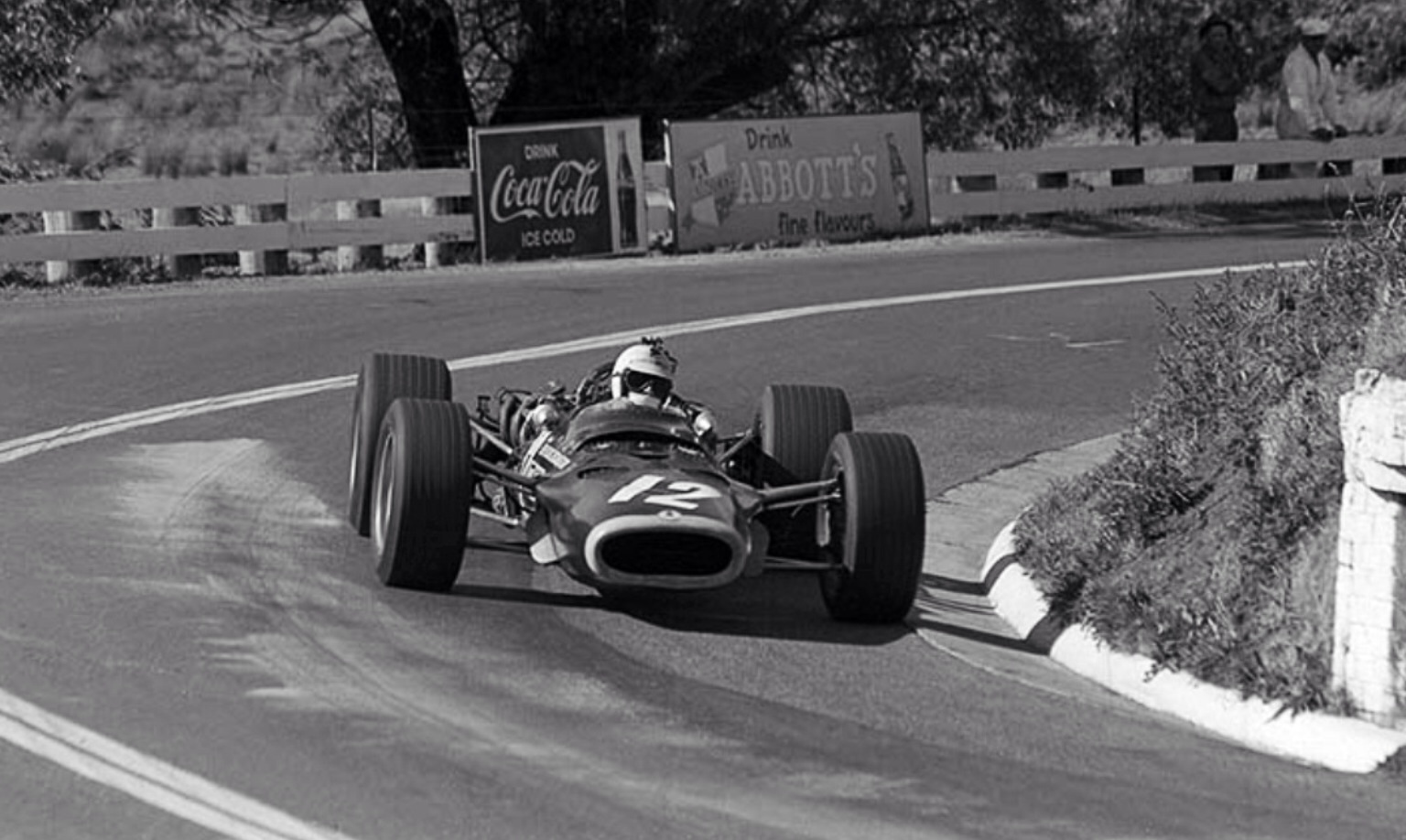
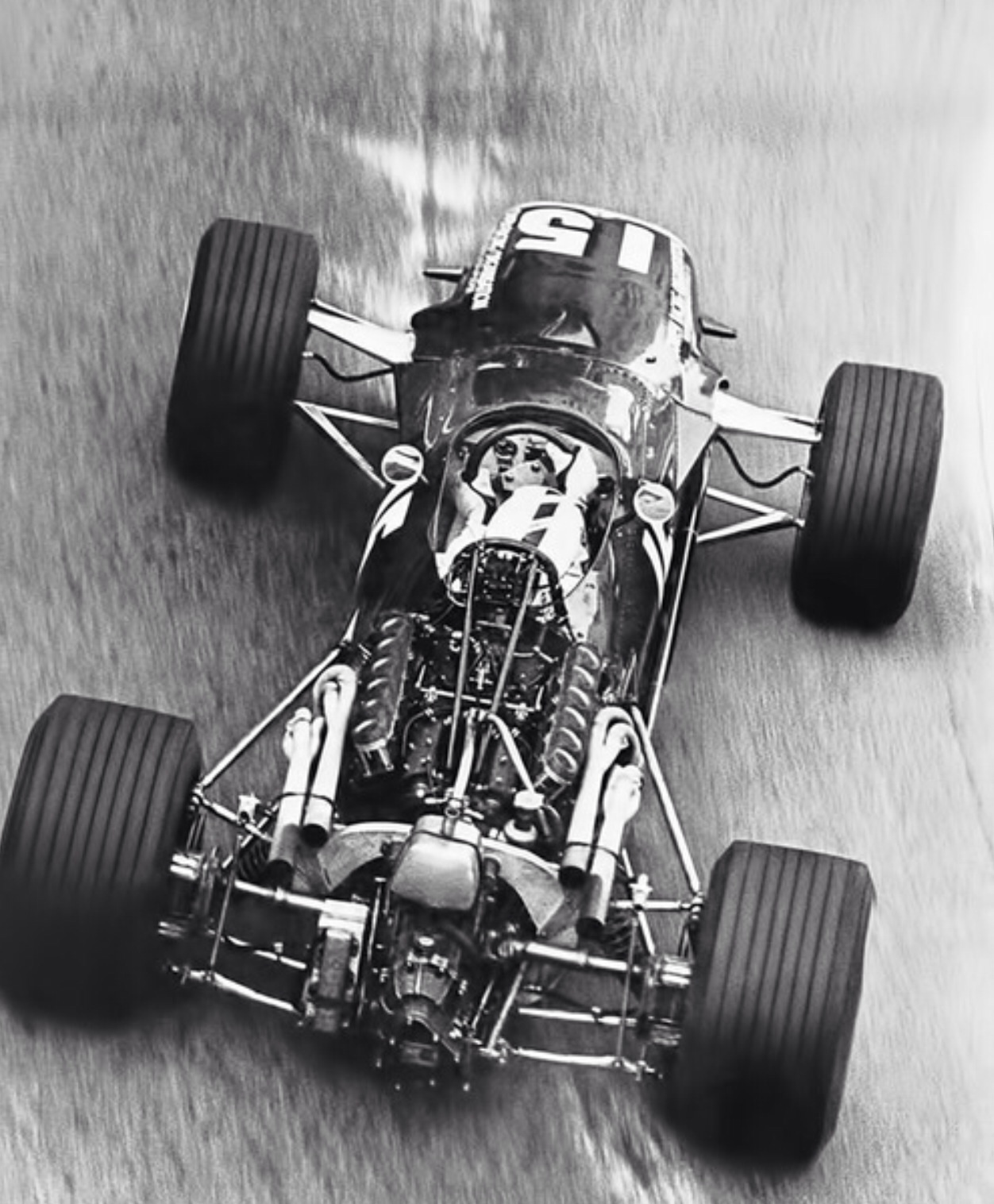
Richard Attwood hooking his big Grand Prix BRM P126 2.5 V12 into Longford’s Viaduct during the ‘South Pacific Trophy’ weekend, 4 March 1968…

He was fourth in the very soggy race, this shot is in the dry earlier in the meeting, won by Piers’ Courage McLaren M4A Ford FVA F2 car from Pedro Rodriguez’ BRM P261 2 litre V8 and Frank Gardner’s Alec Mildren owned Brabham BT23D Alfa Romeo Tipo 33 2.5 V8- a varied lot don’t you think?

I wrote a short article about this meeting a couple of years ago but have just ‘upgraded it’ to feature length due to the large number of photographs of this meeting released in more recent times by Lindsay Ross and Rod Mackenzie. Click on these links to check out their archives.

http://oldracephotos.com/content/home/ and http://www.rodmackenziecollection.com/

The photos really needed a nice home to make them accessible. So you can thank them for this extended piece! Click here to read it;

https://primotipo.com/2015/10/20/longford-tasman-south-pacific-trophy-4-march-1968-and-piers-courage/

The big BRM was far from the car of the series- the Lotus 49 Ford DFW was, but the championship was successful in giving the Bourne outfit valuable testing miles of their new ’68 F1 championship contender albeit in 2.5 litre form.

The BRM design and engineering team led by Tony Rudd were ‘up to their armpits in alligators’ after two fraught seasons in 1966/67 trying to get the BRM P83, or more particularly its complex, heavy, wonderful H16 engine to race fitness.

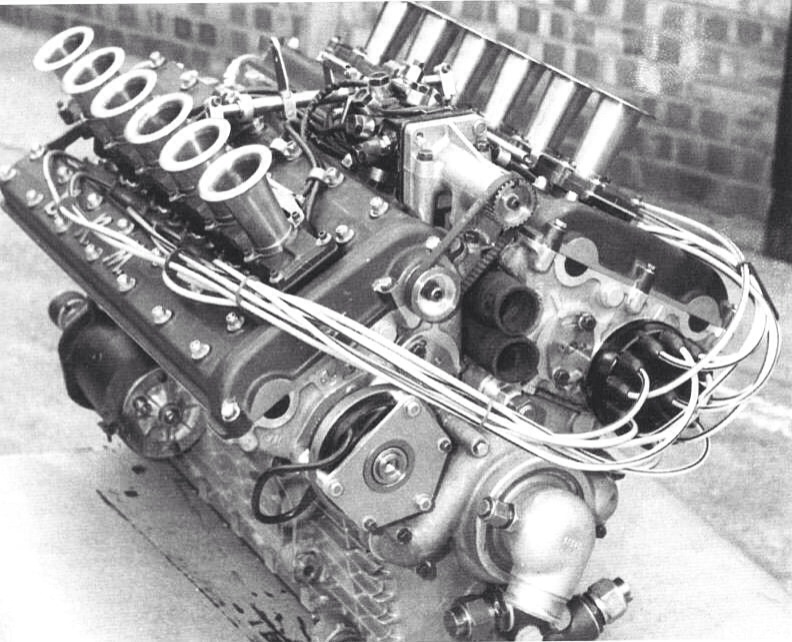
BRM chief Louis Stanley therefore briefed Len Terry, latterly of Eagle and Lotus to design and build a new F1 car. Three P126 chassis were constructed by Terry’s ‘Transatlantic Automotive Consultants’ concern powered by the brand new ‘sportscar customer’ P101, chain driven DOHC, 2 valve, Lucas injected 3 litre V12 which initially gave circa 370 bhp @ 9750 rpm, behind which was fitted a Hewland DG300 transaxle.

The Type 101 BRM engine- 60 degree all aluminium V12 with two chain driven overhead camshafts per cylinder bank operating two valves per cylinder. The compression ratio was 11.5:1, the bore and stroke 74.6mm/57.2mm, fed by Lucas fuel injection the power output during 1968 was initially 370 bhp rising to 390 bhp @ 9,500 rpm. The 2.5 litre variant was designated P121 and gave circa 340 bhp (unattributed)

Bruce McLaren had some good results with the first of the engines in late season 1967 F1 races bolted into the back of his M4B chassis. He was therefore more than happy to thrill his home crowds and assist the BRM lads testing and racing their new car in the New Zealand Tasman rounds before heading back to the UK and completing his own 1968 F1 machine, the Ford Cosworth DFV V8 powered M7A! When Bruce returned to the UK Attwood took over the car for the Australian rounds with Pedro Rodriguez racing P126/01.

In fact Bruce’s somewhat lucky win in P126/02, after Jim Clark’s late race excursion at Teretonga was the only race victory the P126/P133 (two cars designated P133 were built at Bourne to Len’s design) chassis ever had. But don’t discount this series of racers though.

Bruce McLaren on the way to Teretonga International victory on 27 January 1968. Clark’s Lotus 49 Ford DFW was 2nd and Frank Gardner’s Brabham BT23D Alfa was 3rd (I Peak/TRS)

Whilst the car’s Tasman Series was somewhat fraught, the best P126 results other than Bruce’s win were Dickie’s sixth in the Australian Grand Prix at Sandown and fourth at Longford- Pedro Rodriguez had the design leading two Grands Prix in 1968 and generally it was a front third of the field car, if lacking a bit in luck/reliability. These results included a front row start and leading the Spanish GP, second at Spa, third at Zandvoort, lead of the French GP and fourth in Mexico.

Lets not forget that sometime GeePee driver and 1970 Porsche 917 Le Mans winner Attwood took second place in the 1968 Monaco GP aboard a P126 too.

The late sixties BRM’s are often maligned but the P126/133’s results in 1968 F1 in a sea of Ford Cosworth V8’s (well five or six of them anyway in the hands of Lotus, McLaren and Ken Tyrell’s Matra International) were not too shabby at all, in part due to the learnings of the ’68 Tasman…

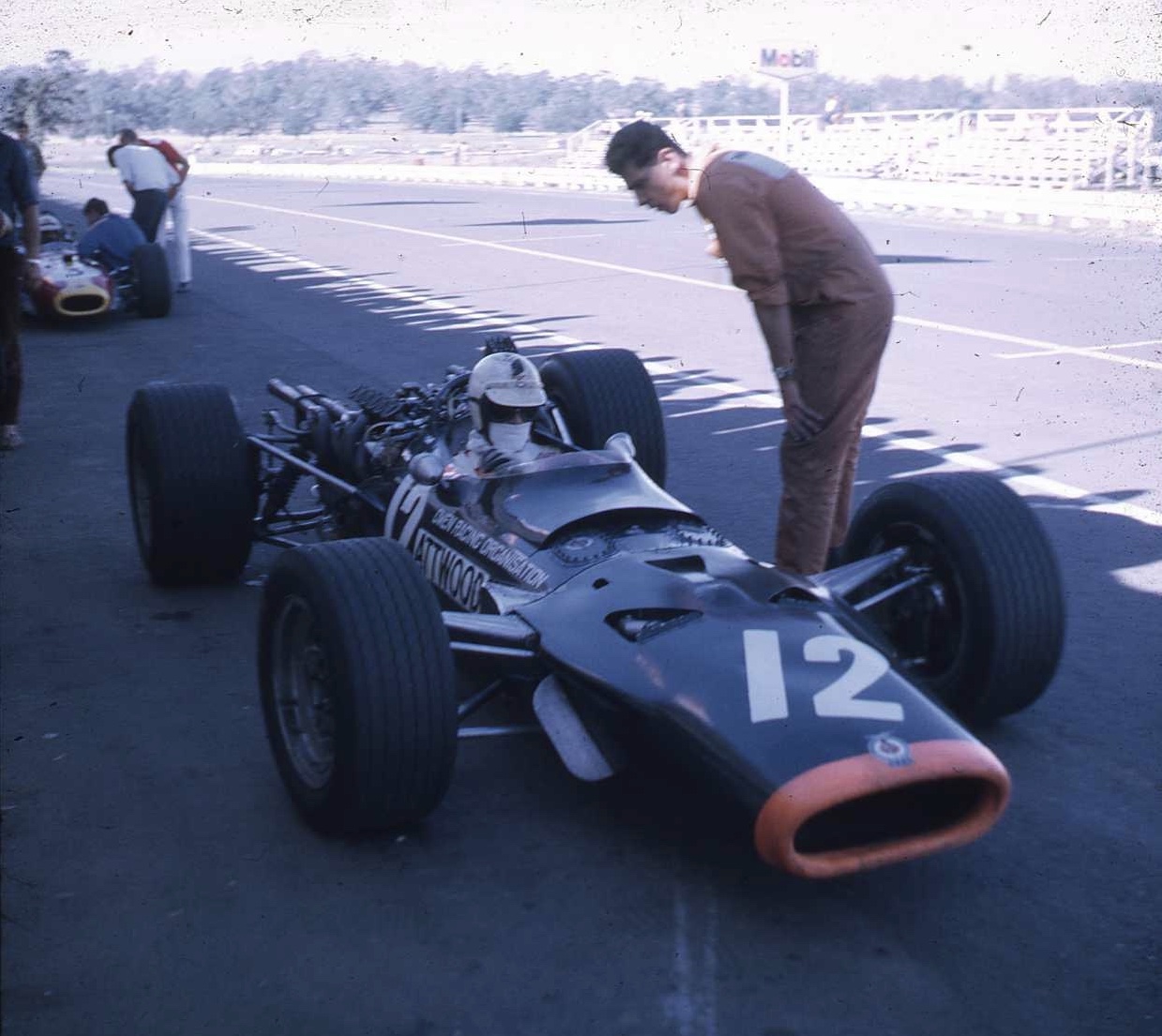
Attwood is attended to at Longford before another practice lap whilst John Harvey in Bob Jane’s Brabham BT11A Repco does the same thing behind (D Cooper)

Etcetera: Attwood, BRM P126 ’03’ Monaco 1968…

The ‘King of Monaco’, Graham Hill won in the principality as he often did in the sixties but Attwood was a very fine second in the third of the P126’s built, a chassis he raced at Spa, Zandvoort, Rouen, Brands and the Nurburgring that year.

(unattributed)

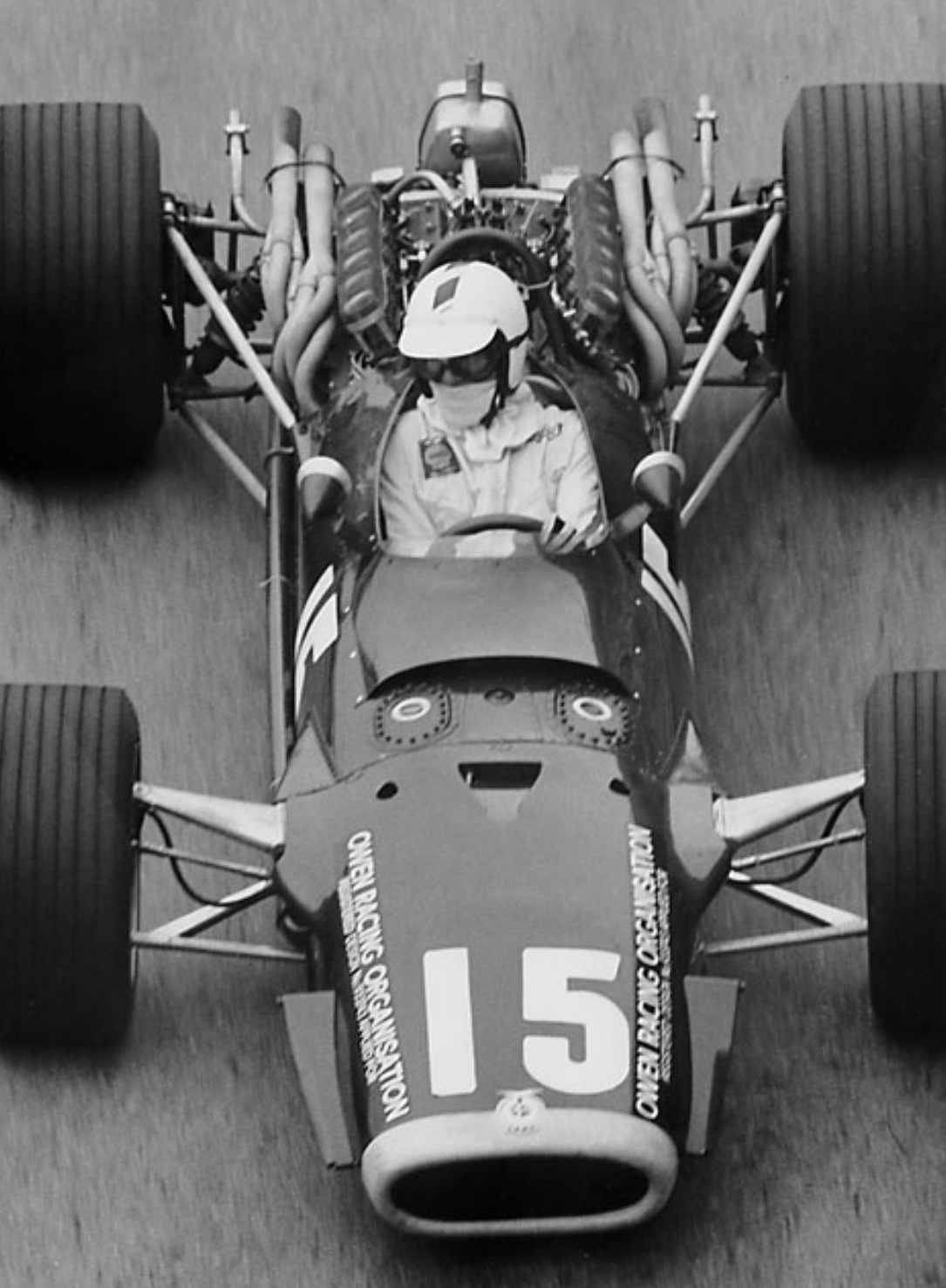
The high photos are beauties to show the key design elements of Len Terry’s car. The aluminium monocoque is a ‘full monocoque’ as against a ‘bathtub’, in common with his Lotus 38 and his Eagle T1G’s. Front suspension is period typical top rocker and lower wishbone with an inboard mounted coil spring/shock to get the mechanical gubbins outta the breeze.

See the spoiler on the nose- 1968 was the ‘Year of Wings’ with BRM being slow adopters and behind the eight-ball relative to other teams mid-season, but that is all to come. No seat belt yet for Dickie, which is interesting, six-point harnesses were not mandated until the start of 1972, but belts were common by Watkins Glen towards the 1968 seasons end.

(unattributed)

Love those mag-alloy wheels, brakes are Girling, engine is carried by the chassis and is not a stressed member as the predecessor P75 H16 engine was in the P83 BRM tub. The Type 101 V12 was originally developed as a customer motor for F1 and sportscar use so its fitment needed to be ‘universal’ in multiple applications.

(unattributed)

Beauty of a shot showing Attwood caressing his P126 through a delicate slide- it shows the effectiveness of the period typical rear suspension popping around 390 bhp to the tarmac. What was a leading Terry design trend are the parallel lower links which found their way into other designers lexicon circa 1971. The norm to that point was an inverted lower wishbone. Otherwise the coil spring/shocks, single top link, twin radius rods and adjustable roll bar are ‘the usual’.

A Varley battery is vertically mounted beside the Hewland DG300 5 speed transaxle- the P126 design is notable as the first BRM without a Bourne ‘box. It was a good choice, these tough old jiggers are still for sale and in use with 550bhp Chev V8’s tearing away at their internals.

The power of that lovely V12, as stated above, around 390 bhp at this stage of the engines long evolution into the four-valver V12 success stories of 1970-2.

Photo and Other Credits…

oldracephotos.com.au/D Keep, Ian Peak/The Roaring Season, Brian Jackson, oldracingcars.com- see Allen Brown’s piece on the P126; https://www.oldracingcars.com/brm/p126/ and P133; https://www.oldracingcars.com/brm/p133/

Tailpiece…

(B Jackson)

Pedro Rodriguez enters the old Sandown pitlane in P126-01 during the 1968 Australian Grand Prix meeting, DNF engine after 10 laps for the Mexican, Jim Clark won in a Lotus 49 Ford DFW.

Finito…


(unattributed)

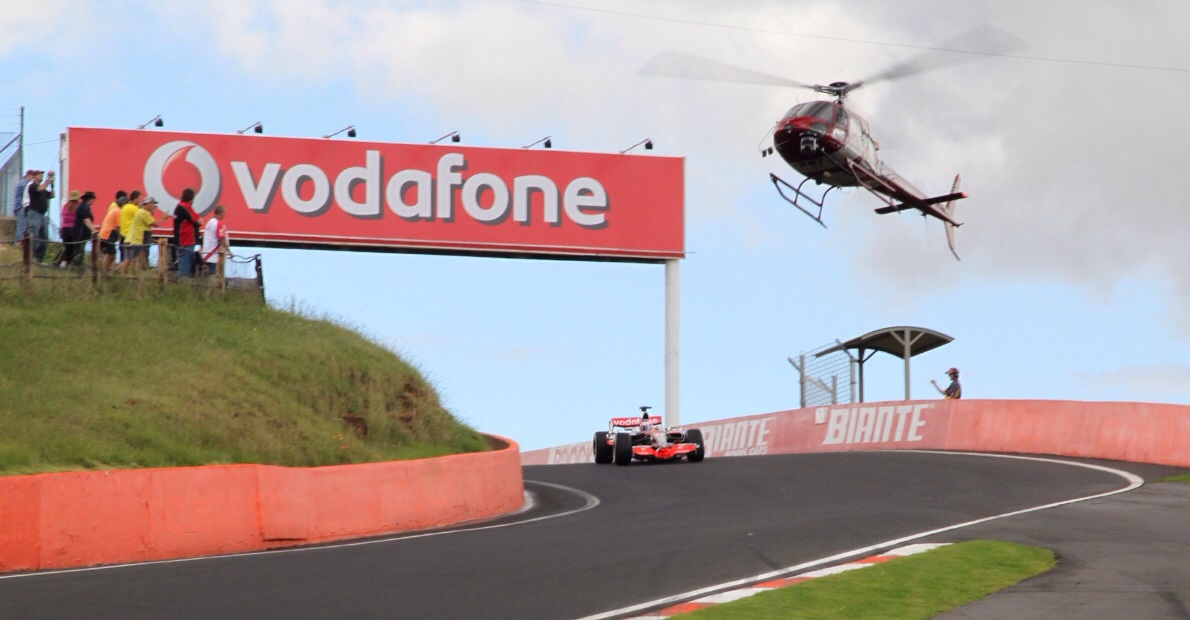
Craig Lowndes dropping into Mount Panorama’s Skyline/Esses, McLaren MP4/23 Mercedes V8, 22 March 2011…

Australian Formula Ford has been a factory for the creation of V8 Supercar Drivers for a couple of decades now. Every now and again one escapes to international racing success, Mark Webber, Will Power and Daniel Ricciardo spring to mind. I’ve not forgotten Larry Perkins I’m just referring to more recent times. But in the main V8 Supercars and to a lesser extent Porsche Cup racing has given local aces a place to ply their trade as well paid professionals.

The popularity and commercial success of Touring Car Racing in Australia relative to Single Seaters began circa 1960 and has continued unabated since. Even very popular single seater formulae such as the 2.5 Tasman and F5000 classes did not put a dent in the rise and rise of ‘Taxis’. Why? Its a topic for a whole series of articles but perhaps fundamentally the cars are easier for the average punter to understand and relate to, are spectacular to watch and have had a succession of ‘characters’ racing them. The absolute professionalism in the way V8 Supercars has been managed for so long now has widened the gulf further.

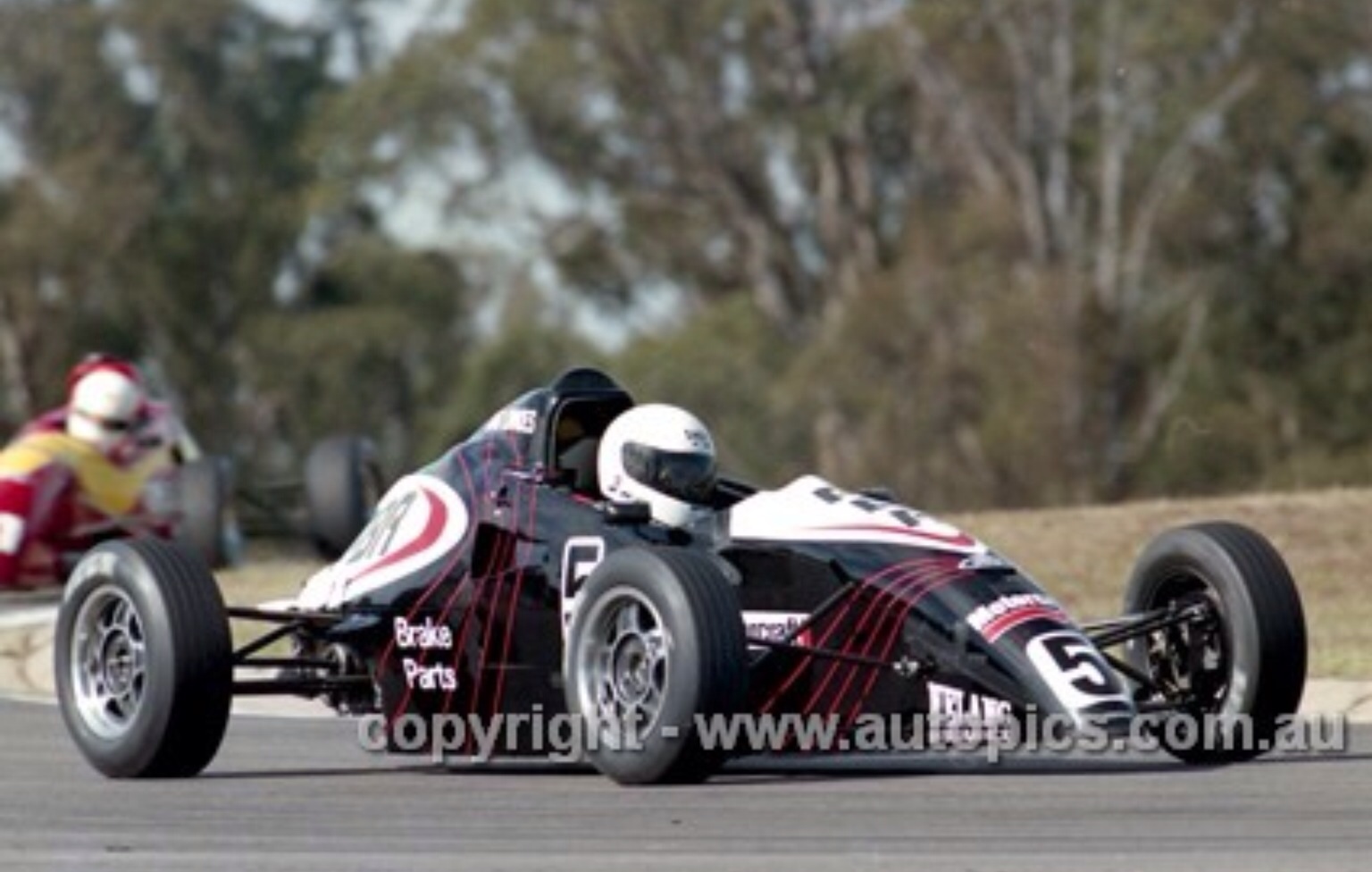
Lowndes, Van Dieman RF93 Formula Ford, Oran Park August 1993. Craig won 5 of the 8 ’93 rounds including OP (autopics)

Sponsors re-prioritised their spend over time away from the purer form of the sport to tourers. Drivers chase the dollars of course. So Taxis grew and grew. Its not that simple but its not much more complex either.

Back to the point of the article which is to discuss young talent and progression into the professional ranks.

It wasn’t always the case though, a career path into tourers. Often guys won the AFFC right into the nineties and none were picked up by professional touring car teams- the class was a bit of a closed shop with the young thrusters not especially welcome. Tomas Mezera is perhaps an exception but he ended up at HRT after he came back from his sojurn in Europe, so too did Russell Ingall make the transition after he returned from Europe.

Cameron McConville, the 1992 AFFC champ looked as though he may set a trend when Dick Johnson recruited him to race the second DJR machine at Bathurst in 1993 but then he boofed a fence and that was it for him, so it seemed. A 1996 win in the Australian GTP Championship in a Porsche 993 RS CS saw him brought back in from the cold- he beat Jim Richards in the Warwick Fabrics car that year, I remember being hugely impressed by his speed and professionalism.

None of yer poofhouse single seater stuff in here matey! Peter Brock was a great mentor to Lowndes early on , this shot of an HRT Commodore circa 1996. Brocky had an all too brief sojurn into ANF2 circa 1973 with a Birrana 272 Ford (unattributed)

Lowndes was the one who really paved the way for the guys who followed- most of the V8 Supercar champs have been Karting and Formula Ford graduates since Craig showed the way.

Out of Karts of course, initially he raced an old RF85 Van Diemen Formula Ford in 1991 and then won the AFFC title aboard an RF93 in 1993. Longtime openwheeler racer and enthusiast (and 1975 Bathurst 1000 winner with Peter Brock) Brian Sampson threw him a lifeline by giving him some drives in his Cheetah Mk9 Holden Formula Holden in 1994. It wasn’t the latest bit of kit by any stretch, in fact it was and IS the very first FH built. But Craig made the thing sing, I recall some very good drives in the car against Greg Murphy in a much more recent Reynard.

Lowndes, a motor mechanic by trade, didn’t have much money but he had ability, a likable and engaging personality and ability to communicate and some contacts via his Dad, Frank Lowndes who had been in and around motor racing forever as a car/engine builder and scrutineer.

Holden Racing Team tested him and he was immediately quick, consistent, and easy on the equipment getting a drive in the 1994 Sandown 500. Soon he was team-leader and won the V8 Supercar title in 1996. He hadn’t lost the fire in the belly for open-wheeler success, and even though he had the local scene at his feet he negotiated a year in the European F3000 Championship via Tom Walkinshaw who by then owned HRT.

Lowndes, Lola T96/50 Zytec Judd F3000, Silverstone 1997 (LAT)

Lowndes had a shocker of a year being comprehensively blown off by Juan Pablo Montoya, his teammate at RSM Marko aboard the mandated Lola T96/50 Zytec. To be fair, he was coming back into single-seaters after an absence of some years into a group of the best F1 aspirants in the world straight out of F3 or doing a second or third year in F3000. Lowndes did not get a fair crack of the whip in the team with minimal testing, Marko ran Lowndes to settle a debt owed to Walkinshaw- and focussed, not unnaturally on the fellow who was winning races- Montoya.

What Lowndes needed was another season, but back to V8 Supercars he came and a couple of other titles, six Bathurst 1000’s and all the rest. Of course he is still racing at the top level too. It would have been interesting to see how far he could have progressed with another season in Europe.

(B Moxon)

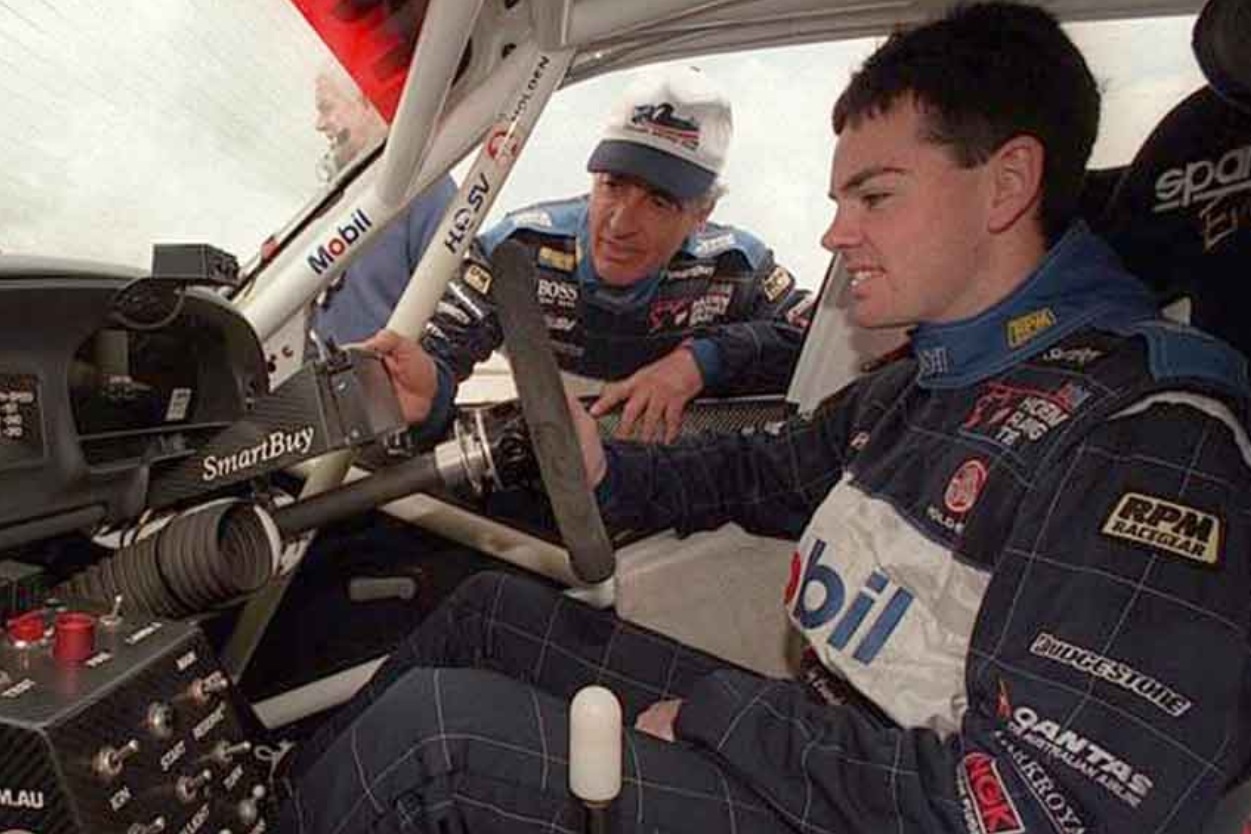
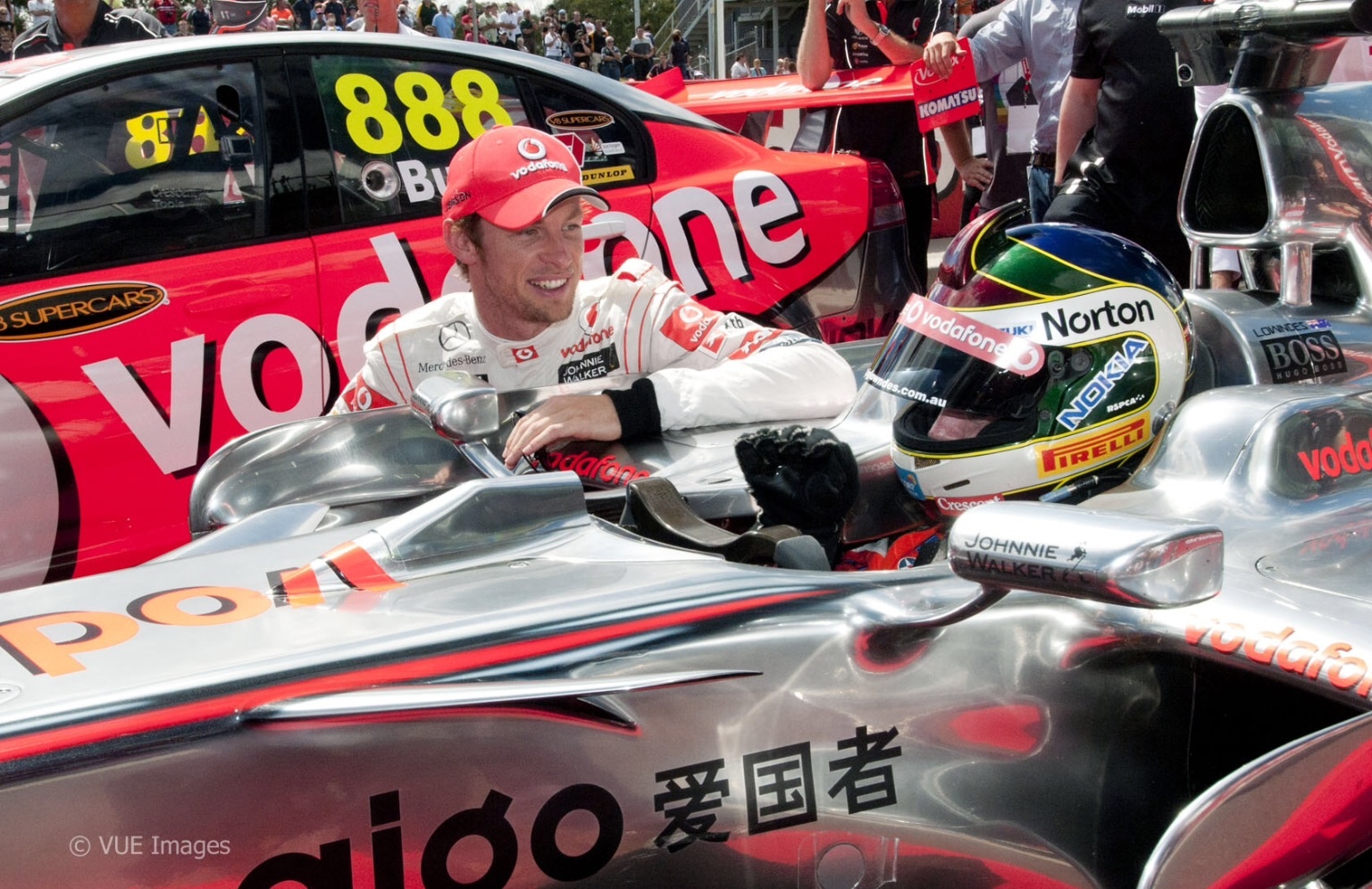
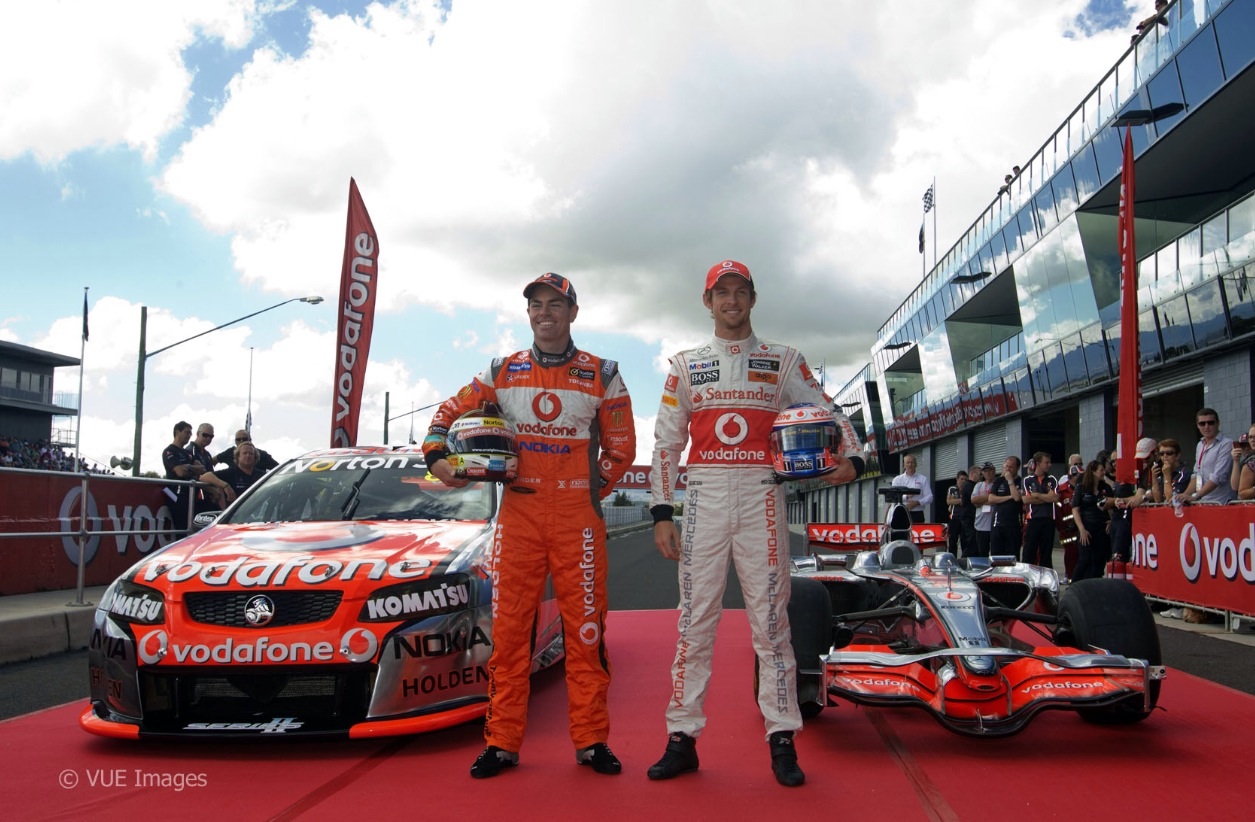
Jenson Button and Craig Lowndes, car a 2008 spec (champion that year in Lewis Hamilton’s hands) McLaren MP23/4 Mercedes 2.4 V8

Lowndes nipping a brake into Hell Corner (unattributed)

The opportunity to get to drive a contemporary F1 car was too good to be true and came about due to Vodaphones sponsorship of both McLaren and Triple Eight Racing who ran VE Holden Commodores that year. The day, just before the AGP at Albert Park involved closure of the Bathurst public roads- the circuit is just that, roads for most of the year with Lowndes and Jenson Button swapping seats between their respective F1 and V8 Supercar racers.

(unnatributed)

For misty eyed open-wheeler fans it was also an amazing ‘if only’, for Bathurst is indeed, in the words of Australian motor-racing historian John Medley ‘The Cradle of Australian Motor Racing’ and is where the Australian Grand Prix should be held. What a spectacle that would be! For that to occur the circuit would be destroyed to meet F1’s safety requirements, so of course it will never happen.

But for one day it was a reminder of what could be for enthusiasts and what might have been for Craig Lowndes had the racing cards been dealt or fallen a different way…

Comparo- F1 McLaren MP4/23 Mercedes Benz (2008) and V8 Supercar Holden ‘VE’ Commodore (2011)…

(Motor)

YouTube footage…

Credits…

Vue Images, LAT, Bruce Moxon, Motor

Tailpiece: Imagine 26 of them zipping past…

Finito…


Charles and John Cooper, Cooper Climax and Babe, late fifties…

I’m a big fan of the Getty Images archive, there are so many photographs there to inspire thousands of articles but Joisus the captions are usually pretty blardy useless. Good enough for the mum and dad recipients of the newspapers they were most often published in but lacking the detail anoraks demand!

This one is a case in point, it reads as follows: ‘Building Cooper Formula 2 racing cars for British racing. Charles Cooper (left) with a fitter at (sic) a Cooper Formula 2 car’, no date of course.

I’m not a Cooper expert but am keen to date the shot, identify the Cooper’s type and the name of the lissom young lass on the workshop wall!

Some hints: the Cooper has coil spring (when fitted) rather than transverse leaf front suspension. The Coventry Climax FPF engine is fitted with twin-SU rather than Weber carbs. The chassis is of no help to me in terms of distinctiveness, it’s the same ‘offensive to purists’ but ‘perfect in practice’ curvy Owen Maddock designed spaceframe which went into all Coopers of the period. Having said that an expert will see what I do not.

My guess, and its no more than that, is a 1958 Cooper T45 Climax. Mind you, that fuel tank is a biggie, matched by another on the other side- none fitted at the moment its more likely an F1 Cooper T51. Or maybe an F2 Cooper running in Gee Pee events as the T45 did with 2 litre FPF’s fitted in 1958.

But most importantly what is the name of blondie-locks, she really has the looks to lift the mood of even the snarliest mechanic on the coldest of Surbiton, winter mornings…

 Credit…

 PA Images


image

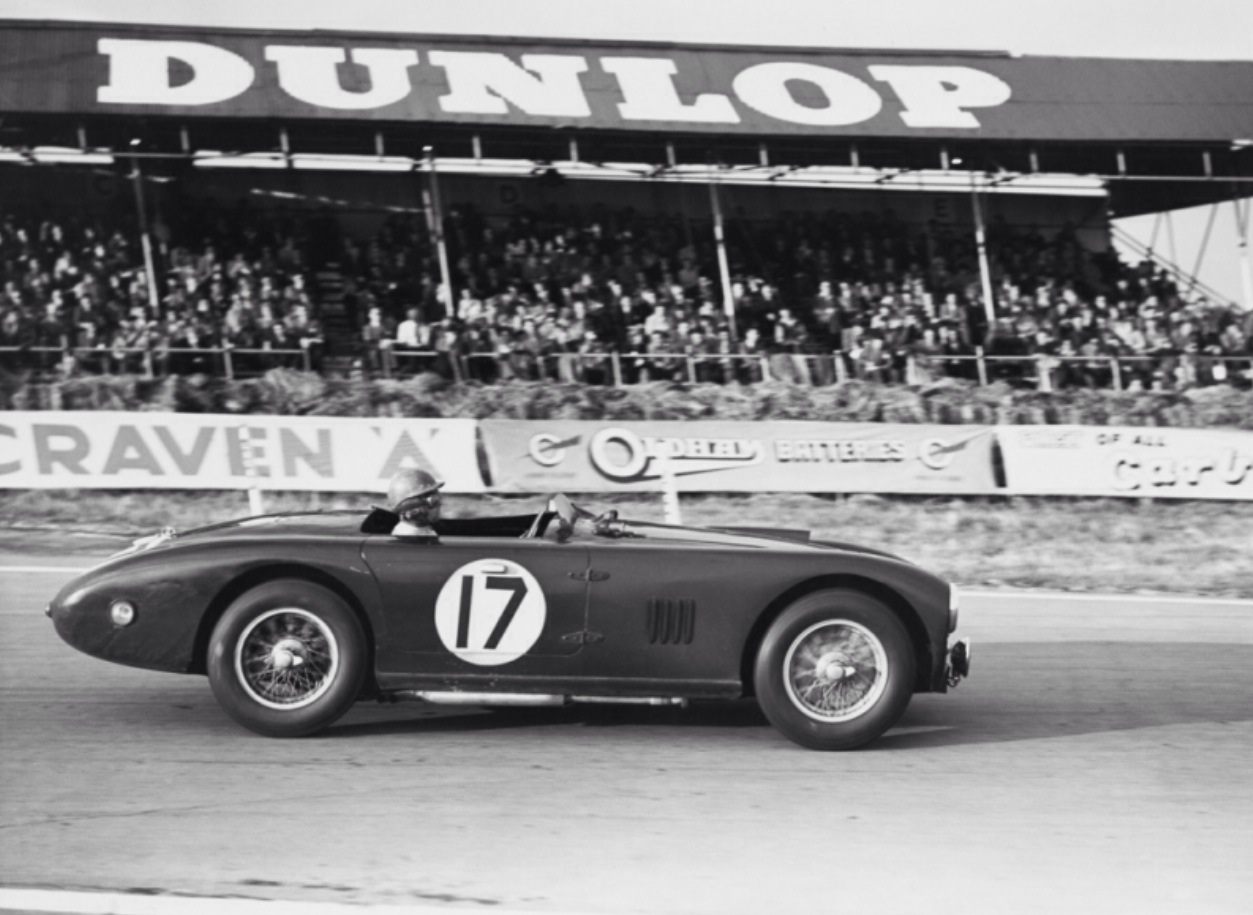
Stirling Moss guides his works Jaguar C-Type through Fordwater on his way to fifth place at Goodwood sharing with 1951 Le Mans winner Peter Walker…

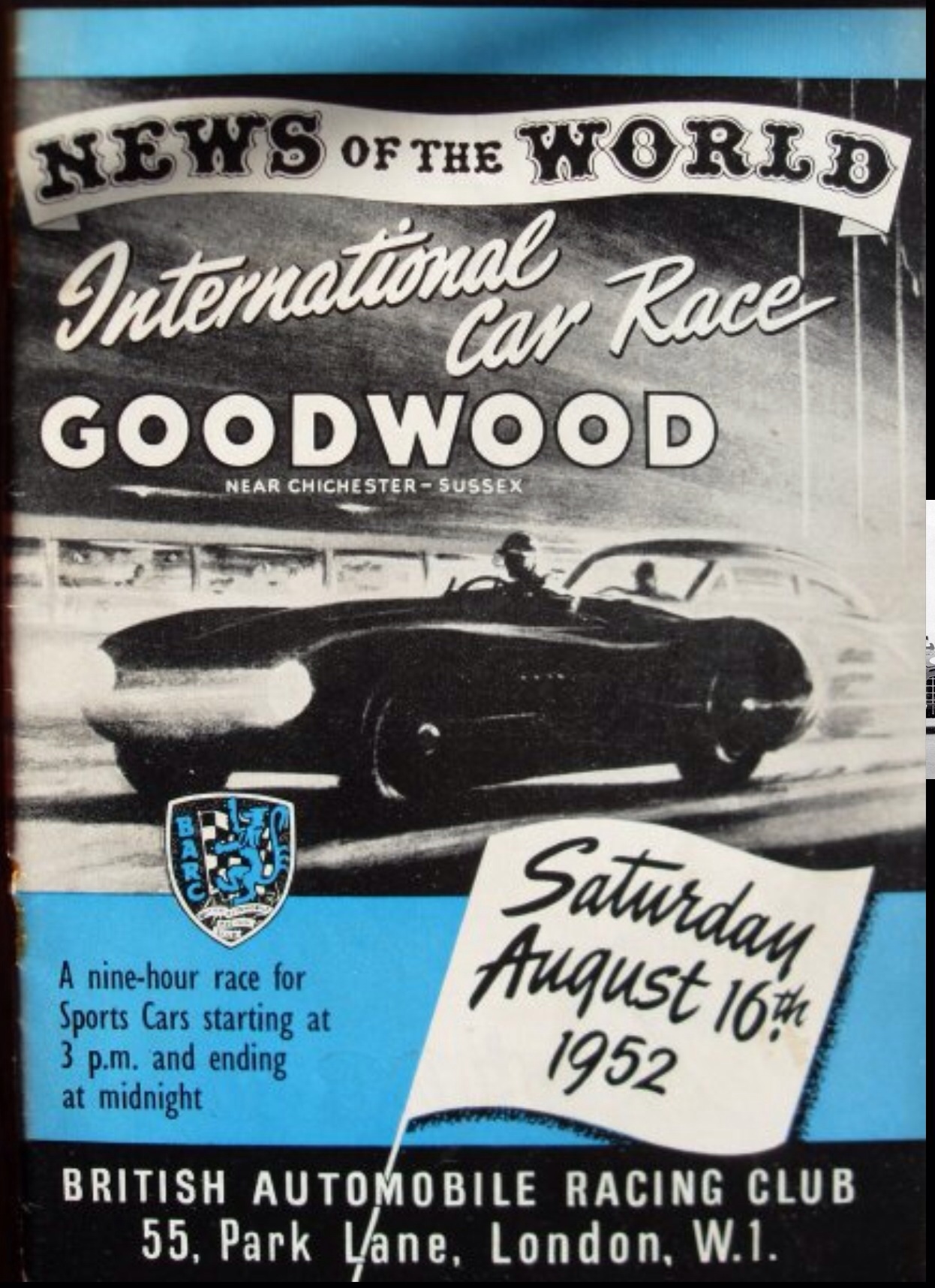
Britain’s first night race took take place at Goodwood on 16 August 1952. The British Automobile Racing Club hoped to emulate the commercial success of Le Mans, that classic a race of 24 hours duration of course.

The Goodwood enduro was a nine-hour event with a 3pm start to allow the spectators to see the cars in all their spectacular glory in the half-light and full darkness.

Modifications were made to the circuits infrastructure by fitting floodlights to illuminate the grandstands and pits, the kerbs were given a coat of luminous paint and a beer tent was laid on, although due to post-war licensing laws it had to stop serving grog before the race ended! Sponsorship and plenty of pre-event publicity was provided by ‘The News of The World’ newspaper inclusive of £2,500 in prize money which represented a powerful incentive for the ‘local’ works teams and privateers to enter in force.

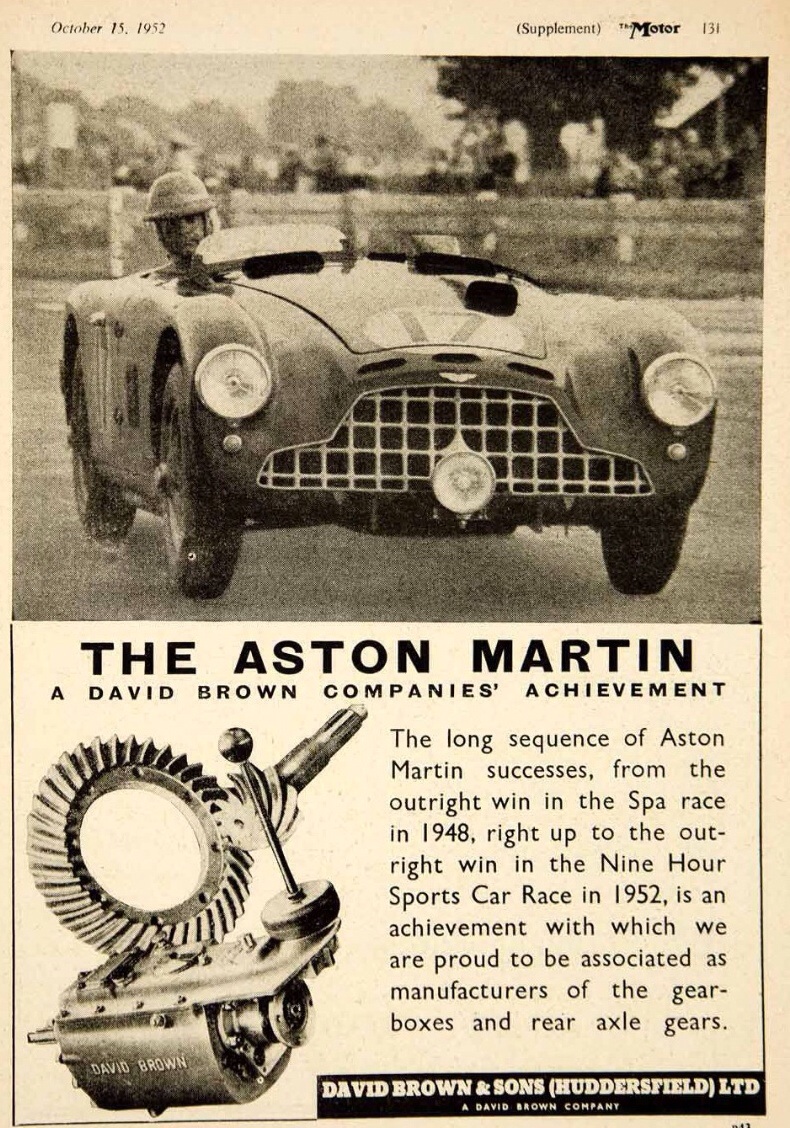
Jaguar and Aston Martin entered three-car teams of C-types and DB3s in the field of 32 cars. Both teams had much to prove. The C-Types were quick at Le Mans in June, but all three cars retired with engine cooling-related issues. The new Ferrari 250S and Mercedes-Benz W194 had been faster than the Jags, victorious at Le Mans in 1951, at the Mille Miglia in May.

As a consequence, Jaguar had designed a more aerodynamic body with a slightly smaller radiator. Jag’s cooling problems became apparent in practice, despite hasty modifications; solutions were not found pre-race. Peter Whitehead/Ian Stewart retired with a failed head gasket during the second hour, Stirling Moss/Peter Walker with engine problems in the third, and the remaining Tony Rolt/Duncan Hamilton car with a head gasket failure in the fourth hour.

Le Mans 1952: #26 the Poore/Griffith Aston DB3 Spyder alongside the Parnell/Thompson DB3 Coupe, all three factory cars DNF (unattributed)

The new Aston DB3 ‘Spyders’ also failed to finish, Dennis Poore/Pat Griffith in the third hour with water pump failure and Lance Macklin/Peter Collins towards the finish with an accident in the twenty-second hour of the long, unforgiving race. The works DB3 Coupe driven by Parnell/Thompson retired in the second hour with gearbox dramas. The ’52 Le Mans was won by the Benz W194, Hermann Lang and Fritz Riess from the sister car of Theo Helfrich/Helmut Niedermayr.

The chance to make a good showing on home turf was therefore ‘manna from heaven’.

Jaguar used the same driver combinations they deployed in France, whilst Aston’s pairings were Reg Parnell/Eric Thompson, Peter Collins/Pat Griffith and George Abecassis/Dennis Poore.

Other strong entries included Pierre Levegh’s Talbot-Lago T26GS, famously for being so nearly the winner driving solo at Le Mans in 1952 before missing a gear very late in the race. Ferrari 225S’ were entered for Tom Cole/Graham Whitehead and Bobbie Baird/Roy Salvadori, a works Allard J2X for Anthony Hume and George Thomas plus a swag of Healey Silverstone, Frazer Nash Le Mans Rep, Jag XK120, Cooper T14 MG, HRG and HWM cars. In short, an interesting field that lacked only works Ferrari and Mercedes entries.

image

At the start, Moss, at right, as usual, won the sprint to his car, but Tony Rolt, to Moss’ right led on lap one, but he was soon overtaken by Parnell’s Aston…

At the end of the first hour the order was Parnell, Rolt, Abecassis, Moss and Baird, Ferrari 225S, then Whitehead.

Then the weather started to improve, and as the track dried, the Jaguar’s pace became apparent with both Rolt and Moss passing Parnell. So, Jag, Jag, Jag, Aston, but then Whitehead crashed his C-Type.

Disaster struck the Feltham team on lap 91 during a routine refuelling pit stop when Parnell’s car caught fire, burning two of the crew and team manager John Wyer. Parnell showed great leadership and strength of character, whilst his race drive was over he stood in for the injured Wyer to take over the critical team management role.

 At half distance the Moss/Walker Jaguar C Type led from the sister XKC of Rolt/Hamilton. The third C-type had crashed at Madgwick and retired whilst the DB3 of Abecassis/Poore had also dropped out of contention.

By 9pm, the drivers had switched their headlights on, the spectacle of racing at Goodwood at night was fantastic, but within half an hour, a half shaft broke on the Rolt/Hamilton C-Type, which allowed the remaining Aston of Collins/Griffith through; that car was then overtaken by the quick Ferrari 225S driven by Bobby Baird and Roy Salvadori.

Eric Thompson came into the pits 3 hours into the race with smoke pouring from the rear of the car. Wyer and mechanic Jack Sopp pulled up the seats to investigate whilst Fred Lowndes refuelled. Spilt fuel from the last churn went onto the tail of the car and ran down onto the undertray where it was ignited by hot oil from a leaking fuel seal- within seconds the car was engulfed in flames and smoke. Wyer and Sopp suffered bad burns, Lowndes not so much but all 3 were taken to hospital whereupon Reg Parnell took charge. Aston DB3/3 was destroyed- and later rebuilt, Parnell, drove it to 5th in the 1953 Mille Miglia (unattributed)

Half an hour later Jaguar’s collapse was complete when the leading Moss/Walker car entered the pits with a broken rear radius arm that would take nearly an hour to repair. It is said that Jaguar boss Sir William Lyons was blissfully ignorant of all of the dramas which befell his team as he had retired to Goodwood House from the pitlane to enjoy what appeared to be a certain win!

image
The doomed Parnell/Thompson Aston DB3/3 earlier in the race prior to its demise (Getty)

In a race of rapidly changing fortunes, the Baird/Salvadori Ferrari 225S had gone from fourth to first in little more than an hour. Still, in a final twist of fate, on its last pit stop, the jack intended to lift the car sank into the patch of tarmac, softened by the earlier Aston DB3 fire! The loss of time was sufficient to put the Collins/Griffith DB3 into the lead with just an hour of the race left. That pairing duly won despite an exhaust valve breaking an hour before the event’s end, from the two privateer Ferrari 225S’ driven by Cole/Whitehead and Baird/Salvadori.

Collins in the winning Aston DB3 early in the race (unattributed)

The Telegraph reported that ‘The Nine Hour had all the ingredients of a classic race; the changing weather, the drama of the pit fire and a dramatic fight for the lead, not to mention the fact that so many of the cars were competing on home soil. Yet the spectators were distinctly unmoved, many only arriving once the night racing began, and few staying for the duration. These were people who attended Goodwood for a grand day out – a nine-hour endurance race, where the leader wasn’t always obvious, was simply too long.’

‘When the Nine Hour race returned the following year it did so without any newspaper sponsorship to offer pre-event coverage. Spectators numbers fell as a result and with them the carnival atmosphere that made Le Mans such a success. Those who did go frequently left when it got dark, defeating the event’s raison d’être. It didn’t matter that the racing was first class (Aston would win again in ’53 and, after the race skipped a year, scored a third victory at what would be the last Nine Hour race in ’55) if nobody was there watching it. Perhaps the British will always see night racing as too good an excuse for a holiday abroad.’ the Telegraph concluded.

There was no World Sportscar or Manufacturers Championship in 1952, that competition started in 1953. However the classic race spoils went to Mercedes Benz W194/300SL at Le Mans and the Carrera Panamericana with a Ferrari 250S victorious at the Mille Miglia and a Lancia Aurelia B20 at the Targa Florio

Vaino Hollming Jag XK120 leads Pierre Levegh Talbot-Lago T26GS then the Lawrence Mitchell Frazer Nash High Speed, Goodwood 9 Hour (Getty)

Aston Martin DB3 Technical Specifications…

Ex-Auto Union design team member Robert Eberan-Eberhorst first worked for ERA when he come to the UK post-war. He was contracted for 3 years from November 1930 to design a sports-racer for Astons which was to use the AML LMB 2.6 litre 6 cylinder engine and a David Brown five-speed gearbox.

He chose a period typical ladder frame chassis design, the main members made from 16-gauge, four inch chrome-molybdenum tubes with substantial cross-bracing by three 14-gauge five-inch tubes.

Front suspension was similar to the DB2- trailing links, transverse torsion bars, piston type shocks and a roll bar. At the rear a more sophisticated De Dion rear axle was deployed. This was constructed from three steel sections welded together and was located by a Panhard Rod and parallel locating links. The upper links ran fore and aft, the lower links angled. Each of the lower links engaged by serrations with a transverse torsion bar. Armstrong double piston dampers were used. The car weighed circa 2165 pounds/980Kg with nine gallons of fuel.

RE Poulton for Autocar

Steering was by rack and pinion with two turns lock to lock, brakes were Al-fin drums, inboard at the rear. Spoked wire wheels were, of course, used with Rudge-Whitworth knock-off hubs.

The DB3 first raced in 2580cc form, with triple 35DCO Weber twin-choke carburettors. The alloy, DOHC, two valve head engine developed 133bhp @ 5500rpm. The gearbox was a DB S527, five-speed with overdrive top gear. From July 1952, a DB S430/63R four-speed box was used.

Into 1952 the engines ran Weber 36DCF carbs making 140bhp @ 5200rpm, still way too little. By the 1952 Monaco GP a 2922cc engine developed 147bhp @5000rpm but any increase in capacity of the LB6 engine was impossible as each pair of bores were siamesed.

163bhp was achieved from an engine with 35DCO twin-choke Webers and connecting rods with offset big ends at the Goodwood 9 Hour in 1952.

Bibliography…

Article by Chris Knapman in The Telegraph April 2011, ‘Aston Martin: The Racing Cars’ Anthony Pritchard

Photo Credits…

Getty Images, Klemantaski Archive, Don Price, Autocar

Tailpiece…

image

Finito…

(unattributed)

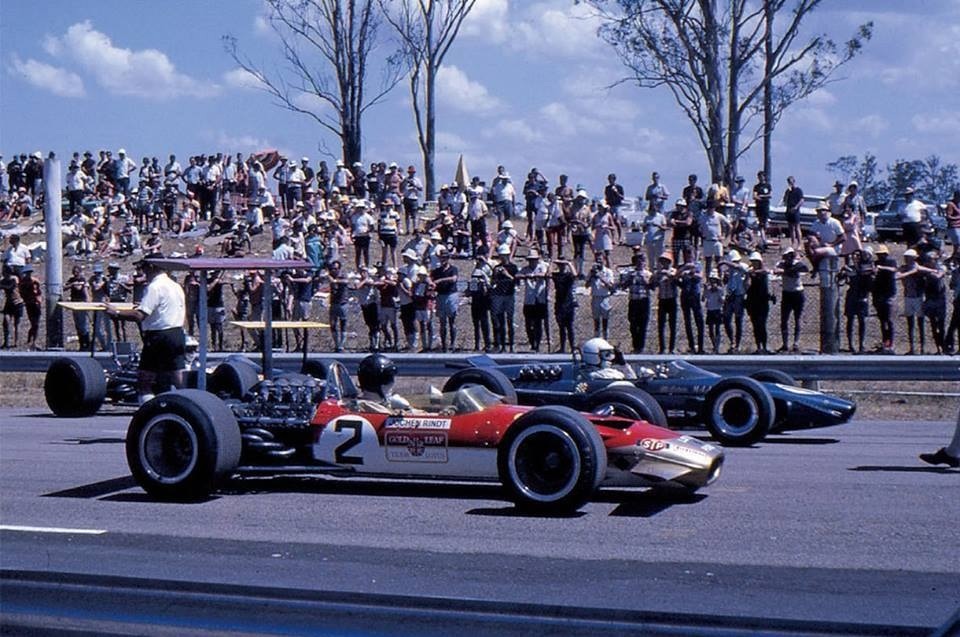
Jochen Rindt awaits the start of the Australian Grand Prix, Lakeside, Queensland on 2 February 1969…

Alongside the Austrian’s Lotus 49B is Australian Niel Allen’s ex-Courage McLaren M4A Ford FVA F2, the bi-winged device behind Jochen is the Piers Courage-Frank Williams owned Brabham BT24 Ford DFW.

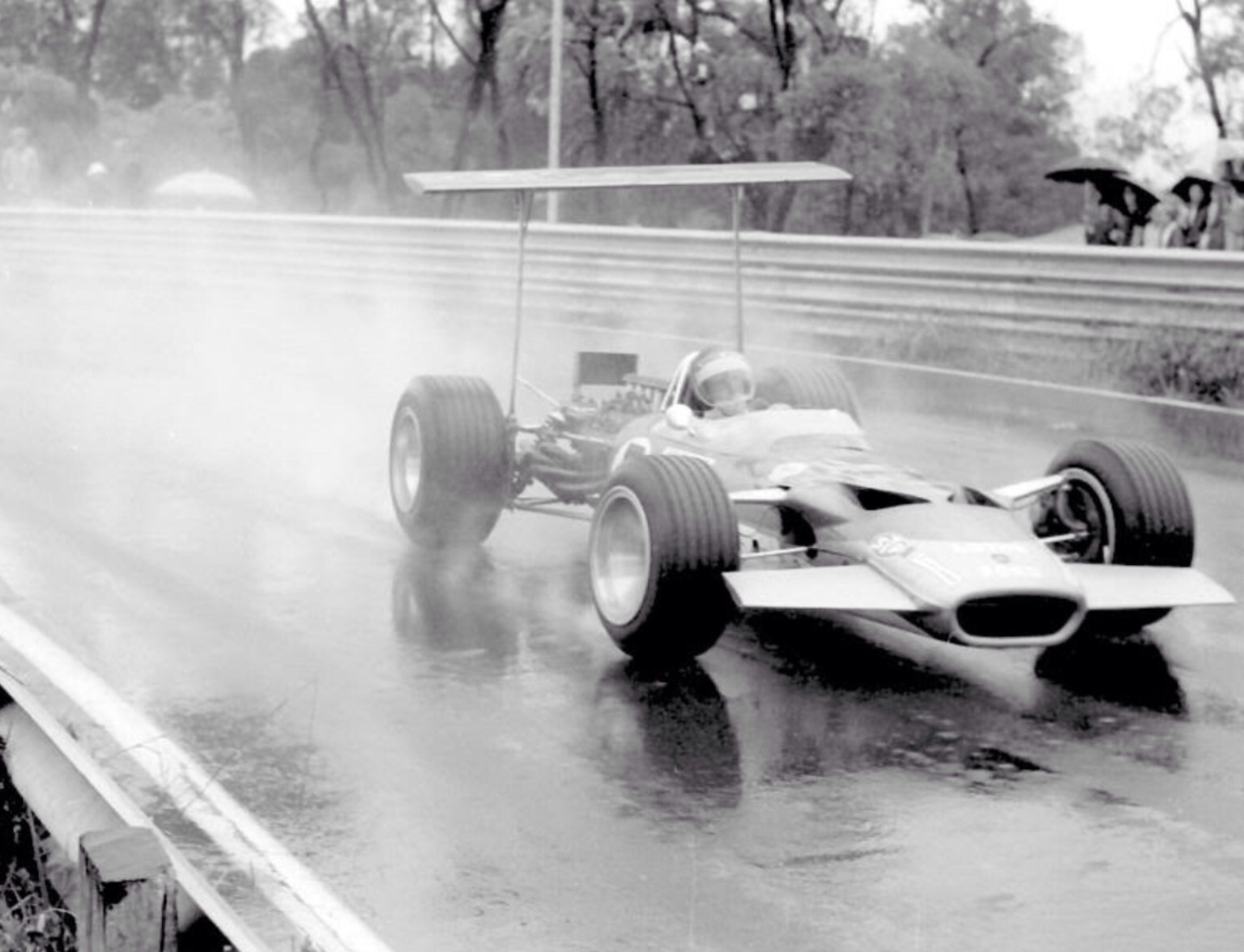
Jochen switched his engine off as it tightened before it went ka-boom – having had problems in practice – on lap 43 whilst in third. Niel was fifth and Piers had an accident on lap five after a passing move on Graham Hill went pear-shaped at BMC bend. Chris Amon won aboard his works Ferrari 246T Dino.

Rindt’s Lotus 49B during dry, Saturday practice at Warwick Farm. He and Chris Amon’s Ferrari 246T had an electrifying duel for pole, won by Jochen in the final minutes of qualifying (R MacKenzie)

Allen Brown’s summary of the 1969 Tasman Series is a great one, it says a lot in the minimum of words, I like that!

“Chris Amon was back for 1969 and taking it much more seriously with two Ferrari 246T/69s for himself and teammate Derek Bell and four 300 bhp 24-valve engines. Despite the loss of Jim Clark, Lotus were present with a two-car team of Lotus 49Bs for Graham Hill and new teammate Jochen Rindt. BRM did not enter so the only other overseas entry was Frank Williams who had a Brabham BT24 for Piers Courage.”

Rindt, Brabham, Amon, Hill and Courage on Sandown’s pit straight with Rindt hooking into Peters Corner for the run up the back straight. Lotus 49 Ford DFW, Brabham BT31 Repco, Ferrari 246T, Lotus 49B Ford DFW and Brabham BT24 Ford DFW. Sandown International 100, 16 February 1969. Amon won from Rindt, Brabham and Gardner (unattributed)

“Rindt proved to be Amon’s closest rival but spun away the lead at both Pukekohe and Levin, leaving Amon to win both races, before the Austrian took a comfortabe win at Wigram. A dominant victory at Lakeside’s Australian GP for Amon meant Rindt could no longer catch him and when Amon and Courage tangled at Warwick Farm, the Kiwi was champion.” Rindt had a stunning weekend in both practice and an amazing wet weather drive which blew the minds of the Sydney spectators and his rivals. “He (Amon) rounded off the season with victory at Sandown, his sixth in two seasons.”

Rindt mesmerised 16,000 soggy Sydney-siders with his raceday drive during the ’69 Warwick Farm 100 on 9 February. He ran away and hid after Amon and Piers Courage collided on the first lap (R MacKenzie)

Now that the visiting British teams were using F1 cars and then taking them home, there was no longer the annual influx of new machinery for the locals. Alec Mildren had the funding necessary to commission specials but the number of competitive 2.5-litre cars was definitely dropping. David McKay’s Scuderia Veloce was the nominal entrant of Amon’s Ferraris but no longer ran their own car. That season, Mildren had installed his Alfa V8s in a car designed for him by Len Bailey and constructed by Alan Mann Racing in England, the monocoque Mildren Alfa ‘Yellow Submarine’ in addition to his ’68 Tasman Special, the Brabham BT23D Alfa driven by Kevin Bartlett.

Jochen, dry practice on the Friday given the lack of punters, Warwick Farm (G Paine)

Bibliography & Photo Credits…

Allen Brown on oldracingcars.com, Rod MacKenzie, Glenn Paine

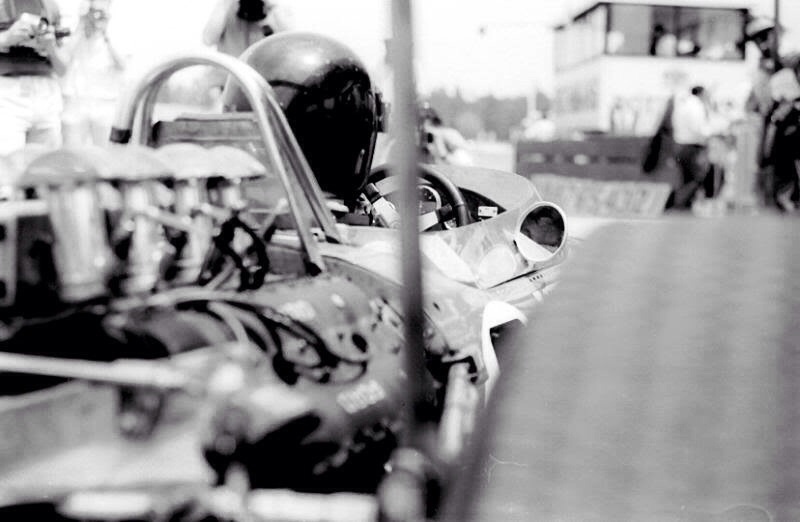
Tailpiece: Moody Rindt shot, Warwick Farm 1969- check the mirror folks…

(R MacKenzie)

Finito…

(J Lineham)

Reg Hunt #5 and Guerino Bertocchi #7 in Maserati 250Fs prior to Saturday practice, Albert Park, Australian Grand Prix, 1 December 1956…

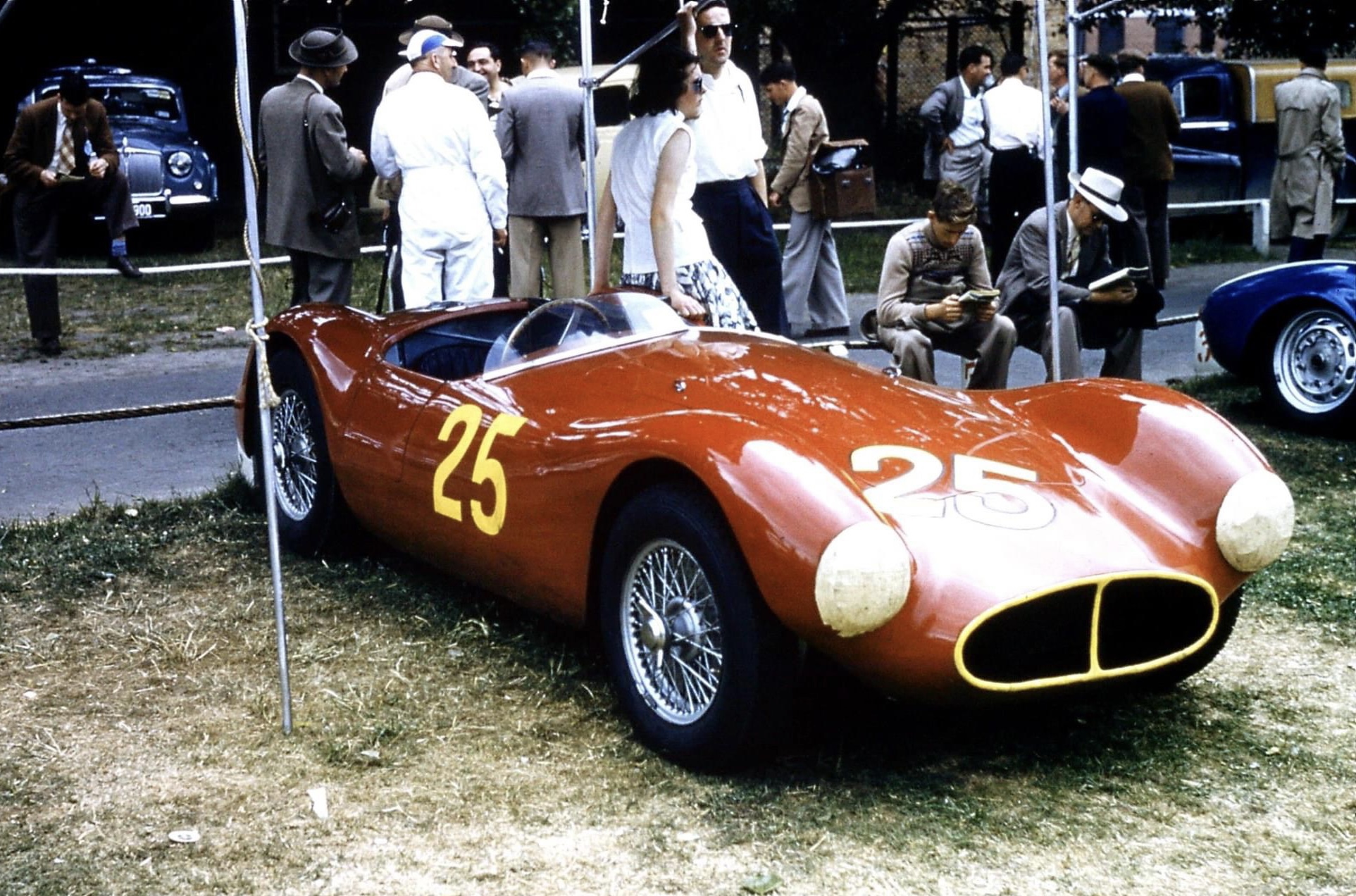
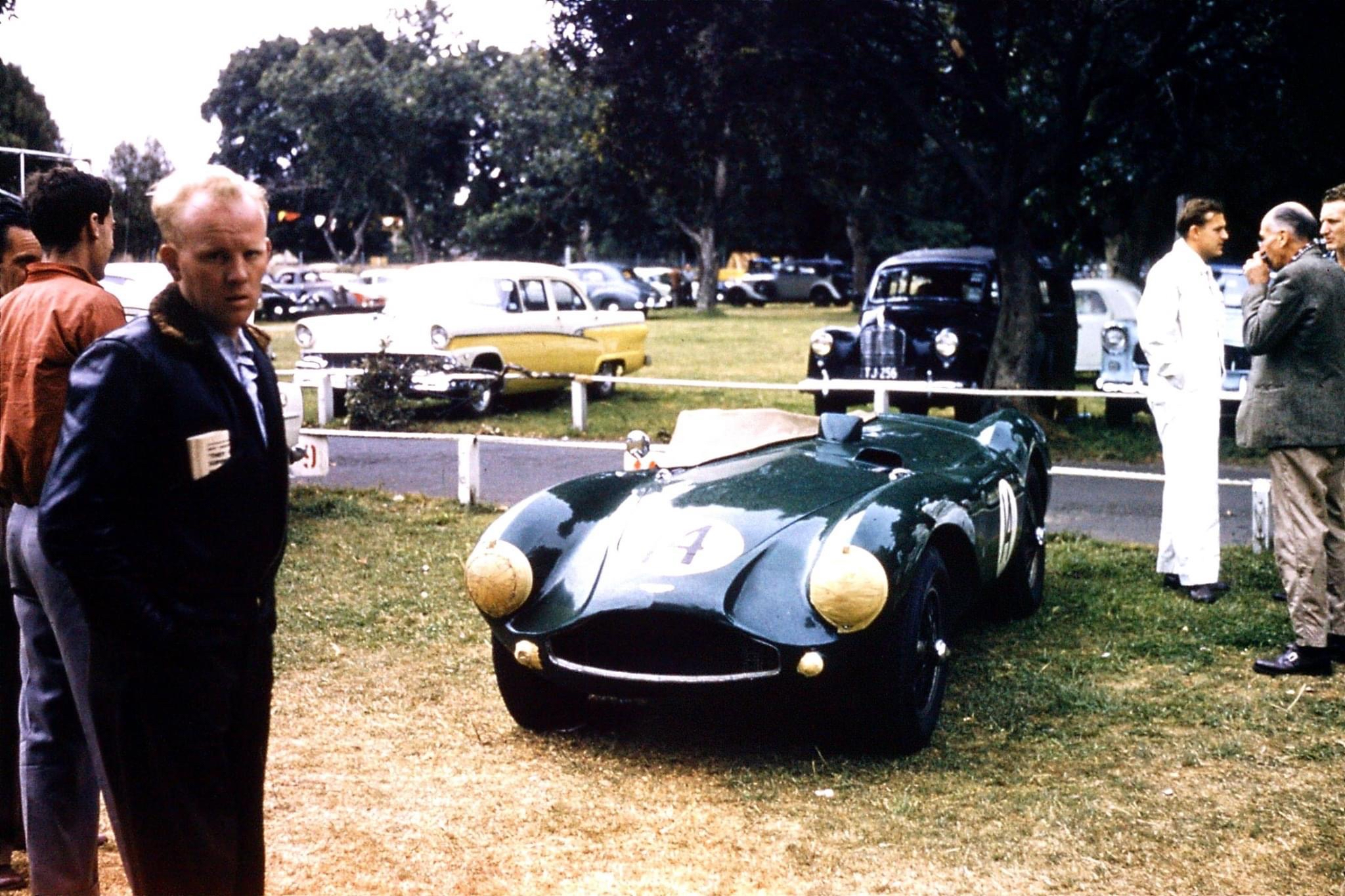
Hunt looks pretty happy with himself whilst Maserati’s legendary tester/mechanic Bertocchi wonders if everything is AOK with the Moss #2501. To the left of Hunt’s car is Tom Sulman’s Aston Martin DB3S.

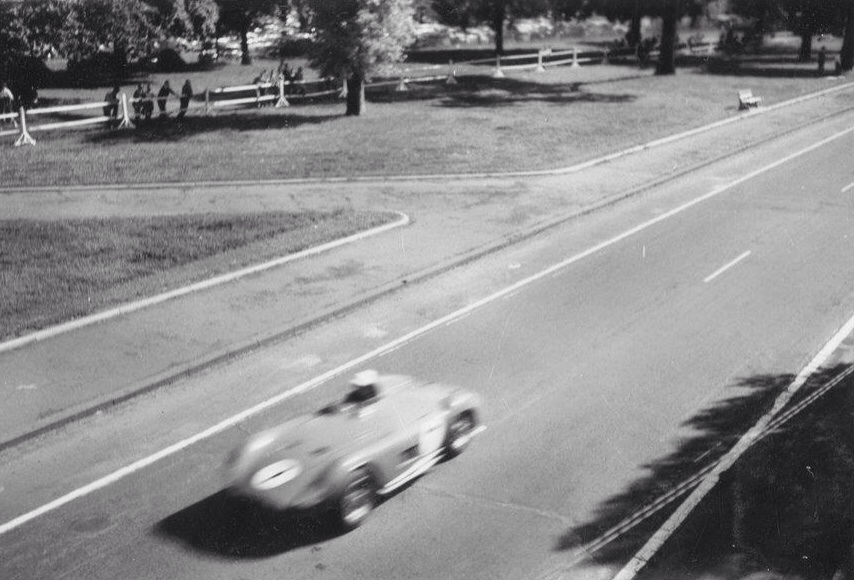
James Lineham had a fantastic day at the ‘Park, the sun shone making it ideal for spectators, especially those with cameras. He used his expensive colour film wisely in the paddock, his camera wasn’t sophisticated, so best to take snaps of stationary or slow moving cars. Then he shot off some monochrome action work whilst he walked Albert Park’s huge expanse.

Bib Stillwell’s Jag XKD perhaps, on Lakeside Drive looking to the south of Albert Park Lake (J Lineham)
Paul England’s superb Ausca Holden-Repco, built after-hours by England at Repco Research (I Curwen-Walker)

James life spanned 1925 to 1997, he was a young enthusiast aged 31 when he attended this meeting. After his death his wife carefully went through all of his precious belongings, found these photographs and donated them to the State Library of Victoria for enthusiasts like you and I to see, in 2014.

Many thanks James and Catherine Lineham. Blurry though some of them are, they ooze atmosphere of a weekend spoken about in reverential terms by those fortunate enough to have attended. One of the journalists of the day, wrote of the weekend as ‘when Australian motor racing came of age’.

Moss or Behra Maser 300S on the pit or main straight, Aughtie Drive. Race direction these days the other direction, or clockwise (J Lineham)
Tom Sulman’s Aston Martin DB3S with Tom in the blazer at right (I Curwen-Walker)
Circuit map from the meeting program (G Dobie)

I’m obsessed with a few circuits in Australia in particular; Warwick Farm, Mount Panorama, Longford, Lobethal and Albert Park – Longford and the ‘Park especially. I live in Windsor 750 metres from Albert Park’s Austin Healey Corner/Turn 13, the Union Street/Queens Road second gear right-hander.

I run around it every other day, I think about the fellows who conquered it’s oh-so-quick unguarded challenges in the 1950s and do so in much more safety today. I feel its wonderful rhythm, vibe and sense of history all the time. These snaps gimme that vibe, Albert Park is a wonderful place to be even at 5.15am with only the park’s Daffy Ducks as company!

When originally posted, the article comprised James’ shots only, but the piece has grown over the years as other photographs have appeared online and I have plucked them from certain obscurity on FB.

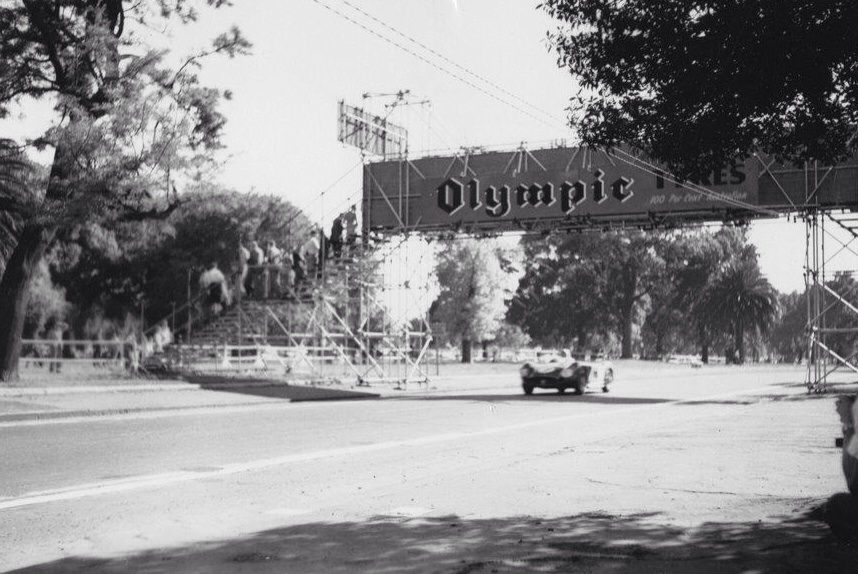
Vrrooom in a six-cylinder 3-litre, DOHC kinda-way. Moss Maser 300S. Aughtie Drive from the Olympic Tyres Bridge (J Lineham)
Reg Parnell’s Ferrari 555 Super Squalo with Peter Whitehead’s similar car at left (I Curwen-Walker)
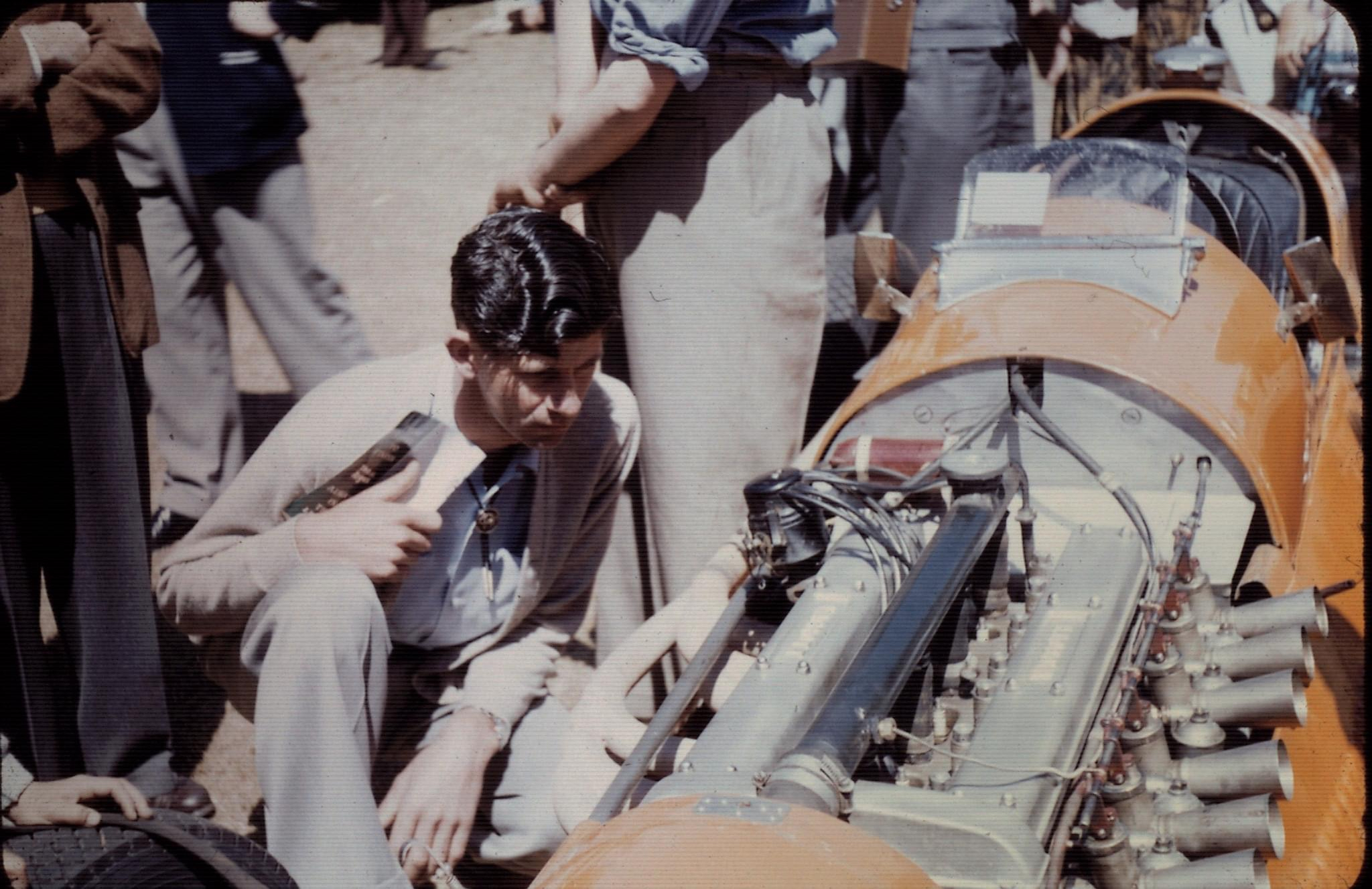
3.4-litre, DOHC, two-valve engine of Parnell’s car (I Curwen-Walker)

Attached are links to articles already written about this motor racing fortnight during the 1956 Melbourne Olympic Games which ‘put Melbourne, if not Australia on the map’.

In fact James had a big choice to make that day. He could have taken a vantage point on the men’s marathon course from Clayton to the Melbourne Cricket Ground. Algerian born Frenchman Alain Mimoun won it in 2:25.00 from Franjo Mihalic of Yugoslavia a minute and a half behind.

The Australian Tourist Trophy; https://primotipo.com/2016/01/29/1956-australian-tourist-trophy-albert-park/ and Australian Grand Prix; https://primotipo.com/2016/12/27/moss-at-albert-park/

Jean Behra, Maserati 250F (J Lineham)

The short story of the race is that Stirling Moss won the 80 lap, 250 mile event on 2 December 1956…

He did so by a lap from teammate Jean Behra, Peter Whitehead’s Ferrari 555 Super Squalo, Reg Hunt’s Maserati 250F and Stan Jones’ similar machine. It was a dominant display from the plucky Brit who was always, and still is immensely popular when he visits Australia.

International representation included the two works Officine Maserati drivers Moss and Behra (#1 above) who brought no less than five Masers with them. They shipped three 250Fs, two of the latest specification and an earlier chassis, and two 300S sportscars both of which remained in Australia post event. The cars were based at Reg Hunt’s Holden Dealership just up St Kilda Road on the Nepean Highway in Elsternwick a few kilometres from the circuit, the 300S’ being famously driven between workshop and racetrack.

Stirling Moss enroute to victory in his Maserati 250F (Melbourne Argus)
Prince Bira and Jean Behra in the Albert Park paddock (S Landrigan)

Jean didn’t have a great year, being comprehensively bested by one of the most gifted drivers in the world, but third places at Buenos Aires, Monaco, Reims, Silverstone and at the Nurburgring is hardly shabby. Over the two weekend Australian carnival it was Moss winning both the AGP and the Australian Tourist Trophy held the weekend before.

Moss raced #7 250F chassis number 2501 and Behra #1 2522. The spare car – 2507 – was driven by both Moss and Hunt during practice. At one point it was thought Jack Brabham may race it, not having an AGP ride that year, but it was not to be. A pity, by that stage Jack had two seasons of racing in Europe behind him so would have given all but Moss and Behra a good-go.

Two of the three Officine Maserati works 250Fs, chassis numbers as per text. #1 is Behra’s machine (I Curwen-Walker)

Scuderia Ambrosiana entered two Ferrari 555 Super Squalos powered by 3.4-litre 860 Monza four cylinder engines.

The AGP at this time was run to Formula Libre rules, the cars above were driven by #2 Reg Parnell, chassis number FL9002 and #3 Peter Whitehead, chassis FL9001. Whitehead was a regular visitor to Australia dealing with the family wool business and had won the Australian Grand Prix way back in 1938 aboard his ERA chassis R10B, when he was 24, in 1956 he was 42 years of age.

Whitehead started the carnival well winning the Bryson Industries Cup support event to the Australian Tourist Trophy the week before, ahead of Hunt and Kevin Neal, Maserati A6GCM.

Whitehead and Parnell were unlikely to be on the pace of the works Masers but would be good bets as best of the rest, as indeed they were, Peter was third and Reg sixth. The Parnell car remained in Australia, click here to read about it;

Car #9 in the background of the photo above is Lex Davison’s Ferrari 500/625, Alberto Ascari’s 1952/3 dual World F1 Championship winning chassis #0005, iconic in Australia and winner of the 1957 and 1958 AGP’s at Caversham and Bathurst respectively. The 3-litre car, which then carried chassis number #0480 was seventh, five laps behind Moss with various problems.

Behra and Moss at the driver’s briefing (S Landrigan)
(J Lineham)

Ken Wharton was a well credentialled Brit in both single-seaters and sportscars, but his ‘Ecurie Du Puy’ (John Du Puy was an American resident in Switzerland) silver Maserati 250F was said to be, and looked, tired.

Chassis #2521 had been Behra’s works machine – a new car that season – and raced in eight events earlier in the year before being sold to Du Puy. But it looked in-need-of-a-birthday before leaving Europe, it was the latest bit of kit, properly prepared the car was a top-three contender.

Ken retired the car on lap 19 and then journeyed on to race the Maserati and his Ferrari Monza in New Zealand that summer, unfortunately dying in a tragic accident aboard the Monza on 12 January 1957 at Ardmore during the NZ GP weekend.

The best prepared and equipped of the locals were the well-heeled Victorian motor dealers, Reg Hunt and Stan Jones in Maserati 250Fs of similar specification and cobbler Lex Davison, who owned a shoe manufacturing and distribution business.

Lex’ Ferrari was older than the 250Fs but was quick with its 3-litre four cylinder, DOHC engine and was beautifully prepared by Alan Ashton at AF Hollins motor engineers just up the road from the ‘Park in Armadale. In fact all three of these cars lived close to the circuit. Hunt was fourth, and best of the locals, Jones fifth and Davison seventh.

(J Lineham)

Doug Whiteford was another local – very – his dealership/workshop was in Carlisle Street St Kilda, a drop-kick from Albert Park.

Whiteford’s first Talbot-Lago T26C, chassis #110007 was an astute purchase, the robust, simple design was well suited to Australian events. It was beautifully prepared and driven by ‘Dicer Doug’ who won two of his three AGPs in it, at Bathurst in 1952 and at Albert Park in 1953. Click here for a piece on Doug’s TLs;

The purchase of the second T26C (photo above) wasn’t quite so smart though. An earlier chassis #110002 but later spec mechanically than #110007 sounded ok but the game in Oz had moved on. He needed something more modern and competitive.

Whiteford was a consistent third in the ’55 AGP at Port Wakefield behind Brabham and Hunt but by ’56 the old Talbot Lago was simply not on the pace. Still, his bankroll was more modest at the top level than most. A shame, as Doug, 42 then and as vastly experienced and tough as they come didn’t give a yard to any of the locals. Whiteford in a 250F or something of that performance envelope would have been worth travelling a few miles to see. It’s a shame he bought a 300S off Maserati after this meeting rather than a 250F.

The Whiteford Talbot Lago T26C in the paddock, and below being pushed by Doug and the crew towards the start (I Curwen-Walker)
(unattributed)
Kevin Neal, Maserati A6GCM 2.5-litre (J Lineham)

Reg Hunt made everybody take notice in his ‘Flying Bedstead’ Hunt JAP Spl in hillclimbs and on the circuits in the late 1940s/early 1950s and then refined his craft with a season racing a 500 F3 Cooper machine in the UK in 1954.

On his way back to Oz he acquired a superb Maserati 250F engined Maserati A6GCM chassis #2038 (above with Kevin Neal at the wheel) with which he belted the locals in 1955. Only mechanical failure kept him from the ’55 AGP won by Brabham’s Cooper T40 Bristol. Hunt ordered a 250F for ’56, he was allocated a rebuilt 1955 works machine chassis 2516 with Melbourne haulier Kevin Neal – who had also raced an ex-Hunt Cooper T53 Bristol – the purchaser of the A6GCM.

Neal had a shocker of an AGP, bending the car severely and injuring himself late in the race when he lost the car in the greasy conditions. I wrote a long feature about the A6GCM;

Stan Coffey’s Ferrari 750 Monza sportscar below. He raced the car in the Australian TT, DNF in the classic won by Moss from Behra and Ken Wharton’s Ferrari Monza.

It’s a rare, clear shot of the man, now whatever became of him? There is an obscure article topic, he raced a few interesting cars too, Cooper Bristol etc…

(J Lineham)

Entry List…

(B Moyle)

Etcetera…

(J Hunting)

The photograph above is in the AF Hollins Pty.Ltd workshop in 604 Hight Street, Armadale (the building still exists as a tyre fitter/retailer). Julian ‘Gib’ Barrett’s #19 Alta GP-2 1.5 s/c alongside Lex Davison’s Ferrari 500/625. Behind are the two Ferrari 555s, Reg Parnell’s partially obscured on the left and #3 Peter Whitehead on the right. The other car we can just see at far left is the Wharton silver Maserati 250F.

(Gray Family)

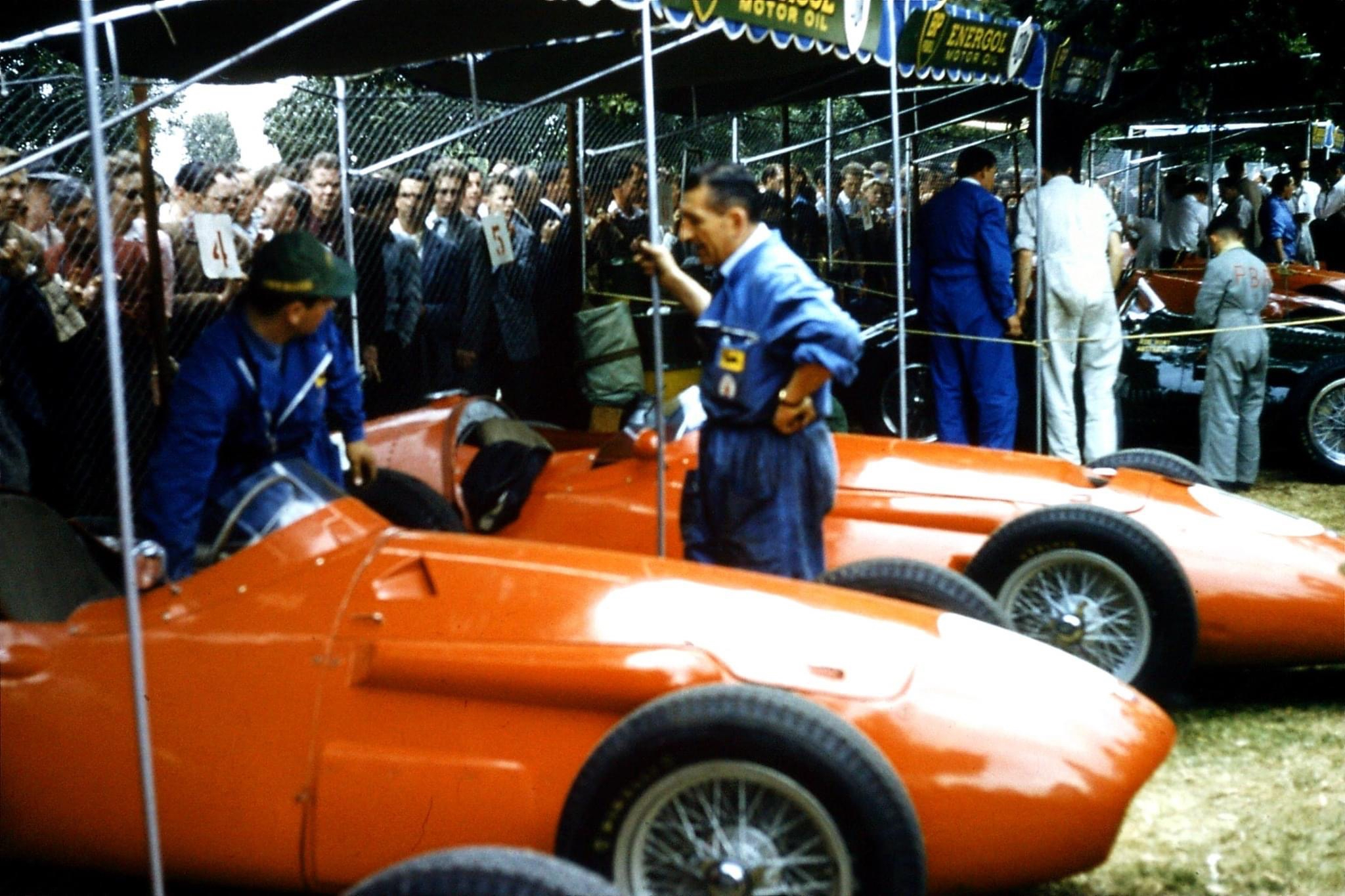
Reg Parnell’s Ferrari Super Squalo, Lex Davison’s Ferrari 500/625, looking smaller in comparison, and the dark coloured Kevin Neal Maserati A6GCM which did not look quite so pristine at the end of the weekend.

(I Curwen-Walker)

Quite what is going on here I’m not sure, it’s most certainly not the start of the touring car race!

(I Curwen-Walker)

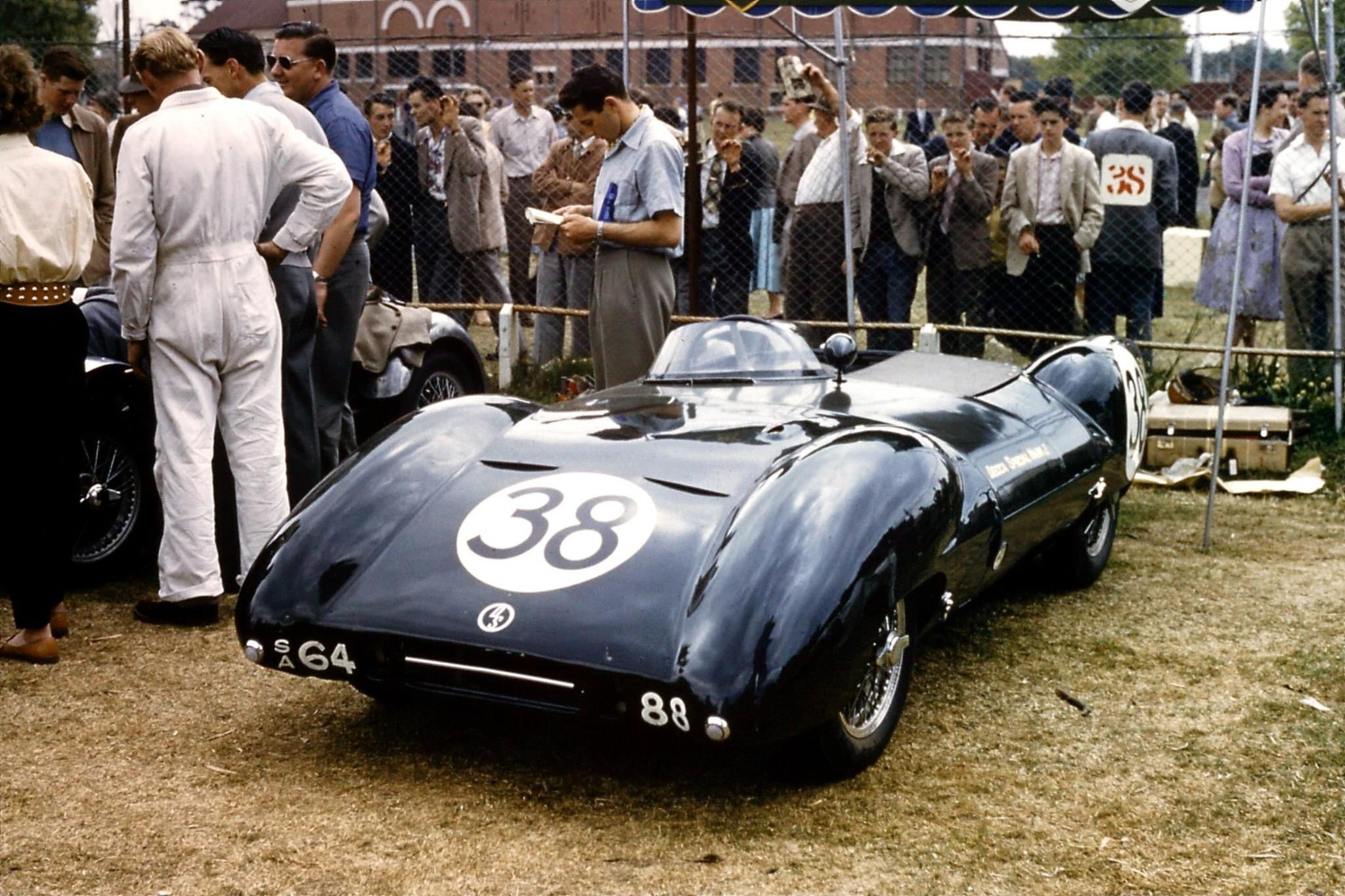
Derek Jolly’s very successful Lotus 11-esque Decca Mk2 Climax. 13th outright and first in class in the Australian Tourist Trophy won by the Moss Maserati 300S. See here for more on Derek and his cars; https://primotipo.com/2017/11/09/dereks-deccas-and-lotus-15s/

(R Jackson)

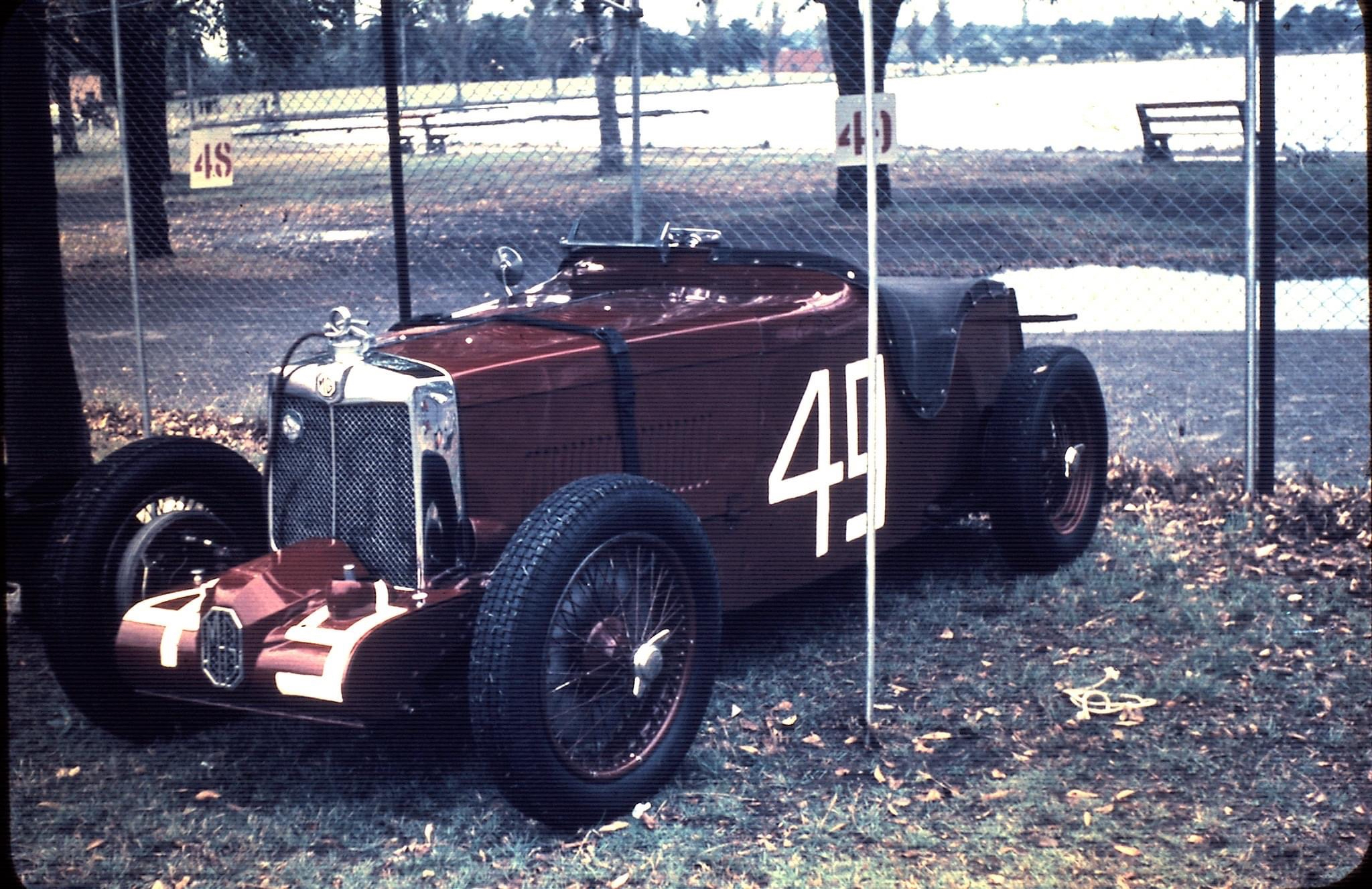
Otto Stone’s MG K3 looking very lonely in the seemingly deserted Albert Park paddock.

Stone was a legendary driver/engineer who fettled all manner of exotic machinery not least Stan Jones’ Maserati 250F during Stan’s glory years including his 1958 Gold Star and 1959 AGP Longford campaigns.

Stone placed second in the curtain raiser, opening event on the first weekend of the carnival, the 16 lap Argus Cup handicap for racing cars. Neil Charge won aboard the Charge brothers MG Special with the C Martyr Sunbeam third.

(R Jackson)

Our engineering oriented friend is taking a good, hard look at Jack Myers’ Cooper T20 Waggott-Holden aka WM Holden. The 2.4-litre Waggott twin-cam head, six-Amal fed Holden Grey six-cylinder engined Cooper placed 12th and last in the AGP. The story of the car and its amazing driver/engineer is here; https://primotipo.com/2015/02/10/stirling-moss-cumberland-park-speedway-sydney-cooper-t20-wm-holden-1956/

(O Plada)

Bibliography…

 8W.forix.com on Maserati 250F chassis numbers, oldracingcars.com

Photo Credits…

James Lineham, State Library of Victoria, Simon Landrigan, Brian Moyle Collection, Gordon Dobie Collection, Oscar Plada, John Hunting, Gray Family Collection, Ian Curwen-Walker, Melbourne Argus, Ron Jackson

Tailpiece…

(I Curwen-Walker)

The Maserati corner of the Albert Park paddock, how good would that have been! The factory spare and Behra’s race-car in shot with Kevin Neal’s 2.5-lite A6GCM behind being looked after by the short-arse mechanic.

Finito…
 

image

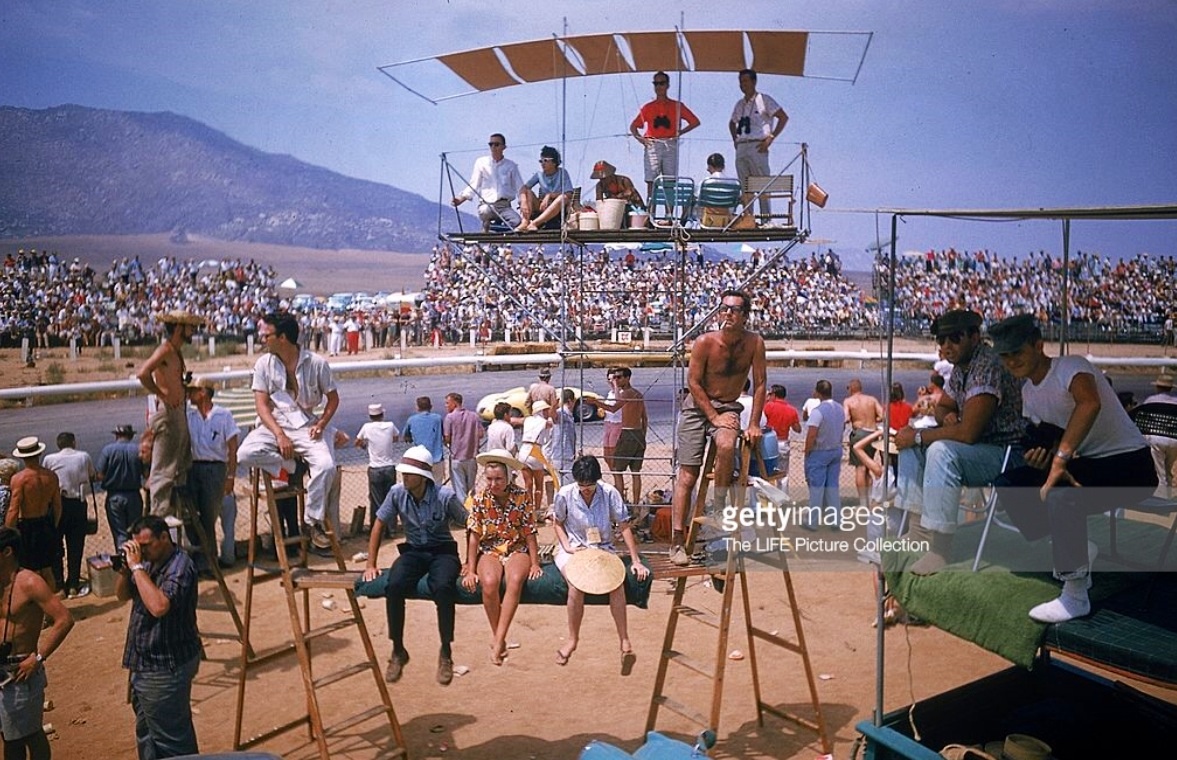
Amazing panorama of a hot, happy Riverside crowd in 1959, no details of date or race meeting, race in progress for sportscars…

These days with so much competition for our leisure dollars promoters globally find it hard to get such crowds. In the ‘immediate’ post war years there was pent up demand and plenty of money in a booming post war economy to draw a crowd to just about anything.

By the look of some of the grandstands, it would have been more dangerous as a spectator than as a racer…

Credit…

JR Eyerman