On South Wharf, Port Melbourne, January 1951. Type 35 Bugatti, GP Lago Talbot and 4CL Maserati (Bob King)
This whole online caper is interesting not least for the people you meet in the virtual world and as a consequence subsequently in the real one.
Greg Smith is one such fellow, he is a well known Melbourne racer/engineer/restorer who wrote an article for us a while back. We were discussing some arcane topic online the other week which led to an invitation to one of Smithy’s wonderful Wednesday night feasts in honour of the late Italian/Australian hotelier/racer/raconteur Lou Molina- who looks down on proceedings from the wall with approval at Greg’s execution of some of Lou’s Italian dishes.
There were some fine car/racing identities there on the night including Perth boy Rod Quinn, and locals Ron McCallum, David Ogg and Bob King. Since then Bob and I have joined the Automotive Historians Australia Inc (many of you would be interested in this several years old group, a topic for another time) and the two day AHA conference gave me the chance to twist Bob’s arm into contributing an occasional article or two.
Bob King hustling the Anzani Bugatti around the Adelaide GP road circuit (Bob King)
He is a retired medical practitioner who has had a lifetime interest in vintage and racing cars and Bugattis- his particular passion. As well as racing and rallying these cars, he has maintained a deep interest in their history which culminated in the publication of three books on Australian (and New Zealand) Bugattis as well as one on the Brescia Bugatti. Bob has had historical articles published in many journals. He continues to enjoy restoring and driving his small collection of a Bebe Peugeot, Bugatti T35B and an AC Ace.
Bob is a wonderful, knowledgeable chap, its great to have him involved, his first ‘Words from Werrangourt’ piece is titled-
‘The Dale brothers, importers of important cars- Part 1’
Anyone who is fortunate enough to have old copies of Australian Motor Sport (January 1946 to April 1971) will be aware of wordy advertisements for exotic cars imported by the Dale brothers: Peter Durham Dale and Henry K H Dale. Their origins are something of a mystery, but it is thought they had some Egyptian ancestry mixed with more recent English blood – Henry may have been born in England.
Dale brothers on the 1936 AGP grid at Victor Harbor in December 1936, Bugatti T37A. Henry driving, Peter alongside- DNF after 9 laps in the race won by the Les Murphy MG P Type (Bob King)
Dale boys during the Victor Harbor race, I wonder if he caught it! (Morris Family)
They are recalled as two rather pompous single men who lived the life of gentlemen in a terrace house in Williams Road, Toorak in Melbourne. Well remembered is a large round ‘coffee’ table in the drawing room on which was displayed the latest copy of every motoring magazine. The garage on the side street was opened to reveal the latest, newly acquired exotica. Peter, known as ‘Durham’ had some mundane job with an insurance company as well as being a journalist on the ‘Truth’ newspaper; he wrote a three part history of the pre-war Australian Grand Prix in AMS, which piqued the interest of the writer in these races. Henry, christened Hylton, was usually engaged in the wool trade in Egypt.
The writer’s earliest memory of Peter was at Fisherman’s Bend car races in the late 1950’s. A friend and I were gazing in awe at Miles Ryan’s 100mph Low Chassis Invicta. I commented to said friend that the radiator badge was not straight. We were addressed in a stentorious tone by one whom were later told was Peter Dale: “That is how you know it is handmade” – a lesson well learnt. We do not have a chronology of cars imported by the Dales, but let us start with three on a wharf.
Peter Dale in ‘37160’ with its unusual ‘Touriste’ body by Jarvis of Wimbledon (Bob King)
The Bugatti 35A is not an ‘A’, but a 1925 Molsheim works racing Type 35, chassis no. 4575.
It was Jules Goux’s 2 litre car for the French and Spanish Grands Prix of that year. The French GP was a 1000km race held in torrential rain over 9 1/2 hours. The Bugatti team finished intact with Goux in fifth place. What endurance.
Henry spotted its radiator in the back of a garage in Neuilly-Sur-Seine in about 1950 and bought it for about $150. Although it had not been run since before the war, he had the oil changed and then undertook a delightful Autumnal drive to Marseille, from where the car was shipped to Adelaide.
Fisherman’s Bend Races – don’t be fooled by the blower blow off hole in the bonnet, Herb Ford had swapped bonnets with his supercharged Type 37A, ‘37332’. (Dino Lanzi)
Peter collected it, had it registered by Bob Burnett-Read who actually substituted a Ford Prefect from his used car lot for the Bugatti – the weigh bridge man seemed satisfied with this. The car was driven by Peter to Melbourne and from there to Bathurst for the Easter races where it performed creditably in the hands of Lyndon Duckett and Peter Dale.
They had driven there in a convoy of 4 Bugattis – the Type 35, the Anzani Bugatti, a Type 51A and a Type 57C – Dales ‘Ecurie Pur Sang’. The next owner of the 35 was Bugatti enthusiast Herb Ford who sold it on when it emitted expensive noises from its roller bearing crankshaft. In the words of Peter, it was ‘a mass of fatigued stresses’.
Some more photos of Bugatti Type 35 ‘4575’…
(P-Y Laugier)
This photograph above is thought to be M Poret in the car pre-war, he was a Parisian owner.
(B Burnett-Read)
This photograph was taken shortly after arrival in Australia. Bob Burnett-Read has just had the car registered prior to Peter Dale’s drive from Adelaide to Melbourne.
(Bob King)
Herb Ford only used the car once or twice, including a sprint on or near the Geelong Road (accounts vary). It is said he made the fastest 1/4 mile time- finishing at astronomical revs in third, maybe this is why the engine was making unpleasant noises.
He sold the tired car to John Martin who did not keep it long enough to dismantle the complicated built-up roller bearing crank before passing it on to John Thomson. Here it is with Martin- note the ill-fitting bonnet from the 37A- when adding a supercharger to an unblown GP Bug, the steering box is moved up and back, to make space. Hence the steering drop arm being in the wrong place.
(unattributed)
The next owner, John Thomson had the good fortune to be friendly with Bugatti expert Peter Menere, at his Brighton ‘Pier Prestige Garage’.
John was dead keen to have a GP Bug, and after prolonged and unsuccessful haggling with Ford, he eventually bought the dismantled car from Martin for an astromonical 870 pounds, the Brighton Buggattisti thought he was mad. After spending a further 700 pounds with Moore Hydraulics getting the crankshaft ground, and untold hours toiling over the rest of the car, he eventually had a going car- an original, unmolested factory racing car, no less. Not long after completing the car in the mid-sixties John moved to London, the car following him in 1972. In 1974 50 years of the Grand Prix Bugatti was celebrated in Lyon with an amazing turn-up of Grand Prix Bugattis. John is seen in the car on that occasion.
(unattributed)
On the starting line at Limonest Hillclimb, Lyon.
A great action shot of John on Prescott Hillclimb- the hillclimb owned and run by the Bugatti Owners Club (unattributed)
A well known photo of the Talbot-Lago ‘110007’ below but worth seeing again. Doug Whiteford AGP, Albert Park, 21 November 1953 – ‘Yes Doug, your tyre is missing’.
Lago Talbot GP chassis no. 110007 was the car with which Louis Chiron had won the 1949 French Grand Prix. Henry was contemplating purchasing Raymond Sommer’s Lago, but was advised by Chiron to speak to Paul Vallee, patron of Ecurie France, as he might sell Chiron’s car which was being prepared for the Barcelona Grand Prix. It was entrained to Marseille and thence to Adelaide.
Its first owner in Australia was Tom (Happy) Hawkes who only drove it once or twice. Its serious debut was at the 1951 Easter Bathurst meeting, 1951; Hawkes drove it to third in the Bathurst 100 and Whiteford was third in another scratch race, setting a new lap record of 3 minutes.
The ‘Maestro’ Whiteford won the 1952 GP at Bathurst and the 1953 race at Albert Park, in spite of the tyre issue.
Here the car is pictured below during the December 1956 Australian Grand Prix weekend at Albert Park, by then the ‘6 plug’ chassis ‘110007’ was owned by Owen Bailey, whose race was shortlived with axle failure on the line.
(S Wills)
AGP Albert Park paddock with the ‘6 plug’ Bailey ‘110007’ in front of the car Doug Whitford replaced it with- an earlier car, chassis ‘110002’ but to more advanced specification inclusive of more powerful ’12 plug’ 4.5 litre motor. Stirling Moss won the feature race aboard a Maserati 250F.
(S Wills)
Beautiful shot of ‘Dicer Doug’ Whiteford with Peter Dale during the 1956 AGP carnival. Car is Talbot-Lago ‘110002’. It would be interesting to know how many AGP’s in total the various cars the Dales imported over the years contested.
(S Wills)
Cockpit below is ’12 plug’, ‘110002’, Spencer Wills photograph again taken in the Albert Park paddock. Quadrant for the pre-selector gearbox clear.
(S Wills)
Photo below of Owen Bailey at Albert Park, am intrigued to know which meeting. It appears he has spun into a gutter, or been rammed from behind.- the shape of the dent suggests the former.
(S Wills)
Shot below is of Whiteford in the ’12 plug’ ‘110002’ at Fishermans Bend on 12 February 1956.
(S Wills)
(unattributed)
‘The Maserati 4CL, chassis No. 1579 is first recognised as Raymond Sommer’s 1946 Marseilles Grand Prix winning car.
In the photo above Sommer is being led by Tazio Nuvolari in another 4CL during the second heat. Sommer won both this 15 lap heat and 35 lap final, the great Mantuan failed to finish the preliminary and therefore did not qualify for the final run on the Marseille Prado Street circuit on 13 May.
It was painted blue for its French owner. Again it was Louis Chiron who suggested Henry should buy it from Sommer’s widow – Sommer had been the owner of one of Europe’s largest carpet manufacturers.
Via an advertisement in Australian Motor Sport, the car was soon in the hands of Victorian Peter Vennermark. He soon had trouble with the highly supercharged 1.5 litre engine, which had developed an appetite for cylinder blocks. Unlike the other two cars featured which have returned to Europe, this car remains in the caring hands of the Victorian owners.’
Bibliography…
‘Historic Racing Cars in Australia’ John Blanden, ‘Bugattis in Australia and New Zealand, 1920 to 2012’ Bob King and Peter McGann
Photo Credits…
Bob King Collection, Herald-Sun, G Griffiths, S Anderson, Morris Family, Spencer Wills, Bob Burnett-Read, Pierre-Yves Laugier
Doug Whiteford’s Maserati 300S blasts past Tom Sulman’s Lotus 11 Climax ‘Le Mans’ during Sandown’s opening International meeting on 12 March 1962…
I hate to think how many times these two fellows shared a starting grid- both personified the ‘Racing Is Living, All The Rest of It Is Waiting’ adage to a tee.
Unfortunately Tom died in one of his Lotus 11’s in a freak accident at Bathurst in 1970, he is 63 here with a career that stretched back to pro-Speedway racing in England pre-war.
Doug, a triple Australian Grand Prix winner, 44 years of age in 1962 raced into his dotage in Datsun Group E ‘Series Production’ Sedans and Production Sportscars after he had finished with the serious stuff.
It must be close to the end of his time racing the Maser, in fact John Ellacott who took the photo of the pair on Pit Straight, thinks it may well be his last race of the car before it’s sale. ‘3055’ was a works machine he acquired from the factory at the end of the 1956 Melbourne Olympic Grand Prix meeting with which he had considerable success in both Sportscar and Formula Libre events from then on.
John Goss’ Tornado Ford leads a gaggle of sportscars on the drop between the Water Tower and The Viaduct, Longford, Saturday 2 March 1968…
I wrote this piece a while back and now seems a good time to post it given one of Tasmania’s finest, Gossy himself was awarded an Order of Australia for services to motor sports in last weekend-and-a-bit’s Queens Birthday Honours announcements. Off the back of that achievement Terry Sullivan started a The Nostalgia Forum thread which now contains some marvellous Goss photos, many from Lindsay Ross’ oldracephotos.com.au archive which have never seen the light of day before- check TNF out;
Back to Longford- it’s the Saturday race day, the Monday Labour Day holiday was Tasman Cup day, that year the feature race was won by Piers Courage’ McLaren M4A FVA F2 car in a notoriously wet, perilous day of motor-racing. Sadly it was the last in Longford’s relatively short but very sweet period as a road racing track. Click here for my article on the 1968 Longford Tasman;
Goss, future Bathurst and Australian Grand Prix winner is leading Kerry Cox’s Paramount Jaguar, three-times Australian Grand Prix winner Doug Whiteford’s works Datsun Fairlady, Bert Howard’s Lola Mk1 Climax, the partially obscured Lotus 23 Ford of Alan Ling and then Peter Mawdesley in a Lotus Super 7. Out front out of shot is the ex-works Scuderia Veloce Ferrari P4/350 Can Am driven by Chris Amon from Ian Cook’s Bob Jane Racing Elfin 400 Repco, Peter Macrow in the Argo Chev, Lionel Ayers MRC Ford and Glynn Scott’s Lotus 23 Ford. The opening shot shown is the second group of cars.
I wrote an article a while back about John Goss including a bit on the Tornado, click on the link to read it;
The following shot is of Gossy losing Tornado on his turn-in to The Viaduct, I wonder if its the same lap! I think not, the track looks wet, which makes it the Monday. Amon’s Ferrari was pushed off the grid with a flat battery- he started the 10 lapper with 2 laps down and finished third- and did 178 mph in the wet conditions on The Flying Mile. Peter Macrow won in Tony Osborne’s Argo Chev from Glynn Scott’s Lotus 23 Ford.
(oldracephotos/DKeep)
Credits…
David Keep/oldracephotos.com, Lindsay Ross Collection, Rob Bartholomaeus
Etcetera: Autosportsman article on the Tornado Ford, courtesy Lindsay Ross’ Collection…
Tailpiece: Amon’s 480bhp Ferrari P4/Can-Am 350 monstering Gossy’s 200bhp Tornado Ford out of Newry, Longford 1968…
(oldracephotos/DKeep)
During the dry Sports Car Scratch race on the Saturday Chris won from Ian Cook in Bob Jane’s Elfin 400 Repco V8 and Peter Macrow in the Argo Chev.
Amon, awfully comfortable in the P4/CanAm 350- in addition to his Ferrari F1 commitments he raced the cars in both the 1967 endurance races and some Can Am rounds, set an all-time Longford lap record of 2:16.2 undercutting Jim Clark’s Lotus 49 Ford DFW time of 2:13.0 earlier in the day. Mighty quick. Mind you, that summer Frank Matich beat Chris’ Ferrari in the Matich SR3 Repco in the other Australian Tasman round sportscar support events. But FM did not cross Bass Straight to do Longford- sad! Those battles on that circuit would really have been something to see!
Derek Jolly racing past the Country Club Hotel, Longford on his way to winning the 1960 Australian Tourist Trophy, 7 March 1960, Lotus 15 Climax FPF…
I wrote an article a while back about Derek and his career inclusive of a snippet about this win, but I had a swag of wonderful photos of the Longford meeting, too many for the earlier piece. So here they are courtesy of Kevin Drage, John Ellacott and Ellis French-some of Ellis’ shots are his own, some from the Walkem Family Collection and others from Brian Dunstan, hopefully I have the attributions correct.
Sportscar racing has waxed and waned in this country, I guess everything other than touring car racing has really. Mind you, GT racing is a strong class at present, interesting too such is its variety.
The Australian Tourist Trophy has some great names inscribed upon it including Stirling Moss, who won the classic aboard a works Maserati 300S in 1956, Bib Stillwell in 1961/2, Cooper Monaco, Pete Geoghegan drove a Lotus 23 Ford in 1963/5 and in 1977 won with Laurie O’Neill’s much more brutal Porsche 935. Frank Matich had a mortgage on the race for a while, he won in 1964, Lotus 19B Climax, 1966 with an Elfin 400 Olds and in 1967 in his self constructed Matich SR3 Olds and then again the following year in an SR3 this time Repco ‘620’ V8 powered. I saw Paul Gibson’s Rennmax Repco ‘740’ 5 litre V8 win at Winton in 1979, that too a memorable machine. After a period in which the title was not contested the ATT was reinstated in 2007 and usually awarded to the winner of designated events rather than a one-off race as in its earliest days.
In the distant past sportscar racing was up there with single-seaters, indeed in the days when the Australian Grand Prix was held to Formula Libre prior to 1964, but especially in the AGP’s handicap days and then before 1960 it was common for sportscars to contest the AGP.
One of the 1960 ATT strongest contenders, Doug Whiteford fitted into that category. The former thrice winner of the AGP entered his ex-works Maserati 300S in the AGP at Longford in 1959- he knew the tricky, demanding place like the back of his hand. Doug was a formidable competitor of vast experience, even though the Maser was not the latest bit of kit, with his driving skill and car preparation the combination could be expected to be there at the finish- at the front.
Frank Matich and Derek Jolly were both coming-men.
Matich was aboard the Leaton Motors Jaguar XKD ‘526’ first owned by the Anderson Family in Brisbane and raced with much success by Bill Pitt. Matich progressed through Healey’s then the Leaton Motors C and D Type Jaguars, proving his pace in all of them. The Sydneysider’s career as a professional of elite world class would extend all the way to early 1974. Let’s not forget the race winning sports and Formula 5000 cars he and his team built from 1966 to 1974 either.
Derek’s Lotus speed was proven in his earlier Lotus 15 despite it toting only an FPF Coventry Climax engine of 1475cc- this car met its maker at Albert Park in late 1958, probably due to component attachment failure. Derek raced his replacement Series 3 15 as a works entry at Le Mans in 1959 with Graham Hill, the engine blew with Derek at the wheel when the infamous Lotus ‘Queerbox’ jumped out of gear- the revs went sky high, then an errant rod comprehensively carved the alloy block in half.
Jolly at left and Kevin Drage discuss the Lotus in the Longford paddock. Note the 1960cc Coventry Climax FPF fed by twin-throat SU carburettors (E French)
Jolly’s Lotus had only just arrived in Australia, equipped with a 1960cc Coventry Climax four-cylinder FPF engine it was the latest bit of 15 kit- in fact it was the most modern car in the field. Derek took a debut win in its first Australian meeting at Gnoo Blas, Orange, New South Wales in early February winning the ‘South Pacific Sportscar Championship’ from David Finch in a Jaguar D Type.
Finch also entered the Jag at Longford. ‘XKD520’ was first owned by Melbourne car dealer/racer Bib Stillwell and was a machine through which Frank Gardner progressed before his departure to Europe. When Frank decamped to the Old Dart Finch raced it with skill, mainly in New South Wales and Queensland, the car left Australia in 1967, the purchaser was none other than Grand Prix driver and later Le Mans winner Richard Attwood.
Tom Sulman, by then one of racings senior citizens, entered his Aston Martin DB3S, a car he had raced since its inclusion as a member of the three Aston ‘The Kangaroo Stable’ team in Europe in 1955. Sulman was a driver of vast experience in all kinds of cars and surfaces going back to his mid-twenties speedway days in both Australia and the United Kingdom. But his car was a winner only in the event of mechanical misfortune at the front of the field. Jim Wright entered another ex-Kangaroo Stable DB3S, he was stepping up from the Buchanan TR2 he had raced at Lowood in the ATT in mid 1959.
Ellis French Collection
The other outright contender was Wangaratta’s Ron Phillips in a Cooper T38 Jaguar.
Reg Parnell raced the attractive beast in the New Zealand Grand Prix in 1956, for car owner Peter Whitehead after which it was acquired by Stan Jones who sold it on quite quickly having raced it at Fishermans Bend and Albert Park. Passed through the hands of a couple of drivers, the cars return to competitiveness was the result of Phillip’s driving skill and the racers preparation by Melbourne driver/engineer Ern Seeliger.
Seeliger had looked after Phillips’ Healey 100S and was the fellow who created Maybach 4- the final iteration of that great series of Charlie Dean designed and built, (Repco Research team duly acknowledged) Stan Jones driven cars. Maybach 3 was modified by Ern by the fitment of a Chev Corvette V8 where six-cylinder Maybach motors previously existed- and some other mods by that clever chap too.
Ron Phillips enters The Viaduct, Cooper T33 Jaguar (HRCCT)
The Cooper Jag was a real chance with a mix of handling and grunt well suited to Longford’s nature, Ron had raced it at Longford the year before so knew his way around the place. Phillips was also ‘in form’ having won the ATT at Lowood, Queensland in June 1959 from Bill Pitt’s Jag D and Bob Jane’s Maser 300S- the sister works car to Whiteford’s which came to Oz during the 1956 Australian Grand Prix carnival. Phillips and Jolly had jousted regularly when Derek raced his Decca Mk2 Climax FWA in 1956-58 with Ron then racing his Austin Healey 100S, both drivers had stepped up to more powerful ‘outright’ cars.
The 22 car field was rounded out by smaller cars of which the John Ampt Decca Mk2 Climax, ex-Jolly, the Eddie Perkins (father of Larry) Porsche Super, Owen Basile Porsche Carrera and Alan Jack’s ex-Bill Patterson Cooper T39 Climax ‘Bobtail’ were the strongest.
Whiteford and Jolly were generally considered favourites for the race, but the ‘Australian Motor Racing Review’ report of the event states that there was confusion over practice lap times and as a consequence that pair and others were placed well back on the grid.
The Phillips’ Cooper Jag and the Matich D Type were on the front row, behind them were Alan Jack’s Cooper Climax 1.5 and David Finch’s D Type, then John Ampt in Decca Mk2. Tom Sulman’s Aston DB3S was on the next row with Jolly, then Whiteford’s Maser and one of the Porsche’s- and the rest of the field.
Phillips, Cooper Jag, #32 Ampt Decca Climax, #92 Finch Jag D, #8 Jack Cooper Climax- with the two Aston DB3S of #99 Sulman and #126 Wright in line astern behind Jack. Tail of Jolly Lotus 15 is behind Finch, the red of Whiteford’s Maser back a bit centre, Porsche Carrera Coupe is Eddie Perkins and the rest (B Dunstan)
(A Lamont Collection)1960 Longford meeting program cover. The shot is of Stan Jones, Maserati 250F and Len Lukey, Cooper T45 Climax during the 1959 AGP at Longford won by Jones. The AGP referred to on the cover is the Oz Motor Cycle AGP, the unlimited event was won by Jack Ahearn (A Lamont Collection)
Race…
The ‘Australian Motor Racing Review’ report of the event follows.
‘With terrific acceleration at the start Derek Jolly moved through the field to the front and soon showed that the other 22 cars in the field would have a hard job trying to catch him.
Ron Phillips in second place, was fighting hard to keep ahead of Matich’s D Type and Whiteford was well behind in fourth place. On the sixth lap of the 24 lap race Whiteford began to increase his speed and on the seventh lap passed Matich to move into third place’.
‘On the ninth lap, Phillips, who was experiencing brake trouble, slowed and allowed Whiteford into second position 11 seconds behind Jolly. In the next lap Whiteford put in an amazing burst to reduce this lead by a further 2.5 seconds’.
‘Jolly, having been notified of this by his pit crew, increased his speed. On the fifteenth lap Phillips retired from the race with smoke steaming from his car. By the seventeenth lap Whiteford had closed to within 5 seconds of Jolly but the speed of the Lotus was again increased until, on lap 26, Whiteford had dropped back to 13 seconds behind.’
‘In the closing stages Whiteford seemed to have lost one or more of his lower gears and Jolly went on to win from him with Matich a long way behind in third place’. Another report has it that Whiteford’s problem was a slipping clutch. John Ampt was fourth in the 1100cc Climax FWA engined Decca Mk2- this little car had a wonderful track record in Australian Tourist Trophy races despite its modest capacity, it was fifth in 1958, fourth in 1959 as well as its fourth in March 1960. Tom Sulman was fifth in his Aston DB3S and then David Finch sixth in his Jaguar D Type.
Winners Are Grinners…
To the victor the spoils of success, well warranted and well deserved.
Derek had completed his apprenticeship having first started racing Austin 7’s in his native South Australia in 1948 and progressed through his Decca Climax FWA powered specials in the mid-fifties into the outright Lotus 15. The best if not the most powerful car in the field, and one he drove with great skill.
Lets not forget his winning Lotus 15 was a Team Lotus works entry at Le Mans in 1959, the drive shared with Graham Hill. He was no slouch. In many ways it is a shame business pressures forced Derek out of racing, he had not peaked, there was still more to come I think.
A great mighta-been is how he would have fared aboard a single-seater Lotus 18 or 21 FPF engined ‘Tasman’ car in the early sixties- he was the Australian Lotus distributor after all. His battles with Frank Matich, seen below congratulating Jolly from the cockpit of the Leaton Motors Jag, would been great to behold. So too those with other top-liners of the period such as Lex Davison, Stan Jones, Bib Stillwell and David McKay.
Etcetera: Other Longford ATT Photographs…
Doug Whiteford and Maserati yet again, on the grid for the Monday Light Car Club of Tas race- #120 is the very neat Zephyr Special of Jim Barrie (E French)Doug Whiteford again, the photographers are drawn to these wonderful red cars! Maser 300S near the start line
‘History of The Australian Grand Prix’ G Howard and Ors, Australian Motor Racing Review 1959/1960, Ellis French Collection
Photo Credits…
John Ellacott, Kevin Drage, Ellis French, Walkem Family, Brian Dunstan, Keverall Thompson, oldracephotos.com.au, Ken Devine Collection, Andrew ‘Slim’ Lamont Collection
Arcane and Irrelevant: The Last Sportscar To Enter an Australian Grand Prix?…
I think it was Jeff Dunkerton’s Lotus Super 7 Ford 1.5 pushrod, above, which contested the ’62 AGP at Caversham- he was classified 9th having completed 46 of the 60 laps covered by the winner, Bruce McLaren’s Cooper T62 Climax 2.7 FPF.
In the days when full 2.5 litre Coventry Climax FPF’s were as rare as hens teeth in Australia- they were in the hands of F1 teams, Frank Matich’s Lotus 15 Climax 2.5 FPF was the last ‘competitive’ sportscar AGP contender, i reckon. His ex-Team Lotus car was delivered with a 2.5 FPF, much to the annoyance of the locals running single-seater Cooper T51’s who couldn’t get their hands on one.
FM failed to finish the 1960 Lowood AGP only completing 9 laps. The race was won by Alec Mildren’s Cooper T51 Maserati 2.5 by a ‘bees dick’ from Lex Davison’s glorious front engined 3 litre Aston Martin DBR4 GP car. I’m not saying Matich would have knocked off Alec and Lex but the 15 had the pace to finish 4th– in behind Bib Stillwell’s Cooper T51 Climax 2.2 FPF. He would have given Bib a run for his money too!
Anyway, its interesting how long sportscars were a part of our great race…
Tailpiece: Kevin Drage’s Longford paddock panorama in March 1960…
Falls mainly on Warwick Farm, at least at its first open meeting it did, 18 December 1960…
Sydneysiders heap plenty of shite on Melburnians given our ‘four seasons in one day’ weather which does present its challenges to the ladies every now and again. Whilst I am a Mexican (Victorian) I am a Sydneysider by inclination having lived ‘in the guts’ of the place for nine wonderful years, in Observatory Hill/Millers Point. As a local when it does rain up there it can be sub-tropical in its intensity, it absolutely chucks it down in Cairns like fashion, as it did during the ‘Farms opening meeting- all of it.
Making like a duck in Kevin Drage’s opening shot is Derek Jolly, the wealthy Penfolds Wines heir’s equipe of Jaguar XK 140 Coupe and ex-works Lotus 15 Climax is behind him. Not sure how he fared in the Sportscar events, click hear for a feature I wrote about him and the Lotus a little while back;
The photo above in the form-up area is #9 Bill Patterson’s Cooper T51 Climax FPF 2.2, #21 Doug Whiteford’s Bib Stillwell owned Cooper T51 FPF 2 litre, then Stillwell’s red Cooper T51 Climax FPF 2.5 and Austin Miller’s yellow Cooper T51 Climax FPF 2.2. Bill didn’t start the ‘Warwick Farm Trophy’ feature race so this is the lineup for the preliminary or before the Victorian Holden dealer pulled the pin.
The ‘Warwick Farm Trophy’ was watched by 12,020 soggy spectators and was won by Bib Stillwell’s T51 2.5 from John Youl’s 2.2 litre variant, then Austin Miller and Lex Davison’s big-bellowing six-cylinder Aston Martin DBR4/250 3 litre. In the following four years, when held in glorious weather, Warwick Farm attracted between 23,000 and 36,021 (1962) to its annual International Meetings- strong numbers to see the F1 stars of the day. It was most unfortunate to have such poor weather for the circuits first big meeting but it was not at all a portent of what was to come for ‘Gods Little Acre of Motor Racing’ for the next thirteen years.
Stillwell’s Rice Trailer behind Lex, the ‘Ringwood’ Rice is Patto’s (K Drage)
Lex’ Aston, chassis DBR4/250 number ‘4’ was powered by a 3 litre Aston DBR1 sportscar engine- Astons won the 1959 Le Mans and Manufacturers Championship with these wonderful cars.
Lex popped the front-engined car on pole- he came sooo close to winning the 1960 Australian Grand Prix at Lowood in it from Alec Mildren’s terribly clever Cooper T51 Maserati in June. Then Davo ‘crossed the fence to the dark side’ and raced a Cooper T51 to a somewhat lucky win in the ’61 AGP at Mallala.
Must get around to doing an article about these Aston’s in Australia, were there two or three?…
(J Ellacott)
John Ellacott’s grid shot above comprises Patterson, Davison and Whiteford (red), then Miller and Stillwell (red) . On row three is John Youl Cooper T51 FPF 2.2, Stan Jones blue Cooper T51 Climax FPF 2.3 and Jon Leighton Cooper T45 Climax FPF 2 litre (this side) A row further back Arnold Glass sits on his lonesome in a Cooper T51 Maserati 250S 2.5 then there is John Roxburgh Cooper T45 Climax FPF 2 litre, Noel Hall Cooper T51 Climax FPF 2.2 and Jack Robinson’s Jaguar Spl XK120 3.4 litre and at the rear Alwyn Rose in the Dalro Jaguar 2 XK120 3.4 litre. As I said earlier the results I have say Patterson did not start so perhaps we lost him on the warm-up lap
David McKay’s Morgan Plus 4 #71 in the Sportscar race which he wins…
(J Ellacott)
Love this anecdote sent to me by journalist Ray Bell- ‘The first race ever at Warwick Farm was for sportscars and you have that pic of the Austin Healey leading McKay in the Morgan off the grid.
McKay dogged the Healey driven by Bob Cutler, until Cutler spun. McKay won, Cutler came in second. Later in the pits McKay went up to him and said, “You were never going to win that race, boy!”. And Cutler asked why.
“See his here” McKay said, pointing to the tiny service sticker on the window of the Healey (you know the ones, oil change due at x miles, with the oil brand or the servo name on it), “That’s advertising, I would have protested!”
Some people’.
For international readers, advertising as it also was in Europe, was banned on racing cars at the time.
Photo Credits…
Kevin Drage, John Ellacott
Special Thanks…
Ray Bell
Tailpiece…I don’t wanna get my feet wet! Derek Jolly, Lotus 15 Climax and ‘plug box contemplating a day for the ducks, and a damp practice session…
Reg Hunt #5 and Guerino Bertocchi #7 in Maserati 250Fs prior to Saturday practice, Albert Park, Australian Grand Prix, 1 December 1956…
Hunt looks pretty happy with himself whilst Maserati’s legendary tester/mechanic Bertocchi wonders if everything is AOK with the Moss #2501. To the left of Hunt’s car is Tom Sulman’s Aston Martin DB3S.
James Lineham had a fantastic day at the ‘Park, the sun shone making it ideal for spectators, especially those with cameras. He used his expensive colour film wisely in the paddock, his camera wasn’t sophisticated, so best to take snaps of stationary or slow moving cars. Then he shot off some monochrome action work whilst he walked Albert Park’s huge expanse.
Bib Stillwell’s Jag XKD perhaps, on Lakeside Drive looking to the south of Albert Park Lake (J Lineham)Paul England’s superb Ausca Holden-Repco, built after-hours by England at Repco Research (I Curwen-Walker)
James life spanned 1925 to 1997, he was a young enthusiast aged 31 when he attended this meeting. After his death his wife carefully went through all of his precious belongings, found these photographs and donated them to the State Library of Victoria for enthusiasts like you and I to see, in 2014.
Many thanks James and Catherine Lineham. Blurry though some of them are, they ooze atmosphere of a weekend spoken about in reverential terms by those fortunate enough to have attended. One of the journalists of the day, wrote of the weekend as ‘when Australian motor racing came of age’.
Moss or Behra Maser 300S on the pit or main straight, Aughtie Drive. Race direction these days the other direction, or clockwise (J Lineham)Tom Sulman’s Aston Martin DB3S with Tom in the blazer at right (I Curwen-Walker)Circuit map from the meeting program (G Dobie)
I’m obsessed with a few circuits in Australia in particular; Warwick Farm, Mount Panorama, Longford, Lobethal and Albert Park – Longford and the ‘Park especially. I live in Windsor 750 metres from Albert Park’s Austin Healey Corner/Turn 13, the Union Street/Queens Road second gear right-hander.
I run around it every other day, I think about the fellows who conquered it’s oh-so-quick unguarded challenges in the 1950s and do so in much more safety today. I feel its wonderful rhythm, vibe and sense of history all the time. These snaps gimme that vibe, Albert Park is a wonderful place to be even at 5.15am with only the park’s Daffy Ducks as company!
When originally posted, the article comprised James’ shots only, but the piece has grown over the years as other photographs have appeared online and I have plucked them from certain obscurity on FB.
Vrrooom in a six-cylinder 3-litre, DOHC kinda-way. Moss Maser 300S. Aughtie Drive from the Olympic Tyres Bridge (J Lineham)Reg Parnell’s Ferrari 555 Super Squalo with Peter Whitehead’s similar car at left (I Curwen-Walker)3.4-litre, DOHC, two-valve engine of Parnell’s car (I Curwen-Walker)
Attached are links to articles already written about this motor racing fortnight during the 1956 Melbourne Olympic Games which ‘put Melbourne, if not Australia on the map’.
In fact James had a big choice to make that day. He could have taken a vantage point on the men’s marathon course from Clayton to the Melbourne Cricket Ground. Algerian born Frenchman Alain Mimoun won it in 2:25.00 from Franjo Mihalic of Yugoslavia a minute and a half behind.
The short story of the race is that Stirling Moss won the 80 lap, 250 mile event on 2 December 1956…
He did so by a lap from teammate Jean Behra, Peter Whitehead’s Ferrari 555 Super Squalo, Reg Hunt’s Maserati 250F and Stan Jones’ similar machine. It was a dominant display from the plucky Brit who was always, and still is immensely popular when he visits Australia.
International representation included the two works Officine Maserati drivers Moss and Behra (#1 above) who brought no less than five Masers with them. They shipped three 250Fs, two of the latest specification and an earlier chassis, and two 300S sportscars both of which remained in Australia post event. The cars were based at Reg Hunt’s Holden Dealership just up St Kilda Road on the Nepean Highway in Elsternwick a few kilometres from the circuit, the 300S’ being famously driven between workshop and racetrack.
Stirling Moss enroute to victory in his Maserati 250F (Melbourne Argus)
Prince Bira and Jean Behra in the Albert Park paddock (S Landrigan)
Jean didn’t have a great year, being comprehensively bested by one of the most gifted drivers in the world, but third places at Buenos Aires, Monaco, Reims, Silverstone and at the Nurburgring is hardly shabby. Over the two weekend Australian carnival it was Moss winning both the AGP and the Australian Tourist Trophy held the weekend before.
Moss raced #7 250F chassis number 2501 and Behra #1 2522. The spare car – 2507 – was driven by both Moss and Hunt during practice. At one point it was thought Jack Brabham may race it, not having an AGP ride that year, but it was not to be. A pity, by that stage Jack had two seasons of racing in Europe behind him so would have given all but Moss and Behra a good-go.
Two of the three Officine Maserati works 250Fs, chassis numbers as per text. #1 is Behra’s machine (I Curwen-Walker)
Scuderia Ambrosiana entered two Ferrari 555 Super Squalos powered by 3.4-litre 860 Monza four cylinder engines.
The AGP at this time was run to Formula Libre rules, the cars above were driven by #2 Reg Parnell, chassis number FL9002 and #3 Peter Whitehead, chassis FL9001. Whitehead was a regular visitor to Australia dealing with the family wool business and had won the Australian Grand Prix way back in 1938 aboard his ERA chassis R10B, when he was 24, in 1956 he was 42 years of age.
Whitehead started the carnival well winning the Bryson Industries Cup support event to the Australian Tourist Trophy the week before, ahead of Hunt and Kevin Neal, Maserati A6GCM.
Whitehead and Parnell were unlikely to be on the pace of the works Masers but would be good bets as best of the rest, as indeed they were, Peter was third and Reg sixth. The Parnell car remained in Australia, click here to read about it;
Car #9 in the background of the photo above is Lex Davison’s Ferrari 500/625, Alberto Ascari’s 1952/3 dual World F1 Championship winning chassis #0005, iconic in Australia and winner of the 1957 and 1958 AGP’s at Caversham and Bathurst respectively. The 3-litre car, which then carried chassis number #0480 was seventh, five laps behind Moss with various problems.
Behra and Moss at the driver’s briefing (S Landrigan)(J Lineham)
Ken Wharton was a well credentialled Brit in both single-seaters and sportscars,but his ‘Ecurie Du Puy’ (John Du Puy was an American resident in Switzerland) silver Maserati 250F was said to be, and looked, tired.
Chassis #2521 had been Behra’s works machine – a new car that season – and raced in eight events earlier in the year before being sold to Du Puy. But it looked in-need-of-a-birthday before leaving Europe, it was the latest bit of kit, properly prepared the car was a top-three contender.
Ken retired the car on lap 19 and then journeyed on to race the Maserati and his Ferrari Monza in New Zealand that summer, unfortunately dying in a tragic accident aboard the Monza on 12 January 1957 at Ardmore during the NZ GP weekend.
The best prepared and equipped of the locals were the well-heeled Victorian motor dealers, Reg Hunt and Stan Jones in Maserati 250Fs of similar specification and cobbler Lex Davison, who owned a shoe manufacturing and distribution business.
Lex’ Ferrari was older than the 250Fs but was quick with its 3-litre four cylinder, DOHC engine and was beautifully prepared by Alan Ashton at AF Hollins motor engineers just up the road from the ‘Park in Armadale. In fact all three of these cars lived close to the circuit. Hunt was fourth, and best of the locals, Jones fifth and Davison seventh.
(J Lineham)
Doug Whiteford was another local – very – his dealership/workshop was in Carlisle Street St Kilda, a drop-kick from Albert Park.
Whiteford’s first Talbot-Lago T26C, chassis #110007 was an astute purchase, the robust, simple design was well suited to Australian events. It was beautifully prepared and driven by ‘Dicer Doug’ who won two of his three AGPs in it, at Bathurst in 1952 and at Albert Park in 1953. Click here for a piece on Doug’s TLs;
The purchase of the second T26C (photo above) wasn’t quite so smart though. An earlier chassis #110002 but later spec mechanically than #110007 sounded ok but the game in Oz had moved on. He needed something more modern and competitive.
Whiteford was a consistent third in the ’55 AGP at Port Wakefield behind Brabham and Hunt but by ’56 the old Talbot Lago was simply not on the pace. Still, his bankroll was more modest at the top level than most. A shame, as Doug, 42 then and as vastly experienced and tough as they come didn’t give a yard to any of the locals. Whiteford in a 250F or something of that performance envelope would have been worth travelling a few miles to see. It’s a shame he bought a 300S off Maserati after this meeting rather than a 250F.
The Whiteford Talbot Lago T26C in the paddock, and below being pushed by Doug and the crew towards the start (I Curwen-Walker) (unattributed)Kevin Neal, Maserati A6GCM 2.5-litre (J Lineham)
Reg Hunt made everybody take notice in his ‘Flying Bedstead’ Hunt JAP Spl in hillclimbs and on the circuits in the late 1940s/early 1950s and then refined his craft with a season racing a 500 F3 Cooper machine in the UK in 1954.
On his way back to Oz he acquired a superb Maserati 250F engined Maserati A6GCM chassis #2038 (above with Kevin Neal at the wheel) with which he belted the locals in 1955. Only mechanical failure kept him from the ’55 AGP won by Brabham’s Cooper T40 Bristol. Hunt ordered a 250F for ’56, he was allocated a rebuilt 1955 works machine chassis 2516 with Melbourne haulier Kevin Neal – who had also raced an ex-Hunt Cooper T53 Bristol – the purchaser of the A6GCM.
Neal had a shocker of an AGP, bending the car severely and injuring himself late in the race when he lost the car in the greasy conditions. I wrote a long feature about the A6GCM;
Stan Coffey’s Ferrari 750 Monza sportscar below. He raced the car in the Australian TT, DNF in the classic won by Moss from Behra and Ken Wharton’s Ferrari Monza.
It’s a rare, clear shot of the man, now whatever became of him? There is an obscure article topic, he raced a few interesting cars too, Cooper Bristol etc…
(J Lineham)
Entry List…
(B Moyle)
Etcetera…
(J Hunting)
The photograph above is in the AF Hollins Pty.Ltd workshop in 604 Hight Street, Armadale (the building still exists as a tyre fitter/retailer). Julian ‘Gib’ Barrett’s #19 Alta GP-2 1.5 s/c alongside Lex Davison’s Ferrari 500/625. Behind are the two Ferrari 555s, Reg Parnell’s partially obscured on the left and #3 Peter Whitehead on the right. The other car we can just see at far left is the Wharton silver Maserati 250F.
(Gray Family)
Reg Parnell’s Ferrari Super Squalo, Lex Davison’s Ferrari 500/625, looking smaller in comparison, and the dark coloured Kevin Neal Maserati A6GCM which did not look quite so pristine at the end of the weekend.
(I Curwen-Walker)
Quite what is going on here I’m not sure, it’s most certainly not the start of the touring car race!
(I Curwen-Walker)
Derek Jolly’s very successful Lotus 11-esque Decca Mk2 Climax. 13th outright and first in class in the Australian Tourist Trophy won by the Moss Maserati 300S. See here for more on Derek and his cars; https://primotipo.com/2017/11/09/dereks-deccas-and-lotus-15s/
(R Jackson)
Otto Stone’s MG K3 looking very lonely in the seemingly deserted Albert Park paddock.
Stone was a legendary driver/engineer who fettled all manner of exotic machinery not least Stan Jones’ Maserati 250F during Stan’s glory years including his 1958 Gold Star and 1959 AGP Longford campaigns.
Stone placed second in the curtain raiser, opening event on the first weekend of the carnival, the 16 lap Argus Cup handicap for racing cars. Neil Charge won aboard the Charge brothers MG Special with the C Martyr Sunbeam third.
8W.forix.com on Maserati 250F chassis numbers, oldracingcars.com
Photo Credits…
James Lineham, State Library of Victoria, Simon Landrigan, Brian Moyle Collection, Gordon Dobie Collection, Oscar Plada, John Hunting, Gray Family Collection, Ian Curwen-Walker, Melbourne Argus, Ron Jackson
Tailpiece…
(I Curwen-Walker)
The Maserati corner of the Albert Park paddock, how good would that have been! The factory spare and Behra’s race-car in shot with Kevin Neal’s 2.5-lite A6GCM behind being looked after by the short-arse mechanic.
Lex Davison aboard 2 VEV at Aintree in July 1961. He won the 51 mile GT race after a battle with Jack Sears’ Jaguar E-Type. He took the lead on the last lap, perhaps recording the car’s only race win in-period.
2 VEV chassis #0183/R was registered to John Ogier’s Essex Wire Racing Team on 19 May 1961. One of 19 Aston Martin DB4GT Zagato’s, this most famous car was raced by Aussies Lex Davison and Bib Stillwell at Le Mans in 1961 alongside 1 VEV, driven by Jack Fairman and Bernard Consten.
The cars had factory support but the race was a disaster. Both failed to finish due to head studs which had been insufficiently tightened/torqued, they ran as high as 15th and 17th behind the open Aston DBR1s before withdrawal from the 24-Hour classic.
Le Mans 1961 start;#1 Dewez/Kerguen DB4Z , #2 Fairman/Consten DB4Z, #3 Davison/Stillwell DB4Z, #4 Salvadori/Maggs Aston DBR1, #5 Clark/Flockhart Aston DBR1 all DNF. The race was won by the Gendebien/Phil Hill Ferrari 250TR (unattributed)
Davison had only 25 laps under his belt when the head gasket failed at Le Mans (MotorSport)
Davison and Stillwell, Australian multiple champions both, had immaculate Aston Martin connections, having raced Grand Prix Aston DBR4s in Australia, see here; Lex’ Aston Martin DBR4/250’s… | primotipo…
Indeed, Lex came within feet of winning the 1960 Australian GP at Lowood, Queensland. He was pipped on the line by Alec Mildren’s Cooper T51 Maserati after a thrilling, race long dice.
It was the closest any of these wonderful but outdated cars came to Grand Prix win. Lex also contested a few 1962 Intercontinental Formula races in the UK aboard a DBR4.
Lex Davison contesting an Intercontinental Formula race at Brands Hatch in his bruised Aston DBR4/250 #4 in 1961. The car was then 3-litre DBR1 powered (unattributed)
Back to the GT Zagato, Lex won at Aintree in July after the battle with Jack Sears’ Jag E-Type. Motor magazine reported that Davison “looked like the prosperous middle aged businessman that he is, rather than a dashing man about town”. In fact he was a champion middle-aged racing driver, a four time winner of the Australian Grand Prix no less!
Jim Clark contested the 1961 RAC Tourist Trophy in it at Goodwood in August, but the SWB Ferrari 250s were too quick, Salvadori and Clark took third and fourth respectively in VEV1 and 2.
2 VEV was loaned to Equipe National Belge to race in the 1962 GP of Spa for GT cars. Lucien Bianchi led the race before losing the car and totalling it. In five weeks the it was rebuilt by the factory around a new chassis to DP209 ultimate lightweight specifications The machine emerged with a lower, flatter roofline, longer nose and tail, and wider rear wheel arches than a standard DB4Z.
Oh-so-famous shot of Jim Clark in Aston DB4GT Zagato 2 VEV, 1962 Goodwood RAC TT (unattributed)
Clark raced the car again in the 1962 Tourist Trophy at Goodwood that August. Having just pitted, and on coolish tyres, he lost control as the car settled after traversing the 120mph Madgwick Hump, he spun into the path of John Surtees’ leading Ferrari 250 GTO, taking then both out of the race. More works surgery to 2 VEV was required. The car raced again in Clark’s hands in the Paris 1000km, but failed while in co-driver Sir John Whitmore’s hands.
Surtees Ferrari 250 GTO and Clark’s Aston DB4 Zagato at Goodwood ’62. Clark spun taking Surtees out on lap 62 of 100. The race was won by Innes Ireland’s UDT-Laystall Ferrari 250 GTO (unattributed)
The car then ran in minor events in John Ogier’s ownership until 1964, racing on into the late 1960s and historic racing after that. 2 VEV was damaged in a road accident in 1993 and was restored/rebuilt to its 1962 specifications, the poor old darlin’ had by that point, ‘more hits than Elvis’ as the saying goes…
1962 Goodwood RAC TT start; Clark is the bolter in his DB4Z. #15 is the winning Ireland 250 GTO, #6 Surtees’ ill fated GTO, #5 Mike Parkes GTO, #8 David Piper GTO, #25 Trevor Taylor/Gil Baird Lotus Elite (unattributed) Australia’s only DB4Z, #DB4GT/0186/R, the fourteenth built, was owned by Sydney’s Laurie O’Neill. Here it’s pictured in the Longford paddock in March 1962. It was raced in a support event by thrice AGP winner Doug Whiteford (Ron Lambert Collection)
The DB4GT Zagato…
The Aston Martin DB4GT Zagato was introduced to the world at the London Motor Show in October 1960.
It was effectively a DB4 GT improved by Carrozzeria Zagato, Ercole Spada is the designer credited with the work. Smaller, more aerodynamic and about 100 pounds lighter than the DB4 GT, the Zagato’s twin-cam, two-valve, 45DCOE Weber fed 3670cc engine produced 314bhp @ 6,000rpm, 12 more than the DB4 GT giving it a top speed of 154mph.
Initially the factory planned 25 cars, but demand wasn’t strong enough so only 19 were completed, albeit 23 chassis numbers had been allocated. Four modern Sanction 2 Coupes were built on DB4 rolling chassis completed by Richard Williams (RSW) to the order of Aston Martin using the unused chassis numbers from 1987-91.
Ex-Zagato employee Mario Galbiatti (with Zagato’s approval) built the bodies using Williams’ own dismantled Zagato as a template. Completed and launched in July 1991, in 1993 Williams completed two more Aston Martin Lagonda approved Sanction 3 cars using left over Sanction 2 bits. Not to forget AML’s own 19 April 2019 Continuation Series DB4GTZs…
The first competition outing of a DB4 GT Zagato was during Goodwood’s 1961 Easter meeting. Driven by Stirling Moss, it finished third behind an Aston Martin DB4 GT and the winning Ferrari 250 GT.
1960 London Motor Show launch for the DB4GT Zagato.
Etcetera…
John Ogier’s two Aston DB4 Zagatos in the Le Mans paddock, 1961. #3 Davison/Stillwell, #2 Fairman/Consten (unattributed) Painting of the Davison/Stillwell DB4Z, Le Mans 1961 (Bernard Reeves)
Credits…
Ron Bert Collection, Bernard Reeves, Jim McKeown Collection
Tailpiece…
(J McKeown)
Doug Whiteford in Laurie O’Neill’s Zagato with Jim McKeown, Jewitt Holden and George Spanos, Elfin Streamliner Ford on the front row of the grid. Longford GT race in 1962 won by Whiteford from McKeown.
The carefree nature of the 1950 Nuriootpa race paddock is contrasted by the formal attire of the day, young boy in the Pith Helmet is impressed by Charlie Dean’s Maybach 1…
The first post war Australian Grand Prix in South Australia was held in the Barossa Valley. Not on the daunting Lobethal road circuit where the 1939 event had been run, but just down the road on roads at Nuriootpa.
The circuit was basically a square layout of 3-miles on flattish land. A permit for Lobethal couldn’t be obtained but one for Nuriootpa was thanks to the intervention of some prominent local businessmen including John Hill-Smith of the Yalumba wine family.
1950 AGP Program cover (Stephen Dalton Collection)
Graham Howard’s ‘History of The AGP’ described the circuit…
‘There was a slight uphill section along the (Nuri) Main Street, followed by a right hand corner onto a downhill section back into the countryside…This led to an Ess at a narrow bridge, after which the road ran straight to an intersection around which were collected the finish line, the pits and – on the next straight after the intersection – the start line. There was a vineyard to the left…but enough grazing paddocks for parking etc…’
The starting straight led to two fast right hand sweeps after which the road then led west by way of a pair of gentle Esses…to a T Intersection…then via a left-right sweep across another narrow bridge, into the Main Street again. There were some very bumpy parts…the roads just wide enough for two cars to pass readily…’
Nuriootpa Road Circuit Map (History of The AGP)
The Sporting Car Club of SA ran the event to the Australian Automobile Association’s decree, the winner was the competitor finishing in the fastest time but otherwise in the best traditions of the AGP at the time, the event was a handicap and awards were made on that basis. Geddit?
Rupert Steele in his ex-Alf Barrett Alfa Monza, drove an exceptional race as a relative novice against the tough Doug Whiteford. (John Blanden Collection)
The ex-Alf Barrett Alfa Romeo Monza, was by the time of the Nuriootpa event owned and driven by relative novice Rupert Steele. https://primotipo.com/2015/02/20/alf-barrett-the-maestro-alfa-romeo-8c2300-monza/ Lex Davison, who would later win four AGPs started his Alfa Romeo P3, the scratch man was Tony Gaze’ 1935 2-litre supercharged Alta 56S, although he was not to start after dramas in a preliminary race, all these racers were Melburnians.
Fastest resident South Australian was Harry Neale in Eldred Norman’s, extraordinary ‘Double Eight’ or ‘Double V8’ which married the chassis of a World War 2 weapons carrier and a pair of single carb Ford V8s from army trucks. It had independent suspension on all four corners, 7834cc in total and was rated a good chance on a ‘point and squirt’ course like Nuri with slow corners and long straights. See the section below for details on this amazing car.
Australian Motor Sports described the race day scene…
‘Brilliant sunshine made the competitors paddock a colourful spectacle with racing cars in different hues, tender vehicles ranging from furniture vans and in which the Steele cars had been brought from Melbourne to the luggage trailer which Peter Damman had towed behind his racing Hudson the same distance. In a handy position near the course, Motors Ltd’s mobile service van was in constant demand with its stock of racing oils, spares and field workshop’.
‘Between the finish of the under 1500cc scratch race and the start of the Grand Prix, there was a brief interval for luncheon; then, as 1.30 drew near, cars were lined up in the continuation of the crossroads behind the starting straight, in preparation for the big race. Two spectators climbed up stepladders which they had brought to the course for private grandstands, and the three limit men were away…’
Lex Davison takes to the circuit, Nuriootpa paddock in the background. Alfa Romeo P3/Tipo B (unattributed)
The race itself was diminished by the inability of Gaze to start, Davison’s retirement on lap one, having lost compression on two of the Alfas eight-cylinders and Dean’s withdrawal on lap 21 with magneto, overheating and braking problems.
What was absorbing was the battle between the Aussie Battler garage proprietor Whiteford in his carefully evolved and very well driven Ford V8 Spl, ‘Black Bess’ and the ‘Silvertail’ from Toorak, Rupert Steele in the aristocratic Alfa.
The latter had the edge on top speed, but the Ford, with more supple suspension was better suited to the South Australian country roads. Whiteford was a hard man as a driver, but the novice Steele was no slouch, he must have been a-natural to adapt to the GP car with his experience limited to a few hillclimbs and speed events in a Bentley road car.
On lap 13 Steele ran out of road having passed a gaggle of MGs, he spun the big Alfa and stalled, then lost about 1 minute 49 seconds, hand-cranking the supercharged straight-eight back into life but his race was effectively run.
Whiteford won from Steele’s Monza and Jim Gullan’s Ballot Olds. The latter was first on a handicap basis from David Harvey and Ron Kennedy, both in MG TC Specials. Steele’s sporting focus was on horses for the rest of his life, sad really as his potential as a driver was clear, the Alfa was sold to ‘Racing Ron’ Edgerton by the end of 1951.
Doug went on to enjoy two more AGP wins in 1952-53 at Bathurst and Albert Park, and a career which went well into the 1970s as a works driver of Datsun sedans and sportscars.
Doug Whiteford, victorious in the 1950 AGP at Nuriootpa, in Black Bess’ his self constructed Ford V8 Spl. (John Blanden Collection)
Other Competing Cars…
The stimuli for this article were several shots I found in the State Library of South Australia archive of the Dean Maybach, McKenna BMW 328, Jones HRG and other cars which competed that weekend.
I’ve done the Maybach to death in the Jones article referenced above, but here are some notes about the other cars with John Blanden’s ‘Historic Racing Cars in Australia’ providing much of the detail.
Peter McKenna’s BMW 328 in the Nuri paddock Car was the winner of the 1948 AGP, at Point Cook, Victoria driven by Frank Pratt (State Library of SA)
McKenna’s BMW 328 was raced by him all over Australia at Rob Roy, Fishermans Bend, Ballarat, Port Wakefield, Albert Park’s initial meeting in 1953 and as far afield as Southport on Queensland’s Gold Coast for the 1954 AGP. He overshot on a corner and rolled that day, the car passed through many hands before leaving Australia for Japan in the early 2000s.
Chassis # 85136 was brought into the country by John Snow, who acquired it on one of his regular trips to Europe, in 1937. A German General sold the car, Snow bought it on behalf of George Martin, president of the Light Car Club of Australia in Melbourne.
It finished the 1938 AGP at Bathurst in tenth, see my article on Peter Whitehead’s ERA which covers this race, Martin sadly had a fatal accident in it near Wagga Wagga on his return trip to Melbourne.
Their were two ‘racing 328s in period in Australia, both of which were involved in fatal road accidents. The other killed very talented racing driver Colin Dunne and his wife Billie at Phillip Island. It wasn’t a race accident mind you, but one which took place on the circuit between motor-cycle events.
By 1947 the 328 had passed into the hands of champion Geelong motorcyclist and dealer Frank Pratt. Pratt famously won his very first car race, the 1948 Australian Grand Prix held at Point Cook! He was aided by a favourable handicap, excellent driving and the extraordinary heat of the day which knocked out many of the more fancied runners.
Whilst new to car racing he was well familiar with intense competition. The car’s preparation by multiple AGP winner Les Murphy was also a factor. Some reports say that Murphy was extremely pissed off, he was originally entered to drive the car, and then was supposedly sharing it with Pratt, whose intention to drive the race solo soon became clear to Les once the arduous event was underway!
McKenna had a handicap of 9 minutes at Nuriootpa, but was unclassified.
Stan Jones, HRG Bathurst, Nuriootpa AGP meeting 1950. Jones cooked his engine in a preliminary race so was a non-starter for the GP (State Library of SA)
HRG ‘Bathurst’…
Tony Gaze brought the first HRG to Australia in 1947. The car was uncompetitive so Gaze specified future cars to be light, sports/open-wheelers with easily removable lights and guards so the cars could run as sports or racing cars in local events.
Brown and Dureau, a Melbourne trading firm who ‘Gaze was with’ imported the first car to these specifications in 1949, Stan Jones was the purchaser of the 1.5-litre, four-cylinder car (which had no chassis number).
He first raced it at Rob Roy in June, it was soon supercharged running at 12-psi of boost, racing it at Corio, Geelong in late 1949 and then entering the AGP at Nuriootpa.
In one of the preliminary races for under 1500cc cars Jones had a furious dice with fellow Melbourne motor trader/racer and later champion Bill Patterson – Bill was MG TC Spl mounted – both cars retired with overheating maladies. Jones’ car didn’t take the AGP start and Patto retired with head gasket failure; it was not a successful trip to the Barossa for either of them.
The car was sold later to Alan Watson in 1950 but was badly damaged by him and driven by Sil Massola in the 1952 AGP at Bathurst. According to the ‘Blanden Bible’ it was/is still in Australia.
Silvio Massola in the ex-Jones HRG. Victorian Trophy, Fishermans Bend 21 March 1954 (VHRR/State Library of Vic)
Blurry Maybach in the ‘Nuri Paddock…
The shot is a bit fuzzy but still included for the atmosphere it shows, Charlie Dean in the paddock, the ‘Copper’ is keeping an eye on proceedings, Fiat Topolino behind the Maybach.
Charlie Dean, Maybach, Nuriootpa AGP meeting January 1950 (State Library of SA)
Other Entrants…
Curran Ford V8.
Dennis Curran, Curran Ford V8 3920cc (State Library of SA)
Regarded as one of the most specialised Ford side valve V8 specials built in Australia, Dennis Curran, then an apprentice, made many of the car’s advanced features including its independent front suspension and modified Minerva braking system. The attractive body appears to be in the style of the Alfa Romeo Alfetta 158/159 GP cars of the period.
The car was raced by Curran at the 1951 Narrogin AGP in WA, then in Bill Wilcox hands in the 1953-55 AGP’s as the ‘FLS’. The machine was then further modified by Frank Murphy on behalf of the owner, Melbourne car dealer Harry McLaughlin by fitment of a Lancia Lambda rear end, Jaguar XK120 gearbox and a new body.
A 5-litre Ford V8 was also fitted inclusive of Offenhauser heads and induction manifolds, it competed in this form at the 1956 Olympic AGP won by Stirling Moss at Albert Park. It was then known as the ‘Marchel’, the car then disappeared but was found by Noel Tuckey in 1980, restored and is now known as the ‘CWM Ford V8 Spl’ an amalgamation of the surname initials of the contributors to the cars evolution: Curran, Wilcox, Murray.
Bugatti Dodge.
L Robinson, Bugatti Dodge, Nuriootpa 1950. Interested to know more about this car if anyone has any information on it (State Library of SA)
Ballot Oldsmobile.
Jim Gullan, Ballot Olds, AGP Nuriootpa 1950 (State Library of SA)
Jim Gullan replaced the Ballot Ford he had been racing in 1944 with a 2-litre Ballot bought nearby to his familiy’ garage in South Melbourne.
The Ballot engine was sold and replaced by an Olds six and ‘box, the chassis shortened by two feet and narrowed by six inches. It was lightened too, you can see the holes made in its longerons to do so. A body was made by Bob Baker in Melbourne – he built many racing bodies at the time – this Ballot is credited as the first. The sports two-seater was registered and commenced racing in 1946. It won the 1950 AGP handicap class as above.
Journalist and historian Ray Bell wrote about this car on ‘The Nostalgia Forum’, here is his detailed account of the construction and development of the car.
‘Jim Gullan’s Ballot will always rank as one of those cars that looks the part of an Australian Special. The raked nose, the heavily drilled chassis, steering wheel close to the chest and mandatory straps over the bonnet, its wire wheels carried a car that mixed European and American as well as any other. Fortunately the early life of the car is well detailed in Gullan’s book, ‘As Long As It Has Wheels,’ and there was plenty to write about as the Ballot Olds was to bring Gullan a number of successes.’
‘The car was bought in 1944, almost on a whim, it seems, after Gullan had sold the Indianapolis Ballot (by now fitted with Ford V8) early in the war. A 2-litre model with sohc engine and knock-on wire wheels (more important, according to Gullan), it had a poor body. He mentions four-wheel brakes with Dewandre servo, making it a 1926/28 model 2LT.
Soon after buying it a workmate offered money for the engine, gearbox and radiator to fit into a Bugatti chassis. Said Gullan: “I suppose any engine was better than none..’ Having just the chassis left, he thought he’d build a copy of his favourite car, the ERA. He was reluctant to go for another Ford, having had bad experiences with the V8, so an ad for an Oldsmobile engine and box (unused spares purchased for a Taxi) overcame his problems. It was to have triple Ford carbies and extractors.
The chassis was made into a copy of a Bugatti chassis, was shorter and narrower, designed to be ‘strong in the middle,’ boxed and drilled liberally ‘as on the SSK’ for lightness. The original hubs were retained, but laced to smaller rims, the spring shackles were located at the front instead of the rear as Gullan drew on all the modern technology he could identify.’
‘Bob Baker built the body round an angle iron frame, which was screwed to the chassis with small reject aircraft bolts. A deliberate effort was made to reduce frontal area, hence the car’s low appearance. Quick-fill petrol and radiator caps were fabricated and instruments (like the carbies) came from army disposals’.
‘The Ballot name was retained, even though virtually only the axles and wheel hubs remained, because it made it simple to register the car. Just roll up and pay the money!’
‘Springs were fitted outside the chassis and there were torque stays to the front axle, with finned alloy drums off a spare 2-litre Ballot Jim had bought and sold. The first race was at Ballarat at the beginning of 1947, after which hydraulic shocks were fitted front and rear (‘to the horror of the Hartford purists!’) and hydraulic actuation of the brakes was arranged. For Lobethal 1950, (the event which is the subject of this article) which the car was to win on handicap, a specially made 3.5:1 diff replaced the original 4.1:1 unit. Jim had to do the design work for the gear cutter.’
‘Gullan was in business with one of his major opponents on the track, Doug Whiteford, and when Doug imported an Edelbrock cam and heads (he’d melted a pair of alloy heads at Lobethal in 1940!) Bruce Rehn copied the cam profile and lift for the Olds. By the time of the Point Cook AGP (1948) there was yet another higher lift cam and special ratios in the gearbox. As a result of the heat at Point Cook, with the Olds running so cool and well, the engine was bored 3/16”, while both cars were fitted with enlarged sumps with cooling tubes fitted. Then for Nuriootpa’s opening meeting in 1949 PBR made up special alloy brake shoes and backing plates. These were found to be bending the chassis, so some more work was required’.
‘The car was Gullan’s expression of all he’d learned from observing racing and running his own Salmson, Wolseley, Austin and Ballot V8. It was considered by Whiteford to be ‘too sensitive in the steering and brakes, difficult to drive.’ Gullan adjudged Black Bess to be ‘tail light, tending to wander at speed, with light and spongy steering and poor brakes.’
‘Considering just how it came together – the bits that just happened to be there, the chance acquisitions – it worked very well. Gullan was a handicap specialist, with his wife Christine timekeeping and acting as strategist, and they beat the handicaps with monotonous regularity. He comments that he just had to keep on making the car quicker to keep on beating them, so it was well developed when sold to Alan Watson.’
‘He mentions getting airborne over the top of the hill approaching Lobethal at 110mph, touching 116mph on the straight and holding it flat all the way from Lobethal to within sight of the pits at that early stage of its development. By the time it won the handicap section of the 1950 AGP it must have been a fairly quick car’ (Ray Bell)
The car passed through many hands over the next 20 years, it was raced as late as 1963 at Calder, Victoria. It has been used since 1970 in historic events, is still alive today I believe in Frank Moore’s Collection of Australian Specials in Queensland.
Jim Gullan in his Ballot Olds at Rob Roy,Victoria in 1946. This provides a clearer view of the car (George Thomas)
Double V8.
Eldred Norman in the ‘Double 8’ during the 1950 Nuriootpa, AGP. DNF on lap two (TNF)
The following truncated account of this car is by ‘theotherharv’ on ‘The Nostalgia Forum’.
‘In 1946 Eldred was purchasing ex-army vehicles left behind by the Americans and selling them in Adelaide. While visiting Papua-New Guinea , he acquired a war-surplus Dodge weapons carrier chassis along with a host of Jeeps and Blitz trucks at an auction in Port Moresby.
Eldred used the Dodge to construct a race car – the ‘Double Bunger’, or more commonly ‘Double V8’ – it was built from the bodywork of an aircraft and a tubular steel chassis.
Scratchy shot of the 2 Ford V8 engines. Double 8. (TNF)
Power came from two Ford Mercury 239ci flathead V8 engines for a total capacity of 7,800cc. These engines were good for 100-110bhp each when run independently, giving Eldred some 200bhp in the Double V8. Engine cooling suffered despite radiators both in front and behind the driver with a tendency to overheat in long races. The engines were coupled flywheel-to-crank snout with a four-row chain drive and were timed to fire as a V16, with a Scintilla magneto providing the sparks.
This large 2500 lbs machine had independent suspension and water-cooled drum brakes supplied by four US made Toronto fuel pumps. The drum brakes produced spectacular clouds of steam as he applied them, despite being undersized for the task. The rear drums were built inboard, operating on the back axle and were additionally cooled by a fan worked by the tail shaft.
Eldred Norman aboard his road registered Double V8, attractive body, truck wheels betraying cars weapon carrier underpinnings! Two seater form here, this evolved over the car’s life (TNF)
Road-registered, Eldred was frequently seen driving the Double V8 around the Adelaide hills, with trade plates tied with string or a strap around his neck! Between 1948-51 he drove the car successfully in hill-climbs and various race tracks in three States, the car was also driven long distances to compete at tracks such as Fisherman’s Bend, Victoria, a 900-mile round trip sans mufflers.
In addition to circuit racing, Eldred raced at Sellick’s Beach, South Australia where competition was undertaken between mile posts. An annual speed trial and motorcycle races were held on three kilometres or more of sand along Aldinga and Sellick’s Beaches up to 1953. The Double V8 won both the unlimited scratch race and the over 1500cc handicap race held at the beach by the Racing Drivers Association of South Australia in April 1950. This event drew more than 5,000 spectators. One incident with Harry Neale at the wheel of the Double V8 ended with the car deposited into the sea, ripping off the bodywork and leaving Harry sitting on the chassis, wet but unhurt!
Eldred Norman Double V8, Woodside 1949 (State Library of SA)
Eldred’s can do, larrikin spirit was also evident in the way he once retrieved the telephone cables laid out for communication between officials at each end of the Sellick’s Beach strip. He fitted a bare rim to the Double V8 rear axle and fired up the twin V8s to power what must have been Australia’s most powerful fishing reel.
Double V8 in the Woodside, SA paddock 1949. (State Library of SA)
The Double V8 marked the start of Eldred’s entries in the Australian Grands Prix: in the January 1950 Nuiootpa Australian Grand Prix the Double V8 retired after only two laps.
The 1951 Australian Grand Prix was again run as a Formula Libre event in March at a 4.4 mile ‘around the houses’ road circuit at Narrogin, Western Australia. Eldred entered the Double V8, whilst leading on lap 7 of 24 it again broke down, this time due to suspension failure, leading to Eldred’s retirement from the race.
The car was sold in 1951 to Syd Anderson, proprietor of the Sydney Anderson Automotives used-car dealership in William Street Western Australia. During both Anderson’s and subsequent ownerships in WA the car was modified repeatedly.
Anderson raced the Double V8 extensively, including the following West Australian meetings: The Great Southern Flying 50 at Narrogin in March 1952, winning the scratch race for over 1500cc. The Northam Flying 50 meeting in April yielded a win in the three-lap scratch race for over 1500cc cars. At the Goomalling Speed Classic, on the road circuit in June he was fourth in the 15 lap handicap for Racing Cars, first in the 3 lap scratch race for racing cars over 1500cc and first in the 5 lap handicap for racing cars.
Wonderful colour shot of Syd Anderson racing the Double 8 in the Goomalling Speed Classic at Goomalling WA in 1952: two first places at the meeting. Note truck wheels drilled for relative lightness. (TNF)Toby Carboni with three helpers trying to get 16-cylinders to cooperate. Note the two carburettor vertical inlets, ‘V16’ script on the hubcaps and heavily drilled steel wheels especially on the rear. Caversham perhaps (K Devine)
Anderson entered the Double V8 in the 1953 Johore Grand Prix in Malaya but retired from the race with overheating dramas. The car was then sold by Anderson to James Harwood, a navy veteran, musician and motor enthusiast in Perth.
Harwood tossed a penny with Anderson to decide the purchase price – either £50 or £100 – Harwood won. The vehicle was then towed to his business premises where Bill Strickland removed the two Ford V8 engines, which were sold. The Double V8 body was then placed outside James’ business as advertising, although it was removed a few days later at the request of Perth City Council.
In the period 1955-1957 Toby Carboni raced the car extensively in Western Australia before Keith Windsor bought the Double V8 body in 1957 and installed a V12 Lincoln Zephyr engine.
Lincoln produced these engines from 1936-1948, ceasing production nearly a decade before Windsor’s repowering of the Double V8. I’m not certain if Windsor used the 267ci, 292ci or 306ci engine (110-130bhp), though in any case it was a marked reduction from Eldred’s 478ci (~200bhp) double V8 powerplant.
Windsor debuted the V12 Double V8 in the Christmas Cup at Caversham in late November 1958, competing in the five-lap racing car scratch race for over 1500cc cars, although he did not place in the top three positions. Sadly, Windsor found the V12 vehicle was not manageable and subsequently scrapped it; if there is one car which would be welcome at Australian historic race meetings it is most certainly this stunning creation!
After the Double V8, Eldred bought a 1936 Maserati Type 6CM.
MG K3…
(S Jonklaas)
Otto Stone’s car, out after completing only one lap.
Healey Elliott…
(SLSA)
The car behind the Healey Elliott is a Nash Ambassador. Donald Healey built 101 of these cars – Elliott refers to the body builders – Healey provided the ladder frame chassis to that firm to clothe, the engine was a Riley 2.5-litre pushrod-four, the car for a time was the fastest four seater in the world. They were built from 1946 to 1950, suspension used trailing arms at the front, and a live axle at the rear suspended by coil springs front and rear.
Etcetera…
Rupert Steele.
(George Thomas)
Rupert Steele contesting a Rob Roy Hillclimb in his Bentley devoid of bodywork in 1948. The step up from this lumbering tourer, he only did one circuit race in the car, to the Grand Prix Alfa Monza must have been immense.
‘The Adelaide Advertiser’ 3 January 1950.
Bibliography…
Graham Howard ‘History of The Australian Grand Prix’, John Blanden ‘Historic Racing Cars in Australia’, Australian Motor Sports January 1950, Stephen Dalton Collection, Motormarques, Ray Bell, The Nostalgia Forum (TNF), The Adelaide Advertiser 3/1/1950
Photo Credits…
Publications as above, State Library of South Australia, John Blanden Collection, George Thomas, The Nostalgia Forum, Stuart Jonklaas Collection
Tailpiece…
Ron Kennedy from Don Cant, both in MG TC Spls, finished in fourth and third places respectively.
Doug Whiteford was one of Australia’s racing greats, he won the Australian Grand Prix thrice- in 1950 aboard ‘Black Bess’ his Ford Spl and in 1952/53 in this Talbot-Lago T26C ‘110007’ here on the forecourt of his ‘BP Servo’, 200 Burwood Road, Hawthorn, Melbourne in 1957…
I tripped over the photograph in the National Library of Australia archive, it’s clearly a BP promotional shot, the ‘Snapper’ was Wolfgang Sievers. ‘COR’, the other brand on the pump, is the acronym of the ‘Commonwealth Oil Refineries’, which was acquired by BP some years before, the pumps were co-branded for a while as part of the evolution of one brand to the other.
These establishments are all of an age aren’t they? The owner operated service station with generalist mechanics working on all makes and models is sadly a thing of the past. The ‘counter jumper’ in the average ‘Mega Servo’, if you can make yourself understood at all, is unlikely to know a dipsticks location let alone anything of real use.
The shot didn’t make sense actually.
By 1957 Doug had well before sold this car to Owen Bailey who owned and raced it at the time, Doug had acquired an older, but more advanced in specification T26C, chassis ‘110002’.
Owen’s son Rob is a fellow racer/Alfista, he and Stephen Dalton have helped with the facts or a theory anyway… we think the car is at Doug’s ‘Temple of Speed’ for fettling, Whiteford was the expert on these cars in this part of the world.
‘110007’ is in BC Ecclestones’ collection, ‘110002’ still in Oz. I am beavering away on an article about these two fabulous Lagos which should be finished soon…
(Clem Smith via Ray Bell)
Doug Whiteford’s T-L ‘110007′ leads Stan Jone’s Maybach onto the main straight at Woodside, the Adelaide Hills road circuit in October 1951, Whiteford won the race with Stan second.
Just look at the nature of the place- ‘Stobie’ telephone poles, fence posts, railway crossing etc. A tragic accident in a motor-cycle handicap race where an early starter completed his first lap before the scratchmen had gotten away and killed two people in the starting area gave rise to police and State Government concern causing the imposition of a ban on racing on public roads in South Australia.
Bob Jane ahead of Doug Whiteford, both in ex-factory Maserati 300S, Victorian Tourist Trophy, 1958 Melbourne Grand Prix meeting at Albert Park…
Its Bill Pitt immediately behind Whiteford in a Jaguar D Type with Lou Molina in his Molina Monza Holden Repco on the inside. Whiteford and Pitt are lapping Jane and Molina, the latter pair scrapped for much of the race. I uploaded an article featuring the clever, technically interesting, Molina Monza the other day.
On the 12th lap Whiteford took the lead from Pitt he was not to lose. On lap 26 Pitts’ D Type hit the haybales at Jaguar corner, pitting to clear the rear guard from a wheel. Ron Phillips took his Cooper Jag through to second. At the finish it was Whiteford from Phillips, Pitt, Derek Jolly in a Lotus 15 Climax and Bob Jane.
Bertocchi in Moss’ 300S drives into the Albert Park paddock ahead of Jean Behra’s car during the 1956 Olympic Grand Prix/ATT weekends (R Bailey)
Stirling Moss in Maserati 300S ‘3059’ during the 1956 AGP Meeting at Albert Park, in December. He won the sports car ‘TT’ race in the car (unattributed)
The Maserati team brought five cars to the 1956 Australian Grand Prix held at Albert Park…
Three were 250F’s and two 300S which were driven by Stirling Moss and Jean Behra, Moss won the AGP and the Australian Tourist Trophy in single-seater and sports Maseratis respectively.
At the end of the meeting the 300S’ were acquired by former AGP Winner, Doug Whiteford and Reg Smith, a Melbourne racer/motor dealer. Smith raced his car little and soon sold it to future Touring Car Champion, very successful businessman and later Calder Circuit owner Bob Jane.
Bob’s driving was ‘pretty rough and ready’ at this stage, fellow racer Reg Hunt was moved to shift his boat further into Albert Park Lake to keep it out of harms way, Jane quickly got the hang of the car and was competitive in it.
Whiteford bought the ex-Behra 300S #3055 which sort of made sense as an outright car as the AGP was run to Formula Libre at the time. A great ‘mighta been’ would have been Doug in a 250F taking on the other front runners at the time; Stan Jones, Reg Hunt, Lex Davison and Ted Gray in an equivalent car, ‘twas not to be sadly.
(Kevin Drage)
Bob Jane pictured above and below in his ex-Moss 300S #3059 on his debut meeting in the car at Fishermans Bend, in the inner western suburbs of Melbourne, October 1958.
(Kevin Drage)
Stirling Moss said of the 300S…’a decently prepared 300S had a chassis which was infinitely superior to any front engined sports Ferrari, one of the easiest, nicest, best balanced sports racing cars ever made’…
The 250F Grand Prix engine would not stretch to 3 litres, 2.8 litre variants of the 300S were built and were uncompetitive so Maserati built in essence a bigger version of the 250F engine, using the 250F head. 6 cylinders in line, 2992cc DOHC. The 2 valves per cylinder, 2 plugs per cylinder engine developed circa 280bhp @ 7000rpm. It was fed by 3 Weber carbs, initially 42 and later 45DCO3’s.
Janes’ Maser 300S engine, Fishermans Bend 1958 (Kevin Drage)
The gearbox was a ZF 4 speed.
The chassis was a ladder frame made with large diameter main tubes, front suspension by upper and lower wishbones and coil spring/damper units and a roll bar. A de Dion rear axle was used with a transverse semi-elliptic leaf spring and hydraulic shocks.
The first cars were built by Maserati, later assembly was outsourced to Gilberto Colombos’ specialist company, Gilco.
Steering was worm and sector, brakes huge finned alloy drums, wheels Borrani 5X16 inch wires, the aluminium bodies built by Fantuzzi. The car weighed circa 780Kg.
26-28 cars were built between 1955-1958 depending upon the reference source…Whilst the cars were built in large numbers and were favourites of privateers they were not particularly successful at an International level, winning the 1956 Buenos Aires 1000Km and 1956 Nurburgring 1000Km.
When first built the 300S was outgunned by competitors with greater capacity and when the 3 litre limit was mandated for sports cars by the CSI in 1958 they were getting a little ‘long in the tooth’ compared with the Ferrari 250TR and Aston Martin DBR1.
They were very useful, competitive, relatively simple devices in places like Australia where the cars of Jane and particularly Whiteford were crowd drawcards from 1956 to 1963.
Bob Jane raced many mouth-watering cars over the decades, he is still alive and has retained many of them, including the 300S for decades after the end of its competitive life, it was sold some years ago.
Bob Jane Maserati 300S, Forrests Elbow, Bathurst October 1961. Our regs of the time encouraged GT cars and as a consequence cars such as the Maser became Coupes (John Ellacott)
Australias ‘Appendix K’ or GT rules at the time mandated cars with ‘lids’, as a consequence Janes’ 300S grew this appendage, which is not too catastrophic in the context of some other efforts to comply with the rule change at the time. The Fantuzzi original is rather nicer all the same. When Janes’ team rebuilt the car in the mid-seventies it was restored, superbly to its original specs.
The car left Australia in the early 90’s, the current custodian appears to be Klaus Werner.
Doug Whiteford has parked his ‘3055’ 300S after a major moment going up Mt Panorama, perhaps driveshaft failure, the dark blue lines on the road show his path. He has time to watch Bob Janes’ approach in ‘3059’. Bathurst 1960. Bucolic Central Tablelands in the distance far below (John Ellacott)
Etcetera…
(P Coleby)
Jane during the Ballarat International meeting in 1961, it must be practice as he did not race given some type of problem or irregularity. Dan Gurney won the feature in a BRM P48.
Photo Credits…
Ed Steet, Kevin Drage, John Ellacott, Peter Coleby Collection, Rob Bailey Collection


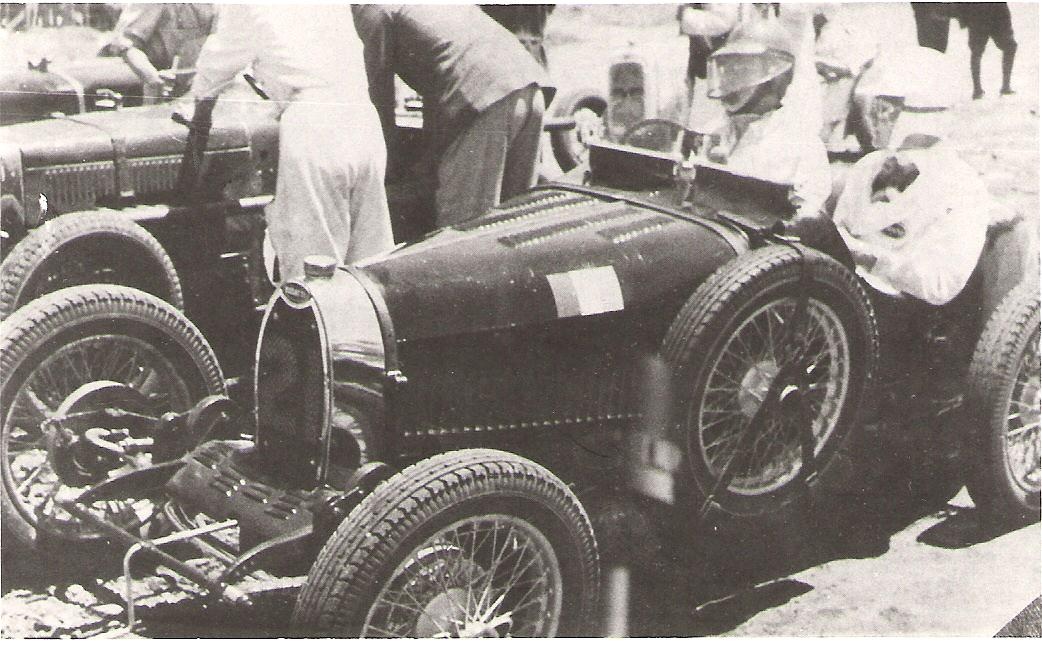
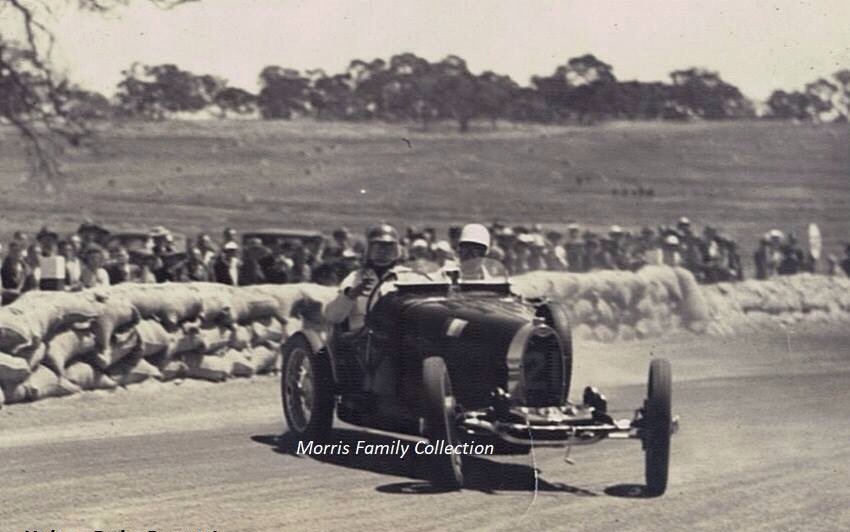


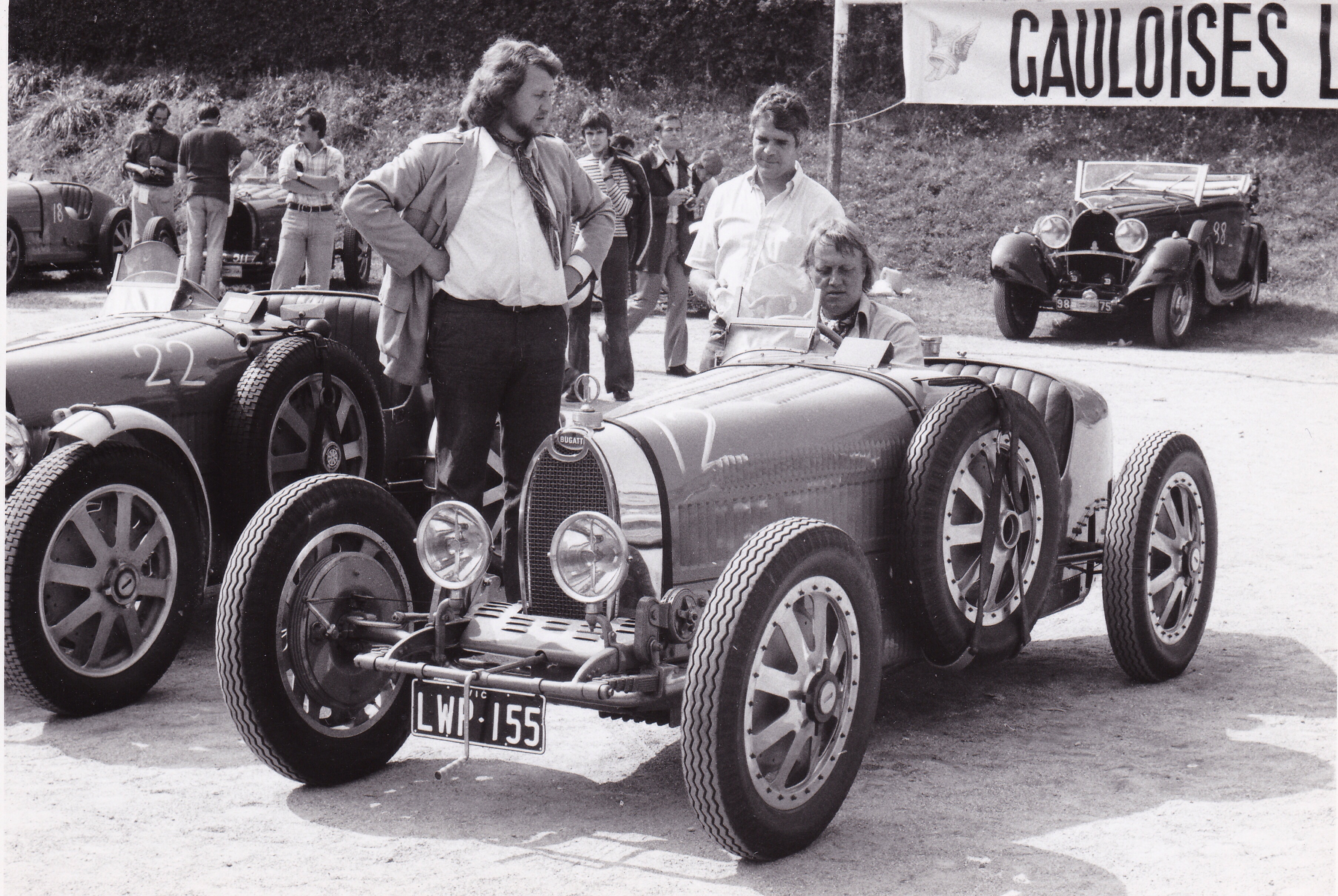

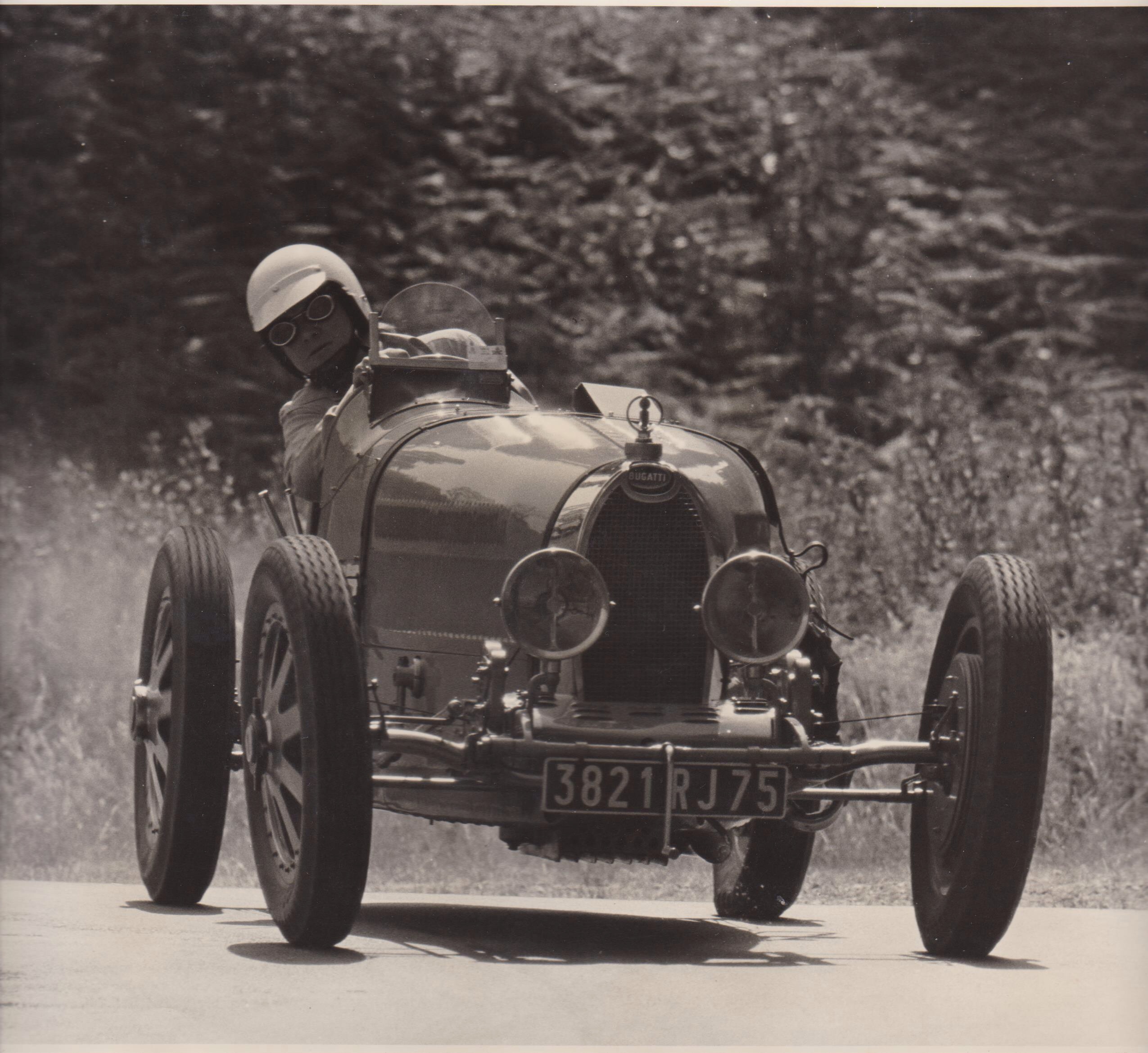

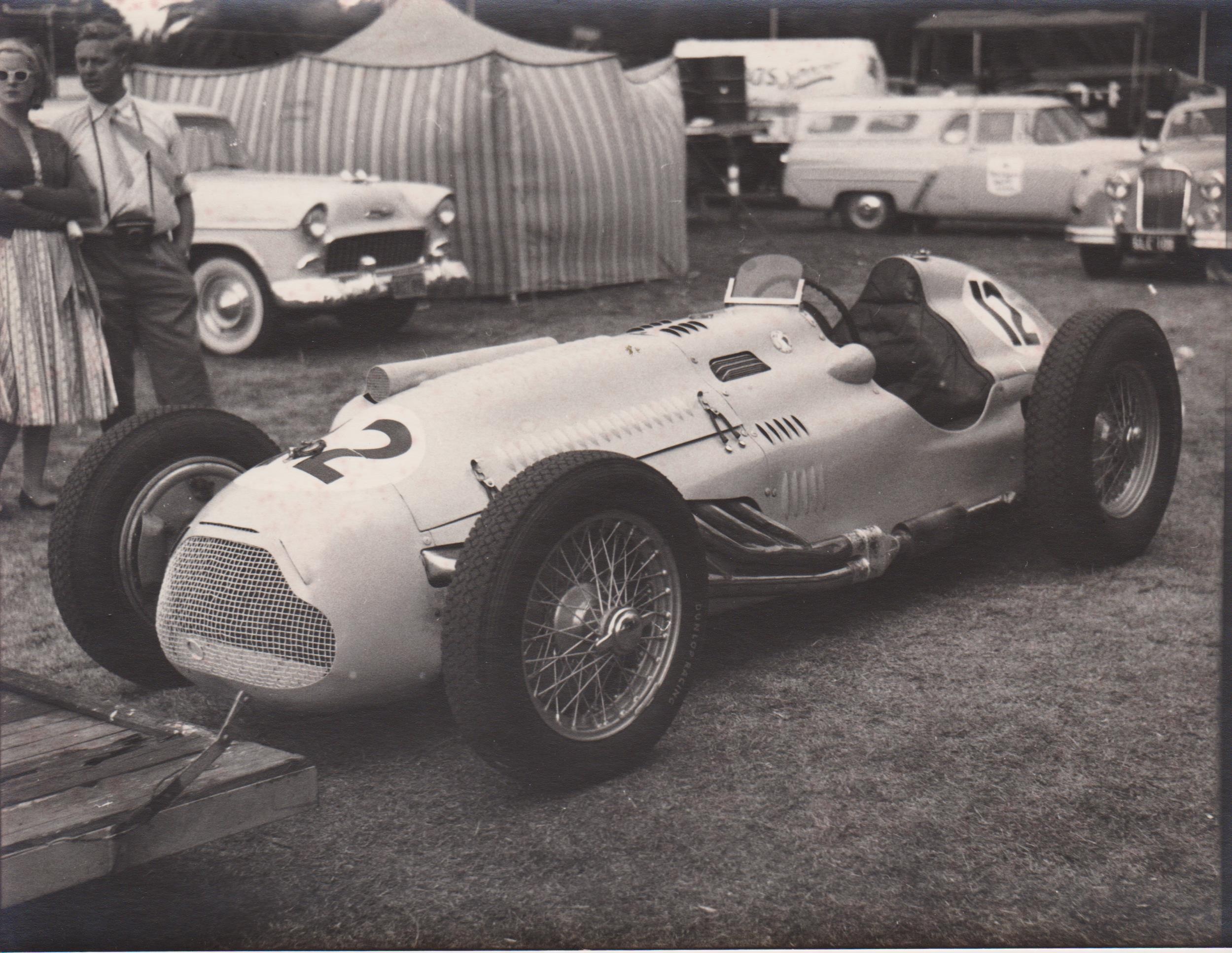


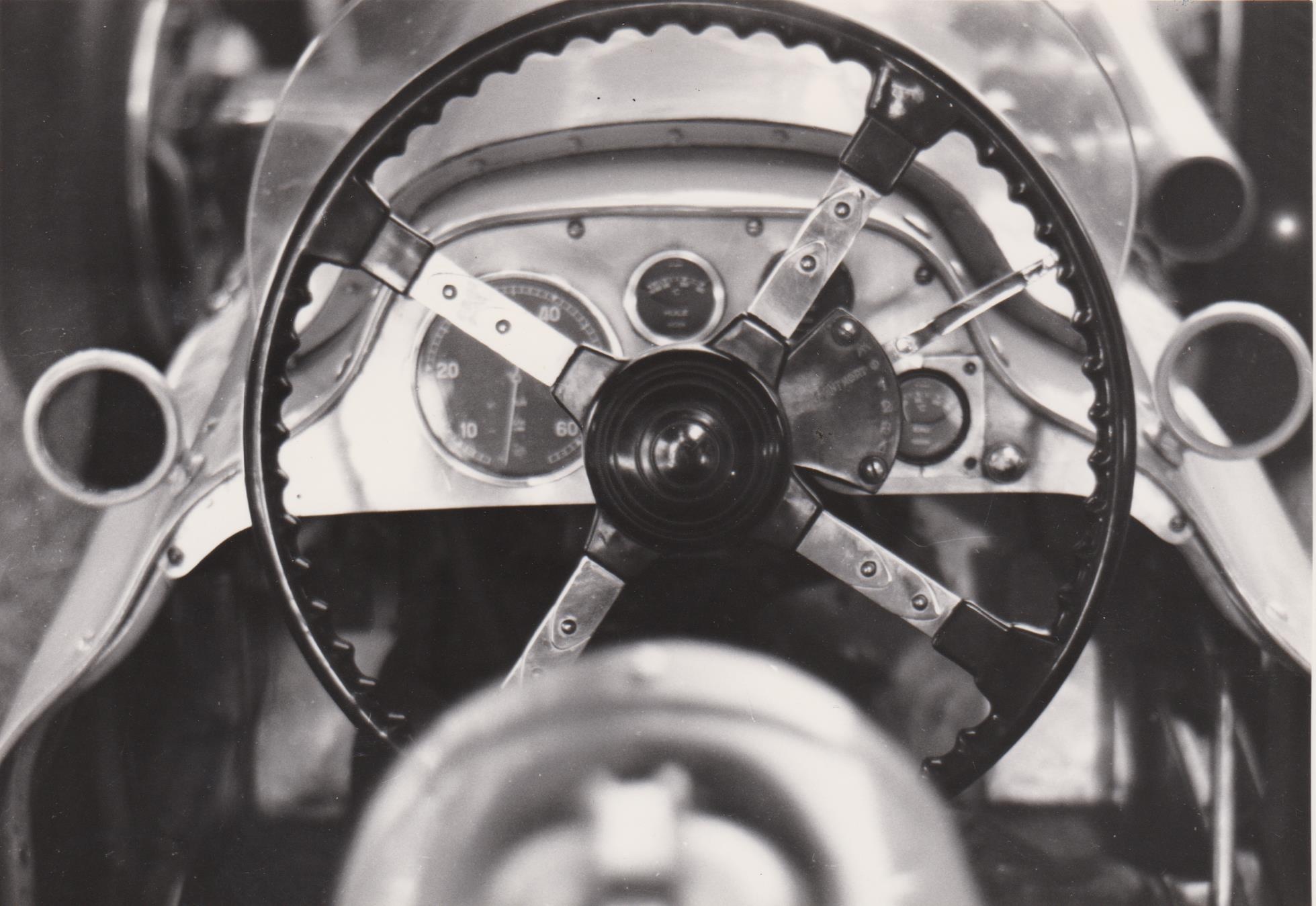
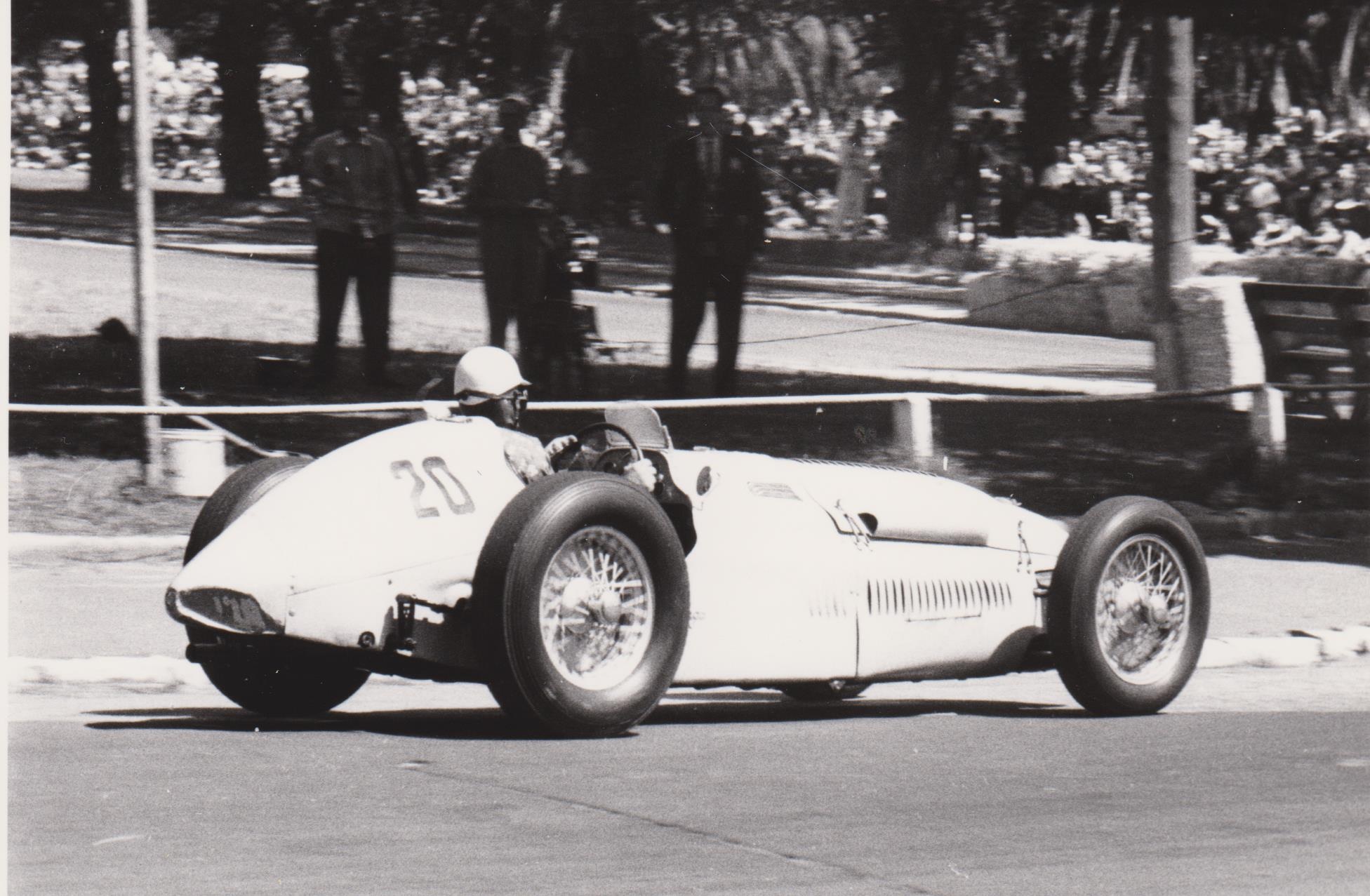


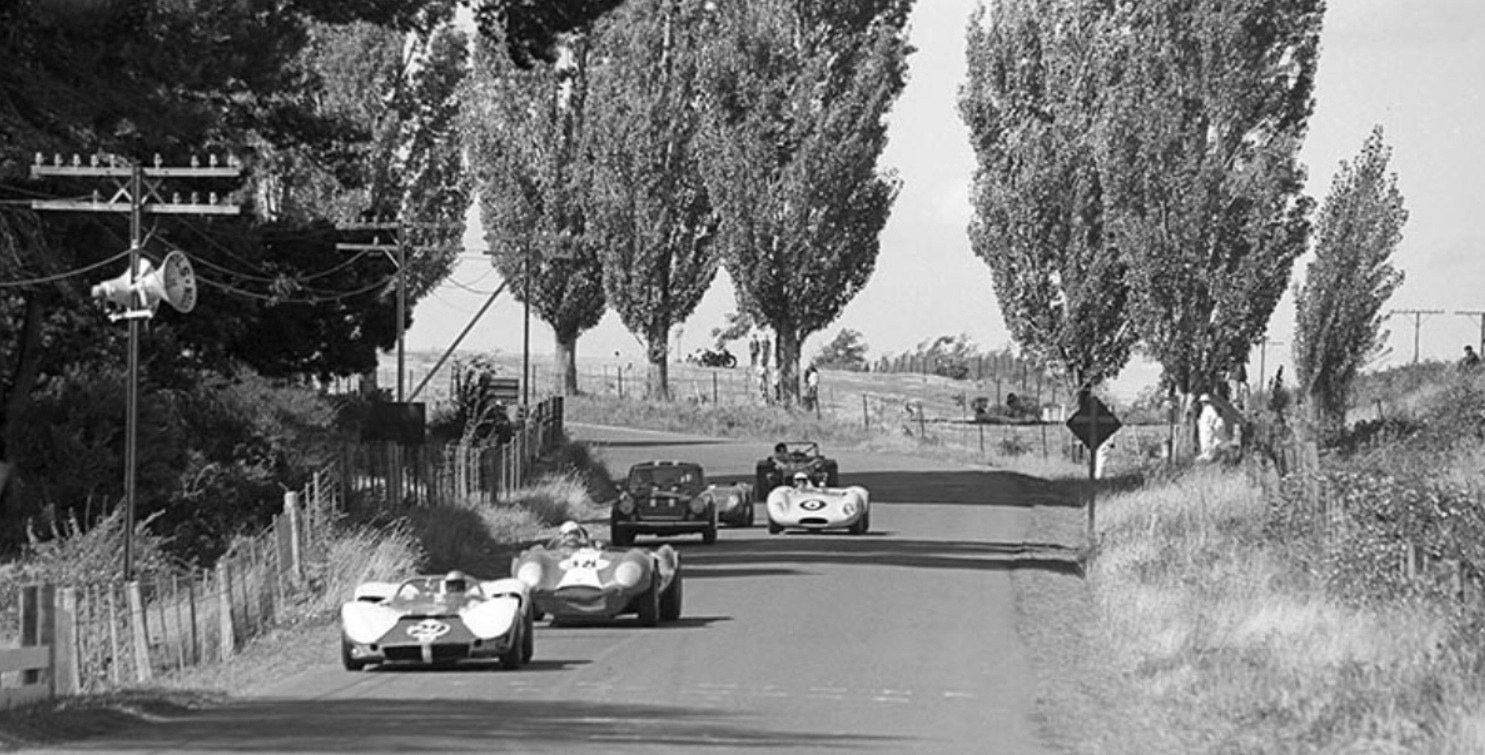

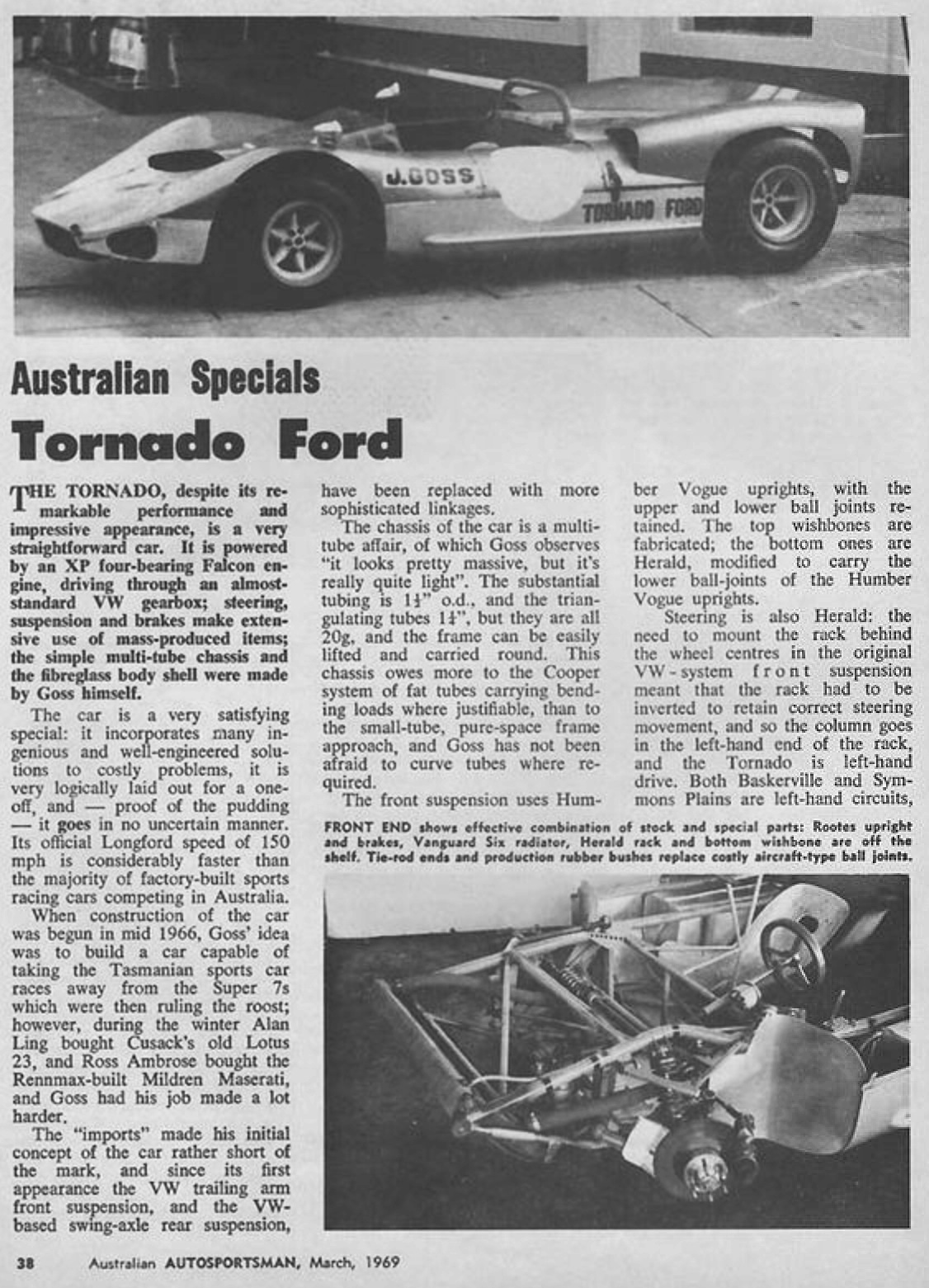

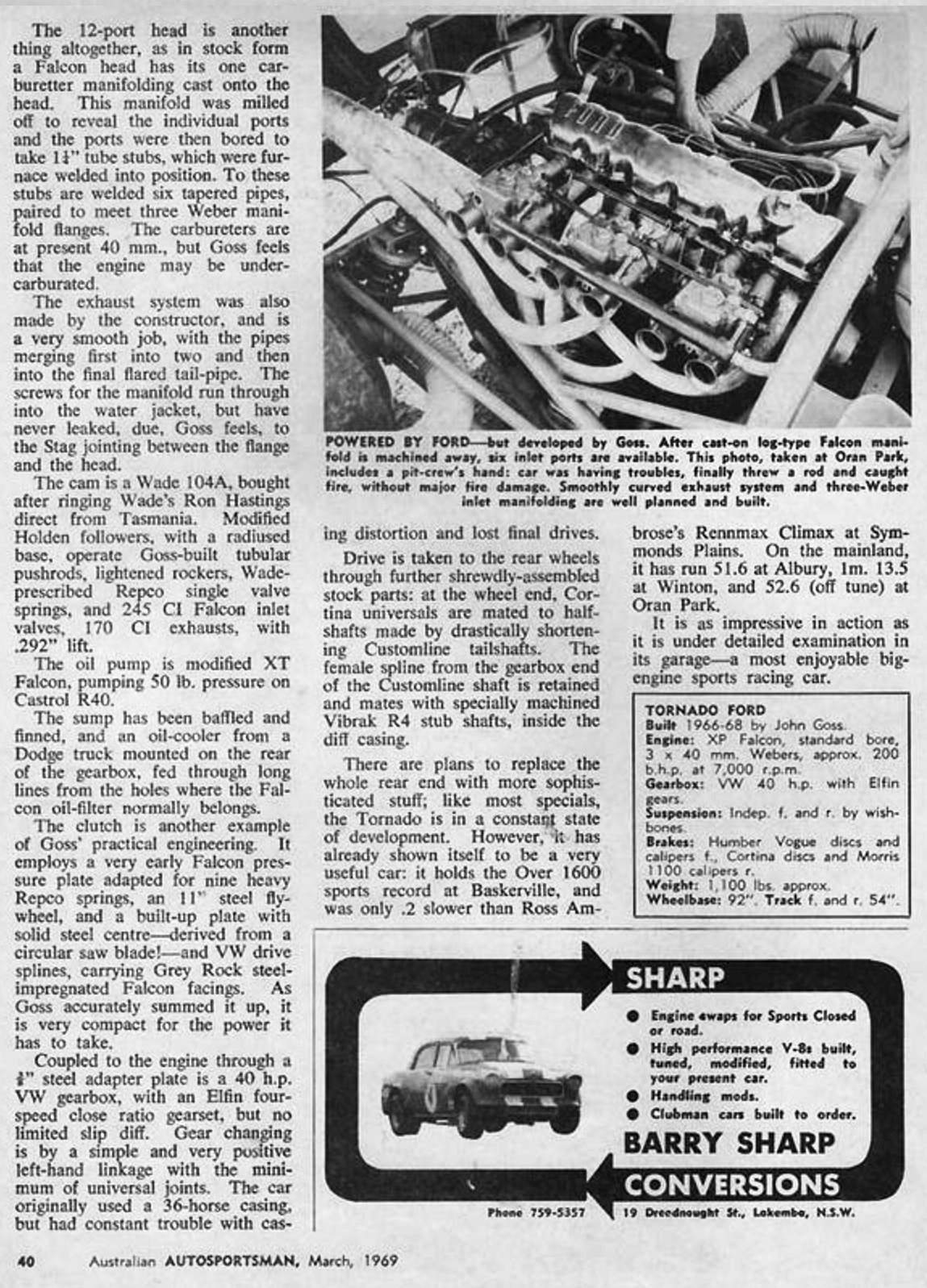
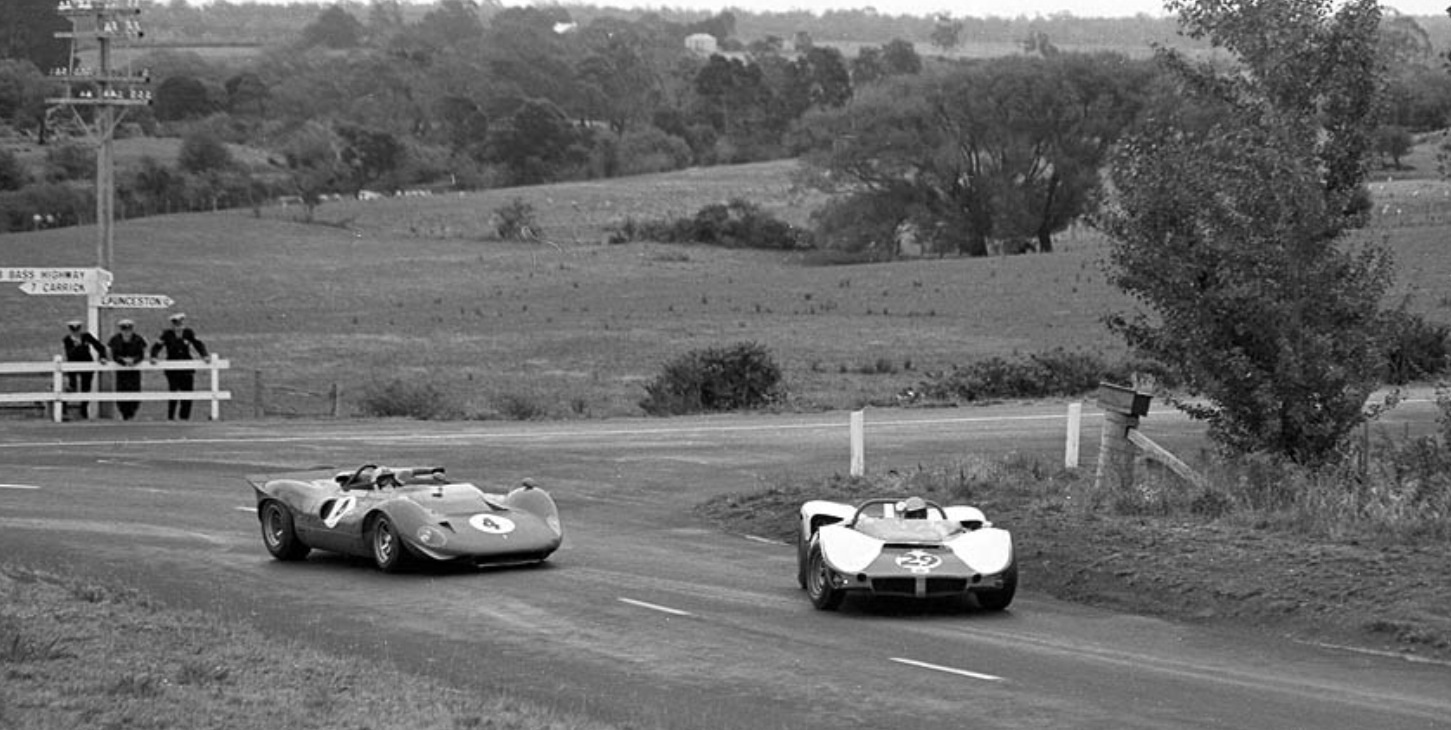


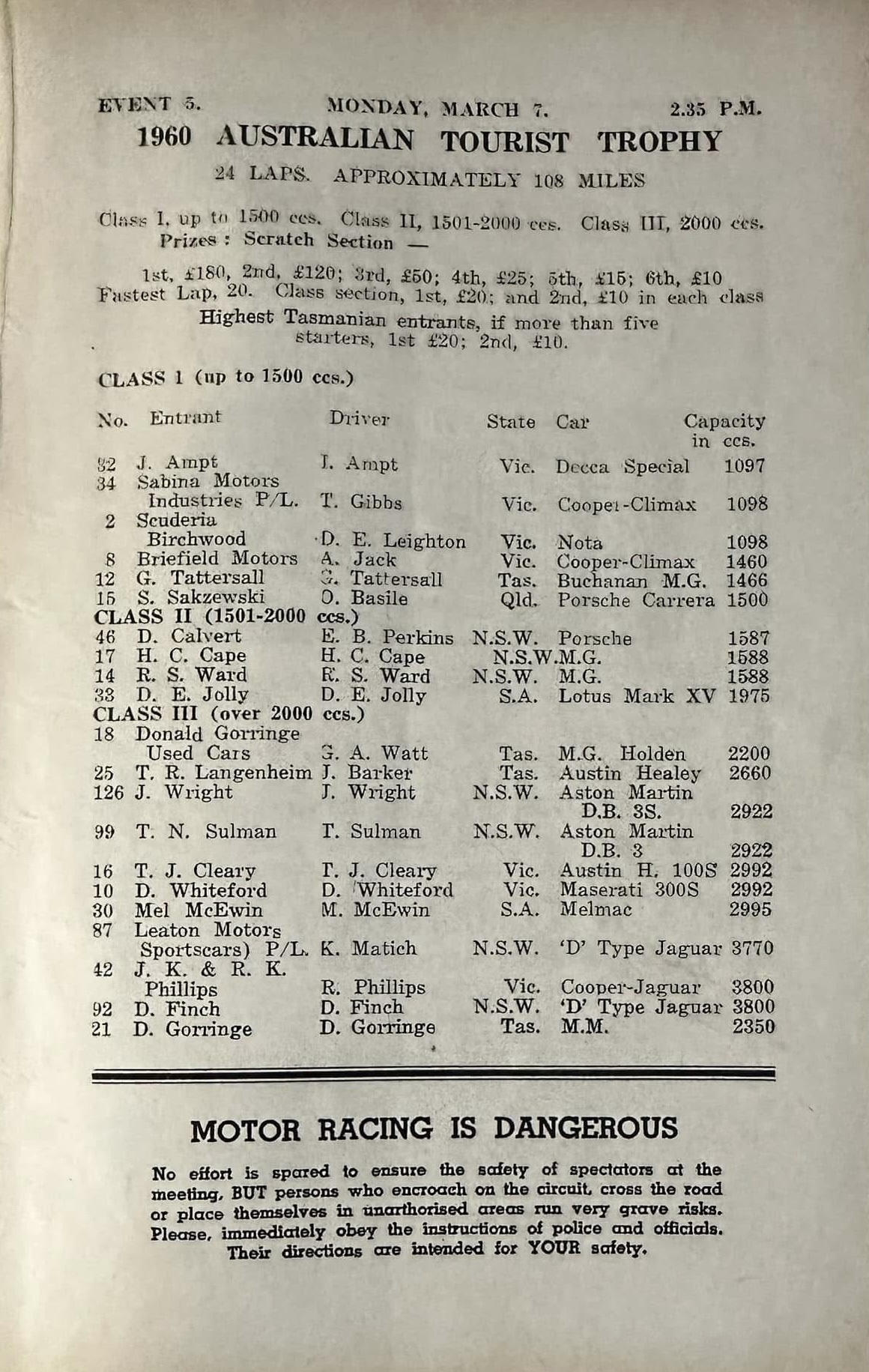
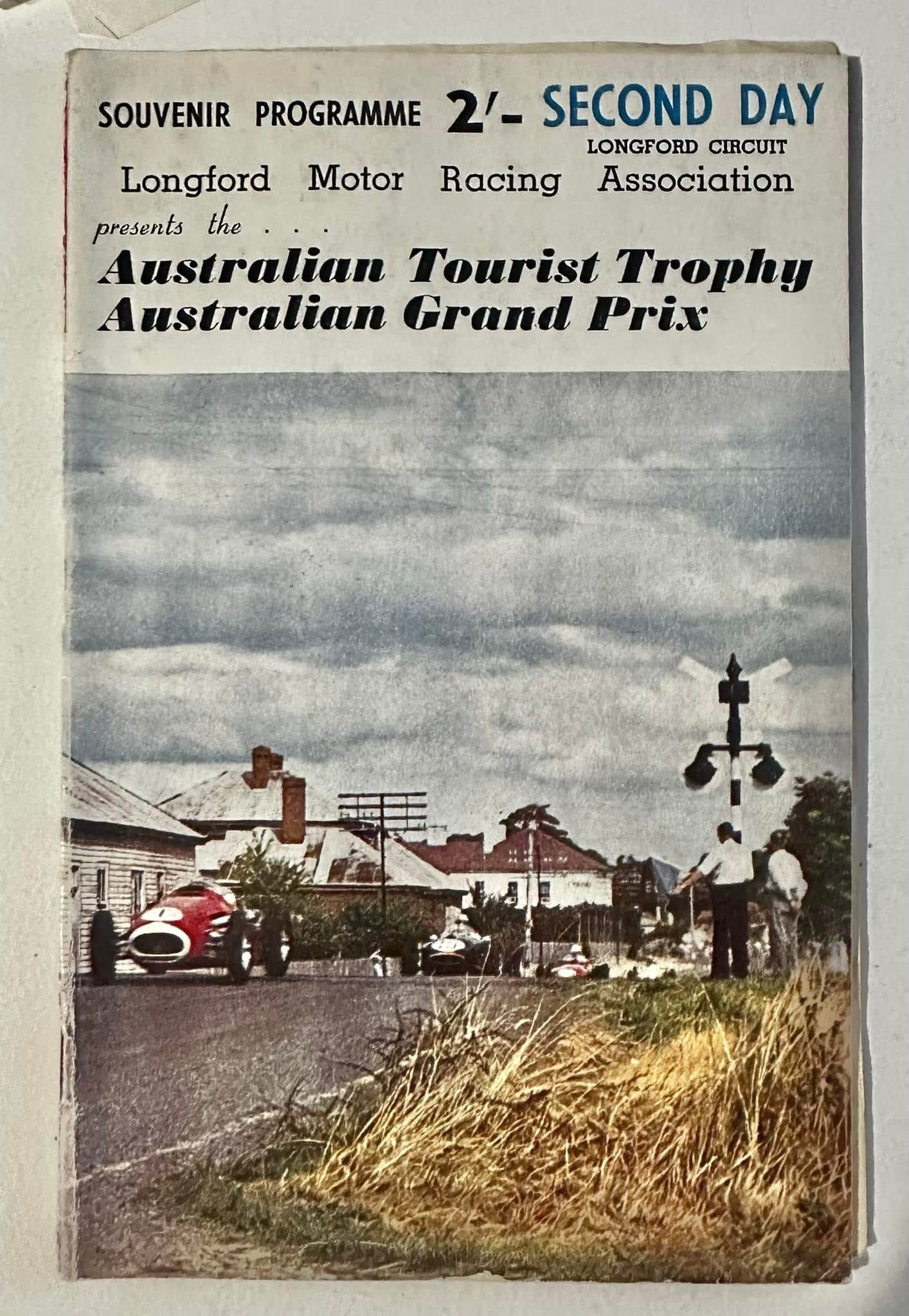


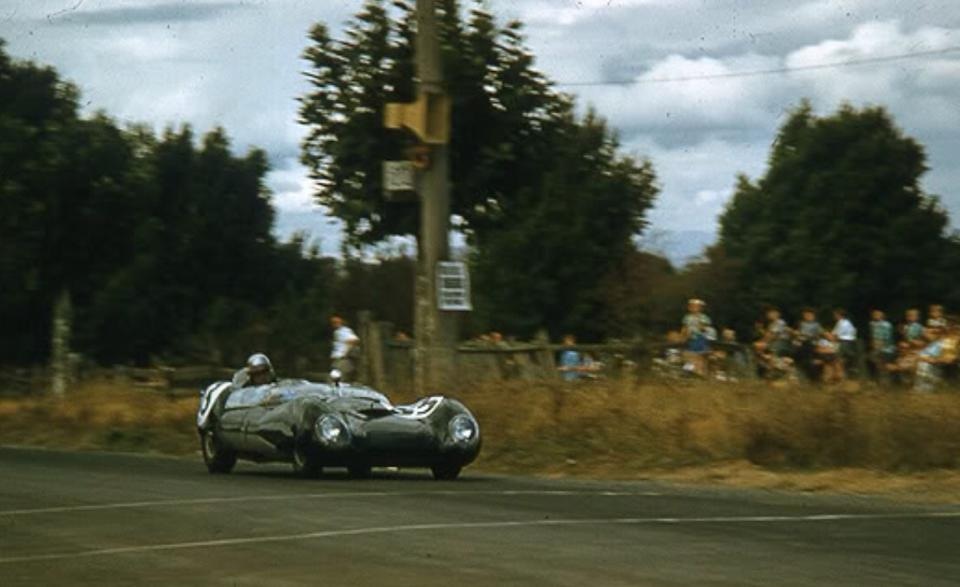


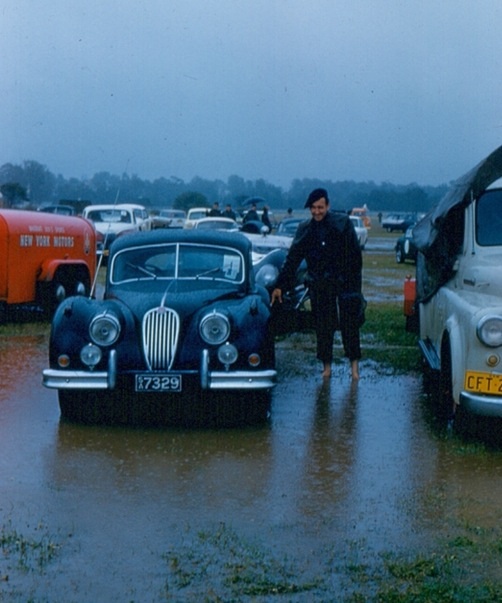


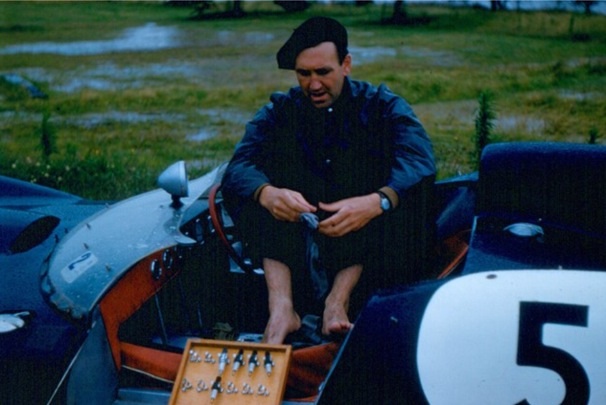


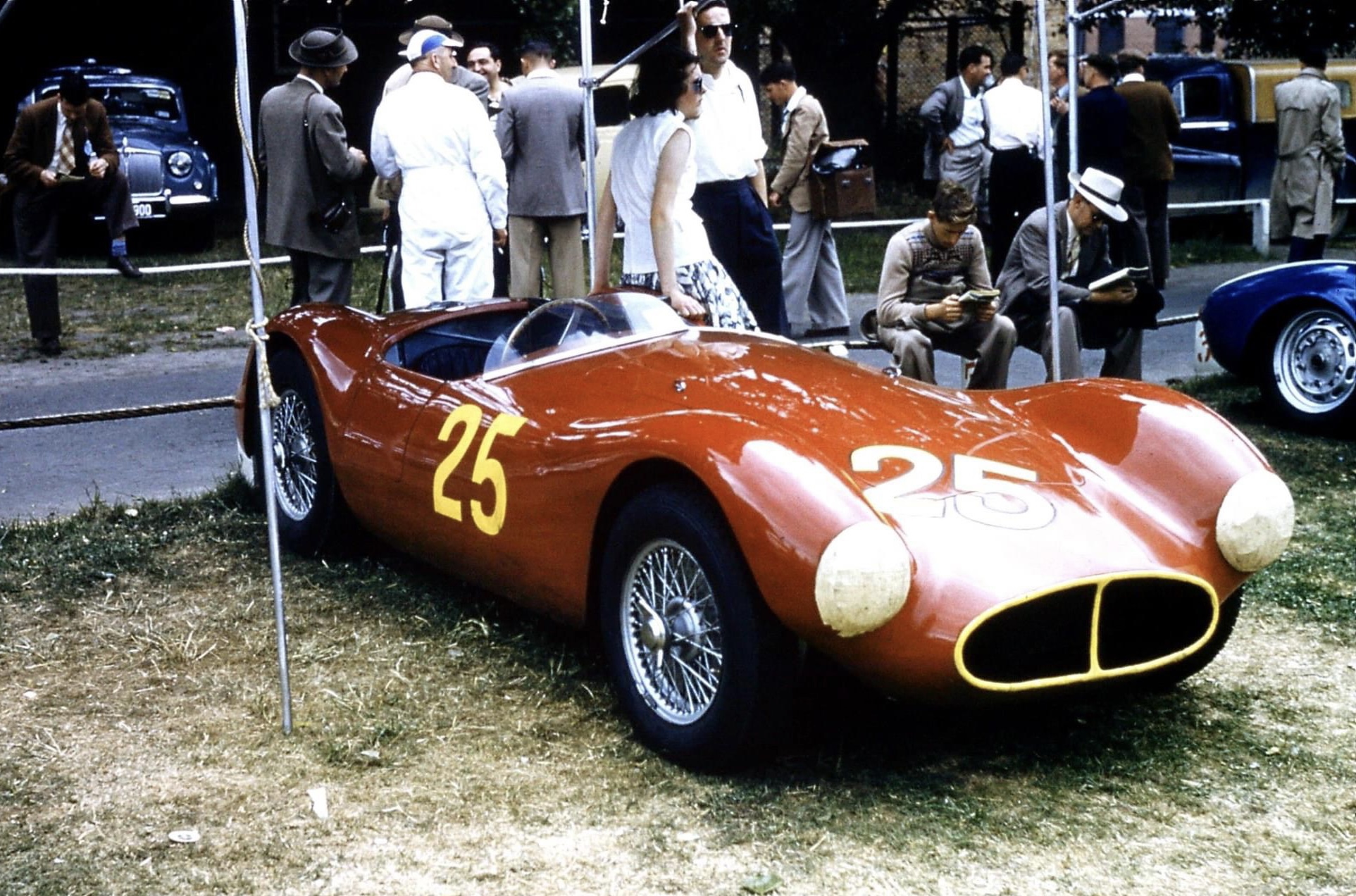
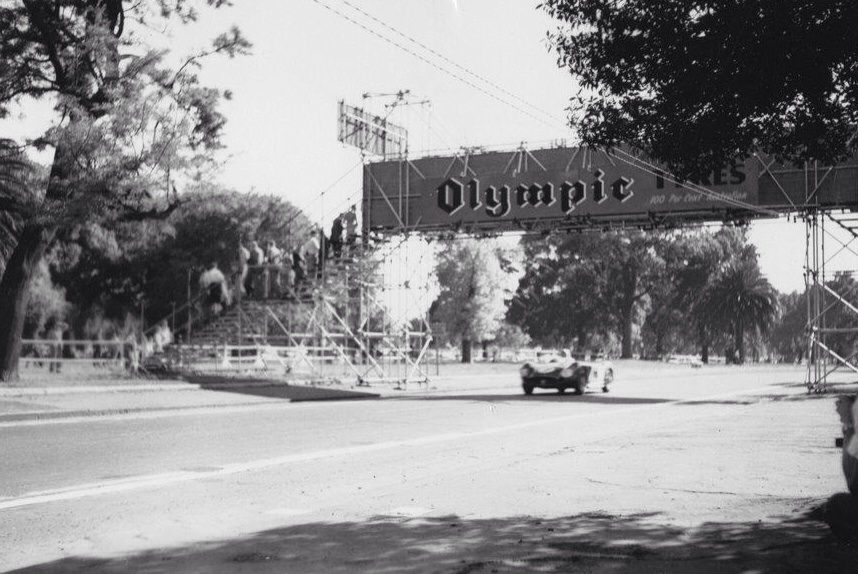
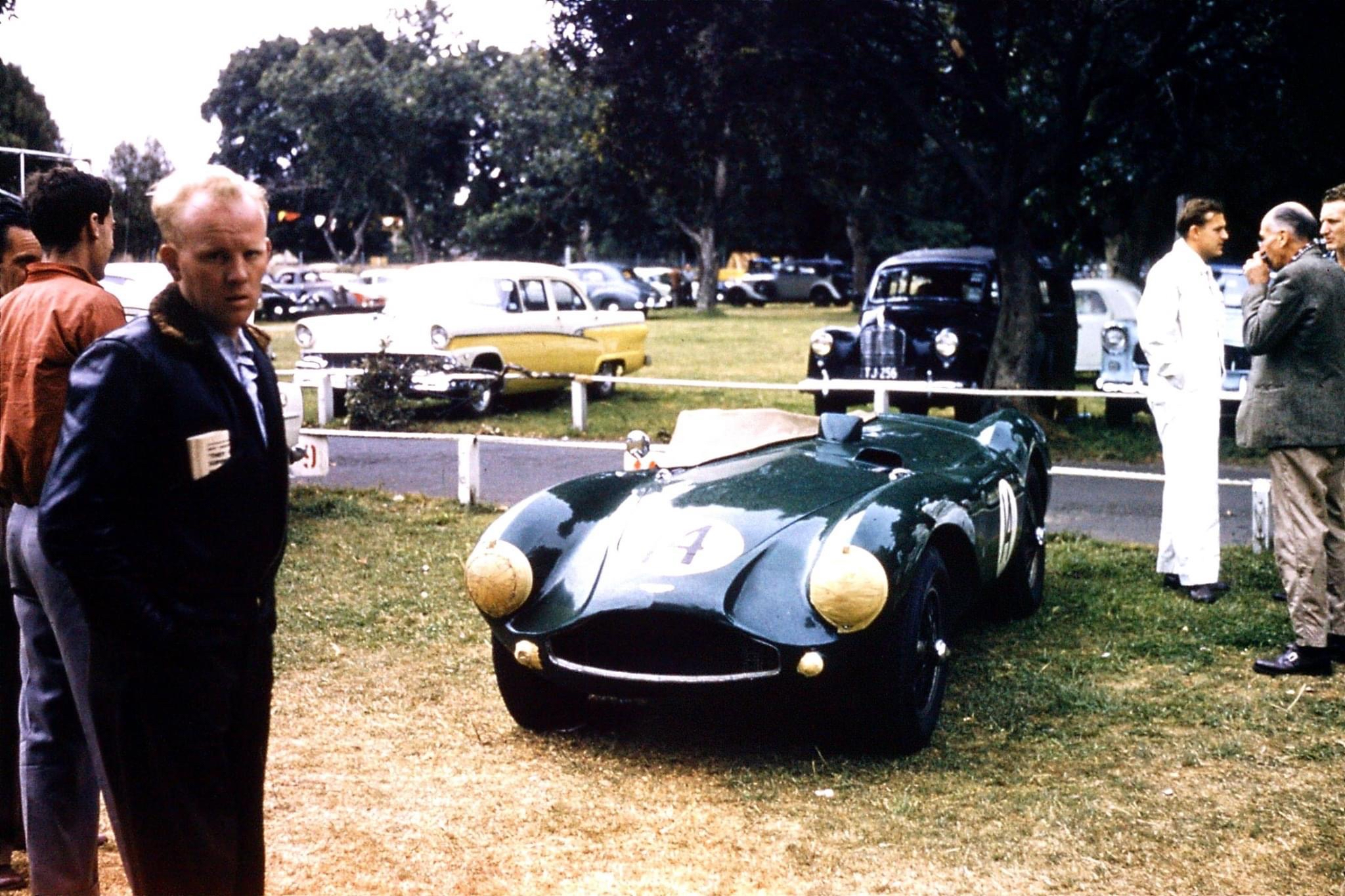

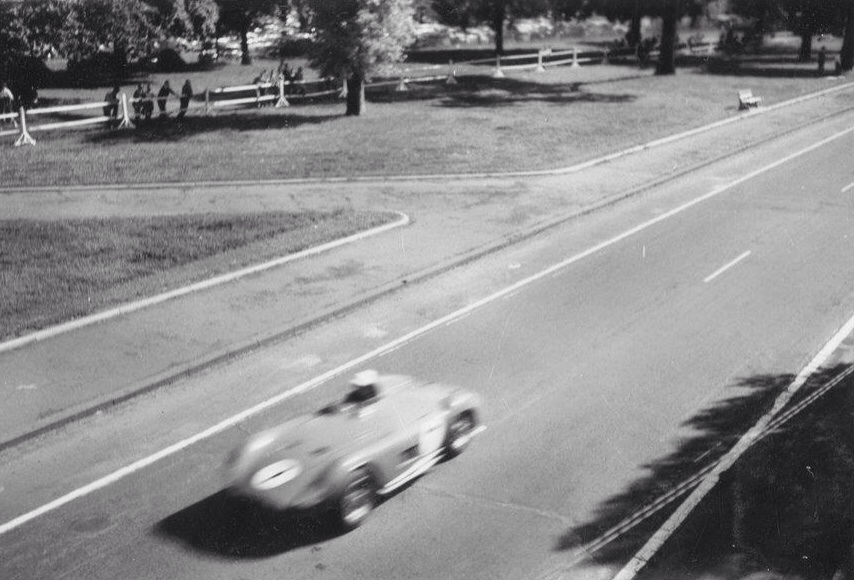

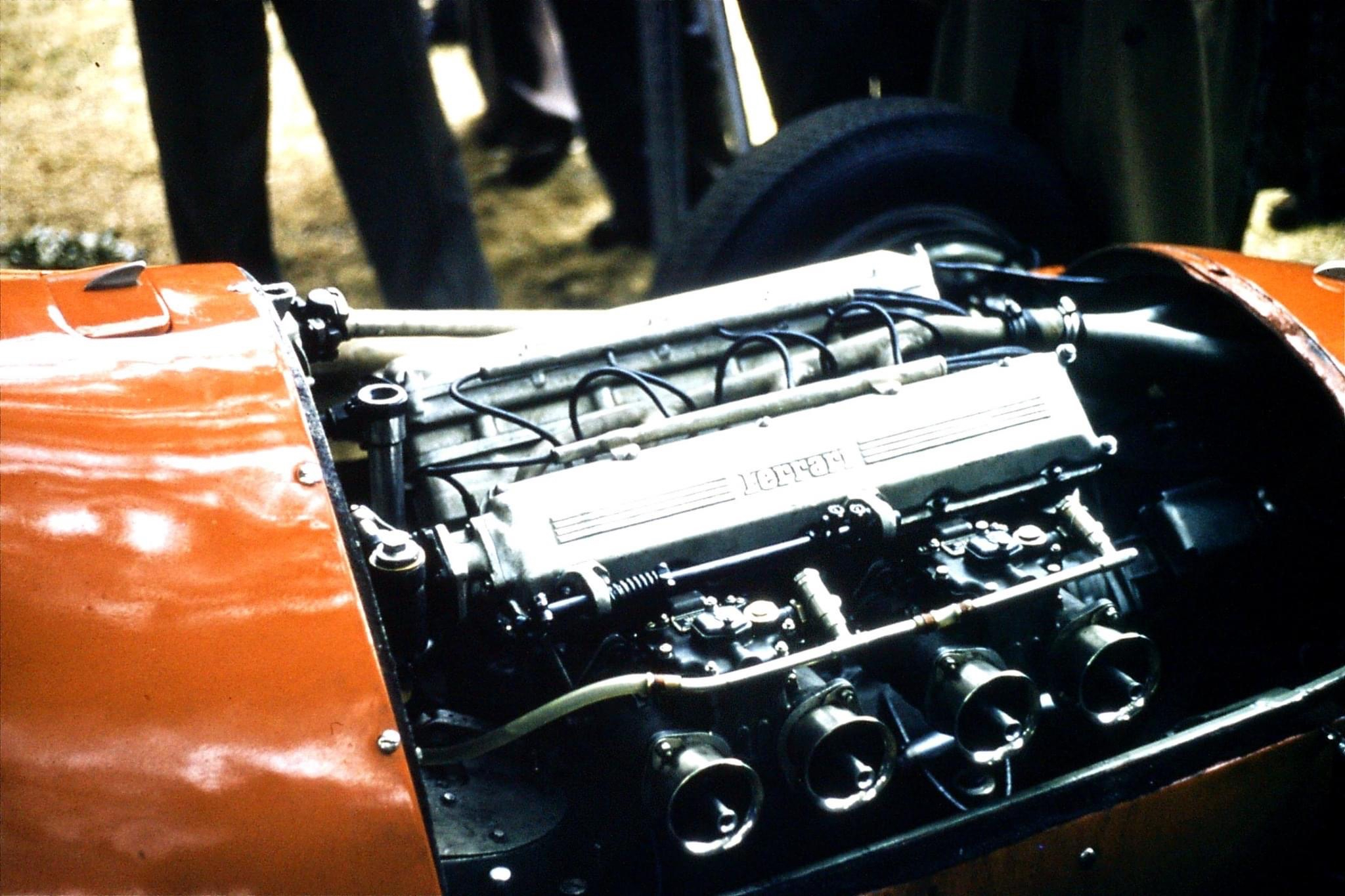


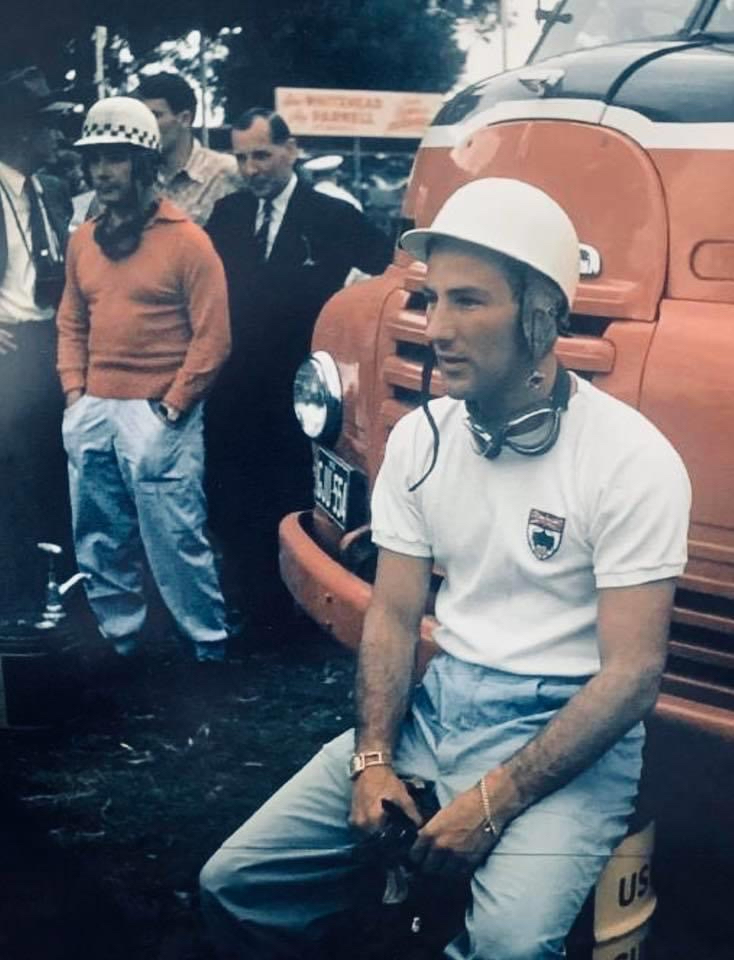
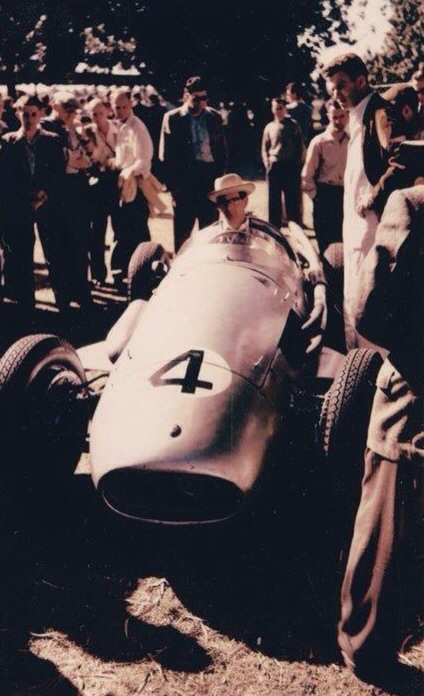


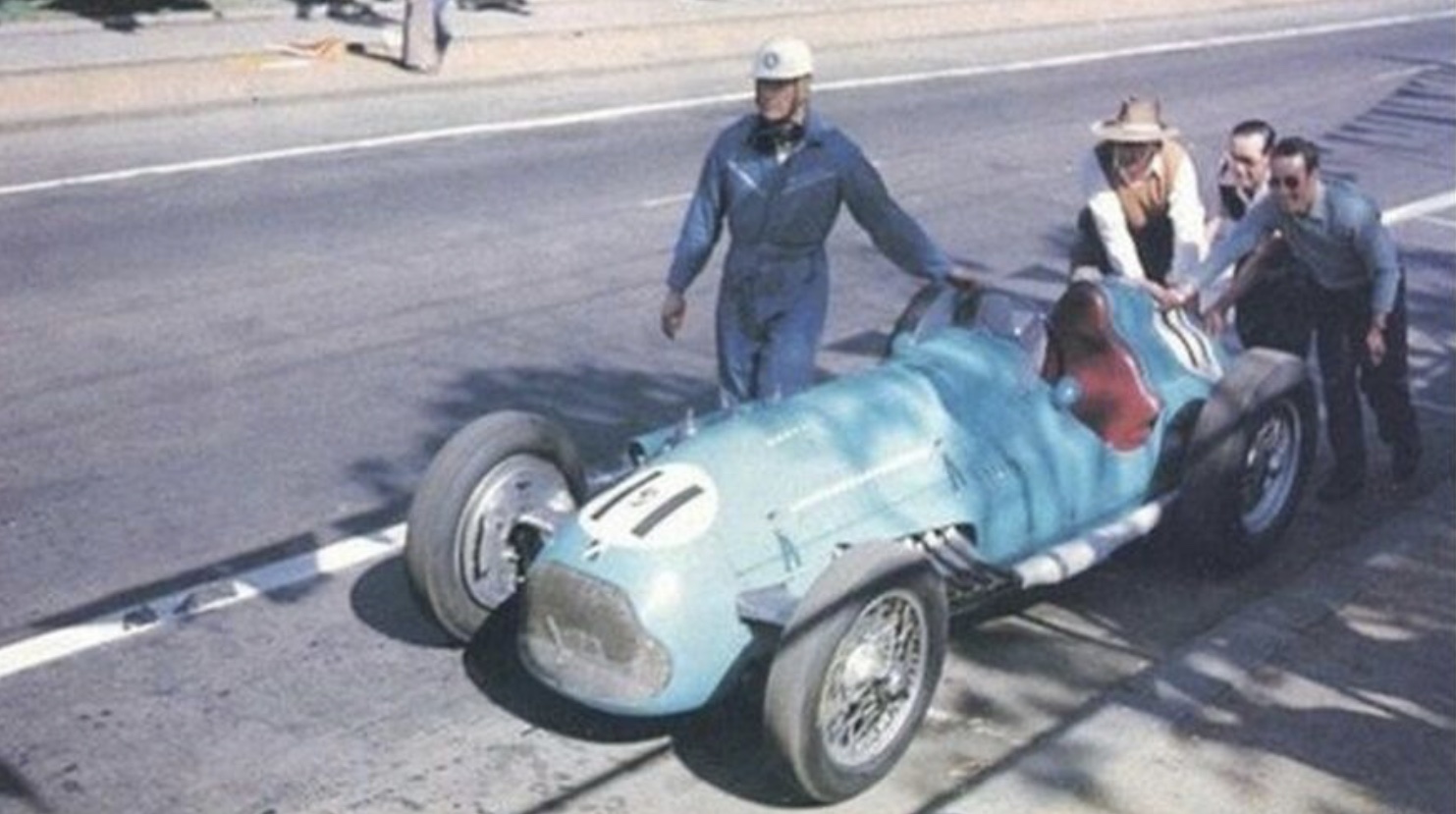


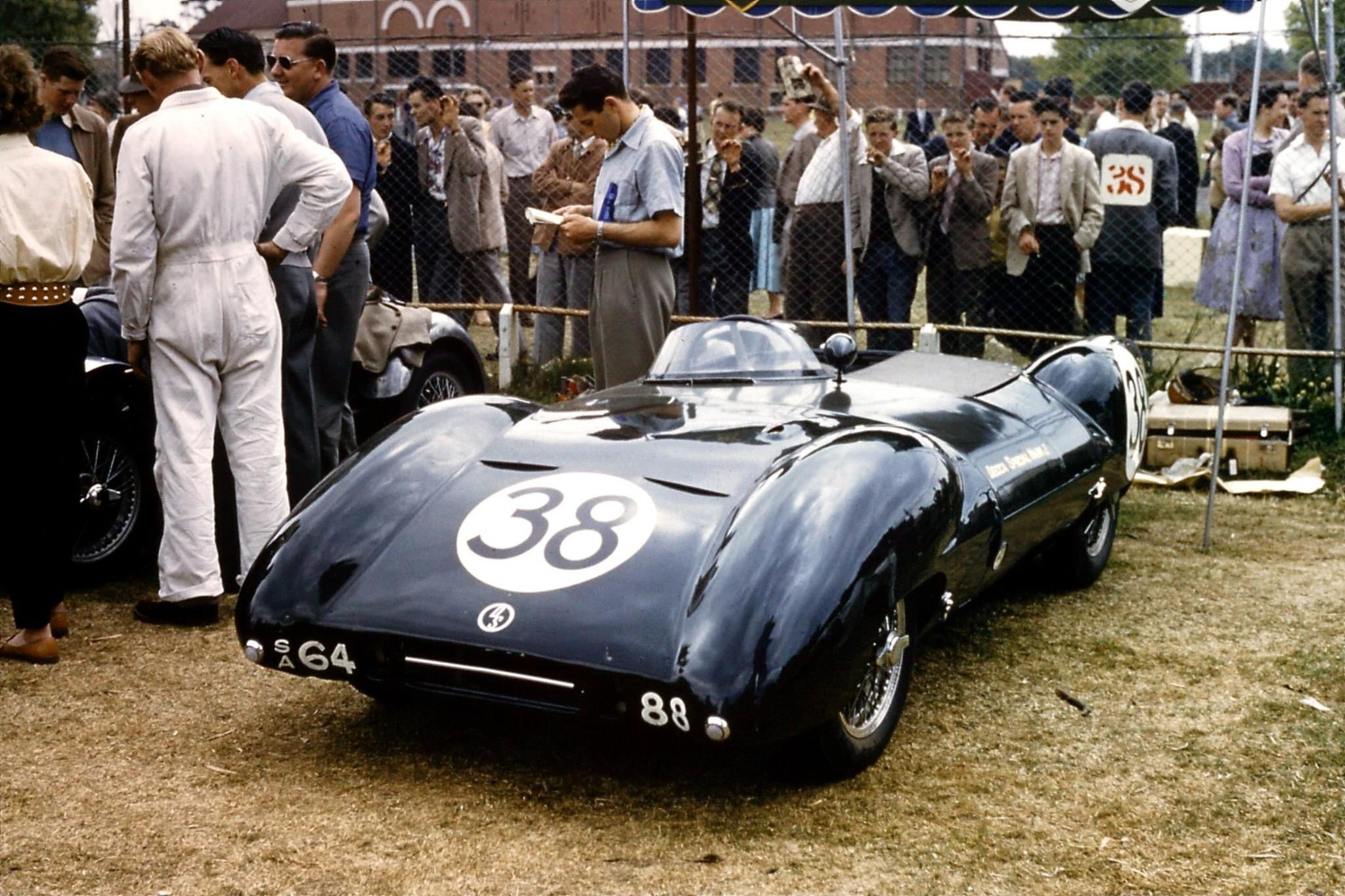
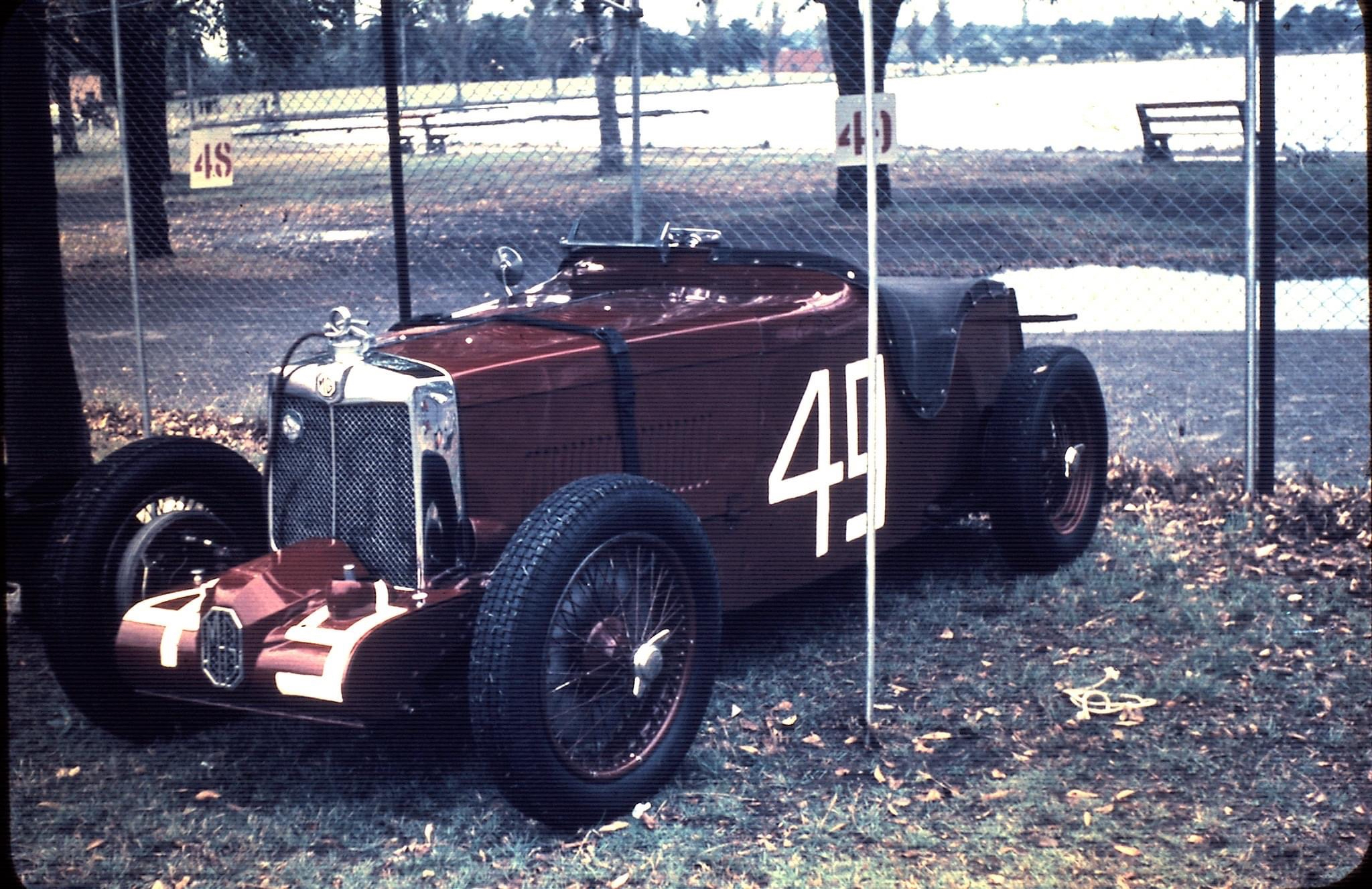
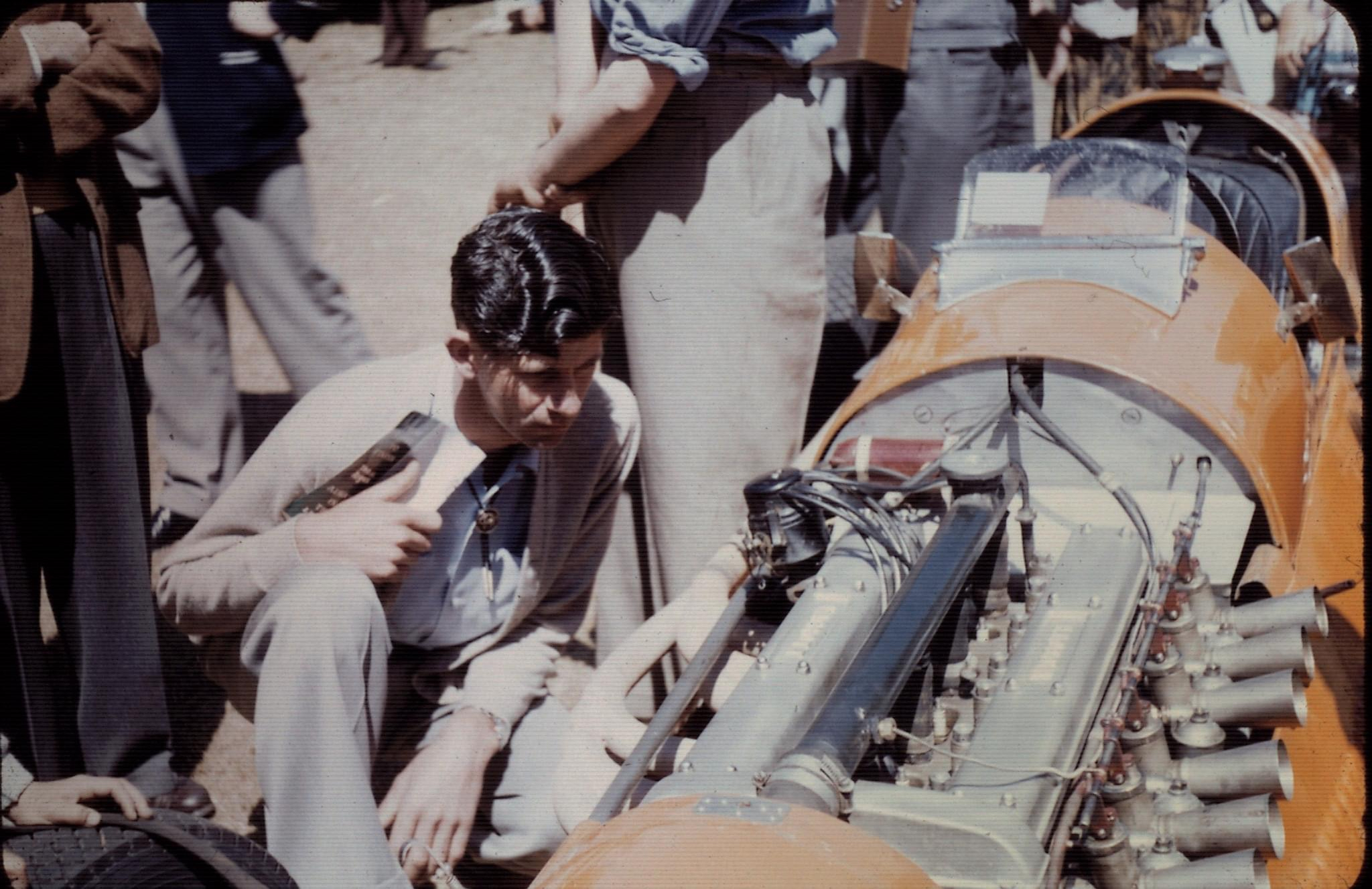

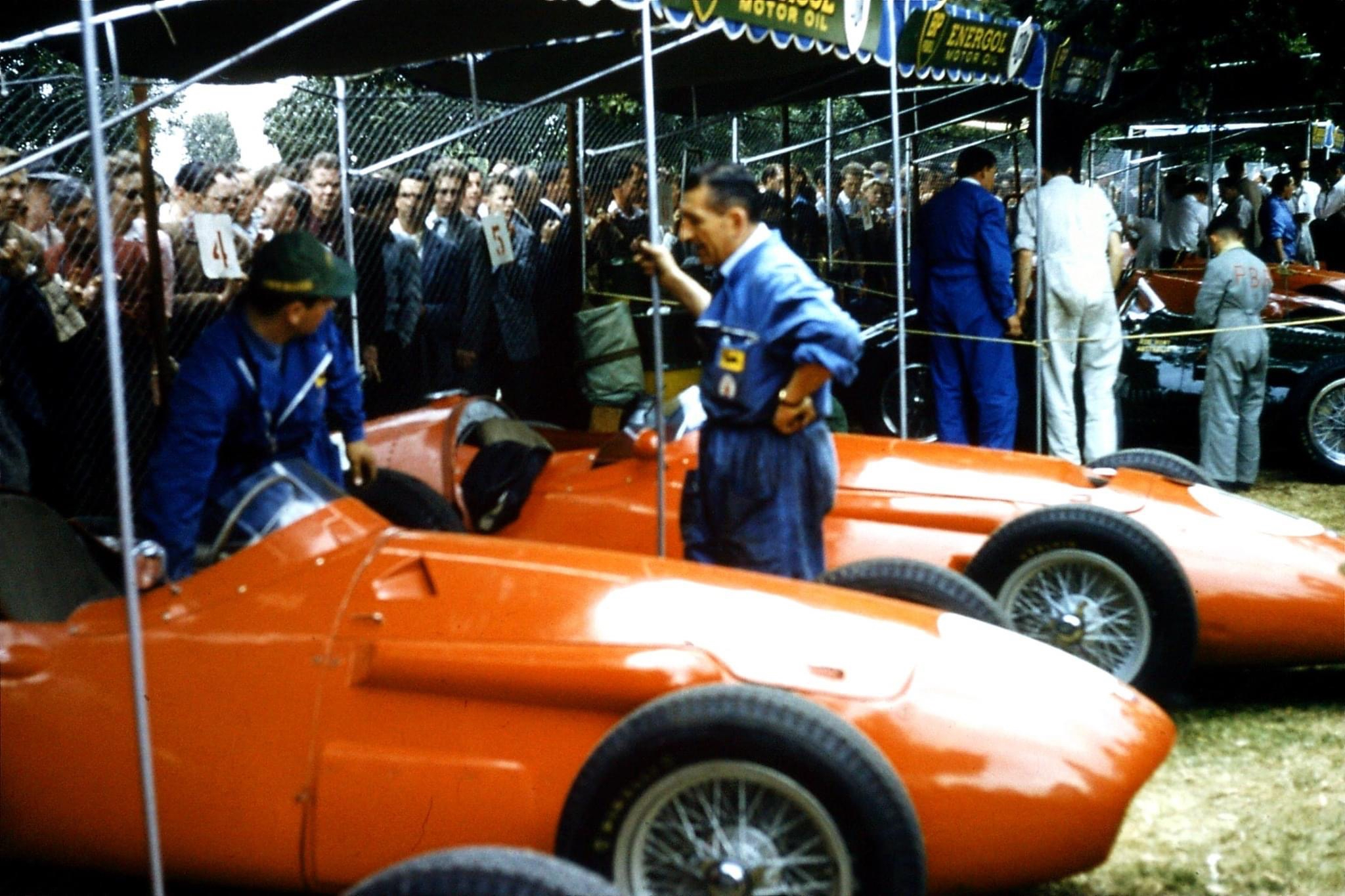
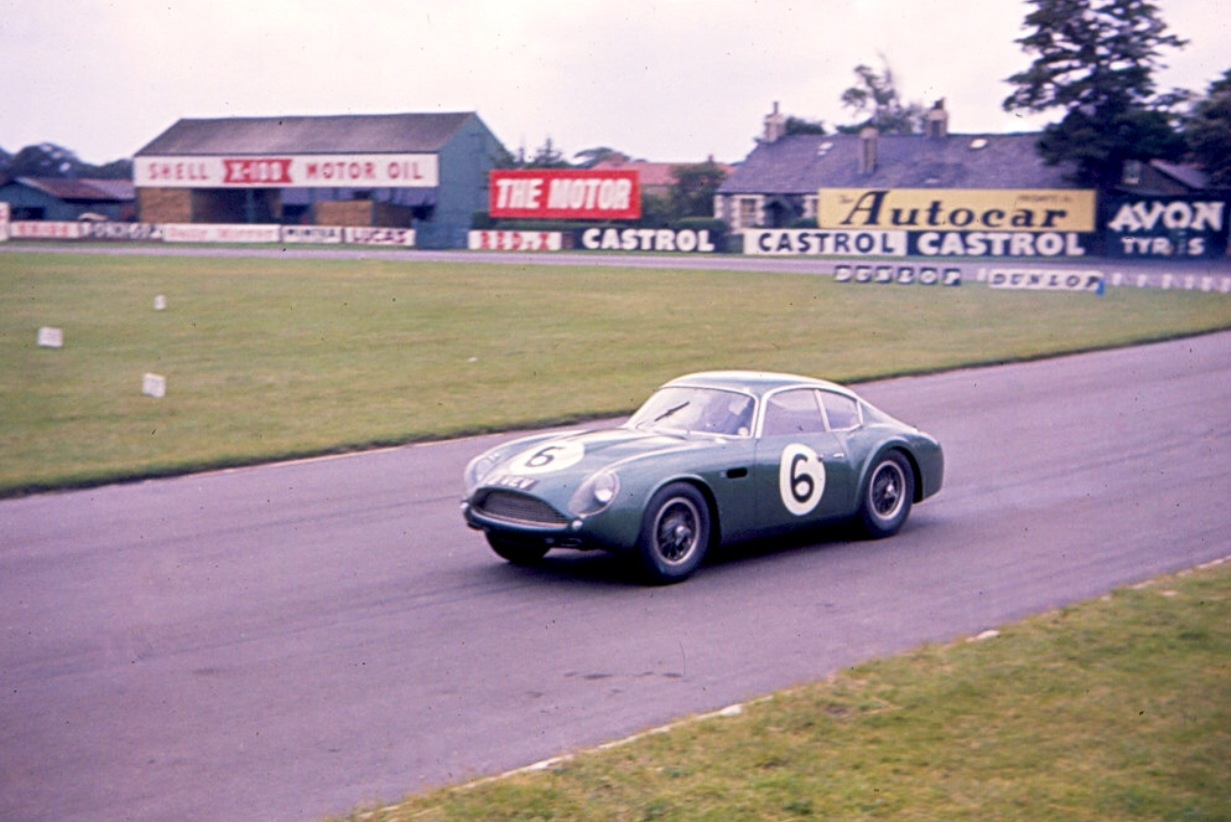


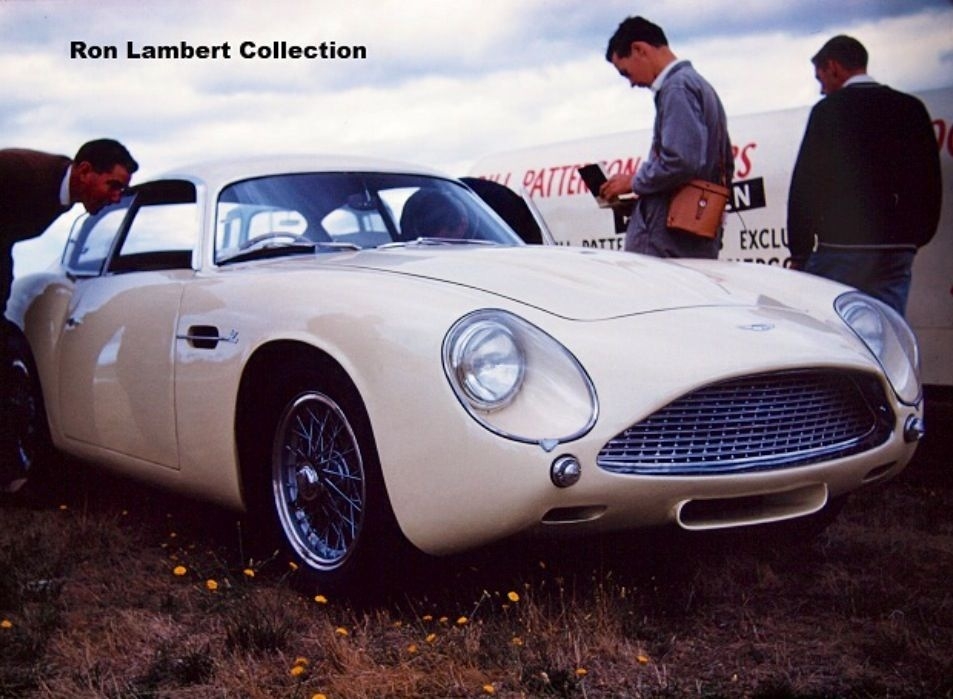


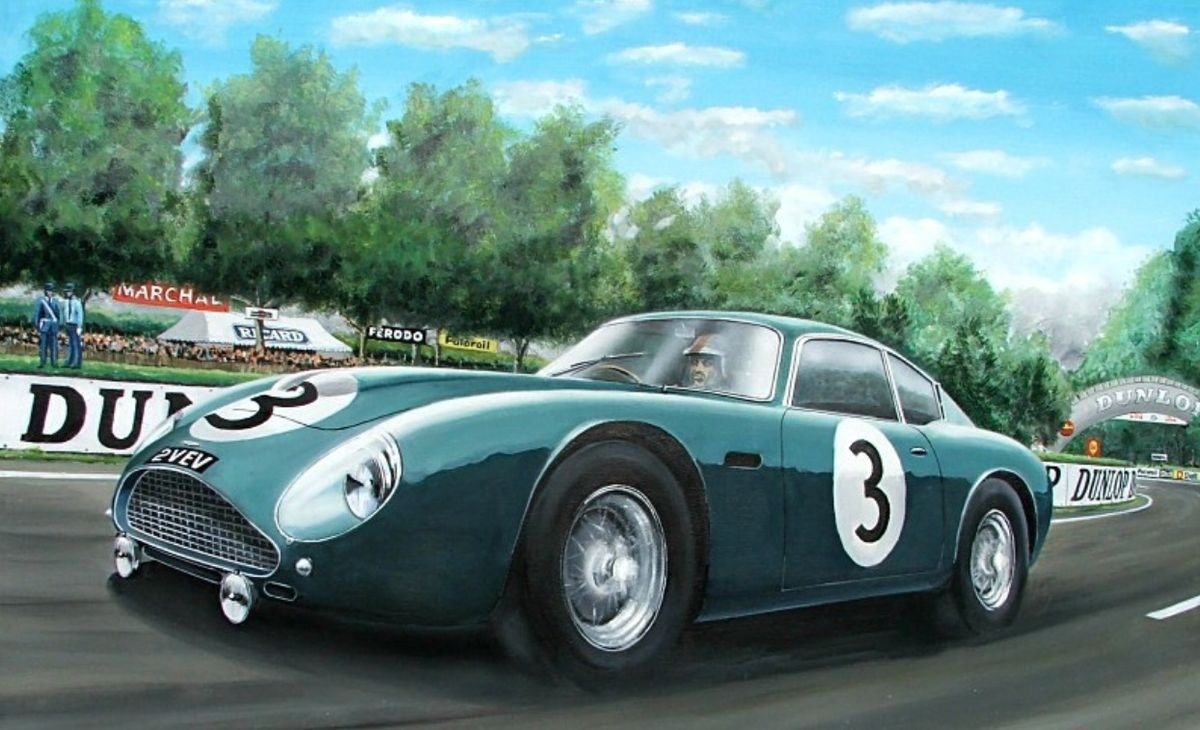

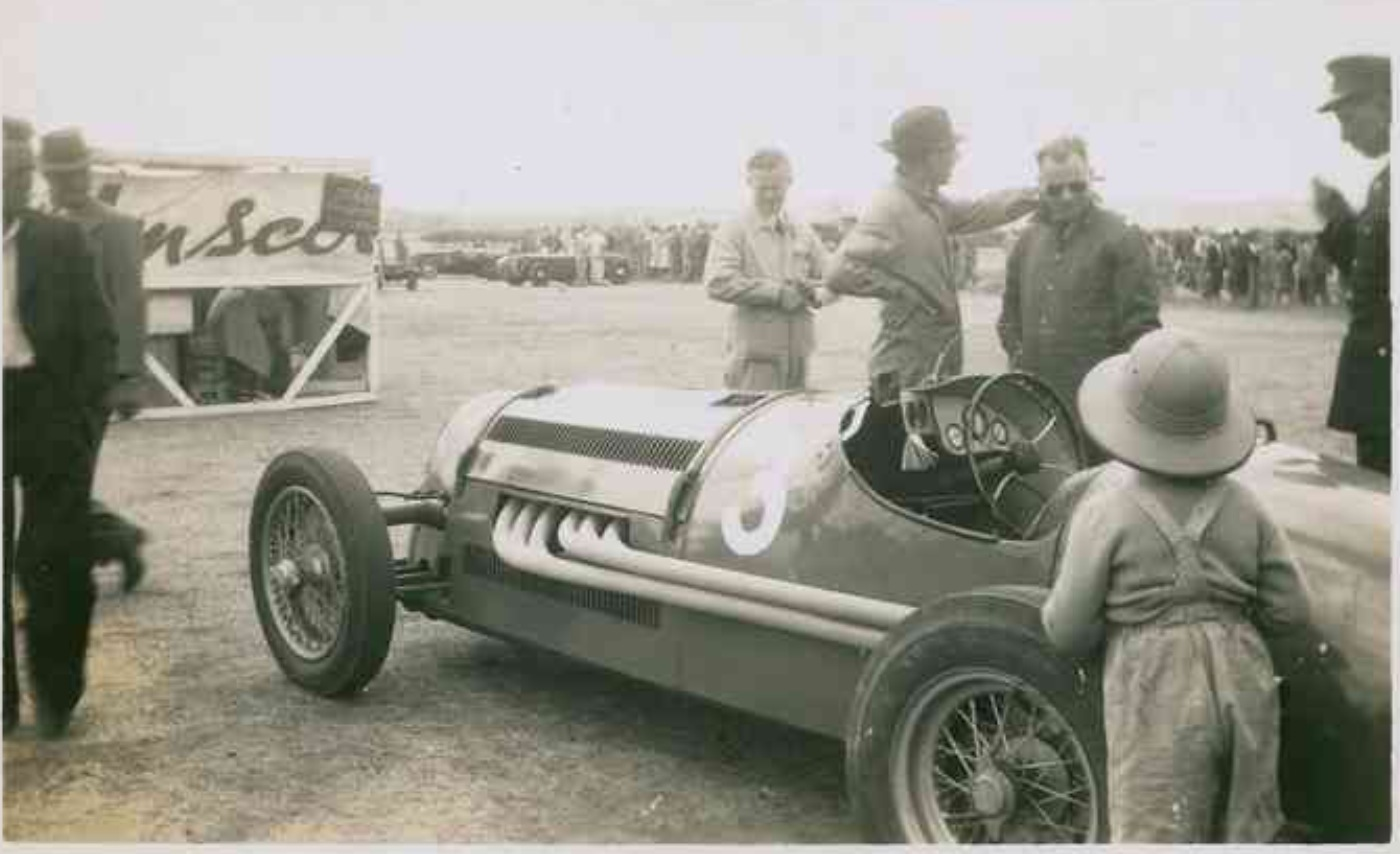


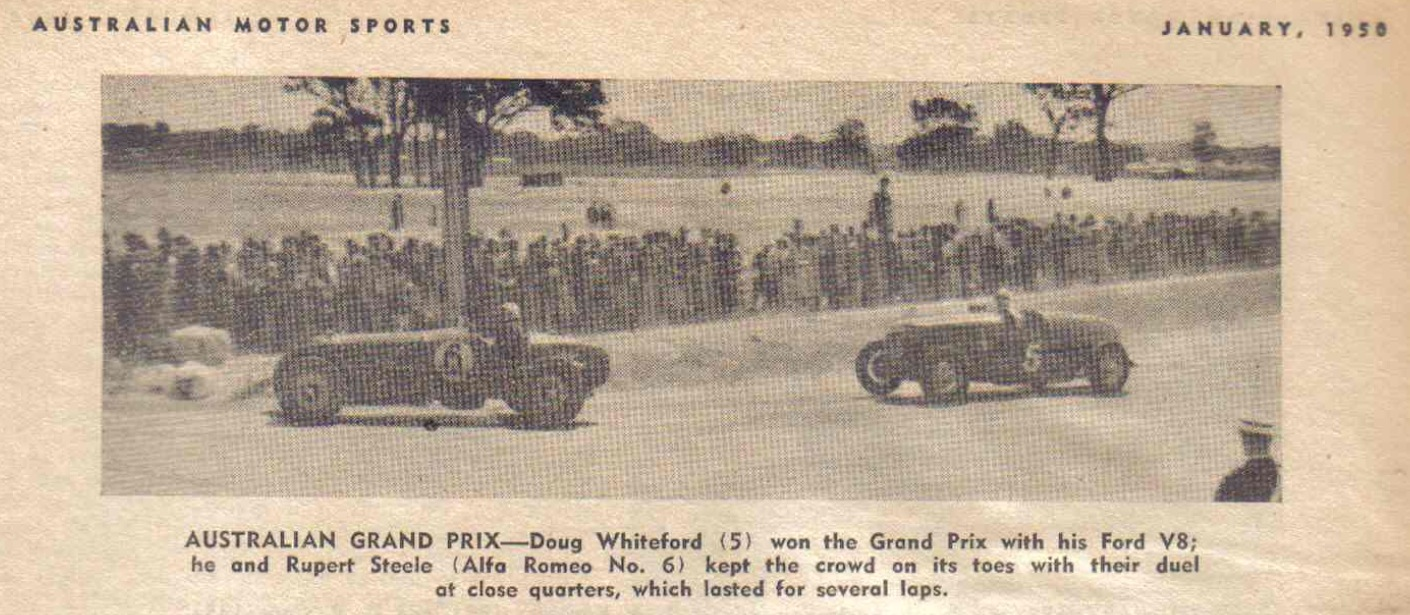
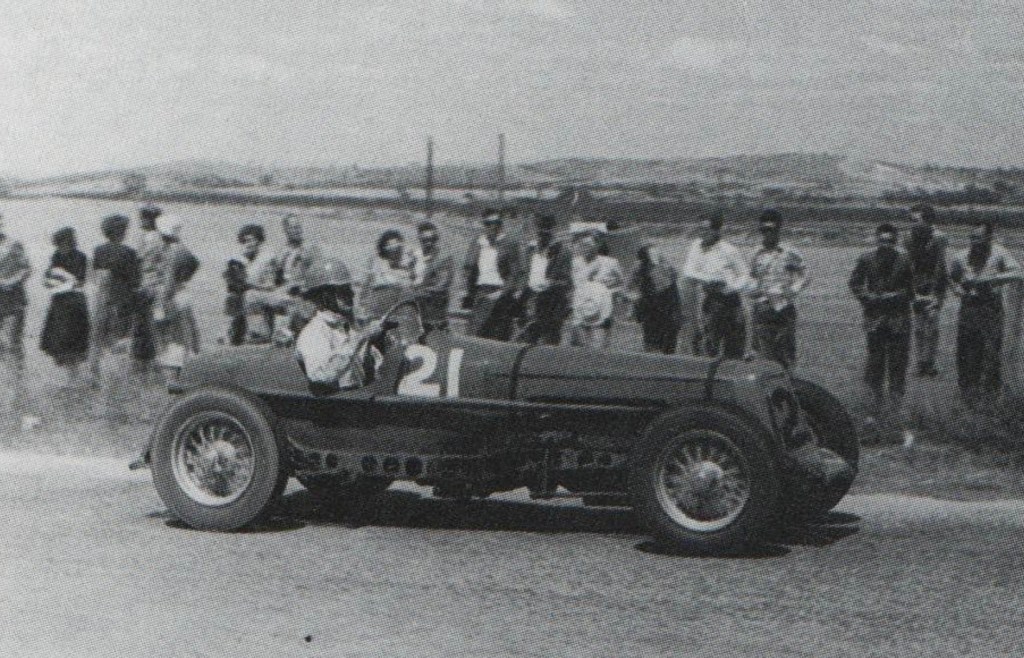


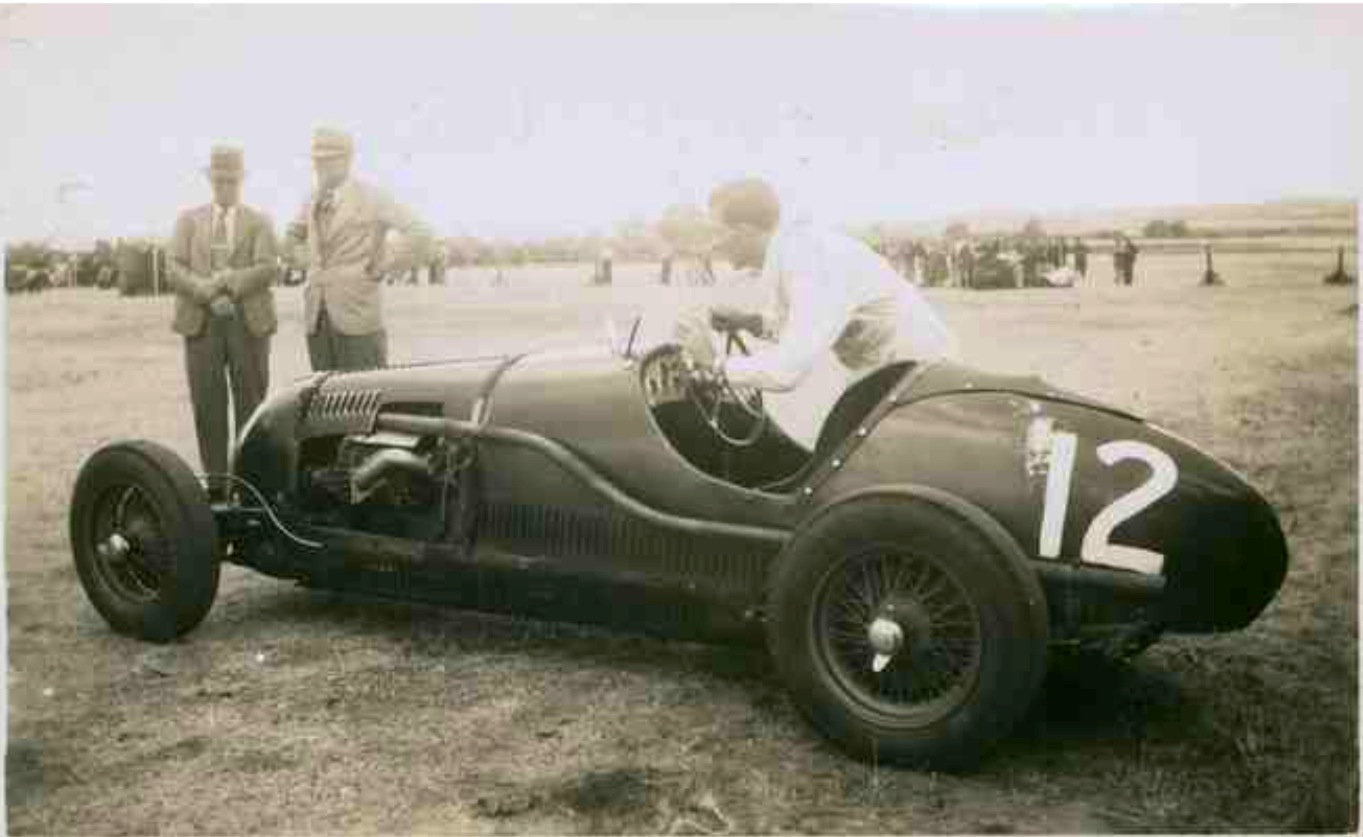

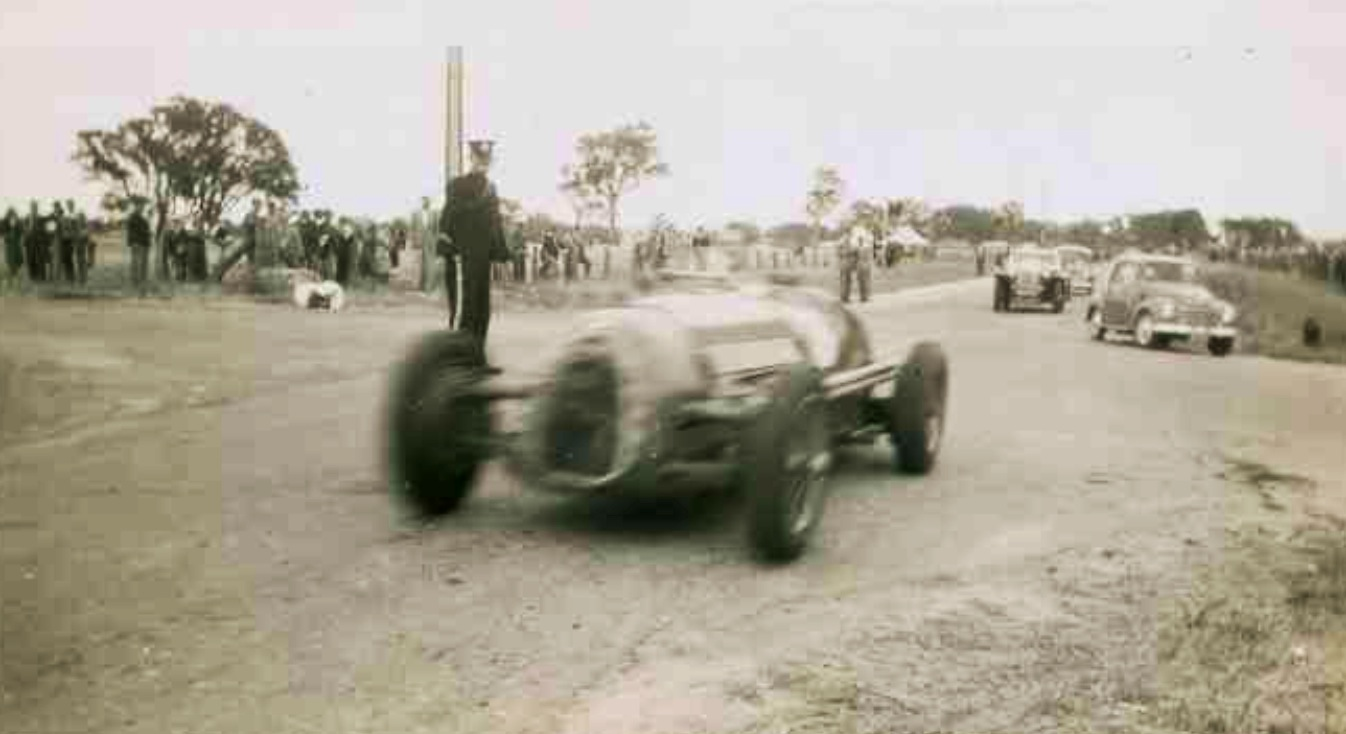


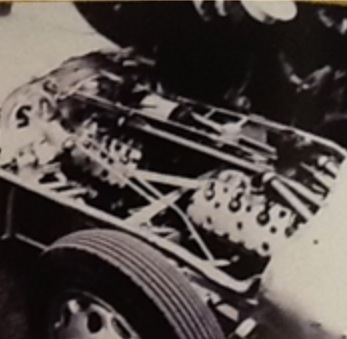


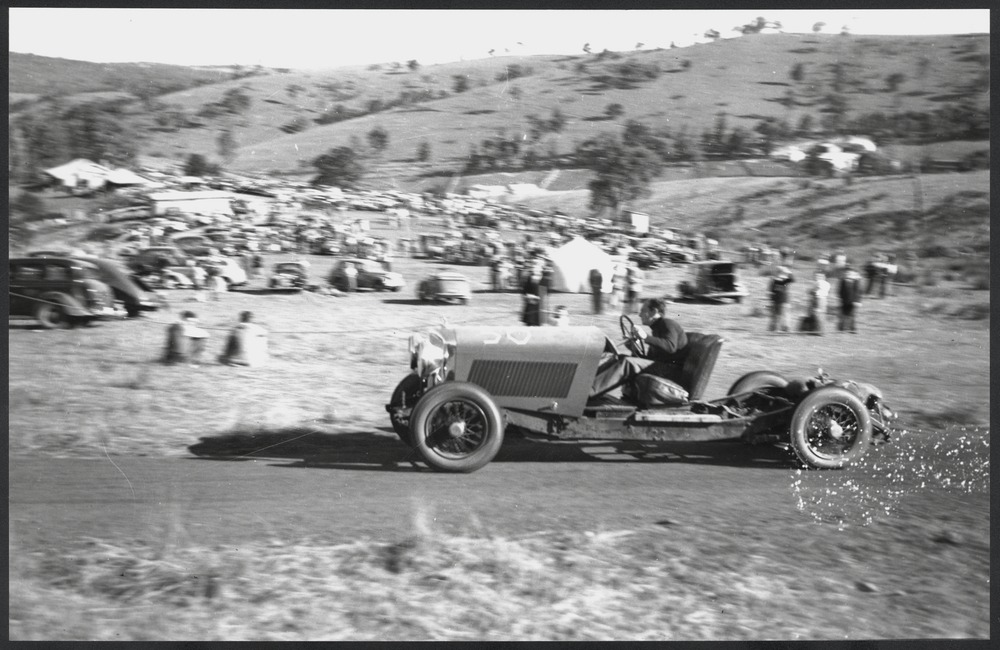
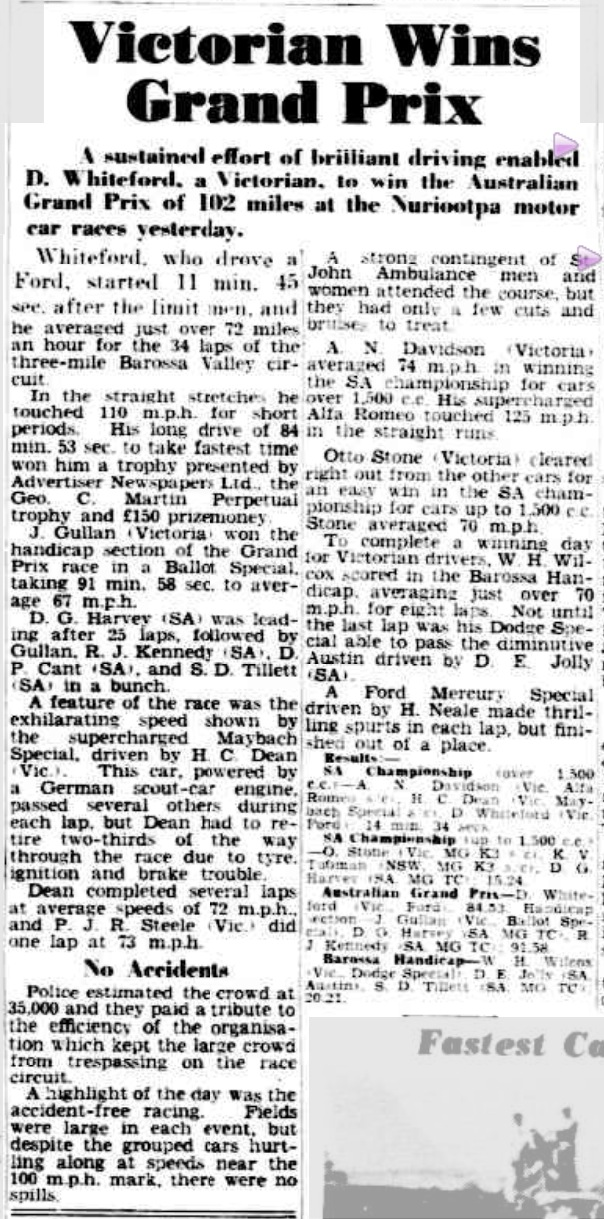


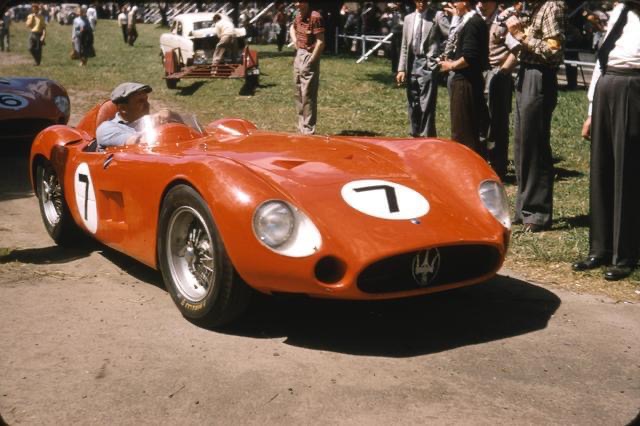
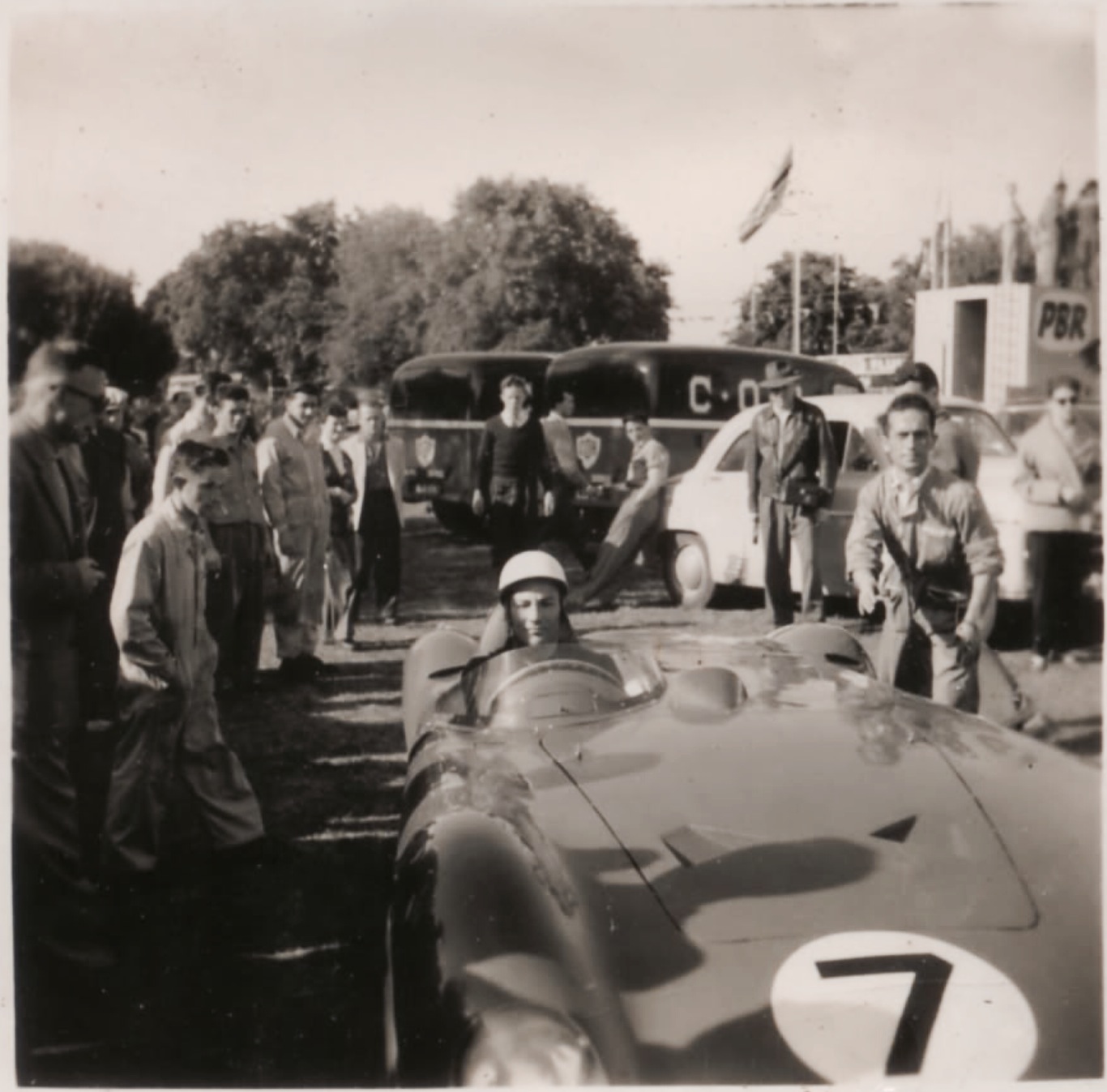
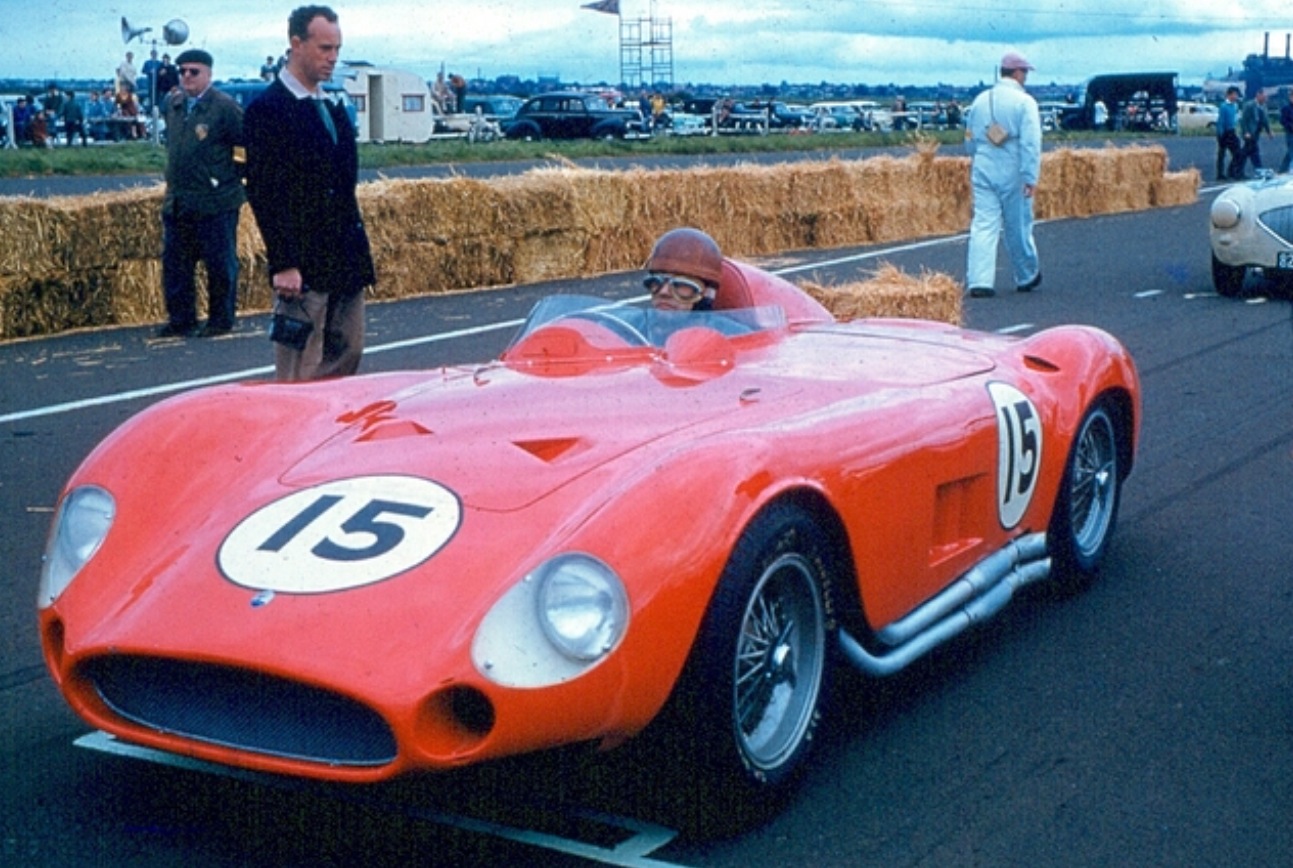

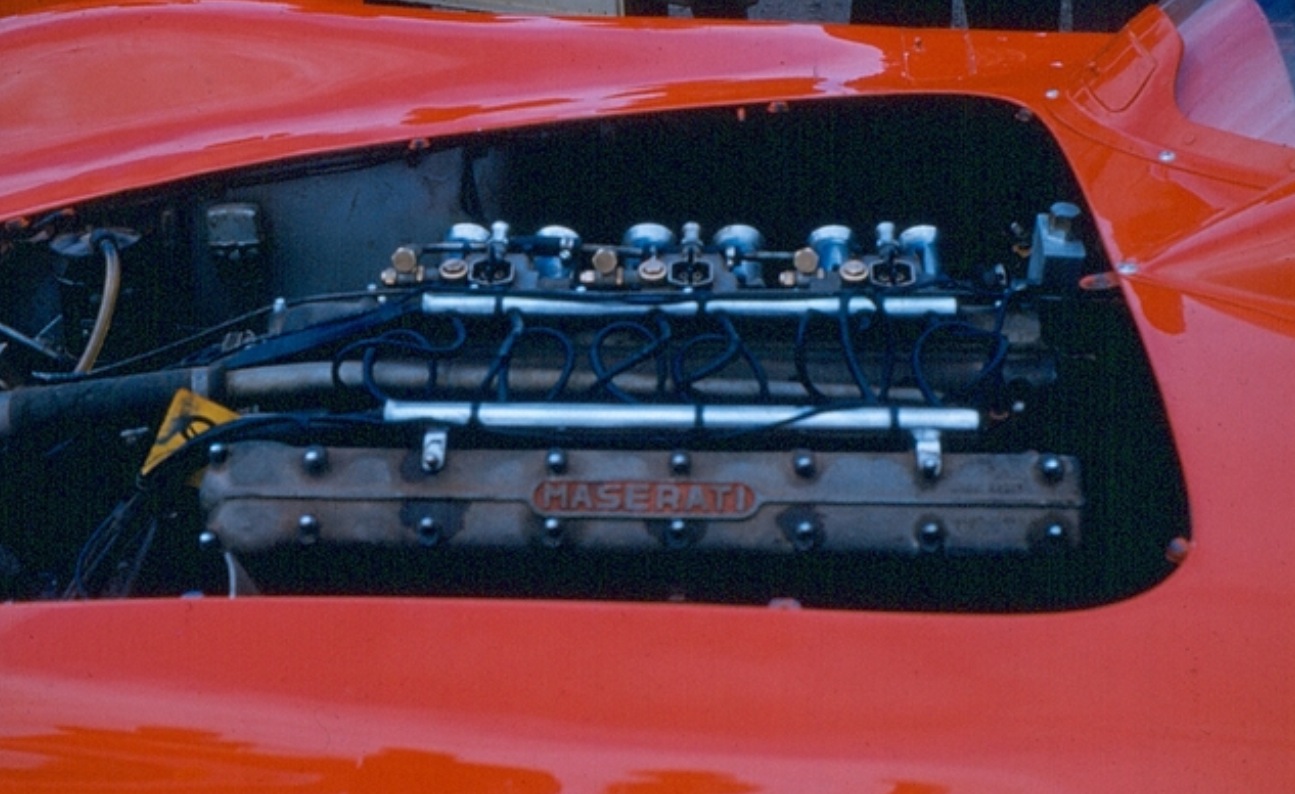


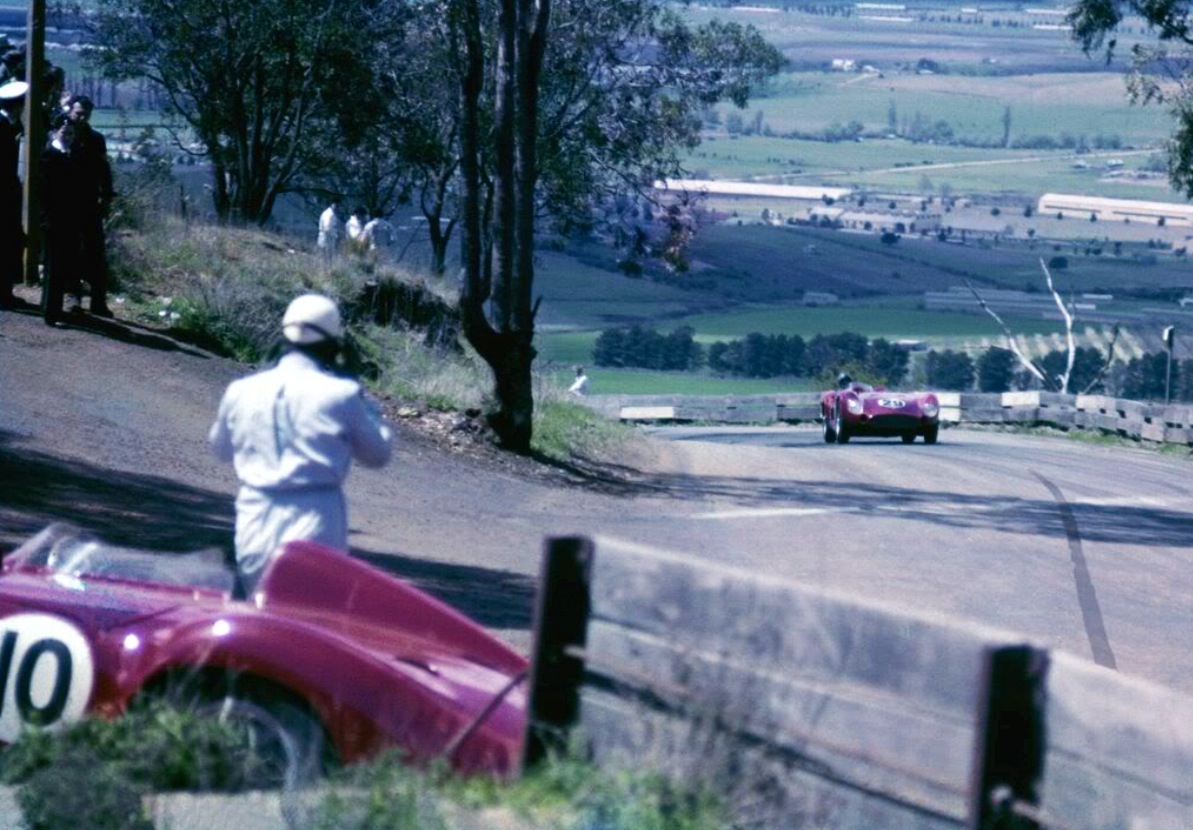

 primotipo...