Archive for the ‘Sports Racers’ Category

(AMR)

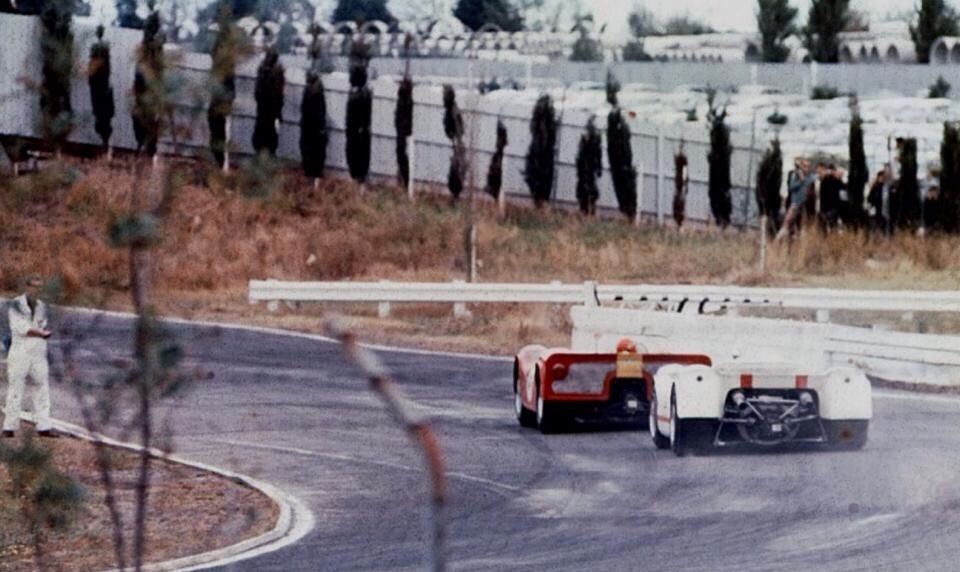
Bruce McLaren points his Ford F3L/P68 into Druids Hill Bend during the 1968 Brands Hatch 6 Hour on April 7…

I guess we all have our favourite racing eras, my own are the seventies and eighties but visually the ‘last front engined decade’, the fifties and the ‘first mid-engined decade’, the sixties have to be right up there.

In sportscar terms the latter is stunning- the bill of fare without limit from the Ferrari 250P early in the decade to the 512S at its end (1969 design and 1970 raced), Lola Mk6 to T70 Mk3B, Chaparral 2 to 2H, Porsche 904 to 908, Elfin Mallala to ME5 and Ford GT40 to F3L.

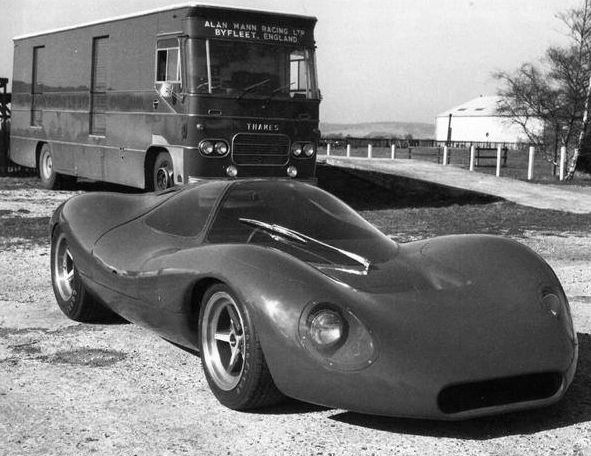
The F3L has to be a candidate for the hottest of hotties with its extravagant length, voluptuous but subtle compound curvature- it’s possibly the spunk-muffin of them all but sadly, as is so often the case with stunning chicks, the beauty was only skin deep.
On the face of it Fords 3 litre Group 6 challenger- the designation is an acronym for Prototype 1968 Ford 3 Litre had all it needed to succeed; the backing and funding of Ford UK, Castrol and Goodyear the most punchy, torquey and reliable F1 engine of the day- the Ford Cosworth DFV, it was designed by the very well credentialled Len Bailey- then on the payroll of Harley Copp, Ford Director of Engineering and built by Alan Mann Racing in Byfleet, Surrey. On top of that the roll call of drivers included the best GP and sportscar racers of the day. How could they fail? But tank they did, by early 1969 the project was dead. What went so terribly wrong?

No less than father of the Ford DFV program, Ford’s European Director of Public Affairs, Walter Hayes launched the F3L at a large function of motor racing’s great and good at the Hilton Hotel in early 1968.

The car blew the brains away of all present in terms of its looks, aerodynamics and advanced specification- it was indeed an amazingly compact, fully-enveloped two-seater Grand Prix car in its conception and execution.

(AMR)

Len Bailey was apprenticed at Austin and moved to the US in 1955 where he worked for American Motors and Ford in Dearborn. He was part of a team which worked on Fords racing efforts and then returned to the UK, still employed by Ford as Chief Draftsman on the Ford Advanced Vehicles GT40 project designed by Eric Broadley. The body shape of the GT40 in its successful form was designed by Bailey in the workshops of Specialised Mouldings with assistance from stylists from Ford UK and US. Bailey designed the Mirage adaptation of the GT40 raced by John Wyer in 1967 and the engineering of many of the Alan Mann Racing touring cars.

In Australia Bailey is best known for his late 1968 Alan Mann Racing built, monocoque Mildren ‘Yellow Submarine’ single-seater, which used some Brabham BT23 componentry (uprights, wheels, steering rack) and was raced very successfully by Frank Gardner, Kevin Bartlett, Bob Muir and Ray Winter way into 1974 powered by Alfa Tipo 33 2.5 V8 and Waggott 2 litre TC-4V engines in ANF1 and finally the Ford Hart 416B twin-cam ANF2 motor.
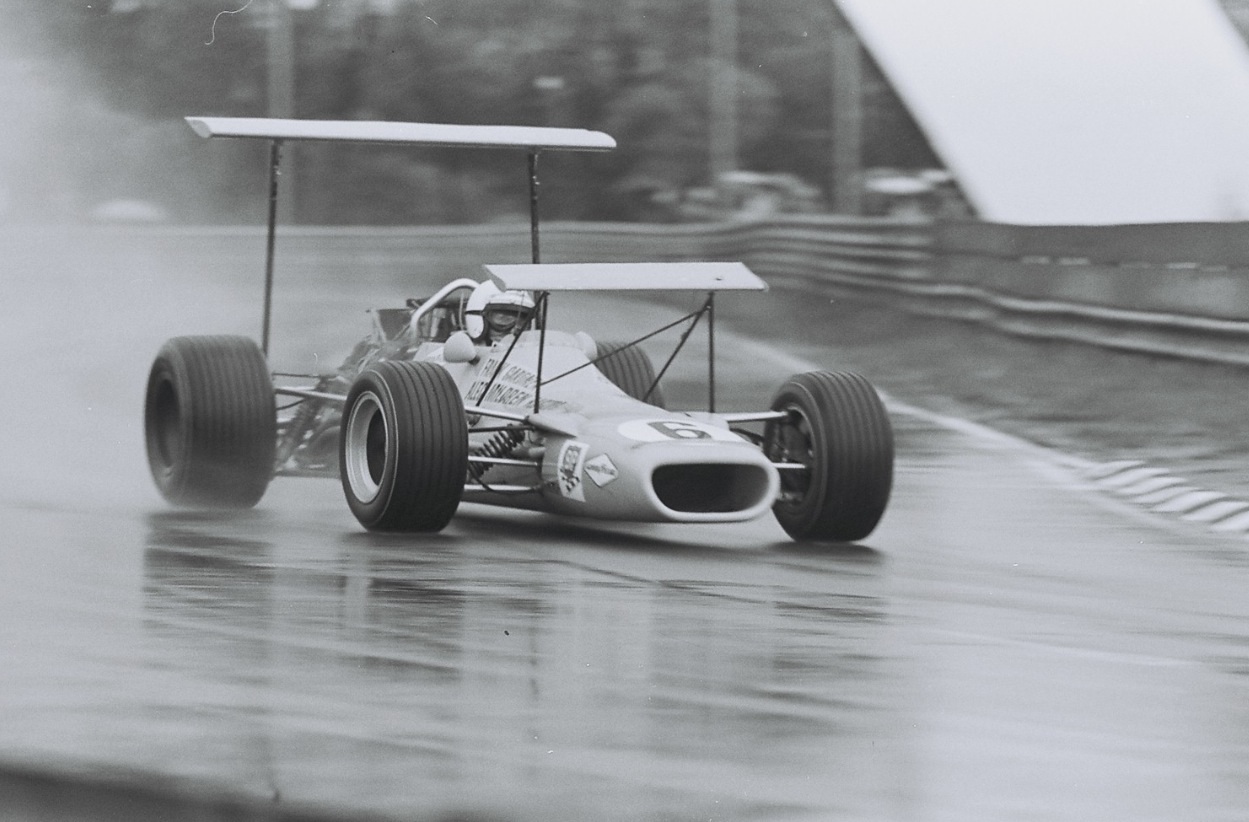
Frank Gardner in Len Bailey’s AMR built Mildren Alfa Romeo Tipo 33 2.5V8 Tasman Formula car in the Warwick Farm Esses during the sodden ‘WF 100’ won by Jochen Rindt’s Lotus 49 Ford DFW in a blinder of a wet weather drive, FG was third in this excellent car. It was a front three car, the absence of wings before the Australian leg meant the car didn’t realise its ultimate pace that summer- god knows why it was delivered from the UK sans wings, its not as tho Bailey or FG didn’t know they were needed?! Superb car which won races throughout Australasia and Asia thru till 1974. Still extant in the hands of the Ayers Family in Waggott engine form (B McInerney)
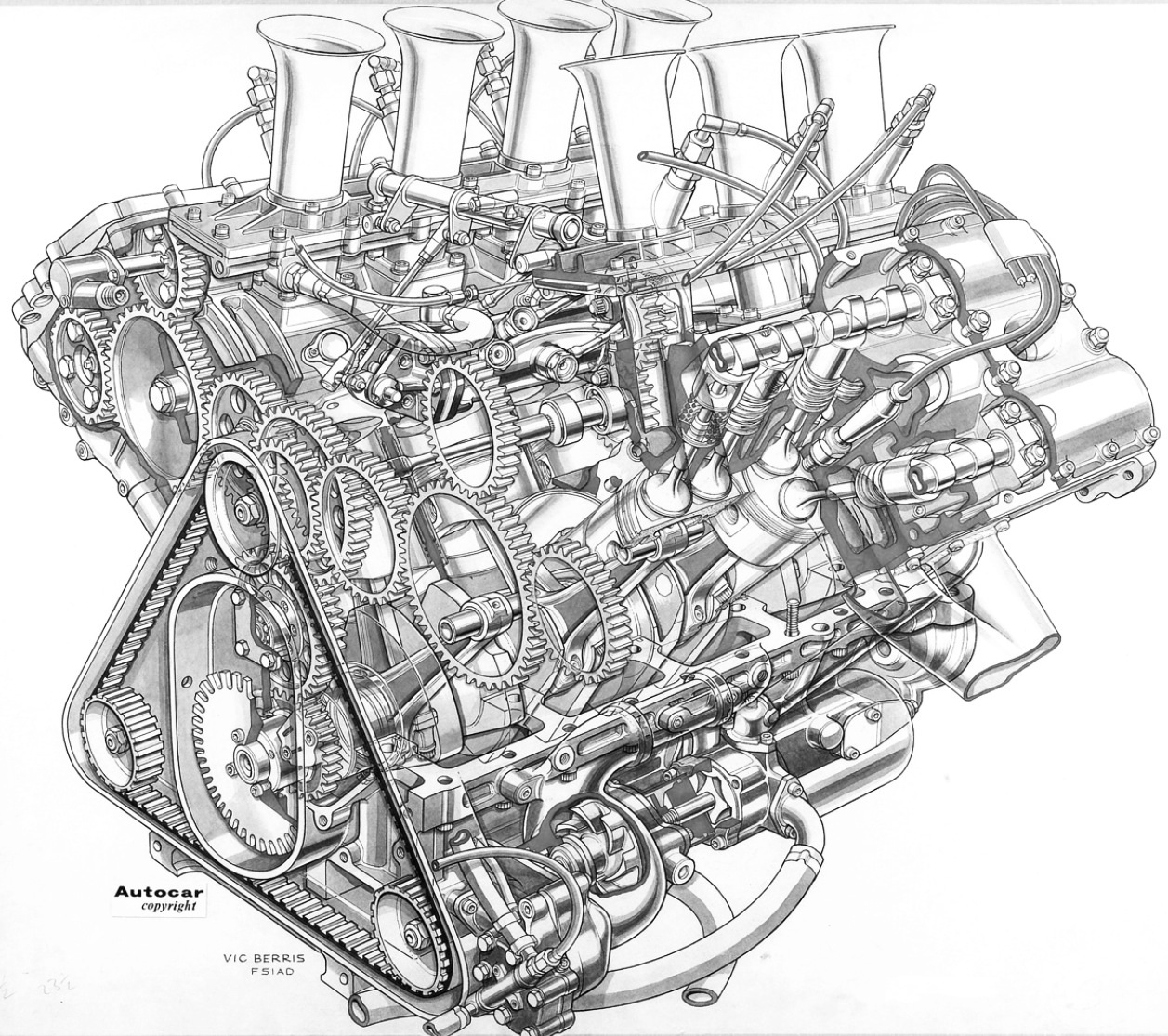
 

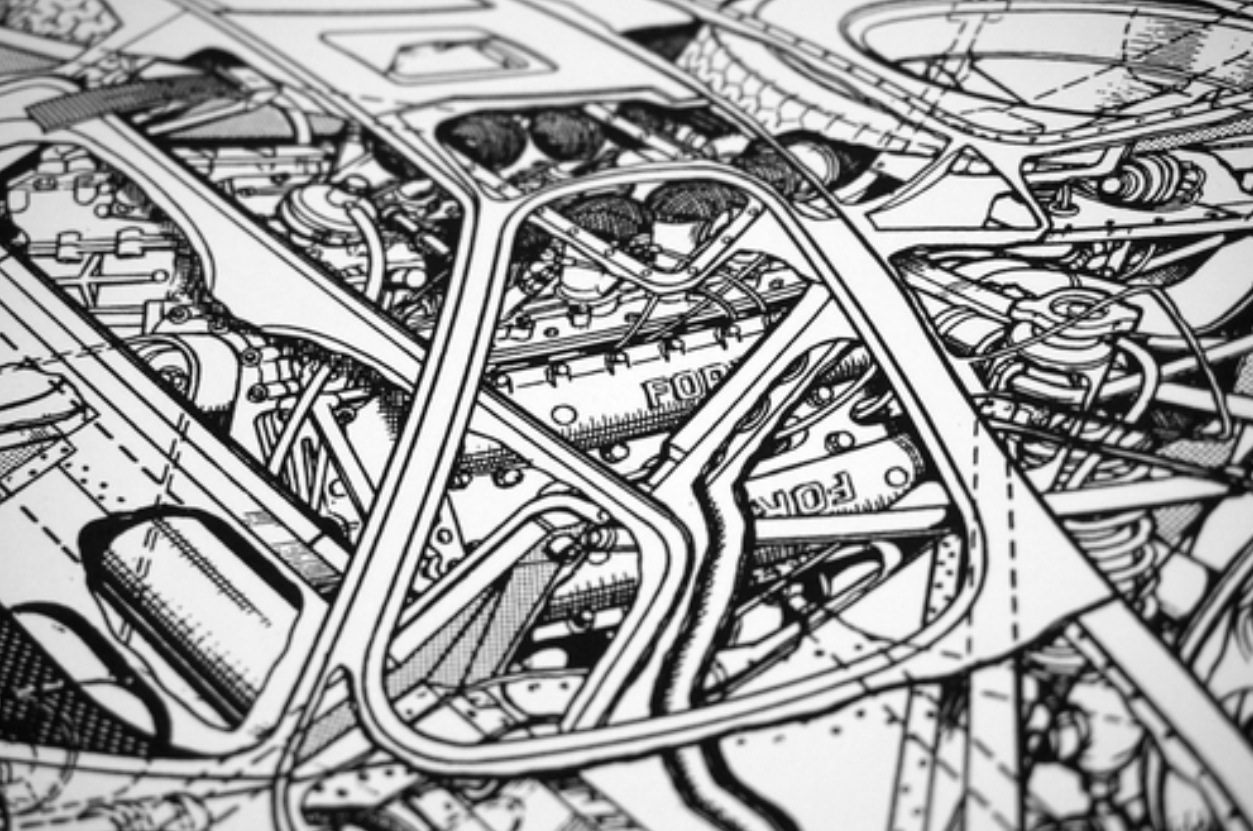
Superb Ford Cosworth DFV V8 cutaway by Vic Berris (Autocar)

Bailey was inspired to build the F3L by the Ford Cosworth DFV given its small size and light weight. Len decided it would make an ideal sprint engine but Keith Duckworth questioned the engines durability, it was designed for 200 mile Grands Prix events after all- so in the first year, 1968, it was not intended to contest Le Mans.

Despite the DFV being concepted by Colin Chapman and designed by Duckworth to be a stressed member of a car the aluminium monocoque Bailey laid down provided for the engine to be carried by traditional aluminium side booms, a choice which was both unnecessarily heavy and problematic in terms of utility. It took too long to remove and replace th engine and it was said heat problems were caused.

The choice of the chassis design is intriguing- whether it was Bailey’s choice or one imposed on him ‘due to political problems within Ford’ is unclear. The latter seems odd- by the end of 1967 Chapman had agreed to Hayes request to make the engine more widely available in 1968 to other teams ‘so as not to destroy Grand Prix racing’, as Hayes was fearful the Lotus 49 Ford cars would do. So Chapman agreed to that, despite his contract providing Lotus with engine exclusivity for a period of time. The point in this chassis design context is that McLaren and Matra, in designing their 1968 M7A and MS10 GP cars located their engines exactly as Chapman did on the 49- they were bolted the the rear chassis bulkhead, that is used as stressed chassis members rather than supported as Bailey/Mann chose to do, or were forced to do, with their F3L sportscar.
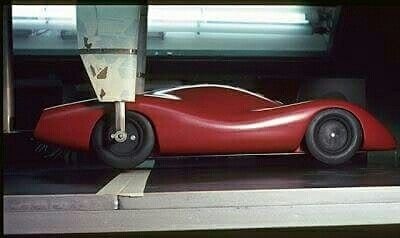
Inperial College wind tunnel in 1967 (unattributed)

To finish this long treatise on the F3L chassis Autosport’s John Bolster in an article he penned about the car in March 1968 reported it ‘was a full monocoque with riveted and bonded aluminium panels; in fact the only unstressed panels are in the small removable nose section and the tail. The skin is of 0.03 inch malleable aircraft alloy throughout, and the shape of the body is intended to produce the lowest possible drag while keeping the small, light car on the ground. At 200 mph it is calculated that a downward force of 600 pounds will be generated’.

The compact size of the F3L is stunning in any picture of it, this is in part due to the cars wheelbase which was a short 7 feet 3 inches with a track of 4 ft 7 ins. The wheelbase was ‘considerably shorter than that of the grand prix single-seaters employing the same power unit’ Bolster wrote. He continued, ‘No doubt this short wheelbase can be used because of the stability conferred by the body shape, and in particular by the Ford-patented vortex generating tail. The overall length is 13 ft 10 ins, the width 5 ft 10 ins, the height 2 ft 11.5 ins and the frontal area 14 sq ft’. Whilst the car undoubtedly had the hands of stylists involved, the fundamental shape was developed with the aid of extensive testing in the Imperial College Wind Tunnel during 1967.
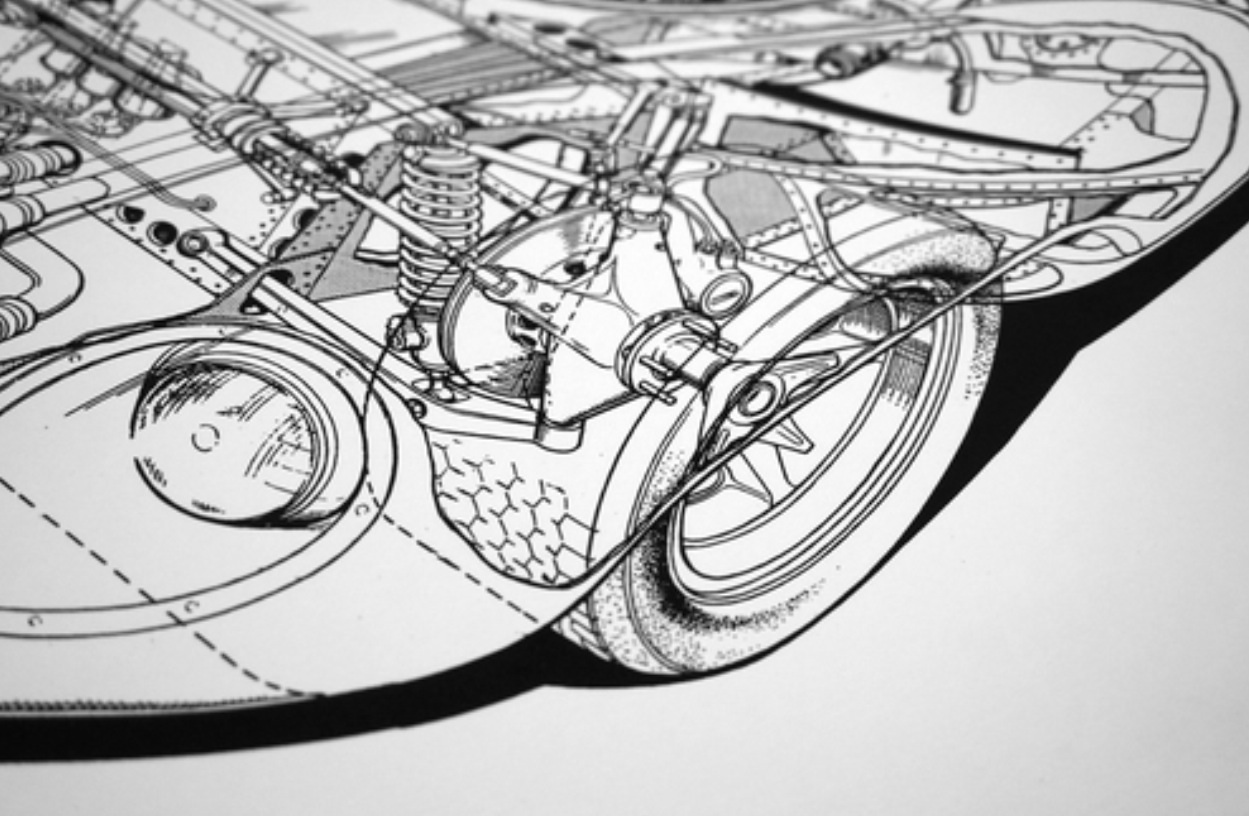
Suspension was GP car standard of the day- upper and lower wishbones with coil spring/damper units at the front and single top links, inverted lower wishbones, two radius rods and again coil spring/dampers at the rear. Roll bars were of course adjustable at both ends. Girling brakes of 11.5 inches diameter were carried inboard of the uprights in the interest of cooling with drive from the hubs provided by short live axles. Light alloy wheels used three-eared knock-on hubs, with peg drive and were 15 inches in diameter with rim widths of 8/9 inches at the front and 14/15 inches aft. Goodyear tyres were used which, given the tyre contracts of the day meant that only Goodyear contracted drivers could be used- not that in any way that limited the talent pool available! Uprights were cast magnesium, steering rack and pinion and the gearbox was a Hewland DG300, relatively understressed in this application.

The 3 litre Ford DFV developed around 420 bhp @ 9000 rpm at this stage of its development, the radiator was mounted at the front of the car with electrics and fuel injection the same as those used in the single-seaters mentioned above. The fuel filler was concealed in the scuttle, the fuel tank capacity was 26.5 gallons, the mandated spare wheel was carried flat behind the engine with compulsory luggage capacity also in the tail. The minimum weight for Group 6 cars was 1435 pounds, the F3L in its early form weighed in at a comparatively svelte 1480 pounds.
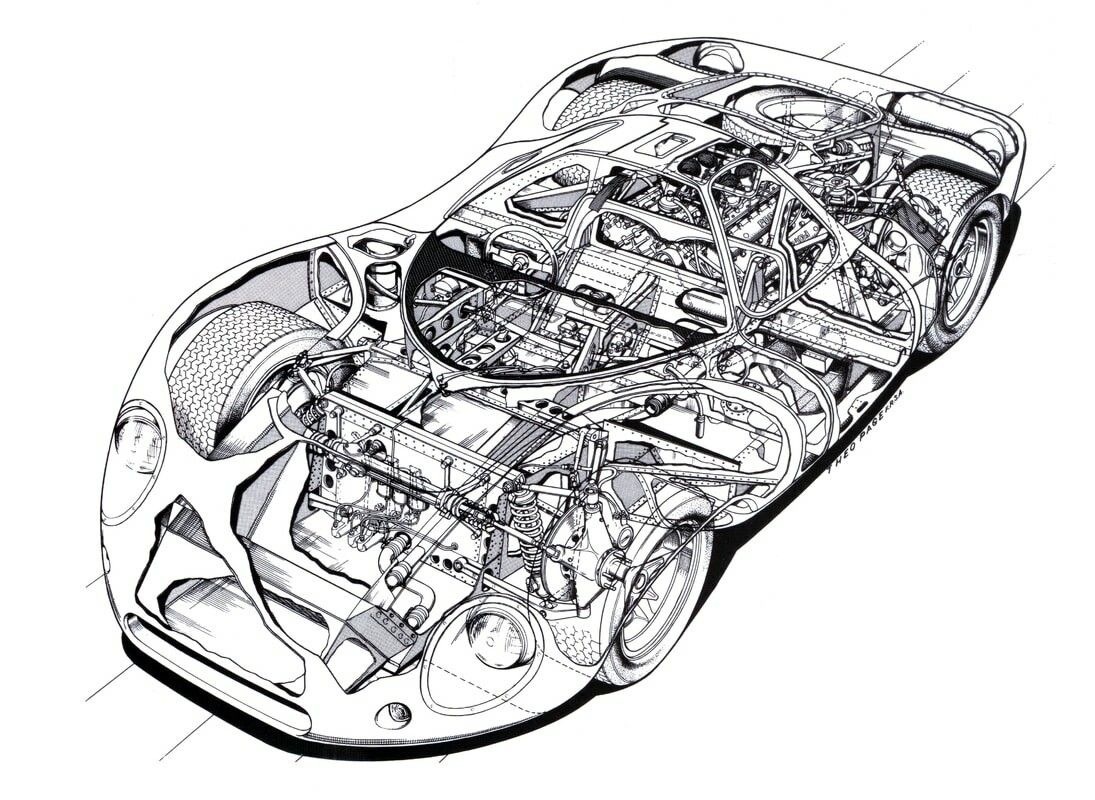
Breathtaking artistry of Theo Page- F3L P68

Bolster reported that ‘It is intended that 1968 be a development season for the car, and Alan Mann will enter it in five or six races. Most of the test driving will be performed by Denny Hulme and Frank Gardner, but Jim Clark/Graham Hill and Bruce McLaren/Denny Hulme are scheduled to drive the cars at the BOAC 500 at Brands Hatch on April 7, which will be the first public appearance’.

If only Jim Clark had raced the F3L that fateful weekend the course of motor racing history would have been quite different, instead the Lotus/Firestone contracted driver raced an F2 Lotus Ford FVA F2 car to his death at Hockenheim.

Bolster concluded his article with the observation that ‘This brilliant design will allow the Ford Cosworth V8, hitherto a Formula 1 unit, to appear in a new sphere. Though the enclosed two-seater is heavier than the single-seaters, its vastly better aerodynamic shape will enable it to reach higher speeds and over 200 mph will certainly be within its compass. This is yet another proof that when Fords go motor racing, they employ all the latest advances in technology and there are no half measures.’

All of Bolster’s observations held true with the exception of half-measures- it was only half-measures in terms of commitment to the cars development which precluded the success that was well within its performance reach…

Gardner’s Nurburgring crutch. The tall, lanky pilot had an extra one and a half inches added to the wheelbase of ‘the second chassis’ built to give him a bit more ‘wriggle room’ (Getty)

The legendary bearded scribbler, Denis Jenkinson, of course attended the cars launch and spoke extensively to Frank Gardner about the car during the function- he was keen for a ride in the new machine with Gardner happy to oblige, a Goodwood test date was soon sorted.

Jenkinson takes up the story in MotorSport ‘I spent a whole day at Goodwood watching Gardner drive the car and he didn’t like the way it steered, though he was unable to explain clearly why. The front end gave no hint of confidence on fast bends and seemed to want to step out sideways, but he could offer no technical suggestions and Bailey and Mann seemed out of their depth with a car they had conceived but were unable to suckle. Jack Brabham was there testing one of his F2 cars (BT23C Ford Cosworth) so Alan Mann asked him to try the Ford. On three laps Brabham approached the chicane and at the last moment thought the better of it and took the escape road. After about 5 laps he drew into the pits, opened the door, and before anyone could speak, he said, in that dead-pan voice that is so typical of Brabham, “How brave do you want me to get?” Without more ado he got on with his Formula Two car and left Gardner, Bailey and Mann scratching their heads, not knowing where to look for the root cause. The late Mike Spence tried the car and was more explicit, describing the movement of the car as being as if the steering rack was moving, making the car step sideways at the front when the torque was applied to the steering wheel. Some primitive, strong arm stuff with long levers indicated that the front structure was rigid enough, and Spence did wonder if the car was aerodynamically unstable, but this was out of the question, for the Ford publicity boys had written pages on the new secrets of the aerodynamics of the tail section which gave the car very special stability. Before the abortive day finished I suggested to Gardner that I’d still like a run around in the passenger seat, if only to be able to see at close quarters what they were complaining about. He was adamant; he said he was reluctantly prepared to risk his own life, but he was not prepared to risk somebody elses. It must have been bad, so I went away and got on with something else’ Jenkinson concluded.

Nonetheless the testing of the car continued, Gardner, Richard Attwood, Mike Spence and John Surtees all drove it and assisted in its development and by the time of the intial Brands outing the car was quick- if unreliable. This is of course not unexpected- the 917 was a pig in 1969, Gardner famously thought he and David Piper should have been awarded an Iron Cross for wrestling it around the Nurburgring 1000 km when none of Porsche’s contracted drivers would- won Le Mans in 1970.

Lets have a look at how the F3L fared at each of its competition appearances.

Alan Mann and Walter Hayes in suit, and the lads, Brands 1968. McLaren/Spence car (AMR)

1968 Season…

Brands Hatch 6 Hour (April 7)

The two-car Alan Mann transporter rumbled into the Brands paddock late for the first day of practice, the second P68 having been just completed. The cars were to be driven by Rindt/Spence and McLaren/Hulme (substitutinq for Clark/Hill, Clark having to take late Lotus 48 FVA F2 commitments at Hockenheim).

McLaren was second fastest in practice with the works Siffert/Hermann Porsche 907 on pole. The other F3L broke its engine and was withdrawn due to the lack of a spare. As a consequence the driver pairings were shuffled with McLaren/Spence teamed to race. McLaren drove a great race, the engine hesitated off the line with Bruce dropping to sixth, but he recovered to lead after 30 minutes. A great dice with Jo Siffert and Vic Elford in works Porsche 907’s saw some place-changing, but McLaren still led at the first pit stop. Spence resumed in third place, but within 20 mins coasted to retirement opposite the pits with a broken driveshaft coupling. The Ickx/Redman John Wyer Ford GT40 won from Q5 with the Porsche 907’s of Mitter/Scarfiotti and Elford/Neerpasch second and third.

Denis Jenkinson saw the race and observed ‘The lone race entry completed only 65 laps, but it held the lead at times, which was most impressive, and when it retired with a broken driveshaft joint everyone was genuinely sorry and we all thought “that car is a certain winner when they get it sorted out”. Oddly enough the strange handling experienced at Goodwood was an aerodynamic instability, and tail spoilers were claimed to have cured all the troubles, as simply as that. For a first attempt in an experimental year the BOAC outing was fair enough, for the car was clearly a winner.’

Gardner, Karrussell, Nurburgring 1968 (unattributed)

Nürburgring 1000 km (May 19)

In a shocker of a meeting for the F3Ls- two cars were entered for Pedro Rodriguez/Chris Irwin and Attwood/Gardner, Irwin crashed at Flugplatz during practice, receiving severe head injuries. The car landed badly on its tail, flipped end to end, the ferocity of the prang caused injuries which hospitalised him for some time.

Interestingly Irwin had done an 8:40.4 lap- quicker than Gardner’s 8:42.5 and good enough for fourth on the grid had be been able to start. On the ultimate test of handling the F3L’s were fast- off the pace of the fastest 907’s but they were very much on home turf and crewed by drivers who knew the place like the back of their hands.

Attwood started the race, but on lap 1 the retaining clip on the right front brake caliper disappeared and the brake pads fell out, Attwood limped back to the pits. On lap 2 the driver’s door came open and twisted itself out of shape, to compound a shocker of a weekend the right rear tyre punctured. On lap 3 Attwood got going again a lap and a half behind the leaders. After a few more laps the engine died due to a broken ignition transistor, the sleek coupe was retired out on the long circuit.

The Siffert/Elford 908 won from the Hermann/Stommelen 907 and then the Ickx/Hawkins Wyer GT40- just under four minutes covered the top 3 cars after 1000 Km of racing.

Chris Irwin about to saddle up for his last, fateful, motor racing laps, Nurburgring 1968, F3L P68 (unattributed)

In a June 2008 MotorSport interview Chris Irwin spoke of that fateful weekend which ended his incredibly promising motor racing career.

‘How the accident happened and why it happened don’t know. I have no memory of it whatsoever. All I can remember of the weekend is that the car I was driving went incredibly quickly and every time I came in I asked them to put a higher top gear in it. We were doing something like 240 mph on the straight. It really was the most lovely piece of equipment before I finished with it.’
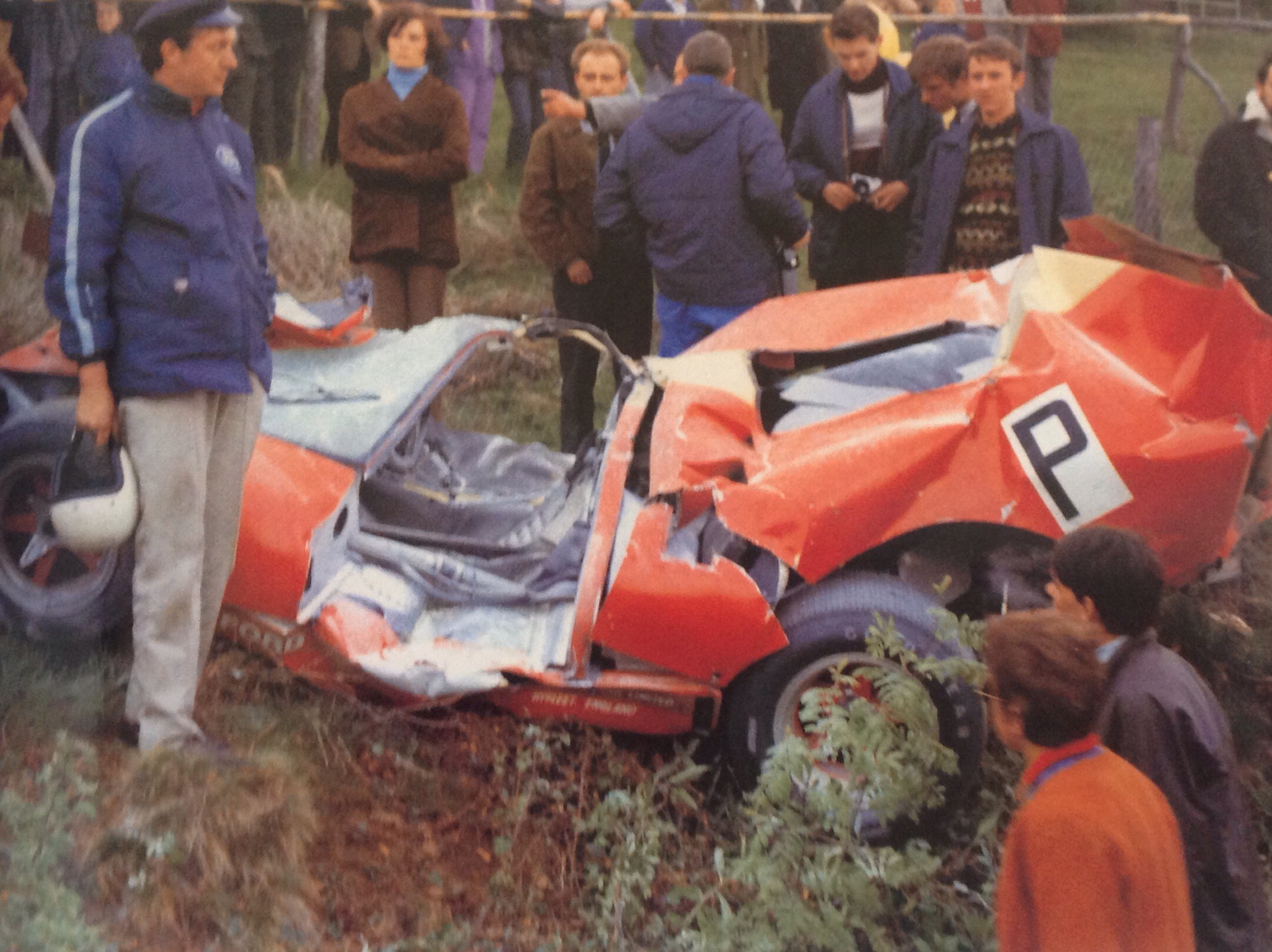
Irwin’s completely wrecked F3L P68 ‘1002 or ’02’ after its Flugplatz landing. I wonder who the Ford fellow with the helmet is? (M Forster)

Irwin spent ten days on life support following the accident. ‘When I woke up they asked me how I felt and I said my right ankle hurt. I’d got a broken ankle and they didn’t know about it. I had to go back to hospital quite a few times for further surgery. I had some very good treatment; the finest that money could buy. I was left with epilepsy as a legacy of the accident, which is controlled by pills, and i’m still allowed to drive’ Irwin concluded.

It is ironic that the death of another F3L driver, Mike Spence at Indianapolis could have opened up a seat for Irwin, with ten GP starts behind him, at BRM for the balance of 1968. The ifs, buts, and maybe’s of motor racing fortunes…
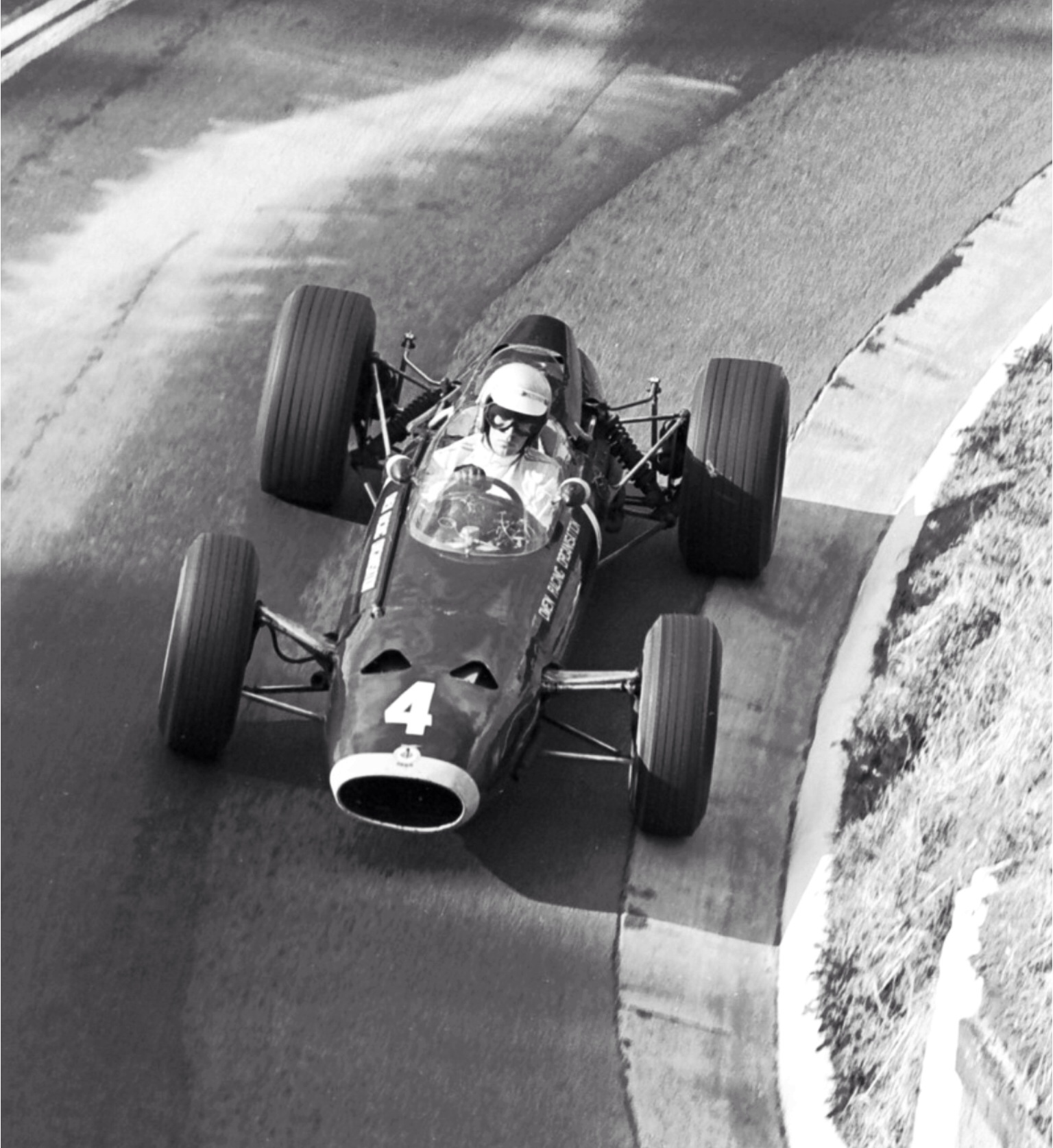
Chris Irwin, BRM P261, Longford, The Viaduct, during the 1967 Tasman Series. Irwin raced this chassis when Richard Attwood returned to Europe- he contested the Warwick Farm, Sandown and Longford rounds for a DNF, 4th and 3rd (DKeep/oldracephotos)


Spa 1000 km (May 26)

The single surviving F3L was driven by Gardner and German racer Hubert Hahne.

High speed stability and predictability are all for driver confidence on the Ardennes Forest daunting road circuit as is the aerodynamic efficiency of the car.

The early handling developmental problems of the F3L seemed to be cured with Gardner taking pole at 145.8mph, with a huge 4 second margin from Jacky Ickx’s John Wyer Ford GT40-and this on a circuit Ickx knew like the back of his hand. The F3L achieved 211 mph on the Masta Straight.

The good work in practice was ruined in the race however. Ickx led Gardner through Eau Rouge, but the F3L slipped to 10th and pitted after the first lap. This was the car’s first run in the rain and cool air ducting funnelled water all over the electrics. Given there was no easy fix the team withdrew the car- again a developmental issue which should have been foreseen but was not difficult to put right with appropriate changes to the machine.

The race was won by the Ickx/Redman Wyer GT40 from the Porsche 907 of Mitter/Schlesser and Hermann/Stommelen 908.

These two front and rear shots are of the Gardner/Hahne F3L at Spa 1968- the car an absolute (unattributed)
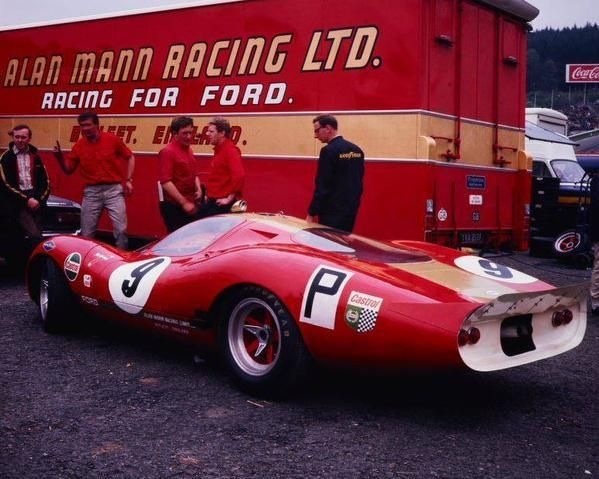
 

RAC TT, Oulton Park (June 3)

A single car was entered for Attwood who took pole at 1:36.0. The F3L led for 10 laps but retired with a Hewland differential failure.

Lacking confidence in the ability of the car to finish the race, Attwood had also been nominated as co-driver in David Piper’s Ferrari 412P- they drove superbly to second place just 9.4 secs behind Hulme’s winning Lola T70 Chev after three hours’ of racing. Paul Hawkins was third in his GT40.

Martini Trophy, Silverstone (July 27)

Another good performance was spoiled by fragility.

Frank Gardner qualified second behind Hulme’s Lola T70 Mk3 Chev, but led from the off staying there for 41 of the 65 laps, causing Denny to spin in his spirited pursuit of the red Alan Mann car. With 16 seconds in hand the DFV engine lost oil pressure, FG retired the car after 41 laps rather than pop the expensive motor. During the race Gardner proved the cars speed setting a new lap record of 1:28.6.

The race was won by Hulme’s Lola from the GT40’s of Paul Hawkins and Ed Nelson.

Later in the year the car was entered in the (sportscar) Austrian Grand Prix at Zeltweg in late August but was withdrawn, Jenkinson said because of ‘political strife at Ford’.

The 1968 Manufacturers Championship was won by Ford with 45 points from Porsche on 42 and Alfa Romeo on 15.5.

Gardner testing the new P69 at Goodwood. Poor quality shot shows front wing between the two guards and fully enveloping nature of the body  (D Phipps)


Due to changes in the Group 6 regulations made by the CSI in relation to windscreen heights amongst other changes Bailey designed a new car for 1969, it was essentially an open version of the P68 but much more revolutionary in its aerodynamic specifications.

When announced to the press on 7 April the P69 was described by Ford as ‘a research vehicle…designed as an integral airfoil study…the P69 continues the (F1) study to the sports prototype field. The P69 integral airfoil utilizes a system of interconnected adjustable airfoil wings mounted at front and rear. Action of the two wings is controlled both mechanically and hydraulically with the pitch angle being governed directly by air pressure bearing on the wing surfaces when the car is in motion’.

‘The front airfoil is mounted low down between the extended front fenders. The rear airfoil is attached by its leading edge to the upper surface of the car. The prototype has a maximum speed in excess of 200 mph and is 15 inches shorter, 5 inches lower, and 2.5 incjes wider than the P68 prototype- a closed car- which first raced last year’.

Len Bailey is quoted as saying ‘We have set out to promote positive downward lift forces with a minimum of drag. Later it is envisaged the rear flap will serve as an air brake which will be directly controlled by the driver’. The engine was of course the Ford Cosworth DFV as used the year before ‘with the water radiator in a special duct at the rear of the car while ducts are cut into the side and underside of the car for the engine and transmission oil cooler as well as the rear brakes and engine trumpets’.

The chassis, suspension and brakes are similar to the P68. At the time of the public announcement wind tunnel tests had been completed at at the MIRA facility at Nuneaton and Gardner had completed a ‘comprehensive test at Goodwood. Drivers announced for the 1969 Brands Hatch BOAC 500 on 13 April were the Australian duo of Gardner and Brabham.
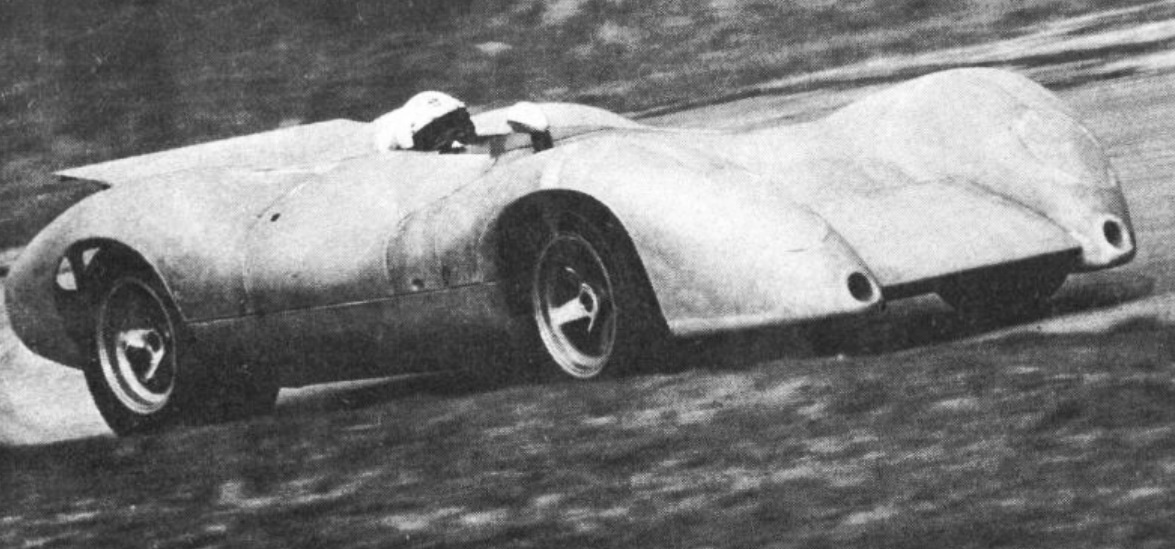
Gardner on the move at Goodwood, shots of car rare, especially in its original form, rear wing/spoiler clear (D Phipps)

Talk about Mann and Bailey doubling their bets!?

You might think the safe move, the winning one would have been to make reliable what was clearly the fastest sportscar of 1968 and win in 1969. But instead the AMR crew added more complexity. One can’t help but wonder if the car wasn’t some type of publicity stunt- the press release said the car had moveable aerodynamic devices which were illegal under the rules then and now. Predictably, the FIA acted swiftly, before the P69 had even raced!

With its moving aerofoil flap between the front headlights and enclosed ‘single-seat’ cockpit there was no way the car could be made compliant without spending a great deal of money. The cars rear mounted radiator was said to be 30% more efficient than the one in the front of the F3L coupe, but if the cars central body section was altered the performance advantages would be lost.

In order to race the car at Brands the car was fitted with a pair of conventional free-standing wings mounted to the front and rear uprights…

Gardner in Ford jacket, Alan Mann a couple of blokes away to his left. Wings added clear, Brands Hatch (unattributed)


Ditto above (unattributed)

1969 Season…

Brands Hatch 6 Hour (April 13)

The new open-bodied P69 ran its bearings in practice, yet again this problem had ruined a race weekend.

Various reports have Brabham not wanting to have anything to do with the car at all having initially driven it but even in the limited practice laps at Brands completed the car recorded a 1:33.0 lap- way off Siffert/Redman Porsche pole of 1:28.8 but again, limited laps were completed and it was the cars first race run.
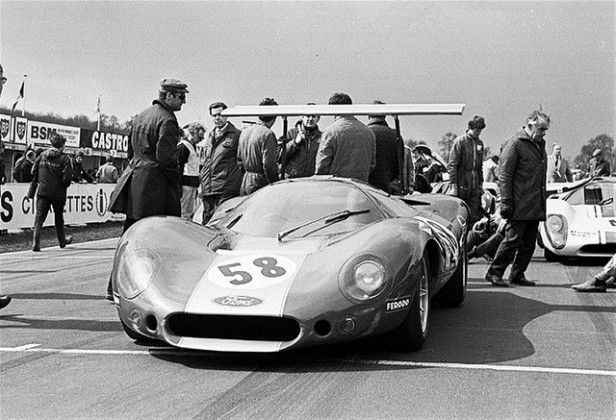
Hulme?Gardner F3L on the 1969 Brands 6 Hour grid (unattributed)

In any event, that now left the P68 coupé- with a suspension-mounted rear wing, in the hands of Hulme/Gardner to start the race without its younger sibling . The car qualified 3 seconds adrift of pole with tired engines a continuing problem, the car, driven by Denny Hulme retired with low oil pressure on lap 14, he held 5th position at the time.

Porsche 908/2’s took the placings- the Siffert/Redman crew won from Elford/Attwood and Mitter/Schutz.
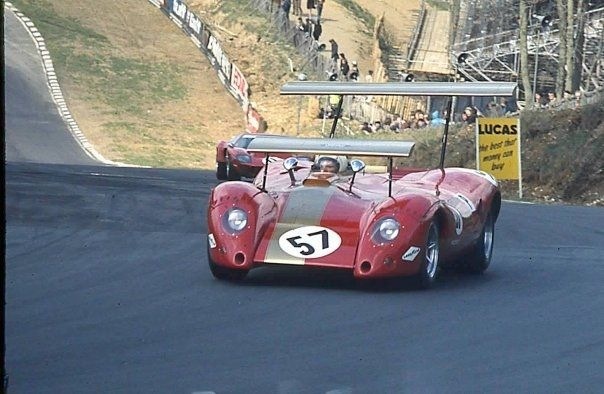
P69 at Druids Hill, Brands 1969, probably Frank Gardner at the wheel (unattributed)

The ongoing engine failures were odd, the motors were not racing beyond GP distances but were failing consistently with atypical bottom end problems.

Richard Thwaites, who acquired the 1968 BOAC chassis #1000 in the nineties identified the cause of the engine problems.

‘When I bought the car ‘chassis No 1000′ was dynotaped to the dashboard, I belive this was original as it was exactly the same faded dynotape as the labelling for all the switches. I had the car restored by Hall & Fowler 1994-96…with regard to the engine problems in 1968 which were mainly bearings, when we restored the car we found a major design fault with the oil tank. Whilst the oil was collected from the bottom of the tank, the outlet pipe came out of the top of the tank and over the monocoque before going down to the oil pump. The oil had to be sucked up about 18 inches and I believe that with the thick oils that were used at the time, it caused cavitation in the oil pump which led to bearing failure. We changed the oil tank so the pipe came out of the bottom of the tank and did not have any problems’ Thwaites wrote.

By this stage faith in the project was well and truly disappearing.

Alan Mann had wanted to gain experience from racing the cars whilst Ford had not wanted to race them until they were race-worthy so there was a certain amount of deadlock. From Ford’s perspectine the good old reliable GT40 had won at Le Mans in 1968 and of course the same John Wyer run chassis ‘1075’ took victory again in 1969- they hardly needed Alan Mann’s cars, as it turned out
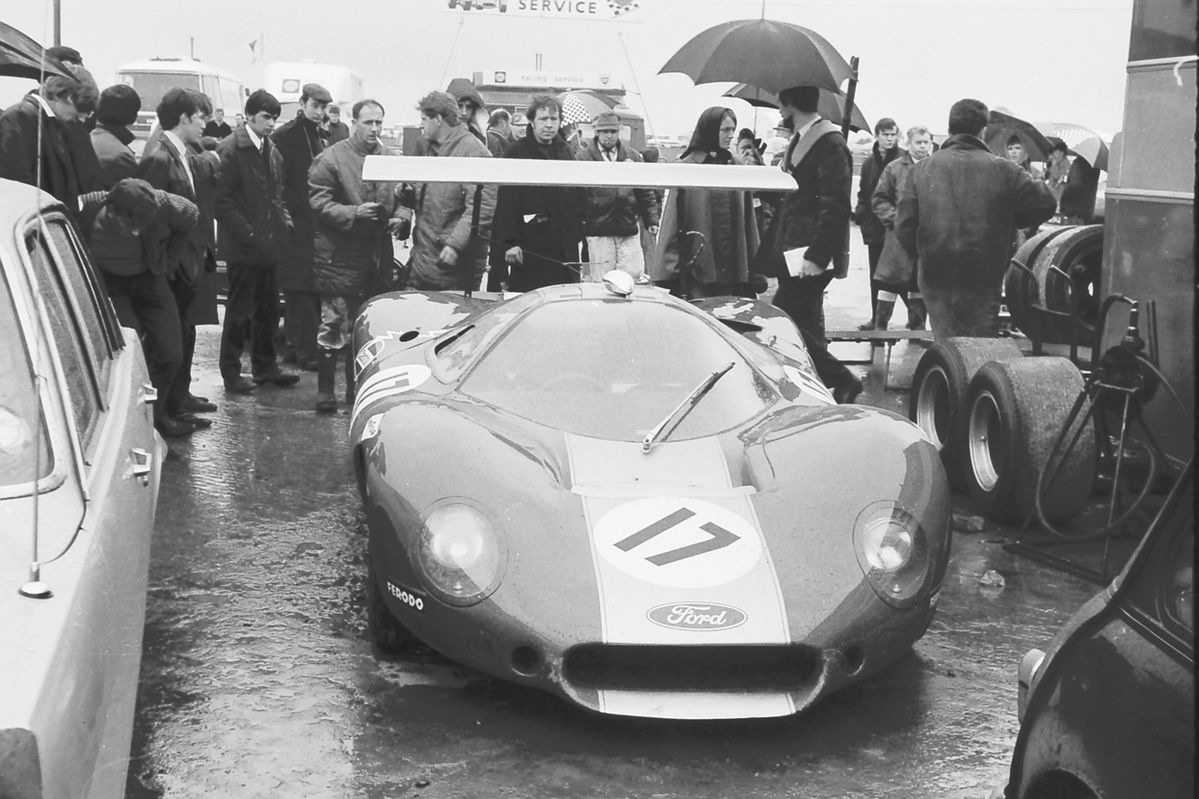
Gardner’s F3L P68 in the Silverstone paddock, Martini Trophy meeting 1969 (unattributed)

Martini Trophy, Silverstone (May 17)

Frank Gardner repeated the  previous year’s pace, by taking pole with 1:28.0. There was very heavy rain on race day, so the team removed the rear wing because speeds would be lower. The engine badly misfired with wet electrics on the warm-up lap, Bailey recalled ‘…suitable rain shields were available , but they were not fitted when the car set off on its warming up laps. The engine popped and banged over the deep Silverstone puddles and there was nothing Gardner could do when seven or eight cylinders all chimed in together at an unexpected moment and put the car off the track.’

Chris Craft won the race from Brian Redman, David Piper and Paul Hawkins, all four raced Lola T70 Mk3B Chevs.

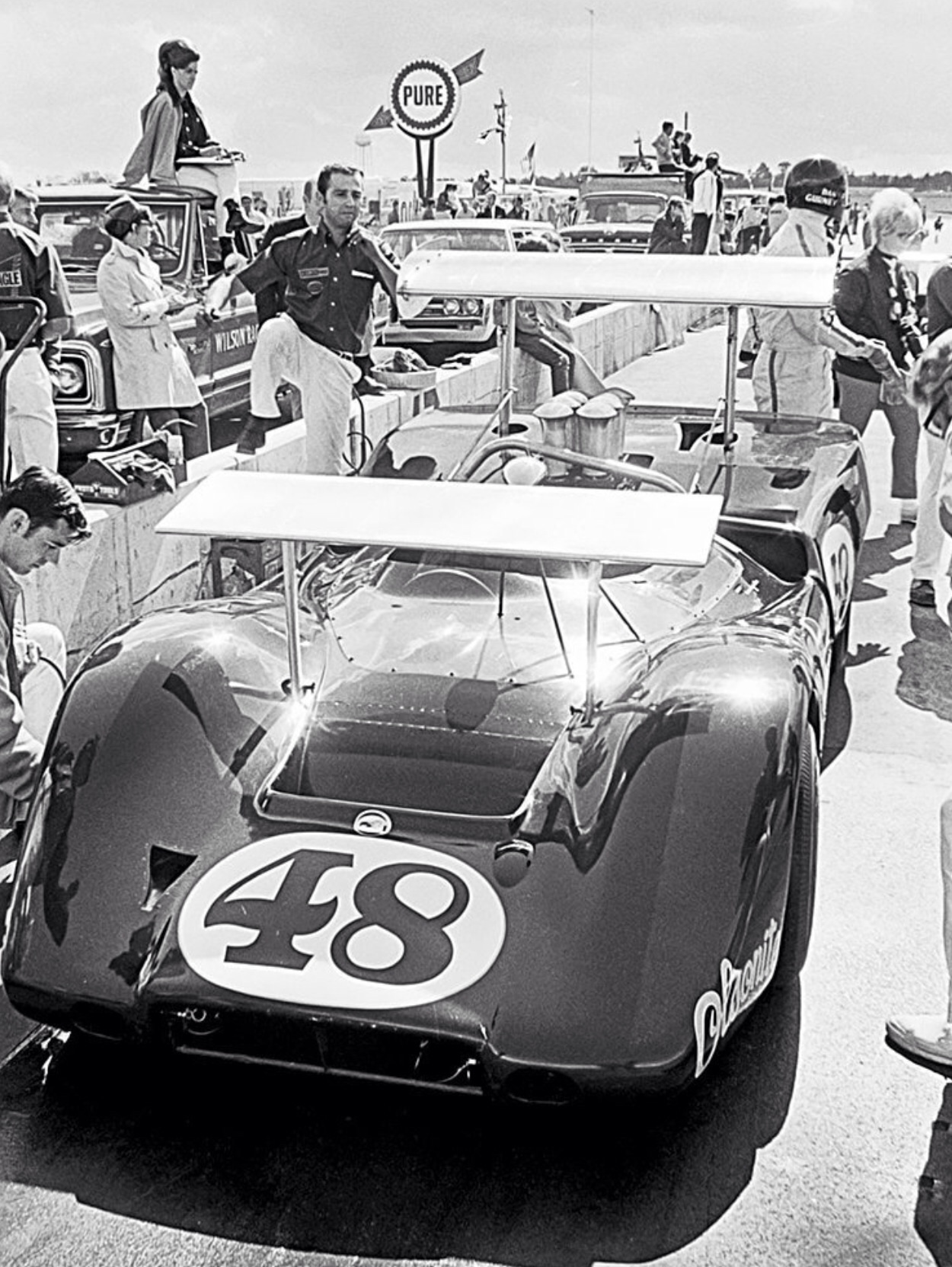
The F3L’s were put to one side in a corner of Mann’s workshop, the final ignominy was for them to be raided as a suspension parts source for AMR’s second Can Am car- the ‘Ford Open Sports’- has there ever been a more sexless name for a spectacular racing car?

But let’s come back to that tangent in a moment, a Ford Cosworth DFV engined car did win an endurance event in 1969- the Imola 500 Km in September.
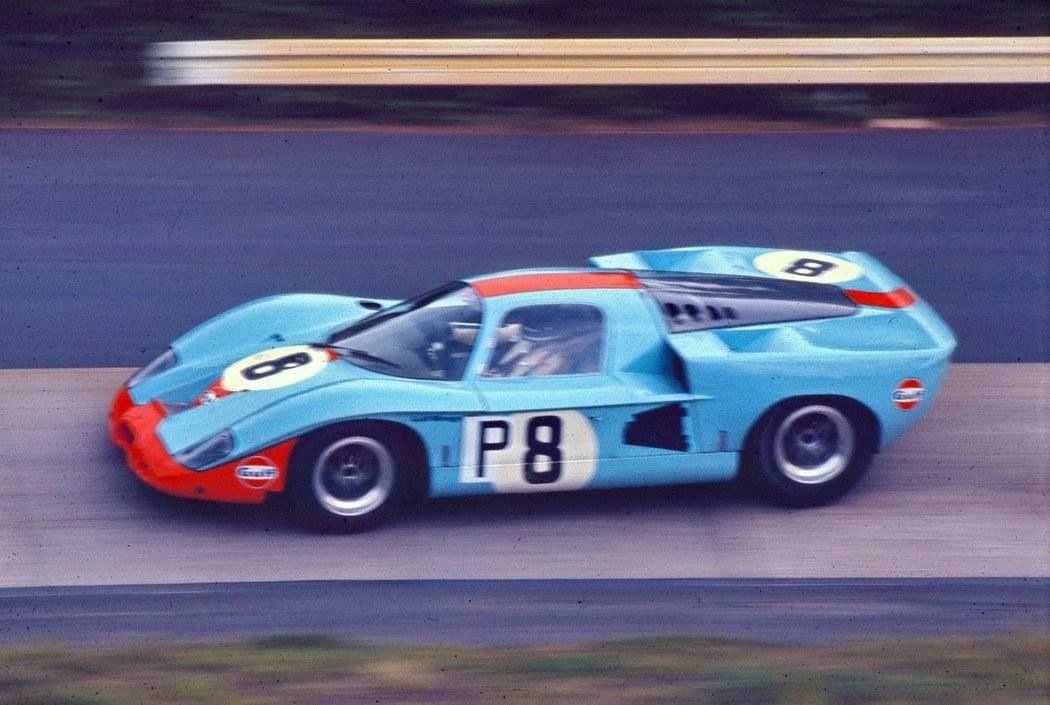
Ickx at the wheel of the Mirage M3/200 Ford Coupe, Nurburgring 1000 Km 1969 (unattributed)

Mirage M2-300 and M3-300 Fords…

When legendary team boss/manager John Wyer considered his JWA Automotive options for the new sportscar rules of 1968 he was keen to get hold of the DFV too- he planned to build a ‘sprint’ car like Alan Mann to supplement his GT40’s which he suspected may struggle with ultimate speed. That option wasn’t available to him as the supply of the motors was limited and AMR got the sports-racer gig.

Undeterred, Wyer briefed Len Terry to design a 3 litre Coupe powered by the BRM ‘sports car’ V12 which Bruce McLaren first used in his McLaren M5 in late 1967 GP events. Whilst quick, the BRM engined cars were not fast enough with Wyer finally getting his hands on the DFV in 1969.

The team quickly modified their existing chassis to accept the smaller, punchier DFV with the M2-300 Coupe having its first race start in the hands of Jackie Ickx/Jackie Oliver in the 1 June Nurburgring 1000 km, why not start with one of the toughest of all events, after all the chassis was well sorted?! The coupe qualified fifth and retired with rear suspension failure.

Bonnier/Muller Lola T70 Mk3B Chev alongside the Ickx/Oliver Mirage M3/300 Ford, further back is the Matra MS650 of Servoz-Gavin/Rodriguez (unattributed)
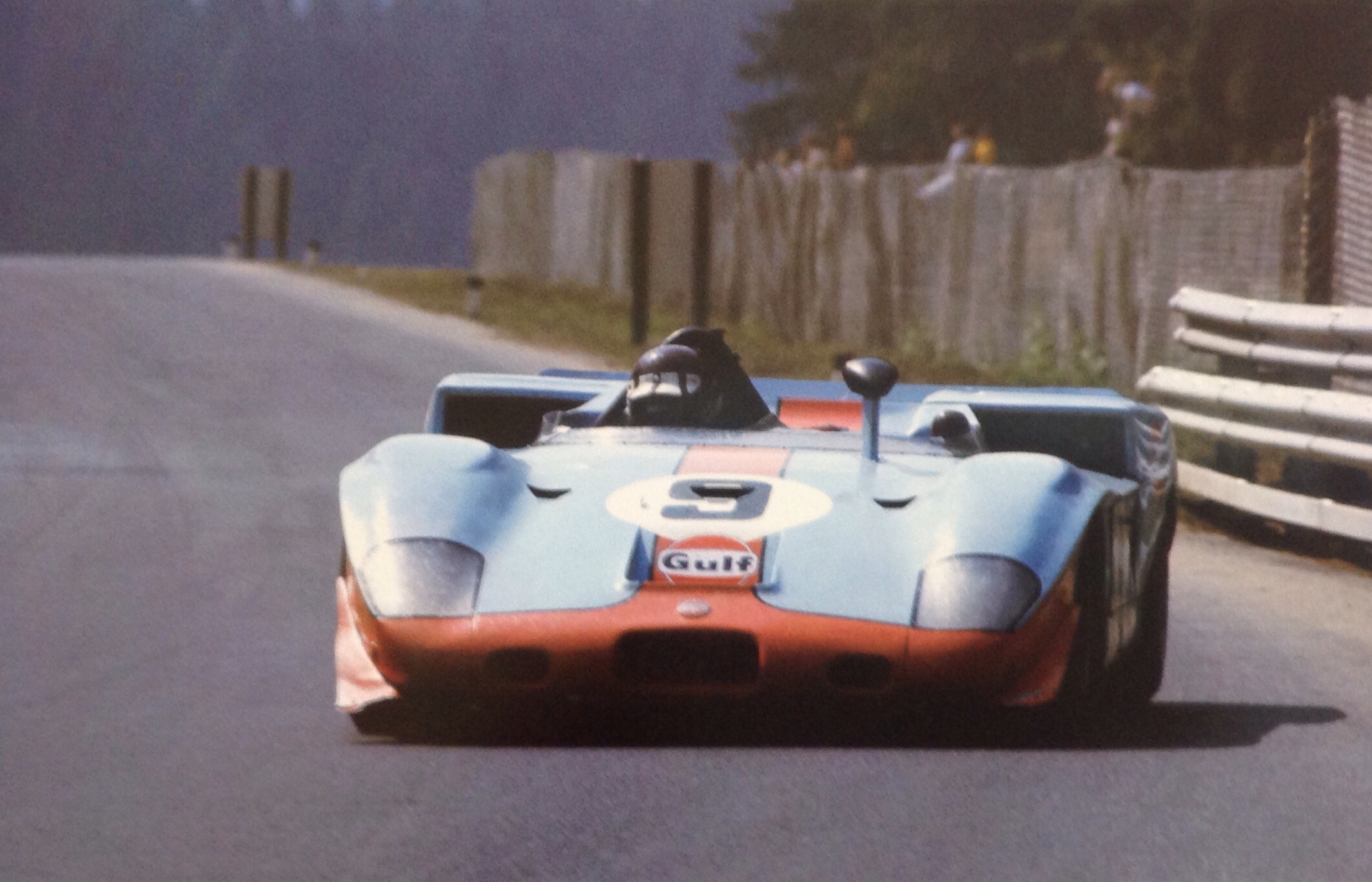
 

Jackie Oliver in the Mirage M3/300 Ford, Osterreichring 1969 (LAT)

At Watkins Glen the same pair raced an M3-300 Spyder- JWA made some minor changes to the racers spec and hacked off most of the heavy body. Q5 and DNF with camshaft failure on lap 112 was the result. Off to the Osterreichring in August Ickx popped it on pole but steering failure stopped the pair short on lap 199- at this stage the Mirage appears to have a ‘touch of the P3L’s- lotsa speed but no endurance!

But Ickx and the little racer redeemed themselves at Imola on 14 September winning the 500 km race in a classy field which included works Alfa Romeo T33/3’s driven by Ignazio Giunti, Nanni Galli and Andrea De Adamich as well as works Porsche Salzburg 908/02’s piloted by Kurt Ahrens, Rudy Lins, Vic Elford and Hans Herrmann.
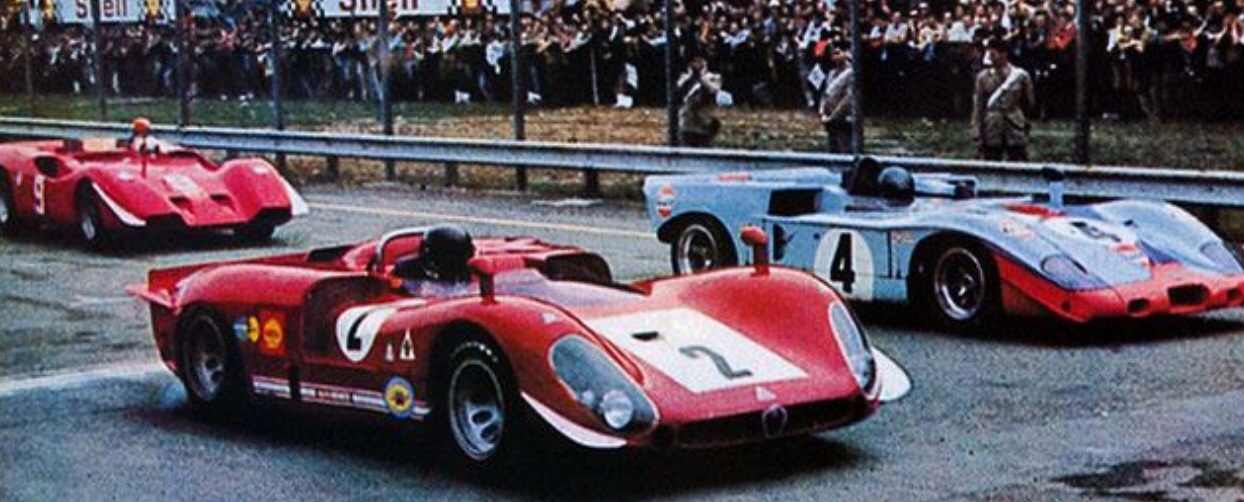
Giunti’s 2nd placed Alfa T33/3 alongside Ickx in the Mirage M3/300 Ford 1st and Art Merzario’s Fiat-Abarth 3000 behind DNF. Imola 500 Km start 1969 (unattributed)

To rub salt into his F3L wounds Frank Gardner co-drove Mike De Udy’s Lola T70 Mk3B in the race and had a front row seat to view the Mirage’s pace as it lapped his troubled Lola several times…

Ickx won from the Giunti T33/3 and Van Lennep/Ortner Fiat Abarth 2000. What Alan Mann and Len Bailey made of this win when they read about it in that weeks Autosport is unrecorded, but if it had been me I would have said- ‘There ya go, you should have stuck with us Walter, we would have got there eventually!’ Perhaps Walters polite response would have been ‘Well Alan, waiting till hell freezes over was longer than acceptable’.

Ickx, Giunti and Merzario from the off, Imola majesty (unattributed)

Where were we?

The F3L’s had been cast to one side in AMR’s workshop as Len Bailey embarked on the design and construction of their last car, the ‘Ford Open Sports’ Can Am racer.

This aluminium monocoque machine was built during early 1969 and tested by Frank Gardner and Can Am ace Denny Hulme before delivery to the ‘States where it was raced in the final two rounds of the 1969 Championship- at Riverside, DNF halfshaft failure by Frank Gardner and at Texas International where Jack Brabham raced it.

Jack qualified the experimental Holman Moody prepped alloy 494cid injected Boss V8 engined car seventh and worked his way up to second late in the race before being slowed by an oil leak which dropped him to third behind Bruce McLaren’s dominant McLaren M8B Chev and George Eaton’s McLaren M12 Chev.

Had the swoopy, curvaceous car been built and tested earlier in the season who knows what the 740 bhp, Hewland LG600 5 speed equipped racer could have achieved?

‘Certainly the potential was there. And yet the Open Sports Ford vanished as quickly as it appeared. Perhaps a victim of Ford Motor Companies lack of commitment to the Can Am, or its drastic budget slash for 1970, or Alan Mann Racing closing its doors at the end of the 1969 season, but the Open Sports Ford never raced again’ wrote Steve Holmes. Click here for more about this interesting car, rather than me getting lost in this tangent- the car still exists too, on Steve’s ‘The Roaring Season’ website; http://www.theroaringseason.com/showthread.php?53-The-Open-Sports-Ford

Gardner testing the Ford Open Sports at Goodwood in mid-1969 (AMR)

FOS- 494 cid ally Holman Moody prepped Ford V8, circa 740 bhp (TRS)

Jack Brabham, Ford Open Sports with Chuck Parson’s Lola T163 Chev at Texas International (unattributed)

After the closure of Alan Mann Racing the two remaining Fords ‘languish under dust covers in a hangar on an aerodrome in Surrey… neither of the surviving cars has suspension, gearbox or engine installed. The suspension was robbed to be put on the Ford Open Sports…In view of the poor results obtained the top brass at Ford were probably happy to see the project at an end. But they had provided one of the most exciting looking sports cars ever seen. Furthermore it was an All-Ford effort which is praiseworthy, and a contrast to other Ford-financed racing ventures’ MotorSport wrote.

One of these Ford financed racing ventures MotorSport referred to was the Ford Cosworth DFV mind you! They go on ‘Bailey is obviously sorry that his baby should have been spurned by its godparents, and indeed thinks it could still be competitive (in April 1970). Weight could come down by replacing the metal nose and tail sections with glass-fibre parts and he still thinks the car would give a Porsche 917 a good run down the Mulsanne Straight’.

Doug Nye picks up the story of the F3L’s in the late 1970’s ‘…I was telephoned by Harry Carlton who was head of Ford’s press department at Warley, Essex’.

‘Knowing of my connection with Tom Wheatcroft and the Donington Collection he told me that Ford’s management had just concluded that the progressively deteriorating pair of Ford P68’s they owned were simply a waste of space. “Unless we can find a home for them, they’re going to be cut up- d’you think Tom might be prepared to house them?”.

‘I told Harry I was sure he would, to guard the P68’s with his life and I’d get straight back to him. I called Wheatie “Ooh aye lad, bootiful, bootiful, get ’em to send ’em oop ‘ere all right”. I called Harry back and put him in direct contact with Wheatie. I think the cars were removed to Donington’s store the next day. One was quite sad and sorry, the other a little less damaged. One of them had a door come open while being trailed back from a motor show…and the airstream on the motorway had then ripped the door clean off…Like so many Len Bailey designs it looked terrific but was somewhat deficient in many areas, not least its nervous SWB handling and-I was told-its structural strength was inadequate to contain the DFV’s devastating vibration’.

‘Tom subsequently, as I recall, part-exchanged one of the cars with Gavin Bain in New Zealand in return for the remains of the Alfa-Aitken Bimotore. The other went to David Piper, and he subsequently built a replica with a slightly longer (more congenial) wheelbase…or something like that.’

‘Richard Attwood recalls one of his greatest disappointments as being in the P68 in the Oulton Park TT. It was so immensely superior to anything else in the field around Oulton, that he was absolutely confident of success- only to be sidelined by some pettifogging fault…I’m quite proud that in small part I contributed to the car’s survival’ Nye concluded on The Nostalgia Forum.
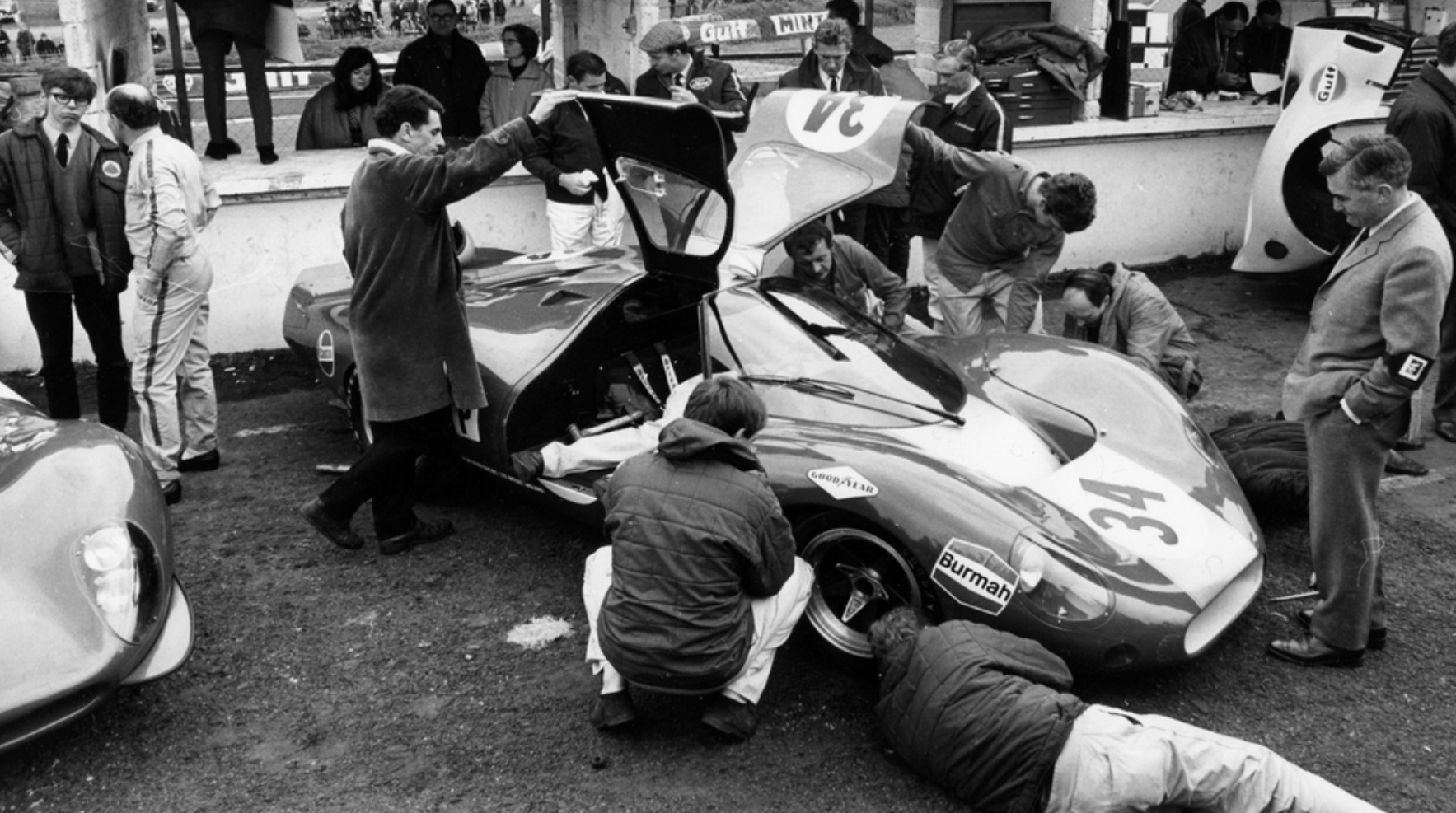
F3L, Brands 1968, McLaren/Spence (AMR)

So, what do we make of the F3L program and why it failed? What would it have taken to succeed? Why did Ford get the jitters?…

 Whatever the design shortcomings of the car, the F3L P68 was an incredibly fast car on medium/quick Brands Hatch, the blinding speed of Spa and the tremendous, unique test of chassis the Nurburgring represents. The speed of the thing is not in doubt.

 The ability of AMR to respond to the necessary developmental changes and preparation is though.

In 1968 AMR built and prepared the Lotus Cortina and Ford Escort twin-cam in which Frank Gardner retained his British Touring Car Championship crown won the year before in an AMR Ford Falcon Sprint. So, its not as though the team ‘lost their touch’, and to be fair the only problems with the P3L which were repeat ones rather than one-offs or learnings were engine ones- which they really should have solved.

Maybe the perfect combination in 1968 was Alan Mann built cars raced by JW Engineering who did know a thing or two about sports-prototype preparation and development!

FG and Peter Arundell play follow my AMR twin-cam leader during the Silverstone BTCC round on 27 July 1968 (unattributed)

The P69, unless there were political reasons for doing it was bonkers. The ‘68/9 winter would have been far better spent sorting what they already had- a very fast but unreliable P68. Had Alan Mann Racing done that and raced the cars perhaps Ford would have won the 1969 manufacturers championship with points gained by its 3 litre P3L and the 5 litre GT40- a win at Brands in early 1969 possibly would have breathed life into a program which was from that moment ‘dead in the water’.

 Its said money was tight and that Ford equivocated in their support. What certainly changed or continued in 1968 was that the GT40 was still a reliable car and a race winner- the venerable Mk1 may have had its sad moments early on in its racing life but it paid back bigtime in 1968/9! Wins at Monza, Spa, Watkins Glen and Le Mans in 1968 and Sebring and Le Mans in 1969 apart from secondary level events fell to the 5 litre beastie. From Ford’s point of view, as 1968 unfolded, they didn’t need the P3L as they thought they did when the car was mooted in mid-1967.

Denny Hulme, McLaren M7A Ford- 2nd behind Graham Hill’s Lotus 49 Ford, 1968 Mexican GP Jarama (unattributed)

Whilst the Ford DFV delivered bigtime in F1 from its debut win at Zandvoort in 1967 it was a sprint not an endurance design, the 3.9 litre endurance DFL Le Mans winner came much later. As the roster of GP teams and privateers formed a queue at Duckworth’s Northhampton door he was up to his armpits in conrods keeping up with the manufacture of engines, rebuilds and ongoing development of the 90 degree V8 to keep ahead of the Matra, BRM and Ferrari twelves. He didn’t have time to mess about with the changes necessary to evolve the DFV into an endurance motor and may well have expressed to Hayes his reservations about the engines being used in an unintended application, with resultant failures- and the risk to Ford’s reputation in relation thereto!

 In addition ‘Going Ford Is The Going Thing’; Ford were winning Grands Prix and World Titles, the Escort was winning rallies, the Ford Indy engine won its share in the US, the Boss 302 Mustang was a winner on three continents- ‘who needs a sportscar program when we have winning global programs and local ones?’ such as that in Australia where Ford GTHO’s were dominant/competitive in touring car racing- may well have been the views of FoMoCo’s top brass.
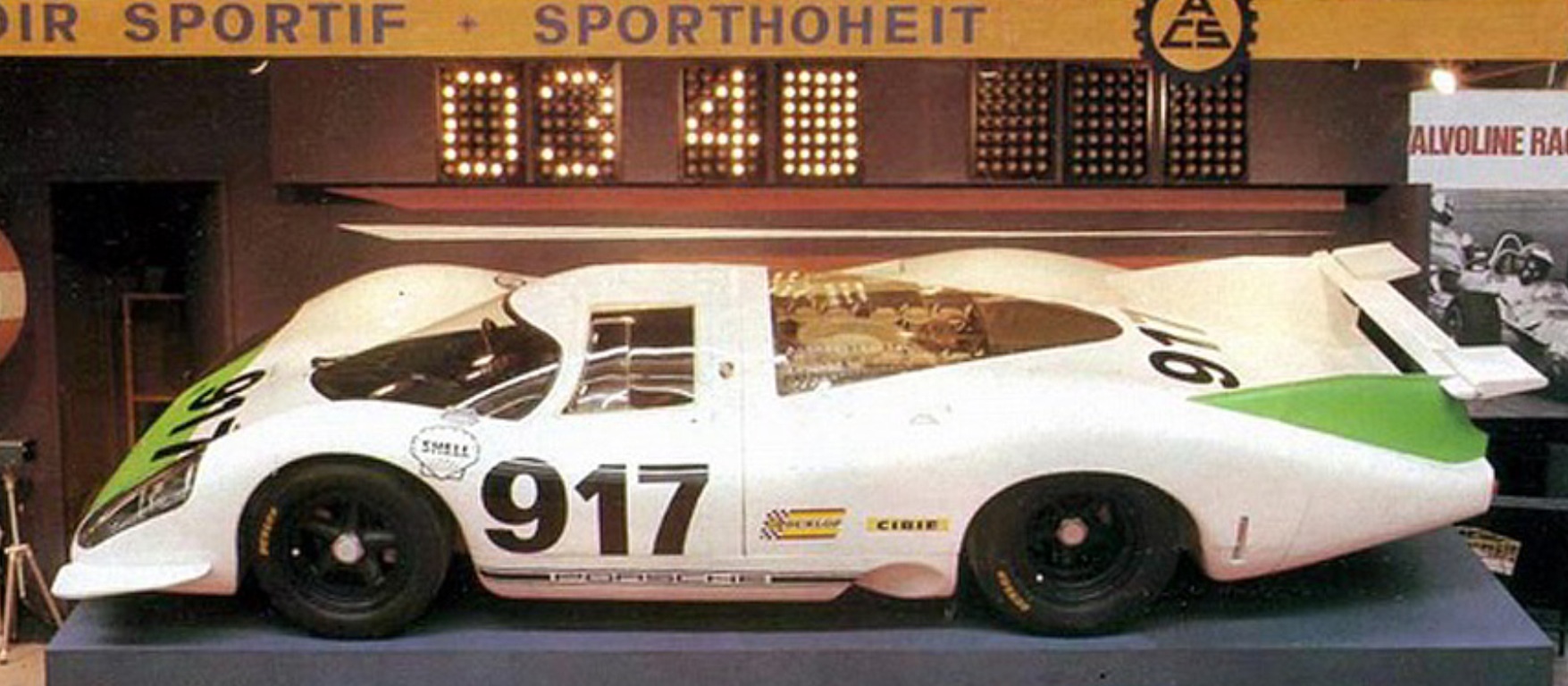
 On 12 March 1969 a Porsche 917 was unveiled at the Geneva Motor Show- the ante was being upped by the 4.5 litre Porsche, and soon too Ferrari with their 5 litre V12 512S, the P3L was destined to be a bit player in this company even if they were reliable.

‘And so there was no further P3L publicity from the prolific Ford writers, no explanations, no excuses as to why they hadn’t swept the 1969 board: in fact nothing more than a deathly hush’ wrote Jenkinson…whilst the remains of the P68’s left over from the Ford Open Sports build were moved, interred really, to a hangar at Fair Oaks aerodrome, near Chobham, Surrey not too far from Byfleet where they were born little more than eighteen months before.

 Sad really for such stunning, fast, under-developed and prepared cars- the P3L’s were on the cusp of delivering all their looks promised but for the application of some race and developmental basics for a professional team like Ford/AMR…
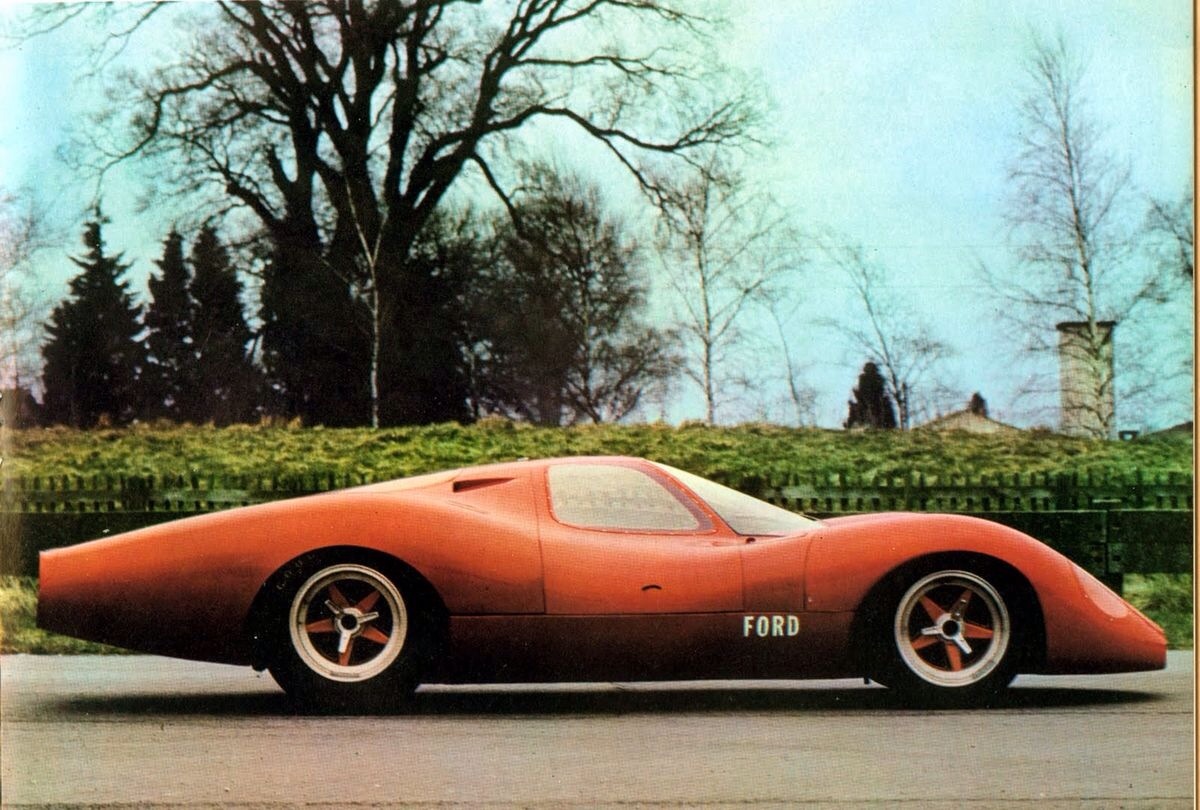
Designers original intent- Ford press shot (Ford)

Chassis Numbers et al…

Treat this as being indicative rather than definitive, none of my usual online sources have neato, fully debated and therefore resolved  summaries of which P68 is which. I have relied mainly on the opinion of Richard Thwaites who owned ‘1001’ for years- but provided the information on the P68’s after he had sold his car and therefore he had no vested interest in the outcome of his particular version of events.

Owners claims always need to be treated with a degree of circumspection during the period in which they own cars in my experience. In most cases the connection between bullshit and the upward trajectory of the fiscal sale implications of the bucket of bolts in question seems way too often to be a temptation even the most devout Catholic of owners fall prey to.

McLaren F3L P68 with one of the works Porsche 907’s behind, Brands 6 Hour 1968 (AMR)

F3L P68 #’1000′ or ’01’

The #34 McLaren/Spence Brands 1968 car Richard Thwaites believes is the car he acquired from Australian Ian Cummins who in turn bought it from Kiwi Gavin Bain who had part-exchanged it in a deal with Tom Wheatcroft.

‘..I am sure it is the one that raced in the BOAC 500 in 1968 as the bodywork is identical to race pictures and the car came with solid discs. I believe David Piper’s original car is the one that was built after Irwin’s crash and subsequently raced in the 1969 BOAC 500. My car did not have the holes in the alloy bodywork for the wing supports, nor were there any signs of welded patches. When I bought the car chassis ‘No 1000′ was dynotaped on the dashboard…the car was later sold by Gregor Fisken’
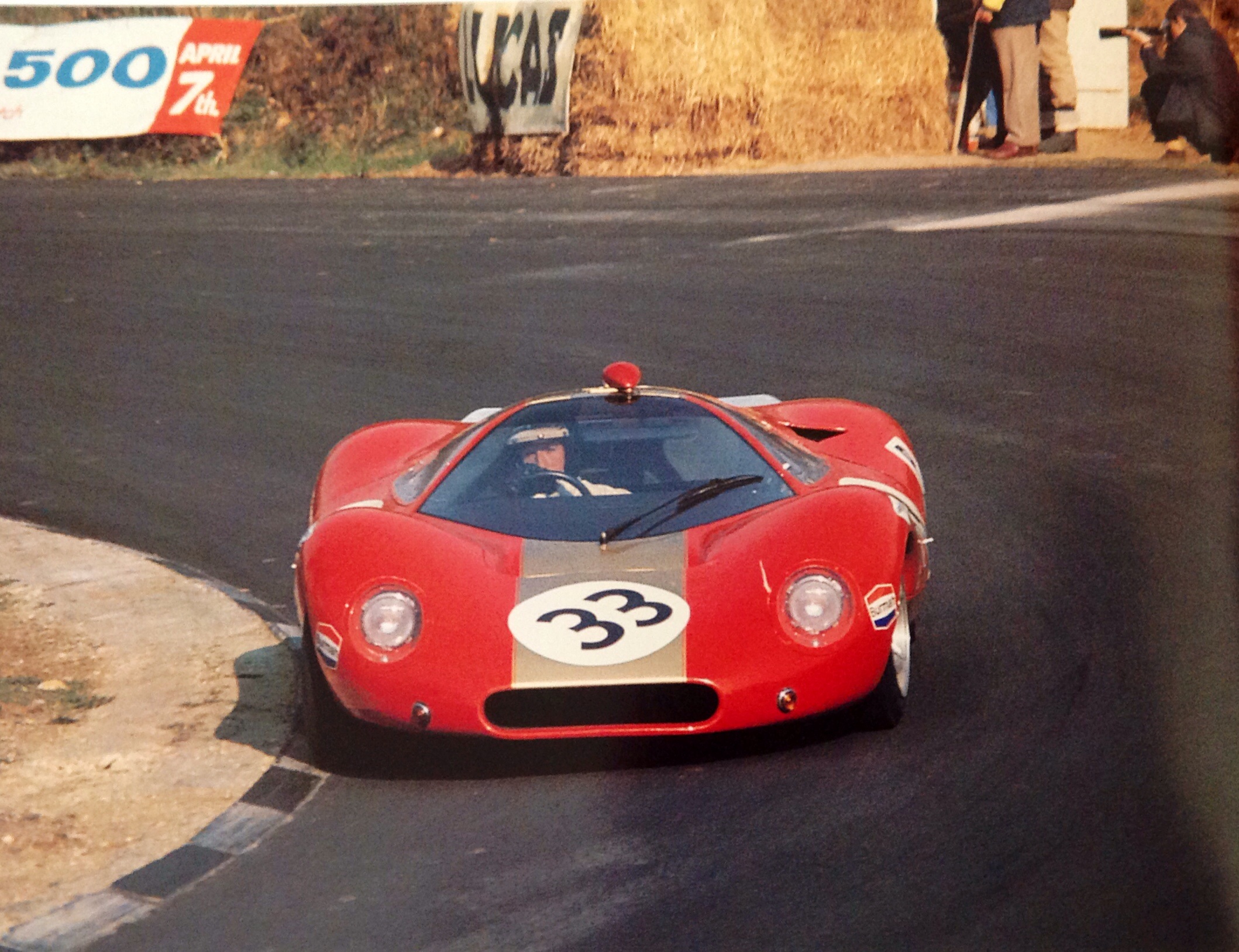
Rare shot of Jochen Rindt in an F3L P68 before the engine popped, Brands 6 Hour practice 1968 (LAT)

F3L P68 #’1001′ or ’02’

Rindt/Spence car at Brands 1968-unraced. Destroyed in Irwin’s 1968 Nurburgring crash.

One version of events is that the car was progressively stripped of useful parts and the remains scrapped- this is the theory to which I subscribe.

The other (David Pipers) is that the remains were retained by Len Bailey after AMR closed and were rebuilt by ex-AMR chief mechanic Brian Lewis in modern times. Raced by Piper and others and later bought by Alan Mann.

Richard Thwaites ‘The Piper continuation car has nothing to do with F3L history. No part of the car is original and it only looks like an F3L because it has a fibreglass replica body with about 10 inches added on the engine cover to cover the extended wheelbase’.

Car has a modern AMR chassis plate ‘P67-F3L-002’ (P67 is not a typo

1969 Brands 6 Hour vista behind Amon’s Ferrari 312P. 55 Elford/Attwood and 54 Mitter/Schutz Porsche 908/02’s, 58 Denny Hulme aborad the F3L P68 he shared with Frank Gardner, 908/02 alongside is Herrmann/Stommelen, blue T70 Mk3B Lola is Taylor/Dibley, red Lola T70 3B is Hawkins/Williams and the white one Sid Taylor’s car driven by Revson/Axelsson…and the rest! (unattributed)

F3L P68 #’1002′ or ’03’

New car built up after the Irwin crash. Raced in the 1969 BOAC 500 by Hulme/Gardner. Eventually to Tom Wheatcroft and then to David Piper
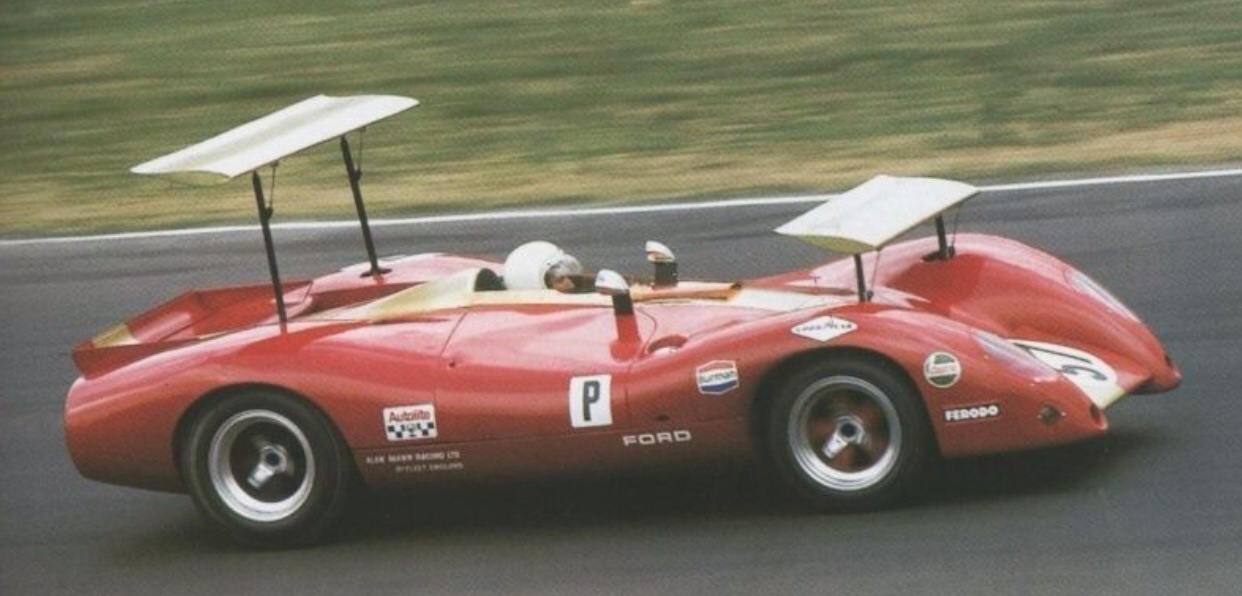
Gardner, F3L P69, Brands 1969- pretty as a picture without the wings! (unattributed)

F3L P69

The car was cut up by AMR after the BOAC 500 debacle in 1969- tested and practiced but did not race.

No doubt the chassis number mystery is ‘resolved’ in the Ed Heuvink book ‘Alan Mann Racing F3L/P68’- if anybody has a copy fill us all in. The jist of the above is right even if the precise minutae is not- noting the veracity and precision of the minutae is critical in these matters of historic accuracy.
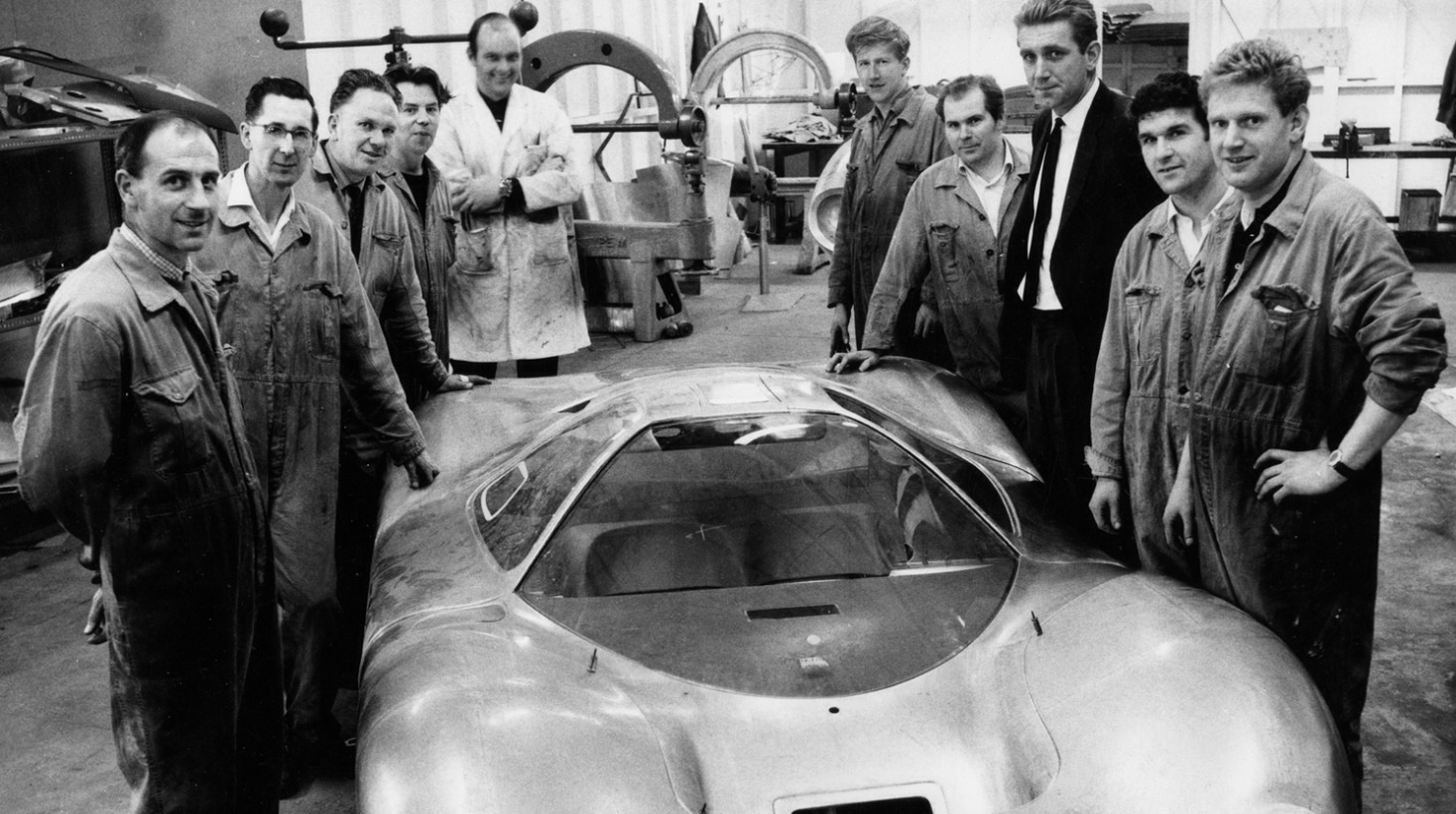
Talented craftsmen at AMR Byfleet during the first F3L build. Alan Mann in suit (AMR)

Arcane Irrelevance…

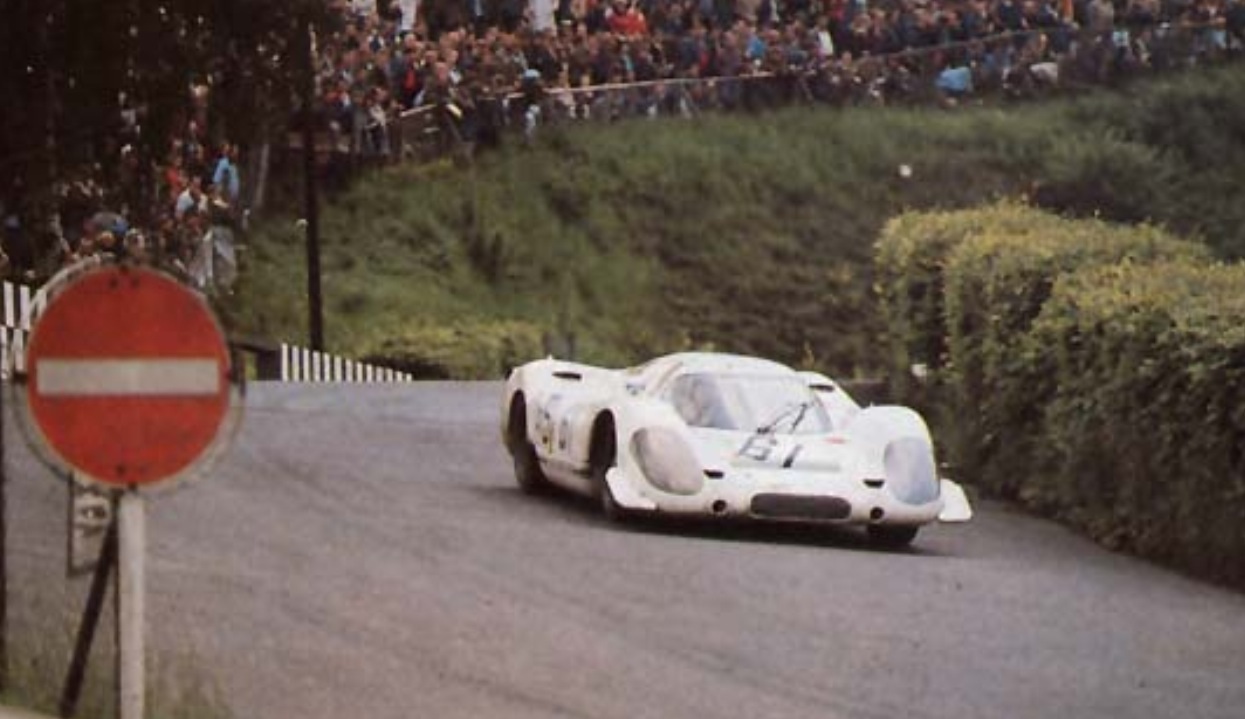
After his first lap in the early, unwieldy, recalcitrant Porsche 917 during the ’69 Nurburgring 1000 km, I’m sure Frank Gardner wished he was in his nifty, nimble, small, responsive, fast…if somewhat unreliable P3L- he qualified the P3L fifth in 1968 and tenth in the Panzer-Wagen in 1969. Mind you, the pace of change, particularly in tyre technology back then is such that his time in the 917 was 4.7 seconds quicker than in the F3L the year before. Gardner and David Piper were 8th in the race won by the Jo Siffert/Brian Redman Porsche 908/2.
(unattributed)

Bibliography…

Autosport 22 March 1968 article by John Bolster, ‘The Nostalgia Forum Ford P68’ thread in particular the contributions of Doug Nye and Richard Thwaites, ‘Classic and Sportscar’ February 1996, MotorSport April 1970 article by Denis Jenkinson and June 2008 article by Paul Lawrence, Darren Galpin’s International Race Report

Photo Credits…

Alan Mann Racing, Getty Images, Vic Berris, Brendan McInerney, David Keep/oldracephotos.com.au, Manfred Forster, David Phipps, LAT, The Roaring Season

Tailpiece: Ain’t she sweet…
(AMR)

Finito…

(oldracephotos/DKeep)

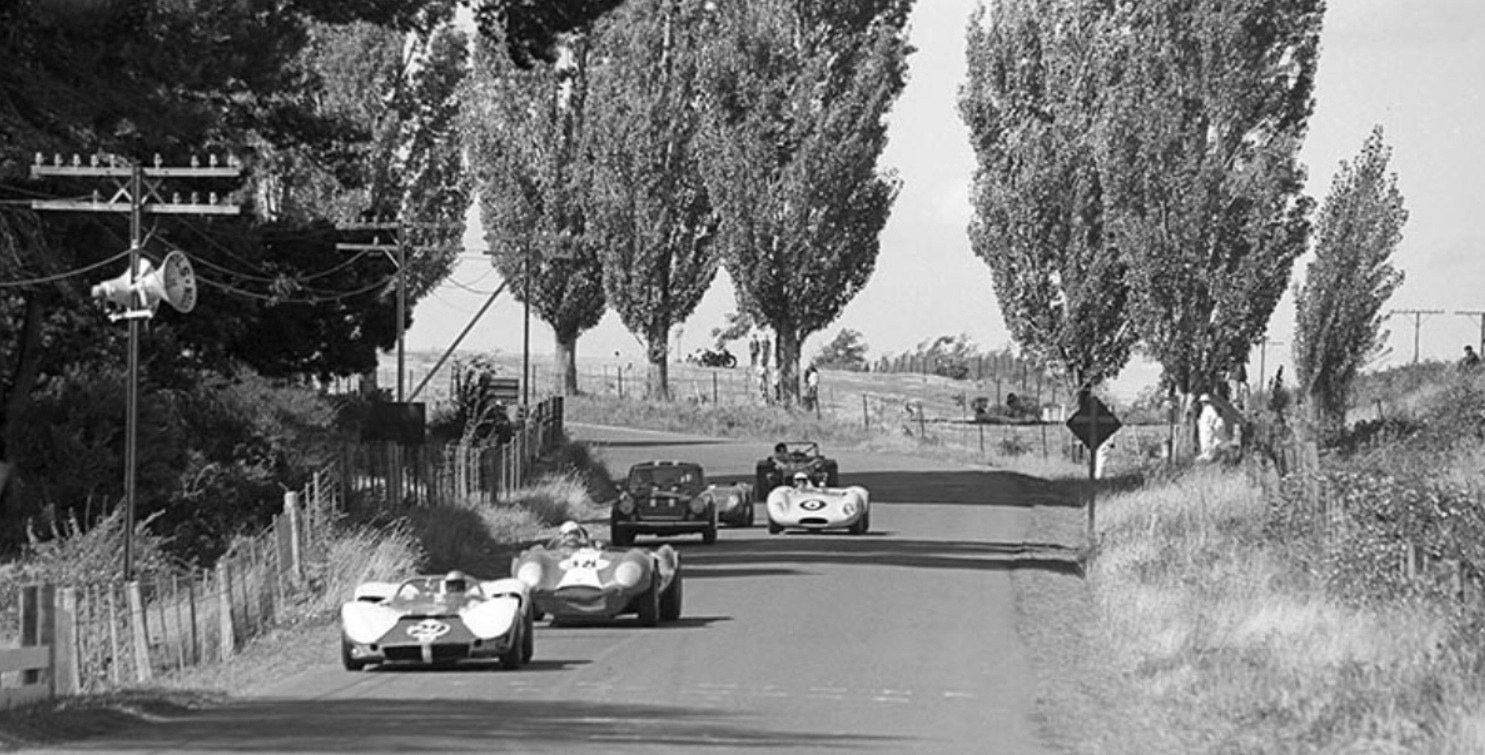
John Goss’ Tornado Ford leads a gaggle of sportscars on the drop between the Water Tower and The Viaduct, Longford, Saturday 2 March 1968…

I wrote this piece a while back and now seems a good time to post it given one of Tasmania’s finest, Gossy himself was awarded an Order of Australia for services to motor sports in last weekend-and-a-bit’s Queens Birthday Honours announcements. Off the back of that achievement Terry Sullivan started a The Nostalgia Forum thread which now contains some marvellous Goss photos, many from Lindsay Ross’ oldracephotos.com.au archive which have never seen the light of day before- check TNF out;

https://forums.autosport.com/topic/209938-john-goss-on-queens-honours-list/

Back to Longford- it’s the Saturday race day, the Monday Labour Day holiday was Tasman Cup day, that year the feature race was won by Piers Courage’ McLaren M4A FVA F2 car in a notoriously wet, perilous day of motor-racing. Sadly it was the last in Longford’s relatively short but very sweet period as a road racing track. Click here for my article on the 1968 Longford Tasman;

Longford Tasman: ‘South Pacific Trophy’ 4 March 1968 and Piers Courage…

Goss, future Bathurst and Australian Grand Prix winner is leading Kerry Cox’s Paramount Jaguar, three-times Australian Grand Prix winner Doug Whiteford’s works Datsun Fairlady, Bert Howard’s Lola Mk1 Climax, the partially obscured Lotus 23 Ford of Alan Ling and then Peter Mawdesley in a Lotus Super 7. Out front out of shot is the ex-works Scuderia Veloce Ferrari P4/350 Can Am driven by Chris Amon from Ian Cook’s Bob Jane Racing Elfin 400 Repco, Peter Macrow in the Argo Chev, Lionel Ayers MRC Ford and Glynn Scott’s Lotus 23 Ford. The opening shot shown is the second group of cars.

I wrote an article a while back about John Goss including a bit on the Tornado, click on the link to read it;

John Goss: Bathurst 1000 and Australian Grand Prix Winner…

The following shot is of Gossy losing Tornado on his turn-in to The Viaduct, I wonder if its the same lap! I think not, the track looks wet, which makes it the Monday. Amon’s Ferrari was pushed off the grid with a flat battery- he started the 10 lapper with 2 laps down and finished third- and did 178 mph in the wet conditions on The Flying Mile. Peter Macrow won in Tony Osborne’s Argo Chev from Glynn Scott’s Lotus 23 Ford.

(oldracephotos/DKeep)

Credits…

David Keep/oldracephotos.com, Lindsay Ross Collection, Rob Bartholomaeus

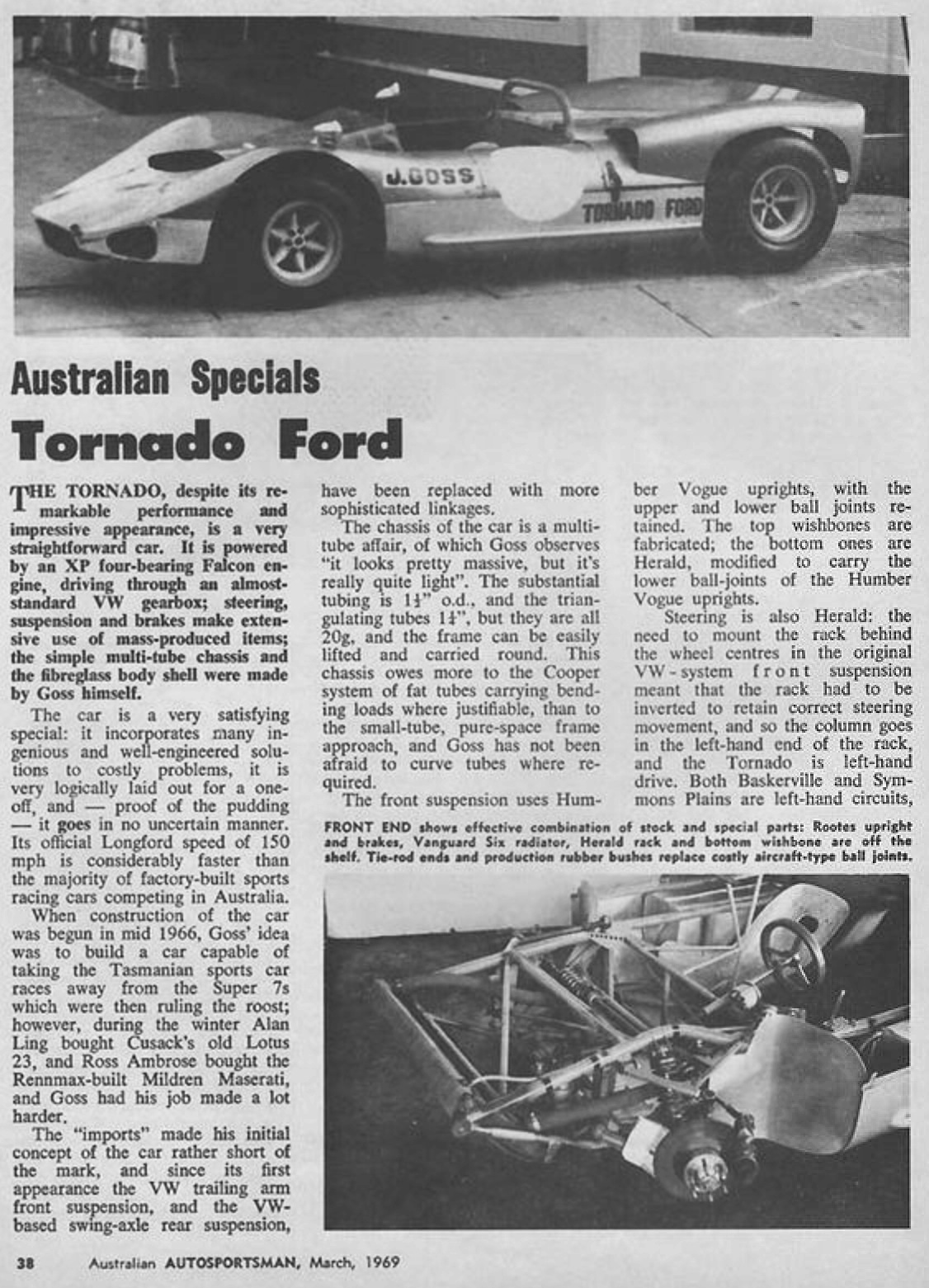
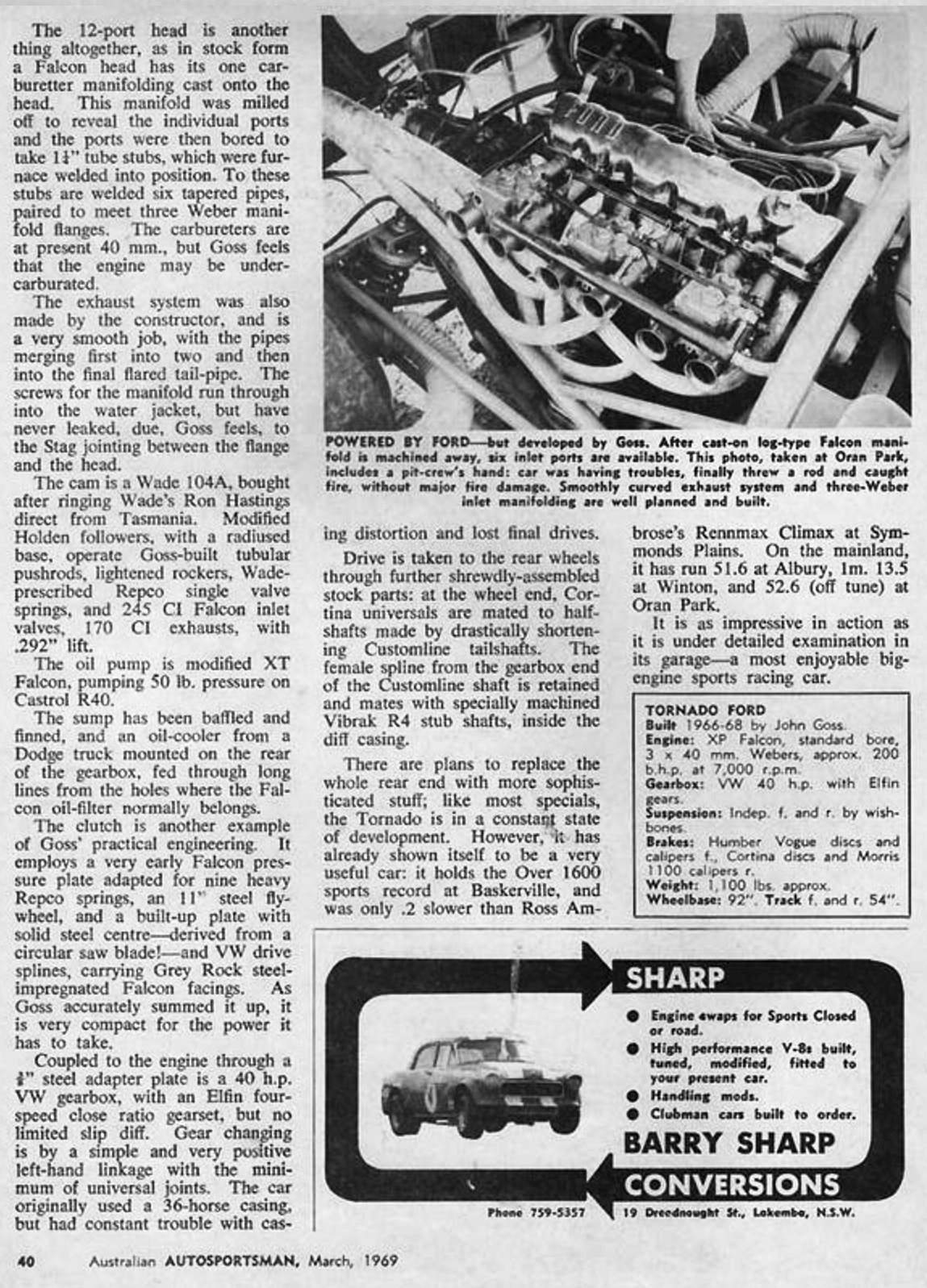
Etcetera: Autosportsman article on the Tornado Ford, courtesy Lindsay Ross’ Collection…

Tailpiece: Amon’s 480bhp Ferrari P4/Can-Am 350 monstering Gossy’s 200bhp Tornado Ford out of Newry, Longford 1968…

(oldracephotos/DKeep)

During the dry Sports Car Scratch race on the Saturday Chris won from Ian Cook in Bob Jane’s Elfin 400 Repco V8 and Peter Macrow in the Argo Chev.

Amon, awfully comfortable in the P4/CanAm 350- in addition to his Ferrari F1 commitments he raced the cars in both the 1967 endurance races and some Can Am rounds, set an all-time Longford lap record of 2:16.2 undercutting Jim Clark’s Lotus 49 Ford DFW time of 2:13.0 earlier in the day. Mighty quick. Mind you, that summer Frank Matich beat Chris’ Ferrari in the Matich SR3 Repco in the other Australian Tasman round sportscar support events. But FM did not cross Bass Straight to do Longford- sad! Those battles on that circuit would really have been something to see!

Finito…

(TEN)

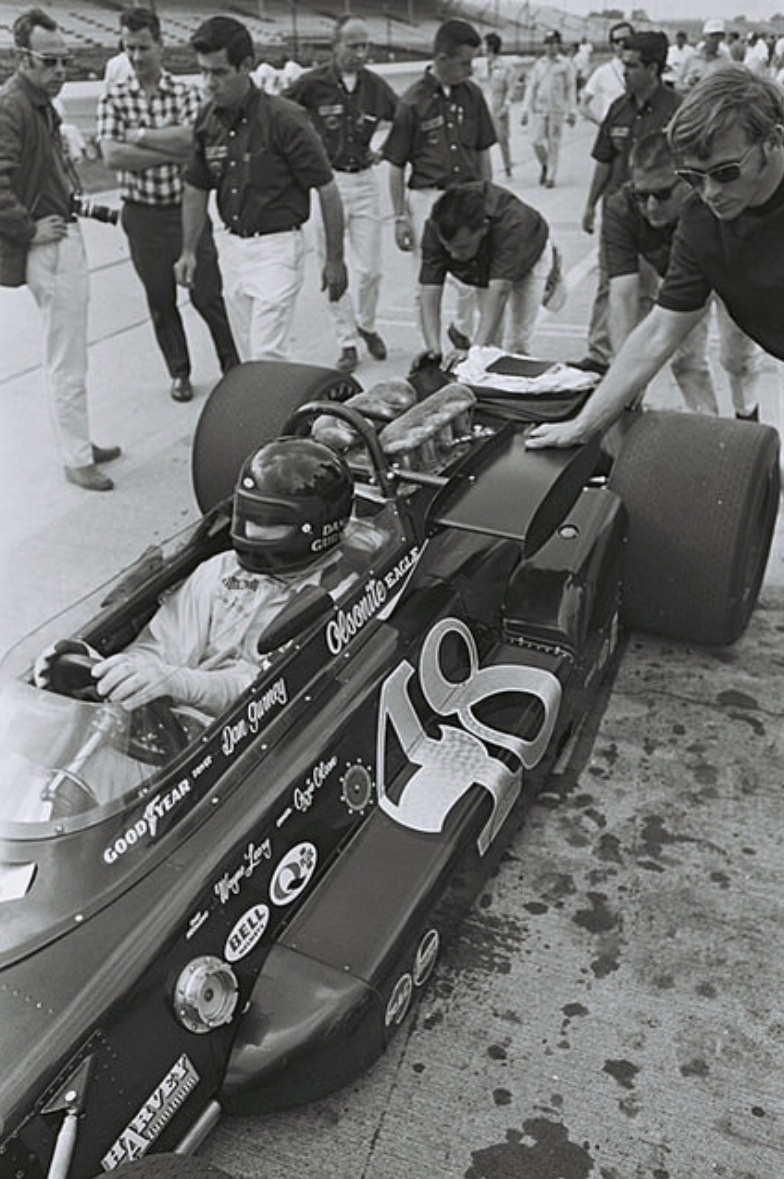
Dan Gurney’s Lola T70 Ford during the Stardust Grand Prix, Las Vegas Can-Am round, 13 November 1966…

Gurney didn’t have a great weekend, the fuel injected Gurney Weslake aluminium headed Lola qualified eighth and failed to finish with a fuel tank breather problem. John Surtees won the race and the series in a Lola T70 Mk2 Chev. The photo got me thinkin’ about those cylinder heads…

AAR Lola T70 Gurney Weslake Ford V8, Las Vegas 1966 (D Friedman)
Dan from Phil Hill, Chaparral 2E Chev, Las Vegas 1966 (D Friedman)
As above, ditto Gurney below (D Friedman)

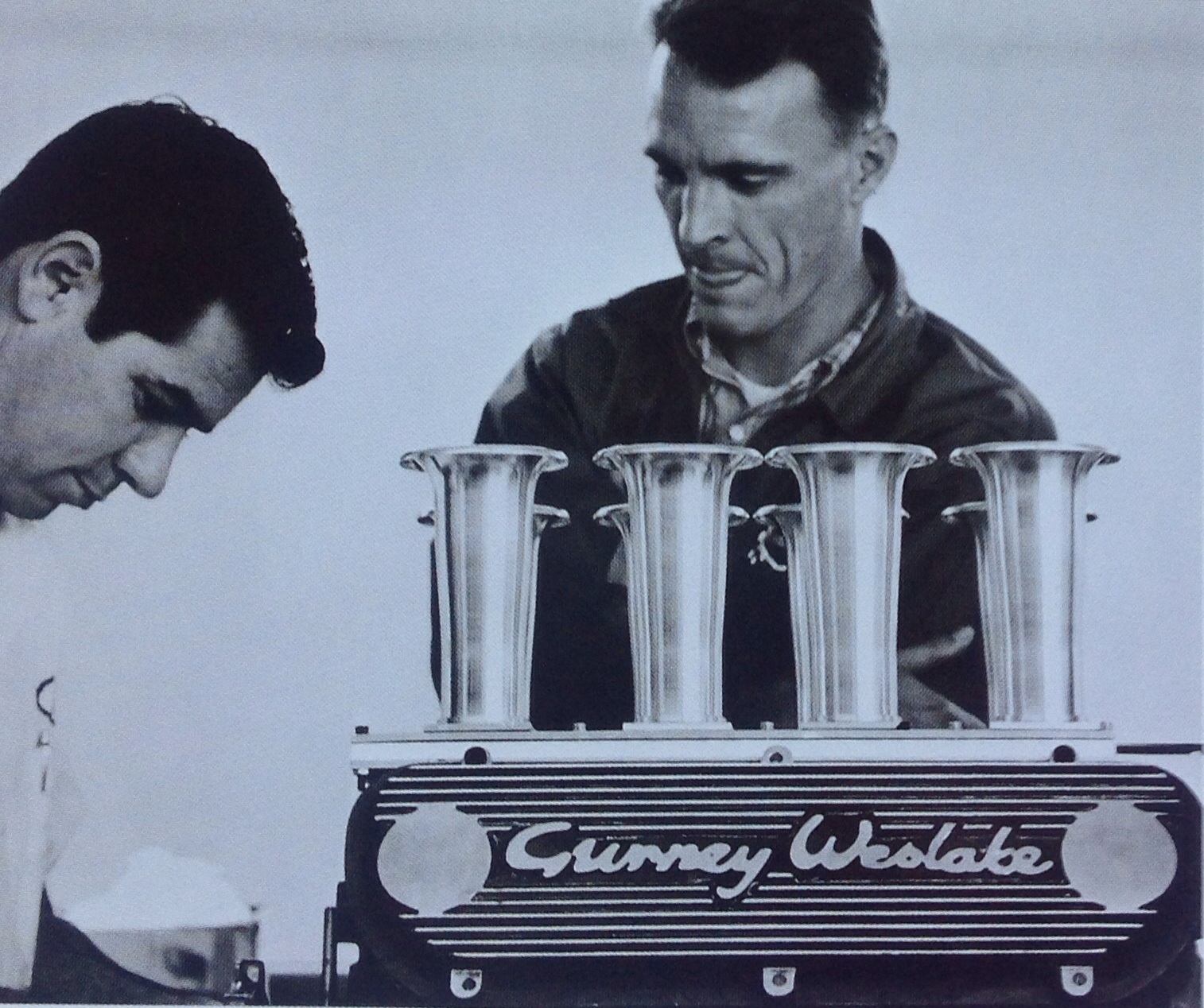
The Gurney-Weslake combination is best known for the Formula 1 60-degree, DOHC, four-valve, Lucas injected V12 which was fitted into the gorgeous Eagle Mk1 created by Len Terry and Dan in 1966. Initially fitted with a Coventry Climax 2.7-litre ‘Indy’ FPF four cylinder engine, the V12 finally raced at Monza in 1966 and won its only GP at Spa in mid 1967. The F1 project resulted from the relationship which arose from the development of special cylinder heads for the pushrod small-block Ford V8 a little earlier.

Gurney’s Belgian GP victory, Spa 1967. Surely one of the five best looking GP cars ever? Eagle Mk1 Weslake chassis ‘104’. The path to the F1 relationship between Dan and the Weslake concern was via the Ford V8 program which preceded it (unattributed)
Len Terry designed Eagle Mk1 powered by Gurney-Weslake V12, 1966. Cutaway by Bill Bennett

Gurney was keen to better exploit the performance potential of the small-block 289 cid Ford V8 with which he was so familiar from his AC Shelby Cobra, Ford GT40 and Can-Am experiences.

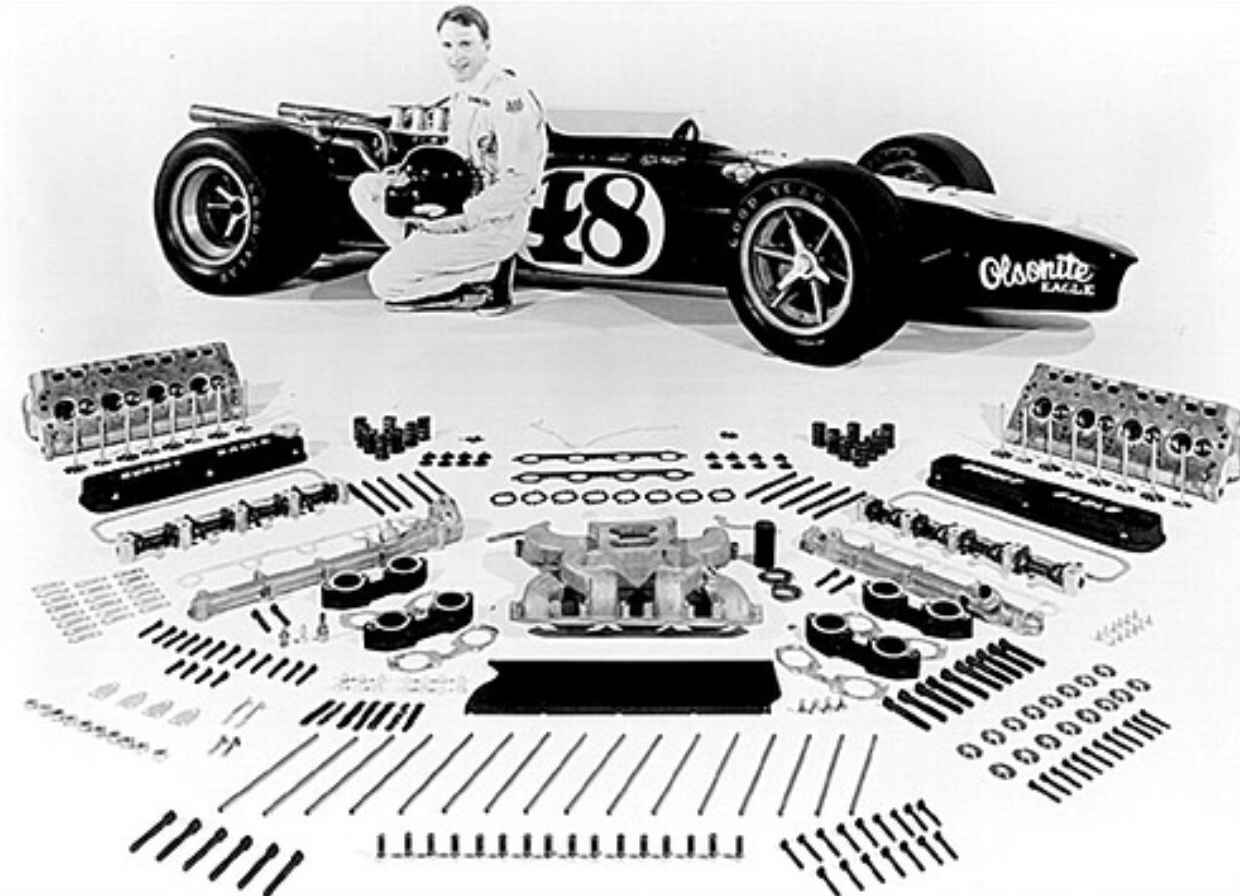
This engine family was the same as that which provided the first 255 cid pushrod engines used by Team Lotus at Indy in the rear of Lotus 29s raced by Dan and Jim Clark in 1963. Whilst Dan’s plan was initially to get more competitive engines for the Sports Car Club of America’s burgeoning sportscar races – which would of course become the Can-Am Championship from 1966 – the Gurney-Weslake V8 engines ultimately powered winning cars at Le Mans and in Group 7 sportscar, ‘Indycar’ single-seaters and beyond.

Dan had seen what Keith Duckworth had done with pushrod Ford engines in the UK; development of 100 bhp per litre, and figured the same approach could be successfully applied to the Ford V8.

‘I heard that Duckworth had modified a four-cylinder Ford Anglia cylinder head by boring an inlet tract hole straight at the port, so it was a more direct shot and I believe that was the first time that a little four-cylinder 1000cc pushrod engine made 100 horsepower. It seemed to me to be a pretty neat thing to accomplish and, naturally, being inquisitive, I wondered if the same idea could be applied to a Ford V8, since it looked to me as though we could do something similar to the 289-302 style engine’.

‘Actually we began our inquest with an extensive rework of the existing 271 bhp heads. At the peak of our testing with the 271 bhp cast iron heads on a 325 inch block, we were pulling as much as 448 hp on gasoline. It was about this time we figured a few improvements along the lines of a new head design might give us even more power, so we got after it’.

Dan sought out Weslake Engineering just outside Rye near the East Sussex coast of England and via Production Manager Michael Daniel engaged them to do some drawings after Gurney delivered some 289 heads to be inspected, analysed and sectioned.

Harry Weslake in his factory in April 1968 with a Read-Weslake 500cc GP motorcycle engine (S Sherman)

Patterns were made and these first Mark 1 Gurney-Weslake heads were cast at Alcoa Aluminium’s foundry in Pennysylvania.

They featured circular inlet ports that provided a direct path from manifold interface to valve seat in order to get as much fuel-air mixture as possible into the combustion chambers. The valves were inclined at 9-degrees to the cylinder centreline instead of the 20-degree angle of the stock Ford heads. The valve guides were fitted with Perfect Circle teflon valve seals. Classic Weslake combustion chamber shapes were deployed: heart shaped with precision machined valve seat inserts – steel for the inlets and bronze for the exhausts – both press-fits into the heads.

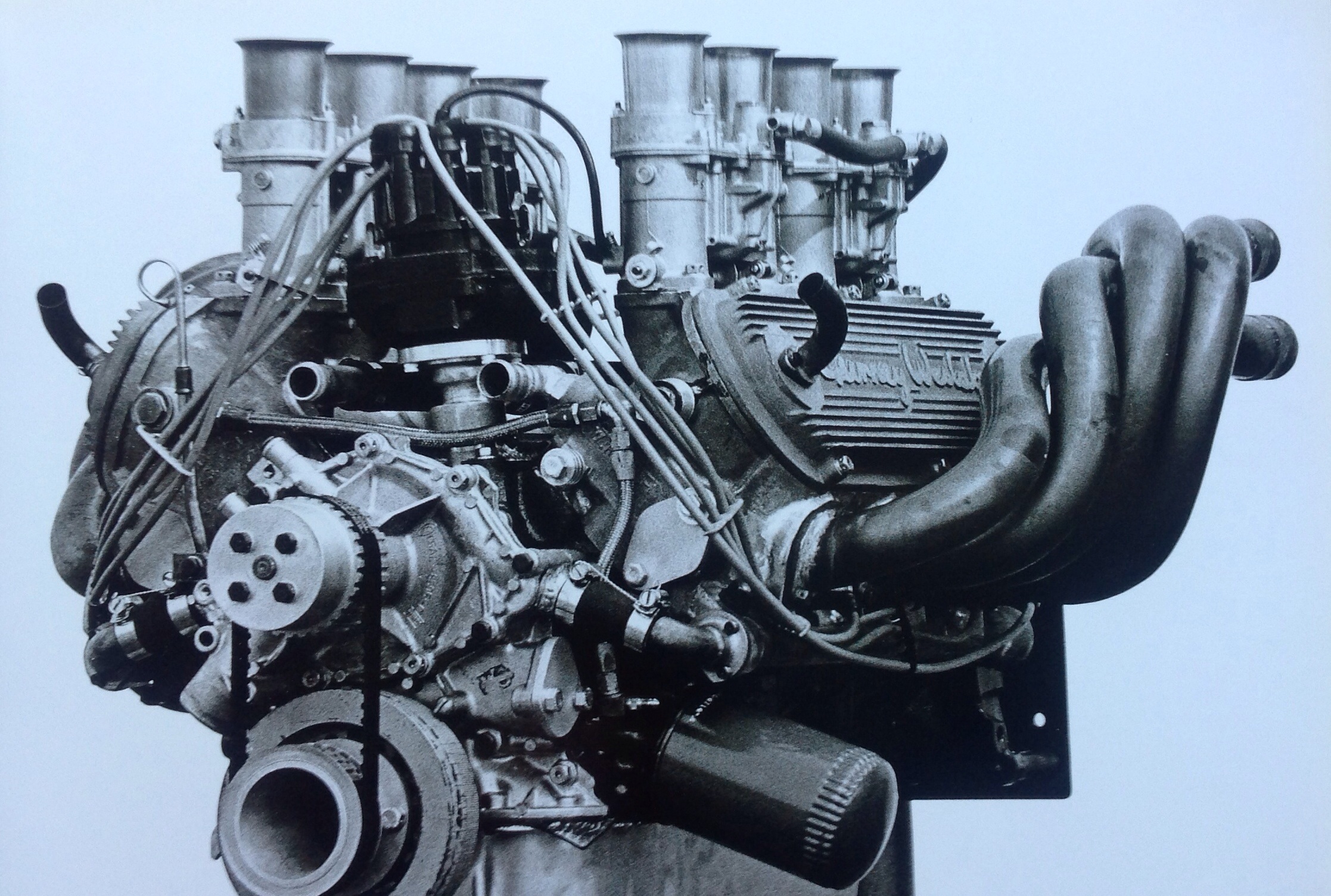
Early G-W Ford on 48 IDA Webers. ‘DG asked Weslake & Co to create a cylinder head…that provided a direct pathway for the fuel mixture from carburettor to inlet valve, as can be seen from this head-on view…’ (AAR)
Front view shows the ‘standard’ Ford block and drives, oil filter, distributor, 48 IDA downdraft two-barrel Webers, ally-heads (AAR)

An immediate improvement of 70-100 bhp was achieved over the standard 289-302 heads both through the mid to upper rpm ranges without losing smoothness down low. To cope with the increased loadings the bottom end also ‘had a birthday’ with bits and pieces provided by well known suppliers of US performance gear.

The Dearborn Crankshaft Corporation made a steel crank to AAR specifications which sat in bearings donated by the Ford DOHC Indy motor. Carrillo provided shot-peened conrods to which were attached Forged True pistons; compression ratios ranged from 10.5 to 11.6 to one. Jack Engle worked on cam grinds arriving at solutions which involved short lift and long duration with ‘rev springs’ fitted into the block’s oil galleries to assist the proper seating of the valves at high rpm. Ford’s stock high pressure oil pump was man enough for the job with stock oil pans baffled and main bearing girdles added to keep the whole lot stable.

Times GP Riverside, McLaren Elva Mk1 Ford G-W, 1965 (TEN)

The Gurney-Weslake heads were first used by Dan during the 200 mile LA Times Grand Prix sportscar race at Riverside in late October 1965 fitted to his McLaren Elva Mk1

In an all-star cast which included Jim Clark, Bruce McLaren, Chris Amon, Hap Sharp, John Cannon, Peter Revson, Chuck Parsons, Jerry Titus, David Hobbs, Bob Bondurant, Parnelli Jones, Richie Ginther, Graham Hill, Jerry Grant, Walt Hansgen, and Dan (wow!- was there ever a better ‘Can-Am’ field of depth). That race was won by Sharp’s Chaparral 2A Chev from Clark’s Lotus 40 Ford and McLaren’s McLaren Elva Mk2 Olds. Dan’s AAR McLaren was out with brake troubles on lap 24. By that stage of G-W development Mark 2 heads were fitted which incorporated improvements including removable rocker arm studs.

Monterey GP weekend, Laguna Seca October. 1966. DNF lap four with an undisclosed ailment, Lola T70 Ford with Mk 3 G-W heads – note still on 48 IDA Weber carbs (D Friedman)
Laguna 1966. By this meeting the G-W engine developed 520 bhp and 415 lb ft of torque @ 6300 rpm (D Friedman)
Hmmm, too short a race. Laguna 1966, Lola T70 Ford DNF after four laps from Q4- behind the first and second placed Chaparral 2E Chevs of Phil Hill and Jim Hall and third placed Bruce McLaren’s McLaren M1B Chev (D Friedman)

Mark 3 Gurney Weslake heads were developed in 1966 with alterations to make assembly and maintenance easier.

With this configuration AAR took their first GW head win in the May 1966 United States Road Racing Championship round at Bridghampton. Jerry Grant won in the AAR Lola T70 Ford from Lothar Motschenbacher’s McLaren Elva Mk2 Olds and Mike Goth in a McLaren Chev.

The same chassis was used by Dan to win the Long Island, Bridghampton Can-Am round in September 1966. In a splendid weekend for All American Racers Dan popped the Lola T70 Mk2 on pole and won from the works McLaren M1B Chevs of McLaren and Amon. Sadly, it was the only Can-Am win for a Ford powered car; 495 bhp @ 7800 rpm was claimed at the time, ‘The redline used to be 8000 rpm but I just found I could turn 8900’ Dan quipped after the race.

It’s interesting to look at the engine competition at the time. Pete Lyons in his bible ‘Can-Am’ writes that ‘Chevrolet’s small block was the typical T70 engine of 1966, and those offered by well respected Traco Engineering in Los Angeles can be considered definitive. The bore remained standard at 4.0in but a stroker crank of 3.625in gave a displacement of 364.4 cid. Breathing thorough a quartet of two-barrel 58mm Weber side-draft carburettors…such a package was rated at about 490bhp at 6800 rpm and 465 lb/ft of torque at 4500…it weighed about 540-560 lbs. Price was just under $US5000’.

Rindt’s Eagle Mk2 G-W Ford on the Indy weighbridge in May 1967, sex on wheels (D Friedman)
Len Terry’s Eagle Mk1 design was a bit of a pork-chop in F1, designed as it was for GP and USAC (Mk2 50 pounds heavier than its F1 brother) use. The design drew heavily on his previous Lotus work and is a beautiful, in every respect, expression of monocoque orthodoxy of the day in both chassis and suspension (D Friedman)

Towards the end of 1966 the engine was also fitted to the very first Eagle Indycar chassis – Mk2 ‘201’ which was raced by Dan in the ’66 Indy with a Ford 255cid DOHC motor. In fact Gurney didn’t complete a lap having been wiped out with eleven other cars in THAT famous collision.

In the re-engined Ford G-W 305 cid powered car Jochen Rindt contested the 1967 Indy 500, he qualified 32nd and retired after completing 108 of the 200 laps with valve trouble – classified 24th. His was the only 305 cid stock-block powered car in the field, the race was won by AJ Foyt, Coyote Ford from Al Unser and Joe Leonard in Ford engined Lola and Coyote respectively.

‘Chewin the fat – lots of downtime for drivers during the month of May at Indy. A youthful Amon, Hulme and Rindt in 1967. Dude on the left folks? (D Friedman)
Eagle Mk2 ‘201’. Hilborn injected G-W V8, metering unit between body cowl and injection trumpets, quality of build and finish superb. Note beautiful body cowl and nerf bar (D Friedman)

Further development work resulted in the Mark 4 variant which was lighter in weight with narrower rocker covers and an intake manifold inclined towards the engine centreline.

Into 1967 AAR’s Can-Am engine was based on Ford’s new ‘mid-sized’ block stroked to 377cid. Dan’s Lola T70 was often the best of the ‘non-McLaren M6 Chev’ class in a year of dominance from the Kiwi’s with their beautiful papaya cars; pole at Riverside was a standout.

Fitted with a Mark 4 engine, but 318 cid, gave Dan and the G-W engine’s first USAC win in the Rex Mays 300 at Riverside in November 1967. His Eagle Mk3 won from pole from the Bobby Unser Eagle Mk3 Ford Indy V8 and Mario Andretti’s Brawner Ford on the challenging 2.6 mile California road course. Gurney achieved six more USAC Championship wins over the next two years and finished second twice on the trot at Indy in 1968 in a Mk3 and in 1969 in a Mk7 ‘Santa Ana’.

Changes to USAC rules for stock-block engines ultimately allowed the G-W motors to displace 318 cid. On methanol they were good for 560 bhp @ 7500 rpm in 1968 with circa 600 bhp in 1969. On petrol a sprint 289 was good for as much as 506 bhp @ 7800 rpm, and a good 305 520 hp.

DG testing his 1968 Tony Southgate designed USAC weapon, the Mk4 G-W V8 at Riverside; warm down lap without the goggles. Ho took three race wins and Bobby Unser three in a customer car including the Indy 500, Ford Indy DOHC V8 powered (AAR)
Eagle Mk4 Ford G-W front and rear – front and rear suspension utterly period typical – a very successful Southgate design (AAR)

For the 1968 Can-Am AAR acquired a McLaren M6B and in a ‘lightness and dash policy’ took over 100 pounds out of the car with a cocktail of small-block 325 cid Ford G-W and the smaller, lighter Hewland DG300 gearbox. The track dimensions were narrower, the body lighter with a lower, longer nosepiece and suspension arms, exhaust system, gear linkage and bracketry were re-made out of titanium. The car was renamed McLeagle! It wasn’t enough of course, the Bruce and Denny M8A Chev 427 alloy blocked cars rolled over the top of the McLeagle, Lola T160, Ferrari 612P and all else in their path. Denny was Can-Am champ that year.

In 1968 and 1969 the John Wyer entered, Gulf sponsored Ford GT40 chassis ‘1075’ won the Le Mans classic fitted with Gurney-Weslake Ford engines.

The honours were taken by Pedro Rodriguez and Lucien Bianchi in ’68 and Jacky Ickx and Jackie Oliver in ’69. In 1968-69 despite the Mk1 GT40 hardly being in the full flush of youth, the gorgeous, somewhat heavy G-W engined machines won many endurance classics against more modern Porsche, Alfa Romeo, Matra and Ferraris (in 1969): the 1968 Brands Hatch 6 Hour, Monza 1000 Km, Spa 1000 Km, Watkins Glen 6 Hour and 1969 Sebring 12 Hour and Spa 1000 Km.

In period the Le Mans winning engines gave circa 440 bhp @ 6800 rpm: 302 cid Ford V8, Gurney Weslake heads fed by four Weber 48IDA carbs.

Lucien Bianchi, Pedro and the boys after the ’68 Le Mans win – ‘1075’ one of the most famous of all Le Mans winners with two notches on its belt (unattributed)
John Wyer GT40 at the factory circa 1969. Note the Gurney Eagle rocker covers, FIA mandated luggage framework above the exhausts, engine and trasaxle radiators and Firestone tyres (unattributed)

In a busy 1968 for AAR, in a commercial approach to capitalise on the cylinder head designs, Gurney started to make modified versions of the heads cast in LM8 aluminium by the Aeroplane and Motor Foundry in England for road cars.

The racer’s Hilborn fuel injection was replaced with a four-barrel carb. Anticipating a large order from Ford, the heads had detuned combustion chambers and were of a budget design. They could be machined with different sized ports and/or valve sizes to the specification of the full racing heads despite some of the internal passageways being of differing sizes to the race heads.

When no manufacturer (Ford or Lincoln/Mercury) chose to fit the heads Dan was left with an enormous stockpile of them. ‘It didn’t’ happen because no-one big enough got behind it. If someone like Henry (Ford II) would have said “Hey guys, why don’t you do this?”, that would have been all it would have taken’ offered Gurney. A trial assembly run was arranged by Gar Laux, head of Lincoln-Mercury but perhaps the idea fell foul of the ‘not invented here’ notion.

Many of the surplus heads were converted to as near as racing specifications as the Gurney factory could make them and were fitted to Indy cars. None of these heads were fitted in-period to GT40’s. All GT40 heads were made at the William Mills foundry and were a higher grade casting with the full race combustion chambers, porting and passageways. The Airplane and Motor cast heads were usually branded as Gurney Eagle although some will over time have been retro-fitted with Gurney Weslake rocker covers.

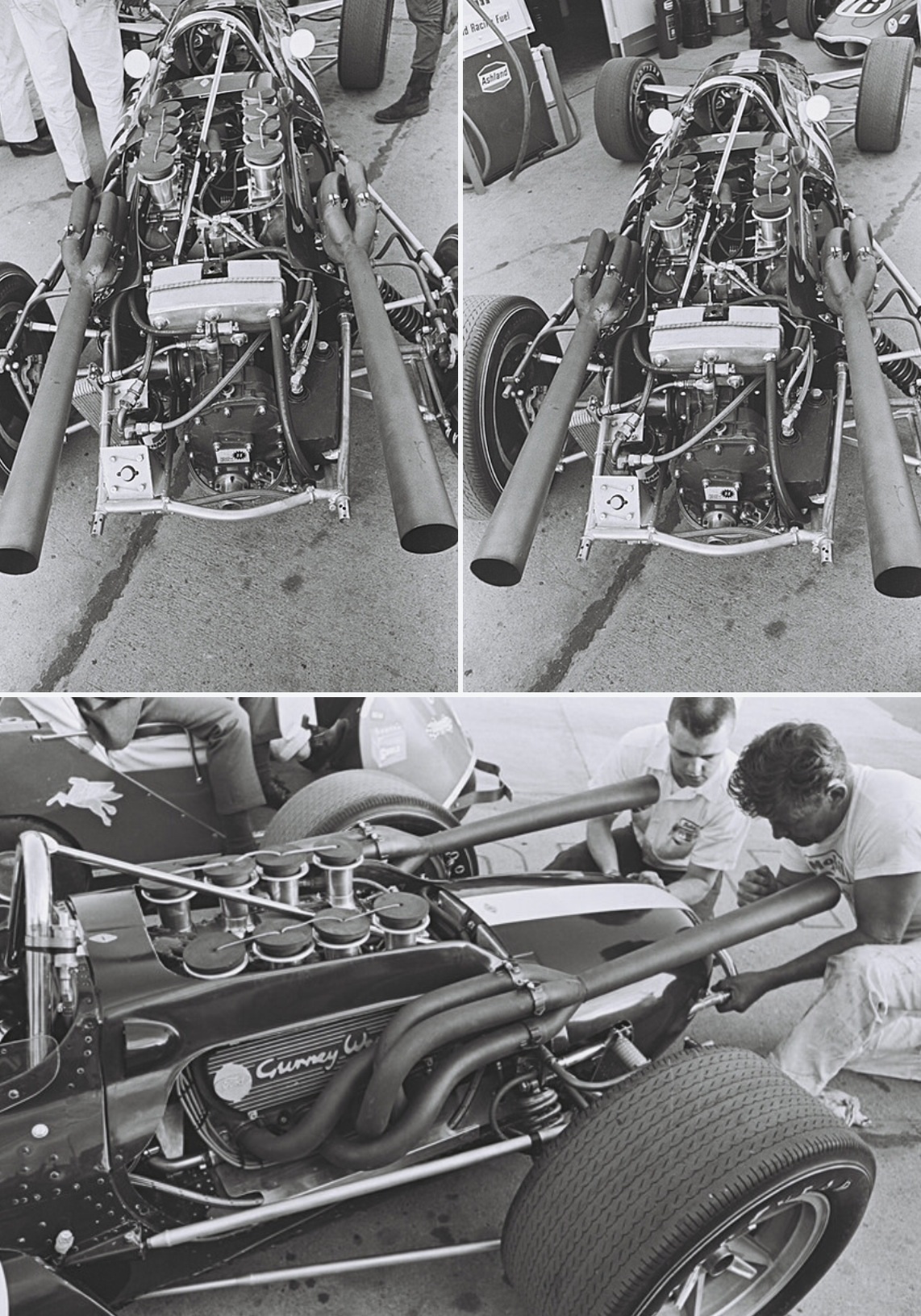
This G-W Ford in Dan’s 1969 Eagle Mk7 ‘Santa Ana’ features Mk 4 heads with canted injectors. This close up shows the Hilborn slide injection, lots of ‘Aeroquip’ lines and AAR’s fine attention to engineering detail – checkout the fabrication of those extractors and rather critical throttle components (AAR)
Gurney, Eagle Mk4 Ford G-W 305 cid, Indy 1969 (D Friedman)

Into the 1969 Can-Am without the Ford factory support he hoped for, Dan raced the same McLeagle with a very special, aluminium 344 cid small-block Ford G-W.

Some of the Can-Am rounds conflicted with his USAC commitments, back at AAR the team toiled with a three-valve G-W variant to sit atop specially cast ally Ford blocks. After various development problems kept it off the tracks Dan bought a 7-litre Chev and popped it into the McLeagle, qualifying ninth at Michigan. That weekend he tasted a great Can-Am machine when he raced the spare McLaren M8B to third behind Bruce and Denny, having started from the rear of the grid.

Pete Lyons wrote ‘…from the back…he passed twelve cars on the first lap…Each lap Dan passed fewer cars but he passed them relentlessly. He gave the impression of being careful, feeling out the car, not risking breaking it, yet the big orange gun shot his black helmet along like a cannonball. When he caught Brabham, he went by so fast the two could hardly exchange glances…’Jack knew exactly how Dan felt as Brabham tested the same car during qualifying – and did a time in a limited number of laps good enough for row two of the grid!

The dark side, 7-litre Chev engined McLaren/McLeagle M6B at Michigan in 1969 (unattributed)

In tragic circumstances, after Bruce’s death at Goodwood, Dan raced a works McLaren M8D Chev with great speed and success until sponsorship conflicts intervened and stopped his campaign short. It was a great pity as a Hulme/Gurney battle for the 1970 Can-Am title would have been a beauty. It was a fascinating season in the short history of the series inclusive of the Chaparral 2J Chev ‘Sucker’ machine; to have finally seen Dan in a car truly worthy of him would have been something, albeit not G-W Ford powered…

(AAR)

Into 1970 the AAR USAC machine, the ‘7000’ designed by Len Terry – was both Offenhauser and Ford G-W powered – and achieved its final G-W stock-block win in Swede Savage’s hands at the season ending finale at Phoenix. The 1971 ‘7100’ was designed by Roman Slobodynski and built to suit the Drake Offy turbo-charged four cylinder engine only.

What a marvellous run the Gurney-Weslake small-block Ford V8s had…

Swede Savage in the 1970 Indy 150 at the Indianapolis Raceway Park all crossed up in the Eagle 7000 G-W Ford, classified eigth in the race won by Al Unser, Colt Ford Indy V8 (A Upitis)

Etcetera…

AAR Santa Ana workshops circa 1968/9 with 3-litre GW V12 in the foreground and FA/F5000 monocoques behind (T Mathiesen)
Dan with gun AAR engine man John Miller ‘Mandrake The Magician’ with G-W Hilborn injected V8 (AAR)

Bibliography…

‘Dan Gurney’s Eagle Racing Cars’ John Zimmerman, ‘Can-Am’ Pete Lyons, gurney-weslake.co.uk, phystutor.tripod.com

Credits…

The Enthusiast Network, Dave Friedman Collection, AAR Archive, Tim Mathiesen

Tailpiece…Dan aboard his second place Eagle Mk4 Ford G-W, Indy 1968…

(D Friedman)

Finito…
Panther GT clay model, at the October-November 1968 Turin Motor Show…

Scuderia Brescia Corse was founded by a group of racers disaffected by their local governments refusal to reignite the Mille Miglia. The outfit, named after the town where the Mille started, prepared cars of any type for privateers wealthy enough to use their services. The roll-call of their top drivers down the years is impressive and includes Carlo Facetti, Teodoro Zeccoli, Giampiero Moretti, Umberto Maglioli and Nino Vaccarella. The variety of cars raced is also mouth-watering- Porsche 906, Ford GT40, Ferrari 206S, 512M and Alfa T33’s included. By the late sixties the team had become quite successful in regional, national and international events.

At the Bertone stand in Turin Scuderia Brescia Corse showed a model of a car the team intended to build to contest the World Sportscar Championship- shortly thereafter at the Geneva Show the stunning prototype was unveiled.

The car had some quite original thinking including an alloy and titanium monocoque (also described as a spaceframe in some sources) chassis, hydraulically controlled rear spoiler and 24 volt electrics to allow the use of smaller, lighter conductors.

BRM were the intended engine provider- their 3 litre V12 was initially to be the cars motor but in the end the team courted Maserati instead. In time honoured fashion sufficient funding could not be secured so the car withered on the vine- a shame, it would have been a welcome addition to grids awash with variety in the immediate pre-1970 period.

 Credits…

 Getty Images, Petrolicious, Pinterest


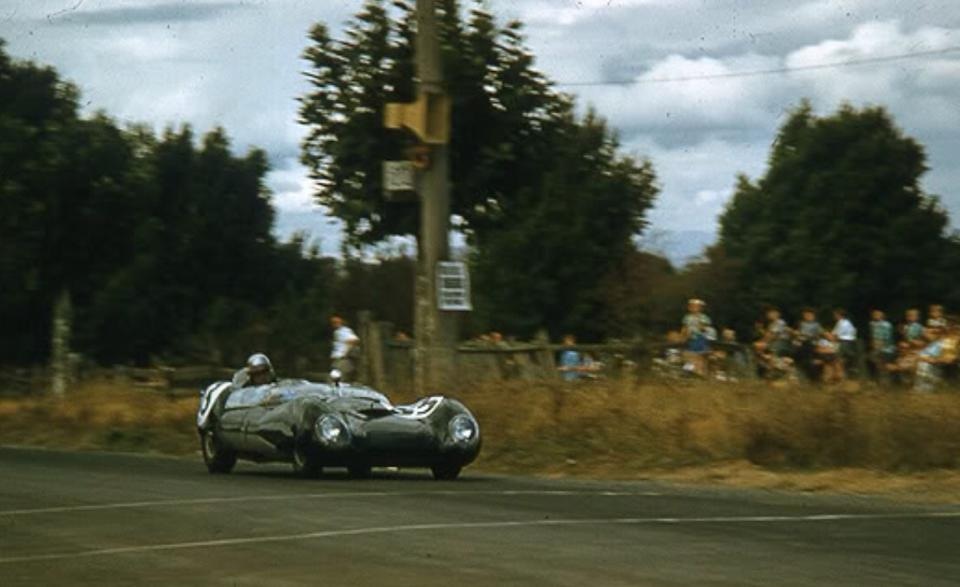
Derek Jolly racing past the Country Club Hotel, Longford on his way to winning the 1960 Australian Tourist Trophy, 7 March 1960, Lotus 15 Climax FPF…

I wrote an article a while back about Derek and his career inclusive of a snippet about this win, but I had a swag of wonderful photos of the Longford meeting, too many for the earlier piece. So here they are courtesy of Kevin Drage, John Ellacott and Ellis French-some of Ellis’ shots are his own, some from the Walkem Family Collection and others from Brian Dunstan, hopefully I have the attributions correct.

Sportscar racing has waxed and waned in this country, I guess everything other than touring car racing has really. Mind you, GT racing is a strong class at present, interesting too such is its variety.

The Australian Tourist Trophy has some great names inscribed upon it including Stirling Moss, who won the classic aboard a works Maserati 300S in 1956, Bib Stillwell in 1961/2, Cooper Monaco, Pete Geoghegan drove a Lotus 23 Ford in 1963/5 and in 1977 won with Laurie O’Neill’s much more brutal Porsche 935. Frank Matich had a mortgage on the race for a while, he won in 1964, Lotus 19B Climax, 1966 with an Elfin 400 Olds and in 1967 in his self constructed Matich SR3 Olds and then again the following year in an SR3 this time Repco ‘620’ V8 powered. I saw Paul Gibson’s Rennmax Repco ‘740’ 5 litre V8 win at Winton in 1979, that too a memorable machine. After a period in which the title was not contested the ATT was reinstated in 2007 and usually awarded to the winner of designated events rather than a one-off race as in its earliest days.

In the distant past sportscar racing was up there with single-seaters, indeed in the days when the Australian Grand Prix was held to Formula Libre prior to 1964, but especially in the AGP’s handicap days and then before 1960 it was common for sportscars to contest the AGP.

One of the 1960 ATT strongest contenders, Doug Whiteford fitted into that category. The former thrice winner of the AGP entered his ex-works Maserati 300S in the AGP at Longford in 1959- he knew the tricky, demanding place like the back of his hand. Doug was a formidable competitor of vast experience, even though the Maser was not the latest bit of kit, with his driving skill and car preparation the combination could be expected to be there at the finish- at the front.

Frank Matich and Derek Jolly were both coming-men.

Matich was aboard the Leaton Motors Jaguar XKD ‘526’ first owned by the Anderson Family in Brisbane and raced with much success by Bill Pitt. Matich progressed through Healey’s then the Leaton Motors C and D Type Jaguars, proving his pace in all of them. The Sydneysider’s career as a professional of elite world class would extend all the way to early 1974. Let’s not forget the race winning sports and Formula 5000 cars he and his team built from 1966 to 1974 either.

Derek’s Lotus speed was proven in his earlier Lotus 15 despite it toting only an FPF Coventry Climax engine of 1475cc- this car met its maker at Albert Park in late 1958, probably due to component attachment failure. Derek raced his replacement Series 3 15 as a works entry at Le Mans in 1959 with Graham Hill, the engine blew with Derek at the wheel when the infamous Lotus ‘Queerbox’ jumped out of gear- the revs went sky high, then an errant rod  comprehensively carved the alloy block in half.

image
Jolly at left and Kevin Drage discuss the Lotus in the Longford paddock. Note the 1960cc Coventry Climax FPF fed by twin-throat SU carburettors (E French)

Jolly’s Lotus had only just arrived in Australia, equipped with a 1960cc Coventry Climax four-cylinder FPF engine it was the latest bit of 15 kit- in fact it was the most modern car in the field. Derek took a debut win in its first Australian meeting at Gnoo Blas, Orange, New South Wales in early February winning the ‘South Pacific Sportscar Championship’ from David Finch in a Jaguar D Type.

Finch also entered the Jag at Longford. ‘XKD520’ was first owned by Melbourne car dealer/racer Bib Stillwell and was a machine through which Frank Gardner progressed before his departure to Europe. When Frank decamped to the Old Dart Finch raced it with skill, mainly in New South Wales and Queensland, the car left Australia in 1967, the purchaser was none other than Grand Prix driver and later Le Mans winner Richard Attwood.

Tom Sulman, by then one of racings senior citizens, entered his Aston Martin DB3S, a car he had raced since its inclusion as a member of the three Aston ‘The Kangaroo Stable’ team in Europe in 1955. Sulman was a driver of vast experience in all kinds of cars and surfaces going back to his mid-twenties speedway days in both Australia and the United Kingdom. But his car was a winner only in the event of mechanical misfortune at the front of the field. Jim Wright entered another ex-Kangaroo Stable DB3S, he was stepping up from the Buchanan TR2 he had raced at Lowood in the ATT in mid 1959.


image
Ellis French Collection

The other outright contender was Wangaratta’s Ron Phillips in a Cooper T38 Jaguar.
Reg Parnell raced the attractive beast in the New Zealand Grand Prix in 1956, for car owner Peter Whitehead after which it was acquired by Stan Jones who sold it on quite quickly having raced it at Fishermans Bend and Albert Park. Passed through the hands of a couple of drivers, the cars return to competitiveness was the result of Phillip’s driving skill and the racers preparation by Melbourne driver/engineer Ern Seeliger.

Seeliger had looked after Phillips’ Healey 100S and was the fellow who created Maybach 4- the final iteration of that great series of Charlie Dean designed and built, (Repco Research team duly acknowledged) Stan Jones driven cars. Maybach 3 was modified by Ern by the fitment of a Chev Corvette V8 where six-cylinder Maybach motors previously existed- and some other mods by that clever chap too.

image
Ron Phillips enters The Viaduct, Cooper T33 Jaguar (HRCCT)

The Cooper Jag was a real chance with a mix of handling and grunt well suited to Longford’s nature, Ron had raced it at Longford the year before so knew his way around the place. Phillips was also ‘in form’ having won the ATT at Lowood, Queensland in June 1959 from Bill Pitt’s Jag D and Bob Jane’s Maser 300S- the sister works car to Whiteford’s which came to Oz during the 1956 Australian Grand Prix carnival. Phillips and Jolly had jousted regularly when Derek raced his Decca Mk2 Climax FWA in 1956-58 with Ron then racing his Austin Healey 100S, both drivers had stepped up to more powerful ‘outright’ cars.

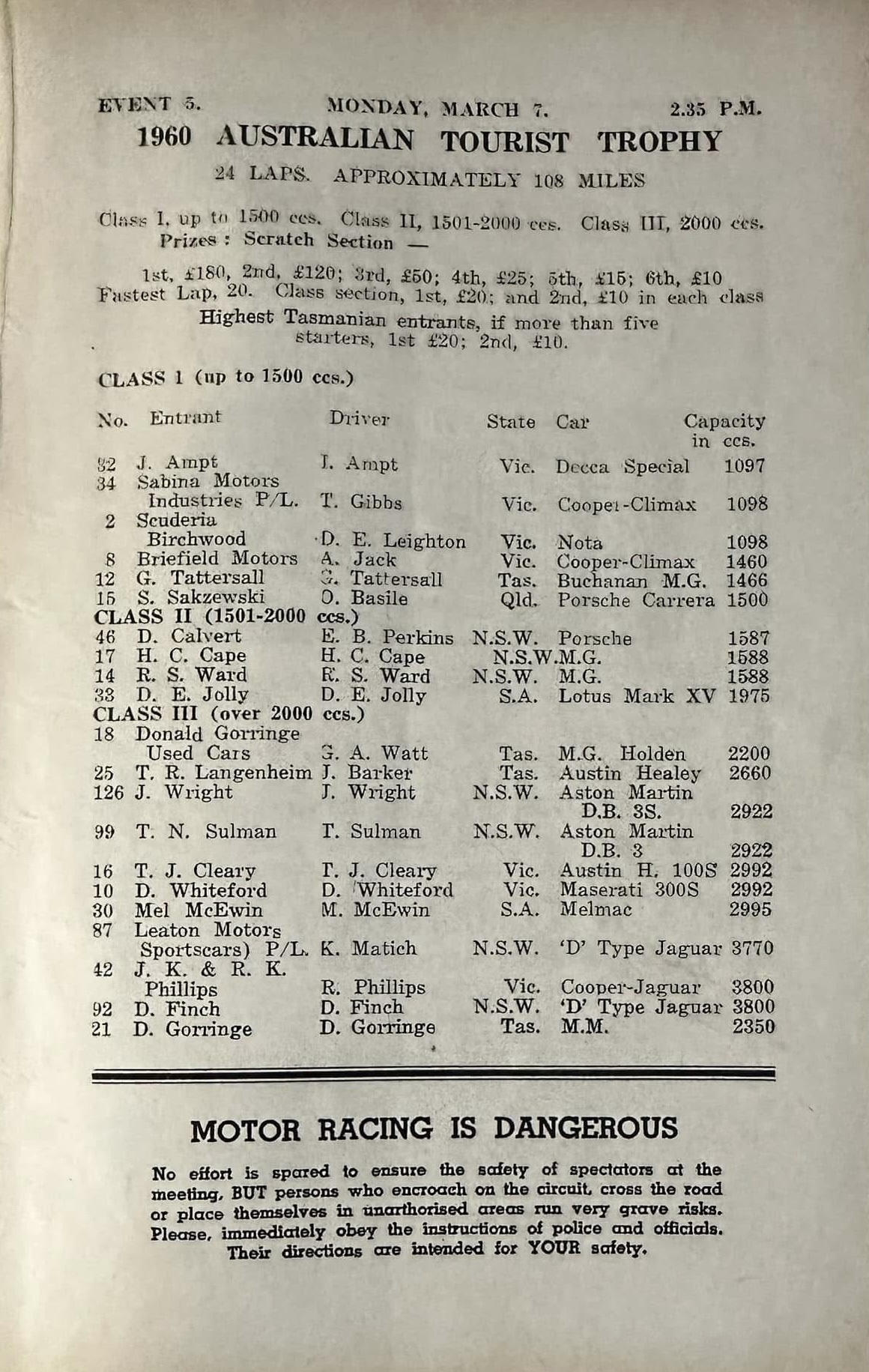
The 22 car field was rounded out by smaller cars of which the John Ampt Decca Mk2 Climax, ex-Jolly, the Eddie Perkins (father of Larry) Porsche Super, Owen Basile Porsche Carrera and Alan Jack’s ex-Bill Patterson Cooper T39 Climax ‘Bobtail’ were the strongest.

Whiteford and Jolly were generally considered favourites for the race, but the ‘Australian Motor Racing Review’ report of the event states that there was confusion over practice lap times and as a consequence that pair and others were placed well back on the grid.

The Phillips’ Cooper Jag and the Matich D Type were on the front row, behind them were Alan Jack’s Cooper Climax 1.5 and David Finch’s D Type, then John Ampt in Decca Mk2. Tom Sulman’s Aston DB3S was on the next row with Jolly, then Whiteford’s Maser and one of the Porsche’s- and the rest of the field.

Phillips, Cooper Jag, #32 Ampt Decca Climax, #92 Finch Jag D, #8 Jack Cooper Climax- with the two Aston DB3S of #99 Sulman and #126 Wright in line astern behind Jack. Tail of Jolly Lotus 15 is behind Finch, the red of Whiteford’s Maser back a bit centre, Porsche Carrera Coupe is Eddie Perkins and the rest (B Dunstan)

(A Lamont Collection)
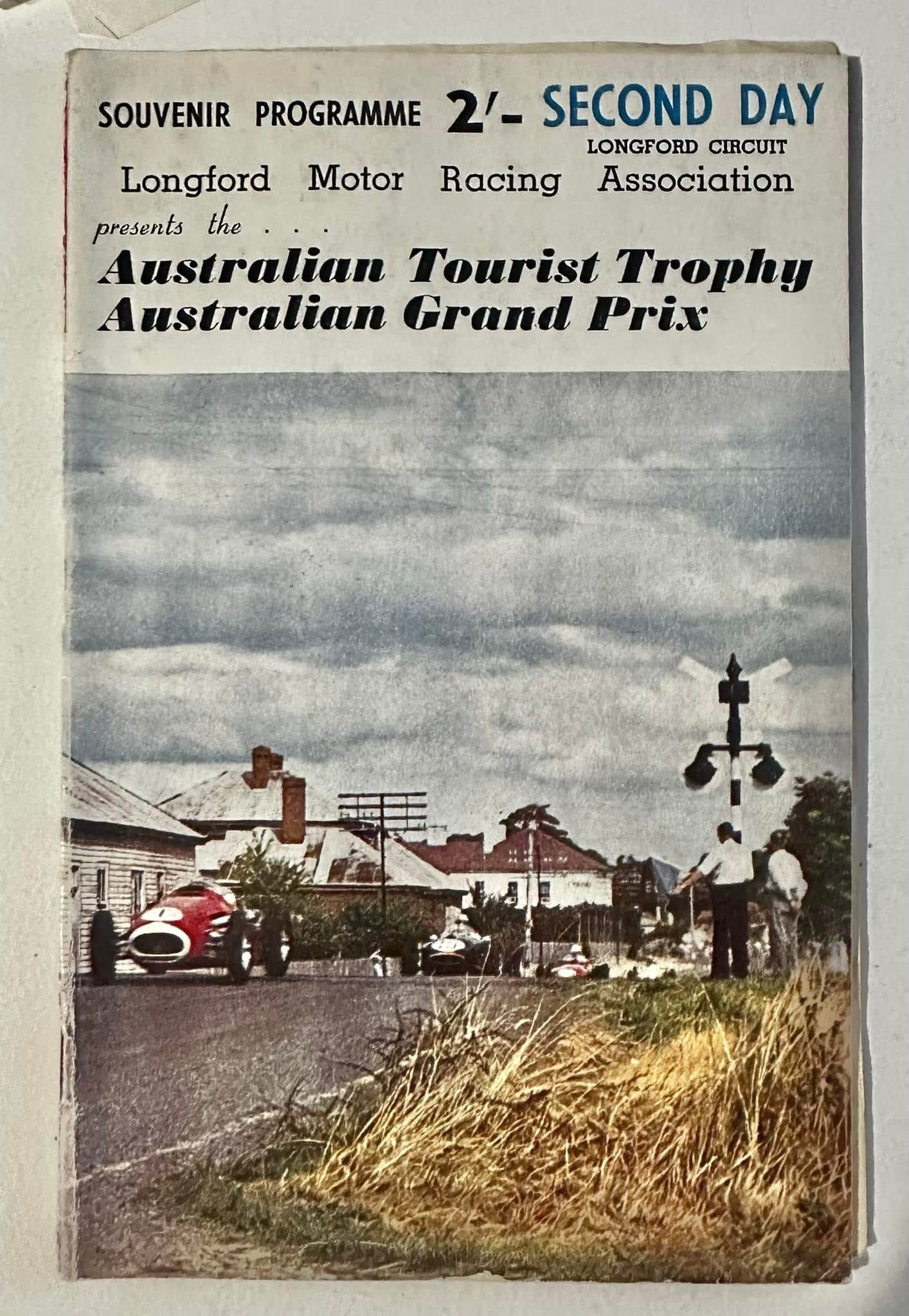
1960 Longford meeting program cover. The shot is of Stan Jones, Maserati 250F and Len Lukey, Cooper T45 Climax during the 1959 AGP at Longford won by Jones. The AGP referred to on the cover is the Oz Motor Cycle AGP, the unlimited event was won by Jack Ahearn (A Lamont Collection)

Race…

The ‘Australian Motor Racing Review’ report of the event follows.

‘With terrific acceleration at the start Derek Jolly moved through the field to the front and soon showed that the other 22 cars in the field would have a hard job trying to catch him.

Ron Phillips in second place, was fighting hard to keep ahead of Matich’s D Type and Whiteford was well behind in fourth place. On the sixth lap of the 24 lap race Whiteford began to increase his speed and on the seventh lap passed Matich to move into third place’.

‘On the ninth lap, Phillips, who was experiencing brake trouble, slowed and allowed Whiteford into second position 11 seconds behind Jolly. In the next lap Whiteford put in an amazing burst to reduce this lead by a further 2.5 seconds’.

‘Jolly, having been notified of this by his pit crew, increased his speed. On the fifteenth lap Phillips retired from the race with smoke steaming from his car. By the seventeenth lap Whiteford had closed to within 5 seconds of Jolly but the speed of the Lotus was again increased until, on lap 26, Whiteford had dropped back to 13 seconds behind.’


‘In the closing stages Whiteford seemed to have lost one or more of his lower gears and Jolly went on to win from him with Matich a long way behind in third place’. Another report has it that Whiteford’s problem was a slipping clutch. John Ampt was fourth in the 1100cc Climax FWA engined Decca Mk2- this little car had a wonderful track record in Australian Tourist Trophy races despite its modest capacity, it was fifth in 1958, fourth in 1959 as well as its fourth in March 1960. Tom Sulman was fifth in his Aston DB3S and then David Finch sixth in his Jaguar D Type.

Winners Are Grinners…

To the victor the spoils of success, well warranted and well deserved.

Derek had completed his apprenticeship having first started racing Austin 7’s in his native South Australia in 1948 and progressed through his Decca Climax FWA powered specials in the mid-fifties into the outright Lotus 15. The best if not the most powerful car in the field, and one he drove with great skill.

Lets not forget his winning Lotus 15 was a Team Lotus works entry at Le Mans in 1959, the drive shared with Graham Hill. He was no slouch. In many ways it is a shame business pressures forced Derek out of racing, he had not peaked, there was still more to come I think.

A great mighta-been is how he would have fared aboard a single-seater Lotus 18 or 21 FPF engined ‘Tasman’ car in the early sixties- he was the Australian Lotus distributor after all. His battles with Frank Matich, seen below congratulating Jolly from the cockpit of the Leaton Motors Jag, would been great to behold. So too those with other top-liners of the period such as Lex Davison, Stan Jones, Bib Stillwell and David McKay.

Etcetera: Other Longford ATT Photographs…

image
Doug Whiteford and Maserati yet again, on the grid for the Monday Light Car Club of Tas race- #120 is the very neat Zephyr Special of Jim Barrie (E French)
image
Doug Whiteford again, the photographers are drawn to these wonderful red cars! Maser 300S near the start line

Related Articles…

 Lotus 15

 Aston Martin DB3S

 Jaguar XKD

 Maserati 300S

Longford 1960

 Bibliography…

‘History of The Australian Grand Prix’ G Howard and Ors, Australian Motor Racing Review 1959/1960, Ellis French Collection

Photo Credits…

 John Ellacott, Kevin Drage, Ellis French, Walkem Family, Brian Dunstan, Keverall Thompson, oldracephotos.com.au, Ken Devine Collection, Andrew ‘Slim’ Lamont Collection

Arcane and Irrelevant: The Last Sportscar To Enter an Australian Grand Prix?…

I think it was Jeff Dunkerton’s Lotus Super 7 Ford 1.5 pushrod, above, which contested the ’62 AGP at Caversham- he was classified 9th having completed 46 of the 60 laps covered by the winner, Bruce McLaren’s Cooper T62 Climax 2.7 FPF.

In the days when full 2.5 litre Coventry Climax FPF’s were as rare as hens teeth in Australia- they were in the hands of F1 teams, Frank Matich’s Lotus 15 Climax 2.5 FPF was the last ‘competitive’ sportscar AGP contender, i reckon. His ex-Team Lotus car was delivered with a 2.5 FPF, much to the annoyance of the locals running single-seater Cooper T51’s who couldn’t get their hands on one.

FM failed to finish the 1960 Lowood AGP only completing 9 laps. The race was won by Alec Mildren’s Cooper T51 Maserati 2.5 by a ‘bees dick’ from Lex Davison’s glorious front engined 3 litre Aston Martin DBR4 GP car. I’m not saying Matich would have knocked off Alec and Lex but the 15 had the pace to finish 4th– in behind Bib Stillwell’s Cooper T51 Climax 2.2 FPF. He would have given Bib a run for his money too!

Anyway, its interesting how long sportscars were a part of our great race…

Tailpiece: Kevin Drage’s Longford paddock panorama in March 1960…

Finito…

(B Harmeyer)

Brian Redman’s Carl Haas Racing Lola T332CS Chev awaits the off at Mont-Tremblant, Quebec, Canada 12 June 1977…

That’s Jim Hall in the Texan hat and you can just see a glimpse of Brian’s driving suit to the far left of the photo. Randy Lewis’ Shadow in front of the Lola I think. Redman was the ‘King of 5 Litre Racing’ in the US having won the American F5000 championship from 1974 to 1976 aboard Lolas- T332, T332/400 and T332C respectively.

When I first spotted Bob Harmeyer’s photo, I thought, ‘what a beauty, I can do something with that pit scene’. Then I looked a bit closer at the date and venue and realised it was the weekend Brian came close to meeting his maker-it was not the only ‘biggie’ in his career either.

Its the very first race meeting of the single-seat 5 litre Can Am formula- Brian and his Lola are about to indulge in some involuntary aviation, the landing sub-optimal in comparison to takeoff.

Carl Haas in the blue shirt and Brian Redman (who is the other Shadow bloke?) in the Mid-Ohio pits, August 1975. #1 is Brian’s T332 HU45, #48 Vern Schuppan’s Eagle 755 Chev. Brian won from Al Unser and David Hobbs aboard T332s, Vern was fifth (unattributed)

With F5000 on the wane a bit, in part due to the dominance of the Lola T330/332, it was decided to spruce up the show by creating a single-seat Can Am series for 5-litre cars- in essence F5000 in drag.

Gordon Kirby wrote about that first single-seat Can Am season in the June 2010 issue of MotorSport- ‘The death of the old Can-Am left the Sports Car Club of America (SCCA) with Formula 5000 as its primary series. For a few years the American F5000 championship was pretty healthy, attracting big fields and top drivers like Mario Andretti, Al Unser Sr, Jody Scheckter and Brian Redman, who won the title for three consecutive seasons in Carl Haas and Jim Hall’s Lola-Chevrolets. But the SCCA and its promoters longed for the return of full-bodied Can-Am cars.

Burdie Martin ran the SCCA’s professional racing department in those days and says the series wouldn’t have come together had it not been for Haas. “Carl had sponsorship for his team from First National City Bank,” says Martin. “But he also talked them into sponsoring the series and, of course, thanks to Eric Broadley and Lola he provided the cars to make it happen. I talked to Carl and said we could make these 5000s into closed-wheel cars and call it Can-Am. I said it wouldn’t cost a lot of money and the cars were out there. We could add the 2-litre cars because there’s a lot of them around and they’re not that much slower. That would fill out the field. So Carl and I got on the phone and called some people, and all of a sudden we were putting a programme together.’

Peter Gethin’s Team VDS Lola T333CS HU2 with standard Lola bodywork…with the front wing added by the team, see text below

‘The SCCA’s last-minute decision to replace F5000 with the closed-wheel, single-seat ‘new era’ Can-Am didn’t inspire much confidence, or interest, from the racing industry. All the uncertainty surrounding the new series meant few teams were ready for the start of the 1977 season. In fact, Haas/Hall was the only Can-Am team able to do any serious pre-season testing and it quickly learned that the new nose for the enclosed wheels didn’t produce enough downforce. The team designed and built its own replacement, which incorporated an F5000 nose in place of the flat, cow-catcher nose of Lola’s T333CS ‘conversion kit’. The result was a car that looked more like an F5000 car with fenders rather than a sports/racer’.

Redman aboard his T332CS- note comments above in relation to the cars body/aero compared with the standard Lola body kit on Peter Gethin’s car above (Harmeyer)

‘Most Lola customers had installed the conversion kit on their F5000s and were pretty upset when Haas/Hall rolled out its unique car in first practice for the opening Can-Am race at St Jovite in Quebec’s Laurentian Mountains. But it soon turned out that in some circumstances even the Haas/Hall aerodynamic package wasn’t up to the job.

In the middle of St Jovite’s backstraight was a humpbacked rise over which the Can-Am cars of Paul Hawkins and Hugh Dibley had taken flight in 1966. Ditto Jackie Oliver in 1970. In afternoon practice Elliott Forbes-Robinson became the first driver to fly a new-era Can-Am car through the air when his flipped as he tried to go over the hump on full throttle. Miraculously, the car cartwheeled through 360 degrees and landed upright on all four wheels. Forbes-Robinson jumped unscathed from the wreckage.

Later that day Brian Redman had a much more serious accident. Redman’s car did a violent backflip, landing upside-down and leaving him unconscious and in a critical condition with a broken left collarbone, a cracked sternum, two broken ribs and a fractured vertebra in his neck. Redman lay heavily sedated in hospital for a week while the swelling and contracting of his brain’s epidermis ran its course and his doctors assessed the damage to his brain and nervous system.’

Harmeyer’s shot of Redman’s car back in the paddock. The Lola aluminium monocoque has stood up to the impact remarkably well, look closely tho- the roll over hoop is gone, torn off/flattened in the huge physics upon landing. Redman a very lucky boy (B Harmeyer)

‘Deeply shaken by Redman’s accident, the Haas/Hall team withdrew from the race and headed home. With the three-time F5000 champion in hospital, a makeshift chicane was installed before the backstraight hump.’

Redman recalled that ‘…the roll bar broke and my head went down on the road. My helmet was worn away on each side. But as the car rolled off the track onto the surrounding land, it landed on its wheels, which was a good job. Because my heart had stopped and the track doctor was a heart specialist- he got that going again. And then on the way to the hospital the ambulance blew a tyre!’

Tom Klausler in the Schkee DB1 Chev at Road America in August. Truly wild coupe like so many cars in this series Lola T332 based (oldracingcars.com)

The Mont Tremblant race was run in half wet, half dry conditions and was won Formula Atlantic standout Tom Klausler driving the unique Schkee coupé, a quite sensational looking Lola-based car built by veteran Can-Am builder Bob McKee. Unfortunately the little team didn’t have the money to race or develop the car and ceased to exist by the seasons end.

Haas/Hall missed the next race at Laguna Seca whilst they looked after Brian’s needs and sought another driver to replace their pilot of the previous near half-decade.

Brian in the Mont Tremblant pitlane, not sure of the chassis number of his T332CS. Randy Lewis Shadow DN4B Dodge # 00 alongside. The car behind the Shadow looks like a T332CS with ‘standard Lola body’ but am not sure which car (B Harmeyer)

During practice in California there were more problems with ‘Cessna 180’s as Aussie F5000 ace, Warwick Brown’s VDS Lola T333CS took off going over the fast brow beyond the pits.

Brown- already a ‘Lola Limper Club’ member by virtue of a T300 F5000 accident at Surfers Paradise in early 1973 broke both legs in the big accident. Teammate Peter Gethin, a vastly experienced driver with an Italian Grand Prix victory amongst his many credits withdrew from the race until a proper solution could be found. Clearly the aero treatment was ‘unresolved’, as the lawyers would put it.

Tambay in the Haas Lola T333CS Chev ‘HU6’ on the way to a win at Mosport on 21 August 1977 (B Cahier)

Kirby- ‘Haas signed up-and-coming French driver Patrick Tambay to replace Redman. A smooth, fluid driver and a gentleman too, Tambay won six of the seven Can-Am races he started in 1977, all from pole, and easily claimed the championship. “I was also doing my rookie F1 season with Ensign, so I had a lot of miles under my belt that year, not only aeroplane miles but driving miles,” he recalls. “The Can-Am car had a lot of power, gave good grip and was a good tool to do mileage to make me sharp for my F1 ride. My Can-Am successes helped me build a strong confidence.”

Back to Brian. As we all know Redman was a racers-racer with several successful comebacks- that he did in 1981 driving a Lola T600 Chev. The Cooke-Woods run car won the IMSA GTP championship on top of the 24 Hours of Daytona, a classic Brian won at the seasons outset together with Bobby Rahal and Bob Garretson in a Porsche 935 K3.

The Redman/Sam Posey Lola T600 Chev during the Road America 500 miles in 1981, 2nd (M Windecker)

Credits…

Bob Harmeyer, Bernard Cahier, Getty Images, oldracingcars.com, Mark Windecker, MotorSport magazine article by Gordon Kirby 2010

Tailpiece…

Calm before the storm, Mont Tremblant…

Finito…

What a couple of pert, perky, taut little tooches!? I do like a finely formed little rump, the Lotus Elan and Jag E Lwt, two of the tightest…

Its Leo Geoghegan chasing Bob Jane through Hell Corner for the blast up Bathurst’s Mountain Straight, I’ve my money on the punch of the Jag’s mid-range torque not to forget its beefy top end over the delicate little Elan. Timeless, twin-cam designs both.

I’ve written about these blokes often enough for international readers to know they were both prominent Australian champions- Bob best known for exploits in touring cars and Leo in open-wheelers. Here they are on ‘neutral ground’, sportscars, during the Easter meeting in April 1965.

(unattributed)

Jane got the better of Leo in both the 5 lap preliminary and 13 lap NSW Production Sportscar Championship, winning both races from the Sydneysider, top speeds of the cars were 147.05 and 142.85 mph (Elan) on Conrod Straight.

I notice Bob’s Jag has a Victorian number plate. The successful businessman lived just off Kew Boulevard in Melbourne’s leafy inner east, no doubt the racer was exercised on that marvellous stretch of road from time to time.

I’ll get around to a comprehensive article on Jano’s Lwt E Type one day, for now enjoy these snippets and shots great sixties sporties.

Etcetera: Jano and his E Types…

(D Lupton)

The Jane Jag E Lwt and Mk2, plus Fiat 2300 at Calder 1964- the E Types first race was here on 8 December 1963.

Its said that the car was a gift from Sir William Lyons via Australian Jaguar importer Jack Bryson. Bob was a Jaguar sub-dealer and had done amazing things to promote the marque in Australia via his race exploits in his Mk 2, an Australian developed car.

Bob and his brother Bill Jane later raced the car in the UK- Jane retained it until 1980 when it was reportedly sold at auction for $A80,000- his ex-works Maserati 300S was sold for a similar figure. He said ‘it was the biggest business mistake i ever made’…


Jane at Bathurst looking fairly hot and dry, Easter 1966 perhaps (T Smith)


(B Caldersmith)

Cracker of a shot above appears to be a lap one horde at Warwick Farm’s Homestead Corner.

Spencer Martin is aboard the Lwt from Leo Geoghegan, Lotus Elan 26R, Kevin Bartlett in Alec Mildren’s Alfa Romeo TZ2 and Andy Buchanan or Greg Cusack in David McKay’s Ferrari 250LM- then the dark top of Fred Gibson’s Elan and a gaggle of ‘Sports Racing Closed’ Minis.

Spencer is driving for Bob so it’s 1966 or 1967.

(H Schendzielorz)

Jane in the Lwt heading up Templestowe Hillclimb in Melbourne’s outer east, circa 1964.

Bob’s Lightweight was his second E Type, as most Australian enthusiasts would be aware.

He bought his first, a series 1 red-roadie in the UK in 1961 complete with Warwickshire rego-plate ‘2152WK’- the car’s chassis number was RHD 621.

It was continually modified and as a consequence was a more successful racer than the Lightweight which competed against sportsracers rather than production sportscars. It competed in 21 race meetings in only 15 months, incuding third in the 1963 Australian GT Championship when driven by Bill Jane, Bob’s brother.

Jane at Longford circa 1963 (unattributed)


Lakeside 1963. Bob’s multi-Oz touring car championship winning Mk2 and E Type FHC (J Psaros)

When Bob bought the lightweight in late 1963 he sold the Fixed-Head E to Adelaide’s Clem Smith, prominent racer and Mallala circuit owner- he raced it twice more.

Soon after it was sold to a member of the RAAF and disappeared, presumed crashed in the Adelaide Hills in the 1960’s or 1970’s.

In more recent times research via Jaguar racer, Mark Trenoweth and Jaguar Magazine have tracked the car to Toowoomba, north of Brisbane where it was owned by a group of enthusiasts- still fitted with is aluminium bonnet and other goodies.

The magazine reported that the car had several owners after that and at one stage was fitted with automatic transmission- the ‘case’ has now gone cold again, do get in touch if you can shed some light on its whereabouts.

(Nantes)

The photographs above and below are unmistakenly Sandown’s old pits, some of the first shots of Bob’s FHC, which still looks in standard specification- more than likely this is the circuit’s opening meeting in March 1962- the Lotus Elite below is driven by Tony Osborne.

(autopics.com.au)


(unattributed)

Wet Lakeside meeting above and Bob is alongside Frank Matich in his Lotus 19B Climax, wet international meeting in 1963 at a guess. Elfin Streamliner on the second row plus other cars you pick yourselves. Matich might have won this race…

And below at Mallala, circa 1963, with Bob ‘half-out-the-window’ as he is in quite a few shots of this car!

(Smith Family)

Etcetera…

(unattributed)

Lightweight E Type at Mallala.

(unattributed)

The red E FHC, i suspect after Bob had sold it, but where, when and who is the driver are my questions!?

Superb shot of Jane heading for the apex of Pub Corner in Longford Village circa 1963.


(unattributed)

Low down shot perhaps taken at Warwick Farm.

Credits…

autopics.com.au, ‘Bathurst: Cradle of Australian Motor Racing’ John Medley, Dennis Lupton, Heinz Schendzielorz, Jock Psaros, oldracephotos.com, Nantes Family, Clem Smith Family Collection, Terry Smith, Brian Caldersmith

Tailpiece: Geoghegan and Jane leaning into Hell Corner, April 1965…

Finito…
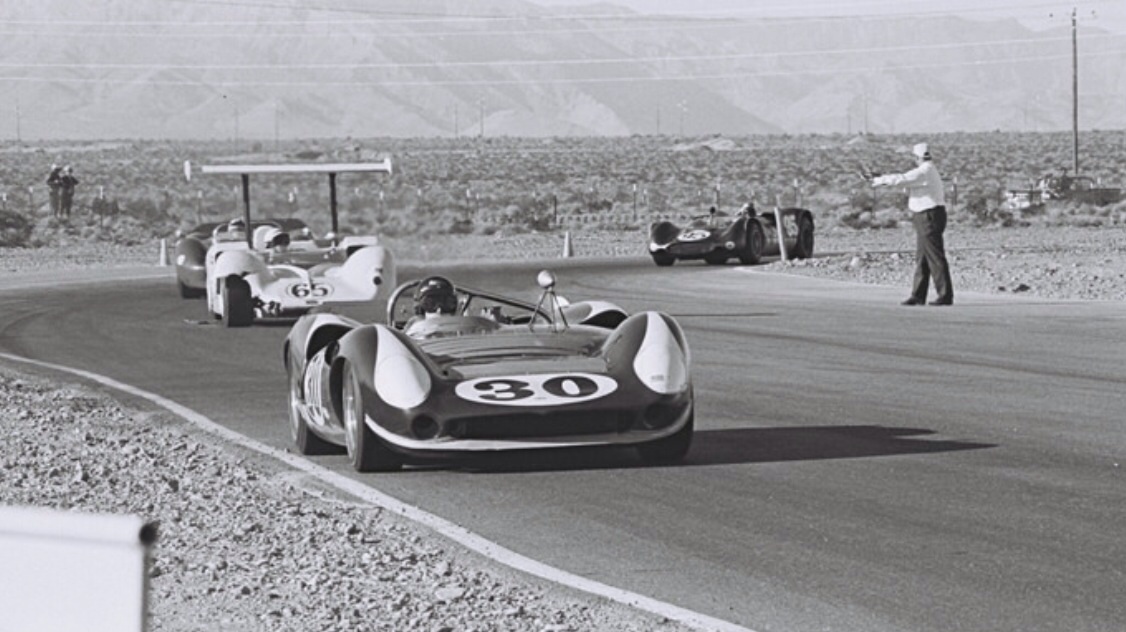
 

(oldracephotos/King)

Bob Jane, Elfin 400 Repco, during the Longford Tasman round in 1967. Sweet Repco V8 music @ 7000 rpm flat out in fifth gear…

Idle moments in front of the Teev provide a male multi-tasking opportunity, looking for ‘that shot’ which inspires an article. Breathing, lookin’ at the telly and searching for photographic inspiration simultaneously- three things at once, my girlfriend can scarcely believe it.

There are some cars which are more prolific in terms of the number of photos in circulation though, usually for the same reasons. That is, they are sensational to look at, were race winners and in Australia raced nationally over a number of years and therefore every ‘snapper in the country, both professional and amateur has had a crack at them. Then, kindly circulated said photos on that internet thingy for us all to enjoy!

So…

In the decade from 1960 to 1970’ish there are several cars which are prevalent as defined above- Pete Geoghegan’s second Mustang, Allan Moffat’s Mustang Trans Am, Leo Geoghegan’s Lotus 39 Repco, Frank Gardner/Kevin Bartlett’s Mildren ‘Yellow Submarine’, Frank Matich Matich SR3’s and Bob’s Elfin 400.

Delivery of the new 400 to the Bob Jane team, Elfins Conmurra Avenue, Edwardstown factory, Adelaide in late 1966. The factory was not flash but the sense of history and those who had been there before was palpable when I inspected my humble Crusader Elfin Vee mid-build in the early nineties. From a modest place did some amazing cars originate (B Mills)

I’ve already done the Elfin 400 to death really…

But there are just too many wonderful photos of Bob’s car not to do this article which I originally intended to be pictorial.

One long previous article was specifically about Frank Matich’s Elfin 400 Olds aka the Traco Olds, the first completed. That piece also covered at somewhat laborious length the design and development of the car, here ‘tis;

Elfin 400/Traco Olds: Frank Matich, Niel Allen and Garrie Cooper…

The other was another lengthy tome, mainly about Hume Weir circuit but it also included a piece within it on Bob’s car, the third 400 built, click here;

Hume Weir…

Bob Jane in one of his first runs, the first race meeting?, Warwick Farm Tasman round in 1967. Top gun that weekend Niel Allen in his Elfin 400 Chev (J Ellacott)

Elfin 400 Repco ‘BB67-3’ was raced by some mighty fine drivers whilst owned by Bob, here is the man himself during the Warwick Farm Tasman round in February 1967…

Jane raced it, so too did 1966/7 Australian Gold Star Champion Spencer Martin. Lets not forget Melbourne up and comer Ian Cook had some drives in 1968, he sadly lost his life at Sandown in 1973 in an ex-Bob Jane Racing machine too. And another young charger, Bevan Gibson took the wheel in 1969, and soon lost his life in it at Bathurst during the 1969 Easter Meeting.

What changed the direction of the article was re-discovery of my copy of ‘Gentleman John Harvey’, the biography on Harves which has some great first-hand material about Bevan by both Bob Jane and John Harvey. I couldn’t find the book when I wrote the Matich Elfin 400 piece, which would have been the right place for its contents, but given the limited print run of Tony McGirr’s book I thought getting these perspectives out there and more readily accessible worthwhile.

In researching Ian Cook i made contact with Grant Twining who owns the Devione Ford, a car raced by Ian. Grant was able to provide some much needed detail to flesh out his story- many thanks to him.

This 400 is significant in Repco Brabham Engines history too as it was fitted with the first customer, as against works engines provided to Jack Brabham. It was a 4.4 litre ‘RB620 Series’ V8.

Ken Hastings aboard the rebuilt ‘BB67-3’ at Sandown on the fast left drop to Dandenong Road circa 1970. Note the change to the bodywork at front and addition of a rear wing. Unguarded horse racing fencing an ever present danger back then. It’s practice by the look, the Pat Crea VW Beetle and ‘Chocolates’ David Robertson Ford Capri V8 sports sedans in the distance (L Hemer)

After the Gibson Bathurst tragedy the car was acquired by Melbourne racer Ken Hastings who rebuilt it. The car passed through several hands over the years before being bought by Elfin enthusiast/racer Bill Hemming, well known to Australians for the Elfin Heritage Centre which houses his collection of cars including ‘BB67-3′.

http://www.elfinheritage.com.au/

The car was rebuilt around a new chassis some years back albeit the very much shagged original frame remains ‘part of the package’- that is the CAMS ‘Certificate Of Description’ recognises the existence of the second chassis precluding the possibility of a ‘B Car’ being built. A neat solution I thought- history and safety are recognised.

Bob Jane leads Spencer Martin and the Elfin 400 Repco at Hume Weir, Queens Birthday meeting in June 1967. John Sawyer in the blue shirt behind, blue car is ex-Jones/Phillips et al Cooper Jaguar  (M Leirsch)

Elfin 400 Technical Specifications…

Lets cover the cars technical specs in brief as it’s covered in detail in the first of the articles referenced above.

The 400 was the third series of sports cars Garrie Cooper and his band of merry men in Edwardstown built. The first were the front engined ‘Streamliners’, the very first Elfins, then came the Clubman and later the mid-engined small-bore Mallala.

The 400 Series sporties were the first ‘big bangers’ he had built, a trip to the UK before he progressed the design too far got him up to speed with what was happening in Europe. The Group 5 Ford GT40 and Group 7 Lola T70, McLaren Elvas and Chaparral’s were the standout cars at the time for different reasons.

Rare colour shot of the Jane 400 in the paddock, date uncertain. Suspension as per text, note the wide based upper wishbone, magnesium uprights and solid Girling brake rotors. See the shot below, car now has a more substantial, but unbraced roll bar (P Houston)

Whilst Garrie was building his first monocoque chassis car, the single-seater F3/F2/ANF 1.5 Type 100 very successful ‘Mono’ he decided an appropriately stressed multi-tubular spaceframe chassis would do the trick for the sportscar. After all, Ferrari were still winning plenty of races so equipped and the Australian market was conservative, a spaceframe was easier to maintain and to repair ‘in the field’ than a monocoque. Such a design could accommodate different engines he knew customers would want to fit to the cars. The frame was of square, round and oval section tubes, the aluminium undertray was stressed as were subsidiary bulkhead panels

Four chassis were built- first completed was the Matich ‘BB66-2’ which used a Traco Olds V8, then came the Globe Engineering ‘BB66-1’ a pushrod and later DOHC small-block Ford powered car,  Jane’s ‘BB67-3’ received a Repco ‘RBE620’ 4.4 litre V8 and ‘BB67-4’, originally owned by Andy Buchanan a big block Chev.

Bolted to these engines were various Hewland transaxles; HD4 for the Matich car LG500 for the Globe and Buchanan cars and DG300 for Jane’s.

Superb early 1967 shot of the Jane car. Engine is the first customer Repco engine delivered. Repco ‘RB620 Series’ 4.4 litre SOHC, 2 valve, Lucas injected V8, circa 400 bhp @ 7000 rpm. ‘620’ is the Olds F85 modified block and first series crossflow heads- this design was the 1966 F1 championship winning design in 3 litres capacity. Note the tubes to the chassis, oil dry sump to the right. Fuel tank capacity 28 gallons- with the option of more. Array of Smiths and Stewart Warner instruments, see chassis plate on dash left and vestigial roll bar- soon altered to a higher and full width hoop albeit unbraced. Simply superb bit of kit (S Lambert)

Suspension was period typical. At the front by upper and lower wishbones with coil spring/Armstrong shocks. Uprights were cast magnesium, adjustable roll bars were fitted with rack and pinion steering.

At the rear, beautiful cast magnesium uprights were used, inverted lower wishbone, single top link and two radius rods, again with coil springs and Armstrong shocks. Roll bars were again adjustable.

Wheels, cast magnesium Elfin jobbies, were 15 inches diameter, 10 inches wide at the front and 12 inches at the back. Owners progressively increased the amount of rubber on the road appreciably over the coming years in accordance with the incredible advances in tyre technology at the time.

Brakes were Girling alloy ‘BR’ calipers with the rotors 12 inches  in diameter at the front and 11 inches at the rear. The bodywork was designed in house, as you will see in the various articles the ‘aero’ of the car was far from ‘fully resolved’ when completed.

Bob Jane aboard his 400 in 1968 (T Parkinson)

And they say Enzo Ferrari kept his drivers on their toes! So too it seems did RF Jane…

It was only in gathering the photos of the 400 that I realised how many fellas drove the 400 in a short period of time.

Bobs race team plans were changed suddenly when Spencer Martin decided to retire having won the second of his Gold Stars with Bob in 1967- they won two on the trot in 1966-7 using Bob’s Brabham BT11A Coventry Climax.

Spencer Martin had this to say about the 400 ‘What caused the accident (to Gibson) was an aerodynamic design fault with the car. I had driven the car in ’67. It was the quickest thing around at that stage. It had a 4.4 litre Repco V8 in it, and was very, very quick. But the aerodynamics on the car were not right. Unfortunately, Bevan paid for it with his life.’

Martin then commented about seeing the sportscars on circuit at Longford in 1967 when Bob Jane raced the 400. Spencer ran the Brabham BT11A and was therefore on hand to watch the sportscars practice.

Noel Hurd in the Globe Products owned Elfin 400 Ford became airborne at high speed during practice, mowing down a row of fence posts after spinning several times but leaving the driver unhurt. ‘It was an Elfin 400, and I saw them coming down the long straight at Longford, in Tasmania. I wasn’t at all happy with the aerodynamics of the car. Looking back I think I was very fortunate. If I hadn’t retired I would probably have been in that car’ (at Bathurst Easter 1969)

Whilst testing the Elfin at Calder early in 1967 Martin was circulating in 44.2 secs, nearly a second under Niel Allen’s lap record in his 400.

Shell boys at Warwick Farm in 1966: Jane, Kiwi Jim Palmer, Harvey and Jackie Stewart- quite an array of talent, champions all (WF)

John Harvey had shown what he was made of in the RRC Phillips owned Brabham BT14 Repco- so Bob hired Harvey, (born 1938) bought the BT14 and popped the Repco engine from it into the back of the BT11A and off they went to contest the ’68 Tasman Australian rounds.

The logic was that the F2 BT14 chassis wasn’t man enough for the Repco, whereas the older ‘Intercontinental’ BT11A was. Harvey did the Hordern Trophy late ’67 in the car, Climax engined before the Repco for Coventry Climax engine swap was performed. Harvey’s ‘compare and contrast’ of engines in that chassis would be interesting. As Australians know Harves was Bobs ‘main man’, his contracted driver from then right through until Frank Gardner returned to Australia in 1974- joining Jane for 1975.

John Harvey on Warwick Farm’s pit straight during the 1968 Warwick Farm 100 meeting. DNF gearbox in Janes BT11A ‘IC-4-64’ Repco. Clark won in a Lotus 49 DFW. The Brabham was and is a famous car- first owned by David McKay’s Scuderia Veloce and raced in the ’64 Tasman successfully by Graham Hill it was then raced by Martin to two Gold Star wins. Still owned by Jane and restored to CC engined form (autopics.com.au)

Early in his time with Bob John had a bad accident at Easter Bathurst 1968 when an upright in the near new Brabham BT23E broke hospitalizing him for some while with a recuperation period even longer. His first meeting post accident was at Warwick Farm later in 1968. It was a meeting John was glad to get behind him as his eyesight, fine early in the day, had a bit of double-vision later as the day wore on.

Naturally on Jane’s part, if not Harvey’s, there may have been a question about him racing again after an accident Jane said could have been fatal. He needed another driver until Harves was fit.

Jane in the Longford pits in 1967, nice rear view of the 400 Repco (E French)

Ignoring the touring cars/sports sedans to focus on the cars which matter, Harvey raced the BT11A, then the ex-Brabham ’68 2.5 Tasman BT23E Repco, the Rennmax built Jane Repco 2.5, Brabham BT36 Waggott 2 litre and finally the Bowin P8 Repco Holden F5000. He raced the McLaren M6B Repco sportscar from 1969, with Bob. He drove the Elfin 400 only once and had this to say about it.

Bob drives and Harves carries the booty. McLaren M6B Repco, they have just won the final round of the 1972 Australian Sportscar Championship at Symmons Plains on 12 November- Harvey won 5 of the 6 rounds that year. Sex on wheels (oldracephotos.com)

‘I drove that Elfin only once and I didn’t like it. I didn’t like it at all. It was the sort of car that probably I could have been persevered with, and make it work properly. Or, at least to suit me. Maybe other drivers, including Bevan, were quite happy with it. But I certainly wasn’t. And that was the result of only driving it one time. I didn’t like it so I never drove it again’.

So, the 400 seems to be the car which Jane, who also raced it a lot, shared around a bit.

Ian Cook, Elfin Mono Ford, Calder 1967 (autopics.com.au)

 Ian Cook was a Melbourne boy (born 1941) who made a name for himself in single-seaters winning the Victorian Lucas Davison Series in 1.5 litre Elfin Monos in 1966 and 1967…

He drove an ex-Granton Harrison Mk1 in ’66 and in Garrie Cooper’s prototype Mk2 in 1967. This chassis was the car which Alf Costanzo drove the wheels off and shot to prominence after sold to him by Cook.

Ian, in addition to his Elfin raced Melbourne car owner Tony Osborne’s Argo Chev sportscar in 1967, no doubt his skill behind the wheel of this Cooper derived sporty, a far less sophisticated machine than the 400, was instrumental in him joining the Jane organisation in late 1967.

Ian Cook, Elfin 400 Repco on the Longford dummy grid in 1968. Car now has seat belts. Notice the different injection trumpets on the engine from the earliest 1967 shots

His first drive of the Elfin 400 was at Calder in January 1968, taking 2 wins. The Jane team then took the car to the Bathurst Easter meeting in 1968, together with the BT23E crashed by Harvey in practice.

Bob and Ian were both down to drive the 400 but must have had problems with it in practice as it failed to start any of the events, certainly Cook drove it in practice. Or perhaps John’s serious accident was enough to ‘up sticks’ for the weekend. Their experiences in the 400 that weekend would have been interesting given the sad events which were to transpire 12 months hence.

(R MacKenzie)

Grant Twining reports that Ian Cook was the quickest of all the Elfin 400 drivers who raced the cars at Longford- Matich (noting the advance in tyres between 1966 and 1968) Jane and Noel Hurd. The photo above is of the front row of the ’68 Longford Tasman sportscar support race- #5 Peter Macrow in the Argo Chev vacated by Cook, Ian in the 400 and Chris Amon on pole in the Scuderia Veloce Ferrari P4/CanAm 350. Amon took the win, am keen to know the placings.

Four months later Jane won the Victorian Sportscar title at Winton in the 400 after Niel Allen retired his Elfin 400 Chev with a split gearbox housing.

After the Tasman BT23E was repaired Cook raced the car at the Lakeside, Gold Star round in July for 4th place. He doesn’t appear to have had another steer of the car, which is unfortunate.

Allan Moffat then raced the BT23E at the Sandown Gold Star round, bending it. More of that shortly.

The first race after repair of the BT23E was in John Harvey’s hands, at Warwick Farm in a support race late in 1968. His first championship steer was at the Sandown Tasman round in February 1969. John had engine dramas and failed to finish the race won by Chris Amon’s Ferrari Dino 246T. Amon also took the Tasman title that year.

Cook aboard the 400 at Hume Weir in 1968 (unattributed)

Ian Cook and Footscray Service Station proprietor, racer, ace machinist and later Brabham expert Denis Lupton were old friends.

Lupton ‘spannered’ Cook’s two Elfin Monos with great success. When the Jane drive came to an end they were keen to buy a Brabham BT23 to run in ANF2 but could not afford to do so. So the pair built the ‘Devione’, a car which took the BT23 track and wheelbase dimensions but was otherwise Lupton’s own design and build.

Ian was a skilled sheet-metal fabricator, between the two mates they had all the skills and experience to build a beautiful car. The spaceframe chassis used F2 Matra MS5 front and rear cast magnesium uprights. A Lotus/Ford twin-cam engine and Hewland 5 speed transaxle completed the cars major specifications.

The car was raced by both men, Cook doing the more ‘senior events’ inclusive of some Gold Star rounds whilst Lupton did club events. The car was built and then raced in the 1968-72 period.

Around 1970 Cook, a talented development engineer moved to Adelaide to join Chrysler, to assist Leo Geoghegan with the road and race development of the Valiant ‘VF’ Pacer, a four door sedan which was proposed to contest the showroom stock, ‘Group E Series Production’ racing which was booming at the time.

Cook was involved in establishing the Pacers road going specification, ensuring a nice balance of engine and braking performance and sorting ride heights, shock absorber settings and roll bars to get the right blend of handling, safety and performance. The first test of these cars was at Sandown in June 1969 during a 12 Hour record setting day.

Niel Allen’s Chev engine 400 ahead of Cook in Jane’s Repco engine variant during the 1968 Warwick Farm Tasman round. They are attacking The Esses. Results folks? Note the different noses on the cars (oldracephotos.com)

Into 1969 the Elfin 400 drive was Bevan Gibson’s, with John Harvey racing the Brabham BT23E and McLaren M6B, the latter with Bob.

Janes Brabham BT36 (BT30-27 was a late build BT30 to BT36 specifications) was raced only sporadically by John Harvey. 2 litre Waggott powered, it was a jewel of a machine but arrived in amongst the F5000’s and too late for the 1971 Gold Star series in which he could have given Max Stewart and Kevin Bartlett a ‘good shake’ at the title Max won.

Bob Jane Racing sold the car less engine to Lupton and Cook who owned it in partnership. They converted it to ANF2 form by the simple fitment of a Lotus/Ford 1.6 litre circa 200bhp engine. The car was to be shared by the friends as before with the Devione.

Lupton withdrew from the arrangement with Ian when he needed to raise some cash to care for one of his young children who needed hole-in-the-heart surgery.

On a cold, wet, foggy Sandown practice day Ian was being looked after by some ‘stand ins’ rather than his usual crew including Lupton- who was dealing with family matters.

Grant Twining, the owner of the Devione and a confidant of Lupton says their theory is that the Brabham’s tyre pressures were probably incorrectly set too low. During practice for the June 1973 meeting the car lost a tyre from a rim, slid into one of the Shell, over the circuit sign, concrete supports, killing him instantly.

A Melbourne driver, his is a story which deserves to be told in full. Suffice it to say, a fine engineer, competitor and man died way too young in very unfortunate circumstances.

Ian Cook accepting the plaudits of the unruly but respectful! Warwick Farm crowd, February 1968. Elfin 400 Repco (D Harney)

Most of us think of Allan Moffat (born 1939) and Janey as arch rivals which they undoubtedly were.

The droll, deadpan, Canadian ‘Marvin’ played the ‘Baddie Role’ so well, it was easy as a kid to dislike him as much as you liked his car! The Trans Am Mustang that is.

But not long after he returned from his successful sojurn of several years in the US, in 1968 he had a couple of drives for Bob- ‘Stuffing the nose of the 400 into the fence and hay-bales at The Causeway at Warwick Farm, and at the following Sandown he had a more comprehensive issue with the Brabham’ (BT23E) wrote journalist Ray Bell. The meeting Bell referred to was the September 1968 Gold Star round, the car, crashed in practice, did not start the race.

400 in the Longford paddock Tasman round, February 1968. Jim McKeown’s Lotus Cortina Mk2 alongside (D Cooper)

I’ve never seen any photos of Moffat aboard either car. Please share them if you have any Instamatic happy-snaps or better!

Moffat didn’t cover himself with glory it seems, not that it impacted his career trajectory! Factory Ford Series Production rides and the Trans Am were both happy 1969 events for both Moffat and we fans. What a ride he gave us all!?

Hume Weir front row of the sportscar feature, Queens Birthday weekend June 1967. Alan Hamilton’s white Porsche 906 Spyder, Spencer Martin in the Jane Elfin 400 Repco and nearside Bevan Gibson Lotus 15 Climax (M Leirsch)

Bevan Gibson (born 1946) I wrote about not so long ago in the article about the ex-Derek Jolly Lotus 15 which Bevan drove to within an inch of its life, bringing himself to the attention of Jane and others. Click here for a link to my article about the Lotus 15.

Derek’s Deccas and Lotus 15’s…

Gibson really was an interesting prospect- considerably younger than all of the other drivers. At 22 he was aboard one of the fastest cars in the country- also a tricky one. I’m not suggesting Bevan was in over his head. He had plenty of experience in the 200 plus bhp Lotus 15 and had done some laps in the BT11A Repco during 1968 ‘with a strict rev limit’ to be observed whilst driving the circa 280bhp single-seater.

Pre driving deal. The Shell contracted Bob Jane Elfin Mono Ford alongside the Shell contracted Gibson family owned Lotus 15 Climax, perhaps at Calder, date unknown (unattributed)

Whilst racing the family Lotus 15 Climax Bevan worked in the workshop of Jane’s Chrysler Valiant Dealership in Sydney Road, Brunswick. The racing department was in the same premises.

Spencer Martin had been staying with Bob at his place in Kew, just off the Kew boulevard, a well known and challenging ‘racetrack’ then. Bob suggested he move out into a place of his own- sharing with Bevan, the pair ‘shacked up’ in a unit at Princes Park (Carlton) organised by Bob, the arrangement ran from 1966-7, at which point Spencer retired from racing and returned to his Sydney hometown.

Bevan Gibson having a steer of Bob Jane’s Brabham BT11A Climax in August 1968 (unattributed)

Its interesting looking at the history, the connection to the Gibson family via Hoot Gibson, Bevan’s employment by the Jane Organisation, and ‘batching’ with Martin that Cook got the 400 drive in early 1968 rather than Bevan.

Perhaps it was simply that they (Bob and Spencer) didn’t think Bevan was quite ready for it at that time? There is no doubt that they saw plenty of each others races, photos of various of the Jane cars with the Gibson 15 in shot show them sharing the Shell facilities at race meetings. I’m not suggesting Cook wasn’t worthy of the Jane drive- most certainly he was, I am merely musing over the reasons/timing of the decision to give the drive to Ian rather than Bevan in 1968.

400 in the Calder paddock in May 1967- I wonder if its Bevan’s Lotus 15, which was painted red for a while, alongside. No roll bar in this shot (T Thompson)

At the 1969 Sandown Tasman meeting, the race and championship won by Chris Amon’s Ferrari Dini 246T, Gibson took the fifth of five in a row wins in Jane’s Elfin 400.

Barry Catford, somewhat prophetically, wrote the following note as a reporter covering the meeting for ‘Australian Motoring News’. ‘During the sportscar race I noticed on each lap the nose of the Jane Elfin lifted markedly after hitting a bump on the main straight before the start/finish line. The bump would affect the other cars, but not as noticeably as it did the Elfin. It seemed as though the Jane car needed less ride height at the front and maybe more at the rear which then may have resulted in less air getting under the front of the Elfin as it lifted over the bumps’.

The accident at Bathurst happened that Easter, on 7 April, three months later

Bevan Gibson ahead of Niel Allen at Calder in March 1969, 400 Repco from 400 Chev (oldracephotos.com)

In ‘Gentleman John Harvey’ Peter Molloy recounts how John Harvey was completely shattered by what had happened to Bevan. ‘I really think that John wanted to give it away then and there’. But, ever the complete professional, he saddled up in the Brabham BT23E and contested the Gold Star race- won by Jack Brabham’s Brabham BT31 Repco after the Gibson accident with the remnants of the fire fighting foam still on the track and debris off to its side. On a track which bit him badly due to component failure only 12 months before.

Bob Jane had this to say about Bevan- ‘Hoot Gibson (father of Bevan)…were a family devoted to motor racing. ‘Hoot’ went back to the rallies from years before. Along with a lot of my mates like Lou Molina and all those sort of people. Young Bevan was a very promising driver. He was very aggressive. When I say aggressive I mean very brave. Unfortunately, that element of bravery brought him undone’.

‘The car he was racing, my car, was an Elfin. Obviously with the knowledge we have today about aerodynamics, things would be different. The car had a flat bottom, and Mount Panorama was a very fast track. It had two bumps and the end of the straight which brought a lot of people undone. The car took off, went upside down, and caught on fire. It was just a terrible, terrible tragedy’.

Gibson pictured with the Jane Elfin Mono, at Calder, date unknown (unattributed)

It wasn’t my intention to spend time dealing with the accident which befell Bevan at Bathurst.

As I mentioned at this articles outset, what started as a pictorial has ended up a feature. There are quite a lot of ‘I reckons’ about the accident online, my article includes these too. What is persuasive or a least informative are the views of those from within the Bob Jane Team, and Harvey details with Bevan sensitively and the accident in full, on that basis I include the following lengthy view of a friend and insider.

‘Bevan was a very bright young bloke. He had extremely good car control, and was very fast. He was a bit like a lot of us in our younger days, he was a bit wild at times. But he was able to harness that wildness, that energy, and put it into his driving. He was very good in competition and making excellent progress’.

‘Also some drivers may have a ‘devil may care’ sort of attitude. This can lead to some ‘spirited’ driving. I never felt this would bring Bevan into harm, but I did sometimes think he was a bit on the wild side. I felt that at times he threw caution to the wind. I have no hard core evidence for this…but I just remember feeling that at times’.

‘Quite apart from what I thought, he was certainly a good young driver. He had a lot of talent. Had he survived he would certainly have been good at his craft, and would have won lots of races…’

Lap 1 of the fateful Easter Bathurst Sportscar race 1969. The event was not an ASCC round- but was an important race with all the ‘top guns’ present. Niel Allen ahead in his ex-Matich Elfin 400 Chev, Frank Matich, suffering fuel feed dramas is 2nd, Matich SR4 Repco then Bevan Gibson, Elfin 400 Repco. Note the winglets on the front of the Allen car, big rear wing and front tabs on the SR4, Jane car devoid of these aero appendages (oldracephotos/Dick Simpson)

Bathurst Easter 1969…

John Harvey continues ‘On the Saturday night Bevan discussed with us the fact that the Elfin was lifting off the road coming over the last hump. I said to him”You can’t have it lifting off the road. If it lifts off the road it will go upside down”. We suggested that maybe the car was getting a bit ‘light’ going over the hump. I really didn’t know what technical things he could do to alleviate the situation’.

‘We expended the conversation to include Bob Jane and John Sawyer (Bob Jane Racing Team Manager/Chief Mechanic). Bevan suggested we may put some air ‘flippers’ on the front of the car, or some little winglets. This was late on the Saturday night, and hardly the right time to initiate things like that. The conclusuion was that we didn’t know if it would work. These are the sorts of things you have to test under controlled conditions. Raceday, particularly at Bathurst, is not the place to test.’

‘The only comment I made was “In all the years I have been coming to this place in whatever cars, if the car does not feel stable over the last hump- or even the second last hump- or if its a windy day- always lift off the throttle”. To do this may only drop your speed only a few miles per hour, but what it does is drop the nose of the car. Drop the nose of the car, and reduce the amount of air under the car. The car will therefore feel that little bit safer, and that much more stabile’.

‘So, that was that. there were a number of drivers who were aware of the problem and did just as I said. All we could do was pass this advice on to Bevan- all I can recall is that Bevan was running third. He then passed Niel Allen (ex-Matich Elfin 400) or Niel had some problem and Bevan was in second place’.

Bob Jane team and Elfin 400 at Calder, date uncertain. John Sawyer in blue suit behind the car. No roll bar fitted in this shot (unattributed)

‘Bevan then started to catch the race leader, Frank Matich  (Matich SR4 Repco ‘760 Series’ quad-cam 4 valve Repco 5 litre V8- a normally vastly faster car than the Jane Elfin 400).  Franks car had gone onto  seven cylinder for some reason, but he still had a good lead. Bevan was starting to catch Frank. Maybe Frank’s car now went onto six cylinders. I don’t know. All we knew was that Bevan started to catch Frank fairly rapidly, Bevan went across the top of the mountain behind Frank, and down through the Esses. From there it was on to Conrod Straight’.

‘It appeared to us that if he caught Frank he would bide his time and pass where it was safe to do so. At this stage no one was thinking about aerodynamics. Plus, i’m not at all sure what role that may or may not have played. It appeared that Bevan ‘drafted’ Frank down the straight. He caught right up on Frank and surely knew he had him. I think by this time there were a couple of laps left to go in the race.’

‘Naturally I have no way to know what is going on in Bevan’s mind. But I can easily imagine him thinking “I’ve caught up to Frank Matich. I can pass him and win this big race at Mount Panorama”. Which, of course would be a big win to have’.

‘So Bevan drafted Frank down the straight. He seemed to me to pull out just before the last hump. He pulled out to get the run down the inside of Murray’s Corner, and beat Frank under brakes. I suppose they were travelling at 160-170mph, and Bevan had pulled out just before the last hump. When Bevan hit the fresh air the car seemed to accelerate. The Elfin lifted, went up in the air, and came to earth upside down. The car almost instantly caught flames, and that was that’.

‘There was no doubt in my mind that Bevan died in that first upside down impact. The rest of the destruction and the fire, didn’t really matter’.

John then sensitively deals with the hours and days which follows, and points out that despite over 25,000 miles of testing, and the advance of aerodynamic understanding in the decades which followed the accidents which befell Mercedes Benz at Le Mans not so few years ago. Two flips to Mark Webber.

Bevan Gibson, Elfin 400 Repco, Bathurst Easter 1969. An outstanding young talent taken too soon. RIP Bevan Gibson (oldracephotos.com)

Bibliography…

‘Historic Racing Cars in Australia’ John Blanden, ‘Gentleman John Harvey’ Tony McGirr, ‘Bathurst: Cradle of Australian Motor Racing’ John Medley, ‘Elfin’ Barry Catford and John Blanden

Special thanks to Grant Twining for insights and information about Ian Cook

Photo Credits…

Ellis French, Dennis Cooper Collection, Dale Harvey, J Ellacott, oldracephotos.com, Dick Simpson, M Leirsch, S Lambert, Bob Mills Collection, GTRX, Tony Parkinson Collection, Wayne Wooton Collection, T Thompson, Tim Watts, Peter Houston

Etcetera: Niel Allen from Noel Hurd and Bob Jane, Elfin 400’s all …


Mixed sportscar bag in country NSW. Jane at Hume Weir in early 1968 from a Lotus 11, Meyers Manx VW beach buggy! and Geneer Outlaw VW (oldracephotos.com)


Bob Jane off the line at a Calder Raceway drag meeting in, I think 1968. He took out ‘Competition Eliminator’ with an 11.78 second/117.80 mph pass for the standing quarter (W Wooton)


Ken Hastings at Sandown circa 1971, note the changes to the 400 body and addition of the rear wing (T Parkinson)


Bill Hemming in his beautifully restored ex-Jane 400 Repco at Phillip Island in recent years (G Russell)

Tailpiece: Butt shot for the tailpiece seems apt. Niel Allen Elfin 400 Chev, bodywork by Frank Matich, compare and contrast with the standard rear of Bob Janes 400 Repco. They are heading over Sandown’s old Causeway and about to swing left into the approach of the very quick Dunlop Bridge in 1968…

Tailpiece 2: End where we started with Bob Jane- at Longford in 1967, alongside is Alan Hamilton’s Porsche 906. We have liftoff…

(T Watts)

Finito…


Clarence La Tourette’s superb cutaway drawing of the iconic, important Chev Corvette SS…

Regular readers will know I am a cutaway fan.

My favourite practitioners of the art are Vic Berris, Theo Page, Paolo D’Alessio, Tony Matthews, Bill Bennett, Bruno Betti, Giuseppe Cavara, Yoshihiro Inomoto and Clarence La Tourette- who I assumed was based in France. In fact he was working as a Technical Artist at Lockheed in the US when the newly appointed editor of Sports Cars Illustrated/Car and Driver, John Christy, brought him into the mix together with writers Griff Borgeson and Karl Ludvigsen in 1956. La Tourette drew the magazines cutaway centrespreads in his spare time. And absolutely marvellous they are.

One writes about such well known cars as these Corvettes with trepidation, but La Tourette’s beautiful drawing was too good not to publish. The article is a quickie to support the photographs, it offers Chevy hardcore no new insights but ‘newbees’ to this car like me an introduction.

GM famously rushed the first Corvette to market, it sold well in 1953 despite poor quality, its wheezy ‘Blue Flame’ in-line six cylinder engine and very limited availability. Only 700 were sold in 1954 and Chevy die-hards have it that only a 1955 memo from Zora Arkus-Duntov to Chev Chief Engineer Ed Cole, guaranteeing the commercial success of the car, saved it from the production axe.

These aero-test shots are dated 28 December 1956, the ’57 Sebring meeting was on 23 March (GM)

Arkus-Duntov was hired by Cole in Autumn 1953 after he saw and was excited by Harley Earl’s ’53 Corvette Prototype at the 1953 Motorama in New York. At the time the Belgian born American former racer was running a family business selling souped up Flathead Ford V8’s. A-D famously improved the cylinder head of the 265 cid small-block Chev V8- the first in a phenomenally successful run of cast iron, push-rod, relatively light and powerful road and race engines.

A-D presented a paper to the Society of Automotive Engineers extolling the virtues of a sportscar marketing approach in which such cars were ‘endowed with a racing halo provided by a few specialist machines of the same make’.

Putting into practice what he preached, Zora took a pre-production updated ’56 model to Pikes Peak early that year and won his class. Cole, by then GM of Chevrolet, approved a production speed record attempt at Daytona and the car set a speed of 150.583 mph in a car sans windscreen and with the ‘Duntov-cam’.

Chevrolet entered a Corvette fitted with an experimental 307 cid V8 at Sebring in 1956, the John Fitch/Walt Hansgen driven car finished 9th in the race won by the Fangio/Castellotti Ferrari 860 Monza.

Cole spoke to A-D about fitting a Chev engine to a Jaguar XKD Bill Mitchell bought but Zora argued for a racing version of the Corvette to be built instead and to be entered at Sebring in 1957.

Superb, posed shot of one of the two cars being built. Light tubular steel chassis, 283 cid, injected V8 and rear suspension in all of its detailed glory- de Dion tube, coil spring/shocks and huge finned drum brakes. Design very much the paradigm of the day, build quality and detail marvellous (GM)

Two cars, code named Project XP-64, were built by the Chevrolet Engineering Centre in the six months available- a ‘mule’ which used a fibreglass body over a multitubular spaceframe chassis and a race car which was to have hand-formed magnesium panels.

The engine was the latest iteration of the small-block, a 283 cid V8 fitted with fuel injection giving circa 307 bhp- to which was bolted a four-speed gearbox. Front suspension comprised upper and lower wishbones (A-arms) with coil spring/damper units. The rear used a de Dion tube, Halibrand quick-change differential, coil spring/dampers and inboard aluminium finned drum brakes- drum brakes were outboard at the front.

Race car close to completion- looks too good for a racer of the day! (GM)

The mule weighed 1850 pounds, the magnesium body would save 150 pounds but time was not on the teams side so all of the testing was done with the mule. No less than Juan Manuel-Fangio was engaged to drive the car but he was released from the deal when it became apparent it would not be ready- contracted to Maserati in his final full season of racing he won the event in a Maser 450S co-driven by Jean Behra.

John Fitch lapping the mule during Sebring practice (G Bussian)


Arkus-Duntov doing some Sebring test laps, schmick Halibrand wheels (G Bussian)

Nonetheless Fangio tested the car and lapped quicker than his previous years record lap-time. When the racer arrived all the ‘sorted bits’ were transferred from the mule to it, the car driven by the vastly experienced Piero Taruffi and John Fitch. It retired after only 23 laps with ‘electrical gremlins, bad brakes and terminal rear end problems’, sad really as the car dominated the early laps and achieved a top speed of 183 mph.

John Fitch said ‘That car had so much potential, but we never had time to make it race ready. We didn’t get the car to the track until the very last minute and so we transferred the parts that worked, and everything we refined on the mule to the racing car when it arrived. The brakes were absolutely terrible and they never got that resolved. For some reason Zora Duntov made the decision not to use disc brakes on the car and it was a bad one. We had absolutely no time to sort that car out. If we had we might have made a real impact on that race’.

Piero Taruffi, Corvette SS, JM Fangio alongside in the winning Maser 450S and #20 Stirling Moss Maser 300S 2nd (G Bussian)

None of the problems were any less than could have been expected of a car at the commencement of its development curve but aspirations for Le Mans and other blue-riband events were scuttled with the American Automobile Manufacturers Association ban an manufacturer supported motor racing off the back of the 1955 Le Mans disaster.

Both cars survive of course, the Mule was sold to Bill Mitchell, then GM Vice President of Styling for a dollar who turned it into the Stingray Racer…

John Fitch and Zora Arkus-Duntov @ Sebring 1957. Superb car has no bad angle (G Bussian)

Etcetera: Sweet coupe, A-D up…

Bibliography/Credits…

Clarence La Tourette, chevyhardcore.com, myautoworld.com, General Motors, Gene Bussian

Tailpiece: Zora looks rather happy with his team’s creation, as well he should. A wonderful mighta-been…

(GM)

Finito…

(Klemantaski)

Jack Sears, Dunlop Curve, Le Mans in the ill-fated long, low, swoopy AC Cobra Coupe 20-22 June 1964…
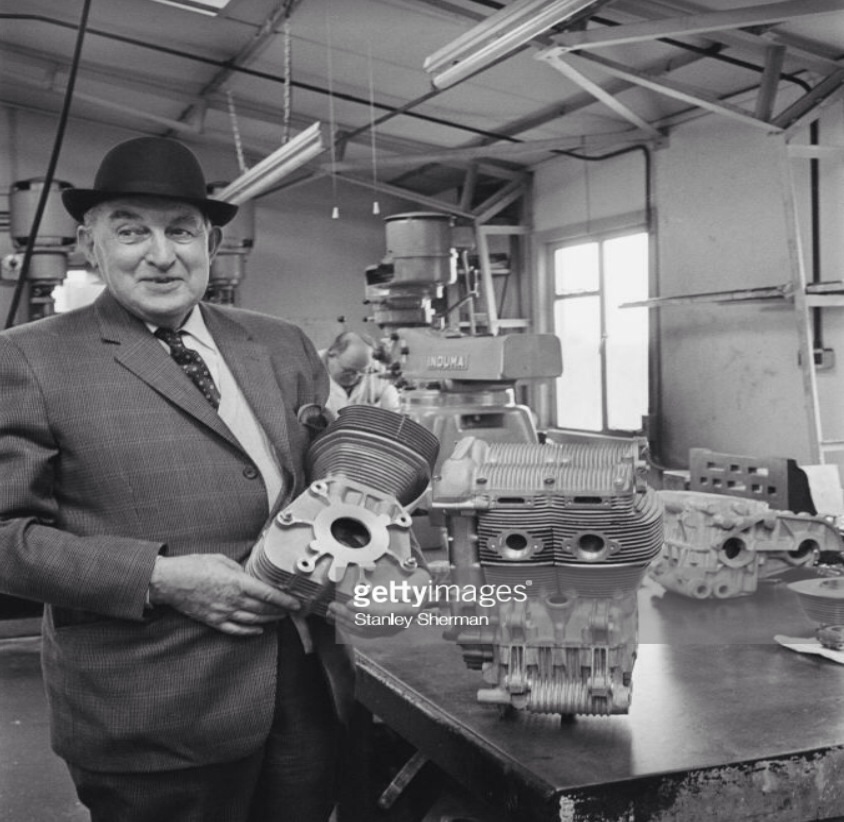
Sears was hoping to do better than his marvellous fifth place at Le Mans in 1963 aboard the Maranello Concessionaires Ferrari 330LMB he shared with David Piper.

The talented British sedan and sportscar racer was partnered with Peter Bolton in the one of a kind AC Cobra Coupe, AC Cars Ltd owner Derek Hurlock and his team built to take on the ‘works’, Shelby Daytona Coupes in the famous 1964 24 Hour classic.

It was also a chance for AC to improve upon its 7th place finish at Le Mans in 1963 when the factory Cobra driven by Ninian Sanderson and Peter Bolton finished 7th.

The big Coupe was registered ‘BPH4B’ to allow some testing on public roads, despite this the first Carroll Shelby knew of AC Chief Engineer Alan Turner’s in-house design was at the car’s competition debut during the Le Mans test day in April.

Visibly lower than the Pete Brock designed Daytona coupe (41 inches compared with 48 inches- its height a function of uncertainty over Le Mans windscreen height regs) both designers sat the drivers lower in the car. Turner had also raked the windscreen, created a lower nose section and a longer flowing roof as well as designing the ‘eyebrows’ over the tops of the wheel arches he claimed help clean up airflow.

The cars promise of speed on the Mulsanne Straight was met- Bolton achieved the 27th fastest time in a fast run without ‘going for a time’ in a car which still required development.

Back in the UK brake overheating problems were addressed with ducting, a burned piston replaced and a rear spoiler added for stability and to reduce lift. The car was then tested at the MIRA facility for which it proved too fast, there was not a road section which allowed the car to run to its maximum speed…

AC’s Alan Turner created a marvellous, handsome, cohesive, masculine shape with demonstrable aerodynamic properties- such a shame only the one was built (Autocar)

During Le Mans Sears and Bolton were timed at 180.2mph @ 6300rpm, matching the Daytona Cobras despite giving away 30bhp to the Shelby entries- AC cars chassis #A98 had a 289cid/4.7 litre ‘Windsor’ engine which developed circa 355bhp, the Shelby cars had around 385bhp.

The car qualified conservatively second in class behind the Gurney/Bondurant Shelby entry and ran in that race position, at one point leading the class early in the race averaging 20mph for the first 3.5 hours.

The big coupe began to have fuel feed problems which were found after the race to be caused by newspaper in the fuel tank- sabotage- which blocked the fuel filter. Much time was lost as the filter blockage was diagnosed and remedied.

Circulating at the pre-race determined lap times the next stint was trouble free with the slippery machine able to match the Shelby’s top speed despite less power and a higher diff ratio (2.88:1 rather than 3.09:1- the fastest Daytona speed of the weekend was 186.4mph @7000rpm using the 3.09 ratio).

It was an unusually bitterly cold night for mid-summer with occasional patches of mist. Some reports have it that the teams tyre supplier advised not to change the cars tyres. At around 10.15pm on Saturday evening, with Bolton at the wheel a tyre blew at Maison Blanche- the car spun and was collected by Giancarlo Baghetti’s following works Ferrari 275P. The Ferrari speared off into the barriers and crushed three French, late teenaged spectators standing in a prohibited area.

The AC flew over the guardrails, lopping branches from trees at a height of 20 feet before coming to rest in a crumpled heap. Baghetti was uninjured with Bolton taken to hospital with minor injuries.

The best placed of the Shelby Daytona Coupes was the Dan Gurney/Bob Bondurant driven car which qualified 10th and finished 4th. Sears qualified his machine 13th, the Jean Guichet/Nino Vaccarella works sports-prototype Ferrari 275P 3.3 V12 won the race that year.

The wreck of Coupe A98 was brought back to the AC headquarters in Thames Ditton and never rebuilt and or raced further ‘in period’. The very significant car was restored by Barrie Baird who negotiated its purchase in 1972. The work took over 12 years, many of you will have seen it at Goodwood and the like.

What a superb looking machine the car is, Le Mans paddock 1964. #43 is the Hunt/Wagstaff Lotus Elite 22nd, #42 is the Lawrence/Spice Deep Sanderson 301 BMC DNF. What a magic atmospheric photo (ITMSP)

The high speed excitement about the AC Coupe started in much more amusing fashion, although it wasn’t seen that way at the time, not long before Le Mans.

Given the Motor Industry Research Association (MIRA) roads had not allowed a flat-out run AC decided to test the high speed stability of the car on Britain’s M1 motorway in an incident which has gone down in motoring lore.

‘Gentleman Jack’ Sears recalled the early morning run in articles published in ‘The Car Connoisseur’ and ‘Autocar’ magazines.

‘About a fortnight before Le Mans AC thought they really ought to try and test the car to see what top speed it was likely to attain. We decided to get up at dawn on this early June morning and do a run up and down the M1 motorway. There was nothing special about that in those days when the M1 was used by other manufacturers with nearby factories such as Jaguar, Aston Martin and Rootes Group (Humber, Hillman and Sunbeam-Talbot).’

‘So we all met at Southern Service Station, warmed the car up, and I went up the north carriageway for several miles, and clocked what I thought was terminal speed before returning south without passing any traffic – it being 4.30 am. Back at the service station I told them how many revs I’d done, they knew what the back axle ratio was, they knew what the tyres size was, the wheel size etc etc, and from their slide rules (no calculators in 1964) they discovered that we had done 185mph. Then Peter Bolton, who was to be my co-driver, went off and did the same thing. We were both happy with the car and by 8.30am I was back home in Norfolk eating eggs and bacon.’

‘Around lunchtime I took a call from a journalist on the Sunday Times who had somehow picked up the story in a Fleet Street wine bar from a chap called Tony Martin, Derek Hurlock’s nephew, who was on the administrative side of the paper and had been present earlier in the day. It must have been a ‘quiet news day’ because they blew up the story out of all proportion. It hit the headlines and the press followed the story right up to Le Mans, where sadly the car was destroyed after a rear tyre burst, putting Peter Bolton into hospital.’

‘I am actually the only man in the world who has raced a Shelby Daytona Cobra Coupé, the AC Car Company Cobra Coupé and the Willment Cobra Coupé.’

Sears AC during the early Saturday Le Mans laps, #18 the Aston DP214 driven by Salmon/Sutcliffe NRF , 250LM or 275P back a bit (unattributed)

Not too long after Le Mans Sears stopped racing to return to farming in Norfolk but he was still very much in demand as a test and development driver, but a monumental accident in a sports-racing Lotus 40 Ford at Silverstone came way too close to costing him his life, aged 35. It took him 12 months to recover but he never strayed far from racing, not least because his son David became a racer and team owner.

(B Bird)

In sequels to the M1 incident the publicity was very good for AC Cars, but the compulsory 70 mph speed limit introduced on British roads in 1967 was sheeted home to the exploits of AC and Jack!

He chuckled at the memory, ‘I took a lot of flak for being responsible. Indeed at the time there were those who felt that sort of speed on a public highway was irresponsible behaviour and I had to live with this for some time. I am glad to say that I was eventually exonerated when, towards the end of her life, Lady Castle was interviewed by Tony Martin and asked whether the story concerning his uncle’s car had any effect on her decision to impose the speed limit three years later. She remembered all the publicity but claimed that the speed limit was already under review long before – so I was vindicated!’

Wowee. Thames Ditton, AC Cars Ltd (Just a Car Guy)

Specifications in brief…

Three shots from ‘The Cobra-Ferrari Wars’.

Top-the Coupe body framework being constructed at Thames Ditton. Middle is the engine bay with the Weber 48IDA fed, cast iron, 355bhp pushrod 4.7 litre ‘Big Henry’ V8- what a marvellous race engine this ‘Windsor’ family of small block Fords is! At the bottom is Jack Sears alighting the car after THAT M1 morning run.

Etcetera: owner Barrie Bird adds…

A day after uploading this article ‘A98’s owner and restorer Barrie Bird kindly got in touch and added hugely to this story with some comments which are at the end of the piece in the readers comments area.

He also sent in some wonderful material, which he is sharing with us all- the first photos are ‘…ones of Jack on his farm and you can see the little farm roads which were traversed for half an hour or so at three figure speeds’.

‘Jack was very funny on the farm- he gathered a couple of his farm hands who knew what they were about and briefed everyone in very military and commanding style; “You will be positioned here, you will lookout for traffic there, the photographer will stand there. I shall only make two passes at low speed to be sure you get your shots”. So off he went at high speed, getting faster and faster, declining to stop, wearing a big grin all the while. Magic!’

(B Bird)

(B Bird)

(B Bird)

See the padlocked fuel caps below- ‘All I can tell you about the padlocked fuel caps is that the photo was taken before the race. Was it a case of bolting the stable door, or did the saboteur slip in during the refuelling? Who knows?’

(B Bird)

What a mess! A98 post Le Mans shunt- Peter Bolton was a lucky boy to escape with his life. The top front suspension leaf spring, steering rack, tank and a rocker cover are about all of the components I can pick.

(B Bird)

Barrie’s adds this piece about Jack Sears comments on the comparative merits of each of the different AC Coupes…

(B Bird)

Technical Specifications in Detail…

Barrie Bird advises as follows;

‘The specifications are in theory the same as the FIA homologation for the standard Cobra, except that, in those days, it was permitted to build a different body on the homologated chassis and still run as a production GT. I think this went all the way back to the inter-war years when the manufacturers would supply rolling chassis to be bodied by coachbuilders. In any event by 1964 this provision was being well abused and chassis modifications, ostensibly to support the special bodywork, were used to stiffen things up.’

‘A.C. to their great credit kept to the spirit as well as the letter of the law and A98 is quite usable on the road as a GT with a comfortable cockpit and a normal boot which will swallow a couple of big holdalls. The ground clearance has to be kept in mind and of course the car was designed before the era of speed bumps and potholes. The lowest point under the car is the diff. oil cooler and this does not take kindly to being in contention with tarmac!’

Dimensions et al

Wheel base 90 inches, Length 176 inches

Track Ostensibly standard at 51″ but in fact wider by reason of the largest homologated wheels 7.5″ front and 9.5″ Rear. The largest track is obviously on the rear and with the original Goodyears fitted increases to 66″

Weight at scrutineering 1964 le Mans 2482 Lbs. Weight in 1986, after reassembly, with tools, spare wheel & tyre, jack, oils and water, but without any fuel 2365 Lbs

Capacities- Fuel 30 Imp.Gals, Engine oil,wet Aviaid sump, 6 Imp Qts

Wheels and Tyres

Tyres Goodyear Bluestreak 26.5 x 8 – 15 and 26.5 x 10.5 – 15

Wheels Halibrand Indy 500 pattern WH6S 2528 and 2532 F & R 7.50″ and 9.50″. Often incorrectly described as ‘FIA Pattern’

Transmission

Gearbox Borg Warner T-10 four speed. Nitride alloy gears ‘Pontiac Gearset’ – 1:1 – 1.31:1 – 1.637:1 – 2.196:1. Axle Ratio 2.88:1 Gearing in 4th gear 27.6 mph per 1000 RPM No allowance for tyre growth

Engine

289 V8, cid 4727 c.c. supplied by Ford Dearborn 355 bhp. Four 48 IDA Webers, ported big valve heads, high lift camshaft, standard High Performance crank and rods, HP 5 bolt block, damper and flywheel. Standard HP clutch

Lucas 28 amp competition dynamo, Lucas 100/100 watt le Mans headlamps, Lucas SFT foglamps

‘Apart from the body not much different to the production roadster, but Alan Turner certainly got the aerodynamics right.’ And so say all of us, it is a glorious motorcar.

Credits/References…

Barrie Bird, many thanks for making contact and contributing both comments and material from your archive for this article

‘Cars for The Connoisseur’, Klemantaski Collection, Inside The Motorsport Paddock (ITMSP), Autocar, ‘The Cobra-Ferrari Wars’ Michael Schoen, ‘Cobra: The First 40 Years’ Trevor Legate, Just a Car Guy, MotorSport

Tailpiece: Thames Ditton, AC men admire their handiwork pre Le Mans, simply superb looking machine…

(Just a Car Guy)

 Finito…