Archive for the ‘Who,What,Where & When…?’ Category

(B Thomas)

Lex Davison’s HWM Jaguar won the Sunday 7 November 1954 Australian Grand Prix at Southport on Queensland’s Gold Coast…

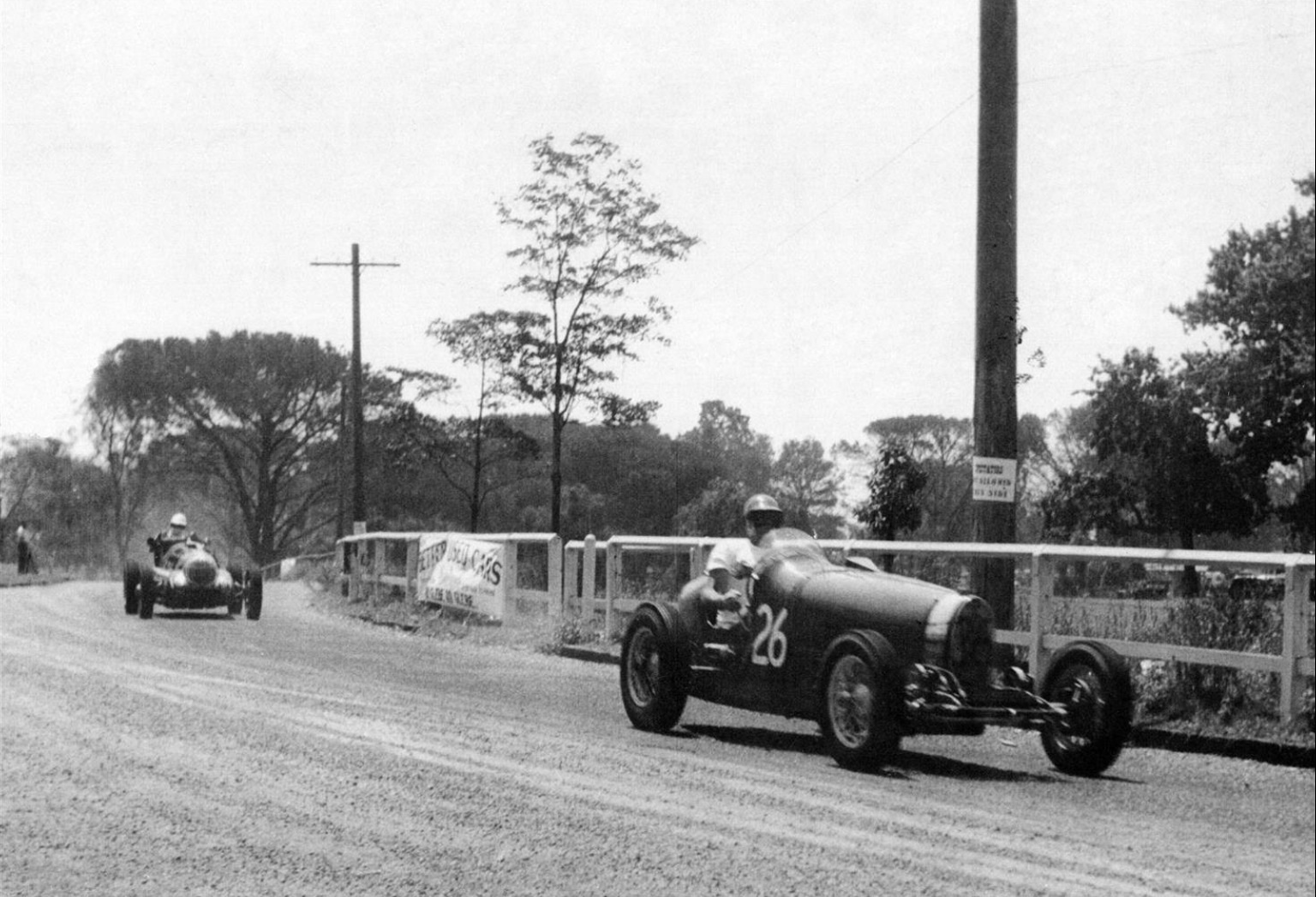
Here, (above) just after the start, Lex is behind Kiwi Fred Zambucka’s Maserati 8CM, with Dick Cobden’s Ferrari 125 behind the HWM and then Jack Brabham’s partially obscured Cooper T23 Bristol ‘Redex Special’.

Race favourite Stan Jones, in the Repco Research built Maybach 2 is already out of shot and some distance up the road ahead of this next group. Stan led until lap 14 when some welds on the chassis of the new car failed causing a very high speed excursion backwards through the Queensland countryside, writing off the car but fortunately without causing injury to the plucky Melbourne motor-trader.

Sydney’s Curley Brydon’s MG TC Spl s/c was second in the Formula Libre, scratch, 150 mile event from Ken Mitchell’s Brisbane built Ford Spl in third place. Davison’s time was 1 hour, 50 minutes and 18 seconds.

After heavy rain in the days before the meeting the race was run ‘on one of the hottest days of the season and drivers had a trying time with the heat and dust’. It was Davo’s fifth attempt at the AGP- a race he was to win four times- in 1954, 1957, 1958 and 1961.

Australia after the initial ‘Phillip Island AGP era’ (1927 Goulburn AGP duly noted) for decades had a wonderful tradition of each of the states hosting the AGP in turn- in that sense ‘everybody got a fair crack of the whip’. The disadvantage was that there was not until the sixties investment in a permanent facility to stage motor-racing let alone events on longer courses of the sort appropriate for events of Grand Prix length. Warwick Farm and Sandown are examples of fine venues and circuits but even then were built within pre-existing horse racing facilities.

The #15 John McKinney MG TC Spl 1.3 DNF lap 11 and Curley Brydon’s MG TC Spl 1.3 s/c, 2nd in a fast reliable run (B Thomas)

Queensland’s first GP was held in September 1949 when 30,000-40,000 people converged on Leyburn, a quiet little hamlet on the Darling Downs- the race was held on a disused wartime airstrip and won by John Crouch in a Delahaye 135S imported by John Snow pre-War.

The venue for the 1954 event was similarly distant from major population centres, an hours drive from Brisbane on a good day, being a road circuit using roads in the Ashmore/Benowa/Bundall areas a mile or so from Southport. International readers are probably aware of the Surfers Paradise location from television coverage of the annual Indycar race, Southport is close by.

These days the Gold Coast City has a population of 560,000, back then before the tourist boom of the sixties the area was a quiet farming and agricultural hamlet adjoining the Pacific Ocean. The organisers, led by the Queensland Motor Sporting Car Club laid out a 5.7 mile course on public roads- the event was contested over 27 laps of the undulating, narrow bitumen surface in sparsely settled, scrubby coastal bush. The local population of 40 swelled to somewhere near 60,000 on raceday!

(Brisbane Courier Mail)

The organisers said the road, much of which had not been sealed before, had a minimum usable width of 22 feet made up of 14 feet of bitumen and at least 4 feet of smooth gravel shoulder on each side. There were two no-passing sections at the causeway leading into the main straight at Boston’s Bend and another about 40 yards long on a narrow bridge at the start of the tight section beside the Nerang River, past Dunlop Bend at the start of the second long straight.

The intersecting two straights as you can see above formed one corner of the triangular course , the section beside the Nerang up to the Courier Mail hairpin was continuously jinking. There were some very quick curves on the return section with a total rise and fall of 60 feet- including several jumps where faster cars became airborne and blind corners with the road overall very bumpy- and surrounded by barbed-wire fences for most of the distance.  The organisers forecast a 90 mph lap average by the faster cars which proved to be quite accurate

The Maybach main men- Stan Jones and Charlie Dean. With the marvellous but shortlived Maybach 2, perhaps at Fishermans Bend in early 1954- cars technical specs as per article linked at the end of this piece. Dean a remarkable fella- engineer, businessman, racer inclusive of several AGP’s and public company Director. No book about him sadly! (unattributed)

The bulk of the racers in the smallish Australian racing scene were based in Sydney and Melbourne so it was a long tow up north for many, but the competitors nevertheless journeyed north to contest the event, the biggest such social occasion ever held in South Queensland to that point.

From Victoria their were six entries including the fast-boys Jones and Davison. The New South Wales contingent of 11 included Stan Coffey in a Cooper Bristol and similarly mounted ‘Pre-race favourite ex-speedway champion Jack Brabham driving a 1971cc Cooper Bristol’, as one of the Brisbane papers saw it. No way did Jack’s 2 litre machine have the mumbo to win this event though.

Redex Round Australia Trial personality/winner Jack Murray added to the gate, he raced an Allard Cadillac V8. Dick Cobdens Ferrari 125 V12 s/c was acquired from Peter Whitehead after the ’54 NZ GP with the wealthy Cobden very quickly getting to grips with the tricky handling of the rear swing-axle suspension car. His dices with Brabham at NSW meetings in the months before Southport were a spectacle all enthusiasts looked forward to at the time with Brabham the better racer but there was little difference in lap times between the two cars.

This paddock shot does not show the muddy conditions competitors endured. #4 is Charlie Whatmore, Jaguar Spl 3.4 7th and #9, the 3rd placed Ken Richardson Ford V8 Spl (D Willis)
Bill Pitt’s Jaguar XK120 Special, entered by Geordie Anderson, was 11th (Stewart Johnson)

The Queenslanders came out in numbers, sixteen in all. The group included Charlie Whatmore’s Jaguar Spl built around a Standard 14 chassis with Jag Mk7 power and Rex Taylor who had bought Doug Whiteford’s dual AGP winning Talbot-Lago T26C. With the replacement Lago a long way off Doug raced ‘Black Bess’, his famous Ford V8 Spl and winner of the 1950 AGP. Arthur Griffiths had just bought the Wylie Javelin.

Much was expected of Kiwi Fred Zambucka’s Maserati 2.9 litre s/c but the very stiffly sprung pre-war machine was all at sea on the very bumpy country roads.

Maybach 2 in the very muddy Southport paddock- almost literally so (J Psaros)

Stan Jones’s new Maybach 2 was a classic single seater built around the same engine and gearbox as Maybach 1 but was shorter, narrower and lighter and was the real favourite for the race. The Melburnian had his tail up as a consequence of his NZ GP win at Ardmore aboard Maybach 1 in January and the speed of Maybach 2 built by Charlie Dean and the rest of the Repco Research team in Bruswick after they returned from NZ. Its pace had been proved from its first appearance in winning the Victorian Trophy at Fishermans Bend in March and was reinforced at Bathurst over the Easter weekend.

The car was without doubt the quickest in Australia at the time, remember too by this stage the AGP was a scratch event (the 1951 Narrogin AGP was started in handicap order but the AGP winner was the car/driver which completed the distance in the fastest time- Warwick Pratley in the Ford V8 powered George Reed Spl) so a machine capable of winning the event on speed and reliability was required. This change had immense impacts on the content of our grids. Very quickly, older or lower powered machines which were half a chance in the handicap days were rendered uncompetitive at AGP level overnight. The time was right for the change mandated by the Australian Automobile Association but that view was hardly one universally held at the time.

Lex Davison before the start, lovely profile shot of the winning HWM Jag (J Psaros)
Lex Davison, HWM Jag, Southport. Circuit safety aspects clear- crowd close to the action! (Davison)

Lex Davison’s HWM Jaguar had been continuously developed by Ern Seeliger and his artisans over the previous 12 months since it’s unsuccessful debut during the 1953 AGP weekend at Albert Park.

There the ex-Moss/Gaze (then Alta powered) car ran its bearings in practice and did so again shortly after the start of the race. The car was modified terms of its lubrication, oil and water cooling and other areas almost on a race by race basis becoming fast and reliable. The ‘C Type’ spec 3.4 litre engine gave 187bhp on the Repco dyno in early 1954 but the clever car was not as quick as Stan, Jack or Dick’s- it had gained reliability though, a quality which was to be rather a valuable one come raceday.

Despite the new Southport circuit being unfamiliar to the drivers, practice was available for only two one hour sessions on the Saturday, the time was allocated after the longer sessions planned were diminished by clearing up the debris of the Mrs Geordie Anderson driven Jaguar XK120 Coupe which left the track on the fast swerves of the return section of the course and hit a telegraph post. She was not badly injured but the car was substantially damaged.

Dick Cobden, Ferrari 125 s/c (F Pearse)

After a rainstorm cleared, faster times were recorded in the afternoon session with Cobden a little quicker than Jones. There had been fifteen consecutive consecutive weekends of rain before the meeting, and plenty in between, so the course road shoulders were soft and the paddock areas boggy which made for rather grim conditions for crews and spectators alike.

Only Stan and Dick got under 4 minutes with Cobden the quicker at 3:55, an average of 88mph. Whilst the times were indicative of performance they did not count for grid positions which had been allocated by the organisers at their discretion.

Jack had engine problems running in a fresh Bristol motor which would also play out on raceday whilst Maybach needed repairs that evening to repair a split fuel tank and reportedly to raise the ride height. Davison’s HWM also needed repairs to the underbody and to straighten some suspension parts after an off by Lex, his best time was 4:14.

Whatmore’s Jaguar Spl, Standard 14 modified chassis and fitted with a Jag 3.4 Mk7 engine for this race. Car descended from a Studebaker powered ex-speedway machine he raced in the 1949 Leyburn AGP (HAGP)

Spectators near Skyline Bend, 4.5 miles from the start reported the faster cars were leaping two feet into the air as they crested the top of the hill. Over 5,000 people attended practice causing plenty of chaos to surrounding access roads indicating the challenges of race day access!

The quick guys were worried about the driving standard of some of the locals with Brabham not confident his Cooper would last the race without some sort of chassis breakage.

In an interesting sequence of events which played out during the race the Maybach’s aluminium fuel tank was split during practice, as was Davison’s.

Whilst Brian Burnett had built much of the Maybach body, chassis and other parts he attended Southport as part of Davo’s crew not Jones’ team so prioritised Lex’s repair over Stan’s. In the end he did not have time to complete the Maybach repair due to an incident whilst working on the HWM’s tank ‘…when Burnett prepared to weld up the crack by following his customary method of clearing fuel vapour out of the drained tank- by waving a lit welding torch inside- the tank exploded. He gathered up the scattered pieces, worked out where they belonged, hammered them back into shape and then, finally, was ready to start welding the tank back together again.’

The Repco crew push start Maybach 2 before the off (J Psaros)

Between 50,000-60,000 attended on raceday, the early birds camped overnight with day-trippers arriving from 4am. The day dawned bright and sunny in contrast to recent weather patterns… 

‘People dressed in gay holiday clothes, some in swimming costumes, went in transport ranging from a family in a horse-drawn buggy to the latest model sedans’ the Brisbane Courier Mail reported.

‘Farmers let down their fences to allow thousands of vehicles to park…at the township of Benowa people watched the roaring motors from the shade of a church. Others watched from houses, some from the rooftop whilst men and boys perched in the trees. Dairy calves not far away ran into the bush as the quiet bitumen road running through tall green turned into a snorting carrier for Australia’s fastest cars…’

Sounds fantastic to me!

The huge crowd blocked the track between races and strolled across the circuit whilst races were running, the chaos was not helped by the lack of an effective public address system throughout much of the course area.

Brightways and Farren Price Trophy sportscar race- A Mills Jag XK120, leads David Griffiths Triumph TR2 and G Greig’s Austin Healey (E Steet)

The program commenced at 11.15 am with the ‘Brightways and Farren Price Trophy’ 5 lapper won by won by Adelaide’s Eldred Norman in a G.M. 2-71 supercharged Triumph TR2.

Norman was an extraordinary character as a businessman, racer, engineer and specials builder- the twin Ford V8 engined ‘Double Eight’  and Zephyr Special s/c are at the more extreme end of his creativity and speed. Somewhat ironic is that his most conventional AGP mount, the TR2 gave him his best AGP result- he was 4th in the car later in the day.

The TR2 was still hot when he contested the ‘Cords Piston Ring Trophy’ First Division event which he also won, the Trophy was won by Les Cosh in an Aston Martin DB2 who did the fastest time in the Second Division event for closed cars.

At the conclusion of the meeting Eldred loaded up the TR2, the first delivered in South Australia, re-attached a lightweight trailer containing two empty 44 gallon drums of methanol racing fuel, some basic spares, tools, odds and sods to the sportscar and then drove back to his base in Halifax Street, Adelaide. The trip is 2050Km one way, so lets say he did around 6,000 Km in all inclusive of the return trip, a bit of tootling around the Gold Coast, race practice, two race wins…and fourth in the AGP. I’d call that a pretty successful trip up North!

The Grand Prix was due to commence at 2.45 pm, but by that time the program was an hour late for the reasons mentioned earlier. This was then exacerbated by speeches of the Southport Mayor to welcome Queensland’s Deputy Premier- who made a speech formally opening the GP and finally another by the local State MP who gave a vote of thanks to the Deputy Premier. Still, to their credit, the Queensland politicians allowed the race to take place on public roads, a situation which existed only in WA and NSW at the time.

Lex hustling the victorious HWM Jag thru Olympic Corner, preceding the start/finish straight (B Thomas)

The drivers waited patiently and nervously with the start, not based on lap times remember, and a road not nearly wide enough for the 2-1-2-1 grid. Their difficulties now also included the sun which was lower in the sky than would have been the case had the program been running to time.

The two front slots were allocated to the fast Stan Jones/Maybach and the slow Rex Taylor in the fast Lago. Then came Fred Zambucka’s very stiffly sprung pre-War Maser which was said to be almost uncontrollable on the bumpy Queensland country back-roads.

The sprint to the first corner with the quicks Cobden, Davison and then Brabham promised to be interesting whilst Stan, up front was not to be impacted if he got away cleanly.

AMS reported that ‘The two minute board went up, engines were started, then their was a minute to go, then ten seconds, then they were off in a mad frenzy of wheelspin, smoke, haze and dust.’

When the flag dropped Jones and Maybach disappeared, he had a lead of 10 seconds at the end of the first lap. All the front runners survived the first corner unscathed but there was a tangle of mid-fielders which was cleared by the time the leaders emerged 4 minutes later.

Stan led Lex by 10 seconds from Jack 6 seconds back who had already passed Dick Cobden’s Ferrari.

‘The order and intervals reflected the various drivers success at passing Taylor and Zambucka; Brabham and Zambucka’s cars had actually touched’ wrote Graham Howard.

Almost immediately Jack’s Cooper cried enough with re-occurrence of the Bristol engines practice dramas where a camshaft bearing shell rotated in the block, cutting off the oil supply and seizing the camshaft, shearing the timing-gear key, bending valves and pushrods. Jack would take a Bristol engined AGP win at Port Wakefield in his self constructed mid-engined Cooper T40 at Port Wakefield, South Australia in 1955.

John McKinney putting out an Xpag engine fire in his MG TC Spl. He needed assistance to restart so retired (HAGP)
Taylor has just spun the Lago and Jack Murray joins the fun in his Allard- the latter restarting, the former DNF after receiving outside  help, Ferodo Corner (HAGP)

Jack Murray provided early excitement and entertainment in the pits as he arrived very quickly in his Allard soaked with fuel from a failed jerry-rigged auxiliary fuel-tank system.

Murray unzipped his fuel soaked britches to reveal that the fuel had dissolved his nylon jocks- all he was wearing was the elastic waistband of said garment! He got the Allard going, having borrowed a set of overalls, only to retire on lap 8 but not before a half lose spinning and just kissing Taylor’s Lago which had arrived shortly before Murray, see the photo above.

Ken Richardson, Ford V8 Spl and Owen Bailey, MG Holden- track verge indicative of the huge volumes of rain in the days before the race (J Psaros)
Jones and Maybach 2, on the hop, as ever, Olympic Corner (E Steet)

Meanwhile up front the gaps between the top three cars widened by the end of lap 5 with the Maybach 20 seconds up the road from the HWM and then 40 seconds further back to the Cobden Ferrari.

‘Nonetheless there was a touch of desperation about Stan’s erratic lap times, and reports that the Maybach was again leaking fuel suggested he might have to make a pitstop.’ To be fair the cause of his erratic laptimes was passing back- markers- he was lapping them from lap 3.

Cobden started to speed up from lap 6 with times of around 4:04 sec- shown a ‘faster’ sign by the crew he dropped his times to 3:55 by lap 9 and closed the gap to Davo to 7 secs and Jones to 30.6 seconds. On that circuit, in that car that drive would have been great to see- he barged past the HWM on that lap taking 4 more seconds from Stan’s lead. And did the fastest lap of the race at 3:51.0 seconds.

The speed that thrills…On the next lap passing the Sefton Ford Spl after the no-passing bridge Dick was gone, Cobden was baulked, both cars spun away from the direction of the river with Cobden motoring the 2 litre, supercharged Ferrari into retirement. Sefton was illegally push-started but was not black-flagged until late in the race.

Cobden, Fred Pearse and ? after the race in a local Gold Coast servo- Ferrari 125 showing the bruise sustained during battle (F Pearse)
Stan Coffey’s Cooper Bristol ahead of Downing’s Rilry Imp Spl with Lex Davison bearing down on the pair, Olympic Corner (HAGP)
Dick Cobden’s Ferrari 125 #49 passes Rex Taylor’s Talbot-Lago T26C just after the pits at the start of lap 2, Taylor completed only 6 laps and Cobden’s wonderful charge was ruined when a back-marker took Dick’s line on lap 10 (HAGP)

Howard writes that Stan’s press-on style had not abated despite the easing of the threat ‘Stan Coffey had a chip taken out of his Cooper Bristol’s front wheel when Jones slashed past; one magazine reported Jones was black flagged for passing in a no-passing area, but did not stop, and the flag was withdrawn…Jones…in the fast curves of the return section…came through lap after lap, airborne and sideways over a crest at about 115mph.’ Oh to have seen the bellowing six-cylinder Maybach do that too!

AMS reported that Maybach was still leaking fuel and that therefore Stanley was building up sufficient a lead to do a ‘splash and dash’ to get him through the 157 miles. His margin over Davison at half distance was more than 40 seconds.

Howard, on ‘The next lap Jones too was gone. Through the fast sweeps and crests of the return section the Maybach had a major chassis failure, the car became unsteerable, and at well over 100 mph it slithered off the road and disappeared into thick scrub. Spectators rushed to rescue Jones- who was miraculously unhurt- and others manhandled the detached front suspension and wheels off the road.’

The very ill Maybach 2 in the Southport countryside, devoid of ‘front suspension section’ which detached, causing the accident. Its said Stan mowed down 4 trees, some of the more substantial ones in this shot would not have readily yielded to the car and its fearless pilot (HAGP)

The car had chopped down four trees, jumped a six foot deep culvert and finished in a gully under the tangle of uprooted casuarina trees with Stan still strapped in the driving seat, unhurt other than a cut on his face.

Lex drove past the mess- skid marks, dust, debris, scurrying officials and spectators and then did his fastest lap of the race, and then slowed right down at the scene to ensure his friend and Monte-Carlo Motors business partner was ok- and then raced on to victory.

He reduced his pace by about 2 seconds a lap, and other than muffing an upshift passing the pits had a comfortable run to the line having taken 1 hour, 50 minutes and 18 seconds to finish the 157 miles, an average of 83.7 mph. At the time of Jones accident his lead over Curley Brydon’s MG TC Monoposto was 1.5 laps.

#16 Snow Sefton Ford V8 Spl 4.2, being passed by Ken Richardson’s Ford V8 Spl with Owen Bailey’s smoke obscured MG Holden on the inside behind and then Gordon Greig’s Austin Healey. Meanwhile Taylor’s Lago is stranded at left. Ferodo Corner lap 2 (HAGP)
Courier Mail Corner action- #29 Frank Tobin in the Rizzo Riley Spl 1.5, 6th, leads the 10th placed Charlie Swinburne Cooper Mk4 Norton 500 and 5th placed David Griffiths Triumph TR2 (HAGP)

Doug Whiteford’s Black Bess was out mid-race with Ford V8 maladies, Bill Pitt’s Jaguar Spl had a tyre go flat with Whatmore’s Jag engined machine out with head gasket failure.

Survival was the whole story of this race.

On his victory lap Davison stopped at the crash scene and picked up Stan who rode back to the pits astride the tail of the HWM. Stan was a force in all of the AGP’s he contested, he finally took one, most deservedly, aboard his Maser 250F at Longford in 1959 whilst Lex took four as recorded earlier. Both were very fast drivers, both drove very well prepared cars, perhaps Lex was the more mechanically sympathetic of the two. For sure Lex had more AGP luck than Stan.

The remains of Maybach 2 on its trailer ready for the long trip back to Sydney Road, Brunswick in Melbourne. ‘…this photo shows how hard the car hit the trees- parts of the cast alloy cam-cover and upper cylinder head have been broken. Other evidence of the impact is the pile of broken SU pieces (bottom left) near the flattened right-side main tube frame. Closer inspection reveals some telling details: front wheels and nose section have just been dumped as a unit and the spare wheels have been almost thrown onboard, as has the hand operated pump which would have been used to fill a re-fuelling churn’- G Howard (HAGP)

For years Jones ‘carried the can’ for the 1954 Maybach crash until Graham Howard carefully researched the matter in preparing the ’54 Southport chapter of ‘The Bible’- ‘The History of The Australian Grand Prix’.

It seems that in the day it was chosen not to report in accurate fashion Repco’s engineering failure as the accident cause with Stan holding his tongue rather than ‘bite the hand which fed him’ in terms of Repco’s ongoing support.

Howard addresses all of this at length in the 1954 chapter he wrote. Note that this wonderful book was written by a number of writers -Howard, John Medley and Ray Bell included….

I’ve included this section of the chapter in full as Stan still seems to get the blame from older enthusiasts for the accident to this day and for international readers who will probably not be aware of the situation, somewhat arcane as it is.

Graham Howard wrote ‘…It is difficult to find the full story of Stan Jones’ Maybach accident, partly because it happened well away from any of the crowded areas, but also- quite obviously – because most writers chose to conceal the truth.

The deservedly respected ‘Australian Motor Sports’- whose report of the race was written by by Bob Pritchett, one of Dick Cobden’s Ferrari pitcrew- offered a number of possible causes, none of them the real one, and a month later recounted what was termed “the correct story told to us by Stan Jones and Charlie Dean” which blamed chassis/axle contact which in turn put the car off line.

Brisbane’s daily ‘Courier Mail’ merely reported that Jones had crashed, and did not offer any possible reasons. General-motoring monthly ‘Wheels’ quoted “the official explanation” and “other probables” while obliquely making the point that “the car was in two pieces”. ‘Modern Motor’ came closest to an outright declaration. “Officials said a broken chassis had caused the accident…” its race report said, observing “the car appeared to split in two.”

Yet if this had happened it was remarkably quickly forgotten, and has never been referred to since in histories of the Maybachs. Without the ‘Modern Motor’ story there would have been no published clue to the real cause of the accident.

Only a remark by Len Allen sparked this book’s enquiry. He remembered how he and a mate had walked around the inside of the course, and had found a great spot to watch Jones, who was so spectacular they chose to wait for several laps purely to watch the Maybach aviate into view. On the critical lap, Allen remembers watching the Maybach touch down and immediately asking himself, “What’s happened to his ground clearance?” Allen and his mate joined the people running after the crashed car, which ended up hidden from the road down a trail of flattened scrub and trees. Allen was adamant something had broken on the car, and – while AMS, the Courier Mail and Wheels gave him no support- Modern Motor’s hearsay evidence suddenly became very credible.

In following up this issue, chapter and verse was willingly provided by Brian Burnett, the man who actually built the chassis at Repco. He explained that the two main chassis rails, of 4 inch 16g chrome molybdenum alloy steel, passed through holes in the diaphragm-type front cross-member and were completely electrically-welded in position. These welds crystallised and cracked, and in the course of the Grand Prix one chassis tube eventually broke away and touched the ground. It was as simple- and as enormous- as unfamiliarity with new materials and techniques.

The Maybach was not rebuilt in its Southport form, but emerged- after another incredibly fast revision- as the inclined-engine, offset driveline Maybach 3 which made its debut at Bathurst at Easter 1955. This car used locally-developed continuous- flow fuel injection, partly because at least two of its three 2 3/16-inch SU carburettors had been broken in the Southport crash. The amazing part was how little else had been damaged- not least the car’s remarkable driver.

Yet it was Stan Jones who became burdened with the responsibility for the accident. It was a situation which, 30 years later, (the AGP book was first published in the mid-eighties) says a lot about the rarity of mechanical failure at the time, and about the veneration which both then and today surrounds those wonderful Maybachs.’ Graham Howard wrote.

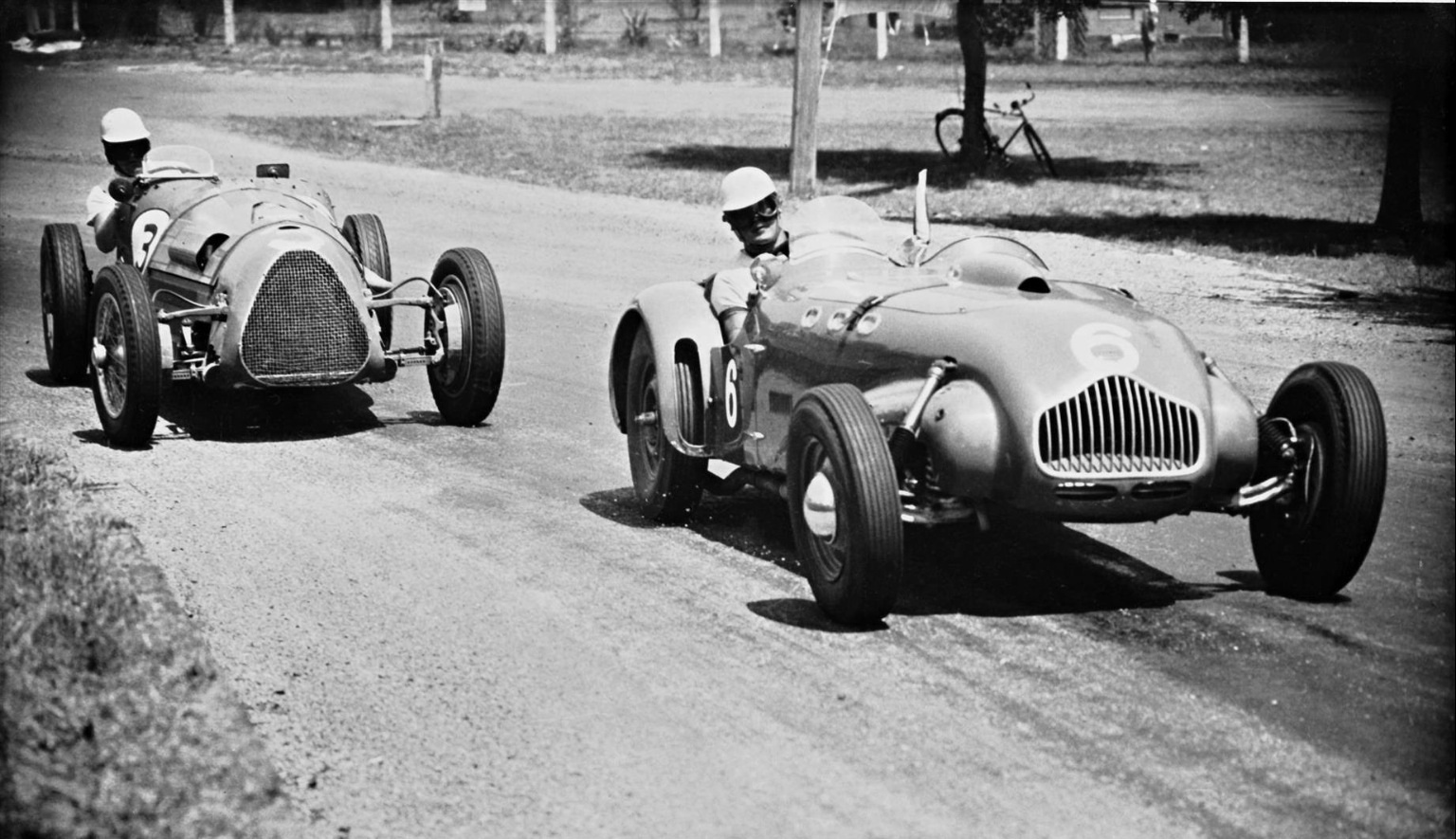
From top to bottom- Davison HWM Jag, Cobden Ferrari 125 and Brabham Cooper T23 Bristol (G Edney)

The question which flows from the collective non-reporting or misrepresenting the truth as to the cause of Maybach’s demise is why those choices were made by those who knew the facts?…

 Lets explore that, my ‘educated surmises’ are as follows.

 As Graham Howard wrote, the accident itself happened ‘out in the boonies’ away from the sight of large sections of the crowd or where the pro-photographers situated themselves. In the rush to rescue Jones the focus was rightly on him not so much the car. Not everybody had a camera then as they were expensive and iPhones were in short supply, so there is little in the manner of photographic evidence taken amongst the casuarina trees where Maybach came to rest.

 The racing scene in Australian then was very small with ‘everyone knowing everyone’ and Jones, Dean and all of the Repco crew were part of that scene, liked and respected. It is not the case that, unlike today, that ‘blame’ be sheeted home in a public way. Best we ‘keep it in the family’.

 Repco were the only corporate to provide significant support to motor racing in Australia at the time. Whilst Maybach 1 was built by Dean, the balance of the cars were built by Dean and his team with the tacit corporate support of Repco in the Repco Research premises in Sydney Road Brunswick. In fact this factory was where Maybach 1 was built before ‘Replex’, Dean’s electric transformer business was acquired and absorbed within the Repco conglomerate.

Jones certainly bought Maybach 1 from Dean but the commercial arrangements between Stan and Repco after that have always been opaque, but there is no doubt it was to their mutual advantage. When I say opaque I mean unknown not dodgy. Repco’s press advertisements of the day, on occasion used Maybach in its ads. Dean, a racer, engineer and arch enthusiast- and a Repco senior employee (and a decade or so later a Director of Repco Ltd) would have been intent on that Repco support continuing and therefore keeping quiet the accident. Jones equally wanted the support to race so the form of words given by he and Dean to AMS was a narrative which did not accurately portray what happened but were words unlikely to cause corporate offence or embarrassment to Repco- and at the same time making clear ‘chassis/axle contact put the car off line’ and in so doing sought to get Jones ‘off the hook’, unsuccessfully it seems, as the accidents cause.

 Repco were a major advertiser in the press of the day, that is the daily newspapers, general motoring magazines such as Wheels and Modern Motor and Australian Motor Sports, the racing specialist monthly. It would not have been in those publications commercial interests to put at risk valuable ad revenues by publishing the truth of the accidents cause in the event said ads were pulled as ‘retaliation’ for negative Repco press.

 Motor racing was still very much a fringe sport in Australia in 1954. The authorities (including the police) were downright antagonistic about motor racing generally and specifically about using public roads for that purpose, particularly in New South Wales. Negative racing publicity of any kind at the time was not needed by the sport as it sought to become more prominent, recognised and respected.

 Whilst negative press about motor racing was probably of no issue or concern to daily papers the general motor magazines and especially AMS would have been keen to avoid coverage detrimental to the growth of the sport, and therefore a circumspect approach by them makes sense. For the general press the day after the race they had moved on to the latest bit of death and destruction locally or globally.

 Its easy to take pot shots of course in retrospect. Hindsight is one of my strengths my sons tell me. But what would I have done, what would I have written in publishing the November 1954 issue if I were Arthur Wylie, racer, editor and owner of Australian Motor Sports- knowing the facts of the accident?

 Exactly what he did and wrote my friends in all the circumstances outlined above…


For Davison the post race celebrations started when he saw the chequered flag, his wife, a noted racer herself was given the flag to greet Lex as he completed his final lap.

After the formalities trackside the HWM was driven on public roads from celebratory gig to gig by the very popular Davo who became increasingly pickled as the evening progressed. Different times, wonderful times.

Things were more serious in the Maybach camp of necessity, their debrief took place at the Chevron Hotel in Surfers. During these discussions Brian Burnett was stupid enough to tell Jones he had driven ‘too fast and recklessly’ only to have Stanley floor him with one punch. In the circumstances he is lucky the pugnacious, tough little nugget from Warrandyte didn’t launch him into the next decade.

Maybach would be back of course, Maybach 3 had more than a nod to the contemporary 1954 Mercedes Benz W196 but alas Maybach never bagged the AGP win one of the cars surely deserved?…

The Maybachs…

The feature I wrote about Stan Jones is as much an article about Charlie Dean’s Maybachs, click on the link below to read about this amazing series of three cars- albeit the machines were under constant evolution as befits any ‘works’ racers, the cars were effectively Repco factory entries.

In my analysis and assessment of Repco’s racing history there were a series of distinct steps which led to Repco-Brabham Engines P/L World Championship success in the mid-sixties. The first is the  ‘Maybach Phase’, the second the shorter ‘Coventry Climax FPF/Repco Phase’ and the next RBE itself. The final bit is the Redco Engine Developments P/L ‘F5000 Phase’ of 1969-1974. So, the Maybach piece is a long, critical foundation component to put its importance into the correct historical context.

(Wheels)

Etcetera…

This group of photographs taken by George Litfin are not clear so have limited use but are great to add context and flavour.

(G Litfin)
(G Litfin)
(G Litfin)
(G Litfin)
(G Litfin)
(G Litfin)
Brisbane Truth report of Geordie Anderson’s Jaguar XK120 practice accident (N Barnes Collection)
Brabham’s Cooper, Cobden’s Ferrari and the nose of Jones’ Maybach in the background (R Baker)
Davison’s winning HWM Jaguar (R Baker)
(D Willis)

Brydon’s second placed MG TC Spl being fettled during practice.

Bibliography…

Various newspapers via Trove, ‘Australian Motor Sports’ November 1954, ‘The History of The AGP’ Graham Howard and others, ‘Larger Than Life: Lex Davison’ Graham Howard, ‘From Maybach to Holden’ Malcolm Preston, Graham Edney Collection, ‘Wheels’, George Litfin, Noel Barnes Collection

Photo Credits…

Eddie Steet, Brier Thomas, ‘Larger Than Life: Lex Davison’, ‘The History of The Australian Grand Prix’ (HAGP), ‘From Maybach to Holden’, Dick Willis, Stewart Johnson, Jock Psaros, The Nostalgia Forum, Fred Pearse, Robert Baker

Tailpiece: If only- Stan Jones, Maybach 2, Southport ’54, pressing on as usual, maybe he was a bit more of a ‘percentage driver’ towards the end of his career, maybe…

(HAGP)

Finito…

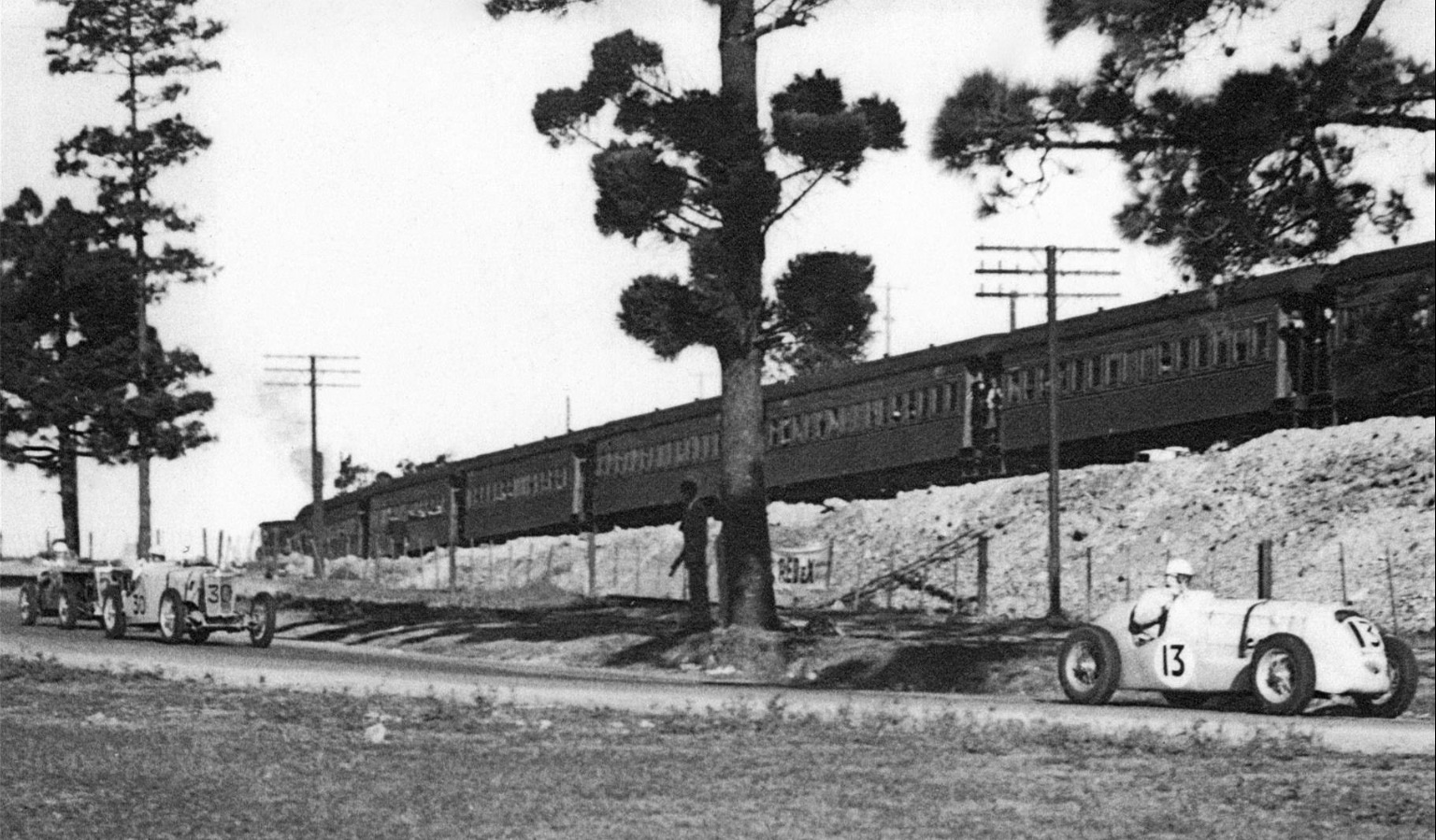
Train commuters watch an unidentified MG TC, then Les Wheeler, MG TC chasing A Griffiths, MG TC Spl s/c at the June 1952 Parramatta Park meeting  (CRPP)

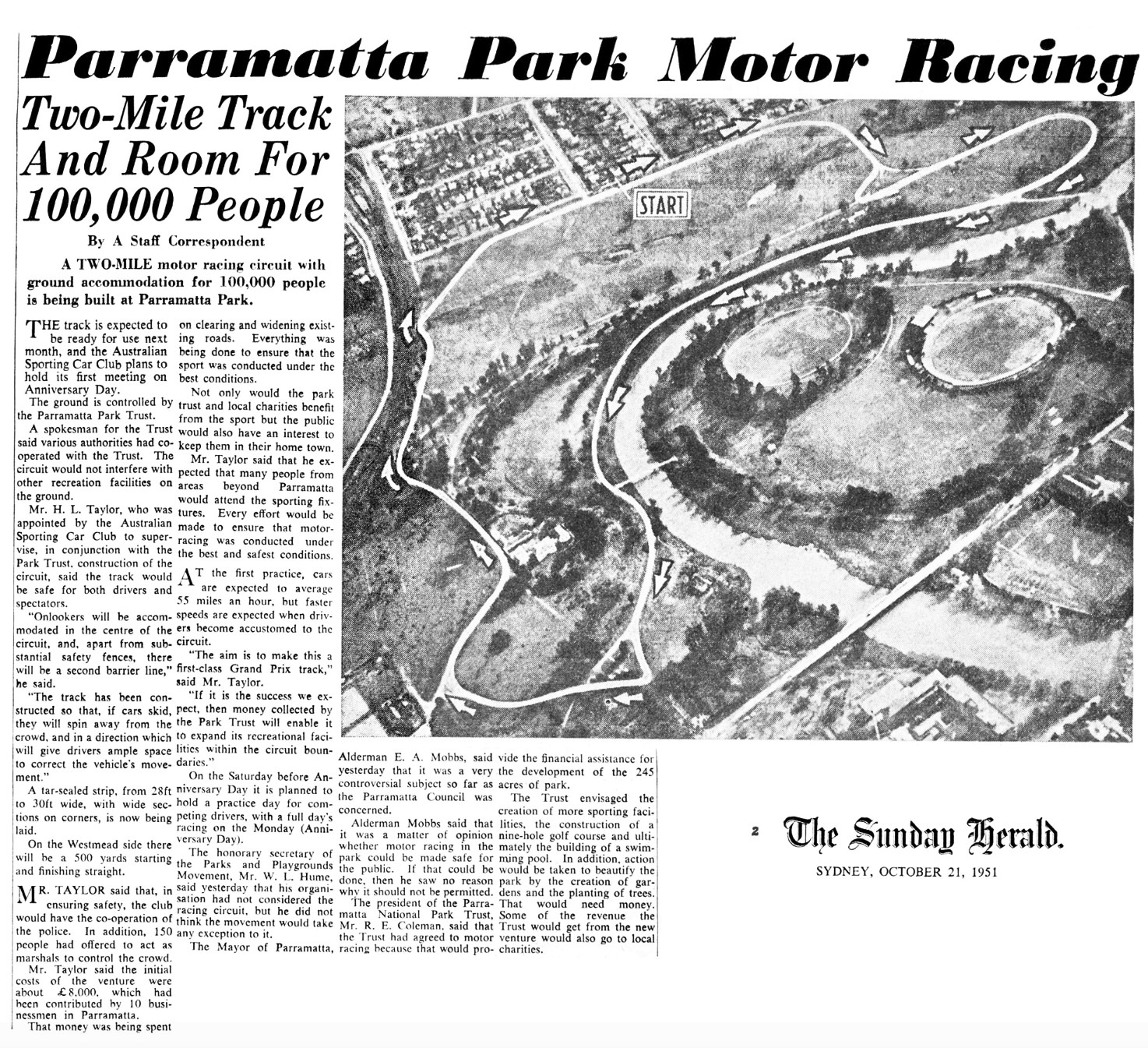
‘A two mile motor racing circuit with ground accommodation for 100,000 people is being built at Parramatta Park’ Parramatta, Sydney The Sunday Heralds headlines proclaimed on 21 October 1951…

 Parramatta is a large city within greater Sydney, 25 Km from the CBD, the huge park occupies an area of 245 acres and straddles the Parramatta River on the western edge of the town.

The 8,000 pound investment in the park facility was funded by ten local businessmen and used to clear and widen existing roads to a minimum of 28 to 30 feet. The projected average circuit speed of the circuit, designed and to be run by the Australian Sporting Car Club Ltd (ASSC), was 55 mph.

Barrie Garner, Frazer Nash in June 1955. Later an ace hillclimber in a Bowin P3 Holden. Track surface needs a sweep! Carnival atmosphere, big picnic crowd so close to the centre of Sydney (CRPP)

Motor racing in Parramatta Park had been mused about for decades. An article about the 1929 Monaco Grand Prix in the ‘Sydney Morning Herald’ mentioned the possibility of events in either Centennial Park, Sydney or Parramatta Park with the writer just as rapidly despatching the idea as one which would be scuttled by the authorities. Indeed, officialdom caused plenty of grief in relation to racing at Parramatta when it was finally becoming a reality.

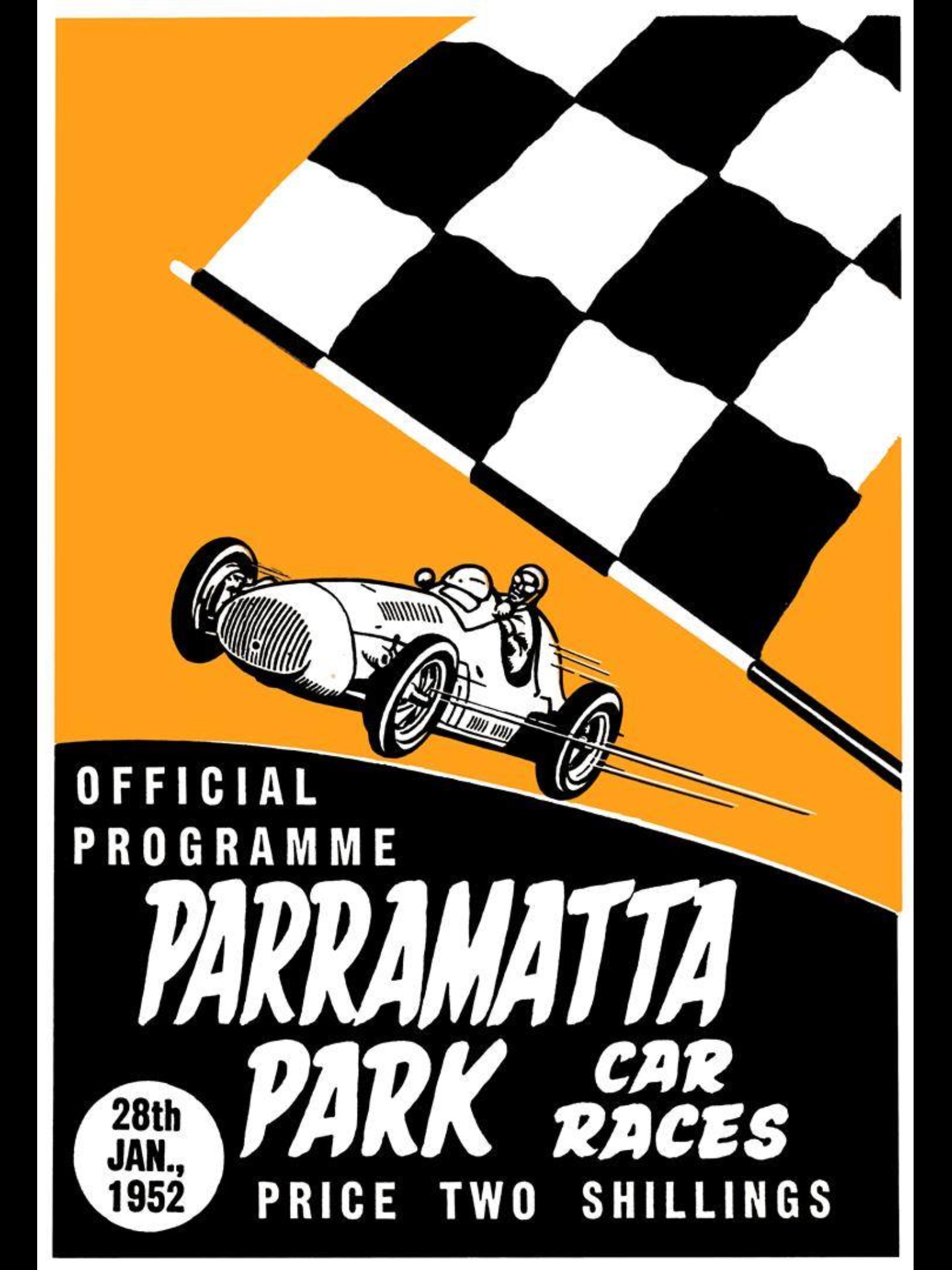
The proposed event on 28 January 1952 was not the first planned at the venue, a meeting was scheduled to be held on 5 November 1938- the star Peter Whitehead.

The wealthy wool merchant/racer was to compete in his 1938 Australian Grand Prix winning ERA R10B. Officialdom intervened in the form of the New South Wales Chief Commissioner of Police who decided to ban the race on Friday, the day before the meeting, due to concerns about competitor and spectator safety. Click here for my article on the 1938 AGP including details and pictures of the ’38 abortive, aborted Parramatta Grand Prix. https://primotipo.com/2015/04/16/peter-whitehead-in-australia-era-r10b-1938/

In a reprise of the 1938 dramas the Chief Commissioner of Police again stepped in and refused permission for the January 1952 race. The ASCC appealed his decision before the Parramatta Court of Petty Sessions with the Magistrate upholding the appeal. The event was allowed to take place on the basis that spectators were permitted no closer than 40 feet from the circuits edge.

Over 40,000 paying punters turned up on raceday causing massive traffic jams throughout the area and its surrounds.

John Crouch Cooper MkV JAP from Curley Brydon’s MG TC Spl in a handicap event during the January 1952 meeting. One of the ultimate TC specials in Australia shaded by the new generation of cars. Check out the crowd (CRPP)

Star of the show that weekend was Sydney driver John Crouch driving a new-fangled, mid-engined Cooper JAP MkV to three wins of the seven events.

One of victories was perhaps the ‘main event’ of the day, a six lap invitation scratch race for the quickest guys of the weekend- he won it in his 1097cc Cooper. Stan Jones was second in the 4.3 litre Maybach 1 then came Reg Hunt’s mid-engined Hunt ‘500’ fitted that weekend with a Vincent 998cc engine Then was Jack Saywell’s Cooper 1000, Doug Whiteford’s 4.375 litre Ford V8 Spl ‘Black Bess’  and Alec  Mildren’s 1750cc Dixon Riley. The results are indicative of the rise of the small, efficient, mid-engine Coopers in Australia as was the case everywhere else in the world! Crouch set the lap record with a time of 1 minute 59 seconds.

In a reminder that ‘Motor Racing is Dangerous’, a wheel came off Doug Whiteford’s 1950 Australian Grand Prix winner, ‘Black Bess’ whilst travelling at circa 80 mph and landed in the backyard of a Victorian cottage adjoining the course. Fortunately the lady of the house was not hanging out the washing at the time the errant wheel landed atop her prize petunias.

Peter Lowe, Bugatti Holden from Laurie Oxenford, Alvis Mercury, January 1952 (CRPP)

Many meetings were held at the venue until 1957, regularly attracting over 10,000 spectators when the demands and difficulties of holding the races became too much. The circuits closure left the New South Wales circuits at the time as Mount Panorama at Bathurst, Gnoo Blas, Orange and Mount Druitt in Western Sydney.

I have long wanted to write an article about Parramatta Park but a paucity of photographs was the barrier. Not so now- the convenor and members of the Facebook group ‘Car Racing at Parramatta Park’ have uploaded some pearlers of shots- I’ve chosen some at random to give you a flavour of the place. For you FB folks just find and like the page in the usual way.

Stan Jones with a touch of the opposites in Maybach 1 chasing ‘Gelignite’ Jack Murray’s Allard Cadillac in the opening January 1952 meeting. Jones was so impressed by the speed of the Coopers in relation to his GP car he promptly placed an order for one, a MkIV was soon in his Balwyn, Melbourne driveway (CRPP)

Both the aces of the day and coming-men raced at the ‘Park including drivers such as Doug Whiteford, Frank Kleinig, Stan Jones, David McKay, Bib Stillwell, Dick Cobden, Bill Patterson, Lex Davison, Tom Hawkes, Alec Mildren, Tom Sulman, Ted Gray, Ron Tauranac, Jack Brabham and many others. RT ran the very first of his Australian Ralts in the opening meeting, as against the Pommie built ones, and his later partner Brabham raced his Dirt Midget!

Jones big Maybach ‘monstering’ Ron Tauranac’s Ralt Norton ES2 500, January 1952 (CRPP)

The program described Jack thus- ‘A familiar winner at the speedway, and this years Australian Hillclimb Champion, Jack should find the circuit well suited to his style. His car is very light, has four wheel hydraulic brakes and is powered by a home made engine using J.A.P bits’.

By the June meeting Jack had jumped into a Cooper Mk5 500, the wry description in the program observed; ‘Australian Hillclimb Champion of 1951, Jack, one of our best midget drivers, is a new recruit to road racing, his Cooper…was an 1100, now has an engine designed and built by the new owner, a foremost expert at getting quarts out of pint pots’ ! A sage description of Jack’s ability to conjure something out of not very much throughout his career as both constructor and driver.

Dick Cobden from Bill Patterson in Stan Jones car and Bill Shipway- Coopers galore, all MkV’s I think June 1955 meeting (CRPP)

Bibliography…

Sydney Sunday Herald 21 October 1951, ‘Fast and Furious: The 1938 Parramatta Grand Prix’ article by Peter Arfanis

Photo Credits…

‘Car Racing at Parramatta Park’ Facebook Group (CRPP)

Tailpiece: Parramatta Park opening meeting, January 1952…


Ted Gray’s #1 Tornado 2 Chev and Len Lukey’s Cooper T23 Bristol being pushed to the ‘Longford Trophy’ grid in 1958…

What an amazing shot! Colour racing photographs in Australia at the time were relatively rare given the cost of film and that professional ‘snappers mainly worked in monochrome given the demands of publications of the day.

So these pictures took my breath away. The Historic Racing Car Club of Tasmania is posting some amazing photographs on its Facebook page. Its incredible the way FB and other online forums provide mediums for the distribution of enthusiast photos which would otherwise be chucked out upon someones death or locked away forever.

The shots are of ‘the more you look the more you see type’. Note the black Repco van and bucolic feel of the parched, brown Longford paddock and surrounding countryside. About 40,000 people attended that March long weekend raceday, it was a big meeting for its time in the Apple Isle. The little yellow Cooper T41 Climax is local boy Austin Miller’s.

I wrote a feature article about both this event and the Lou Abrahams owned Tornado a while back, click here to read it rather than repeat myself.

‘The Longford Trophy’ 1958: The Tornados: Ted Gray…

Bill Mayberry, looking very natty in his red team overalls, takes a well earned rest beside Tornado. Its got a touch of 250F about it in terms of styling albeit not as voluptuous. Slimmer tho, with a higher cockpit surround- perhaps it slipped thru the air a bit better than Masers finest. You can see just how small the cars frontal area is relative to the Cooper Bristol in the opening head-on shot. Austin Miller’s raised yellow Cooper tail you can see and to the right M Hart’s Fiat Abarth 750 (HRCT)

It was a challenging weekend for the Tornado crew as Ted Gray was ill for most of it and there were major dramas with the car, specifically its gearbox. So, the calm looks of the crew are not reflective of some late nights.

Len Lukey’s Cooper was outgunned at Longford, very much a power circuit but Len was soon to become an outright contender- and 1959 Gold Star winner with the purchase of a 2 litre Coventry Climax FPF powered Cooper T43 Climax from Jack Brabham after the Melbourne Grand Prix at Albert Park later in 1958.

Simply marvellous really…

Tailpiece: Tornado 2 Chevy V8…

image

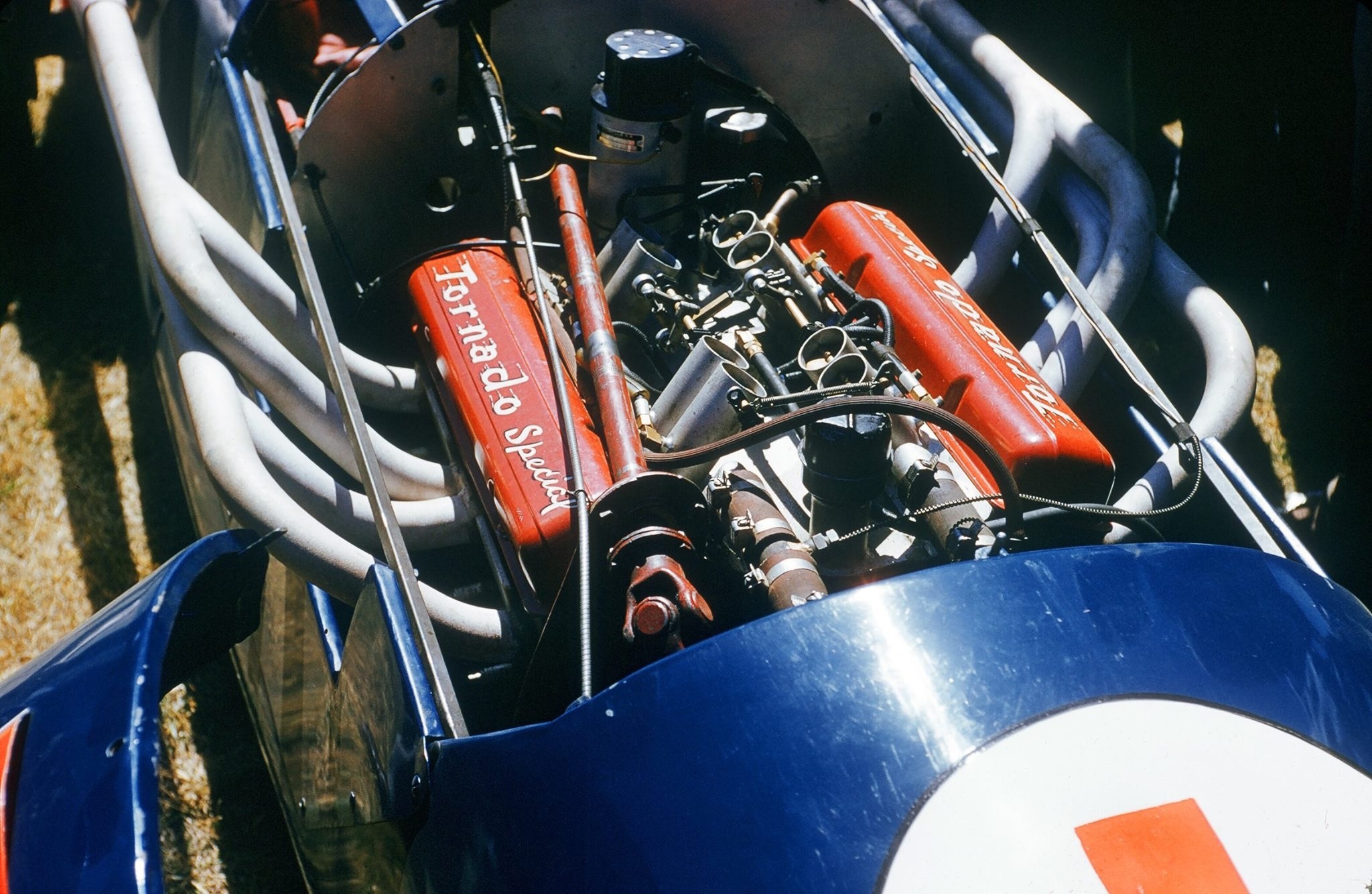
The attention to detail of this wonderful car extends to the engines rocker covers. Chev Corvette 283 cid cast iron, small block V8. Surely there are few production V8’s which spawned more race success than this family of engines? Small block Le Mans winning ‘Windsor’ Fords duly noted! Vertex magneto, hand made fuel injection system using Hilborn Travers componentry, fabricated extractors, note the steering shaft and universal joint. Body in aluminium by the Mayberry brothers in Melbourne (B Young)

Credits…

Historic Racing Car Club of Tasmania, Bob Young, Stephen Dalton


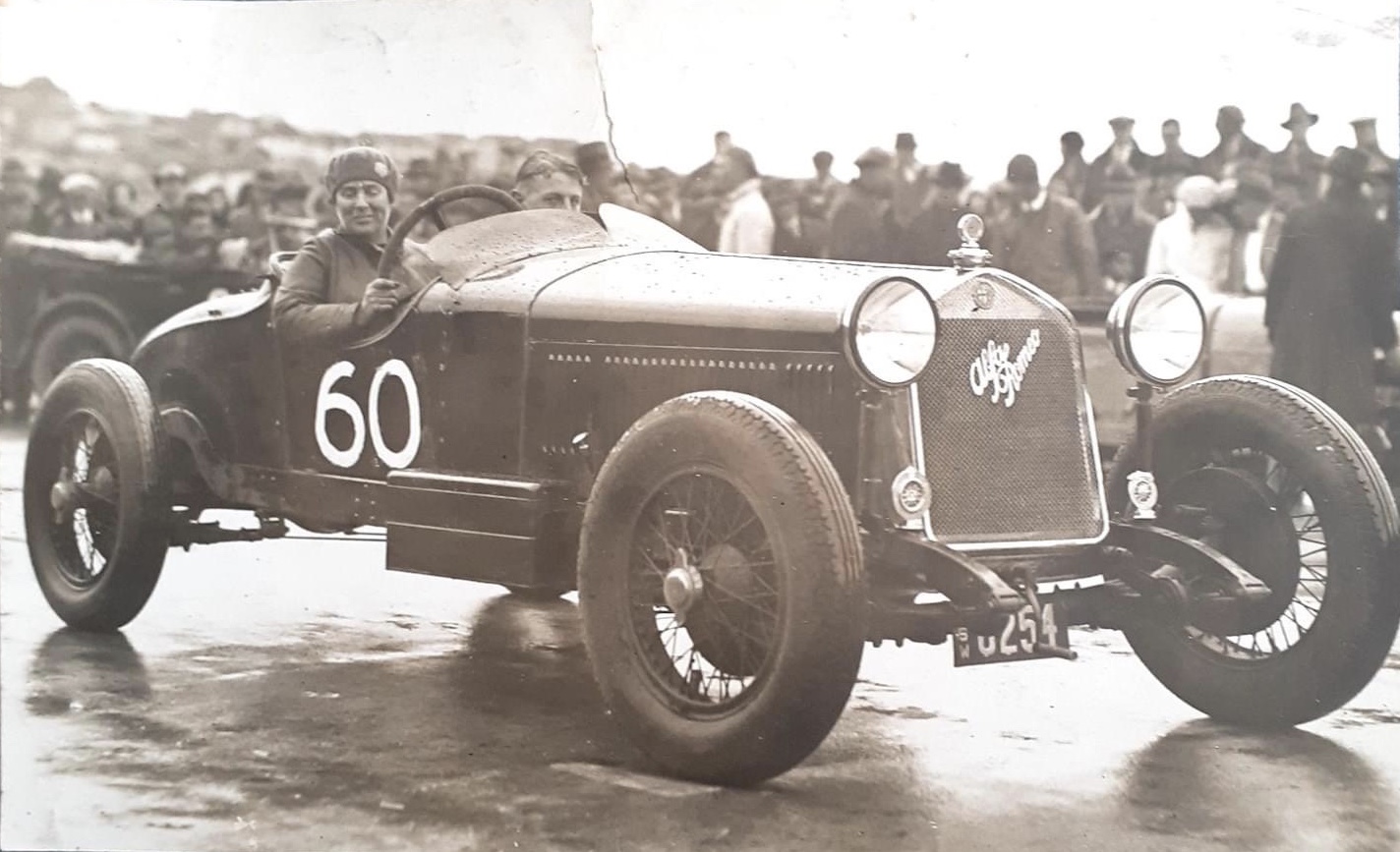
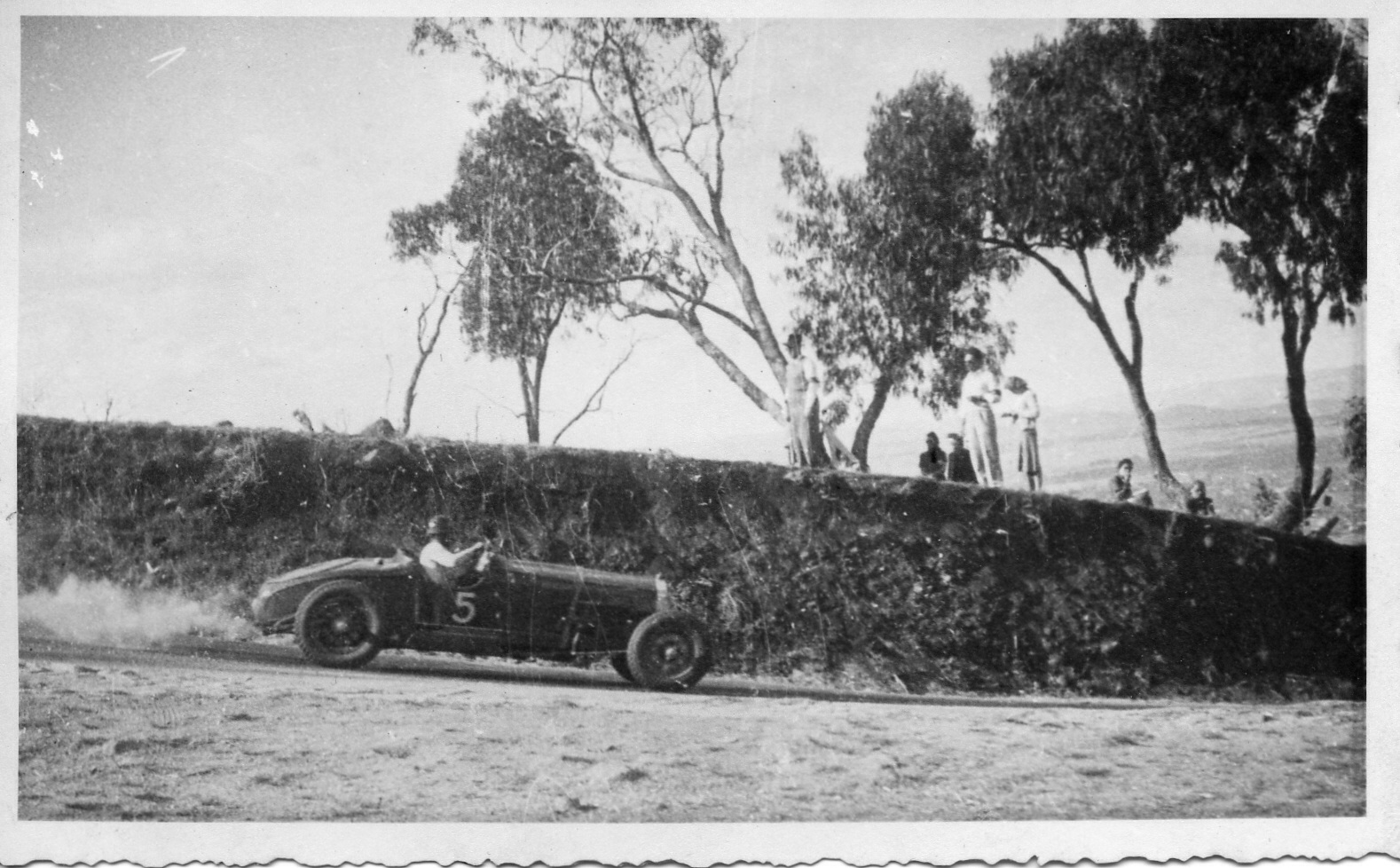
Mrs JAS Jones lines up, left, in her Alfa Romeo 6C1750 SS Zagato prior to the start of a race at Gerringong Beach, New South Wales, 12 May 1930…

Alongside her is the obscured Bugatti T37A of three-time Australian Grand Prix winner Bill Thompson and the Chryslers of E Patterson and #72/14 HJ Beith.

In the politesse of the times Mrs JAS Jones ‘married well’. Her husband Mr John A.S. Jones, ‘Lithgow’s leading businessman’ owned the ‘Zig-Zag Brewery’ and ten hotels. Lithgow is a city in the New South Wales Central Tablelands region 150 Km west of Sydney.

The cashflow of these enterprises provided the means for Mrs Jones ‘…a very congenial hostess who entertains lavishly at her homes in Lithgow and Darling Point, Sydney’ to acquire some wonderful racing cars including the ex-works 1929 Mille Miglia Alfa Romeo 6C1750 SS Zagato chassis number ‘0312894’.

This car played a significant part in Australian motor racing into the late 1950’s being much raced, ‘climbed, trialled, crashed, bashed and modified before being ‘rescued’ and restored in the seventies and eighties.

Jones was one of the great pioneers of Australian motor racing- born Nina Vida Harris in 1882, her motoring career started in the family Chandler and then progressed to a Crossley ‘which she raced at Maroubra with a measure of success’.

After a trip to Europe ‘witnessing real motor racing in France and Italy between Bentley, Sunbeam, Alfa Romeo, Mercedes and Bugatti concerns’, she acquired the Alfa, which was soon shipped to Australia in 1929. It is said she tested the Alfa Romeo model range together with Giulio Ramponi, works driver before choosing the 6C1750 SS, and an astute choice it was for the range of events run in Australia at the time.

Ramponi co-drove the winning 6C 1750 SS in the April 1929 Mille together with Giuseppe Campari. ‘Racing Sports Cars’ in its race results listing offers the tenth placed 6C 1750 SS driven by A Bornigia/Carlo Pintacuda as possibly chassis ‘0312894’ whilst John Blanden in his book suggests the car as ‘reputed to be’ the sixth place Minoia/Marinoni machine.

Jones posing with her new 6C1750 the day after it arrived in Australia (T Forrest)


Jones and Alfa during the Bondi Sprint meeting in June 1930, wet conditions added to the challenge (C James Collection)

Jones was immediately competitive in the thoroughbred, over the next few years she was a regular competitor in the large number of ‘Reliability Trials’ which were the staple of New South Wales Royal Automobile Club and Light Car Club events. These contests always included speed tests, typically acceleration test(s) and more often than not a hillclimb.

The 6C1750 was immediately one of the fastest cars in the country, the Bugatti T37A of four-time Australian Grand Prix winner Bill Thompson always gave the Alfa a run for its money whenever it competed in these events, more often than not Jones won her class and occasionally set FTD.

It appears her earliest event was the RACA reliability trial run out of Canberra in August 1929. She contested another of these events in September establishing second fastest time of the day at the grass surface Prospect Hillclimb, and another from Sydney to Cattai Creek in December.

The car’s 1930 logbook commenced with the Prospect Hillclimb in February and the RACA Sydney to Robertson Reliability Trial.

Disaster was only narrowly averted in her next appearance at Gerringong Beach, in the NSW Illawarra 130 km to Sydney’s south in May 1930, car racing was held on the beach during the twenties and into the early post-war period.

Travelling last of four in a heat of the Four Mile Handicap at well over 100mph numerous spectators surged forward- the first three cars having passed the finishing post, onto the sand track to see the Alfa take the chequered flag, Jones hit one man, a Chrysler mechanic, Norman Curley having avoided several other people who had come too far, hurling him into the air and breaking his leg.

Bill Thompson was the star of the day at Gerringong winning several races including the feature event, the Sydney Bicycle and Motor Club Fifty Mile Handicap off the back of his AGP win in the same chassis at Phillip Island on March 24.

In a sequel to the breaking of the mechanic’s leg, Mr Curley took action in the Darlinghurst Court against Jones for alleged negligence seeking 1000 pounds in damages in June 1931 after spending seven weeks in hospital after the incident. Unsurprisingly, the jury found in favour of Jones, who was a competitor not an organiser of the meeting and therefore not someone responsible for crowd safety. The matter was not left to chance, Jones was represented by Kings Counsel at some considerable expense to the years racing budget.

Jones and riding mechanic, Gerringong Beach May 1930 Alfa 6C1750 SS (Fairfax)


A ‘Percy’ Hunter and Jones before an event at Gerringong in 1930 (A Patterson)


Gerringong May 1930, competitors unknown (Fairfax)

Nina was said by the Sydney press to be entered in the 1930 Australian Grand Prix at Phillip Island but did not compete in the race won by Thompson’s Bugatti T37A.

In June a standing quarter mile competition was held on the Bondi Beach promenade, she did a time of 18.2-5 seconds and beat sixty-four other competitors in what would have been quite a spectacle. A dog dashed onto the course during one of Jones’ runs whilst the Alfa was flat chat at full speed, disaster was averted by the experienced pilot veering around the frightened hound and applying the brakes ‘causing the car to twirl almost around’.

The earliest reported event in 1931 is the June LCC Trial from Sydney to Avon Dam, she won her class acceleration test, in May she set a speed record for women at 93.264 mph over a measured half mile at Richmond and was disappointed with the result, her run in was too short she felt.

Jones did another of these trials in July and in August- this time from Sydney to Wisemans Ferry where she did the fastest time for supercharged cars. In October the Alfa was pointed to the Razorback where the combination were quickest in both the subsidiary acceleration tests and the hillclimb.

Mr A Hunter competed in the car at Maroubra after it was reopened in July 1932 in a weird event comprising a series of acceleration, braking and parking tests.

The following month Jones ‘threw the keys’ of the Alfa to the great Bill Thompson who had a steer of it in an LCC acceleration test event. It would be interesting to know his ‘compare and contrast’ thoughts of the six-cylinder supercharged Alfa Romeo sportscar with his four-cylinder supercharged Bugatti Grand Prix machine.

In a famous 1933 incident recounted down the decades Jones had her first big accident.

A convoy of ‘ten of the fastest sportscars in Australia’ set out from Sydney to Melbourne and thence down to the Westernport Bay to witness the Australian Grand Prix at Phillip Island- the drivers turning the journey into a race and ‘thundering down the Hume Highway at near Grand Prix speeds’.

Jones with her daughter Vida as passenger, having easily outdistanced the rest of the group, when cornering at over 100 mph near Albury, had a nail puncture a rear tyre causing the car to roll whereupon Vittorio Jano’s greatest caught fire and was substantially damaged.

‘Travelling around the corner the next man along, John Sherwood (a racer of considerable aplomb)…found the two women practically unhurt but dismally watching their car crackling furiously. The Alfa was burnt right out after unsuccessful efforts were made to put out the flames’.

To add further to the family woes, the patriarch, John AS Jones died in May 1933.

The Alfa was rebuilt by local artisans in Sydney with parts imported from Italy, making its post rebuild competition debut at Bar Beach Hillclimb, Newcastle in August 1934. In another disaster, Jones’ son Jack, also a racer, after his own run in the Alfa, took his mother up as passenger, lost control, crashed, overturned and hit a telegraph pole gifting his mother a broken thigh and six weeks in hospital.

This second incident, with no doubt her husbands death on her mind, determined the lady racer to retire, she still occasionally drove the 1750 but the more ‘intense’ of events were contested by personal friends driving the car.

Jones did not lose her pace however, as late as April 1937 she won her class FTD at Waterfall Hillclimb in the exotic supercharged machine. Son James won the local River Lett Hillclimb near Lithgow in July 1937.

The Jones family finally parted with the much loved and well used car in 1938. John Blanden records the March 1938 advertisement in ‘The Car’ claiming ‘0312894’ to be completely overhauled and in perfect mechanical condition. The reported cost of the Alfa when landed in Australia was 1750 pounds. Claims were made for hillclimb records at Waterfall, Robertson and Kurrajong in NSW and Mount Tarrengower, Maldon, Victoria.

John Barraclough Sporting Cars of Sydney handled the sale with Barraclough, an ace of the time, racing the car at Penrith Speedway in April 1938 to keep the racer I n the eye of potential purchasers. Graham Howard’s biography of Lex Davison records that Lex’ father AA Davison at one stage considered buying the ‘crashed 1750 Zagato Alfa’ but perhaps this was after one of the earlier accidents not in 1938. Barraclough entered the car in the April 1938 Australian Grand Prix won by Peter Whitehead’s ERA R10B at Bathurst but the car did not start- whether John practiced or did not appear because of the cars sale, or some other reason, is unclear. After the car was advertised for a short time ‘Racing Ron’ Edgerton purchased it.

Ted Gray, Alfa Ford V8, during the October 1946 New South Wales Grand Prix at Bathurst. He was fourth in the handicap race aboard ‘0312894’ won by Alf Najar’s MG TB monoposto. The car still looks a picture at this stage (postcard from The Tom Woolnough Collection)

In a disastrous, expensive start to his ownership the engine ingested a loose part of the carburettor and comprehensively destroyed itself on the way down the Hume Highway from Sydney to Edgerton’s home in Melbourne. He rebuilt the engine, I have unearthed no record of the cars competition in his ownership, the car was sold post-war to Wangaratta, Victoria businessman/racer Ted Gray in 1944. Edgerton later raced an even more exotic Jano Alfa Romeo, the ex-Alf Barrett Monza, chassis #2211134, which he acquired in 1950.

Gray cut his teeth on Victorian speedways and became one of Australia’s fastest drivers in the fifties, he first came to prominence at Aspendale in October 1938 when he gave Peter Whitehead and his ERA a run for his money in the Alan Male owned Midget- and then did it again at Rob Roy Hillclimb when Ted was only 0.8 seconds slower than Whitehead’s record for the hill. I wrote about Gray’s career in an article about the Tornado Chev, a car he raced with great skill, click here to read it;

‘The Longford Trophy’ 1958: The Tornados: Ted Gray…

Ted Gray and passenger at what is believed to be Rob Roy Hillclimb to Melbourne’s outer east, date uncertain (T Forrest)

Gray, very attached to modified V8 engines, having competed with the Alan Male owned Alta Ford V8 special pre-war, soon replaced the Alfa engine, gearbox and rear axle with Ford components, in this form he raced the car extensively for the next few years. The work was performed in the workshop Ted and Bert Cox had in Little Bourke Street, Melbourne. The orginal engine and gearbox were not cast aside but put to use in a Singer chassis hillclimb special! John Blanden records that none of the major Alfa components were lost as the car was continually modified, which became important once the cars racing career was over twenty years hence and restoration commenced.

Gray raced the car at the NSW Grand Prix meeting, the first post-war Bathurst in October 1946, he was fourth in the handicap race won by Alf Najar’s MG TB. Despite the lack of circuits in Victoria, perhaps his focus was on speedway Midgets at the time, he didn’t race further in the Alfa at Bathurst but did contest the NSW Racing Car Championships held at RAAF Nowra in April 1947. Tom Lancey won that handicap in an MG TC, with Ted a DNF due to overheating problems with the big V8 after seven laps.

Ted Gray perhaps in the white overalls refuels ‘0321894’, flathead Ford V8 sits well back in the chassis. Dude in the Brylcreem is Doug Whiteford, later three-time AGP winner. Venue is Ballarat Airfield, Victoria on 27 January 1947. Car, sadly entered as ‘Mercury Spl’ (G Thomas)


AMS cover of the same meeting as the photo above, Ballarat Airfield January 1947 with Ted’s 6C V8 being rounded up by Alf Barrett’s straight-8 Alfa Monza- Vittorio Jano designs both of course (S Dalton Collection)


Ian Virgo aboard the Alfa Romeo V8 from Tom Stewart’s MG TC Spl at Port Wakefield in the mid-fifties- at that stage the car was owned by Bob Jervies (T Stevens)

Bob Brown of Adelaide bought the car in 1949, he raced both locally and in Western Australia and Victoria including a big trip across the Nullarbor Pain to contesting the 1951 WA Hillclimb Championship in which he was tenth. A week later he also contested the 1951 Australian Grand Prix on the round-the-houses street circuit at Narrogin, a small farming town 200 Km to the south of Perth. He failed to finish, lasting only 3 laps in the race won by Warwick Pratley in the Sydney built Ford V8 engined ‘George Reed Special’- it was the last AGP win for a ‘traditional Australian Special’.

The Alfa only contested two AGP’s in its long career, both in the hands of Brown who also had a run at Nuriootpa in 1950. In that race he retired after completing 24 of the 34 laps, the race won by another Ford V8 engined special, Doug Whiteford’s Black Bess.

It’s intriguing as to why Jones did not race the car herself in an AGP, or enter it for another racer during her period of ownership. Nor did Ted Gray, a most accomplished driver enter the car in the countries premier event during his time with it- they were Formula Libre handicap races after all, the beast in whatever form would have been welcome and a handicap determined appropriate to the the car spec/driver combination at the time.

The car competed in an early Port Wakefield, South Australia meeting in May 1951 doing a 17.4 second standing quarter and recording 100 mph for the flying quarter mile.

Adelaide’s Gavin Sandford-Morgan, owner, racer and restorer of many fine cars over the years was the next owner in 1952. He ‘refurbished and repainted’ the car in time to run it at the opening Collingrove Hillclimb meeting at Angaston in the Barossa Valley in March 1952. He was second in the over 1500cc class. Gavin soon sold the car to Bob Jervies of Broken Hill, he raced it in local events and at Collingrove and Port Wakefield.

Going back a step, in 1950, when the car was owned by Bob Brown, Ross Lindsay left the road at the Woodside road circuit in the Adelaide Hills, hitting a stump, damaging the rear axle housing and a rear spring. More ‘butchery’ or keeping the car competitive to apply the perspective of a racer in period, occurred during Jervies ownership with replacement of the crashed, bashed, bruised and abused! Alfa chassis by a Fiat unit. An SS Jaguar front axle with Douglas aircraft brakes replaced the Alfa originals. At this point there was obviously little left of the car which left Milan in 1929, but again, the chassis was put to one side, not destroyed or trashed.

In the late fifties or early sixties South Australian Tony Cullen bought the car running it in local events before it was acquired in partnership by Melbourne Alfisti John Lawson and Terry Valmorbida in 1971, and so, the next period of this significant cars life began- it’s restoration phase.

Car with Ford V8, just doesn’t look the part at all does it!? Mount Tarrengower circa 1975 (J Lloyd)


‘0312894’ at Mt Tarrengower in 1977, headlights not quite right, car more butch, racy and attractive to my mind in this form- the way it arrived in Oz ex-factory as against the way it was built originally- car could quite reasonably have been restored in either form (Blanden)

Lawson and Valmorbida acquired the original engine and gearbox. The much used and abused factory original Alfa chassis was saved by Ian Polson and sold by Noel Robson, who had kept it stored for many years, to Lawson, by then the sole owner of the car for $A20. Lawson also located the original front axle, steering box and brakes, the cars appearance was now original but unrestored.

Whilst the original engine’s rebuild was completed, a 6C2300 unsupercharged Alfa engine was fitted, in this form the car made regular appearances in historic events including the Mount Tarrengower Hillclimb and at Phillip Island in 1977 and 1978. Many of us remember with glee the cars re-emergence then, as a young Uni student I officiated at Tarrengower and well remember the car at that, hot, dusty meeting.

‘Re-restoration’ process at Historic Vintage Restorations in 2010. ‘…a re-restoration, as over ten years the previous owner Diana Gaze restored it sensitively, retaining and rebuilding pretty well every major original component. The chassis rails and body were then deemed beyond economic repair and retained with the car for provenance although the original crossmembers were riveted to the new rails. These decisions were made in 1990 but times have changed so we have refreshed the mechanical bits and added originality. Photos here are before the re-restoration with the replica body (T Forrest photos and quote)

Diana Gaze, nee Davison, another great Alfista given the cars she and Lex owned and raced, acquired the car in 1983 and commenced a long restoration which involved Bob Williams and Mark Rye in Castlemaine- they were responsible for the chassis and reproduction body respectively. David Rapley took on the engine and later was given the whole project at ‘mock up’ stage, Kew Ward painted it and Grant White made the upholstery.

Terry Forest and Alfa at ‘Speed on Tweed’ Murwillumbah, in 2007, after ‘first’ restoration (T Forrest)


Pretty as a picture, some of Vittorio Jano’s finest work technical details of car as per text below. 2007 shot after ‘first’ restoration (T Forrest)

Diana Gaze sold the car after its restoration, the new owner then had the car ‘re-restored’ some seven or eight years ago with the mechanical components ‘freshened’. The original body and chassis rails were incorporated this time- a decade before these were deemed beyond economic repair but were retained with the completed car and incorporated into the last rebuild as befitting a car now worth in excess of $A4 million.

The results of both restorations were quite stunning- Mrs JAS Jones would have been best pleased. Mind you, I expect she would have very quickly climbed aboard and set off at great speed rather than waste her time with the way the car looked…

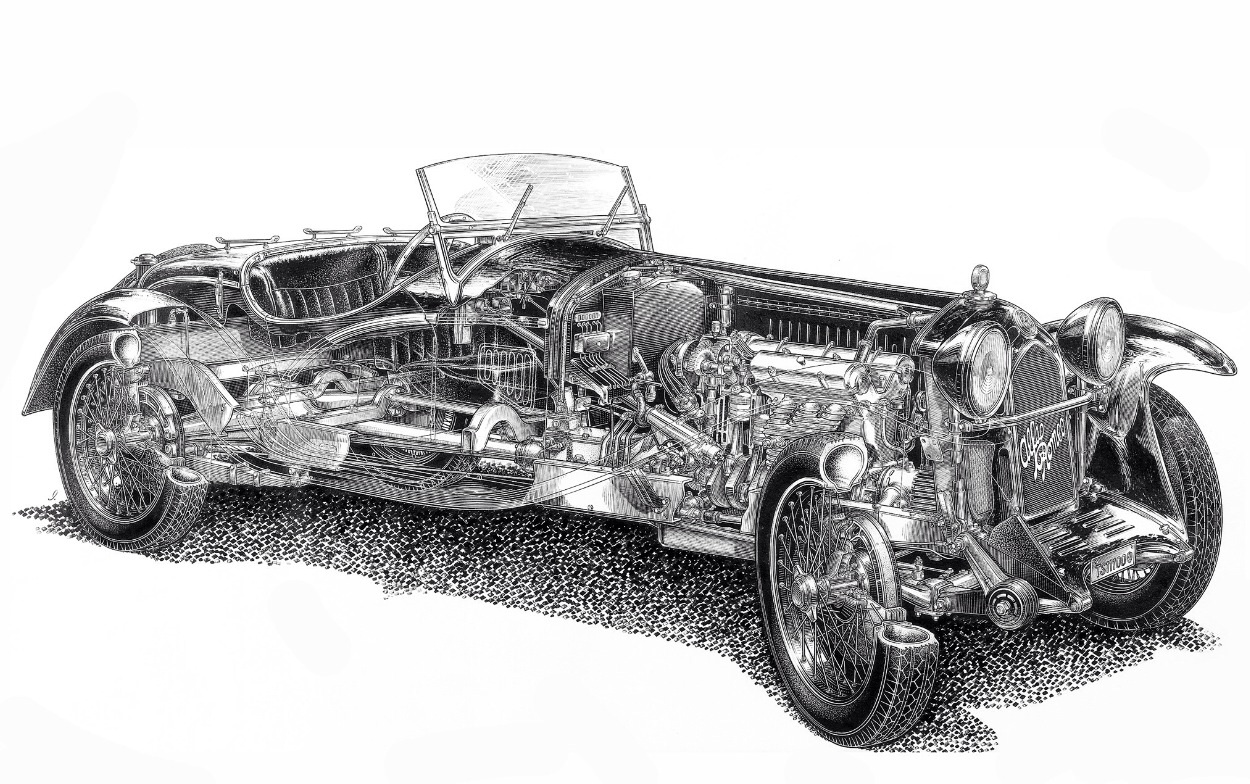
1930 Alfa 6C1750 GS cutaway- not an SS but essential elements the same (unattributed)

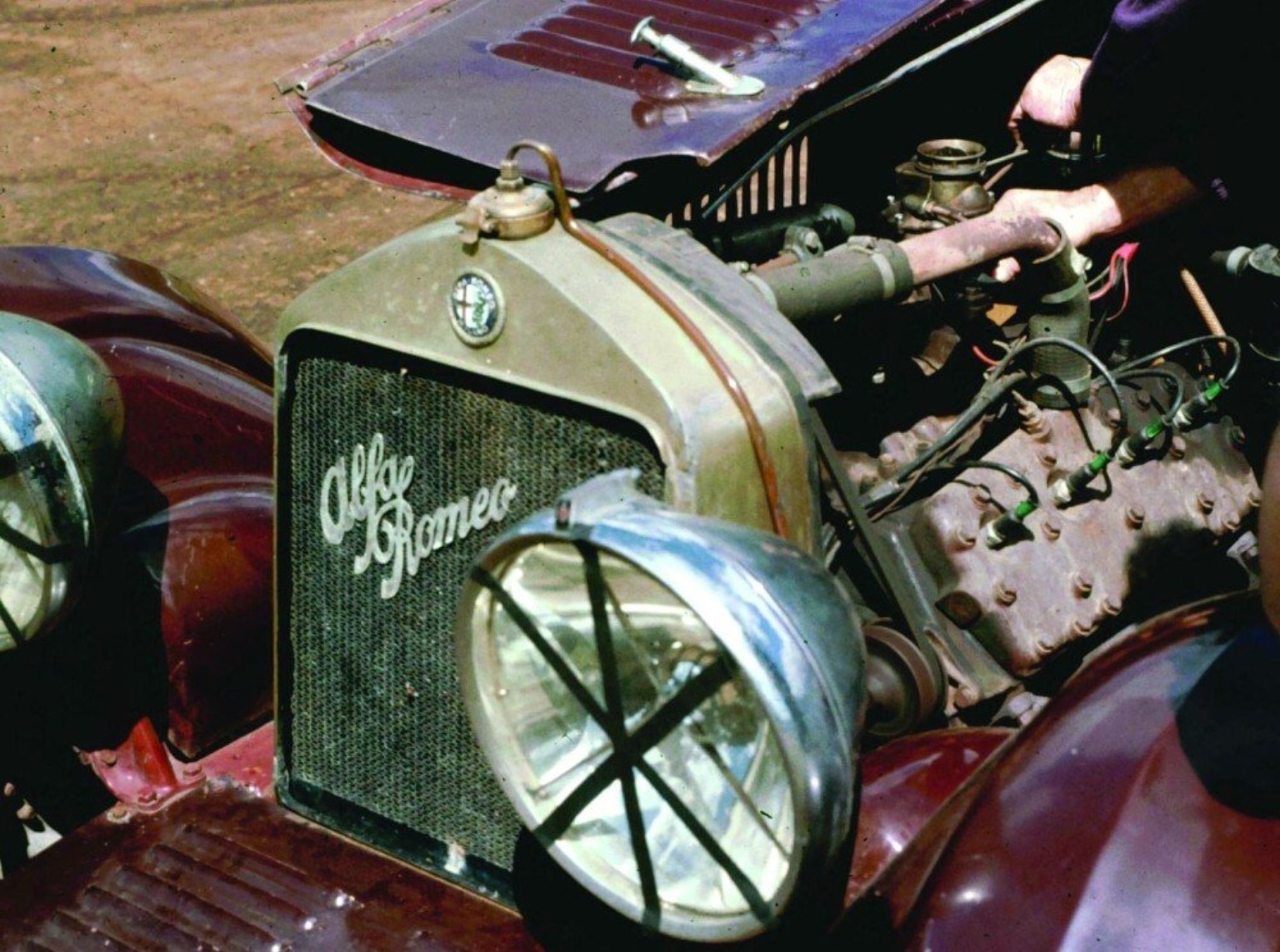
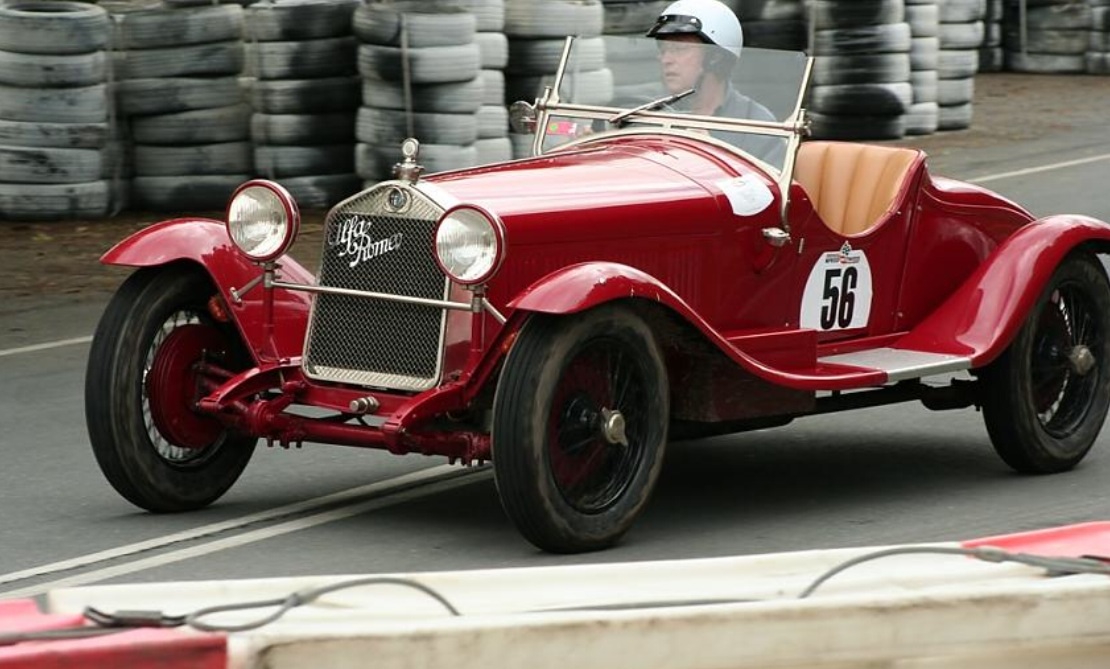
The Alfa Romeo 6C 1750 SS Zagato…

‘The 1750, and for that matter the 1500… must be among the finest ever made both from the point of view of engineering and driver satisfaction.’ – Michael Frostick, ‘Alfa-Romeo-Milano’.

Enzo Ferrari persuaded Vittorio Jano to leave FIAT’s racing department and join him at Alfa Romeo. Jano was one of the greatest car engineers of the twentieth century with a career that spanned the decades right through to his revolutionary Lancia D50 Grand Prix car of 1954- the 1956 Lancia-Ferrari or Ferrari 801 won the drivers and manufacturers championships that year.

Jano designed both Alfa Romeo’s grands-prix and road cars. As a consequence these ‘roadies’ emerged, influenced as they were by their more exotic brethren, as some of the most exciting and sophisticated of their day, establishing the Milanese marque’s reputation for producing sporting driver’s cars arguably unmatched at the time.

Jano arrived at Alfa in 1923. By the following year he had designed, and Alfa built the legendary P2- this GP car achieved much race success and also provided the basis for Jano’s first production model- the 6C 1500 of 1927.

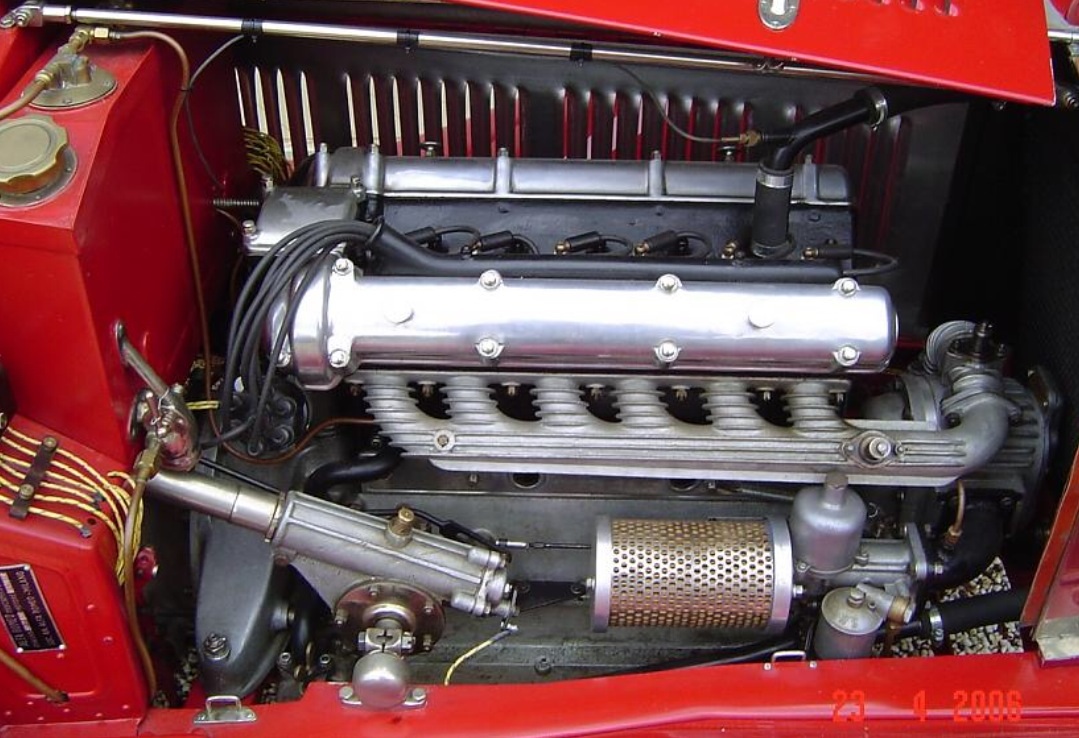
The car was designed as a fast touring machine combining light weight with sparkling performance by the use of a 1,487cc inline six-cylinder engine based on the P2’s straight eight, it produced 44bhp in single-overhead-camshaft ‘Normale’ form.

The beautifully balanced machines engine was mainly made of aluminium alloys, of monobloc construction with gear driven camshaft(s) and five main bearings. The electrics were by Bosch with coil ignition whilst the multiplate clutch and gearbox drove the rear axle via a torque tube. Suspension was by half-elliptics all around, brakes were mechanical- rod operated and fully compensated. The front axle was of C-section, the front springs passed through holes in the beam, small rods formed part of the front actuation and passed upwards and through the centre of the king-pins.

Twin-overhead-camshaft ‘Sport’ and supercharged ‘Super Sport’ models followed, the latter being the first of its type to feature the classic open two-seater coachwork by Zagato forever associated with sporting vintage Alfas.

Production of the 6C 1500 ceased in 1929 upon the introduction of the 6C 1750.

(unattributed)

The 6C 1750 (1929-33) boasted a derivative of the 1500’s six-cylinder engine enlarged to 1,752cc. Built in single-cam Turismo and twin-cam Sport (later renamed Gran Turismo) variants it was an exciting, fast, touring car combining light weight with sparkling performance by the standards of the day, more than 120km/h (75mph) was achieved depending upon the coachwork fitted.

Aimed at gentleman racing drivers, or gentlewoman racing drivers in the case of ‘#0312894’!, there was also a limited edition Super Sport, or ‘SS’, version, which later evolved into the Gran Sport.

Produced only during 1929, the SS was available with or without a Roots-type supercharger fed by a Memini carburettor, the production split being 52/60 cars blown/un-blown. Most of the cars carried coachwork by Carrozzeria Zagato or Touring with James Young bodying the majority of cars imported into the UK.

The 6C 1750 SS was one of the most popular and successful sports-racing cars of its day. Twenty Alfas competed in the 1929 Mille Miglia, with seven in the top ten, the race was won, for the second consecutive year, by Giuseppe Campari and Giulio Ramponi. Other high profile victories for model included the 24 Hours of Spa Francorchamps, Grand Prix of Ireland and the 12 Hours of San Sebastian – all in 1929 – plus the 24 Hours of Spa Francorchamps and the RAC Tourist Trophy in 1930. The 1750’s sporting career, aided by its mechanical longevity, extended far beyond its production, which ceased in 1933.

Mrs Jones’ cars competitive life extended well beyond 1933 of course, I doubt any of the 6C1750’s built were used in anger longer than this car!

Bibliography…

Lithgow Mercury 22 March 1954, ‘Historic Racing Cars in Australia’ John Blanden, various newspaper articles via Trove 1929-37, ‘Bathurst: Cradle of Australian Motor Racing’ John Medley, ‘John Snow: Classic Motor Racer’ John Medley, Bonhams, article by Sir Anthony Stamer in MotorSport December 1961, contributions on the Alfa BB Forum especially Terry Forrest, Racing Sports Cars, Stephen Dalton

Photo Credits…

Fairfax Media, Tom Woolnough Collection, ‘Historic Racing Cars in Australia’ John Blanden, Terry Forrest Collection, John Lloyd, Stephen Dalton Collection, Tom Stevens, Adrian Patterson Collection, Colin James Collection

Finito…

RH Michell’s Citroen Special dates from 1938, the young constructor built it in Woodville, Adelaide…

And that’s about all I know of this little racer.

Did Michell survive the war, did it ever race, if so was it a quick car?

Woodville was the site of some ‘bike and car racing through its streets after the War- I wonder if the car contested an event or two at the place of its birth. It didn’t race in any of the Australian Grands Prix held in South Australia around this time- Victor Harbour in 1936, Lobethal in 1939 nor Nuriootpa in 1950. Mind you, it may have contested a support event.

Intrigued to know anything about this car i tripped over by happenstance…

Photo Credit…

State Library of South Australia

(Smith)

I love pit row scenes. Its where it all used to happen before the activities and those allowed to perform them were policed. Occupational health and safety etc…

Here its Saturday practice during the 1972 Sandown Tasman Round, the Australian Grand Prix that year on 19 January. I’ve written an article about this meeting, see the link here;

My First Race Meeting, Sandown Tasman F5000 1972, Bartlett, Lola and Raquel…

Boy, there is some talent focussed in and around Max Stewart’s Mildren Waggott 2 litre.

Big Maxxie towers over the top- its his car, he raced it for Alec Mildren for several years then bought it upon Alec’s retirement from the sport and won the ’71 Gold Star, the Australian Drivers Championship in it. Max knows every centimetre of that liddl baby.

Up the pitrow is Stewart’s Elfin MR5 Repco. I wrote about this car a short while ago-here; https://primotipo.com/2017/10/24/maxwells-silver-hammer/

Max retired the MR5 with engine problems in the AGP the following day.

The short fella with the big arse leaning over the Mildren on the other side is Paul England, a legend. Ex-Repco Research in the Charlie Dean Maybach days, builder of the Ausca Holden Repco sportscar, Cooper T41 competitor in the 1957 German GP, multiple Australian Hillclimb Champion and proprietor of Paul England Engineering in Moonee Ponds- Dame Edna’s Melbourne home suburb of course.

I wonder who the ‘Firestone’ driver is leaning against the (unsighted) pit counter. Fourteen year old me is somehere on that pit counter at this  very moment. I’ve got my eyes on both the cars and marauding Light Car Club officials looking for prats like me who are not ‘sposed to be there.

One of the ‘works’ Elfin MR5 Repco’s with its new Tyrrell nose is blasting past on circuit in 3rd gear making a glorious fuel-injected 90 degree V8 basso-profundo bellow. Not sure if its Garrie Cooper or John McCormack.

The stocky little dude in the blue T-shirt behind Max’s MR5 rear wing is ‘Lugsy’ Adams- then a top mechanic but very soon to be a quick touring car driver, and several years after that an F5000 constructor/driver. Remember the Adams GA1 Chev? Its his driver Warwick Brown he is talking to- WB is in his formative McLaren M10B Chev F5000 days but is soon to be one of its enduring talents in both Australasia and the US.

image

Tony Stewart tells the crowd how it was after winning the ’71 Examiner 1000 at Symmons Plains. I think that is his well known engine-builder and father in law Jack Godbehear alongside? (oldracephotos/Harrison)

And the fellow aboard the Mildren Waggott? Its Tony Stewart, no relation to Max…

He was a shooting star, out of Formula Vee, he funded his racing with a series of car yards in the Box Hill area of Melbourne. He progressed to an Elfin 600 Ford F2 car, notably winning a very wet Gold Star event at Symmons Plains in September 1971 ahead of a field of sodden F5000’s and ANF2 cars.

Tony had some races in Paul England’s Dolphin Ford- a BT30/36 Brabham copy and several races circa 1973/4 in an F2 Birrana 273 Ford Hart before disappearing from the scene.

He was one of those guys who had the makings of a champion, I’m intrigued to hear from any of you who know the ‘Tony Stewart Story’. He didn’t stray from the used car trade though. He established ‘Car City’ a massive emporium of competing dealers on a huge former apple orchard site on the Maroondah Highway, Ringwood. He saw the new auto retail approach on a trip to the US and applied it in Melbourne’s outer east. Bumma really, he made his money AFTER his racing stage rather than when he needed it to feed his passion most!?

Tony raced the Mildren Waggott in the all of the Australian Tasman Rounds- Surfers Paradise Q15 13th, Warwick Farm Q12 8th, Sandown Q19 12th and Adelaide Q16, non-classified. It was tough in a 2 litre car by then amongst the 5 litre heavy metal but was still valuable experience in longer races for the young driver.

The more ya look, the more you see in these pitlane shots…

image

Paul England makes final adjustments to Tony Stewart’s Elfin 600 Ford before the off at Symmons- he is about to have a great day at the office! (oldracephotos/Harrison)

The 1971 Symmons Plains Gold Star ‘Examiner Trophy’ Round won by Tony Stewart on 26 September…

1971 was a bit of a transitional year between the old 2.5 litre Tasman Formula and F5000. The 5 litre beasties were quicker than the smaller cars but in a year of speed and reliability Max Stewart won the championship with one win and plenty of consistency from to Kevin Bartlett’s three victories in his McLaren M10B Chev.

The Series went down to the wire, to the last round October at Mallala, South Australia. Any of Kevin Bartlett, Max Stewart or Gold Star debutant Alan Hamilton could have taken the title, in the end Max did it with third place behind McCormack and Hamilton. KB looked the goods until engine failure intervened late in the race.

In a strange turn of events and happy circumstances for him, Tony Stewart won at a very wet Symmons Plains, the penultimate ’71 Gold Star round.

image

Kevin Bartlett aboard his ex-Niel Allen McLaren M10B ‘400-02’, a very successful car in the hands of both top drivers. KB looks thoughtful- he is contemplating the challenge of 500bhp in the wet on slick tyres (oldracephotos/Harrison)

A good field of 17 cars entered for the race at the ‘Apple Isle’ but a grid of only 8 cars started as a consequence of non-appearances and accidents in practice.

John McCormack, Elfin MR5 Repco snatched pole late in the second session ahead of Alan Hamilton, McLaren M10B Chev, the similarly mounted Kevin Bartlett and on equal fourth quickest Max Stewart’s Mildren Waggott 2 litre and Colin Hyams Lola T192 Chev.

image

No shortage of helpers to get Warwick Brown’s Pat Burke owned McLaren M4A Ford Cosworth FVC 1.8 to the grid. Famous car- Piers Courage’ ’68 Tasman mount, he won the final Longford round in it. Then to Niel Allen who raced it successfully before a huge Lakeside prang. Re-tubbed by Bowin in Sydney- then to Pat Burke. Left Australia many years ago, who owns it now? (oldracingcars/Harrison)

Then came Warwick Brown, McLaren M4A Ford Cosworth FVC 1.8, then Tony Stewart, Henk Woelders Elfin 600E Ford, Jack Bono and Garrie Cooper Elfin 600D Ford who did not practice. The latter three cars were all ANF2 cars- 1.6 litre Lotus/Ford twin-cams.

image

Colin Hyams, Lola T192 Chev, before his warm-up off. Ex works/Gardner car purchased by the Melbourne businessman after the ’71 Tasman. He had the car repaired, after its Symmons off, in time for the final Gold Star round at Mallala in October, in which he was 4th (oldracephotos/Harrison)

The start of the race was delayed by heavy rain which had practically flooded the circuit. The weather was so poor the drivers were given a warm-up session to get used to the conditions before the off. KB spun his McLaren on the main straight on dry tyres, he had no wets. Colin Hyams also spun his Lola T192 Chev, down a slope into a clump of trees, bending the ex-Frank Gardner ’71 Tasman Series mounts chassis.

image

Start of the very wet ‘Examiner 1000’, Symmons Plains: car at the rear the Cooper Elfin- no sign of Bartlett. At far right is Ross Ambrose’s Elfin 600 Ford who DNP having run bearings on the Friday but clearly started. To Ambrose left is winner Stewart’s Elfin 600 (oldracephotos/Harrison)

Eight cars started the ‘Examiner Trophy’ Gold Star round…

McCormack, Elfin MR5, Bartlett, McLaren M10B, severely hampered without wets but in search of valuable points, Max Stewart, Mildren Waggott, Tony Stewart Elfin 600 Ford, Warwick Brown McLaren M4A Ford FVC, Garrie Cooper Elfin 600D Ford, Jack Bono Elfin 600B Ford and Alan Hamilton’s McLaren. KB elected to start from the back of the grid given the 500bhp/slicks/wet track phenomena he was dealing with.

From the flag Hamilton led, Max Stewart, Brown, Tony Stewart, McCormack, Bono, Cooper with the hapless Bartlett last. Hamilton lapped KB for the first time in two laps.

The Melbourne Porsche importer/dealer drove a strong race in his new McLaren M10B Chev, the chassis was Niel Allen’s spare tub which was assembled and sold upon his retirement from the sport and used by Hamilton in his first single-seater season very effectively.

image

Alan Hamilton’s McLaren M10B Chev- the Melbourne businessman jumped out the Porsche 906 Spyder and 911’s he was racing and very quickly adapted to the rigours of 5 litre cars. He came back to the class 6 years later but its a pity he didn’t stay in the category longer when he was younger and as another strong contender at a time Gold Star grids were skinny. Warwick Brown progressed to this chassis in 1972. Hamilton now owns both this car ‘400-19’ and Bartlett’s ex-Allen ‘400-02’ (oldracehotos/Harrison)

With a third of the race completed Hamilton lapped second placed Brown for the second time. Tony Stewart moved into third place as his namesake Max wrestled with a sticking throttle slide- he pitted early, went out again and nearly demolished the car with another spin. With the conditions not improving Bartlett was hamstrung by inappropriate tyres for the races duration.

On lap 38 the races drama continued with Hamilton having an off, drowning his injected Chevy in the process and losing five laps. He pitted, but was out of the running three laps later the engine soaked.

This left Warwick Brown 20 seconds ahead of Tony Stewart but the McLaren was overheating, it was losing water, ironic given the conditions. So, Tony Stewart was in the lead.

image

John McCormack ahead of his Elfin teammate, Garrie Cooper. Mac’s MR5 ‘5711’ is the first MR5 completed, Coopers 600D ‘7012’ started life as his Repco ‘730/830’ V8 engined 2.5 litre 1970 Gold Star mount and was, with the ANF1 formula change, converted to an ANF2 car- he raced it in Asia in ’71 then sold it to Bruce Allison- an important stepping stone for the speedy Queenslander (oldracephotos/Harrison)

Tasmanian, John McCormack adapted steadily to the conditions and started putting on the pressure in his new Elfin MR5- a combination which proved very competitive over the following three or so years, and took 2nd place as Brown spun in the final stages, Warwick recovered quickly to fill 3rd place.

So, in a drive of speed and consistency Tony Stewart’s ANF2 Elfin 600 Ford won from McCormack’s Elfin MR5 Repco, Brown, McLaren M4A Ford Cosworth FVC, Elfin boss Garrie Cooper’s Elfin 600D ANF2, Jack Bono, Elfin 600 Ford ANF2 and Max Stewart Mildren Waggott. Max had only completed 55 of the 68 laps but the soggy one point gained won him the Gold Star!

It was the last time an ANF2 car won a Gold Star round- a splendid drive by a driver of considerable finesse in the most trying of conditions.

image

Tony Stewart on the way to a speedy but lucky win, Elfin 600 chassis ‘6806’ an early build 600, I wonder who owns it now? (oldracephotos/Harrison)

Photo Credits…

Ian Smith, oldracephotos.com/Geoff Harrison

Bibliography…

oldracingcars.com, Australian Motor Racing Year 1972

Tailpiece: Max Stewart in the soggy, Symmons pits…

image

The famous Mildren Waggott soon to win the ’71 Gold Star, that’s Bartlett’s McLaren M10B behind (oldracephotos/Harrison)

(K Drage)

Falls mainly on Warwick Farm, at least at its first open meeting it did, 18 December 1960…

Sydneysiders heap plenty of shite on Melburnians given our ‘four seasons in one day’ weather which does present its challenges to the ladies every now and again. Whilst I am a Mexican (Victorian) I am a Sydneysider by inclination having lived ‘in the guts’ of the place for nine wonderful years, in Observatory Hill/Millers Point. As a local when it does rain up there it can be sub-tropical in its intensity, it absolutely chucks it down in Cairns like fashion, as it did during the ‘Farms opening meeting- all of it.

Making like a duck in Kevin Drage’s opening shot is Derek Jolly, the wealthy Penfolds Wines heir’s equipe of Jaguar XK 140 Coupe and ex-works Lotus 15 Climax is behind him. Not sure how he fared in the Sportscar events, click hear for a feature I wrote about him and the Lotus a little while back;

Derek’s Deccas and Lotus 15’s…

(K Drage)

The photo above in the form-up area is #9 Bill Patterson’s Cooper T51 Climax FPF 2.2, #21 Doug Whiteford’s Bib Stillwell owned Cooper T51 FPF 2 litre, then Stillwell’s red Cooper T51 Climax FPF 2.5 and Austin Miller’s yellow Cooper T51 Climax FPF 2.2. Bill didn’t start the ‘Warwick Farm Trophy’ feature race so this is the lineup for the preliminary or before the Victorian Holden dealer pulled the pin.

The ‘Warwick Farm Trophy’ was watched by 12,020 soggy spectators and was won by Bib Stillwell’s T51 2.5 from John Youl’s 2.2 litre variant, then Austin Miller and Lex Davison’s big-bellowing six-cylinder Aston Martin DBR4/250 3 litre. In the following four years, when held in glorious weather, Warwick Farm attracted between 23,000 and 36,021 (1962) to its annual International Meetings- strong numbers to see the F1 stars of the day. It was most unfortunate to have such poor weather for the circuits first big meeting but it was not at all a portent of what was to come for ‘Gods Little Acre of Motor Racing’ for the next thirteen years.

Stillwell’s Rice Trailer behind Lex, the ‘Ringwood’ Rice is Patto’s (K Drage)

Lex’ Aston, chassis DBR4/250 number ‘4’ was powered by a 3 litre Aston DBR1 sportscar engine- Astons won the 1959 Le Mans and Manufacturers Championship with these wonderful cars.

Lex popped the front-engined car on pole- he came sooo close to winning the 1960 Australian Grand Prix at Lowood in it from Alec Mildren’s terribly clever Cooper T51 Maserati in June. Then Davo ‘crossed the fence to the dark side’ and raced a Cooper T51 to a somewhat lucky win in the ’61 AGP at Mallala.

Must get around to doing an article about these Aston’s in Australia, were there two or three?…

(J Ellacott)

John Ellacott’s grid shot above comprises Patterson, Davison and Whiteford (red), then Miller and Stillwell (red) . On row three is John Youl Cooper T51 FPF 2.2, Stan Jones blue Cooper T51 Climax FPF 2.3 and Jon Leighton Cooper T45 Climax FPF 2 litre (this side) A row further back Arnold Glass sits on his lonesome in a Cooper T51 Maserati 250S 2.5 then there is John Roxburgh Cooper T45 Climax FPF 2 litre, Noel Hall Cooper T51 Climax FPF 2.2 and Jack Robinson’s Jaguar Spl XK120 3.4 litre and at the rear Alwyn Rose in the Dalro Jaguar 2 XK120 3.4 litre. As I said earlier the results I have say Patterson did not start so perhaps we lost him on the warm-up lap

David McKay’s Morgan Plus 4 #71 in the Sportscar race which he wins…

(J Ellacott)

Love this anecdote sent to me by journalist Ray Bell- ‘The first race ever at Warwick Farm was for sportscars and you have that pic of the Austin Healey leading McKay in the Morgan off the grid.

McKay dogged the Healey driven by Bob Cutler, until Cutler spun. McKay won, Cutler came in second. Later in the pits McKay went up to him and said, “You were never going to win that race, boy!”. And Cutler asked why.

“See his here” McKay said, pointing to the tiny service sticker on the window of the Healey (you know the ones, oil change due at x miles, with the oil brand or the servo name on it), “That’s advertising, I would have protested!”

Some people’.

For international readers, advertising as it also was in Europe, was banned on racing cars at the time.

Photo Credits…

Kevin Drage, John Ellacott

Special Thanks…

Ray Bell

Tailpiece…I don’t wanna get my feet wet! Derek Jolly, Lotus 15 Climax and ‘plug box contemplating a day for the ducks, and a damp practice session…

(K Drage)

Finito…


(I Smith)

James Hunt, Elfin MR8C Chevrolet F5000, ‘Rose City 10000’ November 1978…

James Hunt ran true to form whilst on a short sojurn to Australia after the end of his Marlboro Team McLaren season in 1978, he had a very good time and won the race! He was also the supreme professional as he went about mastering the circuit and a car unfamiliar to him. Winton short circuit ain’t exactly the Nurburgring mind you. Nor was the ’76 World Champion new to F5000’s- he had Eagle and Lola experience of these 500 bhp roller-skates ‘Stateside.

I’ve covered this meeting in an earlier article on Garrie Cooper’s MR8 design, these photos by Ian Smith were too good not to share, click here to read the article; https://primotipo.com/2014/10/15/james-hunt-rose-city-10000-winton-raceway-australia1978-elfin-mr8-chev/

No other Elfin model had so many world class drivers steer them- Hunt, Vern Schuppan, Didier Pironi, Larry Perkins and Bruce Allison is not a bad roll call…

(I Smith)

Credits…

Ian Smith

Tailpiece…

(I Smith)


(Getty)

Juxtaposition!

The wild ‘Mana La’ solar car contrasted by the utilitarian functionality of a cement mixer. Stuart Highway, Northern Territory 1 November 1987…

The John Paul Mitchell sponsored car designed by Jonathon Tennyson is heading for Adelaide, 3005 Km away, sadly the brilliant vehicle DNF’d the race won by GM’s ‘Sunraycer’.

The genesis of this first Darwin to Adelaide ‘World Solar Challenge’ was critics telling adventurer Hans Tholstrup that Australia could not be crossed by a solar powered vehicle.

In 1982, together with Australian F1 driver Larry Perkins and his brother Gary, Tholstrup developed a car in which he became the first person to drive across Australia. The 4,000 Km journey in ‘The Quiet Achiever’ took him 20 days.

The Perkins Engineering- Larry and Gary Perkins built 1982 ‘The Quiet Achiever’ or ‘BP Solar Trek’ car. Rudimentary design which is deceptively clever and a precursor to the much more sophisticated, mega-buck cars which followed (NM)

Criticism of the car sparked what became the first World Solar Challenge five years later. In 1987 23 teams from Europe, the US, Asia and Australia entered the event with over 40 taking part in 2017.

The Danish born Australian’s desire to develop solar energy came after years of being a self-confessed fuel guzzler. ‘I was doing my penance…because I flew around the world, rode in race cars and powerboats, I did everything that used finite fossil fuel’ quipped Tholstrup in a recently ABC interview. He noted that solar panels are half the size they were in 1987 with the cars doing the same speeds.

One of the ‘big buck’ entries won the inaugural challenge, the Paul MacCready designed and built General Motors ‘Sunraycer’ was victorious in 44.90 hours at an average speed of 66.90 km/h.

At the wheel was ever-versatile Australian champion racing driver John Harvey who was also involved in testing the car at the GM Proving Ground in Arizona. Second into Adelaide two days later was the Ford Australia entry and the Ingenieurschule, Biel vehicle third.

The GM Sunraycer on day 3 of the 1987 challenge, 3rd November. Car is on the Stuart Highway 100 Km south of the Devils Marbles. Car took 5.5 days to complete the 3000 Km journey (P Menzel)

In some ways the most radical entry, the John Paul Mitchell Systems car ‘stole the show’, visually at least, albeit the car was out of the race way too soon.

Jonathan Tennyson designed and built the car funded by John Paul Mitchell Systems. With the help of James Amick, the inventor of the ’Windmobile’ Tennyson developed a vertical wing design to exploit the wind to help mobilise the car in addition to its primary source of power- solar energy. By covering the resulting arched wing of the ‘Mana La’ (power of the sun in Hawaiian) in solar panels the idea was to be able to expose the panels to the sun at all times of the day.

The radical machine is 19′ long, 6 1/2′ wide and 6 1/2′ tall. Its built from urethane foam, carbon fibre and vinyl ester resin weighing circa 250 Kg. An onboard computer distributed power to ‘NASA-grade storage batteries’.

(Petersen)

The visually arresting arch is covered by 140 solar panels. Sixty-four silver-zinc batteries retained the power collected and fed a pair of 2-horsepower, brushless direct-current motors. Each engine utilised two windings, one for lower speeds and higher torque, and another for higher speeds at lower torque.

Nicknamed ‘the hair dryer’ given its sponsor, the US$250,000 Mana La qualified second starting behind Sunraycer on ‘pole’. By 4 pm on the first day of the event, the car was out of the race. The crew ran too hard through the hills trying to catch the Sunraycer, exhausting their batteries in the process and were never able to harness the wind the car was designed to exploit. Their battery specialist estimated it would take 40 hours in the sun to recharge…what a great mighta been this quite stunning machine is.

In 2010 the car was donated to the Petersen Museum in Los Angeles.

Bibliography…

Australian Broadcasting Corporation, paulmitchell.com

Photo Credits…

Getty Images, Australian National Museum, Petersen Museum, Peter Menzel

Charles and John Cooper, Cooper Climax and Babe, late fifties…

I’m a big fan of the Getty Images archive, there are so many photographs there to inspire thousands of articles but Joisus the captions are usually pretty blardy useless. Good enough for the mum and dad recipients of the newspapers they were most often published in but lacking the detail anoraks demand!

This one is a case in point, it reads as follows: ‘Building Cooper Formula 2 racing cars for British racing. Charles Cooper (left) with a fitter at (sic) a Cooper Formula 2 car’, no date of course.

I’m not a Cooper expert but am keen to date the shot, identify the Cooper’s type and the name of the lissom young lass on the workshop wall!

Some hints: the Cooper has coil spring (when fitted) rather than transverse leaf front suspension. The Coventry Climax FPF engine is fitted with twin-SU rather than Weber carbs. The chassis is of no help to me in terms of distinctiveness, it’s the same ‘offensive to purists’ but ‘perfect in practice’ curvy Owen Maddock designed spaceframe which went into all Coopers of the period. Having said that an expert will see what I do not.

My guess, and its no more than that, is a 1958 Cooper T45 Climax. Mind you, that fuel tank is a biggie, matched by another on the other side- none fitted at the moment its more likely an F1 Cooper T51. Or maybe an F2 Cooper running in Gee Pee events as the T45 did with 2 litre FPF’s fitted in 1958.

But most importantly what is the name of blondie-locks, she really has the looks to lift the mood of even the snarliest mechanic on the coldest of Surbiton, winter mornings…

 Credit…

 PA Images