Appendix J tustle into Mountford Corner circa 1964- Alan Robertson’s Peugeot 203 dives under an FJ Holden, the finish line is only 500 metres away, perhaps this is a last lap lunge…
It’s a corker of a shot.
‘Longford 2’, who is he kidding, Longford 10 you may well reasonably say!
Everything in motor racing in moderation my friends, unless it comes to Lola, Lotus, Elfin, Rennmax, Bowin, Birrana or anything to do with Repco-Brabham, Alec Mildren Racing, Scuderia Veloce or Equipe Matich, Warwick Farm and most of all Longford where the rules of moderation simply don’t apply- just suck it up ok!?
Apart from my Longford fascination, Tasmania is one of my favourite states, on top of that I seem to be in a Covid 19 induced sixties nostalgia zone at present so I’ve mixed in some period Tassie snaps of interest- to me at least.
The wonderful racing photographs are by Lia Middleton’s mum, the ladies name would be great to know if someone can provide it, and Jim Langdon. Here we go with this Tasmanian assemblage.
(J Langdon)
Jack Brabham whistles into Mountford, Brabham BT7A Climax, South Pacific Trophy 1964…
Graham Hill won the race in the Scuderia Veloce BT4 from Bruce McLaren’s Cooper T70 and Frank Matich aboard another Brabham, this time a BT7A, all Coventry Climax 2.5 litre FPF powered.
Things must be going mighty goodly as Roy Billington even has time to laugh at one of Jack’s one-liners- Longford paddock with the Hewland HDS or is it HD5? and Coventry Climax FPF laid bare. This second in a series of three ‘Intercontinental Brabhams were very successful cars.
Brabham always had time for the punters didn’t he!? A smile rather than the death-ray stare of some others- a Pro our Jack.
(Middleton Family)
(C Raine)
I wonder if it was cheaper to travel by TAA Vickers Viscount or the Princess of Tasmania?
These days the plane is the ‘no brainer’ in terms of cost and convenience compared with the overnight ferry from Port Melbourne to Devonport but it may not always have been so, I wonder what the relative cost was.
The plane on the tarmac at Launceston.
(Middleton Family)
All the fun of the fair!
What a brilliant shot, doesn’t Mrs Middleton capture the mood of the meeting? Technically she has framed and cropped the shot beautifully. I wonder what year this Pit Straight bridge went in?
The shot below gives us a read in part on Don Gorringe’s business interests which funded his involvement and support of motor racing.
(Middleton Family)
1968 South Pacific Trophy field race in the dry, so it’s the preliminary ‘Examiner Scratch Race, contested over 12 laps, it rained cats and dogs on the Labour Day Monday public holiday.
The shot above is from towards the rear of the pack diving into the Viaduct- the two BRMs of Pedro Rodriguez and Richard Attwood, I can’t differentiate between the two, then the yellow Mildren Brabham BT23D Alfa Romeo of Frank Gardner on the outside, to FG’s left is his teammate Kevin Bartlett, Brabham BT11A Climax with the red/maroon car at the head of this pack, Piers Courage, winner of the very last Longford Tasman Cup event in his McLaren M4A Ford FVA.
In a short race of attrition, Graham Hill won from Jim Clark, both in Lotus 49 Ford DFWs and Frank Gardner’s Brabham Alfa- Clarkset a lap record of 2:14.7 during the race but this time was battered by Chris Amon in the Scuderia Veloce Ferrari Can-Am 350 which did a 2:12.6- Chris’ best was 10 seconds a lap better than second place man Ian Cook in Bob Jane’s Elfin 400 Repco 4.4 V8- Amon’s Ferrari was famously timed at 182mph on ‘The Flying Mile’.
The truck is heading in race direction towards Mountford Gate, Viaduct, I wonder what year this shot was taken?
(Middleton Family)
Local Longford racing club chief and landowner Ron McKinnon gives Jack Brabham and the race winner, Bruce McLaren a lift after conclusion of the 1965 Australian Grand Prix- McLaren drove a Cooper T79 Climax whilst Jack was aboard a BT11A and Ron an MGA. 1965 AGP here; https://primotipo.com/2019/09/27/longford-1965/
(D Febey)
No Australian kid’s summer holidays was complete without a holiday at the beach or in the local pool- you really were ‘posh’ if yer folks had a pool back then.
Just looking at this brings back so many memories, not the least of which was the difficulty of executing a ten outta ten dive whilst not landing on top of some schmo in the process- this is the pool at The Bluff in Devonport.
(Middleton Family)
Graham Hill looking a bit more earnest and focused than Jack in a similar car- a Repco Brabham BT4 Climax owned by David McKay’s Scuderia Veloce.
That’s him in the cap on the right with Bob Atkin and another fella pushing- Hill’s focus was rewarded, he won the 1964 South Pacific Trophy as mentioned earlier. Brabham BT4 here; https://primotipo.com/2016/10/16/point-of-sale/
Kings Pier, Port of Hobart in the mid-sixties. Salamanca Place and the Port is these days a wonderful place to stroll around and dine whilst still a working port (R MacFie)
Scuderia Veloce again, this time the great Spencer Martin kicking the tail of the Ferrari 250LM about with gay abandon in 1965, it’s one of the machines very first meetings- the exit of Mountford Corner with a very appreciative crowd.
These cars, production sports-racing Ferrari won Le Mans in 1965 after the top gun Ford GT40, Mk2 and Ferrari P2s dropped by the wayside, Jochen Rindt and Masten Gregory raced the winning NART entry.
I blew my tiny mind upon seeing these photographs of Minuet Stephens- they pinged ‘Queenstown’ in my mind but some of you Tassies can set me straight if I have that wrong, it’s only two years since the last time I swung through, it’s circa 1963 given other shots in this collection.
Isn’t ‘the rig’ amazing, what make and model is the home built caravan’s tow car or truck? The wow factor was succeeded by memories of long interstate trips Australian style before dual-lane highways became common in the eighties- Melbourne to Sydney then, about 500 miles now, was ‘a lot longer then’ on the Hume Highway as yer Dad’s 186cid HK Kingswood wagon was stuck behind outfits like this one and semi-trailers which did not gobble up the road as they do now. ‘How much further Dad?!’ every thirty minutes, its a wonder he didn’t strangle the three of us really.
I imagine on the relatively quiet roads of the Apple Isle this kind of touring would have been very pleasant indeed.
(J Langdon)
(J Langdon)
Bib Stillwell turns in for Mountford with Pit Straight, the Control Tower and Water Tower in the distance- Brabham BT4 Climax in 1964.
By this stage the ‘late blooming’ Melbourne car and aviation businessman had been a front-runner for a halfa decade, in fact he won his third Gold Star on the trot in this chassis that year, having won it in ‘IC-3-62’ as well in 1963.
A quick glance suggested BT11A to me- the airbox led me there but tell tales of BT4 are the external radiator pipe- it looks like a pinstripe and the location of the top front wishbone rear pickup.
The Aston Martin DB5 is rather nice too.
(J Buddle)
Groometals scrap metal warehouse and lead smelting establishment on the corner of Harrington and Warwick Streets Hobart and looking very much in 1998 just before its demolition, as it did in 1965.
The nostalgic observation here is that so many of our inner urban main arteries looked like this until these streets filled with restaurants and retail outlets instead of small business ‘workshops’ as the inner suburbs became places many of us wanted to live.
I gave my Formula Vee a birthday at the end of 1979- amongst other things the suspension was nickel plated and chassis sand-blasted and then stove-enameled in two different ‘shops in Bridge Road, Richmond which these days is all restaurants and retail outlets- many with ‘to lease’ signs reflecting the decade old on-line retail revolution and of course forty-five thousand coffee shops. Still it was forty years ago, so some change should be anticipated I guess!
(Middleton Family)
Look at that crowd on Pit Straight.
Look very carefully to the left and you can just see a couple of jousting Scots- Jim Clark’s Lotus 39 Climax is just in front of South Pacific Trophy winner, Jackie Stewart in a BRM P261 1.9 litre V8.
In the shot below Arnold Glass has neatly popped the nose of his ANF1.5 Lotus 27 Ford twin-cam into the Mountford haybales during the 1964 meeting- hopefully no great damage has been done in ‘The Mercury’ 10 lapper for racing cars.
Below is the business end of the monocoque Lotus 27 which very much apes the F1 Lotus 33 in basic specifications- chassis, suspension whilst noting the 1.5 litre FWMV V8 gave circa 210bhp whereas this 1.5 litre Cosworth built Lotus-Ford four cylinder engine gave circa 125bhp. Hewland gearbox of course, lovely Ron Lambert shot in the Longford paddock, the cockpit/nosepiece is off the car, perhaps being repaired…
(R Lambert)
The lighthouse supply ship SS Cape York off Maatsuyker Island on Tasmania’s southwest coast, mid-sixties (Nat Arc Oz)
(Middleton Family)
(Middleton Family)
A couple more shots on the approach and downhill plunge to The Viaduct.
The touring car experts can probably date the event- two EH Holdens chasing a trio of Morris Coopers- Barrett, Smith, Bromfield, Boot and Evan Thomas are the tips of racers Danny Newland and Barry Cassidy- as to the single seater race, who knows?
(M Stephens)
‘You muck around like a pack of old chooks at a Christening’ was one of my Dad’s sayings!
This group of ladies reminds me of my grandmother and her four sisters frocking up, hats and all for a family ceremonial occasion- like a Christening!
It reminds me how ‘white’ we all were too- Gough Whitlam finally repealed the ‘White Australia Policy’ in 1973 for chrissakes- Asian immigration was negligible until President Ford rang Malcolm Fraser and said ‘you pricks helped us create the mess in Vietnam so you malakas have to help mop it up’ or diplomatic weasel words to that effect anyway.
So now we have a wonderful, mainly harmonious multi-cultural mix rather than the mono-cultural Anglo society reflected in the scene of matrons above.
(Middleton Family)
Montford Corner again with a gorgeous Elfin Streamliner confronting a big special- wotizzit?
Huge crowd again, year uncertain.
( Middleton Family)
Ron McKinnon again this time aboard a Datsun Fairlady- his passengers appear to be Bruce McLaren and Graham Hill, so first and second in the 1964 Sou-Pac Trophy.
Never drove a Fairlady but did have a drive of its big-brother Datsun 2000 and couldn’t believe how much better a car it was than the MGBs i was looking at at the time.
(Libraries Tasmania)
(Libraries Tasmania)
I sorta missed the whole steam engined thing- Puffing Billy excepted, ten years older and it would have been front and centre for me in a way that it no doubt was for many of you.
These eight H Class locos are sitting aboard the ship ‘Belpareil’ at the Hobart docks, I cheated with the decade though, it’s October 1951. I wonder who the manufacturer was/is?, wonderfully five of these trains still exist.
(Middleton Family)
It’s rotating so hopefully the driver of the Humpy Holden missed the Mountford trees, the physics of it all is working in his favour I think. Who is it?
(Middleton Family)
The wonderful thing about Longford is that for every international who raced there the bulk of the weekends entertainment was provided by local/national drivers who got to play on one of the greatest, most challenging and dangerous road racing tracks in the world, as our Sprite friend, Chris Tapping is doing just here.
(C Broadfield Collection)
The gent in the hat does not seem phased at all by the sight of the yacht ‘Heemskerk’ being shifted by road from Sandy Bay, where it was built to the Hobart Port closeby where the owner Edney Medhurst launched the sleek hulled craft in 1953.
Credits…
Jim Langdon, Chris Raine Family, Lia Middleton Family, Rob MacFie, Daryn Febey, Minuet Stephens, Jeremy Buddle, National Archives of Australia, Libraries Tasmania, Craig Broadfield Collection, Ron Lambert
Tailpiece…
(M Stephens)
Another Queenstown shot i think, the most recent car is an EJ Holden so let’s date the queue of cars on the steam train as being circa 1963.
A C ‘Mick’ Carlton and passenger aboard his Lea-Francis Hyper 1.5 s/c, chassis number #14041 during the sprint meeting at Safety Beach, Dromana on Melbourne’s Mornington Peninsula, Saturday 7 December 1929…
It’s amusing to think that a century ago motorsport took place on land upon which at least two of our Victorian readers have weekenders. Let’s deal with the events at Safety Beach first and come back to Mick and Lea-Francis further on.
The Royal Automobile Club of Victoria first ran ‘a long series of motor car contests’ at Safety Beach the year before, Saturday 2 December 1928 on a two mile rectangular, sandy gravel course on the ‘Safety Beach Estate between Mount Martha and Dromana’. Cursory research indicates the venue was used from 1928 to 1932.
About 1,000 spectators attended that day making the long journey by car or steamer from Melbourne to Dromana. No doubt the nascent sport was shown to best effect as the chosen course, held on private property – motor racing on public roads was illegal in most states including Victoria – was placed in a natural ampitheatre of hills including Arthurs Seat and Mount Martha towards which the photograph below was taken.
(Rose)
A familiar view to Victorians from Arthurs Seat across Port Phillip Bay and down towards Dromana and it’s pier – the area to the right before the land starts to rise at Mount Martha is Safety Beach. The settlement in the distance is Mornington – its apex is Snapper Point.
The course was 2 miles 173 yards in length, a nice lap with ‘tests for acceleration over a short run’ and ‘for speed around the full circuit’, more than fifty cars entered.
Prominent competitors included Joan Richmond, Riley, and Arthur Terdich in the Bugatti T40 in which he was so quick in the 1928 100 Miles Road Race (The Australian Grand Prix) at Phillip Island in March. Other Phillip Island racers entered included WA Terdich – variously called Bill or Ab – Senechal, Harold Drake-Richmond in the Maurice Shmith owned Fiat 509 and Jack Day’s Bugatti T37 which had been very fast in the latter stages of that first road race in Australia.
Other cars of interest/racers of later prominence included AW Bernadou, Riley, Maurice Shmith in a Bugatti, Herb Beith aboard a Chrysler and Arthur Terdich’s Lancia Lambda, perhaps running his road car in addition his Bugatti.
Ground level’ish view looking from near ‘Anthony’s Nose’, the Point between Dromana and McRae towards the Dromana Pier with a Steamer in attendance, and on towards Safety Beach beyond. The Nepean Highway, then Arthur’s Seat Road, is that ‘quiet little track’ in the foreground (Rose)Harry Cooper’s 4.8-litre Ballot 5/8 LC. Safety Beach, 2 December 1928 (E Adamson photo published in ‘The Argus’ 4 December 1928 via Terry McGrath)
The final event of the day was a five lapper, about 10.5 miles, between the fastest car of the day, Harold Cooper’s 4.8-litre straight-eight 1919 Ballot 5/8 LC ‘Indycar’, which covered the course at an average speed of 59.96 mph, ‘a remarkable performance, in view of the fact that the course was practically a rectangle with four almost right angle turns’, and an aircraft piloted by Keith Farmer.
‘Cooper sped the 10.5 miles, up till the last lap the plane gave the appearance of not been fully extended, but in the run home it speeded up and won. The contest created considerable excitement among the spectators’ The Argus writer concluded.
Other snippets about the meeting were that the serious boys were down the weekend before to test further improvements made in the final week by ‘gravelling and oiling the course’ – shades of Phillip Island final preparations between 1928 and 1935.
That ‘Speedboat racing will be another feature of the programme’ suggests the road was parallel with and very close to the Safety Beach foreshore. The ‘Dromana Progress Association’ looked after the ‘special catering arrangements’ but I doubt ice-cold ‘frothies’ were on the menu.
Noted future Aussie International Joan Richmond made the dailies the following year, 1929, when she overturned her Riley 9 during practice, ‘the car was smashed, but the driver, whilst concussed, and passenger escaped serious injury. Miss Richmond is known as a capable and daring driver.’
Joan Richmond and Mollie Shaw with the Riley 9 Brooklands (the ‘Young Riley’ in Joan-speak) during the 1931 AGP weekend at Phillip Island, fifth outright and second in the 1500cc class. ‘We had to part our hair in the middle to get our helmets on’ Joan quipped. The car was a Riley 9 chassis with ‘a light fabric body made by Mr Thomas of the Elite Motor Body Works’ (unattributed)
Despite the onset of the Great Depression, 3,000 spectators attended Safety Beach again in 1929, the crowd was perhaps bouyed by the two successful Australian Grands Prix held not too far away at the Island in March 1928 and 1929.
Whilst Hope Bartlett’s 2-litre Grand Prix Sunbeam was not entered at Safety Beach, a long way from his Nowra base, there was no shortage of ‘French blue’ exotic racing machines including Alan Cooper’s big, booming Ballot driven so well by brother Harry, as well as the Terdich, Junker, Jenkins, Bedford and Day Bugattis plus Clarrie May’s Austin 7 s/c and Harry Beith’s very quick Chrysler.
By any measure it was a strong entry of cars for the rapidly growing number of racing enthusiasts. The meeting was also a gala social occasion, by the end of the hot summers day the lovely, long cream dresses of the ladies took on the light brownish hue of the dust created by the cars which was readily picked up by the strong onshore breeze. Once may well have been enough for many of the ladies!
The ‘feature event’ late in the day was a lap record contest for the six cars which made the fastest time of the day, who then ran off to attempt to lower the existing lap record of 2: 6.5 seconds.
The Herald’s advance coverage of the race speculated that the final six drivers/cars may include Cooper, Jack Day’s Lombard s/c (not entered), Arthur Terdich’s Bugatti T37A and Harry Beith’s Chrysler Special.
Cooper, in a repeat of his pace the year before won again aboard the ex-Louis Wagner 1919 Indianapolis Ballot doing a time of 2 minutes 5 3/5 seconds, then came Beith’s Chrysler and Sydney Cox’ Bugatti. Contrary to some reports it appears this event was not a massed start but rather one machine at a time with each getting a ‘flying start of 20 chains’.
The Melbourne Herald put the day in context, ‘In view of the existing ban (which seems to have applied everywhere in Victoria other than the Peoples Republic of Phillip Island, where, bless ’em, the local shire/council basically said up-yours to Spring Street – the Victorian State Government), and the police suppression of events held on public roads, special interest attaches to the speed contest for motorcars…’
In other words a good clean, problem free event would advance the cause of the sport.
By that stage, as noted above, there had been two Grands Prix on Phillip Island’s 6.5 mile rectangular gravel course, at the time its certainty as a venue was far from guaranteed given the absolute constitutional power of the Victoria Government’s sovereignty over and above that the said Peoples Republic of Phillip Island.
I love the local shire’s up-yours-cocko attitude to State law but the Light Car Club and the Shire of Woolamai (aka the PR of P Island) would have been in a pickle, to say the least, had a vexatious litigant had a crack at ’em in the event something went horribly wrong- an errant car killing some punters in the crowd or some such.
Discussions with racers/restorers/historians/authors Tony Johns and Bob King reveal quite a large, and still growing number of Mornington Peninsula venues being identified including the Balcombe Army Camp between Mornington and Mount Eliza and Safety Beach as sprint venues. Frankston, the Moondah Estate in Grices Road (now Kunyung Road) Mount Eliza, Arthur’s Seat, Cape Schanck and Dromana all held hillclimbs.
Who can add to this list?
Dromana Hotel on what is now the Nepean Highway, grand accomodation for the competitors (Rose)
The bountiful land, streams and blue waters of the bay were the home and playground of Australia’s indigenous people for sixty-thousand years before we whiteys rocked up, it didn’t take too long for entrepeneurship, money and steam power to open up the bay.
Steamer services extending to Frankston, Mornington, Dromana, Sorrento, Queenscliff and other places in addition to railway lines to Frankston, Mornington and Geelong opened the new colony in the 1880s.
In days of yore before car ownership became commonplace post-war (WW2) people stayed in hotels and guest houses on their holidays in country and coastal locales such as those listed above. This is the reason we have still large numbers of grand, if often run-down hotels and guest houses in places like Mornington, Sorrento, Queenscliff, Lorne, Port Fairy, Daylesford, Healesville, Mount Beauty and other places, to stick with Victorian examples.
Many such properties were torched in ‘Jewish Stocktakes’ (as my dad in the politically correct (sic) fashion of the day described) in the fifties and sixties as burgeoning car ownership extended the reach of the average citizens holiday horizons beyond many of the towns listed. Many establishments in these places were no longer viable so a surruptitious phone call to ‘Louie da Torch’ and a brown paper bag full of pound notes was not uncommon with insurance assessors not having the forensic services to hand as a defence to the obvious the way they do now. My great-grandfather’s guest house, ‘Montpellier’ in Healesville went up in smoke thanks to Louie’s intervention a decade or so after the family sold it.
Nepean Highway at Dromana looking west towards McRae/Portsea- makes and model folks (unattributed)
The Herald’s December 1929 event coverage very kindly summarises the Supp Regs which are interesting, the deft hand of officialdom was as prevalent then as now – not quite as bad as now perhaps!
There were five classes- stock standard (aka Group E ‘Series Production’!), open, closed car, special and lap record.
The stock standard event was open to any financial member of the club (RACV) whether connected with the trade or not, but sports model cars were ineligible. ‘A stock standard car is one regularly supplied to the public in the usual way of the trade and fitted with standard type body, hoods and guards. The windscreen can be removed and the carburettor and magneto timing adjustments altered.’
‘In the open event, sports models are eligible, but super-sports models, special cars and supercharged cars are ineligible…cars must run in complete touring condition with proper body guards, hood, lamps, efficient silencer and carry a spare wheel, or spare rim with tyre attached.’
‘Women will not be permitted to drive in the event unless they are the bona-fide owner of the entered car.’ In a an interesting twist of logic ‘For the closed car event sports models are prohibited, but women are allowed to drive’ – which i guess means if ‘the wife’ drives the family machine down to the shops to Domain Road they can have a crack at the race.
‘The special event is open to any financial member, and cars can compete fitted with superchargers and stripped of guards, screens, hoods, batteries and spares. Lady drivers are ineligible’. Given the differentiation between ‘women’ and ‘ladies’ i wonder if ‘women’ could compete in the special event that ‘ladies’ were specifically excluded from. Hmmm, one for the lawyers.
Whilst the Victorian Light Car Club limited its Australian Grand Prix to cars of a maximum of 2-litres supercharged or otherwise, this event was divided into 850cc, 1100cc, 2200cc, 3300cc and over 3300cc classes, hence the great variety of cars.
Etcetera…
(B King Collection)
It’s funny how stuff sometimes happens.
I was over at Bob King’s place raiding his photo archive to do the 1928 Australian Grand Prix magnum-opus a few weeks ago. At the end of that exercise we were talking gobshite and going through some other stuff- Herald-Sun shots Bob rescued from the ‘to be chucked out’ pile.
The Mick Carlton Lea Francis shot, marked ‘Safety Beach 1928’ caught my eye – ‘WTF is that Bob? I’ll have that one please!?’ ‘Safety Beach, well bugger me!’, in the words of the great George Pell, I thought.
So off I go – Trove away and learn some new stuff, happy days and draft most of this piece. Then I went back to Bob’s for another Covid 19 friendly play-date last week and lo and behold, in amongst a relatively small number of old ‘programmes’, was the program for the meeting- and the results sheet! Sometimes, ya just get lucky.
(B King Collection)(B King Collection)(B King Collection)(B King Collection)(B King Collection)(B King Collection)(B King Collection)
Peoples Republic of Phillip Island Postscript…
I really have been enjoying my ‘Peoples Republic of Phillip Island’ jokes, even if it they were becoming a bit thin.
A quick glance of John Blanden’s ‘A History of Australian Grand Prix 1928-1939’ 1929 race chapter reveals that constitutional matters were finally in hand and that succession of the smallish island in Westernport from the Commonwealth of Australia was finally rendered unnecessary- the battalion of Lee Enfield 303 toting sheep famers could be stood down.
‘At the (1929 AGP results prize-giving) presentation smoke-night at the RACV Hall in June , Arthur Terdich was presented with first prize, a cutlery cabinet. In addition Wally Robertson received a clock, Noel Langton a silver cup, Reg Brearley a knife chest, Harry Jenkins a pair of binoculars, Jack McCutcheon a manicure set and John Bernadou the RACV trophy.’
Of all the class place-getters only poor old Cyril Dickason and Bill Lowe didn’t get gifts- what a bummer, mind you, given the offerings perhaps they considered themselves the fortunate ones!
To matters more germane.
‘Mr Daly of Phillip Island Council, speaking on behalf of the residents, announced that after negotiations with Brigadier-General Blamey, the Country Roads Board and the Public Works Department, a Bill was to be passed through State Parliament to enable racing to be held on twelve days a year.’
‘Until this time the events had technically been held illegally. However, the authorities had acknowledged the benefits to the island and so the bill had been drafted’ Blanden wrote.
All of the two-bit constitutional lawyers amongst you will advise your clients that a bill does not become law until it passes the two houses of the Victorian State (Tammany Hall) Parliament and gains royal assent – that is the State Governor signs the bill over a gin and tonic or three.
Lets assume though, that the process above was all hunky-dory by 24 March 1930 which makes the 1930 AGP the first held at Phillip Island which was held legally. I Luvvit given all of the ‘Pillars of The Establishment’ involved…
A.C. ‘Mick’ or ‘Mike’ Carlton…
I started this article with a shot of Carlton’s Lea-Francis Hyper, remember?
He was a Melbourne Herald ‘muttering rotter’ in the words of the great Australian motoring writer Romsey Quints aka Bill Tuckey (motoring writer). John Blanden records Mick as a journalist with RVA Automobile & General News Service, whatever the case he was a motoring writer.
Carlton used the car from at least 1929 to 1931 extensively in trials, hillclimbs, reliability events, speed events such as Safety Beach and an Australian Grand Prix. He rode with Harry Jenkins to fourth place in a Bugatti T30 at Phillip Island in the 1929 AGP and then jumped to the other side of a car in 1930 – aboard the Lea-Francis. In its pre-event publicity The Herald wrote that Carlton ‘had in this car one of most formidable British entries, in its new very low built form it should prove extremely fast, while it’s strength and comfort should both prove helpful in the long race’ of 200 miles.
Come raceday the little car failed to finish after Mick left the road at ‘Young and Jacksons’ corner on lap 2 where he ploughed through a hedge and damaged a wheel which he replaced with the spare. He restarted but withdrew as the rear axle was damaged in the off, the race was won by Bill Thompson’s Bugatti T37A.
These little Cozette supercharged 1496cc, pushrod OHV Meadows four cylinder powered two-seater ‘Leafs’ would have been a really cost effective ‘all round’ machine for Australian motorsport at the time. The car below is chassis #14099, this Hyper was owned and raced by Mrs JAS Jones and other drivers on her behalf in New South Wales. Ian Goldingham advises ‘the story of the Australian Hypers is steadily gaining momentum…with at least six, maybe seven Lea-Francis S Type Hypers’ delivered to Australia ‘in period’.
Beach racing of another kind. Mr RG Potts in the JAS Jones owned Hyper on Gerringong’s Seven Mile Beach, NSW on 10 May 1930 (Fairfax)Vida Jones in her Hyper, date and place unknown (A Patterson)None of them look happy, a bitter Melbourne winters night during, or perhaps at the start of a trial, Mick Carlton is the guy with the peaked cap looking sideways third from the right. The Lea-Francis was fitted for this event with its touring body (I Goldingham Collection)Shot as above uncropped – both Hyper and Lancia Lambda are Carlton’s cars. The ‘Metropolitan Ice & Fresh Food Co Pty. Ltd’ was located in North Melbourne and had a ‘storage capacity of 60,000 mutton carcasses’, handy to know – the location is outside their front door it seems. The spot has the feel of an event starting point about it with competitors very well rugged up. Checkout the guy second from left at the back – he looks like a crook from central casting – one of Squizzy Taylor’s gang maybe! (I Goldingham Collection)
After publication Kiwi Lea-Francis owner/restorer/historian/enthusiast Ian Goldingham made contact and provided additional photographs and this information from Max Gregory’s ‘Lea-Francis in Australia’.
‘In Victoria both A Charlton and R Whiting used their Hypers competitively, former Bugatti conductor, Mick Carlton being the most notable.’
‘He was a thoroughly dedicated competitor who left nothing to chance in his preparations and had bought the car in chassis form, for which he obtained two bodies, a tourer and a racing monoposto, which were alternated as use dictated.’
‘Mr Phil Smith recalled how he and some Robinsons mechanics served as Carlton’s pit crew for the 1930 Grand Prix at Phillip Island. Unfortunately Mick lost time with an unscheduled pitstop and was attempting to make up ground when raised dust from a spin-out at Young and Jackson’s caused him to take to the ti-tree scrub, bending his axles.’
‘Mr Smith also remembered Carlton entering a fuel economy test sponsored by Commonwealth Oil Refineries (now BP) and his preparations went as far as removing the supercharger and some piston rings and replacing wheel bearing grease with oil. A great deal of fine tuning was done as the car was driven round and round the Albert Park Lake and all to good effect as the car was a clear winner.’
‘A more appropriate victor for the Hyper which came to mind was the climb at Wheelers Hill in 1931. Mr Smith retains a vivid memory of Carlton cresting the hill at a speed of 83 mph from a standing start. Bob Chamberlain also has a keen memory of that day when the existing record was broken three times, as not only did the Hyper make fastest time of the day but the Chamberlain Special, first time out with Norton barrels on the Indian crankcase, and a Bugatti also beat the old record. Mick Carlton late the motoring news for the Herald newspaper in Melbourne’ Max Gregory concluded.
Mick Carlton ‘in the cockpit of his locally bodied car of which we know very little’ wrote Ian Goldingham (I Goldingham Collection)
Utterly Irrelevant and Pointless…
(B Gaica)
Lea Francis of a different sort.
Have I flagrantly glorified the fabulous female form in publishing this beautiful photograph? Yep, guilty as charged, but only in the name of art of course.
The Sydney Dance Company performed Louis Falco’s ‘Black and Blue’, a fabulously vibrant work to the music of Harry Nilsson in 1994. I’m getting there, the connection is coming my friends.
The stars of that show were Alfred Taahi…and…da dum – Lea Francis! And I have to say that ‘Leaf’ looked even better in the flesh, every single cell. Just like the Lea-Francis Hyper…
Reminds me, Nilsson Schmilsson was such a good album, ‘wannit?
Credits and references…
Bob King Collection, The Herald 12 May 1924, The Daily Telegraph Sydney, 14 November 1925, JJ Maher in the Sporting Globe 27 April 1927, Melbourne The Argus 3 December 1928, The Herald 13 November 1929, Rose Postcards, Dromana Historical Society, ‘Skilful Skidder’ aritcle by Harry Miller in the 2 December 1928 Sporting Globe, Sporting Globe Melbourne 29 December 1928, Smiths Weekly 23 August 1947, Fairfax Corporation, Branco Gaica, Terry McGrath Motoring Archives, Ian Goldingham Collection including an excerpt from Max Gregory’s ‘Lea-Francis in Australia’, Adrian Patterson
Tailpiece…
(unattributed)
I’m not so sure the pipes would ‘slay the babes’ these days but it is a fun Dromana shot all the same, and yes, there are still heaps of bathing boxes today all gayly painted in vivid colours.
Captain Arthur Waite raced his supercharged Austin 7 to victory in the 1928 Australian Grand Prix on Victoria’s Phillip Island…
Here ‘The Skipper’ as his boys in the UK called him, on the far side of the car, and his Australian mechanic, Guy Barringer are preparing the racer behind the Isle of Wight Hotel in Cowes during the race weekend, 31 March 1928.
Billed at the time by the promoter, Victoria’s ‘Light Car Club’ as the ‘100 Miles Road Race’, ‘The First In Australia’ the event was run on a dirt-circuit laid out on the Islands roads, it later became recognised as the first Australian Grand Prix- the Victorian Light Car Club named subsequent events held at ‘Island from 1929-1935 as ‘The Australian Grand Prix’.
In more recent times the first AGP has been acknowledged by many as that held on 15 January 1927. It was a knockout speedway event held at the Goulburn, New South Wales horse racing track. The cars didn’t race ‘en masse’ but rather six competitors ran, two at a time in three heats, knockout fashion over 4 laps of a 1 mile and a bit oval track with the final decided by the fastest two competitors from the heats facing off over 6 laps- Geoff Meredith was the winner in his Bugatti T30. The circumstances around the discovery and recognition of the First Australian Grand Prix are briefly ventilated in this article; https://primotipo.com/2017/04/14/1936-australian-grand-prix-victor-harbour/
The 1928 ‘Island event was a road race held on a 6.5 mile dirt, rectangular course for cars of less than 2 litres spread across four engine capacity based classes- in two races, each race having two of the classes in it of 100 miles distance.
Twenty six ‘light car’ competitors entered with thirteen classified as finishers. The winner was the fastest overall- as in the competitor with the quickest race time from the two events of 100 miles, Captain Arthur Waite in his ‘works’ Austin 7 s/c won from JO McCutcheon aboard a Morris Cowley and CR Dickason in an Austin 12.
Phillip Island 1928: Les Jennings, Morris Cowley at rear with the Morrie Shmith Fiat 509 in front. The Fiat was a special works racing version of the 509 fitted with a very attractive body, the mechanics seat was set back from the driver us was the case with Fiat’s GP cars of the period. The car was not an exceptional performer ‘limited by poorly chosen gear ratios’ Blanden wrote (C Watt)Phillip Island 1928. Competitors prepare their cars in the garage area of the Isle of Wight Hotel- winner Arthur Waite’s Austin 7 is the machine ‘top right’ (C Watt)
Historic European Context…
It is timely to look at motorsport in Australia in the context of what was happening globally at the time.
Motor racing commenced in France, the first ‘motoring contest’ took place on July 22, 1894, organised by a Paris newspaper, the Paris-Rouen Rally was 126 km from Paris to Rouen.
Count Jules Albert de Dion was first into Rouen after 6 hours 48 minutes, an average speed of 19 km/h (12 mph). The official winners were Peugeot and Panhard as cars were judged on their speed, handling and safety characteristics- De Dion’s steam car needed a stoker which the judges deemed to be outside their objectives…
And so commenced a period of racing unregulated cars on open roads between cities, this evolved after many deaths, from racing on open to closed road circuits. During the Paris-Madrid road race of 1903 a number of people, both drivers and pedestrians – including Marcel Renault were killed, as a result the race was stopped by French authorities at Bordeaux- further road based events were banned.
In the US the Gordon Bennett Races for the ‘Gordon Bennett Cup’ funded by American newspaper magnate James Gordon Bennett in commenced in 1900. Its formula was based around similar vehicles competing on closed roads but representation was limited to three teams per country, this disadvantaged France as the largest European motor manufacturer at the time.
When the French proposal to change representation in the 1905 Gordon Bennett failed they used the chance to host the 1906 event, a privilege to the previous years winner, to hold the alternative ‘Grand Prix de l’ACF’. The French Grand Prix was held on 26 June 1906 over a 103 Km roughly triangular road circuit near Sarthe, the winner of the 1238 Km, event, held over 6 laps of the 103 Km course on two days was Hungarian Ferenc Szisz in a Renault.
In the US, William Vanderbilt launched the Vanderbilt Cup at Long Island, New York in 1904.
Races at the time were heavily nationalistic, with a few countries setting up races of their own, but there was no formal championship tying them together. Rules varied from country to country and race to race, and typically centred on maximum (not minimum) weights in an effort to limit power by limiting engine size indirectly. 10–15 litre engines were common, usually with no more than four cylinders and producing less than 50 hp. The cars all had mechanics onboard as well as the driver and no one was allowed to work on the cars during the race except this pair.
In 1904 many national motor clubs combined to form the AIACR ‘Association Interntionale des Automobiles Clubs Reconnus’ to regulate racing, amongst other things.
The American Grand Prix , ‘American Grand Prize’ was first held on a public road course at Savannah, Georgia in 1908. Italy’s first Grand Prix was held on a road course at Brescia in 1921. The first Spanish Grand Prix on 1913 on a road circuit near Madrid, majestic Spa-Francorchamps hosted the first Belgian GP in 1925. Road racing was banned in the UK but the ‘Royal Automobile Club Grand Prix’ was held on the combined Brooklands road/banked circuit in 1926. Some of these events aren’t all continuous mind you, nor were they originally called ‘Grand Prix’ in some cases but you get the drift.
Clearly it is not a big deal to call the 1928 Phillip Island ‘100 Miles Road Race’ the AGP given the first American and British Grand’s Prix weren’t strictly called ‘American or British Grand Prix’ either.
By 1927 and 1928 the period of the AGP i am writing about the essence of International GP rules was as follows;
1927; 1.5 litres supercharged capacity, cars had a minimum weight of 700 Kg, two seater bodies were mandated or monopostos allowed as long as the cockpit was a minimum of 80 cm wide. The events themselves were a minimum of 600 Km in length.
1928; No engine capacity restrictions but a minimum weight of 550 and a maximum of 750 Kg, minimum race distance still 600 Km. This 750 Kg Formula gave birth to the phenomenal ‘Silver’ Arrows’ of the pre-war period of course.
The relevance of these rules in far away Australia with its nascent motor industry, small national ‘car park’ and tiny number of competitors was moot, irrelevant in fact, arguably it was not until the 1955 South Pacific Trophy meeting at Gnoo Blas, Orange, New South Wales that we had our first ‘truly International race’, run as it was to Formula Libre.
Phillip Island 1929. Happy chappy, the John Goodall owned Aston Martin- driven by Ed Huon with Bob Horne as mechanic carried #18 in 1928. One of Lionel Martin’s 1923 products with 1.5 litre side-valve Coventry Simplex engine, 4 speed gearbox and big 4 wheel brakes- very expensive but never particularly fast’ wrote John Blanden (C Watt)
Historic Australian Context…
None of our events at the time resembled those in Europe, we had no specialist motorsport governing body- the Confederation of Australian Motor Sport (very recently re-named Motorsport Australia) was formed in the mid-fifties. Racing decisions prior to the CAMS existence were made by the Competitions Committee of the Australian Automobile Association, an organisation of each states automobile peak body or club, each of which were naturally primarily concerned with everyday motoring/motorists needs.
The level of car ownership in Australia was low, the number of ‘racing cars’ small and so it naturally followed that our events suited our needs, inclusive of our premier race.
Graham Howard observes in ‘The Fifty Year History of the Australian Grand Prix ‘that intercity records-amazing feats, and of dubious legality as well-were the most consistent form of competitive motoring in Australia until the late 1920s, and produced our first household name drivers and some of our first marque rivalries’.
At 100 miles the 1928 Phillip Island event is ‘pissant’ compared to contemporary European GPs of 600 Km. A 6 mile, 6 lap AGP held on a short oval track between two competitors is outrageous but comparisons cannot really be fairly made with events in Europe and the US at the time.
Jack Day, Bugatti T37 on the start-finish straight. His late race charge was one of the events highlights (B King Collection)
The 1928 100 Miles Road Race aka 1928 Australian Grand Prix, Phillip Island, Victoria…
The difficulties of holding a road race in Australia at the time were great, in most states road races were illegal including Victoria- under the provisions of the ‘Highways and Vehicles Act’ racing on other than enclosed circuits, which at the time consisted only of speedways, was illegal.
The local council, the ‘Phillip Island and Woolamai Shire’ voted to sever the Island’s government from Victoria’s in 1927 thus making racing on the Island a possibility. After a hard fought campaign the ‘Shire of Phillip Island ‘ was created in 1928, the creation of ‘The Peoples Republic of Phillip Island’ really does give me a chuckle, why don’t we secede?- sounds like the sand-gropers (West Australians) today.
A delegation was despatched by the Victorian Motor Cycle Union in Melbourne to Cowes, the Islands ‘capital’ with a view to running ‘bike events.
It was quite a trip in those days involving a drive from Melbourne and sea ferry from Stony Point to Cowes, the bridge allowing road traffic from San Remo on the mainland to Newhaven on the Island wasn’t opened until 1940. The Motor Cycle Union were later joined by a group from the Light Car Club of Victoria, proposing racing events on the island in March 1928.
Ex Sydney Harbour ferry SS Killara between Stony Point and Cowes circa 1931- it moved 7,000 people in a day during a 1937 race meeting (unattributed)Spectators cars left at Sony Point for the trip on the ferry from the mainland to Phillip Island during the 1928 race meeting weekend (C Watt)Crowds at Cowes Pier, date unknown (Valentine)
The Phillip Island Shire saw the economic benefits racing would bring to their small rural community so they voted in support of defying the existing Victorian state law and announced a 100 Mile Race for cars to be held on March 26 1928.
Amongst the delegation included Jack Day (and his T37 Bugatti) Bill Scott, and LCCA president and later 1929 AGP winner, Arthur Terdich. After several ‘reccies’, the group retired to the Isle of Wight Hotel which is still keeping competitors refreshed nearly a century later to discuss the event, which seemed impossible given the time available for its preparation given the state of the roads and other logistics.
Jim Scaysbrook in a MotorSport article wrote that ‘Scott suggested the names for the corners; he said that the luncheon gathering reminded him of ‘Young and Jackson’s’, the famous pub opposite Flinders Street Railway Station in Melbourne. ‘Gentle Ann’ was named after a country maid of British folklore, the following narrow cutting christened ‘Needle’s Eye’- ‘Devil’s Slide’ was likened to falling into ‘Hell’, which then became the name for the third corner. Scott admitted to heaving a huge sigh of relief at negotiating the narrow bridge halfway along the next straight, so this became the ‘Bridge of Sighs’ and the final bend, reminding him of peace after torment, became ‘Heaven Corner’.
Terdich’s Bugatti T40 enroute to Phillip Island 1928. The car was a standard T40 fitted with a pointed tail 4-seater body built by the Terdich Bros bodyworks (The Bugatti Trust)Dick and Roy Anderson in Rolvoy at San Remo circa 1930, Couta boats (Edgar Family)(C Watt)
Scott measured the circuit, borrowing a horse and cart. He nailed a strip of rubber to the inside of the wheel and counted the number of times it flicked his boot, multiplying this by the wheel circumference produced the figure of 6.569 miles per lap.
The circuit itself presented a real challenge in that the road was very narrow with a high crown and was extremely dusty- whilst the surface was partially consolidated by blue metal rolled into the gravel it was entirely unsealed.
An inspection of the circuit by 130 Light Car Club members on 4 March revealed a surface in very poor repair. The LCC Committee therefore advised the local council that Commonwealth Oil Refinery and Castrol would provide 5,000 gallons of sump oil to be spread over the track to reduce dust levels. This work was overseen by the COR’s Charlie Watt who found the time to take some of the wonderful photographs spread throughout this article.
Whilst the feature event in 1928 was ‘The 100 Miles Road Race’, when it was discovered that the rights to stage the ‘Australian Grand Prix’, held at Goulburn in 1927, had not been taken up for 1929 the LCC began to apply the AGP term to Phillip Island.
The event was very much an adventure for competitors almost none of whom had road racing experience- their ‘racing’ was variously trials, hillclimbs and in some cases speedway.
Entries closed on 24 February- thirty were received with twenty-six accepted which in the end converted to seventeen starters due to accidents and mechanical mayhem- thirteen cars were manufactured in the UK, eight in France, two in Germany with one apiece from Belgium and Italy.
‘With the exception of one or two entries, the field comprised either standard touring or sports chassis stripped of road equipment and in some instances fitted with narrower and more efficient bodywork…not many modifications were indulged in, other than careful assembly and the polishing of heads and ports and in some instances a slight increase in compression, the use of stronger or double valve springs and the employment of a larger or outside exhaust system’ wrote John Blanden.
Let’s not forget at the time ‘top whack’ of a garden variety Ford, Morris or Citroen was 50-55mph together with a few ‘Hail Marys’ whilst clutching yer St Christopher medallion from father at the wheel.
Plenty of newspaper interest was generated in the ‘big smoke’ (Melbourne) in the lead up to the event with police from later in March turning a blind eye to stripped cars devoid of silencers blasting along the narrow, relatively deserted roads of Melbourne-Frankston-Hastings.
Racing was totally different to today when even production cars are trailered to events. There were no trucks or trailers to take the racers to the meeting, the racing cars were driven by their owners or drivers with spares, consumables and tools loaded into the car- or what wifey, friend or sponsor could carry in a separate vehicle which was then driven to Stony Point and loaded onto the Westernport Shipping Company ferry for the short trip across Westernport.
‘The Melbourne Argus’ Monday 26 March 1928Shell lap board near the start-finish line, just feel the relaxed vibe- wonderful shot (C Watt)Four scallywags up to no good- Farmer Brown’s post not too far from the circuit (B King Collection)(C Watt)
Phillip Island was then a sleepy rural and fishing hamlet with a nascent tourism industry, accommodation was provided by two hotels- The Isle of Wight and Phillip Island Hotel and a swag a boarding houses which filled up very quickly with the influx of thousands of people the likes of which the Island had never experienced before.
Charlie Watt took many photographs at a hotel which appear to be The Isle of Wight, it burned own the 1925 and was rebuilt in the ‘Tudor’ style one can see in many of the shots- my guess is that the garage shots are at the same establishment- the Phillip Island Hotel appears far more modest in comparison.
The challenges of communication back then were so different to today- the local populace knew when the event was taking place via newspapers but the timing of practice was a different thing without a local radio station even if the punters possessed a ‘wireless’ in any event.
It was hoped that word of mouth and notices on public buildings and shops would do the trick but the possibility of wandering sheep or cattle or Farmer Brown aboard his horse-drawn rig ‘on track’ was not beyond the realms of possibility- a job for the solitary local police constable whose number was bolstered by another couple of souls when police HQ in Russell Street realised the scale of the public event being staged in the Peoples Republic of Phillip Island a couple of hours away from Melbourne.
All was set for first practice on Wednesday 21 March, the first casualty was the SC Cox Bugatti T39 which crashed on the home turn onto the straight- Waite lapped at 57 mph ‘his Austin seemingly on rails’. Official practice took place on the Saturday with Cox’ repaired Bug providing more excitement when it shed a tyre at 90 mph and ‘made a sensational skid at the Bridge of Sighs’. Jack Day did 61 mph in his Bugatti T37. Ed Hussey and Phyllis Passmore’s Frazer Nash took off over a hill, as an escape road after brake failure on the approach to Young and Jacksons- the rear axle had moved forward its springs making the cable operated brakes inoperative…
Bill Williamson, Riley 9, twelfth in the Class B/D race after transmission dramas and pit repairs before rejoining the contest (B King Collection)
Bill Williamson’s Riley found a road roller working on the two-mile stretch, skidded and overturned chucking the driver and his passenger out fortunately without injury- the car landed upside down in the bush with radiator, scuttle, tail and steering wheel smashed- by Monday she was ready again to ‘rock and roll’ and looking good as the photograph above shows.
Edward Huon aboard John Goodall’s Aston Martin added to the excitement after shedding a wheel- he too rolled but again the pilot and mechanic, Bob Horne were ok. WH ‘Bill’ Lowe, later importer of Ferrari and Lancia into Australia broke a wheel of his Metallurgique at Heaven Corner whilst Wagner skidded at the same spot after a tyre burst on his Wanderer.
‘Finally Maurice Shmith’s narrow, scarlet Fiat tried to take Young and Jacksons corner too fast, jumped a gutter and plunged through a hedge and a wire fence surrounding a house on the corner. The car was almost immediately shot back onto the roadway by the catapulting effect of the wire fence, fortunately without too much damage to the car and with the passengers only stunned by the suddenness of it all’ John Blanden wrote.
No times from practice are available but doubtless by the end of practice the crews were well aware of the challenges of this simple in some ways, but dangerous and demanding road course.
Unseasonally, the weather gods turned on the Sunday night- raceday was Monday 26 March- the heavens opened completely swamping the course- given the lack of the TV, internet, iPhones, Facebook, WhatsApp or Instagram the Light Car Club decided to hold some flying half mile sprints on the highest, driest straight between Heaven and Young and Jacksons to entertain the crowd who poured in from the mainland on the SS Alvina and Killara. Jack Day’s Bugatti was timed at 84 mph which was the quickest, later in the day the sandy soil dried sufficiently to run and some 3 lap races were organised with Cox scoring a win.
The first weekend really was wet on raceday- Arthur Terdich and Bugatti T40 is amongst all of that water (B King Collection)Les Jennings, Morris Cowley. ‘A specially tuned and bodied version…his car’s beautifully turned out…and intelligently driven’ wrote Blanden. He worked for Lanes Motors, Morris Distributors till the very end of the marque and therefore had access to the workshop facilities and technical knowledge of the company (unattributed)‘The Australasian’ 7 April 1928 photomontage of the 1928 AGP. Stan King’s Austin 7- not Waite as described at top left three wheeling, Terdich’s Bugatti T40 centre, #25 Dickason’s Austin 12 and bottom right Williamson’s RileyBarney Dentry, Senechal, winner of Class B and race 1. The Senechal was thought to be the quickest car in its class being exceptionally light and very well prepared by its racer/tuner driver (C Watt)Barney and Bess Dentry pit stop- same Senechal but 1929 when the husband and wife combo were sixth (B King Collection)Jack Day, Bugatti T37, Bill Terdich DFP and at right Bill Williamson, Riley Nine (B King Collection)
When the field finally assembled on March 31, 1928, the event didn’t attract the number of spectators who attended on The Eight Hours Day long weekend.
‘Nevertheless, the attendance was regarded as highly satisfactory and the racing, although never close enough to be exciting or fast enough to be really thrilling, attracted so much interest that it is likely that the club will make the race an annual event. It is claimed to be the first 100 mile motor race in Australia, ‘The Argus’ newspaper reported .
Of the 26 cars entered 17 started- the Class A capacity limit was 750cc, Class B to 1100cc, Class C to 1500cc and Class D to 2 litres- competitors had to race on Australian made tyres.
Fancied combinations included Ed H Cooper’s Frazer Nash which burst into flames whilst parked in the main street of Cowes and was utterly destroyed despite attempts to extinguish the blaze. The three Bugattis of Jack Day (Type 37A), Sid Cox (Type 39) and Arthur Terdich (T40)- although Arthur Waite’s supercharged Austin 7 was also seen to be an outside chance.
The morning’s race, for Classes B and D, got under way at 11am, with a maximum of two hours 30 minutes allowed to complete the 16 laps.
Barney Dentry’s Senechal was delayed early with a broken gear lever, Williamson’s Riley 9 led for 5 laps then he had mechanical problems giving Bill Terdich’s DFP the lead.
He stayed in front until valve troubles caused his retirement so Barney Dentry, with his gear lever repaired, won Class B from Williamson’s Riley and Pounds DFP.
In Class D John McCutcheon led from start to finish in his Morris Cowley from Cyril Dickason’s Austin 12 in a time of 1hr 50min 10sec – the mark that the afternoon cars would need to beat to win the contest.
The second heat, for Classes A and C, left the line at 3pm and ‘provided the most thrilling driving of the day’, with Waite making the early running, he had a lead of 100 metres at the first turn only a mile from the start.
‘The turning of the small cars on the corners provided many thrills for the spectators. There were spectacular skids, but the cars were always handled with so much skill that the drivers recovered control without apparent difficulty’ The Argus reported, whilst noting that Waite was not in doubt to win Class A.
For the first 7 laps Waite’s Austin led the field, gradually the Bugattis of Day and Terdich got into their stride, with the latter taking the lead on lap 8 and was led by nine minutes as it entered the fifteenth lap, only for the French exotic to stop on course seemingly out of fuel.
Terdich hitched a ride to the pits, returning to the track soon after with tins of fuel only to find that his mechanics had retrieved the Bug and coaxed it back into the pits!
Finally Terdich and his car were reunited and refuelled and sped off in pursuit of Waite who had stopped to refuel, having lost 3 minutes. Day was fast after an excursion early in the race had put him through a hedge, but time ran out for the Bugatti despite a series of laps late in the race of over 70mph.
Waite took the flag in 1hr 46min 40sec and was chaired from his ‘Baby Austin’ as ‘The Argus’ described it, to the victory dais by jubilant supporters.
Waite post victory- mechanic Guy Barringer (Waite’s spelling) at right? (B King Collection)Arthur Terdich, Bugatti T40 (B King Collection)Les Jennings, Morris Cowley DNF (C Watt)Jack Day togs up before the off, Bugatti T37 (C Watt)Arthur Waite and Guy Barringer winning the 1928 100 Miles Road Race in the tiny ‘works’ Austin 7 s/c (B King Collection)
Class A was won by Waite from C May, T Davey and S King all in Austin 7’s, only Waite’s machine was supercharged. In Class B Barney Dentry in his Senechal won from Williamson’s Riley 9 and Les Pound’s DFP. Class C was taken by Terdich’s Bugatti T40 from Day’s Bugatti T37A and the J Hutton Alvis 12/50.
John McCutcheon’s Morris Cowley won Class D despite having more than 21,000 road miles on its odometer! ‘Such performances as these, and that of Mr Hinkler in his British-built light aeroplane, should remove any doubt as to the return of Britain to world leadership in the automotive field’ ‘The Argus’ reported, breathlessly and patriotically- we were a British Dominion then after all!, the Federation of Australia duly noted in 1901. Second in Class D was Cyril Dickason’s Austin 12 and Bill Lowe’s Metallurgique.
‘Probably Waite’s win was due chiefly to his remarkably cool driving throughout and his deliberate stop half way through the race for a methodical refilling of his tiny supercharged Austin with water, oil and petrol. A similar stop would probably have won the race for Arthur Terdich (Bugatti), who seemingly had the race in hand two laps before the finish. Petrol troubles then stopped his car, and Waite won before Terdich got going again…recorded the Geelong Advertiser. ‘Waite won using Shell spirit and oil and Australian made Perdriau tyres’- it was usually the case that the ‘paper reports of the day recorded this information- early advertorial perhaps.
John McCutcheon, Morris Cowley second overall and winner of the morning race, first in Class D (B King Collection)Stan King, Austin 7- eleventh (B King Collection)
In a word from the sponsor, the Managing Director and owner of Austin Distributors Pty. Ltd. SA Cheney said that ‘…it is pleasing that our confidence in (the Morris and Austin cars the company distributed) their quality and stamina is being so constantly rewarded in successive reliability trials and road contests.’
‘A notable feature of the race was that every Austin which started finished the race. SV King’s car being one of the only three cars to run non-stop, an honour also gained by McCutcheon’s Morris and Dickason’s Austin 12’ the ‘Tiser concluded.
Five thousand spectators went home covered in dust but happy – the largest influx of people in the island’s history, the Shire’s brave decision to back the race was vindicated, the race became a fixture at the ‘Island until 1935 when the intrinsic nature of the gravel track- without change to a sealed surface had run its course.
The winners of the AGP in the Phillip Island era were Bill Thompson in 1930 and 1932 in a Bugatti Type 37 and 1933 aboard a Riley Brooklands. Arthur Terdich won in 1929 in a Bugatti T37A, Carl Junker in 1931 in another Bugatti, a T39, Bob Lea-Wright in a Singer 9 Le Mans in 1934 and finally Les Murphy in an MG P type in 1935. Thompson was second in 1934 and 1935 off scratch and was well and truly the driver of the era, and regarded as one of Australia’s greatest ever. Click here for a piece on Thompson; https://primotipo.com/2018/10/26/gerringong-beach-races-1930-bill-thompson/
Jack Day, Bugatti Type 37 sixth (C Watts)Dickason’s Austin 12 ‘was in effect the good old family tourer, which, apart from being stripped and mildly tuned, had the entire section of the four seater body removed…It must have called for a good deal of determination and skill to not only finish second in D Class but also to record third fastest time’ John Blanden wrote (The Australasian)Les Pound’s DFP being attended to- note the Light Car Club badge on the radiator. The car was a later version of the model with which WO Bentley was successful at Brooklands and the Isle of Man before setting up his own enterprise. JC Hutton’s Alvis 12/50- eighth place is in the background (C Watt)The Pound DFP during the race- thirteenth and final classified finisher (B King Collection)
The following piece from the fifty year anniversary meeting program of the then first Australian Grand Prix in 1978, was written by John Williams, a journalist who attended and covered the 1928 race.
Do read it, he paints the most marvellous picture of the times and the meeting.
The end of the Phillip Island AGP Era…
Phillip Island’s eighth and final Australian Grand Prix took place in March 1935, it had been decided to rotate the race amongst the states, the 1936 event moved to Victor Harbour, South Australia- the South Australian Centenary Grand Prix held on 26 December 1936, was later erroneously and incorrectly appropriated as the 1937 Australian Grand Prix.
The loss of ‘their’ event was seen as a crushing blow by the Light Car Club, but it was not entirely unexpected, racing on potholed unsealed roads may have been acceptable in the 1920s, but by 1936 it was out of the question, so was the prospect of sealing the Phillip Island track, the economics simply did not stack up.
A new promoter, the ‘Australian Racing Drivers Club’, conducted racing on a shorter 3.3-mile Phillip Island circuit which used only the original start/finish straight (on Berry’s Beach Road) but by 1938 the cars were gone, although motorcycles ran their annual Tourist Trophy on that layout until 1940.
It would be December 1956 before the island saw motor racing action again, this time at a new purpose-built circuit south west of Cowes.
‘Win on Sunday, sell on Monday’ ‘The Argus’ Dunlop ad Monday 2 April 1928- Australian made tyres mandated for the eventPerhaps the Jack Day Bugatti T37 (C Watt)Jack Day and mechanic showing the physicality involved in racing of the day! Bugatti T37- sixth (B King Collection)
The roads of the Phillip Island road circuit are still intact…
They were clearly marked after the 50 year anniversary of the AGP held in 1978- what an event that was, one for another time.
Its well worth a visit and a few gentle laps amongst the PI tourist traffic, the place is a popular destination for surfers, holiday makers and tourists seeking koalas and the fairy penguin nightly scuttle from the water to their nests in the sand dunes-and of course bike and car enthusiasts visiting the circuit and its museum.
The start/finish area is located on Berry’s Beach Road, the pits used to be located in a large paddock, which today is still a large paddock.
From the start, the road rises slightly to Heaven Corner, the first of the four right-hand, right-angle bends. From here it’s a flat-out blast along the still-narrow undulating high crowned road, past a small monument which has a map of the original track inset into the stone, to Young and Jackson’s Corner, almost two miles away. On your left, a timber plaque displays the corner name, although the original bend is now a large roundabout. Once this is negotiated, another straight (the main road from Cowes back to Melbourne) takes you to within 400 metres of Gentle Annie Corner.
The highway now swings left, so the approach to Gentle Annie is not the original straightforward 90-degree corner, but is clearly signposted and easily found. From here it’s another two-mile roller-coaster ride over the hillocks and humps, encountering The Needle’s Eye at the halfway point, which is no longer a needle, nor an eye.
Hell Corner has recently been obliterated by a roundabout- once you’re through the maze the road stretches out ahead over more gentle rises, with the former Bridge of Sighs at about half distance and the old pits on the left- and that’s it.
In the 1930s the landscape was more barren, caused by the penchant to denude the landscape of trees to allow the maximum number of sheep per acre, and, of course, the road is fully sealed, unlike the days when vast quantities of black sump oil was laid to ‘kill’ the dust
‘Frankston Hillclimb’ at Moondah Estate Mount Eliza circa 1929-1930 with three Austin 7s lined up before the off. Daryl Burkett at left and Cyril Dickason on the right. Clarrie May is aboard the car in the middle which is the ex-Waite AGP winner by then fitted with headlights- ‘the clues are the standard front axle beam, extension on the top of the radiator cap, the short radiator and the flat exhaust manifold as opposed to the upswept manifold on the Dickason car’ Tony Johns coomented (T Johns)
Captain Arthur Waite and his Austin 7…
As we have just see, the 1928 victor was a ‘Baby Austin’, a prototype of the supercharged ‘Super Sports’ package released that year.
Waite was born in Adelaide on 9 April 1984, he lived and attended school in Norwood before attending the Adelaide School of Mines and was then apprenticed to JH Southcott until the outbreak of the Great War.
He joined up and soon achieved the rank of Second-Lieutenant in the Australian Field Artillery, he then took a reduction in rank to ensure his qualification for overseas service- after training in Egypt he landed in Gallipoli on 25 April 1915 also serving in North Africa and France where in 1916 he was awarded the Military Cross
His wife was Irene Austin – daughter of Lord Herbert Austin, founder of Britain’s Austin Motor Company. The pair met during Waite’s War service, he was injured in France and met Irene, a volunteer nurse, during his recovery, they married in 1918 and Waite, an engineer, was introduced into the Austin family business on his twenty-fifth birthday- 9 April 1919.
Waite thought that racing would improve vehicle development and enhance sales, with Herbert Austin’s support he began to develop, build and test racing and sportscars amongst his other responsibilities.
In 1923, together with Alf Depper, foreman of the Experimental and Racing Department the pair drove a 7 to Monza, won the first International Italian Grand Prix for Light Cars on 20 April and then drove home again- success at Brooklands quickly followed when Waite broke all existing 750cc class records.
In 1925 ‘The Skipper’ set up racing ‘shops at Longbridge where work started on the first supercharged 7, this was not initially successful so Austin designed a Roots type blower with three impellers. The blower was mounted on a cradle atop the timing cover utilising magneto drive gear revolving at a quicker engine ratio of 1.25:1- 36 bhp @ 5000 rpm was the result.
Fitted into a 7 foot 3 inch wheelbase chassis with a fabric covered body the car made 92 mph and 86 mph for the two-way flying kilometre. Later that year Waite, with the car bored to 775 cc ran it in the 1100cc class of the 200 Mile Race at Brooklands- along with five other 7s. ‘By the end of 1928 Waite held all the class H (750cc) records’ Bryan Purves wrote
Herbert Austin was keen to broaden his son-in-law’s management experience and shipped him off to Australia to do so, SA Cheney, the owner of Austin Distributors was glad to have him aboard ‘to try and double sales’.
When Waite became aware of the 1928 ‘Island race he requested that his old car be sent to the colonies but unknown to him his supercharged racer, less engine had been sold to Johnny Pares, a Longbridge employee (or dealer depending upon your source), suitably re-engined it raced successfully obtaining the nickname ‘Slippery Anne’ along the way.
Arthur and Irene Waite with Lord and Lady Austin (Making Cars at Longbridge)Arthur Waite and Alf Depper after winning the 750cc class of the Italian Cyclecar GP, April 1923 (T Johns Collection)The ex-Waite ‘Slippery Anne’, notes self explanatory (‘Austin Racing History’ via T Johns)
Waite was therefore sent a car which was basically a prototype of the ‘Supercharged Sports’ which was going into production to qualify for the Ulster Tourist Trophy.
The chassis of the car (number unknown) was standard as were the springs but they were cord bound- a straight front axle was also standard along with production friction dampers- the steering column was lowered to suit the longer bonnet Waite had made by a coach-builder in Melbourne.
The engine was supercharged, fitted with a Laystall steel crankshaft and pressure lubricated. The Cozette Number 4 blower created a boost of 5psi drawing air from a Cozette carburettor. All of the alloy castings of the engine were prefixed with the letters ‘SP’- the crankcase had the casting number ‘SP767.’
The inlet manifold was designed to slide over long studs and the exhaust was taken out of the nearside bonnet panel via a three-port exhaust manifold which continued along the side of the body. Its output was 33-35 bhp at 5000 rpm which converted to a top speed on the long Phillip Island straights of about 75 mph.
The gearbox was trick too- it was four rather than three speeds but reverse was omitted to find the requisite space inside the standard case.
Austin Works engineer, team manager and driver Charles Goodacre described the completed Waite car ‘As the most dreadful thing you ever saw, for it looked like an enormous egg and when the driver sat in it his head stuck out of the top. Anyway, the whole thing was put together and tested locally instead of being sent to Brooklands. There was a straight stretch of road from Rubery to Bromsgrove over which a local motorcycle company used to test their TT machines at over 100 mph early in the morning…They went there early in the morning when it was safe…I drove it to carry out the road testing and the car had quite a good performance. It would do 90 mph easily and the engine would tun at about 5500 rpm. It was quite smooth, and it was reliable.’
‘Sir Herbert saw the car in the works on his return from South Africa and asked what it was. When told it was the car that was going to Waite in Australia he asked how they proposed sending it and was told they were making a crate for it. “We’re not wasting, time, wood and money on a crate. It looks like a bath, it will float so let the boat tow it to Australia” Austin quipped!
The bathtub which won the Australian Grand Prix it seems!
Two other similar cars were produced by Longridge which were raced by Sidney Holbrook and Gunnar Poppe- entered at Shelsey Walsh, the pair were knocked off by George Coldicutt in ‘Slippery Anne’.
‘Col Waite as well as his other titles was a Freeman of the City of London and a Life member of the British Racing Drivers Club’ Tony Johns added, Johns suggested the inclusion of Waite’s Foreword from John Blanden’s ‘A History of Australian Grand Prix 1928-1939’ which is below.
(C Watt)
(austinharris.co.uk)
(austinharris.co.uk)
The three photographs above are the Waite car at the Island- that is the the prototype of the 1928 ‘Super Sports’ albeit fitted with a locally modified bonnet, then below it a standard ‘SS’ in order that you may compere the differences between the cars for yourselves- and a Super Sports engine.
At this point thanks are in order to racer/restorer/historian/authors Tony Johns and Bob King who have contributed all of the photographs in this article from their vast archives, and in Tony’s case an enormous amount of Austin 7 material and race experience.
Of the latter engine photograph Johns observes, ‘The ‘Y-shaped’ inlet manifold is the same as mine (see a bit later on) designed to fit on long studs- look between the centre exhaust pipes and rear pipe. The photo illustrates the longer than standard valve springs to accommodate the 3/8 inch lift camshaft, as well as the location of the Pilgrim pump on the rear of the supercharger to lubricate the vanes- Vane type superchargers such as Shorrock need more lubrication than Roots type where their is no contact between revolving parts. The carburettor is a Cozette- this is a slightly later engine than Waite’s as it has the later inlet manifold designed for shorter studs to make for easier assembly.’
By the 1929 AGP Waite was back in the UK where he was appointed to the Austin Board of Directors.
Amongst his new responsibilities Arthur took over the Austin racing team in 1930, competing along with ‘Freddie’ March and ‘Sammy’ Davis. In the Ards TT Waite was thrown from his Austin into the path of oncoming cars suffering a broken jaw and concussion- engine failures to all but one 7s in this race resulted in the crankcase being extended to below the level of the chassis- the end result was a ten-stud head which was a part of the ‘Ulster’ model specifications. Waite gave up his racing career after the Ards accident.
Back in Australia the driving chores of the 1928 winner were handed to Clarrie May who had a run in the car in the lead up to the AGP at Aspendale Speedway in bayside Melbourne that January but the car failed to impress the ‘Sporting Globe’ writer, ‘Truto’ who commented that the Clarrie May driven car was one of the most disappointing of the meeting ‘It showed no ginger and is probably a temperamental piece of mechanism’- rather a harsh description of the AGP winner!
Entered in Waite’s name for the 1929 AGP, decades later correspondence between Waite and John Blanden confirmed the car was owned by Austin Distributors Pty. Ltd. not Arthur individually.
The car ran very well as part of the lead bunch until suffering supercharger failure on lap 20 of the 31 lap race won by Arthur Terdich’s Bugatti T37A- he bagged the win in 1929 he in many ways deserved the year before.
Clarrie May, and we think, Joan Richmond in the A7 Ulster May raced in 1930 (B King Collection)
In the 1930 AGP May again raced an, Austin, on this occasion an Ulster to a DNF after rolling the car- Bill Thompson won that year in a Bugatti T37A.
1931 saw two supercharged Austin 7s entered driven by CR Dickason and CR May, again Clarrie reputedly racing the ex-Waite car, this year completing 18 of the 30 laps and retired, the best placed Austin 7 was Cyril Dickason’s superbly driven car which finished second outright in the handicap race.
Bill Thomson won again in 1932 with T37A, Clarrie May again ran an Austin 7 but it was a different machine to the year before and not as fast’, Blanden wrote that ‘Clarrie May was also in an Austin as usual. However it was being tipped that this car was not going to be as fast as the one he had driven the previous year’- in the event he was eighth, with Dickason again the best placed Austin 7 in third behind Thompson and the G Disher Salmson.
In his 1931 race piece in ‘A History of Australian Grand Prix 1928-1939’ Blanden ponders as to whether the car May raced in 1931 was the Waite car- Tony Johns confirms it was not and ‘all efforts to trace to whom the car was sold and its subsequent movements have been in vain’. John published his book in 1981, in 2020 the picture is clearer but still to an extent publicly untold.
The Austin 7 community in Australia are a tight-knit bunch, one of their ‘doyen’ is Tony Johns who will be known to many enthusiasts as an A7 racer, restorer, purveyor of fine books for many years and more recently an author- he and Phillip Schudmak together with Clare Hay and Bob Watson wrote and published ‘Vintage Bentleys in Australia’ about twelve months ago, do get a copy, its a great book, which i promised to review now i think of it…
Tony Johns picks up his Austin story and history, ‘Great Aunt in Brisbane owned an Austin 7 from new, and I would sit in the back seat whenever we were in Queensland for family holidays which usually involved a seaside holiday at Southport on the Gold Coast, quiet as it was in those days. As an aside Bill Pitt (the driver of the Geordie Anderson owned D Type Jaguar i have written about ), the service manager at Anderson Motors looked after both my Grandmother and Aunts motor cars.’
‘This Austin was a 1931 tourer and as it was not Vintage, ie built before December 1930 I rejected the offer to inherit it when my Aunt passed away. However I did claim the original tool kit and still have the screw driver, pliers and grease gun that have n ever been used.’
‘In 1960 I purchased a 1928 Chummy six months before I was eligible to get a driving licence and joined the Austin 7 Club. Not long after, I met Nigel Tait and we were both young and were soon elected to the committee. Nigel started racing a few years before me and I would act as his pit crew at Templestowe, Tarrawingee and in 1964 the South Australian Easter Collingrove Hillclimb and Mallala Races. By 1964 I had collected a modified chassis, and the body from Allan Tyrrell’s racing car- by Easter 1965 my first racing car was ready for the trip to Adelaide with the rest of the Victorian Austin 7 racers.’
‘In 1973 and 1974 i lived in London and used some of that time to locate an Austin 7 Ulster- there were no complete running cars for sale so I ended up buying a restored rolling chassis and a new body. I shipped four of these Stuart Rolt built bodies back to Melbourne. Also in 1974 I was loaned Martin Eyre’s spare Austin to race in UK VSCC events in exchange for building engines, it was then that the challenge was made to prove that our Australian Austins were quicker than their cars- plans for the ‘1981 Raid’ of Australian Austin 7s in the UK were soon underway’ that story we will pick up in the next couple of months.
Equipe Johns at Sandown 26 September 1965- Tony Johns’ Chummy A7 and the A7 Spl he raced from 1965-1980 (T Johns)
‘I was as well connected as anyone in the Austin 7 world and knew the story that the Waite car remained stored at the back of the Austin Distributors building in South Melbourne for some years before it was sold- by then the later Ulster sportscars were faster machines.’
By the seventies the consensus was that the race winning car had been broken up so Victorian A7 man Bill Sheehan built a replica using the correct type of chassis and running gear with the body built with the assistance of Barry Papps.
Whilst Johns was happily racing his 7 in 500 Car Club/A7 events and divisional racing then later still historic racing he was always on the lookout for A7 bits- especially competition parts.
‘My longtime Meteor bodied Austin 7 friend from Sydney, Col Masterton, told me about the supercharged Waite crankcase. He approached the owner in the hope that i may be able to buy it for my unblown Ulster i purchased in pieces and shipped from the UK in 1974.’
‘It was not for sale but the owner also had a 1930s Nippy sports Austin that was missing its crankcase and if i could find one he would do a swap- it was all stops out to locate a suitable crankcase from my UK contacts so that i could complete the deal.’
‘When the crankcase arrived from England and on my next racing weekend in Sydney…i arranged with Colin to complete the swap. That Saturday morning, under a house not sure where in Sydney i saw the Ulster crankcase for the first time. Imagine my surprise and the look on face trying to stay calm when i realised it was a complete engine including the cast alloy inlet manifold and timing chest at the front of the crankcase. Even the steel gear that drives the supercharger was a special Works part that had one less tooth than the standard part in order to increase the supercharger revs- not just the crankcase that was to be the swap. Racing the Austin in Sydney that weekend became less important, i already had achieved the win of a lifetime.’
‘The Waite motor was reunited with the replica Bill Sheehan constructed replica when it was owned by my friend, Graeme Steinfort- i had sold the eight stud Waite crankcase to Graeme in exchange for legal advice.’
‘At the time Graeme was driving an un-supercharged Ulster he had purchased in the UK from former Lotus F1 driver John Miles. The four speed Waite gearbox was purchased by Graeme from another Melbourne Austin 7 enthusiast, Neil Johannesen’ so the replica at that stage had two of the critical original parts from the 1928 AGP winner.
(T Johns)
‘Sydney 1970s when i acquired the Waite engine, unfortunately the spare Blown crankcase was not part of the deal. Note the four bolts on the side face of the crankcase are there to mount the Cozette supercharger. Sydney A7 enthusiast Col Masterton is holding the very rare cast inlet manifold, this differed from later Ulster manifolds as it was designed for the long studs that were used at the time. Note the special 9C numbers that were cast into the non-standard competition parts.’
(T Johns)
‘Above is the Waite crankcase after I stripped and cleaned it- the special inlet manifold is clearly visible as well as the original supercharger driveshaft and coupling.’
‘As to the casting numbers you can see, Mike Costigan checked with all the UK experts in relation to casting numbers on the side of the crankcase. The reply was that they were there for the factory to be able to check which foundry had made the castings in case of faults and are of no importance to us regarding Ulster or Super Sports part numbering.’
‘The shot below shows the same inlet manifold, Cozette carburettor and supercharger fitted to my Ulster as above- the crankcase is now, again, as noted above, fitted to the Waite Replica.’
(T Johns)
At this point a happy confluence of events occurred, Bob King (remember his ‘Werrangourt Archive’ articles on primotipo) had a next door neighbour at Blairgowrie on Melbourne’s Mornington Peninsula named Reg Sweet who just happened to have owned the Waite car in the late thirties.
‘He was a great bloke, he made a mean home-brew and ensured the whole Blairgowrie experience was bearable. Fascinating too, he had flown as a pilot in Lancasters during the War including sorties over places like Cologne.’
King introduced Sweet to Graeme Steinfort on a Victorian Vintage and Sportscar Club run to Blairgowrie circa 1980, Graeme made typed notes after the meeting- i would scan them and pop them up but they will be too difficult to read hence this transcription in full.
‘Apparently the car had remained in the hands of Austin Distributors in Melbourne for many years after the event (1928 AGP) and was gradually pushed into a corner of their workshop. Reg Sweet at that time was engaged in the motor trade mainly buying and selling Austin 7s, and thus had a lot to do with the people at Austin Distributors. He was onto them for a number of years to sell the car to him, but in those “pre-depreciation” days they said that it was on the books for 200 pounds!’
‘He was called in to Austin Distributors one day in about 1934 and was told that they were clearing out all the old stock and was invited to make an offer on the Waite car if he wished. To this, he requested their suggestion as to what he should offer, and was told “60 pounds”, he offered that amount and acquired the car.’
‘He recalls a lot about the car, the most significant feature which to him, apart from the number 4 Cozette supercharger, was the fact that it would rev quite easily to 7000 rpm in competition. It had the straight front axle and the body on it was quite similar to that constructed by Bill Sheehan (that Graeme owns).
‘Reg proceeded to race the car at Aspendale Speedway (in bayside Melbourne) without success because the days of the Austin 7 in competition were really over, having been overshadowed by the MG P Types and Singer Le Mans which were then the current favourite for light car competition.’
‘However he did have a success in his class at Rob Roy and until recently had a cup to prove it. That cup he donated to Bob King to give as a trophy for Brescia Bugattis at the Bi-Annual Bugatti Rally. Reg tells me he registered the car during this period and ran it without lights or mudguards, the registration authorities in those days being less stringent than they are today.’
‘Basically, however, he used the car purely for competition disposing of it in about 1938 when the responsibilities of family and the like put an end to his sports motoring at the time. Reg managed to break the crankshaft and replaced it with one purchased from England for 13 pounds. The replacement crank came complete with new pistons, rings, gudgeon pins and rods- all fully prepared to go straight into the motor. He tells me the crankshaft was not an exact fit and he had to do some work on the case, grinding a proportion away to get the crankshaft to fit. Tony Johns reports that these grinding marks are present on the crankcase that he has on his engine.’
Graeme Steinfort concludes an amazing document with the observation that ‘Naturally, Reg remembers the car with some affection and would like to have it back today! I think we join with him in that, and it would be nice to see the complete car in existence.’
Tony did some quick Rob Roy research and indeed Reginald Sweet won class 1, under 750cc, supercharged at Rob Roy Number 5, Cup Day November 1938 with a time of 41.66 seconds- he returned on 30 January 1939 and finished second in class to Derry George, MG J4 who did a 38.74 seconds.
If any of you can fill in the gaps between Reg Sweet’s sale of the Waite car circa 1938 and the acquisition of the car’s engine and gearbox by Messrs Johns and Steinfort in the seventies that would be wonderful, do get in touch.
Austin A7 Waite Replica (G Steinfort)Graeme Steinfort in the Austin 7 Waite Replica at ‘Speed on Tweed’ September 2007 (G Steinfort)(T Johns)
Arthur Waite provides his best wishes to the Austin 7 ‘Raid’ racers prior to their trip to the UK in 1981.
Prominent Australian historian/racing journalist Ray Bell provided this shot below which his brother took in the UK in 1987- Ray wrote the 1928 chapter, and others, of ‘The 50 Year History of The Australian Grand Prix’, Bell’s copy of which Arthur is holding.
Ray dispatched his brother to meet with the old racer to sign the 1928 title page of his HAGP copy, when brother Brian knocked on the door and sought an audience, or arrived at the agreed time, the lady who answered the door enquired as to the reason for calling to which Brian responded ‘He won a car race in Australia a long time ago’ at which point the lady interrupted him by saying ‘Yes! And haven’t we all heard enough about that?’
(R Bell Collection)
Etcetera…
(B King Collection)
Stan King Austin 7- unusual angle shows the tight packaging of mechanic and driver in the smaller cars- the pair completed the second race for Class A/C cars without a stop, one of few to do 100 miles without pitting.
Good deed of the day award went to this crew who gave Arthur Terdich a lift on the rear of the car as the hapless Melburnian tried to find his Bugatti which had been coaxed back to life by the side of the road and driven back to the pits by his mechanic.
(B King Collection)
John McCutcheon and friends before the off- the second placed and very quick Morris Cowley was never headed once into the lead of the morning’s Class B and D race.
(B King Collection)
The Pound DFP in profile- Les was third in Class B despite a number of tyre blowouts in the morning race, Bill Terdich in the other DFP was a DNF with a broken valve or piston.
(C Watt)
Light Car Club committee members at the Isle of Wight during the 1928 meeting. The fellow on the car side closest to the umbrella pole is Arthur Terdich, Tony believes- any clues on the other characters folks?
(B King Collection)
Arthur Terdich was in many ways the ‘man of the meeting’ having been up to his armpits in the organisation of the event as a LCC Committe member and one of the front runners in the race- he was stiff not to win it.
He returned to the Island many times of course and won in 1929 with a Grand Prix Type 37A Bugatti rather than the modified touring T40 machine he drove so well in 1928.
Terdich was a critical force in Victorian racing for many years, I will circle back to him and have a crack at a profile about him with Bob and Tony’s assistance.
In the sensational photograph below Terdich (left) is plotting the path of the 1926 Alpine Trial, the car is his 3 litre Bentley chassis ‘602’, which was also the official course car during the event, somewhere in the Victorian high country.
(E Adamson)B King Collection)
Bill Williamson, aboard the Riley 9 owned by Mrs Jack Day.
It was a weekend of drama with a rollover in practice and a class B/D race of perseverance after transmission problems caused a pitstop- during which the problem was fixed, twelfth the result.
(B King Collection)
Barney Dentry does look like a lean, mean fighting machine, despite the fag.
So many of these early racers were middle-aged given the readies required to compete, Barney is a veritable youth in comparison- car is a Senechal.
A Valentine postcard of the Isle of Wight over a race weekend- not much to go on but cars and a date folks?
Gee-whizz, the Phillip Island Hotel looks decidedly low rent, I doubt any of the Light Car Club types stayed there.
(B King Collection)
Les Jennings, Morris Cowley DNF after completing 6 laps- the car blew a cylinder head gasket.
His Lanes Motors supported machines were very well prepared with support from Lanes- and very well driven.
‘Dunlop Grand Prix this way’- Terdich in the drivers seat of a road roller (B King Collection)
‘Dunlop Grand Prix this way’- by this stage of the journey to Cowes the spectators would have been at fever pitch with excitement at the prospect of a spectacle few would have seen before- Terdich behind the wheel of the road roller?
(B King Collection)
Ron Gardner with a touch of the opposites, Alvis 12/50- DNF after completing 8 laps- big end bearing failure.
(B King Collection)
The John Goodall Aston Martin 1.5- Ed Huon the driver and Bob Horne the mechanic- Goodall retired the car with stripped gears having only completed a lap of the afternoon race.
(T Johns Collection)(T Johns Collection)
Not too many racing cars and drivers have been honoured with an Australian postage stamp- but the Waite Austin 7 s/c is one of them.
The Australia Post researchers got it right too- the other car featured is the ‘if only’ Bugatti T40 of Arthur Terdich.
(S Dalton Collection)(S Dalton Collection)(S Dalton Collection)
As reported in period by ‘The Car’…
(A Waite Collection via D Howe)
The Austin Distributors Pty. Ltd. Melbourne dealership with all staff on deck by the look of it out front of 460 Bourke Street just before the race.
We are not sure if this shot was taken in 1928 or 1929 but it’s not so much the date as the vibe.
Bibliography…
‘The Austin Seven Source Book’ Bryan Purves, Bill Sheehan, Austin 7 Club Australia website, Jim Scaysbrook article in MotorSport magazine February 2008, speedwayandroadracinghistory.com, The Nostalgia Forum, The ‘Goulburn Evening Penny Post’ 17 January 1927, ‘The Sydney Sportsman’ 22 November 1927, ‘A History of Australian Grand Prix 1928-1939’ John Blanden, ‘History of The Australian Grand Prix’ Graham Howard and others, Tony Johns recollections, ‘The Advertiser’ Geelong 3 April 1928, article by Philip Turner about Charles Goodacre in Motor- 17 February 1973 issue, ‘Vintage Bentleys in Australia’ P Schudmak, T Johns and others, ‘The Car’ article via T Johns Collection, Arthur Waite Collection via David Howe
(C Watt)
Photo Credits and notes…
Tony Johns, Tony Johns Collection, Bob King Collection, Graeme Steinfort, MotorSport, Edwin Adamson, ‘Austin Racing History’ Roland Harrison, Edgar Family, The Bugatti Trust, Stephen Dalton Collection, Ray Bell Collection, ‘Making Cars at Longbridge’ Bardsley and Corke
Charlie Watt provided many of the photographs in this article via Tony Johns who comments as follows, ‘In the early sixties i met Charles ‘Charlie’ Watt of Brighton, Melbourne who had a lathe in his garage and helped with some machining on my Austin.’
’He worked for COR and was very pleased to pass his photos on to a young enthusiast, several of the photos (in this piece) have been published under others names- it would make me feel better if Charlie finally received some acknowledgment for his work.’
‘Charlie was also responsible for the COR scoreboard above. He damaged his hand with its construction and still had issues with it in 1960. His son Bruce built a special, named after his girlfriend and later raced a Valiant or Falcon on gas in a Sandown endurance race- the Bruce Watt of Benalla Auto Club fame?’
Many thanks to the late Charlie Watt for his photos and to Tony for sharing them.
It was amusing sitting down with Bob King at his place in Brighton earlier in the week and learning that Ray Bell, a mate who wrote the 1928 AGP chapter in HAGP, sat beside Bob in the same study circa 1984 whilst Ray made his choice of photographs from Bob’s Collection which was largely accumulated in the long research process of writing various Bugatti books- i can imagine Ray sitting there twisting from buttock to buttock, frustrated trying to work out which of the over forty shots to use with a page count limit to work to- as you have probably worked out i have no such restrictions!
The end I think.
Tailpiece…
(C Watts)
The Castrol depot at the Island in 1928 – car folks?
Jack Brabham’s tiny Cooper T41 Climax takes on the big Ferrari 555 Super Squalo’s of Peter Whitehead #5 and Reg Parnell #4- to the right is Syd Jensen in another T41, Ardmore, New Zealand Grand Prix 1957…
Jack’s ‘slingshot’ didn’t topple the big guys that weekend but Stirling Moss ‘put the writing on the wall’ with his Argentinian GP Cooper win twelve months hence and by 1959 it was all over-red rover for the big front-engined glorious Grand Prix cars.
Brabham built this car at Coopers late in 1956 racing racing it twice in the UK before shipment to Australia- in the 22 September Oulton Park Gold Cup, DNF, the race won by teammate, Roy Salvadori’s T41, and then the BRSCC F2 race at Brands Hatch on October 14 where he again failed to finish with piston failure, again a T41 headed the field, Tony Brooks was at the wheel of Rob Walker’s car.
Off to the Antipodes he contested the NZ Internationals, the AGP at Caversham in March, and then the Victorian Trophy at Albert Park the following weekend- he then returned to Europe at the end of the summer having sold the car to Alec Mildren.
T41 chassis number ‘F2/P/56′ was fitted with a 1476cc Coventry Climax FWB sohc, two valve engine which gave circa 100 bhp @ 6500 rpm- it was a trend-setter in that it was the first of many, very many Climax engined Coopers to come to Australia. The design and construction progression of these Coopers (T41-T53) is covered in detail here; https://primotipo.com/2019/10/04/cooper-t41-43-45-51-53/
Despite giving away 2 litres in engine capacity to the Ferraris, Brabham was third at Ardmore until lap 100 of the 120 lap race when his engine temperature soared and he retired with a burst radiator hose which had fried the Climax engines cylinder head gasket- Parnell won from Whitehead and Stan Jones’ Maserati 250F.
Brabham was Q3 and second at Wigram behind Whitehead, started from pole in the Dunedin Road Race this time finishing second to Parnell and then retired after completing 9 laps of the wild Southland Road Race at Ryal Bush where Peter Whitehead again prevailed.
Brabham at Oulton Park during the Gold Cup weekend, Cooper T41 Climax FWB (MotorSport)
Brabham during the 1957 AGP at Caversham in March 1957- behind him is the Fred Coxon driven Amilcar Holden Spl DNF (K Devine)
Caversham AGP start 1957- Brabham, Cooper T41 Climax, Davison, Ferrari 500/625, Lukey, Cooper T23 Bristol and Jones Maserati 250F. Car #12 Syd Anderson, Alta GP2, #14 Syd Taylor, TS GMC Special, #8 Tom Hawkes, Cooper T23 Holden- behind him is Tom Sulman’s Aston Martin DB3S, #6 Alec Mildren, Cooper T20 Bristol and #5 Jack Myers, Cooper T20 Holden (K Devine)
Off to Perth for the 4 March AGP Jack was third in the scorching hot event behind the 3 litre Ferrari 500/625 of Lex Davison and Bill Patterson and Stan Jones’ Maserati 250F which did that event with its 300S motor.
Then it was back across the continent for the Moomba meeting at Albert Park where the little car contested the 32 lap 100 mile Victorian Trophy Gold Star round finishing second behind Davison’s Ferrari 500/625 and in front of Doug Whiteford’s Maserati 300S.
Jack then returned to Europe but not before, Graham Howard wrote, driving Ron Tauranac’s new Ralt Vincent at Mount Druitt- i wonder who has a shot of that test day?
Alec Mildren raced the T41 only briefly ‘finding that the chassis kept breaking due to it being too light’ John Blanden wrote- in short order the car was owned and raced by Arthur Griffiths and John Roxburgh before passing to Lyn Archer in Tasmania who raced it very successfully, ultimately with a highly modified Hillman Imp engine, he sold it to buy an Elfin Catalina Ford, a machine he raced for years and is still owned by his family.
The T41 passed through many hands in the decades which followed before Tom Roberts acquired it with David Rapley heading up the restoration of the car, which made its debut at the 2003 Albert Park AGP.
Etcetera…
Australian colours aren’t they?- green with the gold nose, lovely profile shot by racer/photographer David Van Dal at Caversham, ditto below in the paddock.
(K Devine)
Jack aboard a Cooper T43 Climax FPF 1.5 at Brands Hatch, 8 August weekend 1957, he won both heats of the Rochester Trophy F2 event (unattributed)
Credits…
‘History of The Australian Grand Prix’ Graham Howard and others, ‘Glory Days: Albert Park 1953-58’ Barry Green, ‘Racing Cars in Australia’ John Blanden, sergent.com, Ken Devine Collection, David Van Dal, MotorSport, F2 Index
Tailpiece…
(unattributed)
Lets go back to where we started, Ardmore 1957, and another cracker of a shot, this time just after the start.
Up front it’s all Ferraris- Ron Roycroft’s 375 V12 from the two four cylinder Super Squalos of Whitehead and Parnell. Then out wide on the left is Jack’s Cooper, the Peter Whitehead owned, fourth placed #18 Ferrari 750 Monza driven by Ross Jensen and far right the HWM Alta I wrote about not so long ago being driven by Tom Clark.
The Cooper T39 Climax Bobtail is Ronnie Moores- to the right of him is the Talbot Lago T26C of Allan Freeman, and then, perhaps, Horace Gould’s #2 250F, whilst in the middle of the pack the unmistakable, regal lines of the Alfa Romeo Tipo B/P3 raced by John McMillan, the almost as ancient Maserati 4CLT-48 of Pat Hoare is out to the right- alongside him is the Jones 250F. I’ll take advice on the rest…
I got a chuckle when I came upon this harvester on Albert Park Lake last Tuesday morning, I thought my farmer brother in law had taken a wrong turn at San Remo and somehow ended up in the lake…
My run or walk is usually well before dawn, this craft and the waste truck into which it loads its haul of reeds and weeds has been moored near The Pavilion for a couple of weeks, it was the first time I’d seen it in action.
It moves along too, its not likely to set any speedboat course records mind you.
(Parks Victoria)Yachts racing on the Albert Park Lagoon (The Illustrated Australian News 5 July 1879)Les Maloney’s ‘How-Do’ skiff on the lake in 1954 (L Maloney)‘Darren Muir Bad Influence Blown Lites Team’ Albert Park Lake 1970s at a guess (paranoid)Jacques Villeneuve ’rounds up a few Bertrams’ in his Williams FW18 Renault during the first Albert Park AGP weekend in March 1996 (AGPC)
On my many laps of the place I’ve often thought an elite level boating event run over the GP weekend made sense, it seems plans were afoot to do just that in 1996 until the greedy eff-wun pericks stepped in the way. Bob Carter wrote on OzBoatRacers that ‘The real story about the demise of Albert Park Lake (as a speed boating venue) has nothing to do with water depth.’
‘I promoted the Aussie F1 Series for five years and ran a round on Albert Park Lake and what is now Docklands. I was closely involved with Melbourne Major Events (the people who run the GP F1 race and bikes at Phillip Island) to run a round of the F1 powerboat series in Melbourne at either Albert Park Lake or Docklands.’
‘Docklands was really too small a venue so Albert Park Lake was the choice. The concept was to run at Albert Park in conjunction with the first F1 car race in Melbourne (in 1996).’
‘We brought Nicolo di San Germano (world UIM (Union Internationale Motonautique) F1 promoter) to Melbourne to check the Albert Park venue and met the people from Major Events. We were on track from the Melbourne end but the deal fell over when the F1 car people said no to the boats as a support event. I understood they felt a bit threatened by the spectacle of the F1 boats. Never before has there been a World F1 car GP and a World F1 boat GP staged at the same venue on the same weekend’. How good would that have been on an ongoing basis!? And yes, i know, the pedestrian pontoon across ‘The Neck’ could not have been put in place, big deal.
Carter finishes his piece in tapatalk.com by observing ‘The knockback ended any chance of ever running an F1 boat GP on Albert Park Lake. The Act of Parliament that underscores the GP at Albert Park specifies that there can only be one motorsport event in the Albert Park parkland precinct each year. This restriction was intended to prevent the venue becoming a motorsport track for cars and bikes and no doubt power boats.’
A current F1 boat (unattributed)Adelaide Festival Centre launch of the 1985 AGP event by South Australian Premier John Bannon. He is aboard Jack Brabham’s 1966 World Championship winning Brabham BT19 Repco (unattributed)Adelaide AGP 1985, the end of lap 1 with Patrick Tambay’s Renault RE60B chasing Marc Surer’s Brabham BT54 BMW, an Arrows A8 BMW, McLaren MP4/2C TAG-Porsche and Ferrari 156/85 (unattributed)Longtime former Bob Jane racer John Harvey giving current Bob Jane racer Gerhard Berger some good old fashioned Aussie hospitality in one of the Group C support races in 1985. Kevin Bartlett in the Mitsubishi Starion ? and who else is back there in the Alfa GTV6 with Charlie O’Brien in the other BMW 635 CSi? What happened there Harves? (unattributed)Who could forget Niki’s last GP, McLaren MP4/2C TAG-Porsche- he did two AGP’s back to back, the 1984 F Pacific event in a Ralt RT4 Ford BDD, DNF after a prang with a back marker and DNF in the race won by Keke Rosberg’s Williams FW10 Honda (unattributed)
The signing of Albert Park as the host venue for the F1 Australian Grand Prix split both the motorsport community and Melburnians within a bulls-roar, or rather a Vee-Ten scream of Albert Park down the middle.
We all loved the Adelaide AGP. Full stop.
The Victoria Park venue, the road circuit created thereon using a mix of existing roads and bespoke bits, the carnival weekend with ‘yer mates away from the little sabre-toothed tigress and the kiddy-wids, the fantastic variety of support events, the way Big Country Town Adelaide embraced the F1 Circus. It was just sensational, no other word does it justice.
But the cost of the race, in a democracy at least, can be, and often is a political football.
South Australian Labour Government (our progressive party) Premier John Bannon achieved a political coup when he secured Bernard Charles Ecclestone’s signature on a contract to stage an F1 race in Adelaide from 1985. Race fans were orgasmic with delight at finally having a world championship event here, the last truly F1-esque Tasman Series was run in 1969, it was a very long time since current F1 drivers and cars had raced in Australia.
Bannon ran an expansionary, imaginative administration, but, like Labour’s Victorian Premier John Cain, the push to make their State Banks more entrepreneurial was to their, and taxpayers considerable cost when the lack of sufficient oversight and due diligence of the enterprises investments meant the banks had to be re-capitalised or bailed out after unbelievable clusterfucks of political and management incompetence.
By mid 1992 Bannon was well and truly in the political merde to such an extent that he had to resign as Premier that September. In Victoria similar problems impacted both John Cain and his successor, Joan Kirner, and so the unthinkable seemed possible, Liberal (our conservative party) leader, Jeff Kennett, who had already lost two Victorian elections and was pretty much regarded as a bit of a joke, seemed half a chance in the next state poll.
Ecclestone and Bannon, apart from their business relationship also had good personal rapport, but South Australia’s budget problems meant the future contract to retain the AGP had still not been finalised.
By the reaction of Judith Griggs, CEO of the Australian GP Corporation and Ron Walker, Jeffrey Kennett has just given the chequered flag to a Save Albert Park cyclist, June 1994. Kennett was and is a character, he ran a successful advertising agency in Burwood before entering politics, so he innately understood the needs of business unlike most of our ‘political elite’. Refreshingly he wasn’t the Australian politician stereotype either. That is, a ‘St Fondles’ educated, narcissistic ex-lawyer permanently physically aroused by their own ongoing pointless cunning linguistics which never deliver any policy substance or outcome. Kennett was the real deal, an absolute goer who marshalled a very effective Cabinet and got the state moving again with sound economic management and sensible investment in infrastructure which still serves the joint well a couple of decades on (J Lamb)Grand Prix enthusiasts gather in support of Albert Park circa 1994. The biggest of these anti-Albert Park AGP rallies attracted over 20,000 people, the SAP were still generating a monthly newsletter twenty years after the first race- they may well still do so (unattributed)AGP start 1996 with Jacques Villeneuve getting the jump over teammmate Damon Hill- Williams FW18 Renault and the two Ferrari F310s of Michael Schumacher and Eddie Irvine (J Atley)Hill, one of the Bennettons, a Ferrari wing, Rubens Barrichelo’s Jordan 196 Peugeot on the ground and the similar airborne car of Martin Brundle indulging in a spot of lap 1, turn 3 Jordan aerobatics which did not do the car much good but fortunately left the plucky, popular Brit unharmed. The other Bennetton on the outside, and the rest (Herald Sun)
Former Lord Mayor of Melbourne, partner in local builder/developer Hudson Conway, Federal Treasurer of the Liberal Party, head of Melbourne Major Events, friend and ally of Jeff Kennett, Ron Walker, sniffed an opportunity. Bannon was marginalised in the sin-bin, so he renewed his regular onslaughts upon Bernie to shift the race from Adelaide to Melbourne, and so it was, over a period of months, a contract was negotiated and signed, and then kept secret for a year, at Bernie’s request.
By that time (from October 1992) Kennett was Premier of Victoria, a job he did brilliantly for two three year terms, only bulk hubris cost him another one or two terms, and his Liberal Party buddy, Dean Brown headed a government in South Australia. Ron Walker’s terrible ‘kiss of death’ the day after Brown’s election win on 14 December 1993 was to inform him the Vics had knocked off Adelaide’s tourism jewel in the crown; his devastation and that of South Australians generally was complete. Poor ‘ole Jeffrey was button-holed in the streets of Adelaide for decades by antsy South Australians, the fact that he was President of the Hawthorn Football Club didn’t help his cause of course!
Both South Australia’s and Victoria’s economies at the time were in dire trouble. The AGP was important economically but also symbolically to both states, whilst anger raged in South Australia about the loss of the Grand Prix even greater passion was being vented in Melbourne about its win.
Amongst the best places to live in Melbourne are parts of South Melbourne, Albert Park and Middle Park. The trouble for Jeffrey was that the good citizens of these suburbs all vote for the Liberal Party, they were Jeff’s own supporters many of whom were well connected and rather vocal using about it. The poor bastard couldn’t go to a Dribble Party gig – the most dull, shit-boring gatherings on the planet mind you, having done my share in the cause of commerce – without being bailed up by some well nourished chappie in tan trousers and blue blazer whinging about that ‘bloody race in my park oulde boy’.
Even angrier of course were the self-righteous left wing, arty-farty, commo, poofter bastard, tree-hugging whale kissers (to use a Sir Les Patterson descriptor in part) living in St Kilda, Prahran, Windsor and Port Melbourne. Jeffrey didn’t give a rats about this mob mind you as these nasty folks voted Labour, or even worse were the flower pot mob living in Pixie Land at the bottom of the garden, who, of course, voted Green.
Reg Hunt, Maserati 250F leads Lex Davison, Ferrari 500/625 during the 48 lap 150 mile March 1956 ‘Argus Trophy’ at Albert Park won by Hunt from Davo and Kevin Neale in the Maserati A6GCM 2.5 litre Hunt raced throughout 1955 – tickets available for this meeting as below (unattributed)Stirling Moss winning the 1958 Melbourne Grand Prix aboard a Rob Walker Cooper T45 Climax in the final weekend of racing before the modern era, in November 1958. Concerned citizens living closely to the park in the mid-nineties, other than old-timers, could quite reasonably argue they bought in the area to enjoy the peace and serenity of the park not the complete opposite…(unattributed)(T Johns Collection)
And so it was that the Save Albert Park (SAP) group was formed by February 1994 of a very large unholy alliance of people with absolutely nothing in common and completely opposite political views but who were united in their hatred of any change to their park including a race week which was going to impact upon the normal progress of their Mercedes four-wheel-drive or wheezy Peugeot 504 as the case may be, in and around their lovely bayside suburbs.
Some of the SAP public rallies were anti-Vietnam War in size for chrissakes, the Save Albert Park nutbags endurance and commitment had to be admired though as they maintained a DAILY vigil with a couple of folks sitting at a table knitting Melbourne Footy Club scarves whilst sipping lots of Earl Grey tea surrounded by anti-GP posters near the corner of Queens Road and Albert Road for well over a decade after the race commenced.
The amazing thing is that despite the fairly dubious economic net benefits of the Gee Pee to the state, which even I struggle to justify, the race has bi-partisan support. Every now and again some pollie gives it a bit of a slap but the race, thankfully is with us and as a Windsor dwelling tree-hugging nuffy I am very thankful for that!
The park is a wonderful communal resource made better by Jeff’s investment in many improvements as part of the quid pro quo with the locals including regular harvesting of the reeds which otherwise cause sclerosis of da lake, said harvester is about where I came in with this strange piece of boats, cars and politics.
The ever entertaining Glen Dix does his thing as Damon Hill crosses the line to win the first Albert Park F1 AGP in his Williams FW18 Renault 3 litre V10- the venue having hosted Formula Libre AGPs in 1953- won by Doug Whiteford’s Talbot-Lago T26C and 1956- the victor Stirling Moss, Maserati 250F (J South)Damon Hill had the unique experience of winning the last AGP in Adelaide in November 1995- the last race of the season, and the first AGP at Albert Park in March 1996- the first race of the season, here he is in Dequetteville Terrace in Adelaide, Williams FW17B Renault V10 3 litre (unattributed)(Gay Dutton poster art)
Due process and managing the punters expectations…
The politics and management of nudging public opinion back in the direction of racing in the park started in February 1993 with the ‘Back To The Lake’ public event in which 250-300 ‘classic cars’ did some laps of a circuit created by roads on the west side of the lake- not the full ‘old circuit’ using perimeter roads mind you.
I had an Elfin NG Formula Vee and ASP 340 Toyota Clubman at the time and ran the latter in this event about which I remember very little, other than that track time was minimal. It was a beautiful day which attracted lots of spectators and plenty of ‘wotizzit mister’ questions about one’s car which was nice.
The public policy or political point is that the gig wasn’t about the competitors but was rather an important step in the process carefully constructed by Melbourne Major Events with ‘Field Marshall Walker’ and his small band of Lieutenants at the helm heading in the direction of a prize – racing in Albert Park which was made slightly easier to achieve thanks to a confluence of political events in North Terrace and Spring Street.
More practically in this process, in mid 1994, the new government commissioned a ‘Master Plan for Albert Park’ from The Hassell Group (town planners and architects) and Melbourne Parks and Waterways, who had administrative responsibility for Albert Park as to it’s redevelopment in the future.
It would only be of interest to locals but shows the professionalism which was deployed to make the precinct a vastly superior community resource for all than it was before the hundred million dollars was spent.
(unattributed)
Sydney. Where did you say? Really…
Every now and again the Sydney Morning Herald runs a story about the Harbour City lifting the race from Melbourne, but I’m not so sure that will ever happen.
These pissant GPs which have popped up in the last decade or so in places nobody has heard of or wants to visit has kept the price of having a GP very high. Perhaps in a post Covid 19 world some GPs will choose to not renew their contracts which may create, say again, may, create some competitive tension in Australia, and let’s not forget the good ‘ole Melbourne/Sydney rivalry which is never too far below the surface.
The last bit of nonsense about a Sydney GP speculated in 2015 about a race using the bridge, the Cahill Expressway and Bridge Street before jumping onto York Street and back across the bridge. I thought it was completely bonkers taking as it would, a big chunk of the track away from spectators, the bridge that is.
But, ever constructive and helpful, here is the best GP track on the planet. Walk it the next time you are in Sydney and tell me what you think. I lived in Millers Point for a decade from 2003 and this was my every other day early morning run route, it is a locals layout with backdrops which simply cannot be bettered.
The start of the race will on ‘The Hungry Mile’ on Hickson Road, a nice bit of local history as it is the place unemployed dock workers queued for a days work to load a ship during The Depression, hence ‘The Hungry Mile’ epithet.
We then have a straight run between the Barangaroo Parklands towards town on the right with the steep stone escarpment to the drivers left as they jostle for ‘Napoleons’ – a medium sharp left hander into Napoleon Street which rises gently straight for 100 metres to a tight left-hander at ‘Kents’.
Kent Street continues to rise gently as the drivers have tall apartment and office buildings on the left and open space on the right as they head north back towards the harbour, the road flattens as they pass Stamford Apartments on the left and Observatory Tower on the right.
On the approach to Observatory Hill Park on the high escarpment to the right the cars pass The Rocks Fire Station on the right and my old apartment building ‘Highgate’ on the left before doing a sharp left- and then right into High Street before heading downhill gently and up the other side again- this stretch is open to the drivers left with Barangaroo below and has Harbour Trust housing on the right side of the street- this stretch is about 400 metres long before turning right into Argyle Street for a 1 km run past the Lord Nelson on the left and again Observatory Hill park on the right towards Circular Quay in the distance.
This section of the track is very open – there is heaps of space for spectators and stands to the left and natural vantage points from Observatory Hill down to the track – with the Hero of Waterloo an easy stroll for a quick ale, it’s one of Sydney’s oldest pubs.
Argyle Place is straight and flat for the first 500 metres and starts to drop gently downhill towards Circular Quay at Cumberland Street- the sound of the cars going through The Argyle Cut will be unbelievable – now we are in the heart of The Rocks, braking hard and going gently downhill to turn left into George Street. The drivers will have a glimpse of the blue-green Quay waters and a Manly Ferry perhaps, after the left the road is straight for 500 metres before jinking right onto Hickson Road and then what will be a very fast open right-hander parallel with Campbells Cove – there are heaps of ‘money shots’ along this stretch – across to the Opera House, Bridge and North Sydney.
The road then sweeps open left, fast past Dawes Point itself and then runs along close to and parallel with the Harbour before turning left at Pier One. There is a hotel on the right and heaps of open space to the left for spectators and high above on the escarpment from the bottom of Lower Fort Street looking down. Plum, stunning viewing actually, my seat might be somewhere here.
The drivers are now onto the last third of the track, which comprises a 500 metre straight, opening to a flat gentle right past the Walsh Bay wharves on the right and the Hickson Road eateries and Sydney Theatre Company on the left before a medium fast left at the Towns Place intersection – we are still on Hickson Road – and then a fast blast through the short tunnel with the Palisade Hotel high above us and then 500 metres before hitting the start finish line and commencing another lap.
Walk it folks and then let me know if that isn’t potentially the best city road circuit on the planet. Ok then second best after Monaco.
Circa 1970’ish i guess with the Arts Centre spire in St Kilda Road in the background- the water never looks that blue to me.
One for you many aircraft nutters.
RAAF Westland Wapitis from Point Cook, site of the 1948 AGP BTW- formation flying over Albert Park Lake circa 1930- planes used for, amongst other things Forests Commission of Victoria, aerial bushfire reconnaissance.
Villeneuve from Hill in 1996- exit of Pit Straight and beyond- didn’t he take to GP racing from Indycars in a way i wished Michael Andretti had done so a few years before- the BAR era took him backwards didn’t it.
(The Age)
Janey in trouble trying to do a three point turn during the November 1958 meeting. Bob Jane, Maserati 300S. That eye-talian coachwork is looking slightly the worse for wear, he did eventually get the hang of this motor racing caper. Check out chummy to the right with the fag in his mouth, all ready to set the hay bales alight.
Some attractive young ladies if you like that sort of thing, in these politically correct times I should even the score with some blokes, hmmm, maybe not.
Bugger off and go home for gods sake – enough is enough like. Labour’s John Thwaites addresses a sea of angry SAP ants in 1994.
Thank the big fella up above than Martin Brundle was hunky-dory after this lot, it really would not have been a good look to lose a driver first up, not that it was the last of Albert Park’s involuntary aerobatic performances.
(unattributed)
AGP start 1953, Albert Park’s first race meeting on the 21 November weekend.
Lex Davison, HWM Jaguar, Stan Jones in Maybach 1 and Doug Whiteford in his Talbot-Lago T26C on the right. #11 is Ted Gray, Alta Ford V8, #7 Frank Kleinig’s Kleinig Hudson Spl, #20 back a bit is Jim Gullan in an MG K3 and #6 is the Peter Vennemark dariven Maserati 4CL.
Doug Whiteford won from Curley Brydon’s MG TC Spl and Andy Brown in a MG K3.
St Kilda Swamp aka Albert Park Lake in 1876 (St Kilda History)
Arcane, barely relevant but just because its down the road from me…
The aboriginal Kulin tribe who first inhabited the area 40,000 years ago were the first users of an enormous salt lagoon which formed a part of the delta where the Yarra met the sea. Hunting and fishing, they caught eels and fish in conical shaped nets watched by over 130 different species of water birds including ducks, swans, grebe, coot, cormorants as well as possums, bats and reptiles.
The area to the south of what became known as the Yarra River, its low sides skirted with marshes covered with luxuriant reeds, wild grass and herbage comprised a series of brackish lagoons and low lying marsh formed by the flow of the Yarra to the Bay near St Kilda. Early settlers reported on the area’s beauty and abundance of wildlife.
Emerald Hill ‘a gum and wattle tree forest’ was the name given to the high point of the land in South Melbourne. Some early geographers queried whether the Yarra was really a river and characterised it as a tract of marsh or swamp drawing a parallel with the fens of Lincolnshire which were drained, a model that ‘the Yarra and other Melbourne wetlands were doomed to follow.’
What was known as the South Melbourne Swamp was low lying land around Emerald Hill which was formed into Albert Park Lake during the 1930s Great Depression years. In so doing the marsh was drained and built over for domestic housing, the only reminder of the area as it was before European settlement is Albert Park Lake.
The Park originally extended to St Kilda Road, but the land was sold in 1874, the St Kilda Cricket Club was the first of many sporting clubs to be given permission to use the land, the Junction Oval is well known to Melburnians.
The Lake itself is about two kilometres long north to south and about one kilometre wide, the site was permanently reserved as a park of 230 hectares in honour of Queen Victoria’s Prince Consort in 1876
Bibliography…
Bob Carter on tapatalk.com, ‘Lost and Found Wetlands of Melbourne’ Rod Giblett
Illustration and Photo Credits…
The Illustrated Australian News July 1879, Les Maloney Photo Collection, Australian Grand Prix Corporation, John Lamb, Jack Atley, Herald Sun, Parks Victoria, Jason South, Tony Johns Collection
Beautiful Peter D’Abbs photograph of Lex Davison’s Aston Martin DBR4/250, chassis #1 3-litre with Austin Miller, Cooper T51 Climax in the background, Phillip Island, 23 October 1960…
Lex became famous for his retirements from racing and Dame Nellie Melba type returns to the grid. His 1958 AGP win at Bathurst was the final time he raced the marvellous ex-Ascari/Gaze Ferrari 500/625. He took a break from racing, but heading into 1960 he planned to take a holiday in Europe with his wife Diana, and to acquire a new racer.
He had watched the ‘Cooperisation’ of Australian racing from the sidelines and decided that a modern incarnation of his (ex-Moss 1954 AGP winning) HWM Jaguar would be competitive with the growing number of mid-engined cars.
Lex pitched the idea of a DB4 3.7-litre engine fitted to a DBR4 GP chassis to Aston Martin Racing Manager John Wyer. Wyer assured him the motor wouldn’t readily fit and that the David Brown five-speed transaxle, already marginal, would be pushed beyond its limits.
After plenty of argy-bargy Lex did a deal to buy DBR4 chassis #1 fitted with a 3-litre DBR1 sportscar engine, and a DB4GT road car. A rather nice combination of roadie and racer!
After the cars rebuild in March 1960 it was tested at Goodwood by Jack Fairman, and Roy Salvadori over two days before shipment to Port Melbourne. Davison drove the car on the second of the days to within a fraction of a second of Fairman’s best.
Chassis 1, unsurprisengly the first of the DBR4s built, was raced by Salvadori during the 1959 and four times in 1960.
After an initial test session with Allan Ashton and the AF Hollins crew at Phillip Island Lex raced it to THAT missed-a-win-by-a-bees-dick Australian Grand Prix at Lowood on 12 June. There, Alec Mildren’s Cooper T51 Maserati led Davo home by an official margin of one half of a second after a little over an hour of Grand Prix motor racing of the first order- click here for a feature on Mildren inclusive of a full race report on the AGP; https://primotipo.com/2018/06/08/mildrens-unfair-advantage/
Davison in his new car, Aston DBR4/250-1 during the 1960 AGP at Lowood, Queensland (B Thomas)
Davison and Mildren hard at it at Lowood. The flaggies are absorbed in the battle, not sure if it’s Glynn Scott or Jon Leighton’s Cooper Climax behind (B Thomas)
Lex and the boys made the long trip back to Queensland in September and ran again at Lowood in another Gold Star round for third place behind Alec and Bib Stillwell, both T51 mounted, then at the non-championship meeting at Phillip Island in October. Davo then raced in the soggy Warwick Farm opening meeting on 18 December where he was fourth behind the T51s of Stillwell, John Youl and Austin Miller having started from the front row.
Famously these Aston Martins were at least two years late to be competitive in Grand Prix racing. Honours as the successful front-engined GP cars go to the Ferrari Dino 246 and Vanwall, winners of the 1958 drivers and manufacturers respectively. While handing out gongs, perhaps the most sophisticated front-engined GP car was the Lotus 16 Climax, if not the most reliable.
Two of the magnificent Aston Martins came to Australia in 1960. Davison’s ‘DBR4/250 (1) and Bib Stillwell’s ‘DBR4/250 (3)’.
Unlike Lex, Bib had an each way bet, his Kew, Melbourne Holden dealership was spitting out wads of cash so he had a Cooper or three in his garages as well as the Feltham beastie. Lex’ eggs were in one basket, until he borrowed one of Stillwell’s Cooper T51s and nicked the 1961 AGP at Mallala, South Australia from under the noses of the established water-cooled Cooper aces.
I say that as Lex had been winning races and hillclimbs in two Phil Irving fettled Vincent engined Coopers for years, he was hardly unfamiliar with the handling characteristics of these small, light mid-engined missiles.
Ain’t she sweet our friend is thinking. Ballarat 1961 (P Skelton)
Davison’s DBR4-1 in the Ballarat paddock with Warwick Cumming at the wheel, and perhaps Allan Ashton doing the pressures. I’m not sure whether #4 or 14 is correct but both shots are at the Ballarat Airfield (P Coleby)
Into 1961 Lex raced the Aston in the late January Warwick Farm 100- Q11 and DNF oil leak, the race was won by the Walker/Moss Lotus 18 Climax. Davison then contested the Victorian Trophy at Ballarat Airfield on 12 February- the colour photo taken above by Phillip Skelton at that meeting could almost be a BP PR shot!
This time the car was out after completing nine laps with gearbox dramas, the hot and dusty race was won by Dan Gurney from Graham Hill in BRM P48s. It was the only international win for these cars.
Three weeks later, Davison and Stillwell took the cars to Longford. While Bib practiced the Aston he raced his Cooper whereas Davo raced to the finish of the 24 lap 100 miler, finishing in fifth behind Roy Salvadori, Bill Patterson, John Youl and Austin Miller in 2.2-litre and 2.5-litre Coventry Climax engined Cooper T51s.
Davison howls off Kings Bridge during the 1961 Longford Trophy, Aston DBR4/250-1 (oldracephotos.com.au/JSaward)
Dunlop HQ at Longford in 1961. Doug Whiteford’s Maserati 300S and Bib Stillwell’s Aston Martin DBR4/250-3 in attendance. This car was built to a later spec than Davo’s DBR4/250-1. In fact it was of the same specs of Davo’s new in 1961 chassis 4 inclusive of Maser transaxle and 80-degree engine (R Lambert)
Davison, during practice at Longford in 1961, DBR4-1 (G Smedley)
After Longford Lex shipped the car back to the UK. It needed a major rebuild as “the chassis was breaking up” wrote Graham Howard. The AF Hollins crew had repaired chassis tubes and added strengthening gussets to the machine in their Armadale, Melbourne workshop between the Ballarat and Longford meetings.
Lex’ plan was to race an Aston Martin at Le Mans and contest a number of Intercontinental Formula races in 196. In the event, after ongoing discussions with John Wyer, Aston Martin provided Davison a later chassis, “the sister car to Stillwell’s later model DBR4”, chassis 4 which was built but unraced in 1959, for Lex to use at Silverstone in July and Brands Hatch in August.
It was equipped, as was chassis 1 with a five speed Maserati transaxle instead of the heavy, recalcitrant David Brown unit, the latest cylinder head design which had valves arranged at an included angle of 80 degrees rather than the earlier variants 95 degrees. In 3-litre form it was good for circa 296bhp @ 6,700rpm, a good deal more mumbo than the 230 or so bhp of an FPF 2.5, but of course the chassis was no svelte nymph.
Davo above having his first race in the second Aston DBR4/250-4 3-litre at Silverstone during the July 8 1961 British Empire Trophy Intercontinental Formula race. DNF gearbox quill-shaft after 17 laps, up front after 245km was Moss and Surtees in Cooper T53 Climaxes.
Davison had a busy weekend as he also contested the GT race in John Ogier’s Aston Martin DB4GT, “a bit of an old nail” and finished third behind the Ferrari 250 GTs of Stirling Moss and Graham Whitehead.
The Australian’s DBR4 drive received good press coverage, but Graham Howard wrote that it added to confusion for later historians as to which car Davo raced. The Motor described the machine as an ex-works DBR4 Grand Prix car fitted with a much modified 3-litre sportscar engine, while Autosport added to the confusion by noting that “a new chassis was fitted.”
Aston Martin themselves didn’t help either. In a late 1961 letter to Lex about a variety of things including shipment of the car to Australia, Wyer advised “the Aston had now been shipped, although there had been a mix-up with chassis numbers and it had been stamped DBR4-1 rather than DBR4-4”.
To be clear on this point, Graham Howard makes no comment about the chassis number of Lex’ first Aston, nor does Doug Nye, while Anthony Pritchard – his book was published later – says that the car is generally accepted to be DBR4-1. John Blanden in the second edition of his book simply lists one car and applies two chassis numbers to the “one entity”.
The correct position seems to be that the two cars were quite separate. Lex raced DBR4-1 in Australia, returned it to Feltham in early 1961, then raced DBR4-4 (the unused 1959 built chassis) in the UK and then later in Australia. The chassis, body and engine were different, built to a later spec. Whether the Maserati gearbox and other componentry fitted to chassis 1, which was interchangeable, was carried over to #4, who knows.
What is clear is that Lex was unhappy with his new car after Silverstone, Autosport quoted Lex as saying its “handling was nothing like the original car.”
A month later Davison contested his second and last Intercontinental race, the Guards Trophy at Brands Hatch on 7 August. This time, in dry, sunny conditions he brought the “new dinosaur” home in sixth place, ‘bruising’ the nose of the car; up front, four laps up the road in fact, Jack Brabham headed Jim Clark home in Cooper T53 Climax and Lotus 18 Climax respectively.
The relative size of the Aston Martin is put into context by Lorenzo Bandini’s Centro Sud Cooper T51 Maserati going underneath Davison into Surtees at Brands. The Italian was seventh and last of the finishers, and several months later was a popular contestant in our 1962 summer internationals (Getty)
Davison cruising through the Silverstone paddock during the July 1961 International Trophy meeting, his first race in DBR4/250-4 (unattributed)
A week or so after Brands the family headed home to Australia with the Aston Martin left behind at the factory for further work. This included repair of the panel damage sustained at the Kent circuit and to fit 12.5:1 pistons to suit the alcohol based fuel Lex used in Australia.
Howard reports that Davison was still unhappy with the handling of the car. He quotes from a letter written by Lex to Brian Josceleyne of the Aston Martin Owners Club, “My Grand Prix car is still at the works, where they are endeavouring to sort out some of the handling bugs, for the new chassis proved rather twitchy, unlike my earlier one which was a superb handling car and could be thrown about in a rather flippant way.”
Davo returned home via America including Hawaii, in time to win the AGP in South Australia on 9 October in one of Stillwell’s Cooper T51s. It was a car he rented from Bib after it became clear the DBR4 wouldn’t arrive in Australia on time for the race, that story is here; https://primotipo.com/2018/03/29/the-naughty-corner-renta-gp-winner/
Pat Hawthorn in the second of the Davison DBR4/250 Astons, chassis 4. The eagle eyed will note that the induction and exhaust ports of this car/engine are the reverse of the earlier machine (P Hawthorn)
There was still life in the old design though, Davison raced the Aston Martin to second place in the Victorian Trophy at Calder behind Stillwell’s Cooper T53 Climax in late February 1962. Not too far from home, at Sandown’s opening meeting he contested the Sandown Park International on 12 March where he was eighth behind a swag of Climax engined Coopers and Lotuses as well as the Chuck Daigh driven Scarab RE Buick 3.8-litre V8, it too was a mid-engined machine.
By that stage Lex had got-with-the-strength and was racing a Cooper T53 Lowline which famously met its maker in a huge accident at Longford on March 4. A gust of wind caught the car while airborne on the hump in the road before the Longford pub, it was a very lucky escape. The Yeoman Credit Cooper was geared for 170mph @ 6,700rpm that weekend, Davison described the accident, raconteur as he was, to John Wyer in one of the many letters they exchanged.
“I was managing to lap at 110 to 112 mph, some three seconds faster than Brabham’s lap record of the year before, when I became airborne over a hump some 200 yards prior to a 90-degree corner in the middle of a little town. A gust of wind caught me and I landed in a drain beside the road. I motored along this at some 140 mph causing some uneasiness to the police, radio announcers, officials, television cameramen and various others cluttering up the entrance to the escape road. I regained the road again but the heavy rear-engined end slid in the gravel and I shot down the road sideways. I hit a tree with the nose, which plucked everything forward of the soles of my feet off the car and spun the car around in the process. It then shot along a hotel wall at window height, demolishing the floral display, pot plants etc, then a 360 degree spin around the entrance porch of the hotel and back up the wall again. The car then fell off the hotel wall and back into the road and shot across the road backwards into a grain mill. I shook what was left from me and went back into the pub and ordered a brandy. They even made me pay for it, which was the cruelest blow of all.”
After the international visitors returned home Lex ran the Aston at Sandown in May 1962, winning a race for front engined racing cars. He didn’t run it again until February 1963 when he gave it a gallop at Calder, in part to demonstrate it to potential purchasers. In the process he provided five thrilling laps for spectators in a three car match race with Bryan Thomson’s supercharged Cooper T51 Climax and Frank Matich’s new, works, Elfin Catalina Ford pushrod 1.5.
The Aston Martin was advertised for sale in Australian Motor Sports during 1962 and was soon acquired by garage proprietor and Calder Raceway part owner, Pat Hawthorn. He is photographed above proudly showing off his new acquisition at his Clayleigh Service Station in Clayton, not too far at all from Sandown where, by March 1963, he was mixing it with the heavies in the Sandown Park International.
Pat Hawthorn on the way to fourth place in the Advertiser Trophy, 1963 Mallala Gold Star round. And kids just want to have fun below!, circuit uncertain, Winton perhaps. Aston Martin DBR4/250-4 (P Hawthorn)
(P Hawthorn)
Hawthorn raced the car through until 1966 in Victoria and South Australia. Perhaps the last championship points the car scored were in the 14 October 1963 Advertiser Trophy, Mallala Gold Star round. There he was fourth among the mid-engined hordes, behind the Cooper T55 of John Youl, Bib Stillwell’s Brabham BT4 and Wally Mitchell’s MRD (aka Brabham BT1) Ford Formula Junior.
Pat sold the car to UK historic racer Neil Corner in 1966, there he was a consistent race winner, the Calder Raceway signed Rice Trailer cut quite a dash on UK Motorways! DBR4-4 of course still exists.
Aston Martin DBR4/250 cutaway drawing, 95 degree engine spec (conceptbunny.com)
Chassis numbers and development of the Aston Martin GP cars in summary…
My standard reference for all things chassis numbers is Allen Brown’s great site, oldracingcars.com (ORC). I say great in the sense that most of the standard texts were written in the pre-internet days before it was possible to debate the merits of ‘what is what’ and ‘which is which’ amongst knowledgeable enthusiasts to land on generally agreed positions based on facts which have been often vigorously debated.
Using ‘Howard’ (see bibliography) published in 2004, ‘Nye’ in 1993, ‘Blanden’ in 2004, ‘Pritchard’ in 2006 and ‘ORC’ as my source material the Aston Martin Grand Prix cars built are as follows and their destiny, I think and hope is as follows…
Reg Parnell does all the work as Peter Whitehead and Tony Gaze share a joke. Aston Martin DP155/1 at the Dunedin Wharf rail head, New Zealand, January 1956 (T Selfe)
1. DP155 and the DBR4/250
Aston’s first toe in the water GP exercise was the DB3S based DP155 I wrote about a while ago. Its most significant racing was with Reg Parnell at the wheel during the 1956 New Zealand Internationals, click here; https://primotipo.com/2019/09/05/the-gp-aston-martin-dp155/
‘Its bones’ were converted back into a DB3S albeit there is a car doing the rounds in the UK ‘sorta in the style’ of DP155. It has none of the original car’s core componentry.
Getting more serious, in the summer of 1956 – at the same time they started development of the DBR1 – Aston Martin’s engineers commenced the design of the DBR4/250 GP car.
The spaceframe chassis was fitted with a short-stroke version of their 3-litre sportscar RB6 engine. This 2493cc DOHC, two valve, 50DCO Weber fed engine produced 250bhp @ 7,800rpm on the Avgas which was mandatory from 1958.
The design was period typical in having upper and lower wishbone suspension at the front, with torsion bars and co-axial shock absorbers, and De Dion rear suspension with torsion bars again the springing medium. The axle was located by a Watts linkage and radius rods. Armstrong provided the shocks front and rear.
A transaxle was used at the rear – the unpopular with drivers – David Brown CG537 five-speeder. Girling provided the brakes, Borrani the wire wheels. Initially Morris Minor rack and pinion steering was used, later the DB4 rack and pinion was adopted.
Roy Salvadori in practice aboard DBR4-1 during practice at Zandvoort, 1959 Dutch GP weekend. DNF overheating after 13 laps. Jo Bonnier won in a BRM P25, it was BRM’s first championship GP win (Getty)
2. DBR4/250 chassis number 1
‘This prototype’ was built in time for testing by Reg Parnell and Roy Salvadori at MIRA in December 1957. It was further testing again there in February 1958 before being put to one side as sportscar racing was prioritised.
Stirling Moss won the Argentinian GP in a Rob Walker Cooper T45 Climax in early 1958. Time was of the essence with the DBR4/250. The oh-so-sexy-beast, was, in effect obsolete by the time of its launch in April 1959.
By then the car was fitted with modified DB4GT coil and wishbone front suspension which was more practical than the torsion bar arrangement, but was 15 pounds heavier – in a car which was already a pork-chop.
Salvadori’s second place in the BRDC International Trophy at Silverstone flattered to deceive. Initial problems were an engine at the wrong end of the car (cheap shot), too much weight, and, most critically engine bearing lubrication issues which meant revs had to be kept down to an uncompetitive level.
Aston Martin won at Le Mans in 1959, Salvadori and Carroll Shelby took a splendid win in the DBR1. Poised to win the World Sportscar Championship, the F1 program, rightfully, took second place in the allocation of scarce corporate resources.
In the winter of 1959/1960 chassis 1 and 2 were modified. After surgery they were two inches slimmer and some 55lb lighter. ‘”Merely replacing Brown’s own heavy and baulky CG537 transaxle with one from Maserati (Type 5M-60) saved 50lb. The Aston gearchange, reliable, but heavy and slow – tolerable in a sportscar, was out of place in Formula 1″ Doug Nye wrote.
After negotiations between Davison and Wyer DBR4 1 was fitted with engine number RB6/300/1 from sportscar chassis DBR1-1 and shipped to Australia, John Blanden wrote.
DBR4 1 was returned to the UK by Davison in early 1961 and was eventually bought by Neil Corner, to use as a spare for his DBR4-4 he ran in historic racing with chassis 1 built into a complete car by Geoffrey Marsh in the early eighties.
Front and rear suspension of Trintignant’s DBR5-1, British GP weekend, Silverstone 1960. Upper and lower front wishbones, torsion bar, roll bar, Armstrong shock, Girling solid disc brakes. The major difference to the DBR4 is the use of a torsion bar instead of a coil spring. De Dion rear suspension, Armstrong shock and radius rods – same as DBR4 (Getty)
Carroll Shelby during the 1959 Portuguese GP at Monsanto Park, eighth in DBR4-2. Moss won in a Cooper T51 Climax (LAT)
3. DBR4/250-2
Was Carroll Shelby’s chassis in 1959, and like #1 contested only the Dutch, British and Portuguese GPs that year. 1959/1960 winter modifications as above. DBR4-2 was scrapped.
Bib Stillwell susses his equipment, DBR4-3 in the Ardmore paddock, NZ 1962 (E Stevens)
4. DBR4/250-3
This car was lighter than the first two built by virtue of a stressed skin body centre section, one piece De Dion tube and lighter Maserati gearbox. Its race debut was at Monza in September 1959.
Salvadori retired it while running sixth, Moss won in a Rob Walker Cooper T51 Climax. Front engined Ferrari 246 and BRM P25s filled six of the top eight places so a good front-engined machine could still do well, on fast circuits at least!
Stillwell bought the car on a bit of a whim, frustrated as he was by not being able to buy a 2.5-litre Coventry Climax FPF engine for his Cooper T51 at the time. The motors were in short supply, allocation preference was to the works favoured or contracted Cooper, Walker and Lotus teams.
In the event, no sooner had Bib committed to the Aston Martin, he was able to buy the Cooper T51 Jack Brabham raced in Australia that year…fitted with a 2.5-litre FPF.
In fact the Kew, Melbourne Holden Dealer had possibly fallen out of love with the Aston before its arrival in Australia. Bib raced his new 2.5-litre T51 to first at Port Wakefield in October, then second at Caversham, and third at Phillip Island on consecutive December weekends. He topped off his late season form by winning the (non Gold Star) Warwick Farm Trophy on 18 December, back in fourth place was Lex’ DBR4 surrounded by a sea of Cooper T45/51s.
Fitted with 3-litre RB6/300/7 sportscar engine, DBR4/250-3 arrived in Australia in late 1960 and was almost immediately shipped to New Zealand to contest the NZ GP at Ardmore, Auckland in early January 1961. He placed fifth in a heat and was classified twelfth in the GP, Jack Brabham won in a Cooper T53 Climax.
Bib Stillwell’s Aston DBR4-3 in the Ardmore paddock during the January 1961 NZ GP weekend. Jo Bonnier’s Cooper T51 Climax right rear, David McKay’s Stan Jones owned Maserati 250F #12, and the #38 Cooper is uncertain. Denny Hulme drove a car with that number in this race but the car shown is not the dark coloured Yeoman Credit T51 Denny raced (TRS)
A nice compare and contrast shot. Stan Jones’ Cooper T51 Climax alongside Stillwell’s DBR4-3 before practice at Longford in March 1961
Back In Australia, he practiced the car for the Warwick Farm 100 in late January but didn’t race it. Running the T51, he finished third behind the Moss and Innes Ireland Lotus 18 Climaxes. Bib’s crew then took the car across Bass Straight to Longford in early March, Bib practiced it, but the engine burned a piston so he raced his Cooper T51, retiring with plug problems in the Longford Trophy won by Roy Salvadori’s Ecurie Vitesse (Jack Brabham) Cooper T51 Climax.
Bib continued to race his T51 but returned with the Aston Martin to Warwick Farm in May. He won the (non Gold Star) 10 lap Racing Car Scratch from Alec Mildren’s Cooper T51 Maserati 2.9 and Noel Hall’s Cooper T51 Climax 2.2. Was this the only race win of a DBR4 in-period anywhere?
And that was it. Bib displayed the car at Jim Abbott’s Melbourne Racing Car show in August before racing it again in the 1962 NZ GP, doubtless, given his flotilla of Coopers, with a view to selling the car in New Zealand. He was tenth in the sopping wet race won by Stirling Moss – having qualified seventh – inclusive of a mid race plug-change.
Bay of Islands driver Lionel Bulcraig acquired the car after the race, running it in NZ through to 1965, his time in the car is covered here; https://primotipo.com/2019/09/02/waimates-aston-martin-dbr4-250/
Bulcraig advertised it in Car and Driver, the American international magazine, in late 1965. It was acquired by Peter Brewer who dominated Historic Racing in the UK in the late sixties with it. Bought by Tom Wheatcroft’s Donington Collection in 1970, it was “a collection of horrible bits”, as Doug Nye described it, for restoration to original 1959 specifications.
Stillwell, DBR4-3 during the 1962 NZ GP, site of a Stirling Moss Lotus 21 Climax wet weather master-class. Stillwell was tenth, 6 laps in arrears (Ardmore)
DBR4-3 chassis in recent times in the Hall & Hall workshop. Rare chassis photograph (H&H)
Plug change for Salvadori’s IRS “diabolical handling” DBR5-2 during the 1960 British GP weekend, nice cockpit shot. Trintignant’s de Dion DBR5-1 is in front (Getty)
5. DBR4/250-4
This chassis built at the same time as #3 but was unraced in F1 in 1959 and 1960.
After DBR4-1 was returned by Davison to Feltham in early 1961, DBR4-4 was built to ultimate spec; De Dion rear, Maserati gearbox, 80 degree cylinder head and magnesium alloy block RB6/300 engine specifications for use in the Intercontinental Formula in the UK. Then limited use in Australia before its sale to Pat Hawthorn in early 1963.
Later to Neil Corner in 1966, who also acquired DBR4-1 which was eventually built up as an historic car.
Trintignant’s DBR5/250-1 being unloaded from Aston Martin’s AEC transporter at Silverstone during the July 1960 British GP weekend at Silverstone- a poor eleventh was the result (LAT)
Cars 6. and 7. DBR5/250-1 and 2- sometimes also referred to as DP201
For 1960 Aston Martin designed a new car – still front engined mind you – the DBR5/250 was 3 inches shorter than the DBR4 with a wheelbase of 7 ft 3 inches and used torsion bar independent front suspension.
Two cars were laid down, DBR5/250-1 which was built with a De Dion rear and chassis 2 which was fitted with independent rear suspension by torsion bars.
Both DBR5s were scrapped after unsuccessful performances in the International Trophy, at Zandvoort and in the British GP.
Doug Nye wrote that “The new rear end merely made the cars handle worse, so following the British GP, David Brown wisely withdrew his team from the dying Formula”,- the 2.5-litre F1 ended on 31 December 1960.
In summary, Aston Martin built seven Grand Prix cars; one DP155, four DBR4s and two DBR5s with three now extant – DBR4 1, 3 and 4.
Zandvoort 1960, two cars for Roy Salvadori. DBR4-3 at left was brought along as the practice hack and DBR5-1 is at right, the racer. DNS along with the Scarabs when the Dutch GP organisers reneged on the start money deal. The cars were rumbling back towards the Channel by the time the race commenced. It’s a nice side by side shot, the only obvious difference is the 95-degree engine in the DBR4 and 80-degree exhaust on the left motor in the DBR5 (D Friedman)
DBR5-1 with Lucas fed 80-degree twin-plug 2.5-litre six – 245bhp @ 7,500rpm. Zandvoort 1960 (D Friedman)
Anthony Pritchard wrote that “By this time (Zandvoort) Aston Martin realised the hopelessness of their position.”
Team Manager Reg Parnell asked Stirling Moss to try the car, the best that he could manage was a 1:40 compared to 1:33.2 in his Lotus 18 Climax. Trying his very hardest, Salvadori achieved 1:37 seconds.
Zandvoort, (D Friedman)
British GP July 1960. Nice compare and contrast of the Weber DCO and Lucas injected engines. The independent rear suspension shot is Salvadori’s DBR5-2 which handled atrociously; upper and lower wishbones, roll bar, Armstrong shock and two radius rods, torsion bar (Getty)
Etcetera…
(Michael Oliver Collection)
After publication Lotus historian and author Michael Oliver got in touch and sent these two marvellous shots of Lex during the Brands Hatch Guards Trophy meeting taken by his father, and his dad’s mate, below.
Whilst Lex damaged the nose of the car during practice he also knocked off the right-front corner of the Aston. The shot captures the damage and is a rare colour image of the suspension.
(Michael Oliver Collection)
(K Harley)
Ecurie Australie at Longford in 1961.
Photo Credits…
Peter D’Abbs via Mark Ellery Collection, Pat Hawthorn Collection via Russell Hawthorn, Phillip Skelton via the Tony Johns Collection, Getty Images, Ron Lambert, oldracephotos.com.au/JSaward, Peter Coleby Collection, Tony Selfe, David Friedman Collection, LAT, E Stevens, Brier Thomas, Hall & Hall, TC March, conceptbunny.com, Michael Oliver Collection, Kim Harley
Bibliography…
‘Lex Davison: Larger Than Life’ Graham Howard, ‘History of The Grand Prix Car 1945-65’ Doug Nye, ‘Aston Martin: A Racing History’ Anthony Pritchard, ‘Historic Racing Cars in Australia’ John Blanden, oldracingcars.com
Tailpieces…
(P D’Abbs)
The opening shot of Lex again but cropped a tad tighter to focus that little bit more on the car- DBR4/250-1. While below is the same car eighteen months before in the Dutch sand dunes rather than the Australian ones, Roy Salvadori at Zandvoort during the 29-31 May weekend in 1959.
The shot above shows him in his ex-Mrs JAS Jones Alfa Romeo 6C 1750 Zagato Ford V8 in front of Frank Kleinig, Kleinig Hudson Special during the handicap 1946 New South Wales Grand Prix at Bathurst. Ted was fourth and Kleinig DNF in the race won by Alf Najar MG TB Monoposto- article here; https://primotipo.com/2019/11/15/1946-new-south-wales-grand-prix/
I was researching another Wangaratta driver, Ron Phillips when I came upon this gem about Ted’s legendary Wangaratta to Melbourne record breaking run in his race Alfa in a blog by KB Hill…
‘What about the celebrated record attempt, undertaken in the late forties by two Wangaratta personalities, Ted Gray and North Eastern Car Club President, Jack Cox. Here’s a condensed version of the story that Jeff Whitten recounts in one of his publications:
A group of men had been chatting in a local hotel when the conversation turned to how fast a car could travel from Wangaratta to Melbourne (145 miles). Ted Gray drained the last drop of ale from his glass, planted it on the bar and told the small group in a confident tone: “I’ll do it in less than two hours.”
A boast became a bet, and hundreds of pounds changed hands during the next few days. Speculation raged around town. On the day (in April 1946 according to Tony Parkinson) of the attempt Wangaratta’s taxi fleet did a roaring trade, shuttling people to the ‘S’ Bend just south of Glenrowan, for 2 shillings a time. Many spectators thought the Alfa Romeo may fail to negotiate the sharp turn over the railway line. Visions of a wrecked car, hurtling over and over, were probably foremost in the minds of those who were waiting there.
That evening, more than 1,000 people lined Murphy Street as Gray, the Australian Land Speed Record Holder, and his passenger Jack Cox, a Faithfull Street engineer, sat waiting in the Alfa Romeo. The moment the Post Office clock struck 5.30 the Alfa’s engine roared and the pair took off, accompanied by the cheering of the crowd. All along the route, thousands stood in the darkness, shuddering with cold, and expectation.
Telephones ran hot, as people sought updates. In many places the Alfa, with Gray at the wheel, exceeded 110 miles per hour, while Cox hung on for dear life. The car clipped the railing on the sharp bridge over the river at Seymour, but sped on and recorded 112mph over Pretty Sally (Hill).
The railway-gate keeper at Tallarook had been bribed, to make sure that he kept the gates open at a certain time.
With misty rain falling, Gray spent much of the trip peering over the top of the windscreen, ensuring he wouldn’t tangle with cars and transports that hadn’t yet turned on their tail-lights. It enabled him to reach Bell Street, Coburg, in record time.
The trip from Bell Street to the Melbourne GPO took six and a quarter minutes. The pair pulled up in front of the Post Office exactly one hour and 59 minutes after leaving Wangaratta.
Jack Cox climbed out of the car, knees still shaking, while Ted Gray acknowledged the cheers of the crowd…’
Ian Virgo in the Alfa Romeo V8 from Tom Stevens MG TC Spl at Port Wakefield in the mid-fifties , date folks?- the Ford V8 engines Alfa Romeo 6C 1750 SS Zaato was by this stage was owned by Broken Hill’s Bob Jervies (T Stevens)
(J Cox Family)
Postcript…
The power of the internet.
Racer/restorer/historian Tony Parkinson got in touch with the fabulous material below, he wrote ‘I found references to the Alfa Romeo sent to me by John Cox, son of Jack Cox, riding mechanic on the infamous Wangaratta to Melboune run, also shots at Fishermans Bend pus Jack Cox (with blindfold) and Pat O’Keefe, the Alfa front on in Murphy Street Wangaratta, a glorious shot of the Cox & Gray garage and a very young John Cox on a trike in Roy Street Wangaratta with the 6C1750 V8 up the drive.’
Just wonderful stuff, in addition there are various newspaper reports, if anyone can help with the date of the run in April 1946 that would be the candle atop the cake!
(J Cox Family)
Jack Cox and Pat O’Keefe aboard the Alfa Romeo and hamming it up for the local press.
(J Cox Family)
The old beast still looked pretty good in 1946 despite a very active competition life from the time it arrived in Australia- here in Murphy Street, Wangaratta with road equipment- well lights anyway!
Late 1950’s report or retrospective on the run probably from the Melbourne ‘Herald’ at a guess (J Cox Family)
Big sister looks after John Cox whilst his Dad, Jack Cox and Ted Gray’s big V8 engined racer is at rest up the drive.
Imagine the drives possible from there- Wang to Corryong, Wang to Mansfield via the King Valley, Wang to Echuca and so on…apart from the car’s racing of course.
(J Cox Family)
There was obviously plenty of consternation after the veracity of the elapsed time given plenty of money wagered on the outcome- a close run thing it seems!
(J Cox Family)
(J Cox Family)
The two shots of the Alfa at Fishermans Bend- be great to know the date and have the identities of other cars and drivers.
(J Cox Family)
Credits…
Excerpt of an article by KB Hill ‘A Lifetime Passion for Motor Sport’, December 2019 in kbonreflection.wordpress.com, State Library of New South Wales, Australian Motor Sports Tom Stevens Collection via Tony Parkinson, Jack Cox Family Collection via John Cox and Tony Parkinson
Tailpiece…
(J Cox Family)
Jack Cox and Ted Gray’s ‘Hume Garage’ in Wangaratta.
His pre and post war speedway and road racing career across the country was conducted using Wang as a base- was his move to Melbourne from the time he started to race Tornado 1 Ford with Lou Abrahams circa 1954?
You need luck in motor racing of course, Lex Davison made his own with great preparation of his cars by AF Hollins (and others early on), Ted Gray was keeping Lex’ Ferrari 500/625 and Stan Jones Maserati 250F at bay at Bathurst in October 1958, he really, coulda-shoulda-woulda won the Australian Grand Prix that year, cracked suspension mountings caused his retirement.
An under-rated driver i reckon…
Jones, Gray and Davison, Hell Corner, Mount Panorama during the 1958 AGP (AMS)
Barrie Garner settles himself before unleashing 3 litres of triple-carbed Holden power to the Lakeland tarmac, Bowin P3 Holden 1972…
Lakeland Hillclimb was operated by the Light Car Club of Australia, it was one of several ‘climbs in Melbourne’s outer suburbs or inner countryside depending upon your perspective- the others were Templestowe and Rob Roy, the latter is still operational after some decades of non-use.
Whilst the LCCA ran the meetings the land was owned by Jim Abbott, a motor racing entrepreneur whose interests included AutoSportsman magazine, the Melbourne Racing Car Show held at the Exhibition Buildings, Lakeland and other businesses.
Upon his death the Marque Sports Car Association ran some meetings for a couple of years before the required levels of upkeep became beyond them- ultimately Abbot’s widow sold the land which went to a developer who carved it into smaller rural allotments.
(silhouet.com)
Many of us recall the place well as spectators and/or competitors, it was a fun, challenging climb and great for club motorsport given its proximity to Melbourne. Ron Simmonds remembers competing there in his Cooper S in 1963’ish, I ran there in my road Alfa Sprint in either an Alfa Club or MSCA event in 1982/3 albeit by then open-meetings were long finished- i wonder when the last ever meeting was?
There was a time when hill-climbing was huge, attracting big crowds to see the circuit racing stars of the day testing their skills against the hillclimb specialists, perhaps the sport’s zenith was reached around the dawn of the sixties.
Despite that I can recall as a younger kid watching Lakeland on the teev in the early seventies – no doubt the touring car aces such as Peter Brock pulled good ratings.
Most of these photographs were taken by Wayne Giles who posted them on Bob Williamson’s Old Motor Racing Photographs Australia Facebook page well over a year ago. Whilst many of the shots are static, the cars are interesting and Wayne captures the mood, vibe and flavour of the times well.
Jim Abbot’s ex-Alec Mildren Racing Brabham BT23D’ then Oldsmobile powered (W Giles)
It seems apt to start with a photograph of ‘Squire’ Abbott’s Brabham BT23D Oldsmobile.
He positioned it as ‘Australia First F5000 Car’ when he acquired the 1968 Gold Star winning machine from Alec Mildren. It was first raced by Frank Gardner in the 1968 Tasman Series before Kevin Bartlett took it over to win the Gold Star, I’ve written about it before;
Later iteration of the Abbott BT23D again at Lakeland in 1972- Paul King’s Malmark Elfin Vee alongside (P Robinson)
Chris Murphy bought it and modified it further for hillclimb use and died in it, sadly, at One Tree Hill, Ararat.
Restored by Paul Moxham in the nineties the car is now owned by Chas Kelly in Tasmania along with the ex-Clark/Geoghegan Lotus 39 Climax and one or two other nice things.
Frank Gardner in the Alec Mildren Racing Brabham BT23D Alfa Romeo 2.5 V8 at Longford in 1968- the last Longford (R MacKenzie)
Another car which passed through Abbott’s hillclimbing hands was the ex-works/Alan Hamilton Porsche 904-8.
In Abbott’s time it was Ford V8 powered and named ‘Porsche Cobra’- below its seen in wilder configuration, still Ford powered in Murray Bingham’s hands. Its ultimate spec was in ex-Bob Muir injected Chev F5000 form, a transplant which took place about a year after this 1972 photograph, Bingham was a talented driver who won the three round Australian Hillclimb Championship in 1972.
Murray at Huntley Hillclimb in May 1973- Bingham the reigning AHC champion at the time, the car by then powered by an injected 5 litre Chev (G Logg)
(W Giles)
Another talented driver/engineer was Paul England.
The ex-Repco Research apprentice built the fabulous Ausca Holden sportscar with assistance from his buddies in Sydney Road, Brunswick and after a Cooper racing adventure in Europe he settled back into Melbourne establishing Paul England Engineering in Moonee Ponds. Click here for a bit about Paul;
Kerry Power keeping an eye on Paul’s takeoff at King Edward Park, Newcastle (D Wilson)
Amongst engine building, and providing support to many young thrusters- Tony Stewart, Larry Perkins and Peter Larner amongst others, England pursued his racing and engineering passions by building his Ausca VW series of supercharged and twin-engine cars- how many did he build?
He was quick too- taking the AHCC in 1970 at Mount Cotton Queensland and again over a four-round series in 1973 and 1974.
Rallycross was big at Catalina Park, in Sydney’s Blue Mountains and Calder to Melbourne’s north-west for a couple of years with the LCCA very kindly creating a hillclimb category to give the pensioned off beasts somewhere to run.
(P Shea)
The Holden Dealer Team Holden Torana LC GTR XU1 supercharged sports sedan/rallycross car is above with Peter Brock at the wheel.
Bob Watson’s 1970 rallycross Renault 8 Gordini below giving the sponsor a run for their money.
Didn’t they make some magic cars at the time? i couldn’t believe how good a 16TS was until I drove a mates ‘students car’ which was hardly in the full flush of youth at the time.
(W Giles)
In similar rally vein the 1972 Dulux Rally, which commenced in Queensland and finished in Melbourne, passed through Lakeland, inclusive of a timed run.
The former Australian Sportscar Champion, single-seater front runner, journalist and Scuderia Veloce owner had not lost his touch and drove his works Ford very well.
It was a winning car in his hands with more luck, the ‘small car big engine’ approach has been such an effective touring car formula down the decades hasn’t it?
David Wilson took this shot of the RS2600 in the Silverdale Hillclimb paddock during the Dulux. Soft plugs out, used driving between events, hot ones in? (D Wilson)
Also from Germany was Paul Older’s BMW 2002Ti- he was quite prominent especially on the circuits helping build the BMW brand in Australia- what became of him I wonder?
It is amazing how quickly BMW took a big slice of the market as they got the dealer network and product right from about circa 1970 and a bit.
(W Giles)
The sedans were ‘quirky’ things until the first 3 Series- the 6 cylinder variants were great cars- to me BMW ‘exploded’ here from about then- say 1979’ish.
And the very happy BMW customer I have been on three occasions. (325is, a sensational little car and now as rare as hens teeth, 325i Coupe manual and X5 tow-car and kiddy-shifter. The X5 was the most car like of trucks and did serious Melbourne to Wye River times being good fun on the Great Ocean Road, a stretch i got to know well in my Wye days)
(W Giles)
Heavy metal racing at Lakeland included two five litre Elfins- the 400 Ford sportscar of Terry Southall and MR5 Ford F5000 of Adelaide’s Stan Keen.
the other on the Southall chassis which was first owned and raced by Bob Jane and a lengthy roll call of drivers before being sold to Ken Hastings and then Southall- here; https://primotipo.com/2018/04/06/belle-of-the-ball/
(W Giles)
Stan’s MR5 was first raced, not for terribly long though, by John Walker- chassis ‘5724’ was sold before the 1972 Surfers Paradise Gold Star round to Stan when JW acquired a Matich A50 to which he fitted the Repco Holden engine and DG300 Hewland out of the MR5.
The A50 complied with the US L&M F5000 regs (in relation to bag fuel tanks i think) whereas the MR5 did not, Walker raced A50 ‘004’ in the US in 1973.
John Walker Elfin MR5 Repco fourth from Warwick Brown McLaren M10B Chev DNF and Max Stewart’s MR5 Repco DNF during the 1972 Adelaide International Tasman round won by David Hobb’s McLaren M22 Chev (I Smith)
Keen fitted a 5 litre Ford ‘Boss’ engine fed by four 48IDA Webers and raced the car extensively on both the circuits and hillclimbs all over Australia- he made his Gold Star debut in it during the October 1972 Adelaide International Gold Star round finishing sixth.
Did his later ‘Boral Ford’ sporty use many of the running bits of the Elfin or is that my memory playing tricks again?
Nice Lilydale and Dandenong Ranges vista, the Noel Devine LC XU1 exiting The Carousel (W Giles)
I’ve said before surely one of the greatest all-rounder touring cars in the world at the time was Holden’s six cylinder 3 and 3.3 litre Torana GTR XU1?
They won on the circuits, in sprint and endurance events, inclusive of the Bathurst 500, on the dirt- in both rallies and rallycross- Colin Bond won the Australian Rally Championship three times and Peter Lang once, and in the hills where they were the weapon of choice for many club racers.
The LC XU1 below, sponsored by Booran Motors, then a Caulfield Holden dealer in Melbourne was I think driven by Brique Reed- he of Elfin, Farrell and Asp Clubman racing and Elfin Owners Club fame.
(W Giles)
Sundries…
I’ve no idea who the drivers and in some cases what the cars are shown below, but am intrigued to find out if any of you can assist.
(W Giles)
Of ‘first generation’ Formula Vees in Australia the Elfin 500 and Rennmax Mk1 were probably, note the use of that word probably, the best chassis- both cars here are Elfin 500s, the blue one was raced by Jim Hutton and chassis ‘V669’ still owned by his family, whilst the other is in the colours of Ray Kelly- thanks to Sean O’Hagan for the FV identification work.
(W Giles)
Tried to buy a Honda S800 as a fifth or sixth form student, probably lucky I didn’t I suspect!
Way beyond my non-existent practical mechanical, as against theoretical mechanical skills at the time. Owner/driver folks?
(W Giles)
The Ford Escort Twin-Cam has to one of the ultimate road/club cars of the era too, always loved them but never quite got to buy one- 105 Series Alfa’s got in the way. Article here; https://primotipo.com/2017/06/30/twinc/
(W Giles)
No idea what these Clubman beasties are.
‘Blanchards’ (on the rear of the chubbie at left) were a Holden Dealer not far from Sandown, on the corner of Springvale and Dandenong Roads, Springvale. Graeme Blanchard was a punter of touring cars of some repute in the sixties and seventies- don’t know that he raced a Clubman, more likely he sponsored this fellow.
Etcetera…
(Beasy)
Some photographs of Brian Beasy’s self constructed Formula Ford which evolved into a very fast little car as the Kent engines specifications grew wilder and wheels and tyres wider.
Brian, both a racer and engineer of great talent was Lilydale local so no doubt knew Lakeland very well, see some of the LCCA hierarchy in the start shot below- names please- Doug Hicks at left?
(Beasy)
(Beasy)
Credits…
Wayne Giles, Richard Rodgers, Peter Shea, David Wilson, Grahame Logg, Rod MacKenzie, Ian Smith, Paul Robinson, Beasy Family Collection, Sean O’Hagan
(R Rodgers)
Tailpieces: Barrie Garner, Bowin P3 Holden…
Having started with Barrie’s immaculate, quick, unique ‘Holden Red’ six-cylinder powered Bowin, lets finish the same way.
The New South Welshman was not a regular visitor to the Victorian Hills so one can assume he was here for a championship event, perhaps a Victorian Hillclimb Championship round in 1972 or 1973.
Garner, Huntley May 1973 (G Logg)
Look out! Coming through kids!
(G Logg)
Again Huntley in May 1973, magic shot from Grahame Logg to finish the article?! The truth of the matter is that Barrie’s goggles are down so his run is over, but let’s not let that get in the way of a good line.
The sheer beauty and preparation of the Barrie Garner owned and prepared, John Joyce designed and built aluminium monocoque P3 is shown to good effect as well as the casual club feel of hill climbing.
Lots of shots are great, I’m accumulating way too many for an article apiece so this is the first in an ongoing series of ‘dumping ground’ of photographs most of which first saw the communal light of day on Bob Williamson’s Australian Motor Racing Photographs Facebook page. I will keep adding these ‘Oz Racing Random’ over time- about thirty in each article seems a nice number of shots…
The first one is of Stan Jones whistling along Phillip Island’s front straight in his Maserati 250F- its a tad outta focus but still wonderful with the magic blue sky and sea vista across Bass Straight and the crowd enjoying the early summer sun.
The film ‘Grand Prix’ created a huge hit wherever it was released, in Adelaide the film promoters organised an evening parade of racing cars throughout the city streets.
The #6 Lotus is Mel McEwin’s ex-Jim Clark 32B Climax, alongside is Stan Keen, Elfin Mono Ford with future Australian Grand Prix winner and Gold Star champion John Walker in his Elfin Mono Ford behind, the sportscar at rear on the right is Malcolm Ramsay, he of Birrana and much more fame, Elfin 300 Ford, whilst car #90 is Helene Bittner, Rebelle Ford 1500.
The cars are turning from King William Road into Hindley Street for you locals.
(J Strickland)
Wentworth Park in Sydney’s Glebe 1920s, these days it’s a trotting track.
Wentworth Speedway was used as a test and race venue from 21 April 1928 to 28 November 1936, a planned December meeting that summer was cancelled because of damage to the track surface and noise.
The venue was first used by bikes, then cars as well, all of the stars of the day competed there, close as it was- very, to Sydney’s CBD.
Anybody ever give the Kleinig Products Mist-Master a whirl?
Tornado 2 Chev at Collingrove, Angaston, South Australia circa 1961 when it was owned by Mel McEwin but it’s still in its first owner/co-constructor Lou Abrahams’ colours.
The car was an incredibly competitive tool in the hands of Ted Gray- with a bit more luck he could have been the winner of the 1958 AGP at Bathurst. He was a consistent front runner from the time Tornado 1 Ford begat Tornado 2 Ford and in its final Chev 283cid iteration set an Australian Land Speed record of 157.57mph average at Coonabarabran on 29 September 1957- apart from his many race wins.
Mel McEwin attempted to better Gray’s land speed record mark at Lake Eyre, South Australia in July 1960, his best in difficult conditions and with an engine not running properly was 151.101 mph- soon thereafter the car reverted to normal race mode and contested the 1961 Australian Grand Prix at Mallala where Mel was classified ninth amongst the mid-engine hordes led home by Lex Davison in one of Bib Stillwell’s Cooper T51s- it was the last time Tornado started an AGP.
The big beast didn’t have a great AGP finishing record, sadly, with DNFs for Ted Gray at Albert Park in 1956, Bathurst in 1958, Longford in 1959, the car’s two best results were ninth at Lowood in 1960 and Mallala in 1961 with Mel at the wheel but in both cases she was classified ninth and not running at the finish…
The ‘Victor Harbour Times’ 7 July 1961 records that whilst the then Casterton, Victoria domiciled 23 year old farmer McEwin ‘…failed by 9 mph when he averaged 148 mph (for the Australian Land Speed Record) he smashed a 23 year old record for the flying mile when he averaged 151.101 mph.’
Da Boys.
Riverside Drags at Fishermans Bend circa 1960.
Once the road circuit ceased to be used the growing hot rod and drag racing scene found a good use for the perfectly flat vacant ex-runways- cool photograph of some cool dudes; https://primotipo.com/2016/04/15/fishermans-bend-melbourne/
(B Jackson)
(B Jackson)
I wonder if Brian Jackson went stalking competitors in the 1966 12 Hour at Surfers Paradise or just happened upon the Mildren Racing Team Alfa Romeo TZ2 whilst looking for a decent bar?
Kevin Bartlett and Doug Chivas raced the car to third place behind the winning Jackie Stewart/Andy Buchanan Scuderia Veloce Ferrari 250LM and Frank Matich/Andy Sutcliffe Ford GT40.
Competitors line up at Penguin Hillclimb, Tasmania 1964.
The tiny north-west coastal Tasmanian town, 130km from Launceston, hosted the Tasmanian Hillclimb Championship from 1955 to 1971- the 1100 metre climb ran along Deviation Road starting just above Walton Street.
The organising club was the North West Car Club, the annual event was held just after Longford to ‘capture’ some of the interstaters whilst on the Island- FTD in 1955 went to Tom Hawkes’ Allard.
Local bloke, Stephen Mott is publishing a book about the place later in 2020, keep an eye out for it.
(R Moppett)
Longford control tower and Launceston Tram ‘nerve centre’- the pit complex and bridge are still a year or so away.
Everybody has to start somewhere, these shots by Ron Simmonds are of 1980 World Champ Alan Jones at Melbourne’s Templestowe Hillclimb not too far from the Jones abode in Ivanhoe, probably during 1964, meeting date folks?
The first shot is rounding ‘The Hole’, the second is the first corner and in the last he is running wide at ‘Barons’.
The Mini 850 was built up by Brian Sampson’s guys- was he trading as Motor Improvements then?
It begs the question as to when was the very first time the Jones boy competed? I’ve got Keith Botsford’s book somewhere, there is no shortage of conflicting material online about his early career, this machine was from a repossession yard recalls AJ. It is a far cry from a Williams FW07 Ford of course.
Terry Kelly, Ryleford at Hume Weir circa 1962-1963.
This is one track I would love to have competed at ‘in the day’. Peter Finlay commented that he didn’t realise you could see the village as the place was so often shrouded in fog- that’s the Carrington Hotel smoking- where ‘everybody’ stayed.
Appendix J grid competitor names courtesy Rob Bartholomaeus- Bert Needham #6 Studebaker, with Spencer Martin in a Humpy Holden and Bruce McPhee, Holden FE on row one- then #40 Norm Beechey and Des West on row two with #53 Midge Bosworth all in Humpys and rounding out an all-star cast.
(R Martin)
(R Martin)
(R Martin)
On a clear summers day at Phillip Island you can see forever…
Here Bob Jane Racing are running in the January 1969 meeting- Bob in his second Mustang, the ‘GT390’ and Bevan Gibson who was driving the Elfin 400 Repco that weekend.
1972 Dulux Rally Phillip Island stage- David McKay is about to disappear into the distance.
The Holden Dealer Team Torana GTR-XU1 of either Peter Brock or Colin Bond is alongside and the other is on row two- on the far side obscured by the Torana is Paul Older’s BMW 2002ti with the works Datsun 240Z of Edgar Hermann on the third row.
McKay won the 20 lapper aided by a very top fifth gear he had not used in a competitive stage to that point- click here for a piece on Australia’s Cologne Capris and the 1972 Dulux; https://primotipo.com/2015/04/09/australias-cologne-capris/
(I Smith)
Ian Smith was quick on the scene, and on the shutter when a group of Mazda executives got more excitement on the trip to the 1973’ish Phillip Island 500km than in the race itself.
The track had an airstrip then, ‘the pilot tried landing from the ocean side with a tail wind overshot, Grant Steers from the Holden Dealer Team jumped in to assist…no injuries.’
(D Willis)
Dick Willis, forever young racer, with the JWF Milano Holden 179 in Grafton Street, Coffs Harbour he has just built in 1965.
Bruce Polain is writing a book about these wonderful cars, which will be one to add to the shelves.
Brian Caldersmith, who took the shot wrote ‘This image is a very rough assembly from smaller segments of the drawing of the GT2 done by Tony Caldersmith in April 1969 (B Caldersmith)
(Via Neil Stratton)
Its a riot.
Well almost, crowd scene after the one race Australian Touring Car Championship at Warwick Farm in September 1968.
Norm Beechey’s Chev Camaro SS awaits a tow after the finish- Pete Geoghegan’s Ford Mustang won from Darrell King, Morris Cooper S and Alan Hamilton’s Porsche 911S/T- d’yer reckon Aussies like Taxis or what?!
(unattributed)
Jaguar in Jaguar Corner.
Bib Stillwell’s D Type chasing Jack Brabham’s Cooper Bobtail Climax during the Australian Tourist Trophy, Albert Park, November 1956, I wrote an article about this car not so long ago; https://primotipo.com/2020/04/17/stillwells-d-type/
(K Devine)
It could only be Longford’s Viaduct.
Mini ace Peter Manton’s Morris Cooper S on the turn in, guessing 1965- how’d he go folks?
Steve Jones, Reg & Craig Sparks Collection, James Strickland, Brian Jackson, Alan Howard, Australian Broadcasting Corporation, Rohan Moppett, Ron Simmonds, Paul Kelly, David Wilson, Russell Martin, Dick Willis, Ian Smith, Neil Stratton Collection, Ken Devine Collection, Brian Caldersmith, Victor Harbour Times 7 July 1961, Rob Bartholomaeus
Tailpiece: Eclipse Zephyr Spl s/c…
(S Jones)
Whilst not the prettiest of things, agricultural is a word which may be applied to its physical appearance, all of Eldred Norman’s masterpieces bristled with innovation and speed.
Famously constructed in only ten weeks in the lead up to the 1955 Australian Grand Prix at Port Wakefield, the proud South Aussie needed a car to contest the event- its speedy construction belied the insights of its engineering.
The engine and gearbox were stressed components and, together with the Holden front crossmember formed a very stiff structure. Suspension was independent front and rear, the driver was offset, he snuggled the fuel tank as you can see and the Ford Zephyr six-cylinder engine was supercharged.
Here, circa 1960, Keith Rilstone, very quick in the car, prepares for a run up Collingrove Hillclimb- gotta do an article on this thing…
Dick Cobden’s Ferrari 125 being pushed through the Gnoo Blas paddock- that’s lanky, slim Jack Brabham with helmet on behind (F Pearse)
The natural or established order of Australian motor racing was shaken up and greatly changed by events over the summer of 1955…
The Ardmore, New Zealand Grand Prix in January was won by Prince Bira’s Maserati 250F from Peter Whitehead and Tony Gaze in their matching Ferrari 500/625 3 litre, four cylinder hybrids, Jack Brabham’s Cooper T23 Bristol and Reg Hunt’s new Maserati 250F engined A6GCM, fifth.
Other Australians who made the trip but failed to finish were Stan Coffey, Cooper T20 Bristol, Lex Davison, HWM Jaguar and Dick Cobden in the Ferrari 125 V12 s/c he acquired from Peter Whitehead after the NZ GP the year before.
Lex Davison being chased by Bira and Tony Gaze at Ardmore, 1955 NZ GP. HWM Jaguar, Maserati 250F and Ferrari 500/625 (thechicaneblog.com)
(CAN)
A group of the front running cars at Ardmore in ‘Phil Neill’s showroom a day or two before the race.’
Bira’s 250F and Gaze Ferrari 500 in front with Whitehead’s #2 similar 500, #3 is Reg Hunt’s Maserati A6GCM, #77 Lex Davison’s HWM Jaguar, #9 George Palmer’s Mercury powered Palmer Spl, #6 Cobden’s Ferrari 125 and hidden, unfortunately, in the corner Bira’s ‘second-string’ Maserati 4CLT Osca V12 with a Ford Consul providing marvellous context!
Tony Gaze warms up his 3 litre Ferrari four with plenty of admiring Kiwis by the Dunedin wharves, Ferrari 500/625, January 1955. Reg Parnell’s Aston Martin DP155 is behind and then an Aston Martin DB3S (unattributed)
By the end of the Ardmore weekend, Brabham, buoyed by his speed and his mind filled with ambition, ideas of opportunity and success paid bonuses from trade suppliers in the UK by the visiting RAC’s Dean Delamont- had determined to sell his Cooper and chance his luck in the UK.
Dick Cobden, another of the fast-men in Australia- his dices with Brabham during 1954 had drawn fans to meetings from far and wide, also planned a racing holiday in England in between continuing his stockbroking career in a London brokers office.
‘He was accompanied by mechanic Fred Pearse and the fascinating, frustrating Ferrari (125), and enjoyed some mobile spectating…Cobden hoped to collect the D-Type he had ordered, but long delays led to him cancelling the order, and the overseas trip was effectively his farewell to motor racing’ Graham Howard wrote.
Fred Pearse attending to Cobden’s Ferrari 125 (F Pearse)
Pat Ratliff and Tony Gaze with Gaze’s Ferrari 500/625- the oh-so-famous ex-Alberto Ascari 1952 and 1953 World Championship winning chassis- one of the ‘winningest’ if not the most, GP cars ever (F Pearse)
But first the travelling circus headed by sea to Sydney and then by road west to the Gnoo Blas road circuit at Orange for the ‘South Pacific Championship’ international held on 31 January. Bira, Whitehead and Gaze then planned to race their cars in South Africa.
Whilst Brabham and Cobden contested Gnoo Blas, Hunt and Davison, Lex the winner of the 1954 Southport AGP did not- Hunt was short of some critical parts for his A6GCM whilst Lex did not make the trip.
Hunt’s pace had always been apparent in Australia and in the year he raced a Cooper 500 in the UK and Europe- with the purchase of the A6GCM he vaulted over the top of everyone in Australia- the speed of car and driver was THE combination of 1955.
Whilst Lex’ HWM Jag was fast, it wasn’t fast enough nor, despite ongoing development was it sufficiently reliable, it did of course hold together at Southport some months before, the 1954 AGP win was the first of Lex’ four victories in Australia’s premier event.
Davison no doubt showed more than passing interest in his good mate Gaze’s Ferrari 500 in the early months of 1955- a purchase he would consummate later in the summer of 1955-1956 and as a consequence set the standard- along with the local 250F’s of Hunt and Jones and Ted Gray’s bellowing V8 Tornado 2 Ford/Chev in the coming years.
Gaze #4 and Whitehead Ferrari’s getting a tickle- car behind is Bira’s Maserati 250F and at the rear the Broadbent/Haig Hurst Bentley (F Pearse)
In Orange the ‘star cars’ were garaged in a workshop where several of these photographs were taken. The images by Fred Pearse, kindly circulated on social media by Peter Reynell who cared for Fred in his final years, take ones breath away.
Bob Pritchett makes mention in his AMS report of the race, of the OSCA being looked after at Lapham’s Garage in Orange, Mr Lapham was the Chairman of the Orange ‘Cherry Blossom Car Racing Committee’ which staged the event along with the Australian Sporting Car Club. Laphams is most likely the venue of the garage shots.
Tony Gaze Ferrari 500 (F Pearse)
Ratliff and Gaze (F Pearse)
Thirty-nine cars entered the 100 mile South Pacific Championship, there were also events for sport and touring cars, a purse of two-thousand five hundred pounds was offered for the feature race, very good money at the time.
The entry included Kiwis Fred Zambucka in the Maserati 8CM he raced in the ’54 AGP and John McMillan’s Alfa Romeo Tipo B- both pre-war machines which were at that stage a little too long in the tooth to be a threat, the race was a scratch event, even if, in a nod to the past, handicap placings would also be awarded.
Jack Murray, Allard Cadillac, Ted Gray aboard Tornado 1 Ford was fitted with the Lou Abrahams developed fuel injection setup for the first time. Tom Sulman had rebuilt his Maserati 4CM after a blow up at Gnoo Blas’ last meeting with parts flown specially from Italy to Sydney. Curly Brydon’s supercharged MG T single-seater special was one of the fastest in the country. Albury’s Jack Seaton entered a Maserati, Jack Robinson his Jaguar Special and Stan Jones had Maybach, a Cooper JAP and his Lancia GT entered- in the end Stan raced only the Lancia .
A special practice session was laid on before breakfast on the Sunday for the benefit of Bira, Gaze and Whitehead but it wasn’t of much benefit to the member of the Thai Royal Family when his Maserati 250F threw a rod after only 3 laps of practice, the car had done some miles in New Zealand, was rather tatty and overdue for a rebuild- this was the precursor to the tragedy which followed involving Iain Mountain and his very clever Mountain Peugeot Special the following day.
Practice itself started after breakfast and continued with breaks through until 5.30pm. No appearances were made by Hunt, Zambucka, Davison, the Jones Cooper 1100, James Barclay Special, the Moy MG Magnette Holden or the Peek MG Q Type.
Both Gordon Greig and Sydney’s Bill Reynolds appeared at the wheel of the Alfa Tipo B Alvis which Greig had only just acquired from Ash Marshall. Cobden’s Ferrari was spewing oil out of its breathers, Gaze’s had clutch and magneto problems and Bira’s crew had work to do on the exotic V12 OSCA’s oil scavenge pumps, so there would be no shortage of midnight oil poured in Lapham’s workshops.
Alf Harvey, ex-Bira Maserati 4CLT Osca V12 aka Osca V12 from Dick Cobden’s Ferrari 125 at Gnoo Blas during the 1956 South Pacific Trophy – Can’t find a shot of Bira in the car the year before (Gnoo Blas)
The ill fated Ian Mountain aboard his neat Peugeot Special, Sulman’s Maserati behind (K Devine)
Brabham’s Cooper T23 Bristol
Raceday started at 10.20 am with the ‘KLG Handicap’ for closed cars under 1100cc won by R Long’s Fiat 1100. The 5 lapper for Sports and Closed cars was taken by Jack Myers Holden, was he the ‘King of The Holdens’ at that stage?
Bira’s spare car was his OSCA V12- a marriage of a 4.5 litre, circa 300 bhp OSCA V12 with his old Maserati 4CLT/48 chassis, as noted earlier his crew had been trying to adequately prepare the car the evening before the race.
In the preliminary 5 lap ‘Gnoo-Blas Handicap for Racing Cars’ event it too suffered a major mechanical failure- a scavenge pump, the motor dumped its oil all over the road with Iain Mountain, who was following closely, lost control on the oil, left the road and crashed through a barbed wire fence at Connaghans Corner killing himself and 26 year old Ballan, Victoria, spectator James Young. Several spectators were injured, two of them were admitted to hospital- all were standing in restricted areas.
The MotorSport account is the one above, the Australian Motor Sports report of the race attributes the accident to driver error ‘Ian had been cautious about the corner on which he came to grief and it could be that he was off line to avoid stones thrown up by Curly Brydon’s car, which he was chasing; Curly actually saw him behind, and slowed down, having discussed the corner with Ian and knowing how he felt about it…’
Whatever the case it was a tragic motor racing incident, the ‘lotsa-money superb preparation of car’ Bira days were long gone. Poor Mountain, 26, had only married four months prior to the 1954 AGP weekend at Southport and had only been racing the beautifully built car from its first appearance at Fishermans Bend in early 1954.
Jack Robinson’s Jaguar Special won the race in which Mountain died, the South Pacific Championship for Closed Cars and another similarly titled 14 lap 50 mile race were won by Les Cosh’ Aston Martin DB2 and Bill Kelly’s Jaguar XK120 respectively.
South Pacific Championship…
The main event was delayed by 50 minutes for obvious reasons, with some indecision about the grid- it was to be 4-3-4, then decided to be 3-2-3 given the narrow road and ended up being 3-2-4. What follows is a summary of the AMS race report.
As the flag quivered before dropping, Jack Murray shot his Allard Cadillac between Gaze and Whitehead and led the field out of sight of the hill crest; Gaze somehow managed to get his clutch operational enough for the getaway and almost as soon as the last sound of the last cars had died, Jack Brabham flashed past the pits, his Cooper Bristol a good fifty yards ahead of Whitehead’s Ferrari, then Murray, Gaze, Cobden, and MacMillan in close quarters.
Gaze was past Murray in the next lap, but Cobden’s Ferrari was smoking and retired after 2 laps at Muttons Corner with a cylinder full of water and a bent rod which was shades of the last Orange meeting.
Brabham (K Devine)
Murray, Allard Cadillac (K Devine)
Tom Sulman, Maserati 4CM
Brabham’s lead was shortlived, it was not many laps before Whitehead was past the Cooper Bristol- but he drew away slowly indeed and, on the fast sweep and slow right angle corner, Brabham was very visibly fastest of any car in the race, drifting the sweep beautifully with all four wheels leaning outwards, braking late and going through Muttons Corner as clean as a knife…
Gaze, hampered by not having a fully operational clutch and only one effective magneto, was not as happy as he could have been.
For some laps there was a good duel between MacMillan in the Alfa Tipo B and Greig in the Alfa Tipo B Alvis, the two red cars looking very impressive as they came around in close company. Jack Robinson and Joe Murray went at it for most of the race, the Jaguar just ahead until towards the finish when he stopped briefly at the pits and lost two laps.
Curly Brydon, always quick and neat, kept hard on Tom Sulman’s hammer, and Bill Wilcox went very well in his green Ford Special until it went bad over a space of 3 laps or so and he retired. Noel Barnes had the ex-Ron Ward MG Special sounding very sweet and healthy even though he was lapped several times by the faster cars.
Finally, the sun well down on the Western horizon, Peter came around grinning and without his crash hat and we knew the race was finished. As Brabham was less than a minute behind at the end he naturally won the handicap, Peter had fastest lap in 2:21.
Peter Whitehead Ferrari 500/625, won from Brabham, Cooper T23 Bristol, Gaze, Ferrari 500/625, Jack Murray Allard Cadillac, Tom Sulman Maserati, Curly Brydon MG Spl, G Greig Alfa Tipo B Alvis
Whitehead’s top speed was 149 mph, Gaze 147, Brabham 136, Sulman 110 and Brydon’s 115mph.
Cobden about to go out, Sulman readies his Maserati (K Devine)
One of the Ferrari 500s at Laphams (F Pearse)
Snippets by AMS’ Bob Pritchett…
‘The 3 litre motors of Gaze and Whitehead have a bore and stroke of 104 x 90 mm and the inlet valve is open for, wait for it, 330 degrees of the revolution…I saw Gaze’s motor stripped later; the valves are simply tremendous, and the pistons are like outsized salmon tins with bumps on them, rods like a short length of RSJ and the five bearing crankshaft a beautiful piece of work’.
Big Muvvas: Weber sand cast 58 DCO’s (F Pearse)
Hunt didn’t race but was present in person ‘…With no Maserati, marooned in Melbourne with a broken back plate. He tried to borrow one of Bira’s spares but received the rather discouraging reply, that he could have them all and the car for 4000 sterling. Slightly different to the Australian approach- Tony Gaze did the race with a magneto coil out of Cobden’s Ferrari for instance.’
Bira’s Maserati 250F (F Pearse)
‘I reaped some sort of macabre delight out of watching the Clerk of Course Daimler steaming around festooned with advertising matter during the wrangle about slogans on cars which resulted in Coffey’s dramatic retirement on the (start)line, masking tape all over Murray’s Allard Cadillac, funny little blobs of green paint on Brabham’s Cooper Bristol and such.’
Stan Coffey’s Cooper Bristol, after a stoush with CAMS about advertising he did not take the start, I see Clive Adams prepared the car. Cobden Ferrari 125 at rear (K Devine)
Etcetera…
(K Devine)
Jack Robinson being push-started in his Jag Special whilst alongside Tom Sulman fettles his Maserati, photo below of Robinson’s Jag XK engine.
(K Devine)
#2 Whitehead, Ferrari 500 #4 Gaze’s similar car and #1 Bira’s 250F (F Pearse)
Tom Sulman, Maserati 4CM
Bibliography…
MotorSport May 2006 article by Jim Scaysbrook, Australian Motor Sports February 1955 race report by Bob Pritchett
Photo Credits…
Fred Pearse Collection, Ken Devine Collection, Stephen Dalton Collection, Allan Dick’s ‘Classic Auto News’, Australian Motor Heritage Foundation, Russell Hawthorn, Doug Chivas Collection
(D Chivas)
Postscript…
Brabham left for the UK in mid-March 1955 after a function held at Jack’s parents home in Hurstville attended by over 100 guests including the Mayor and Mayoress- at that stage he was expected to be away for six months.
It turned out to be rather longer than that of course, the great Australian finally retired from Grand Prix racing at the end of 1970 having been a front runner that season inclusive of one GP win which but for poor luck should have been three- competive to the very end of his long career.
He couldn’t stay away from racing for too long though, by August 1971 he was back in the seat of the Jack Brabham Ford sponsored Bowin P4X Formula Ford and won the ‘Race of Champions’ at Calder from Frank Matich, Kevin Bartlett, Bib Stillwell, Alan Hamilton, Allan Moffat and others.
I think it was his last ever real ‘race win’, 1978 Sandown demo with JM Fangio duly noted?…
(R Hawthorn)
Tailpiece: Smorgasbord of ‘Big Red Cars’…
Whitehead, Cobden, Gaze and Bira, not that his 250F was red (F Pearse)


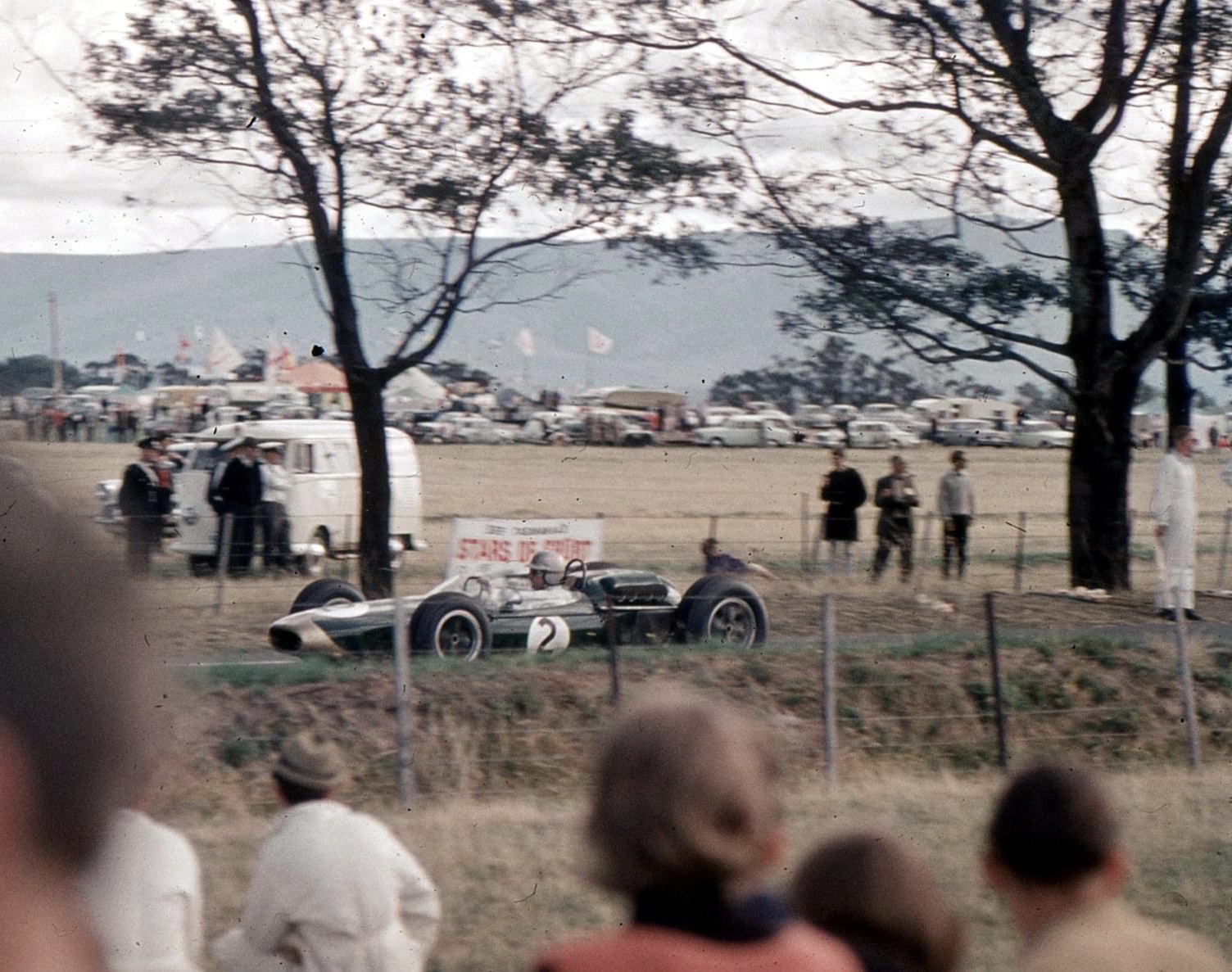


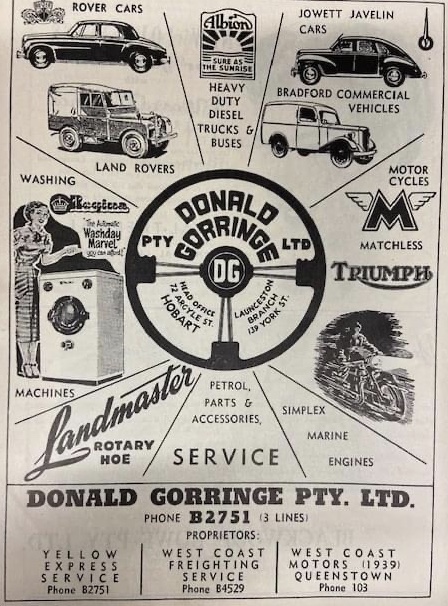

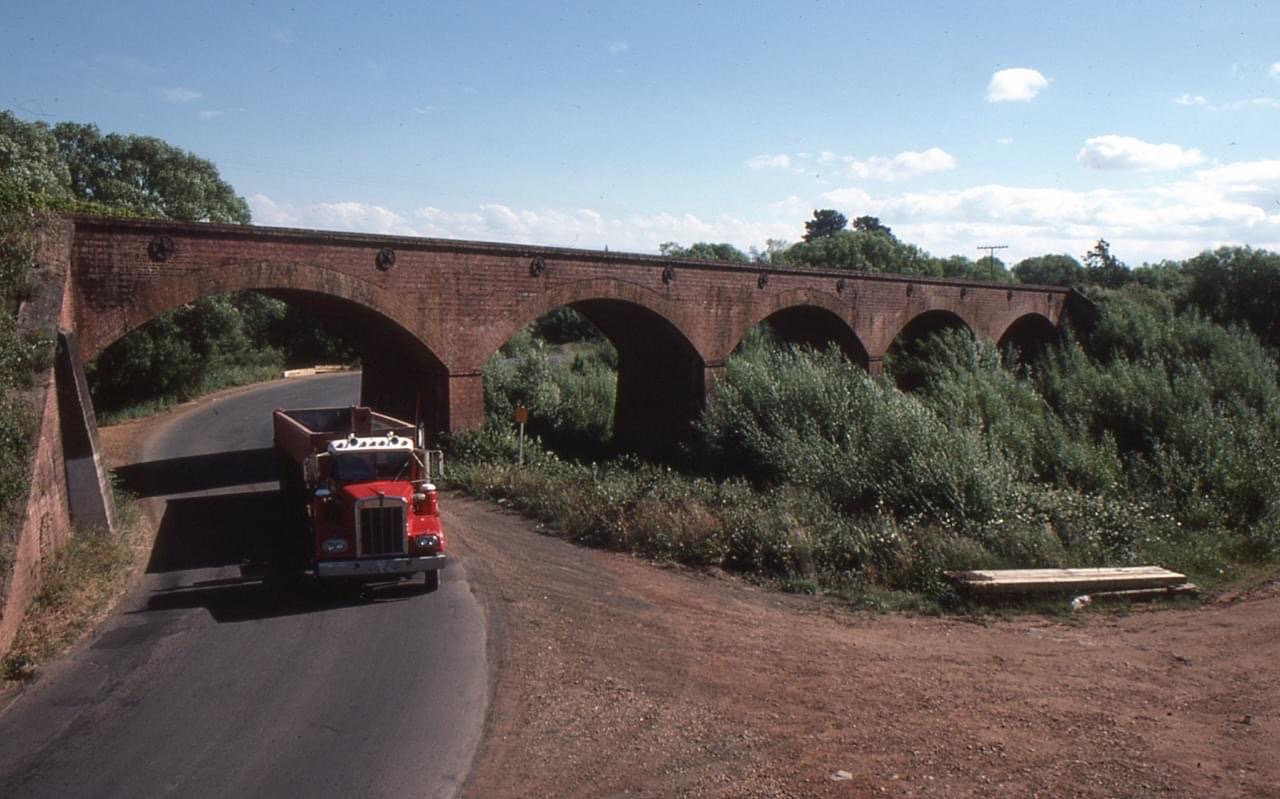

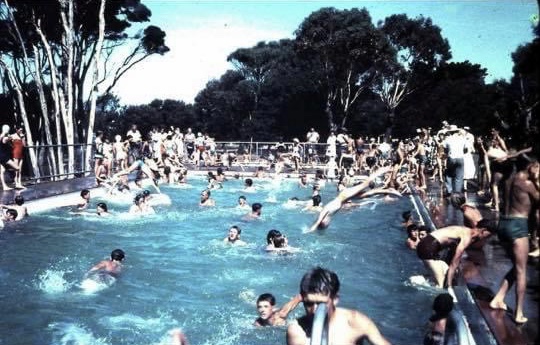


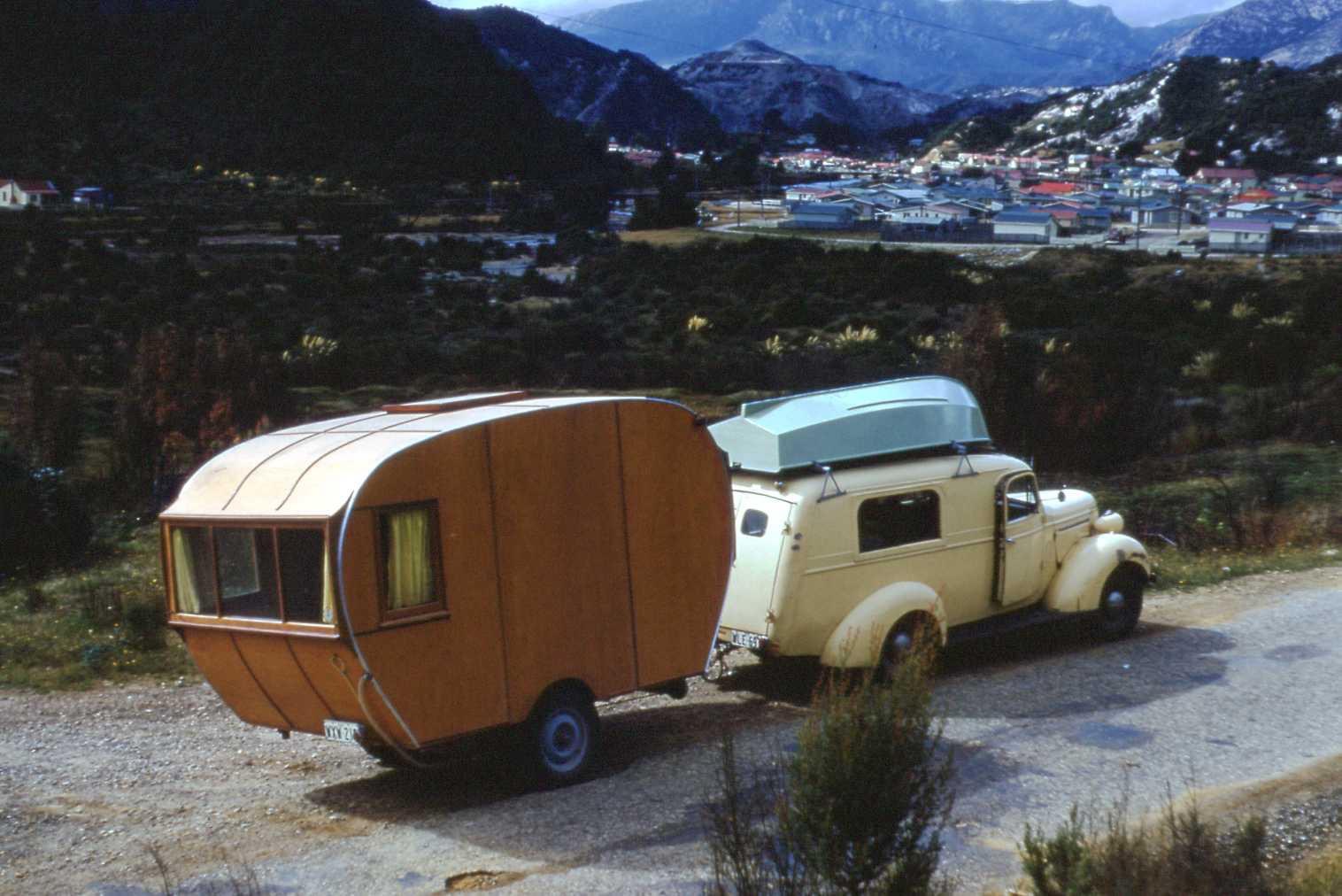


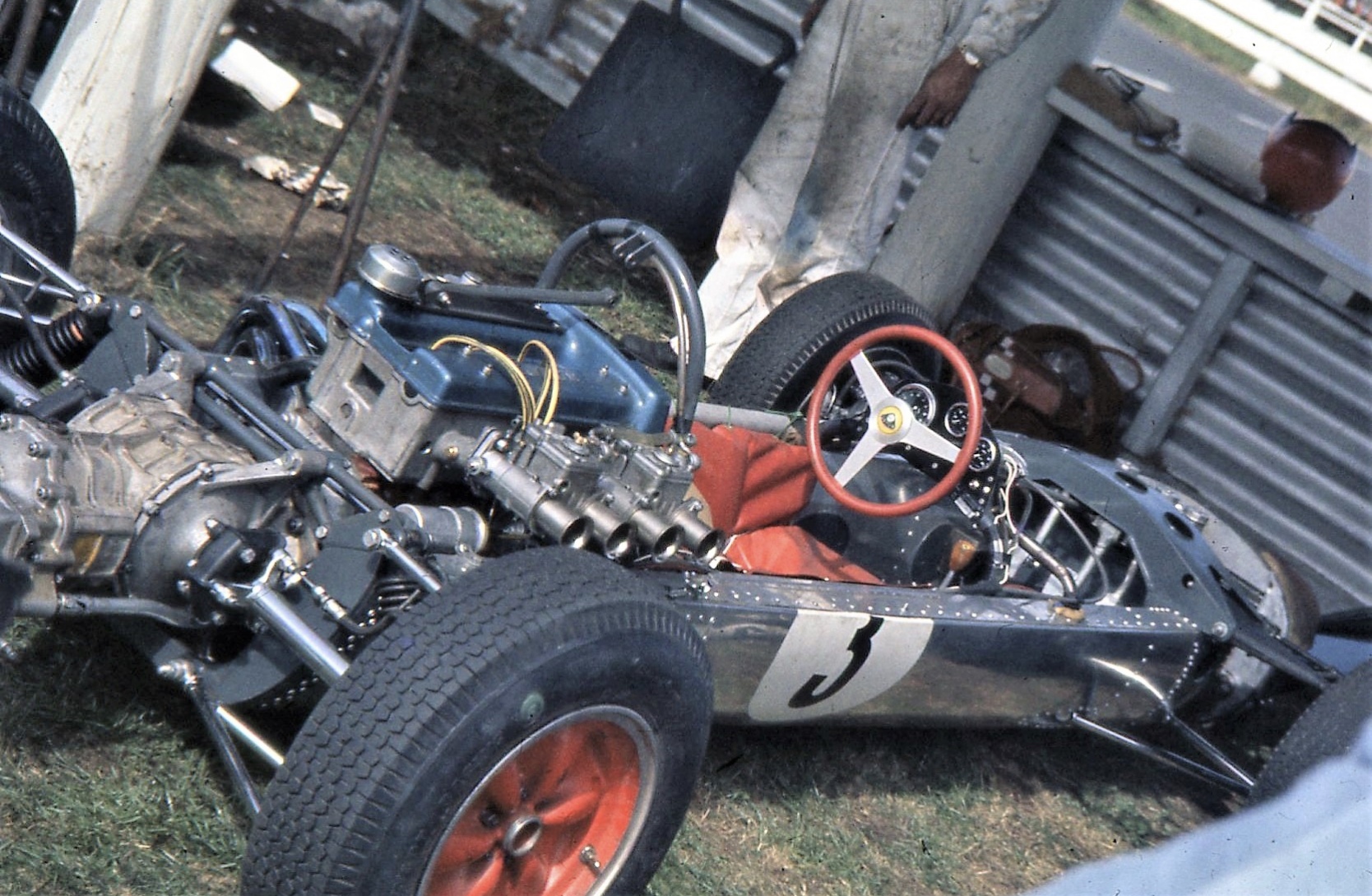


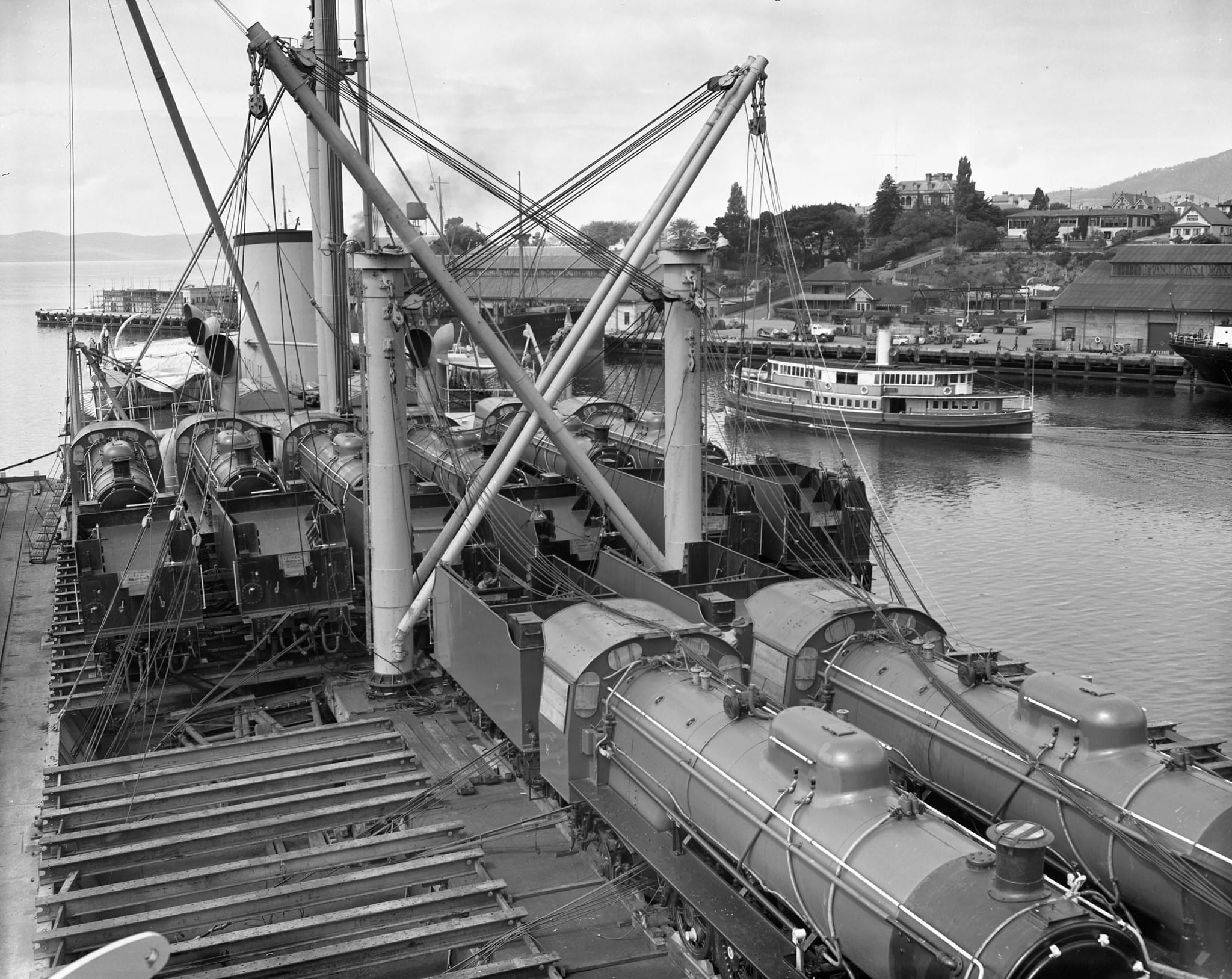


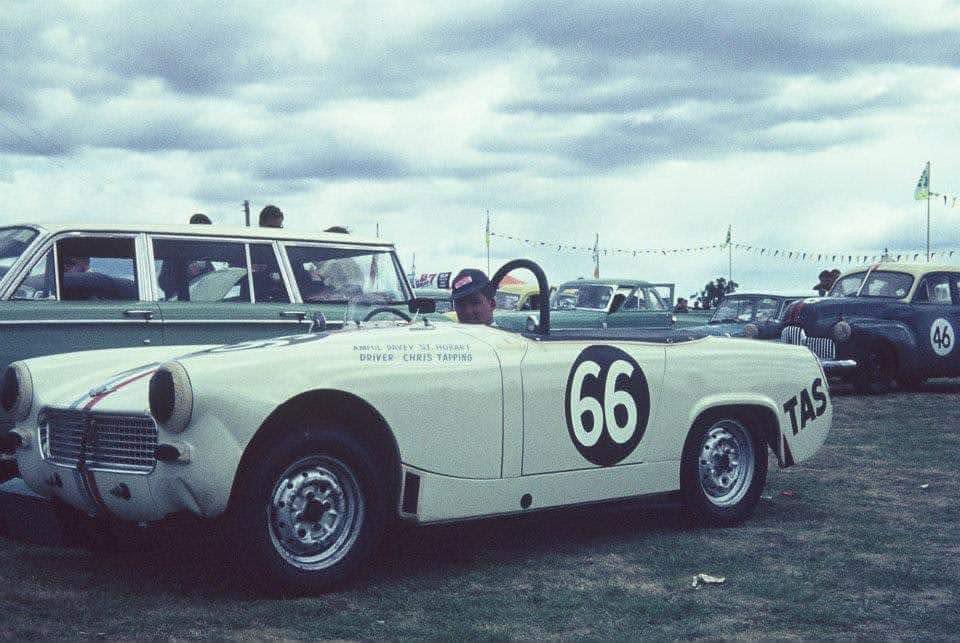

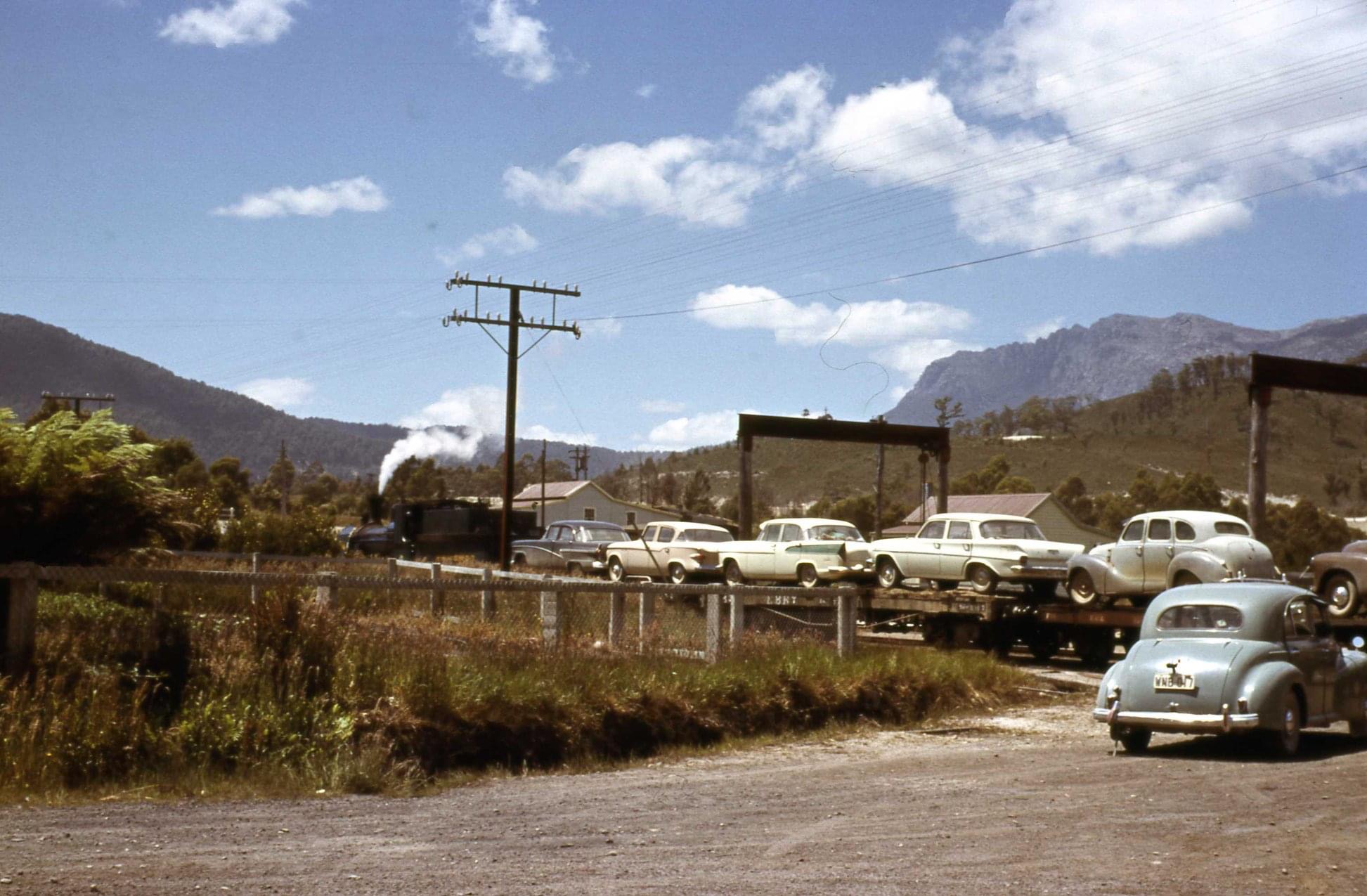
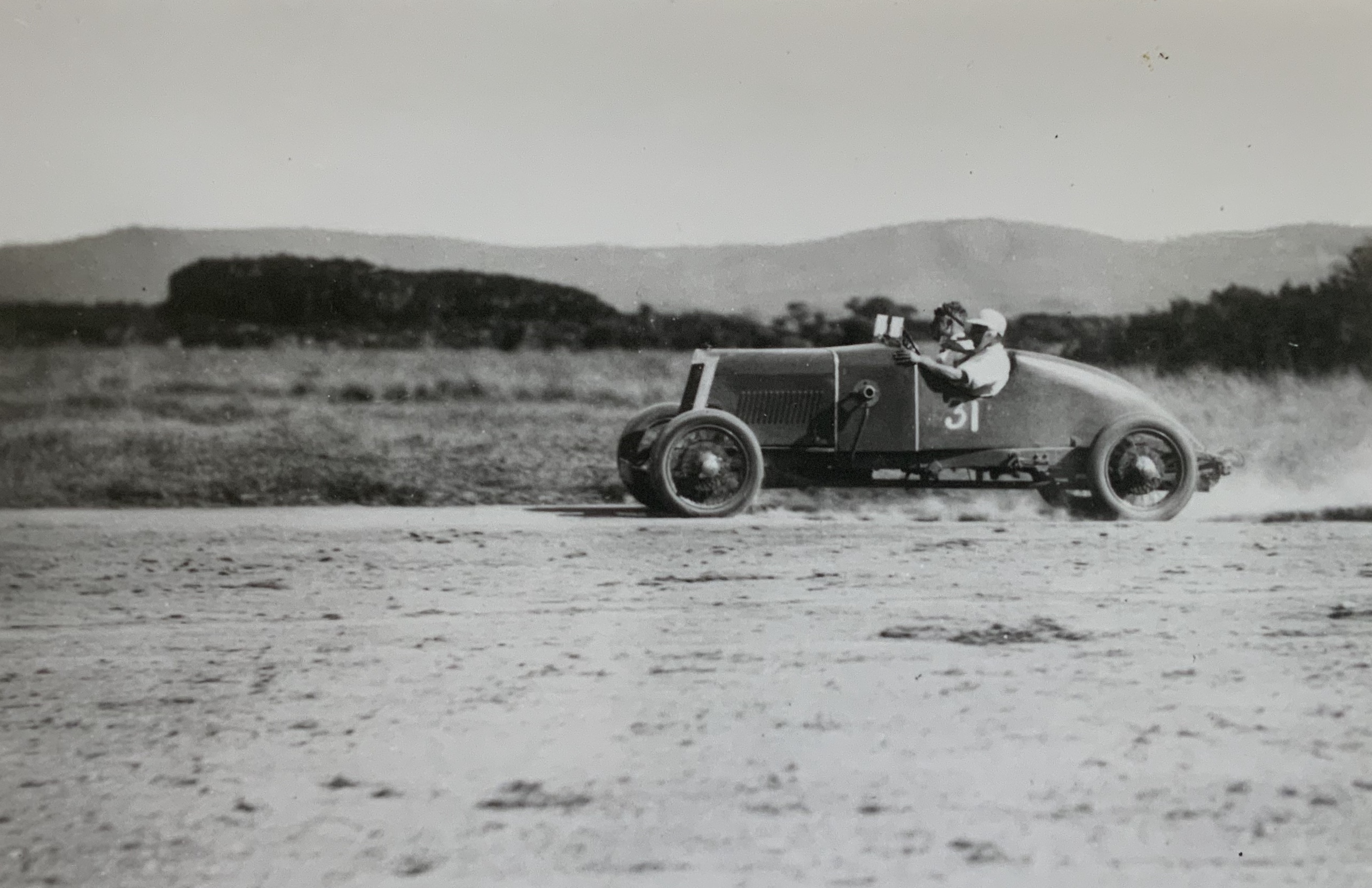


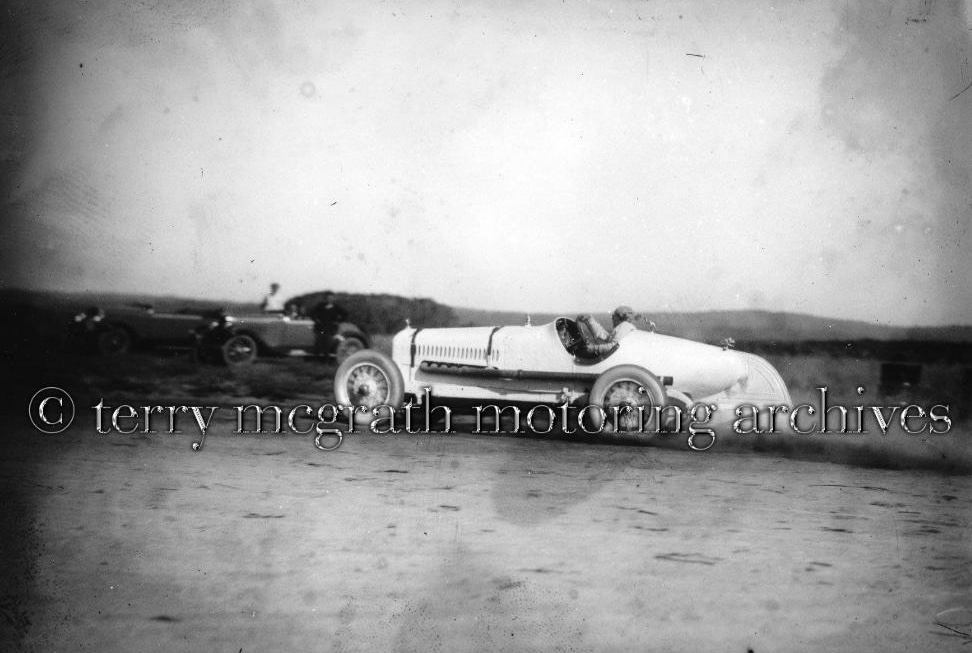
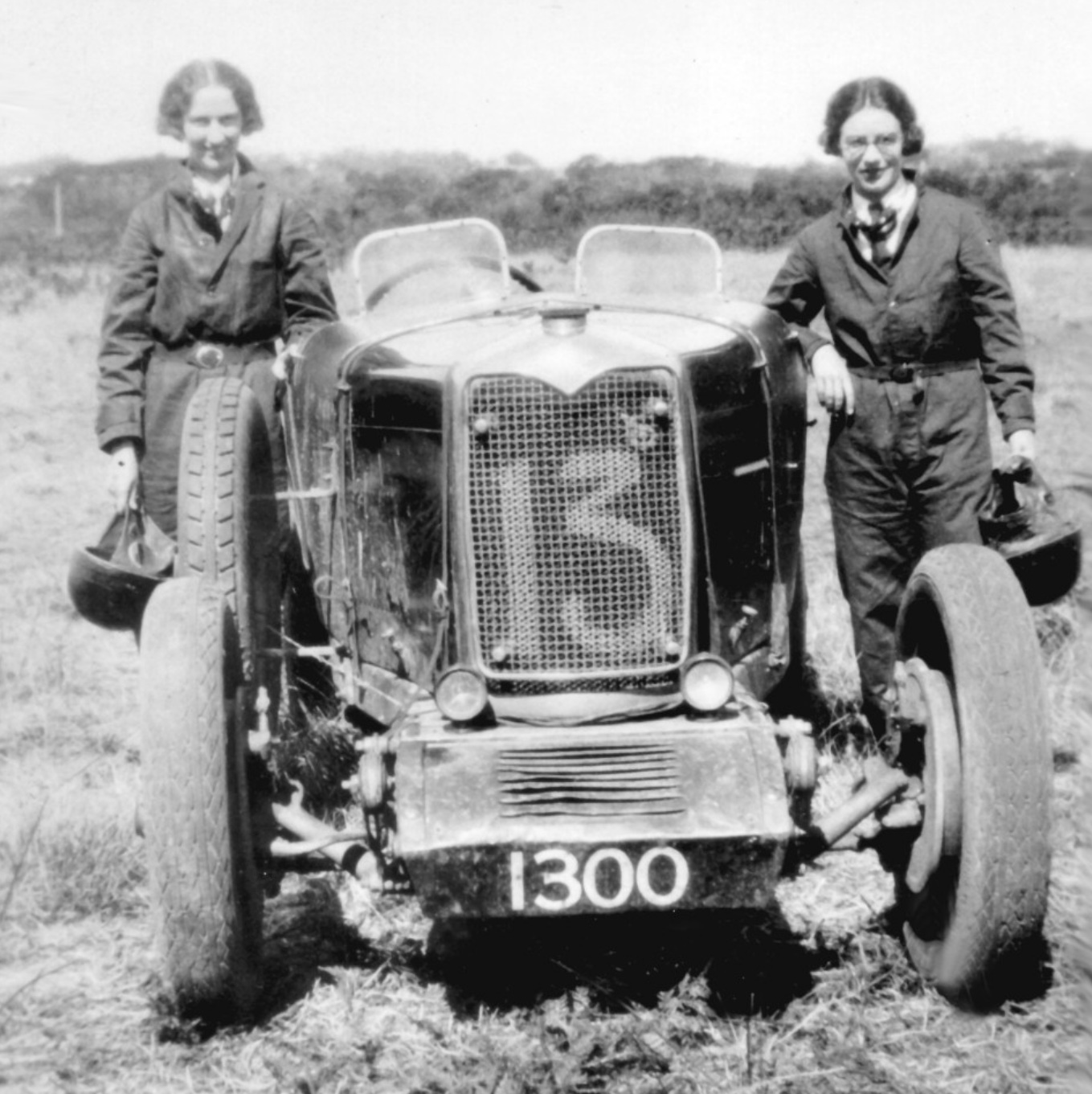

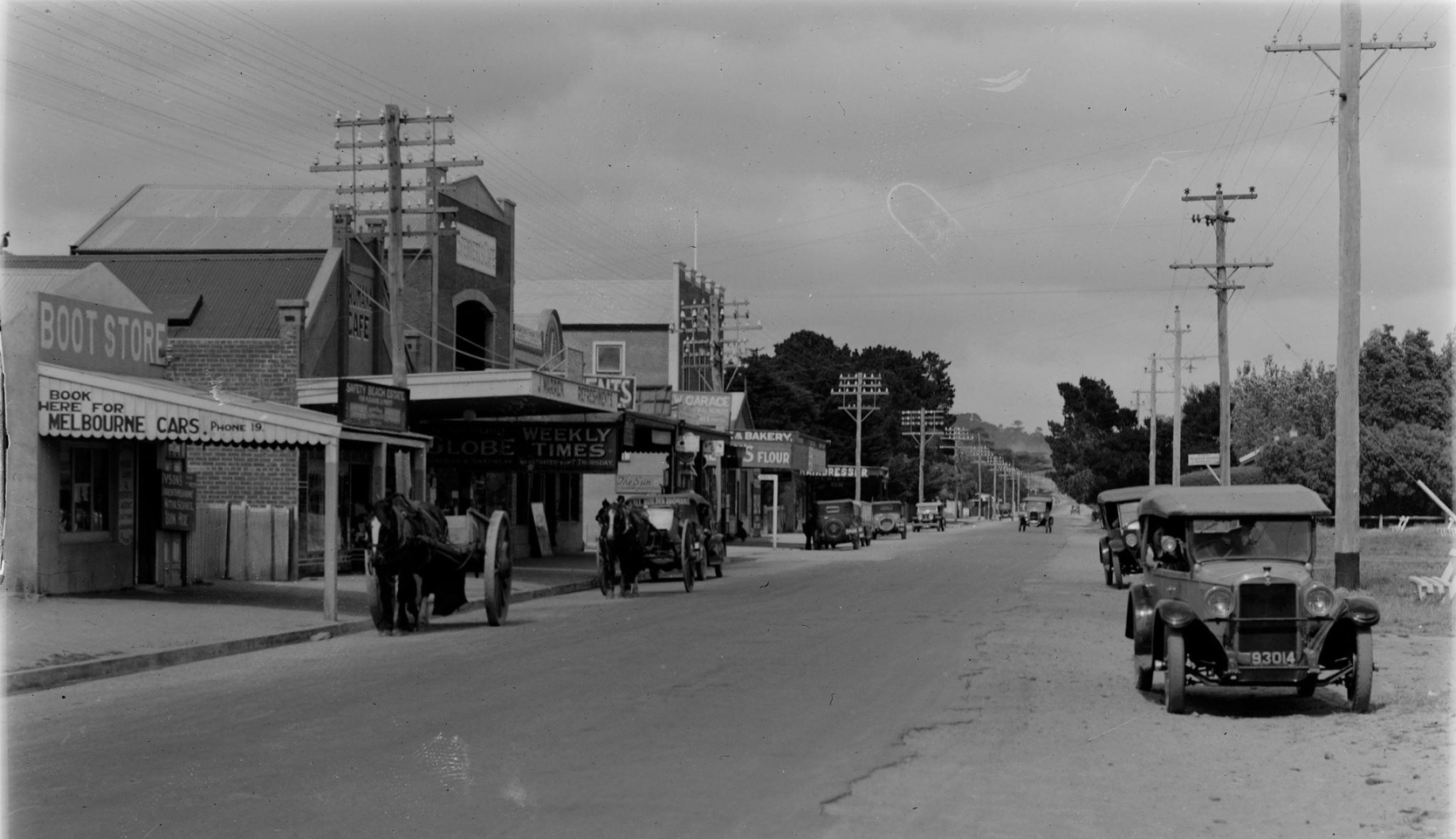
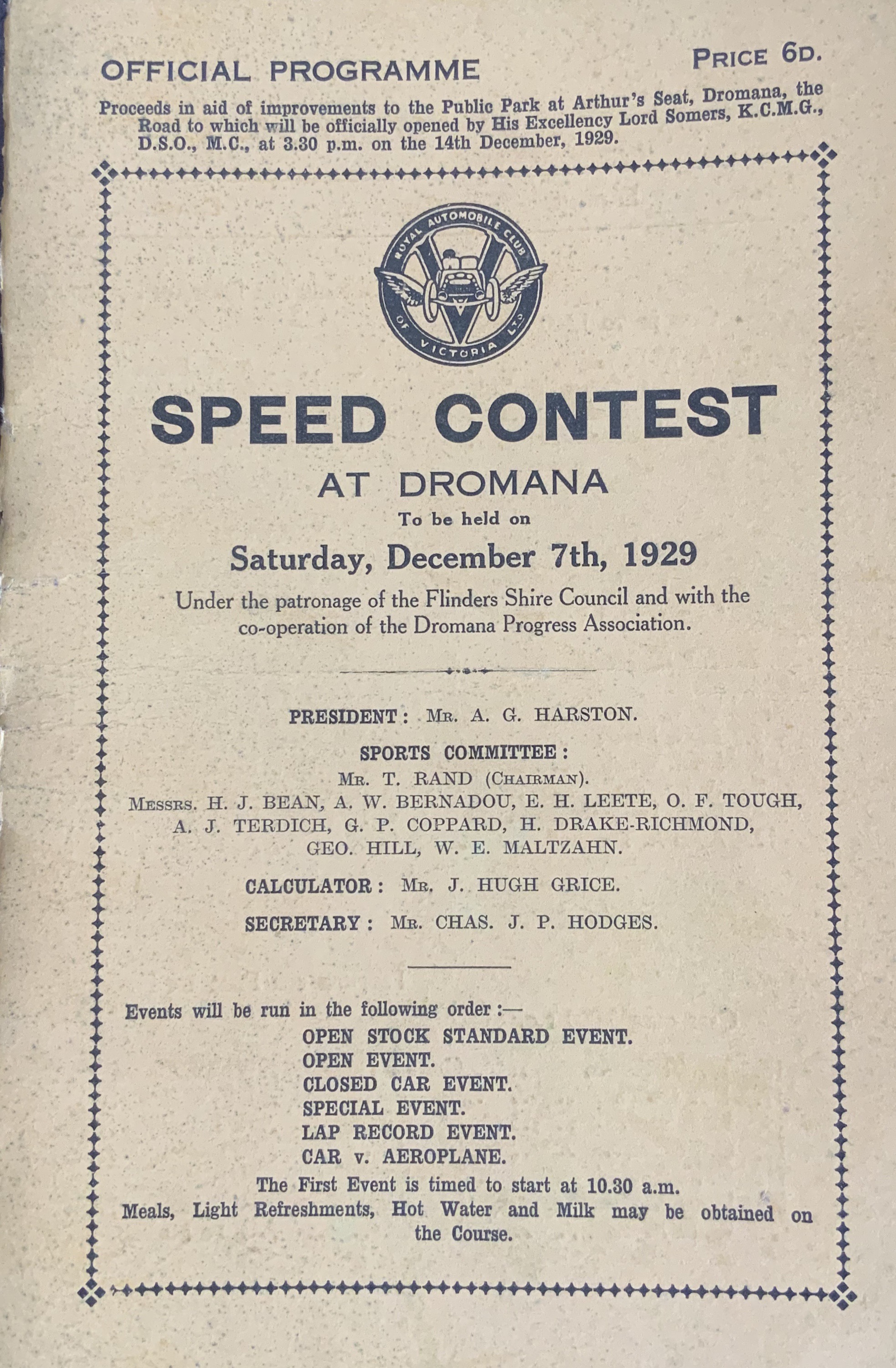

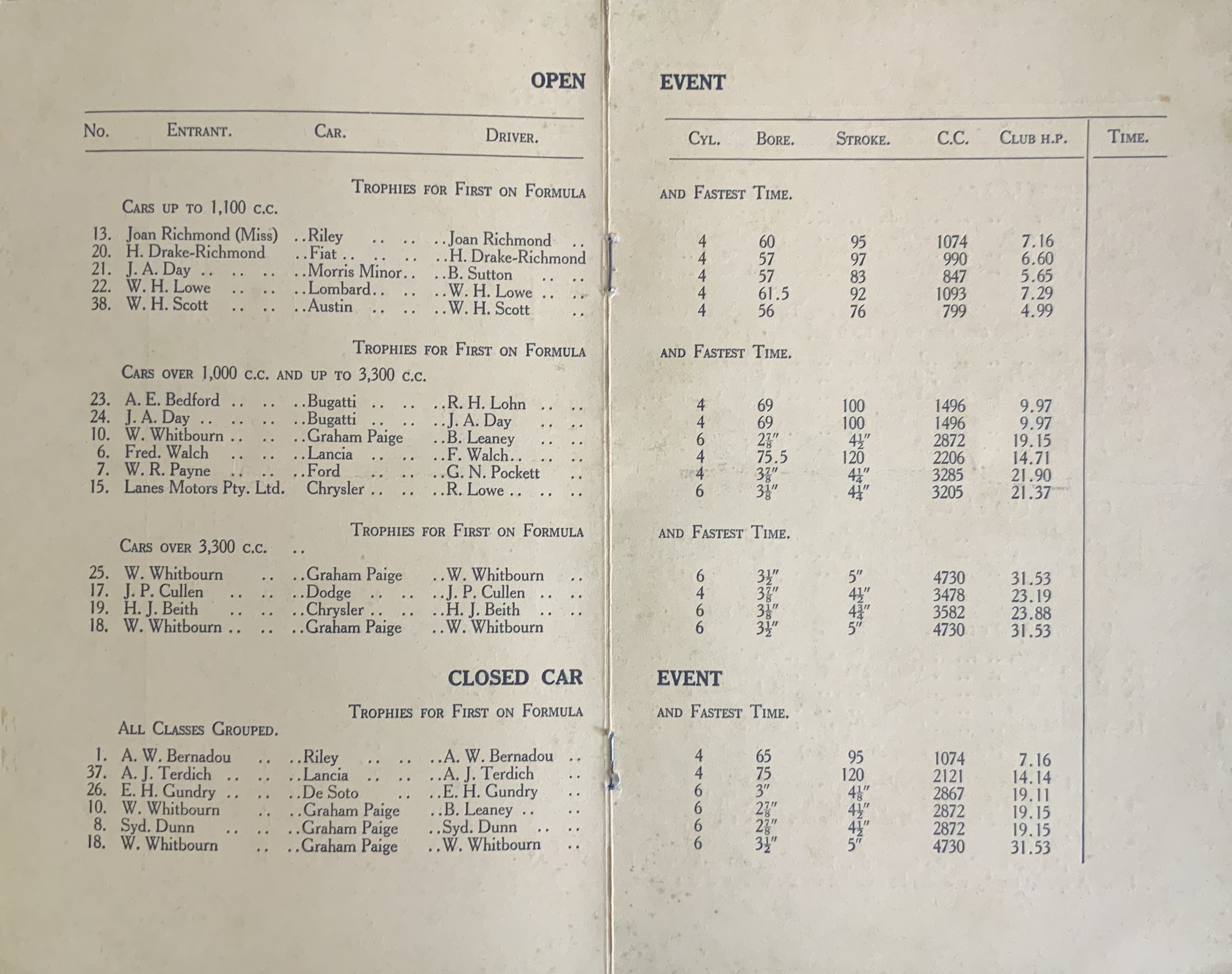


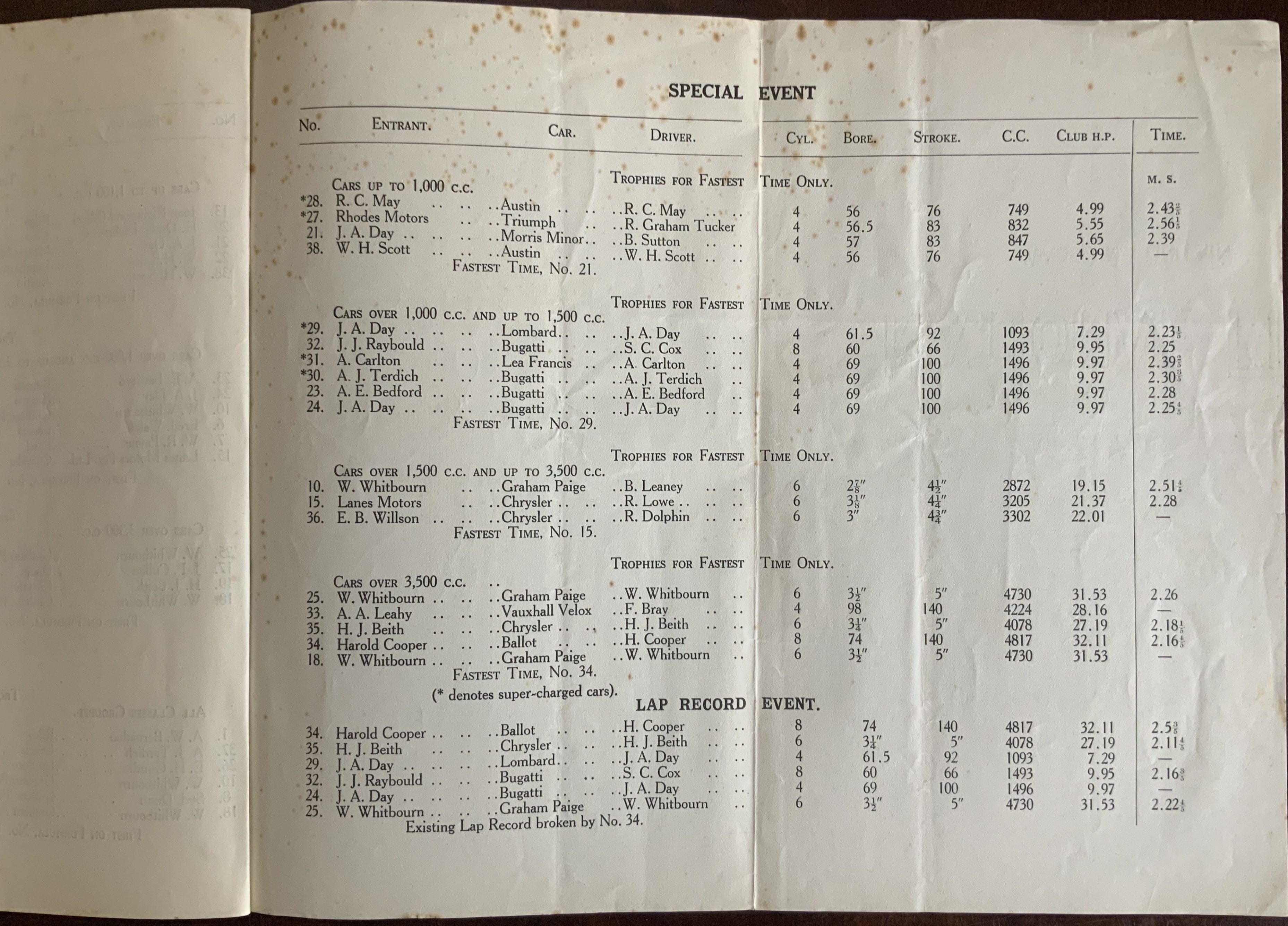
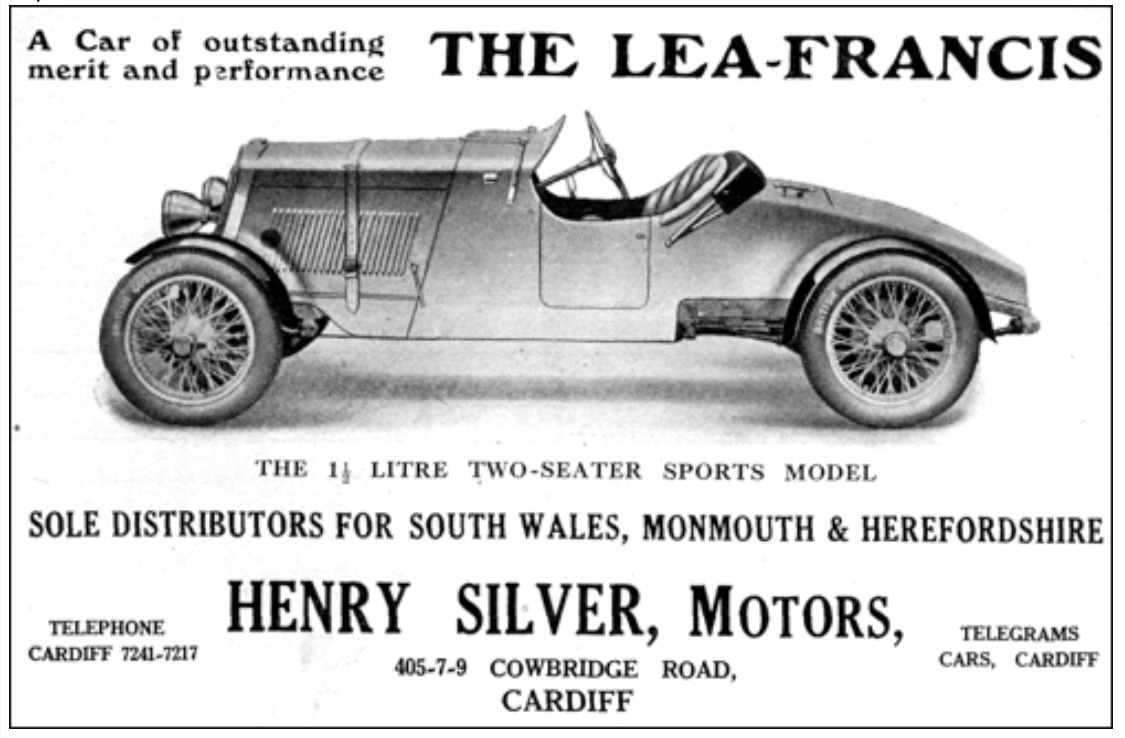
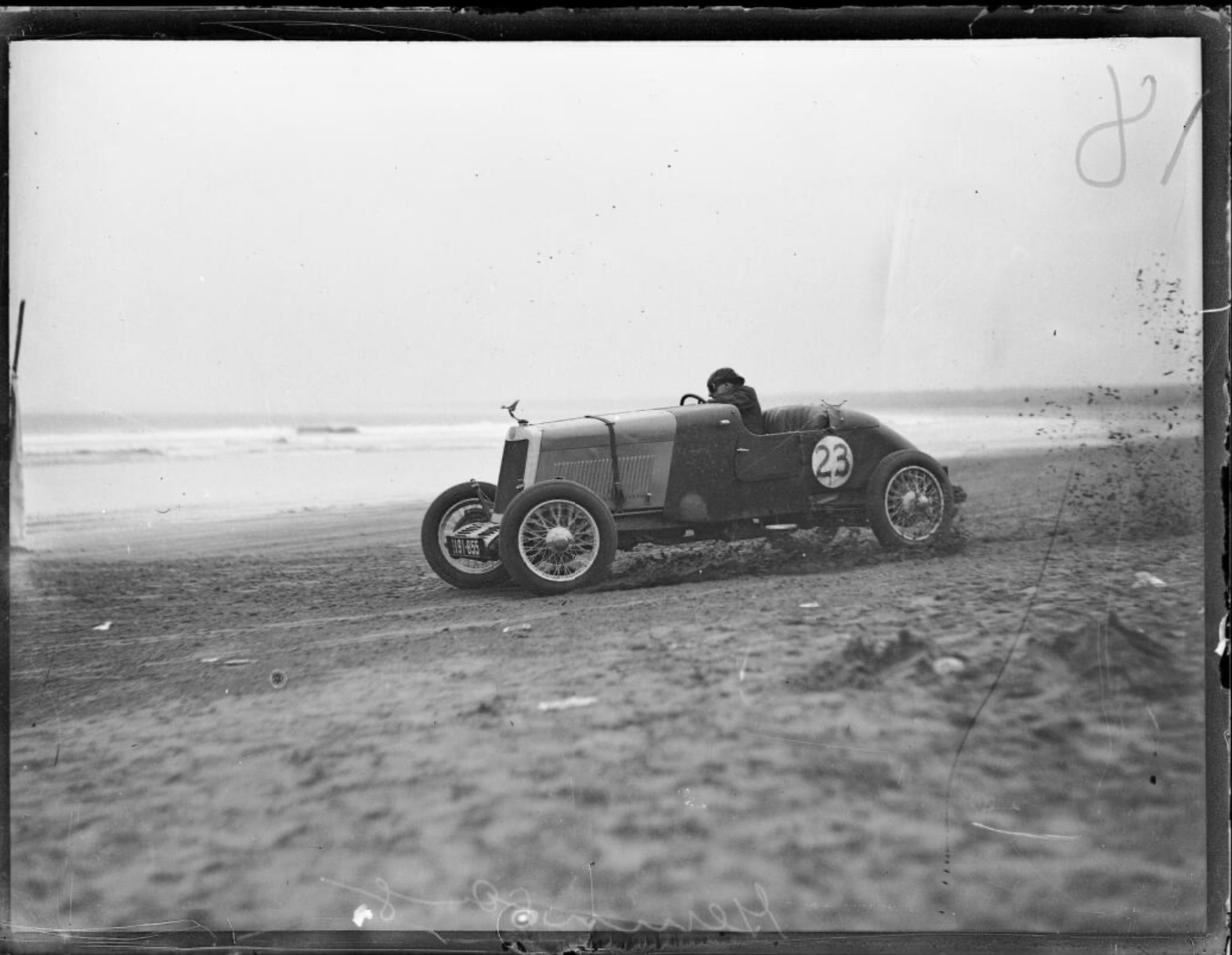


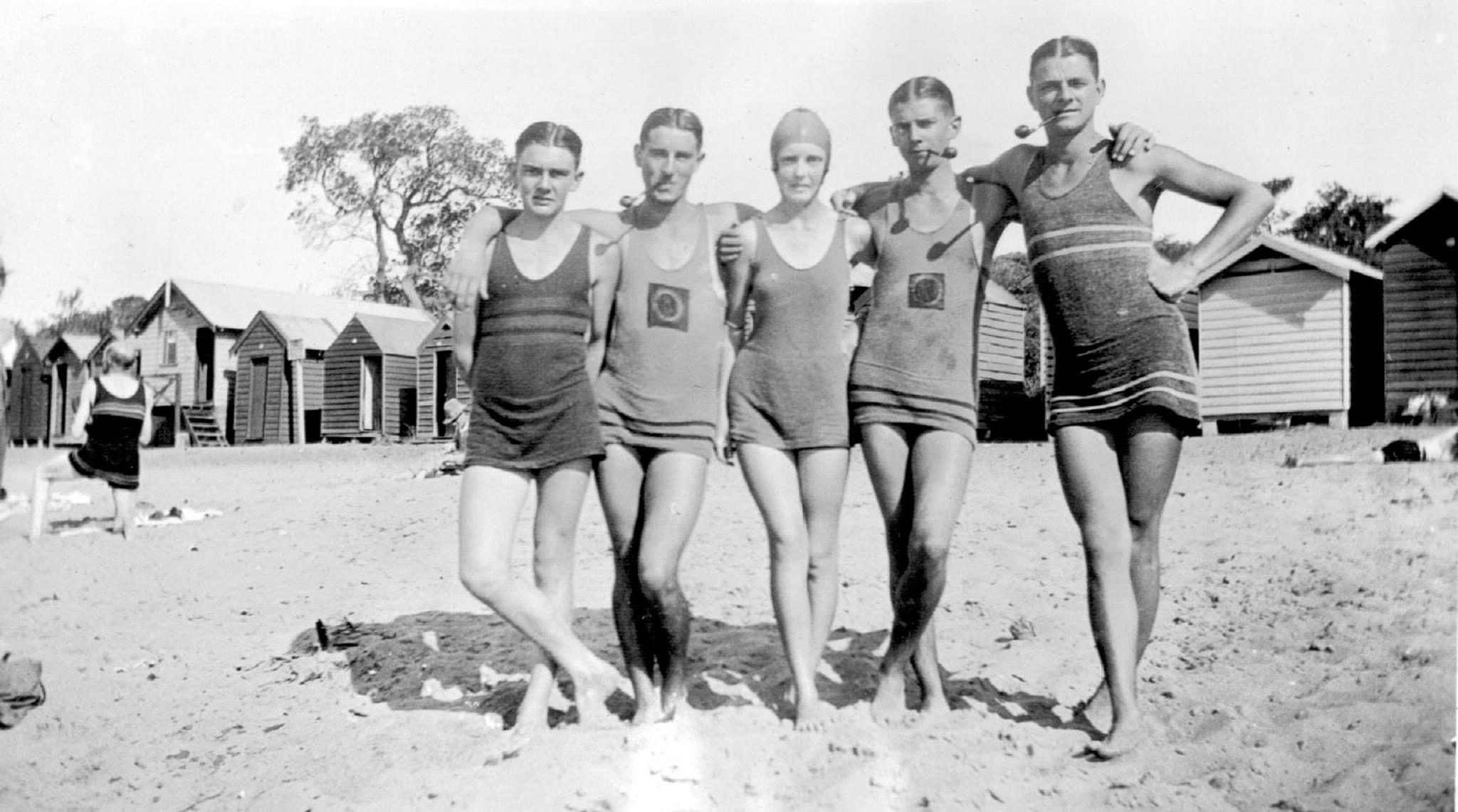


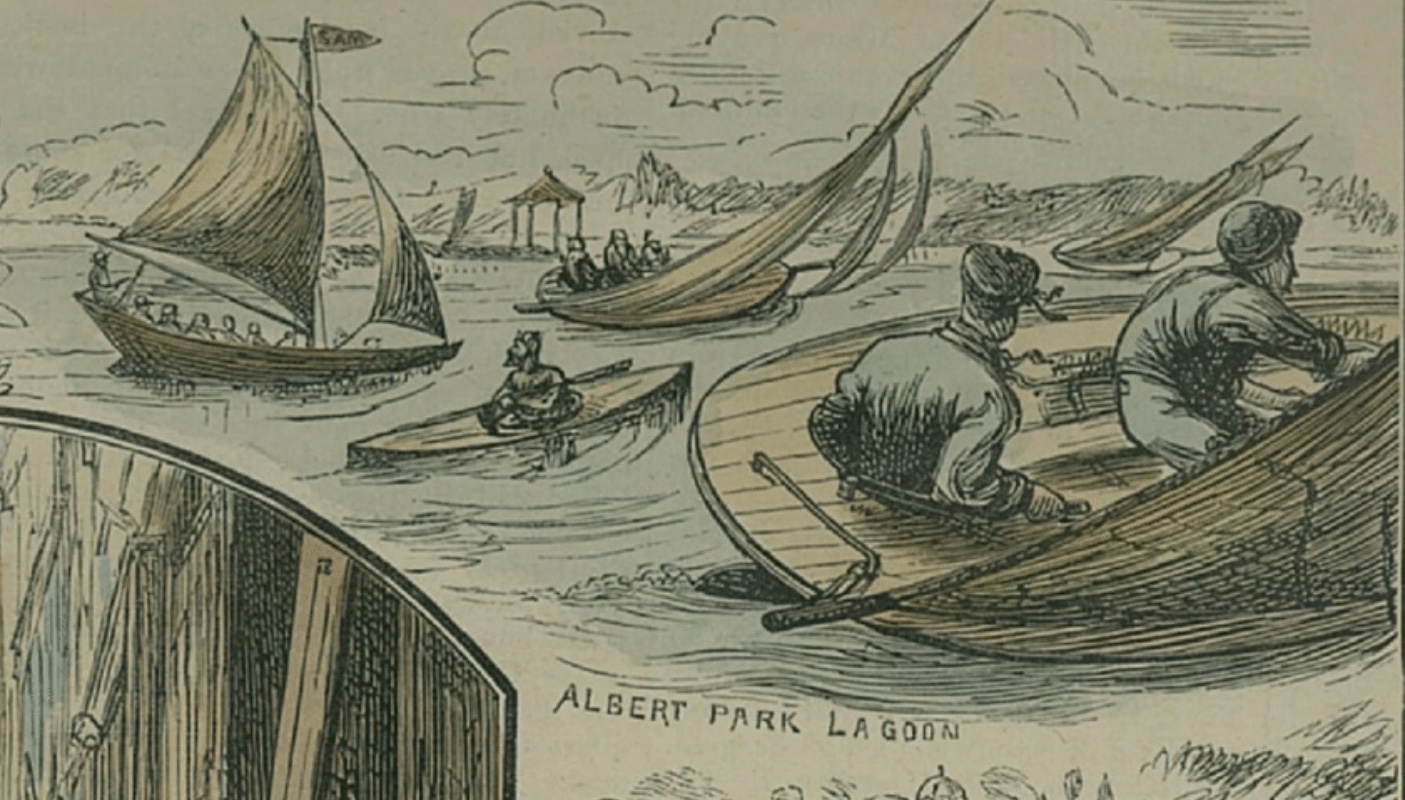
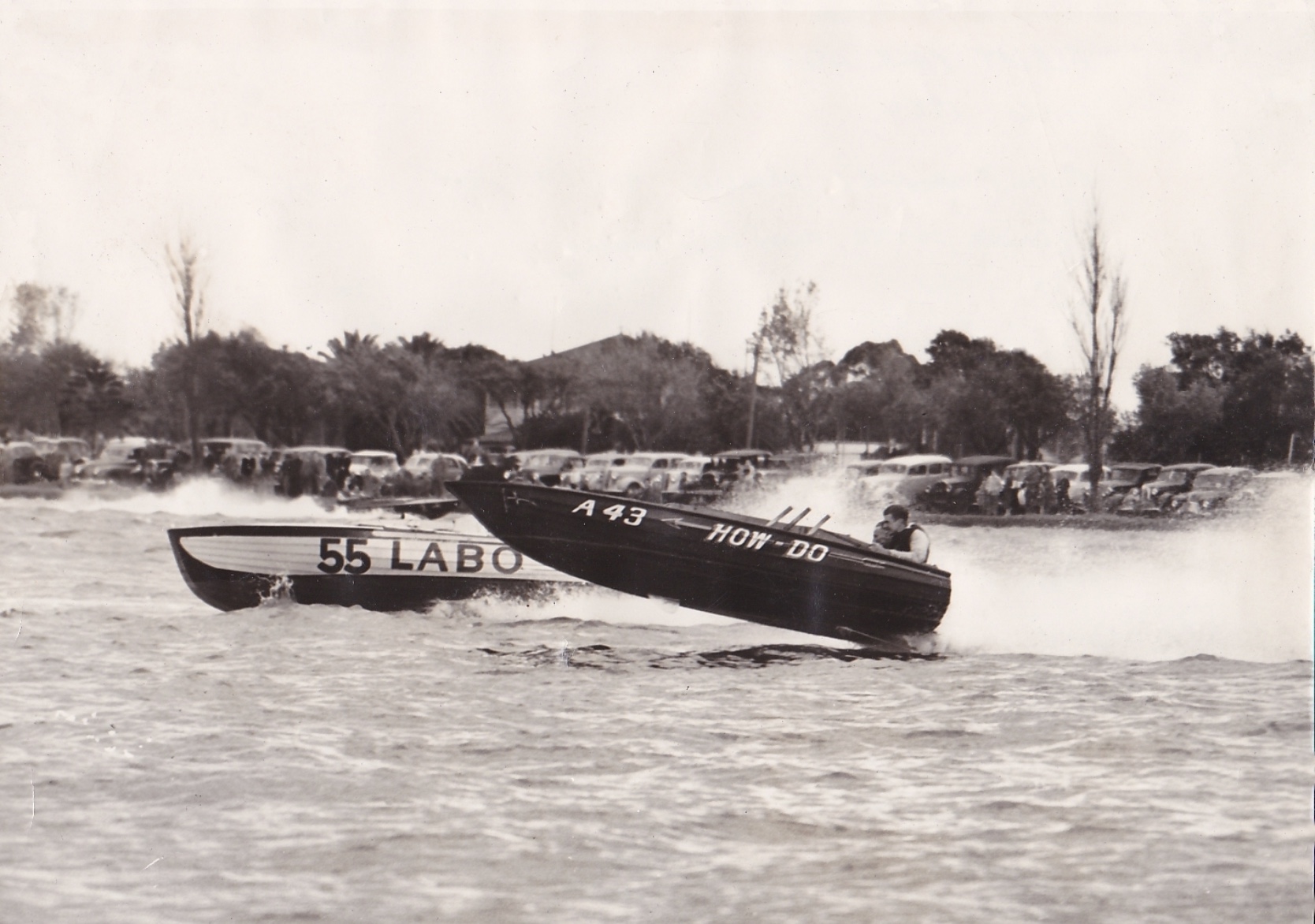
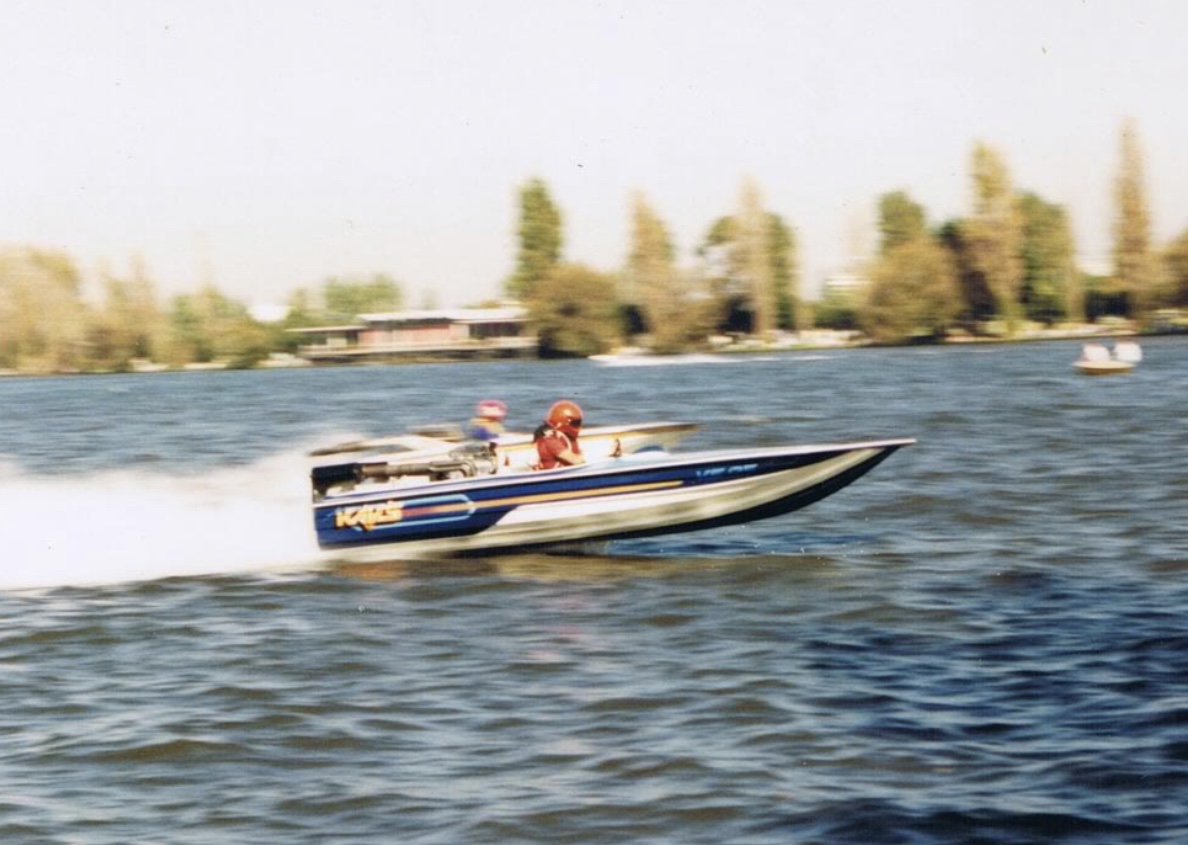
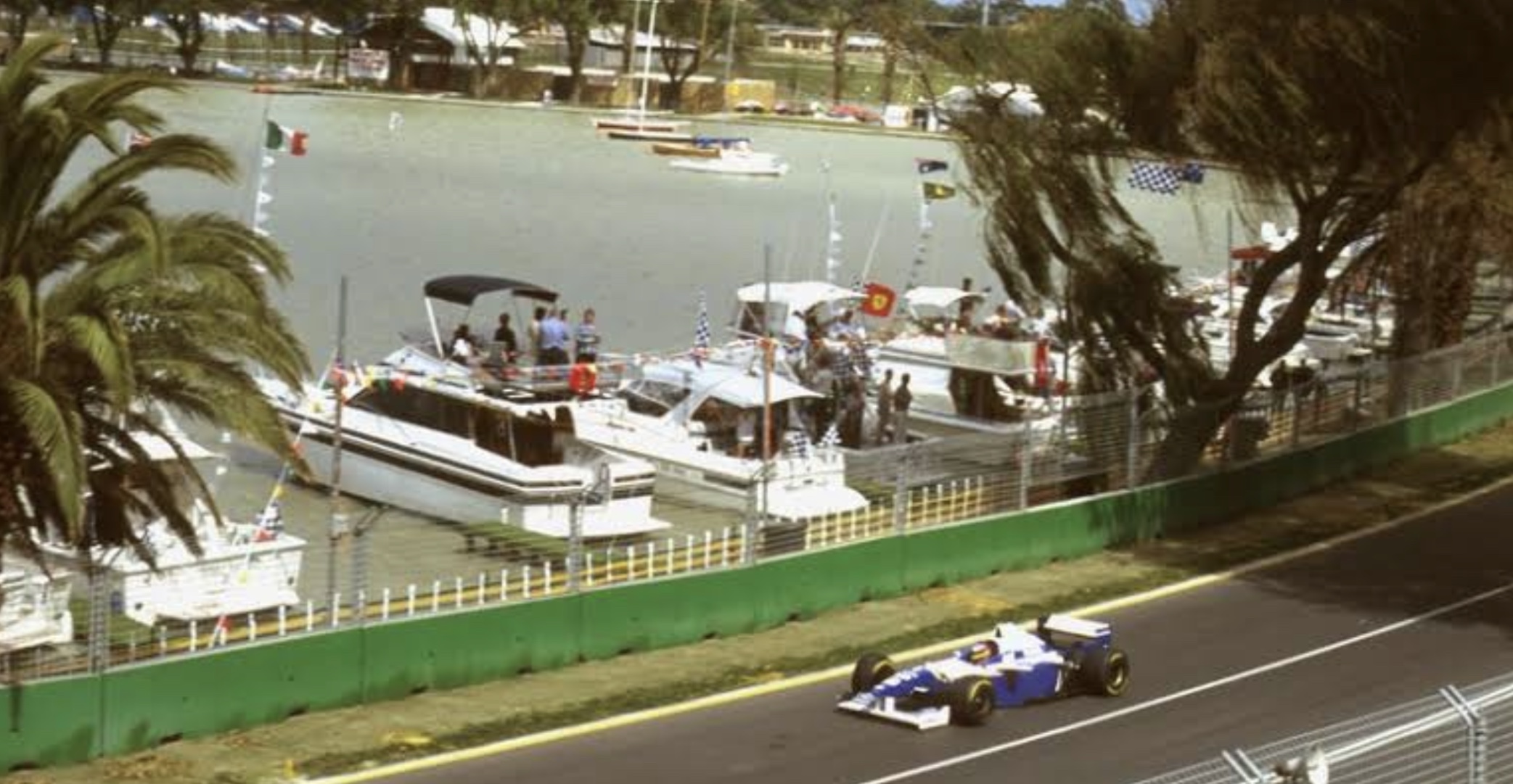
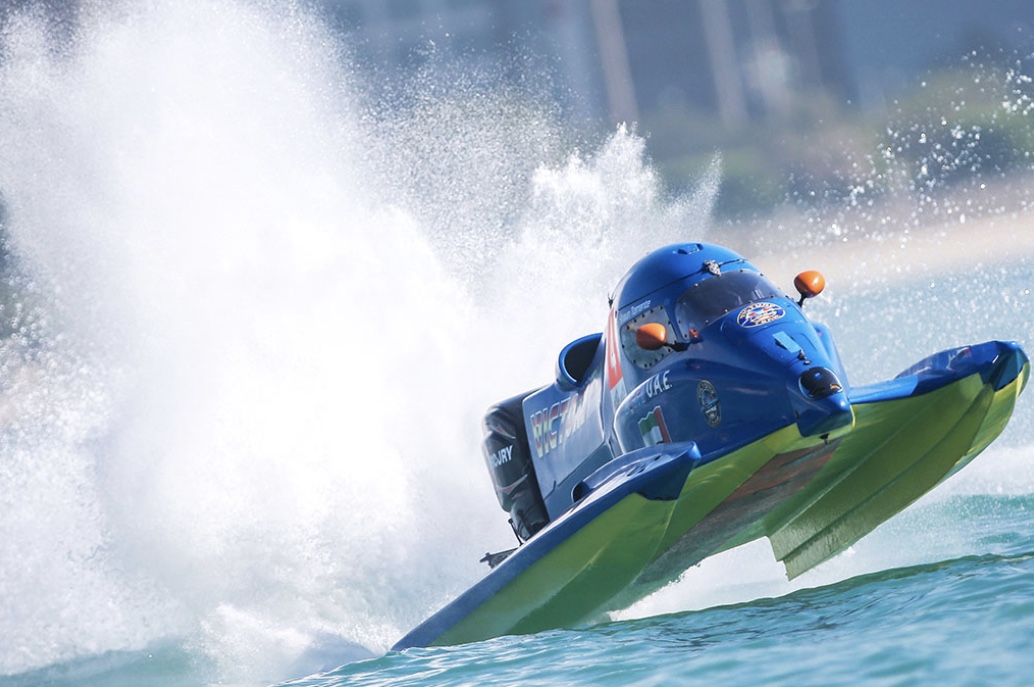
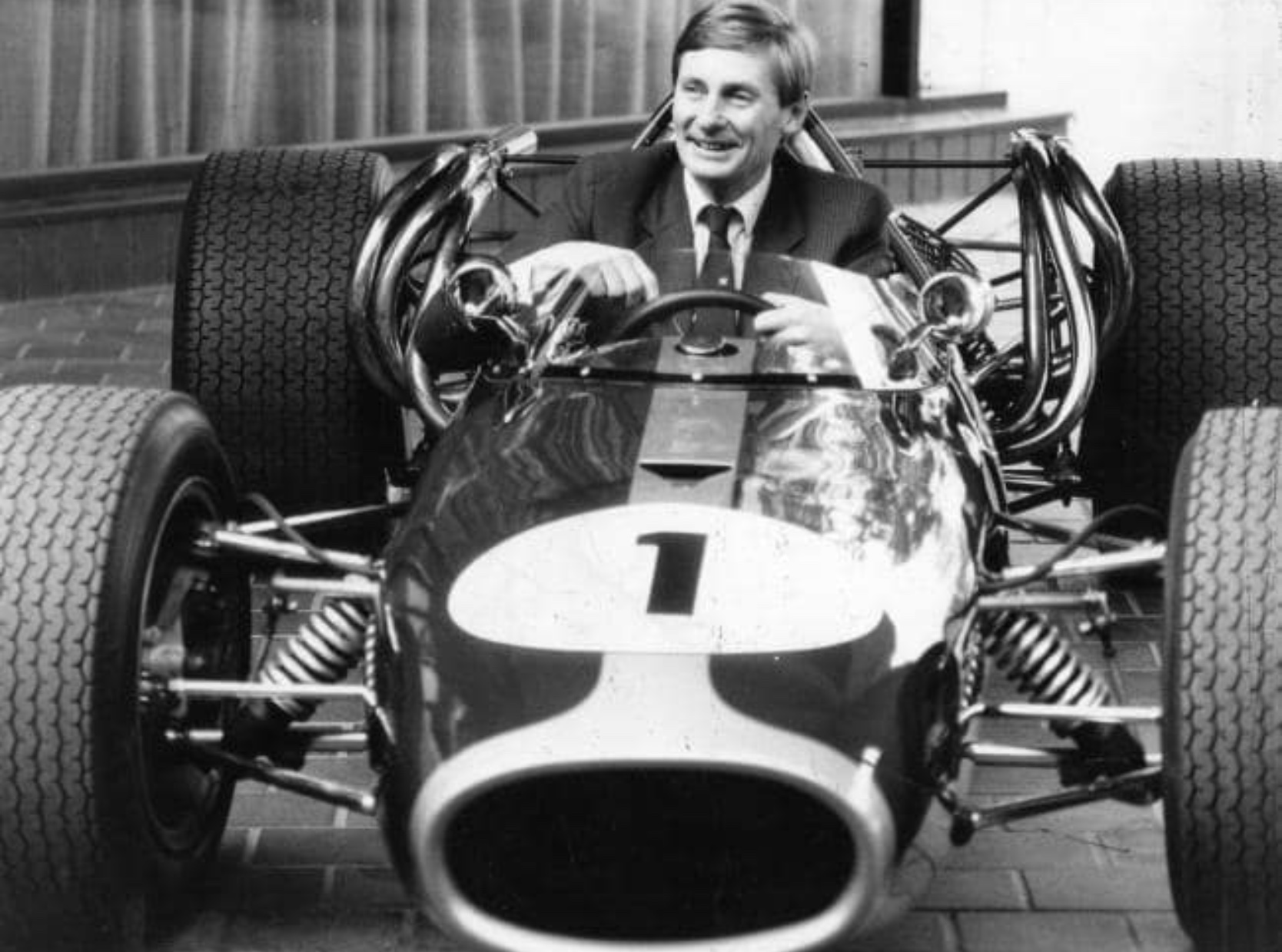

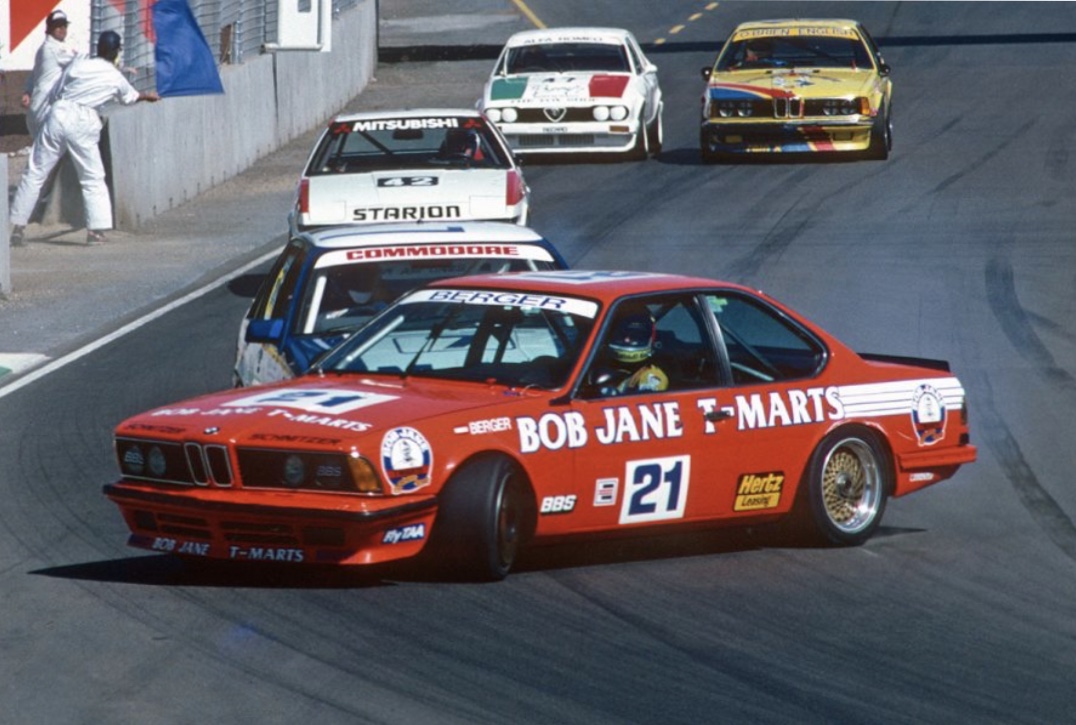


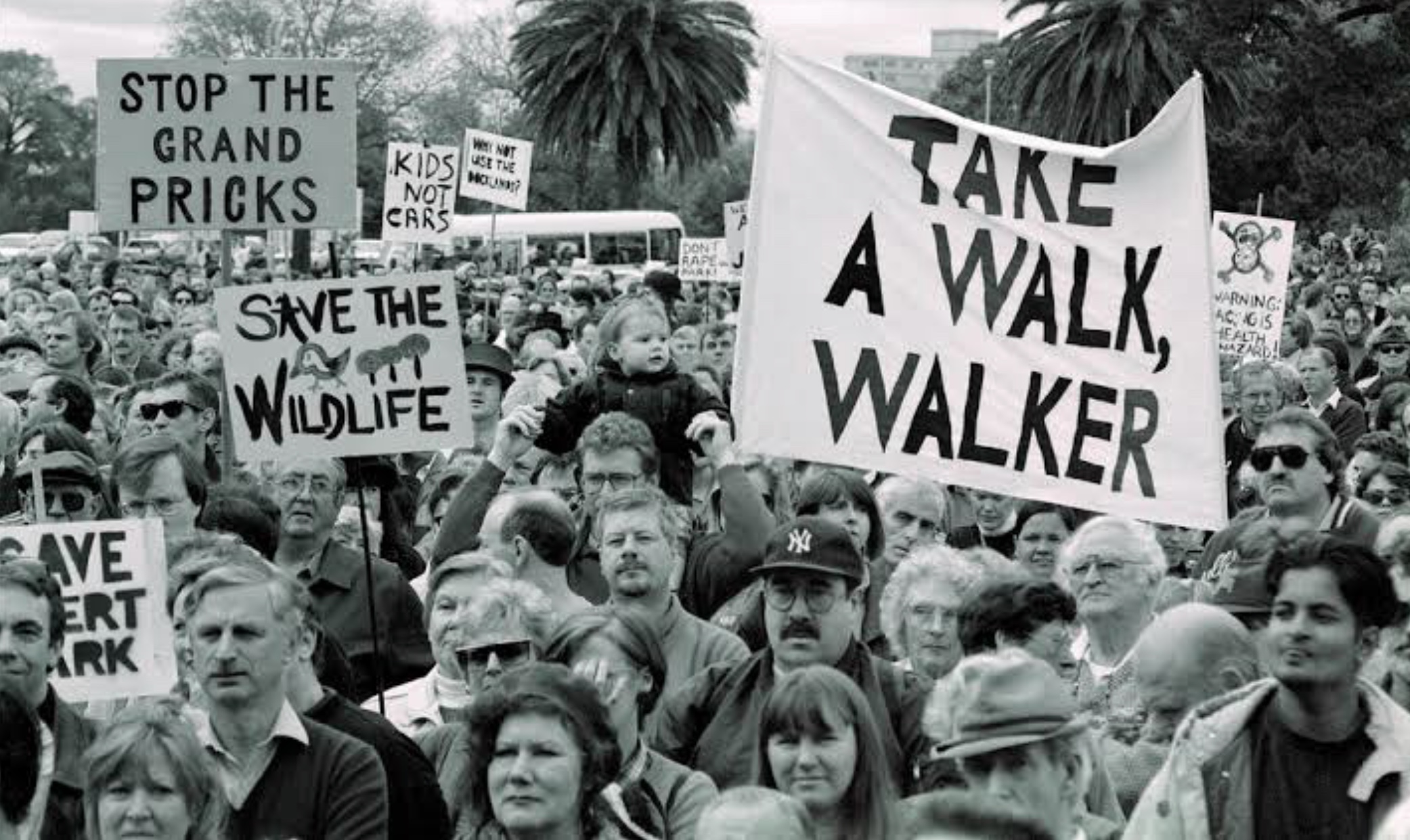
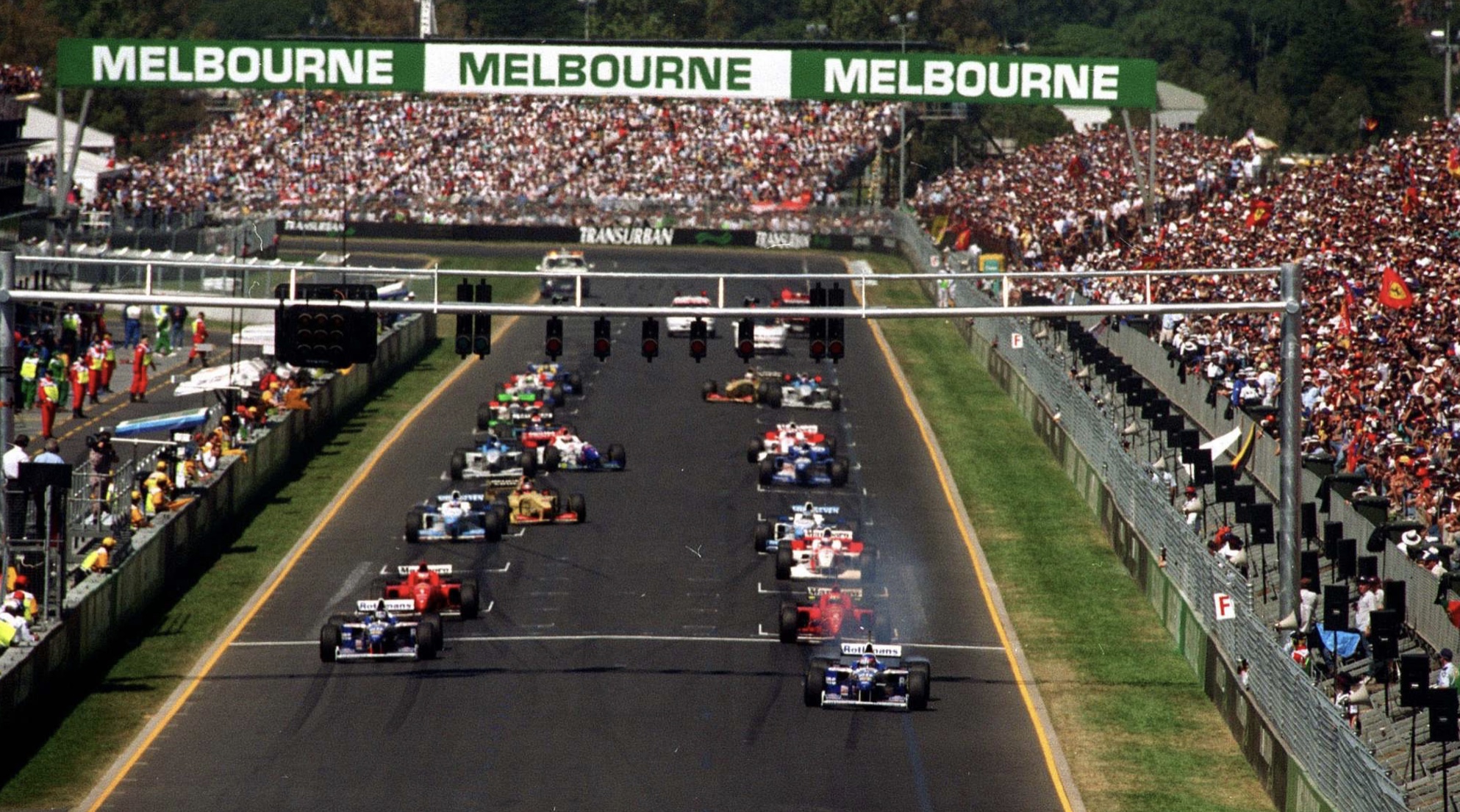

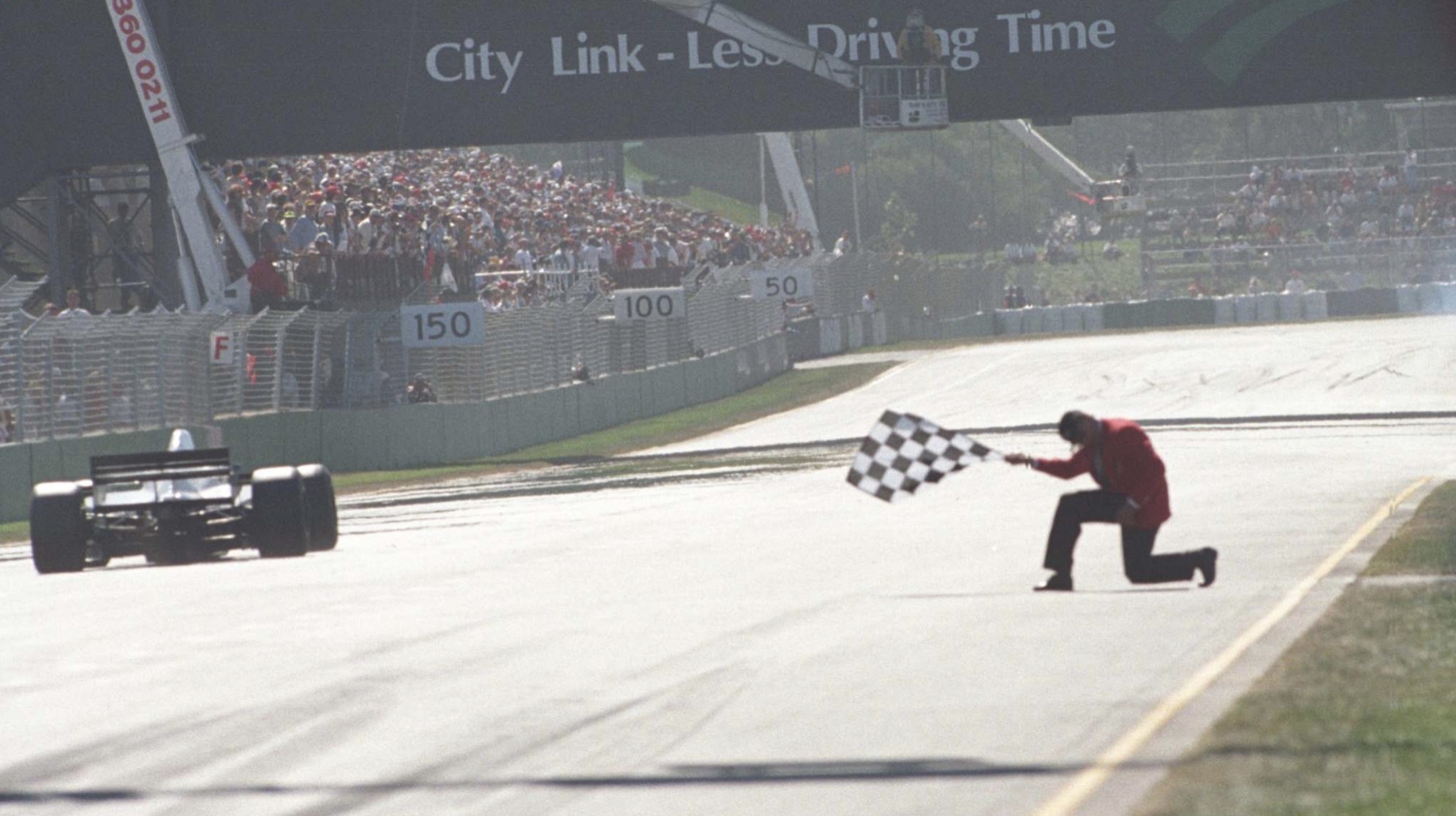
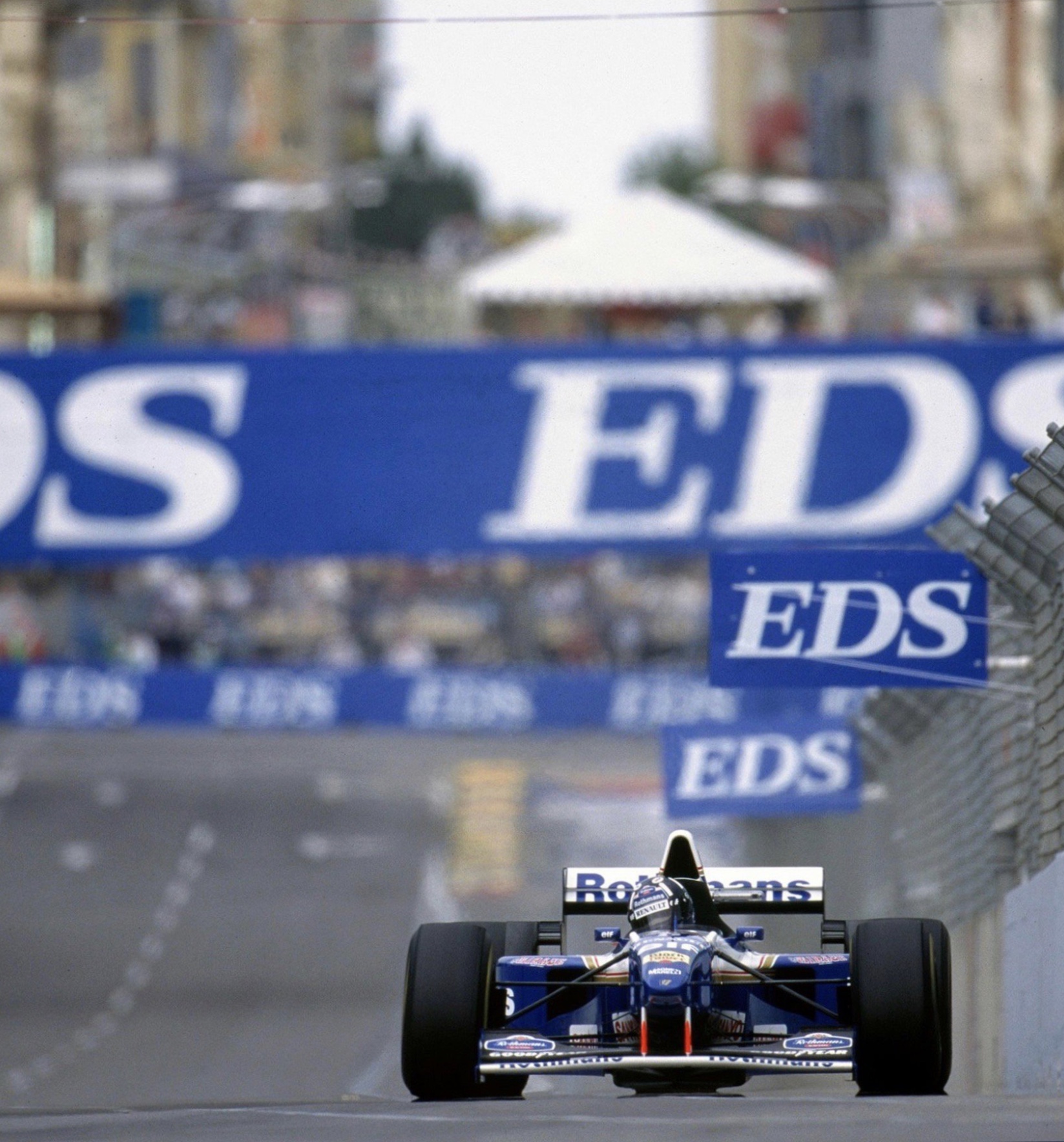



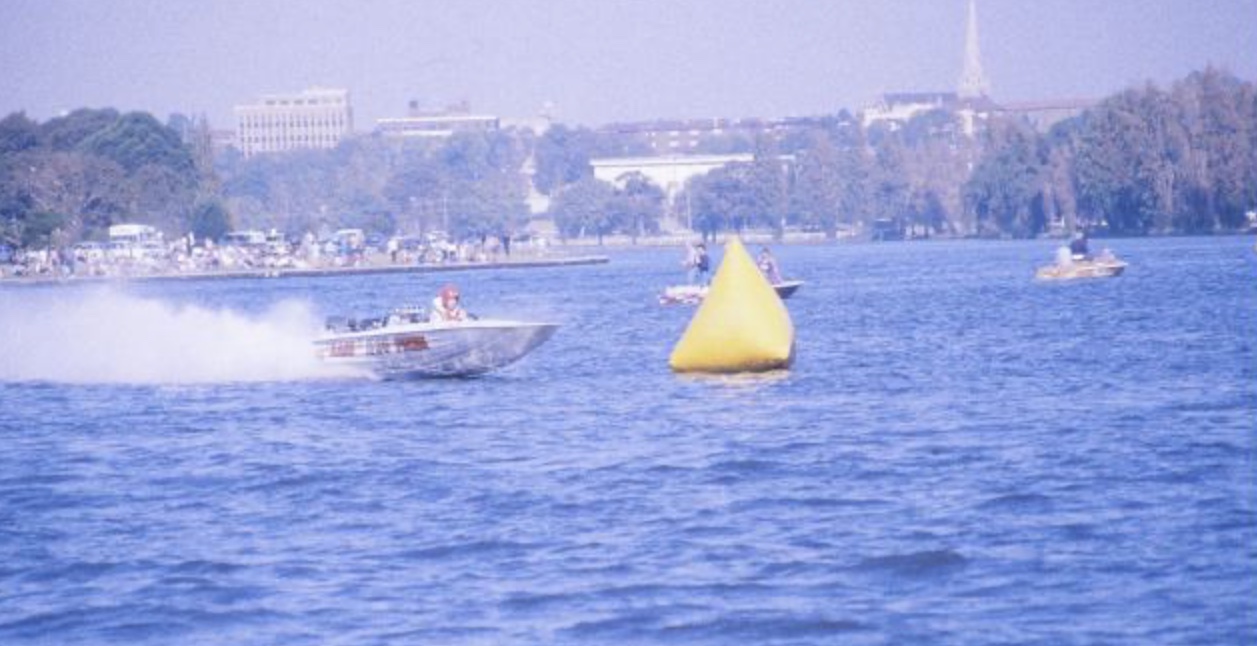

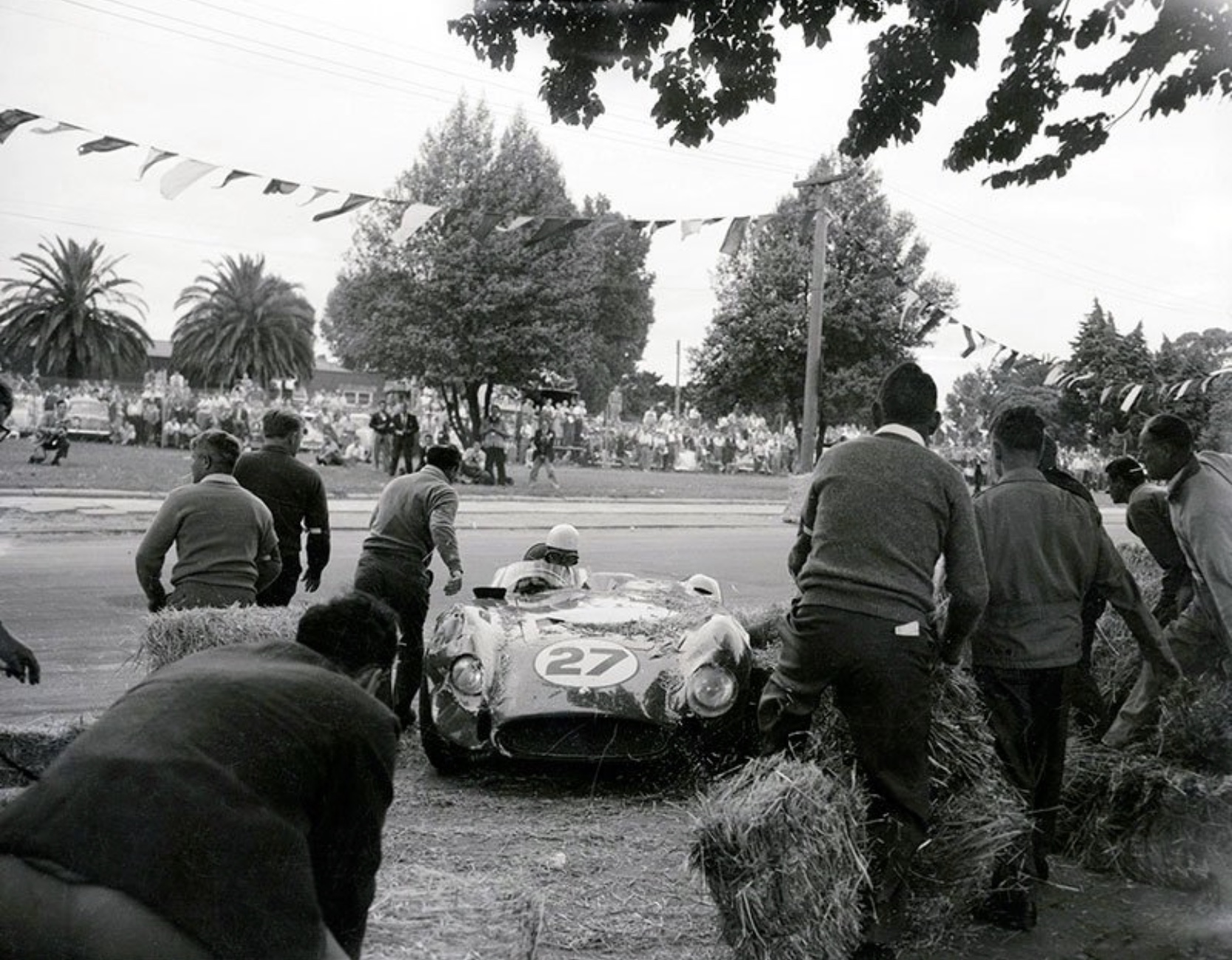

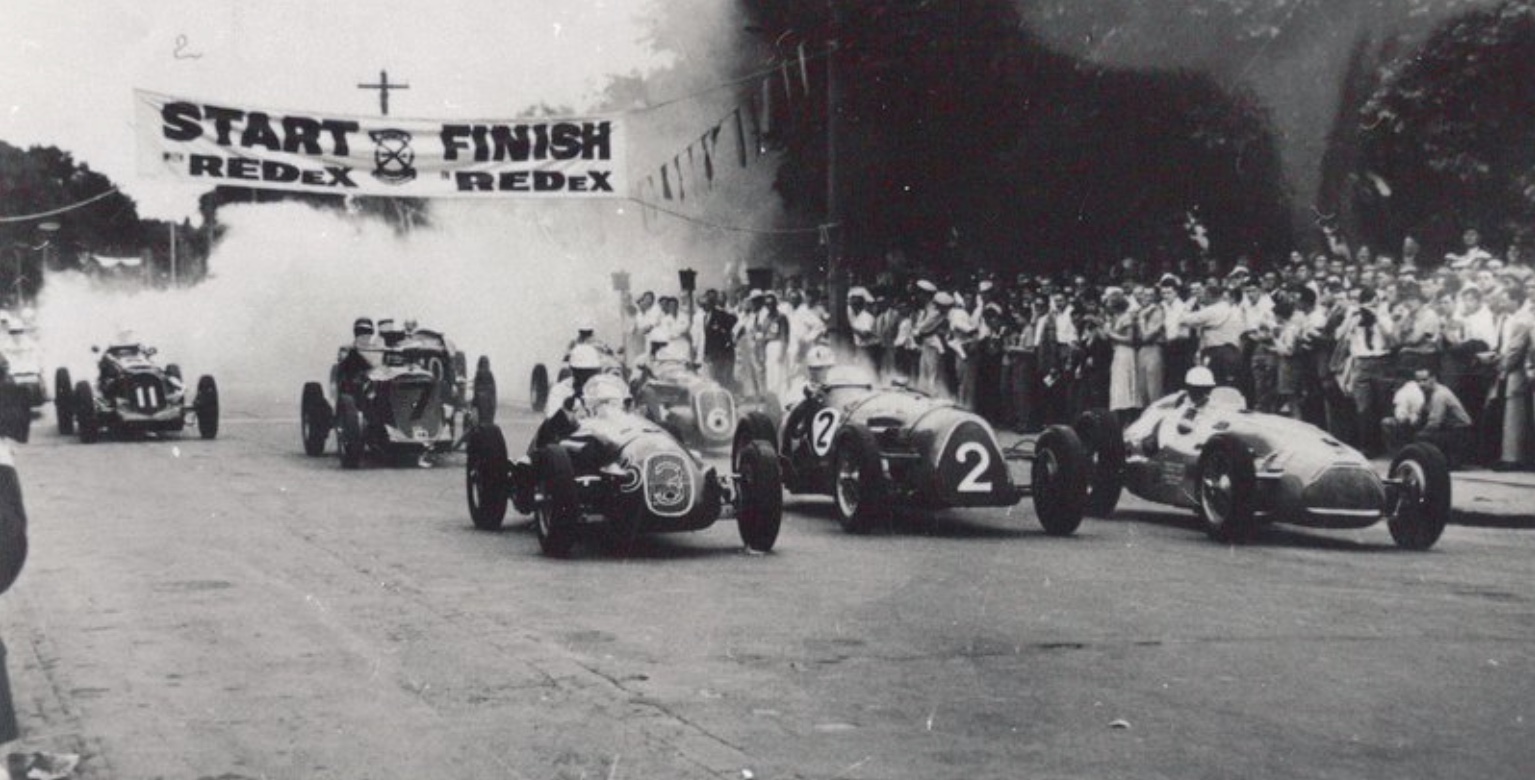
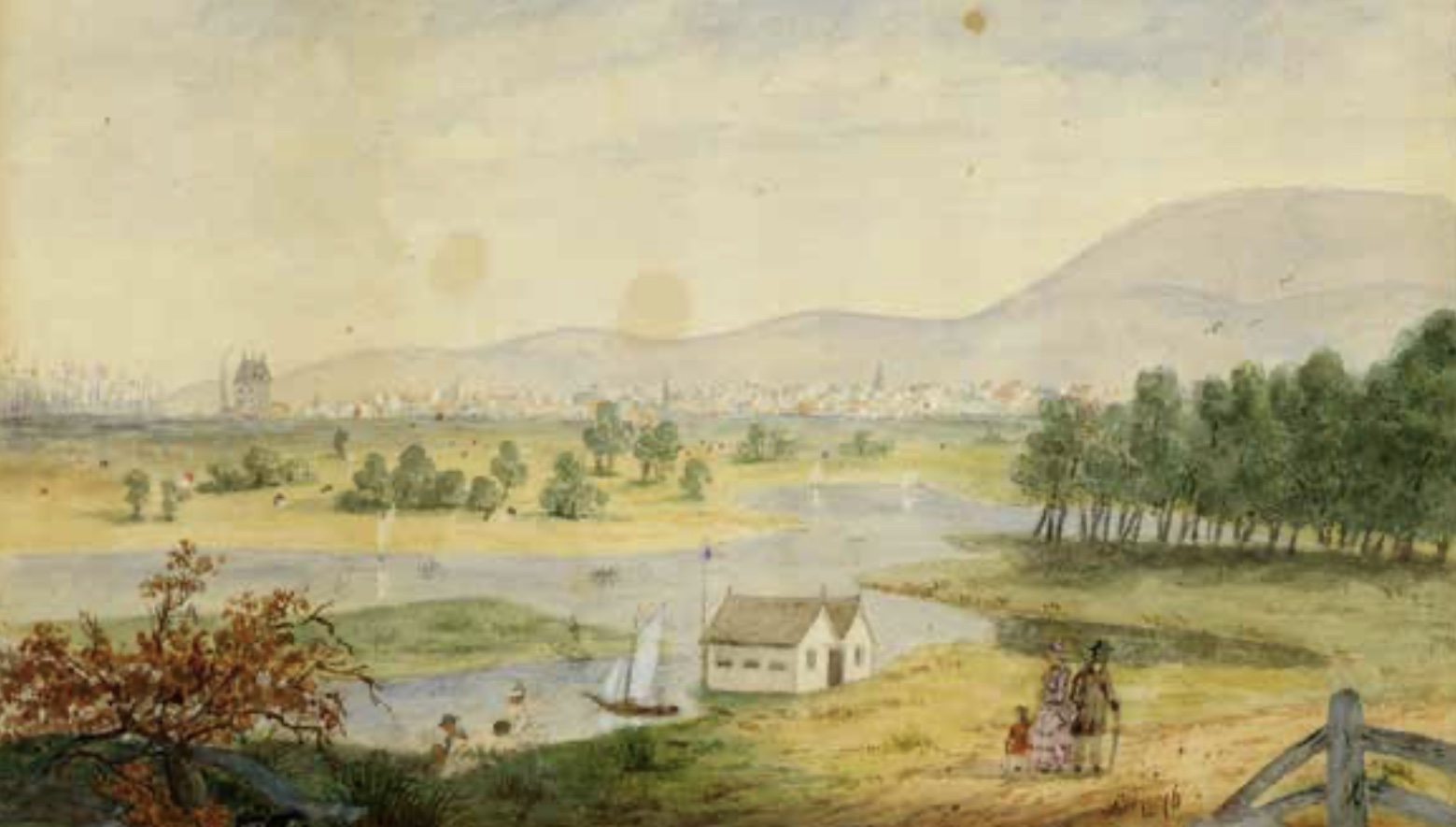
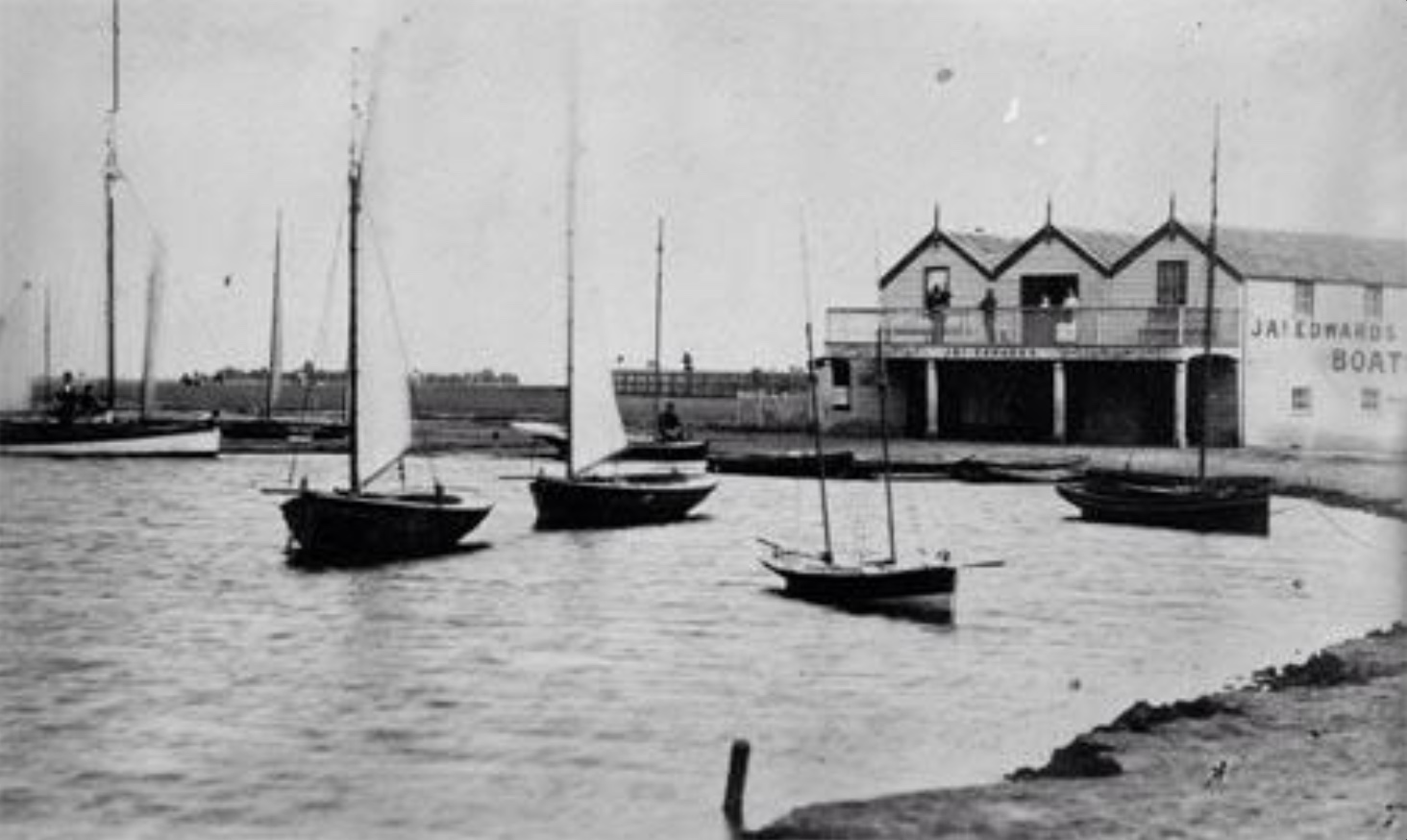


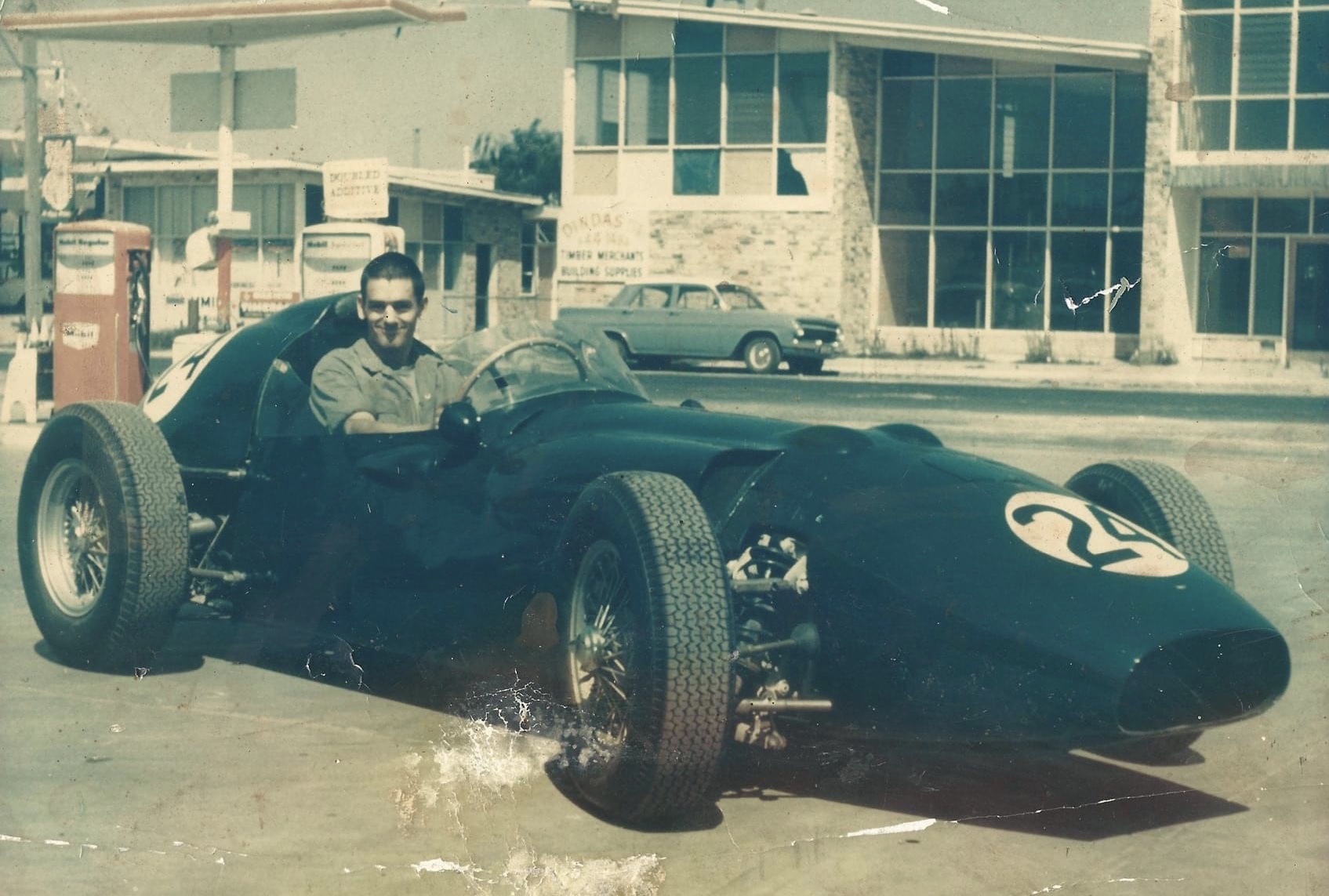


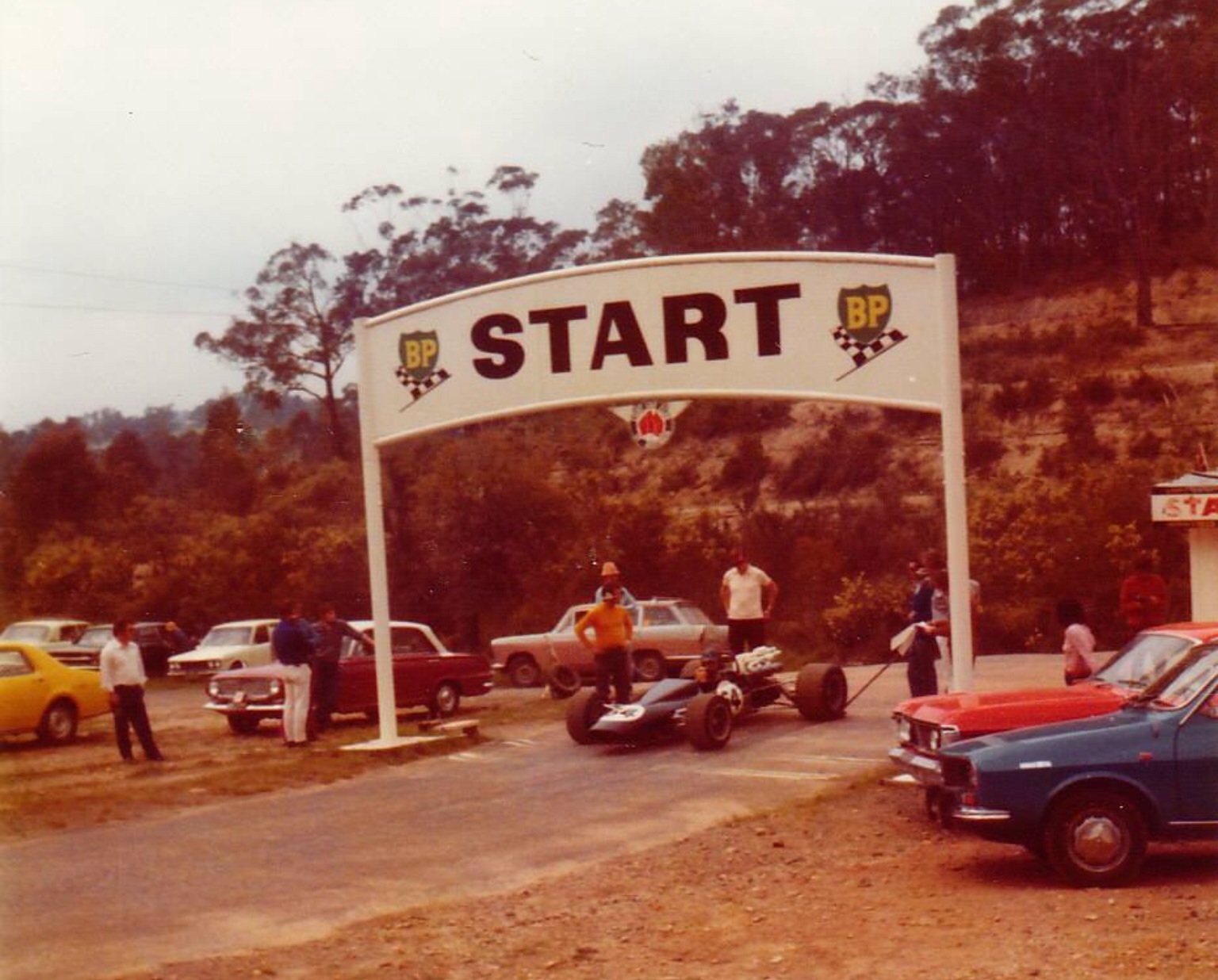
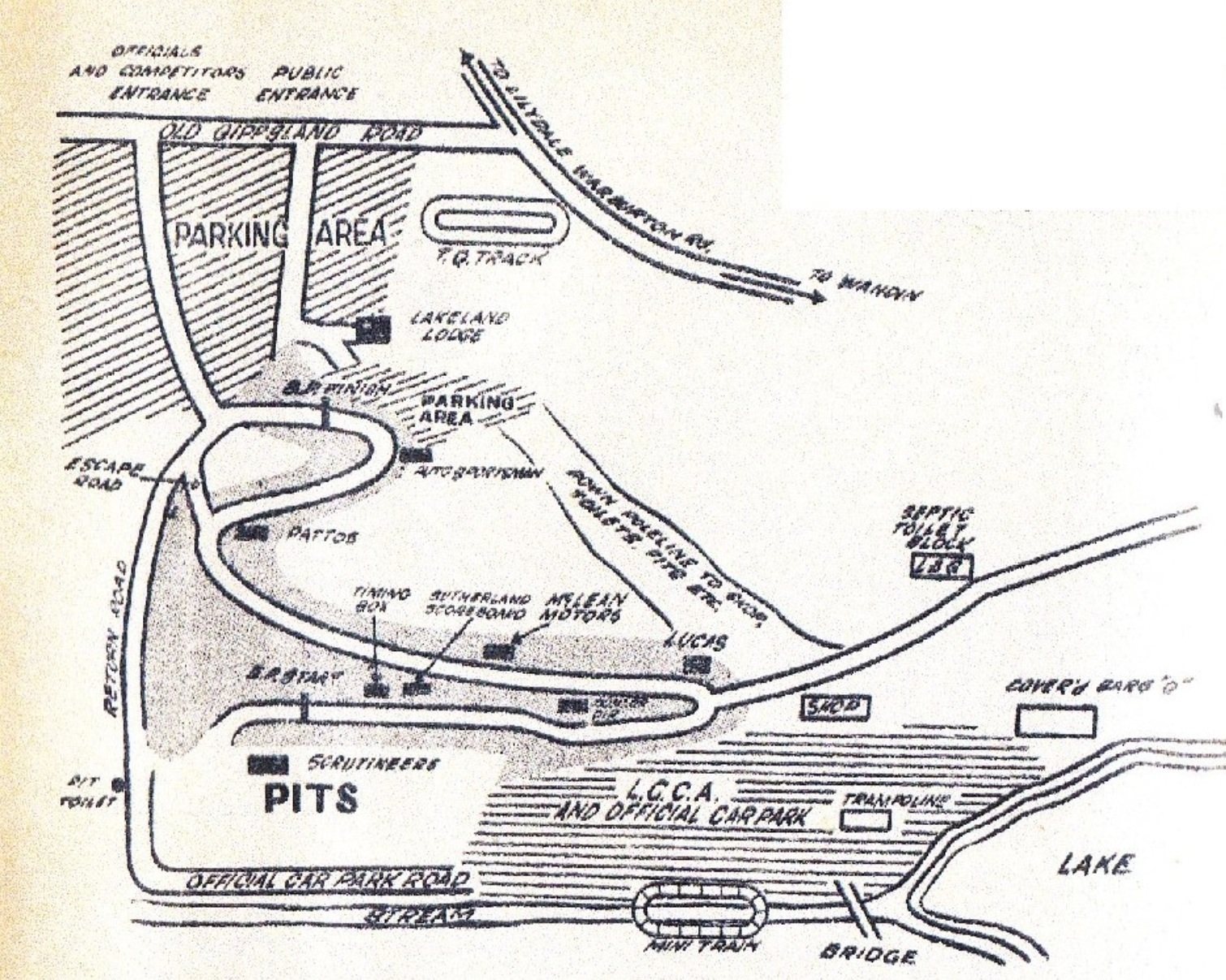

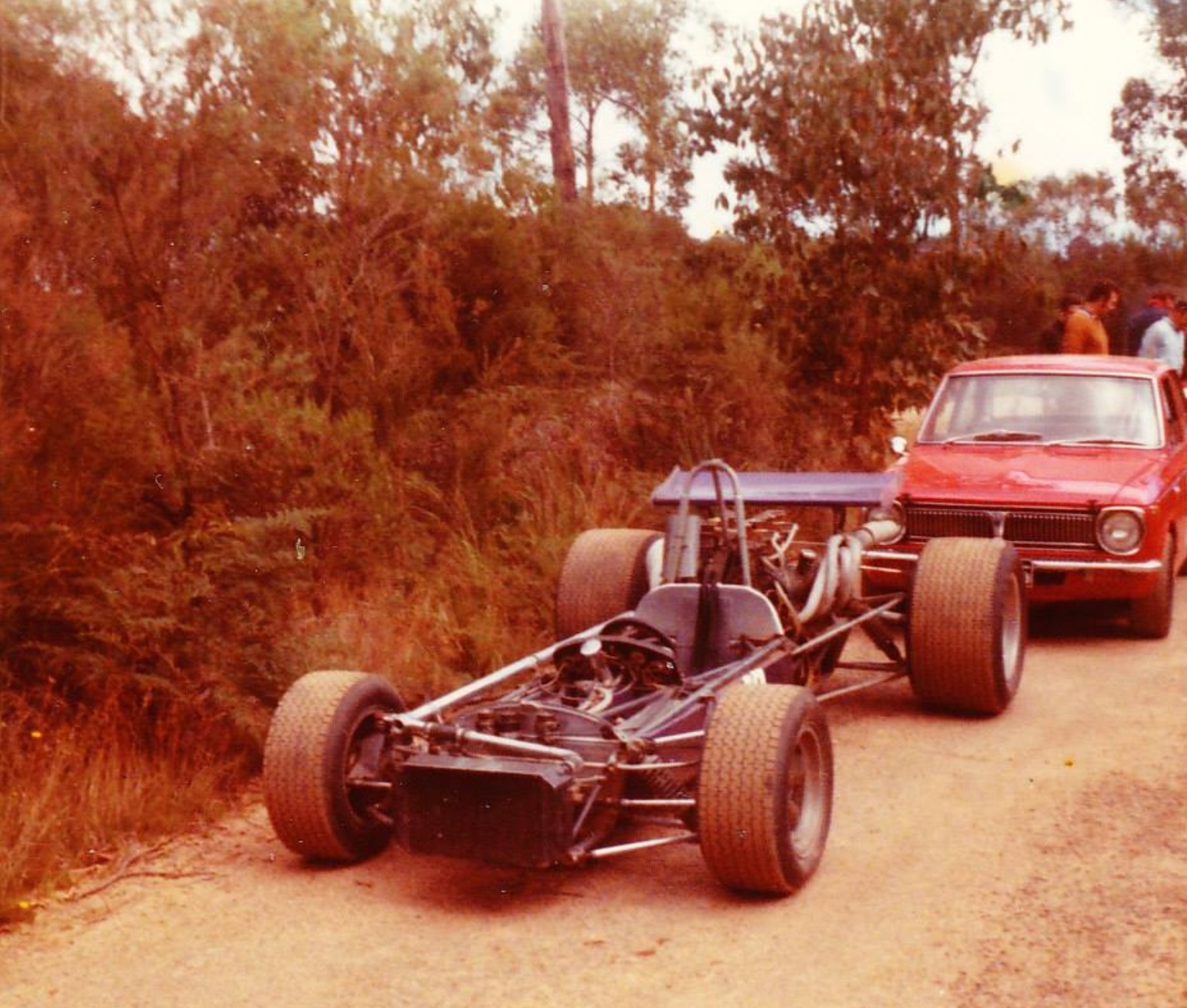
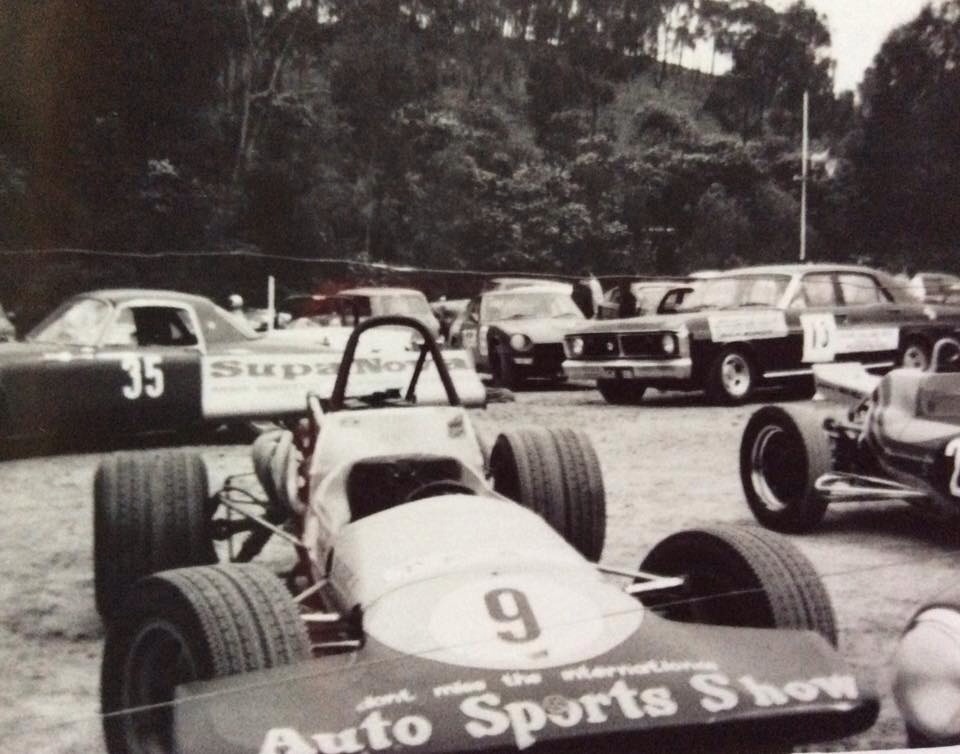
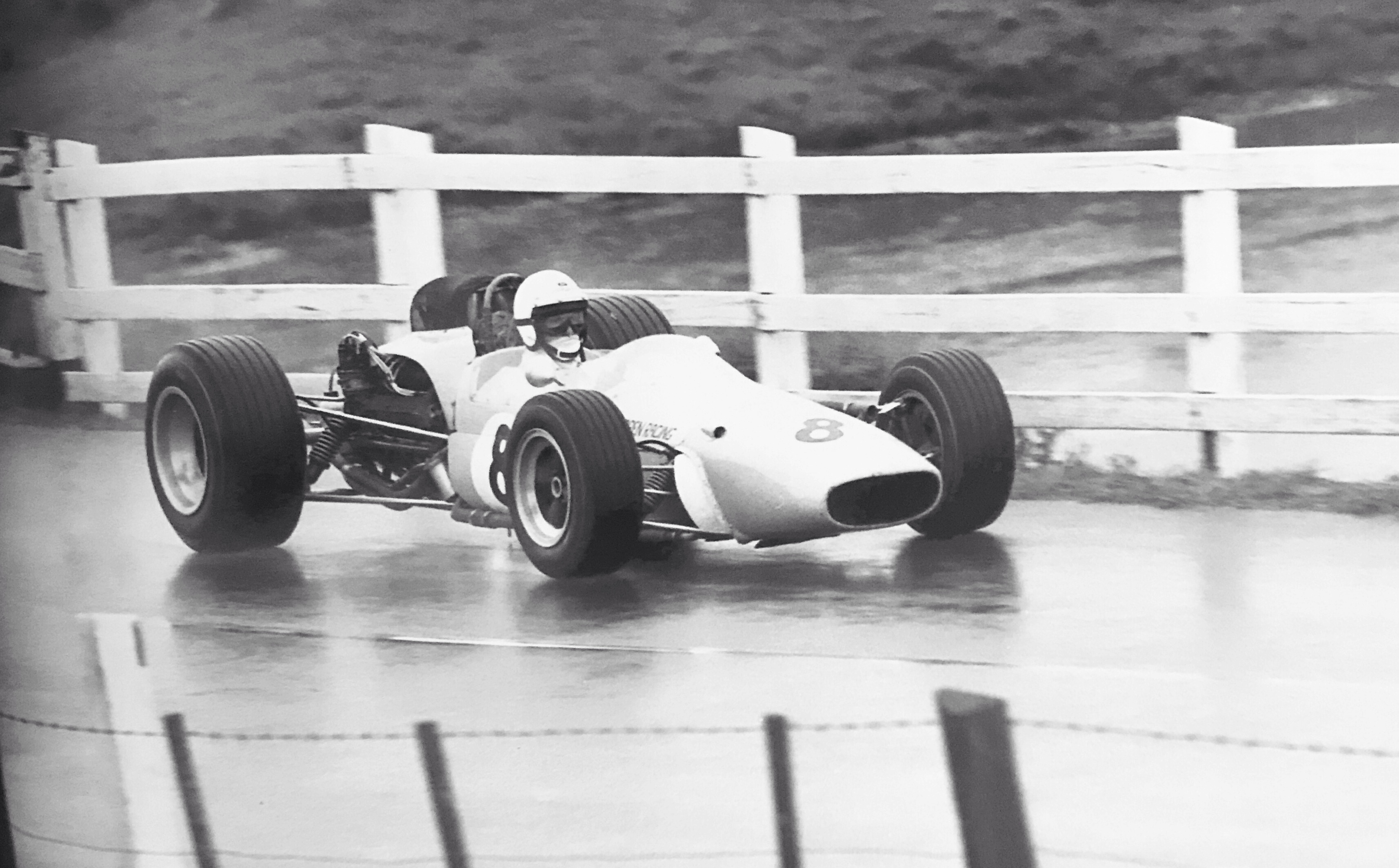
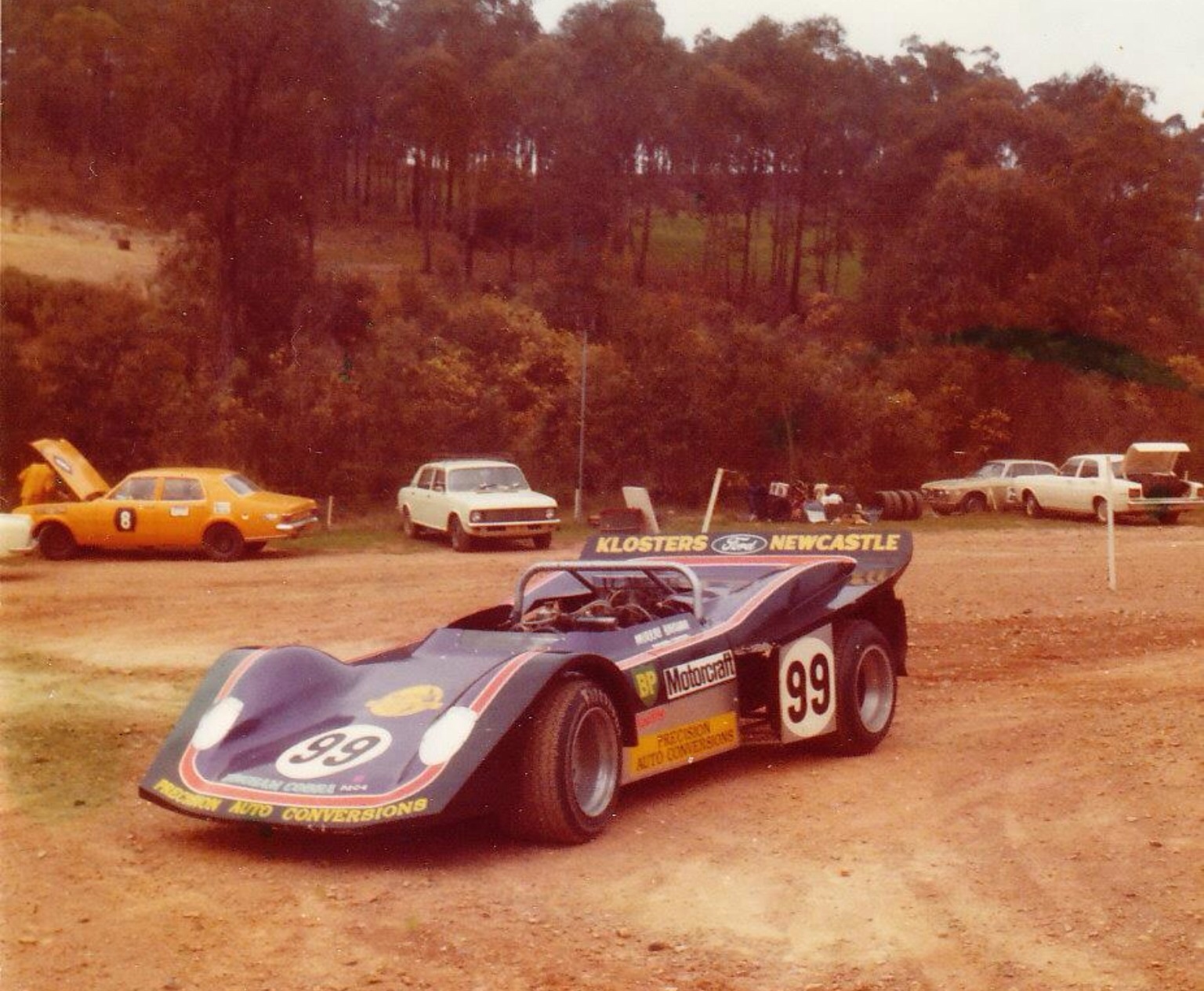


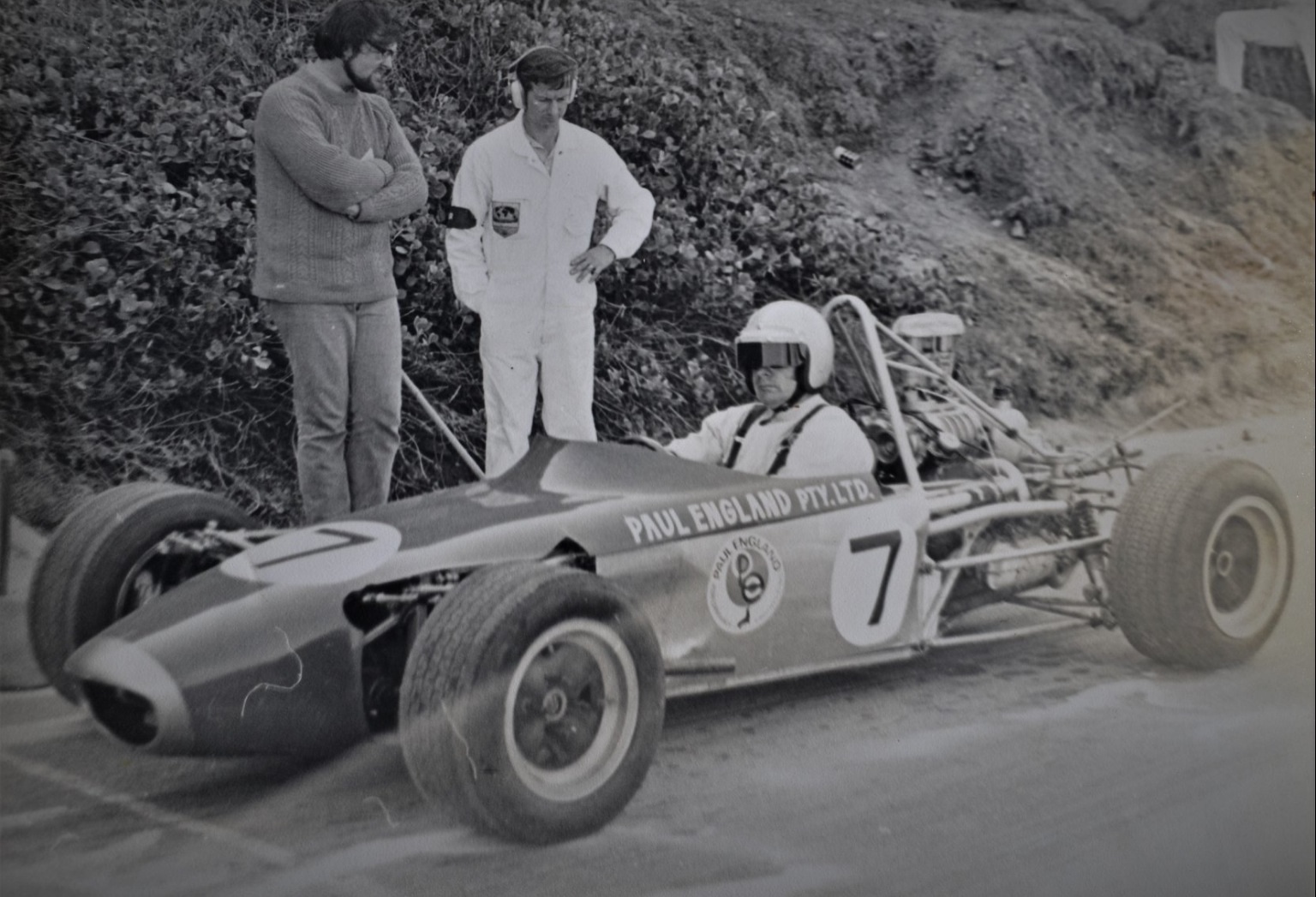
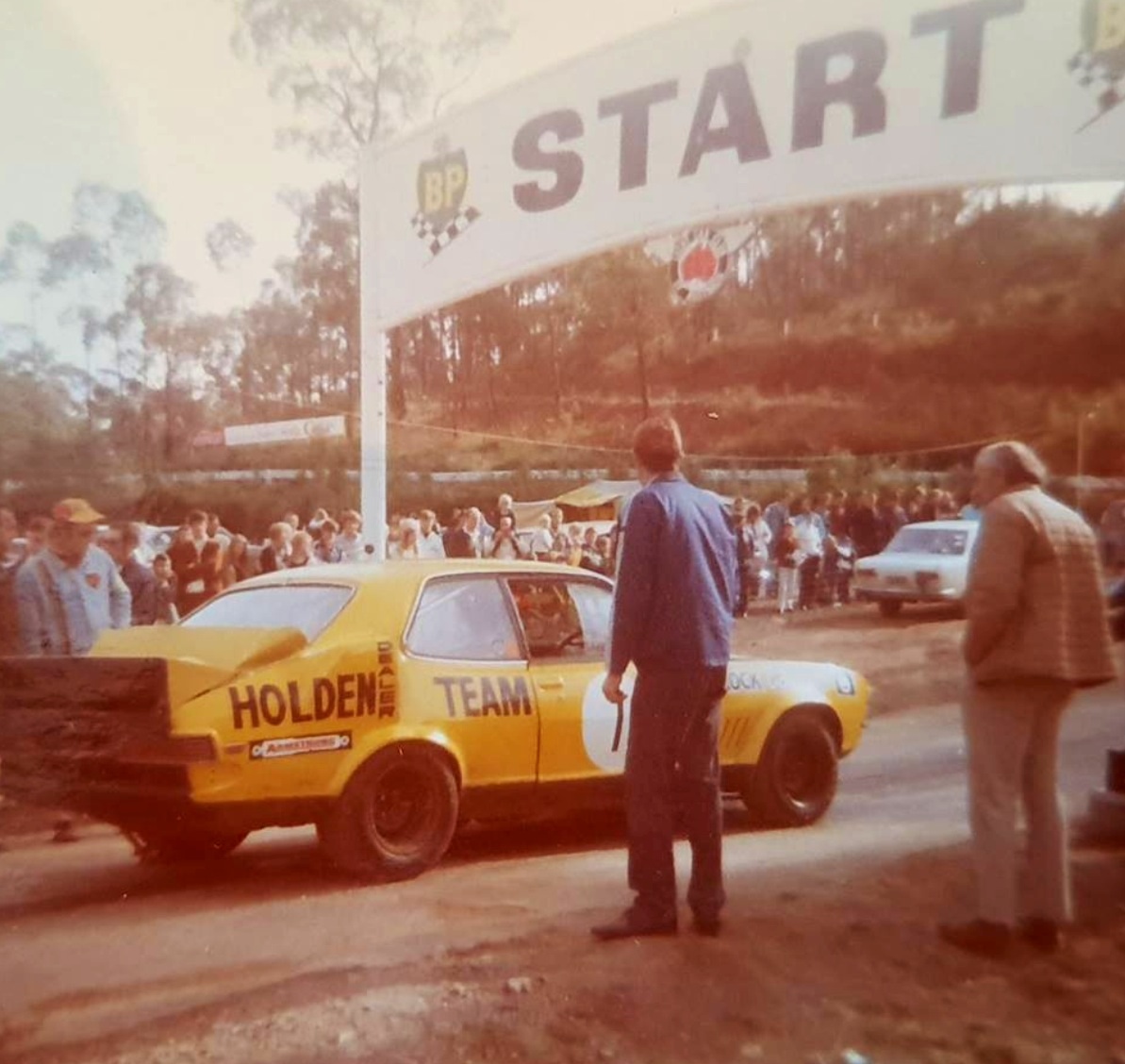


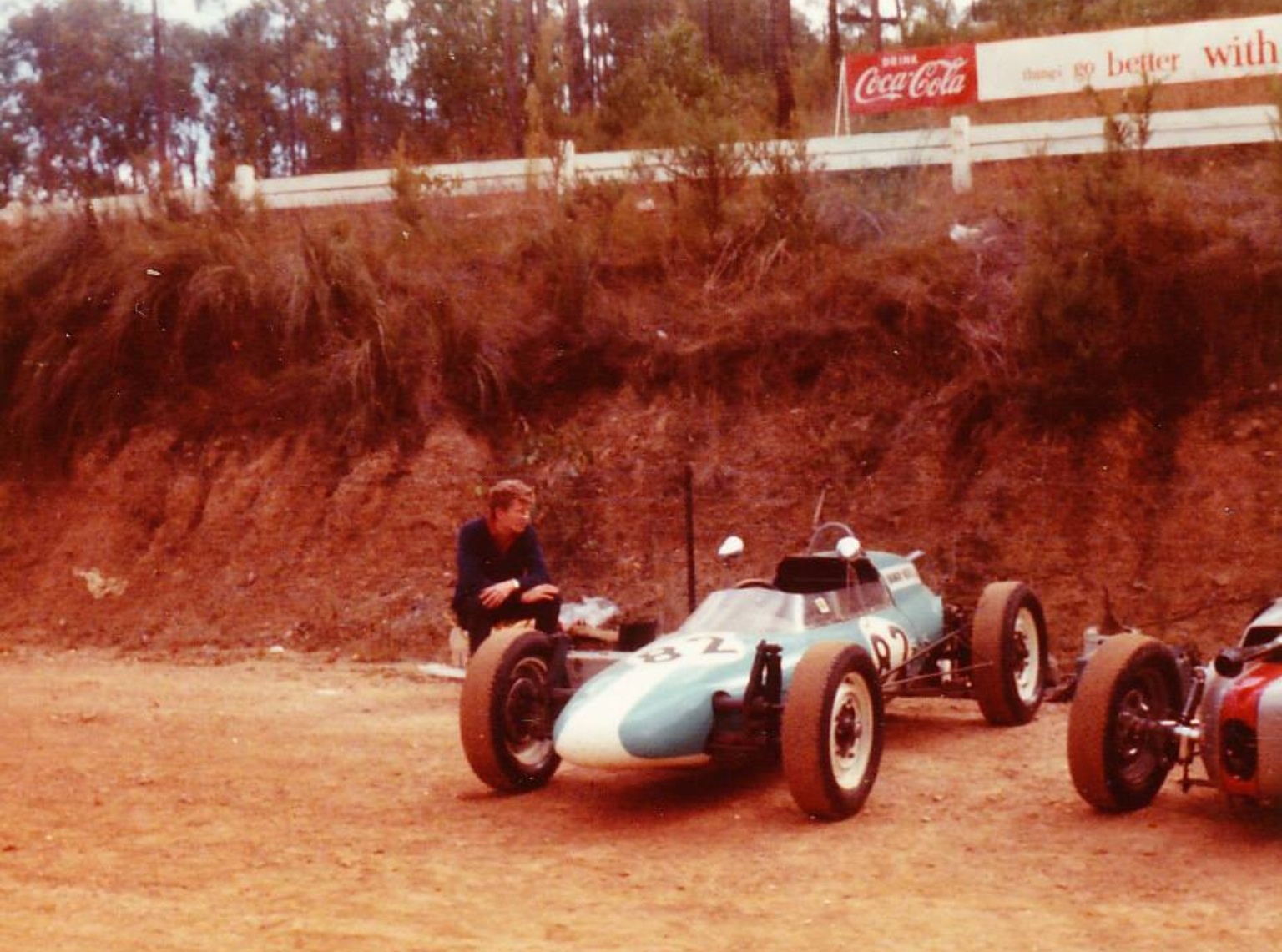
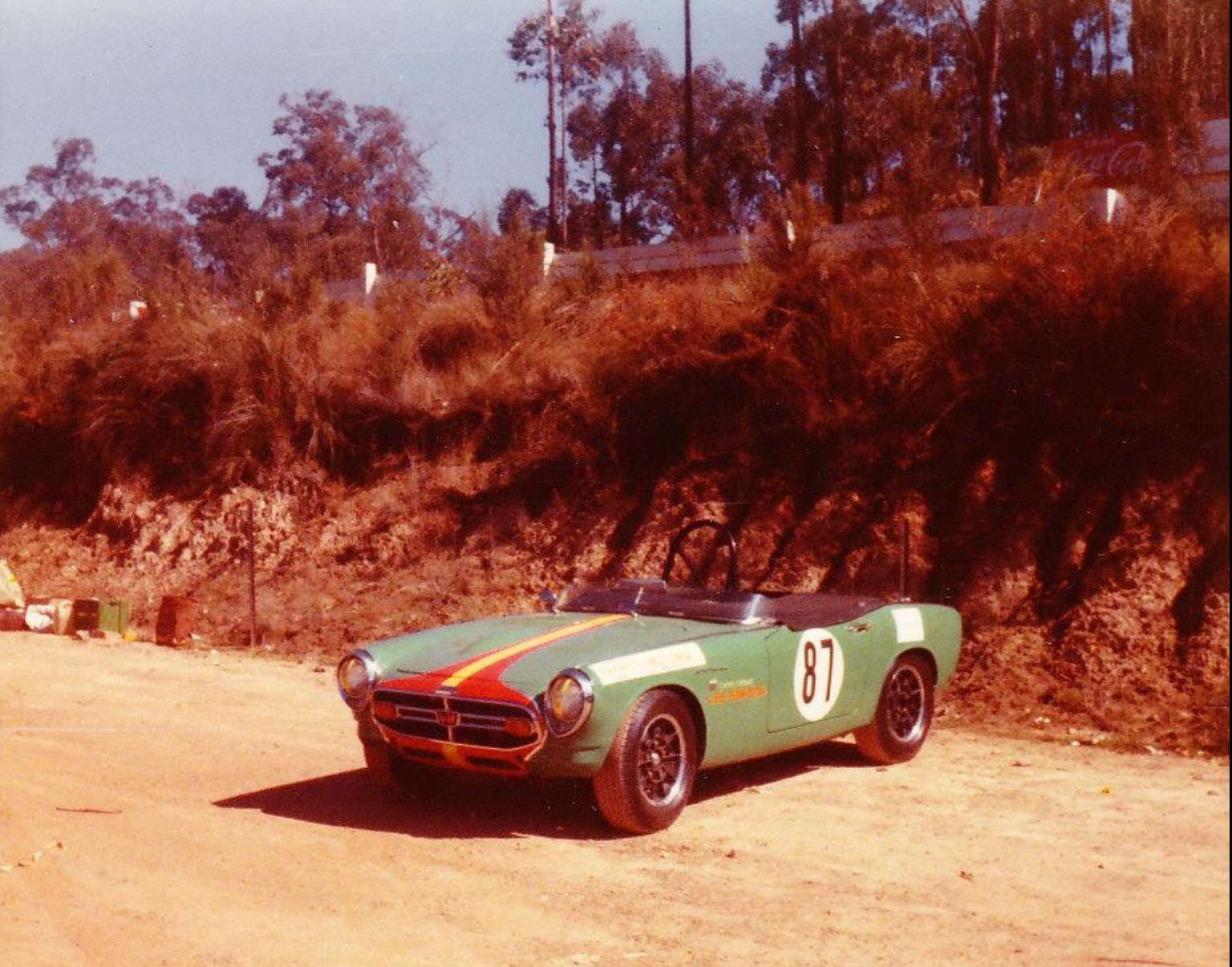
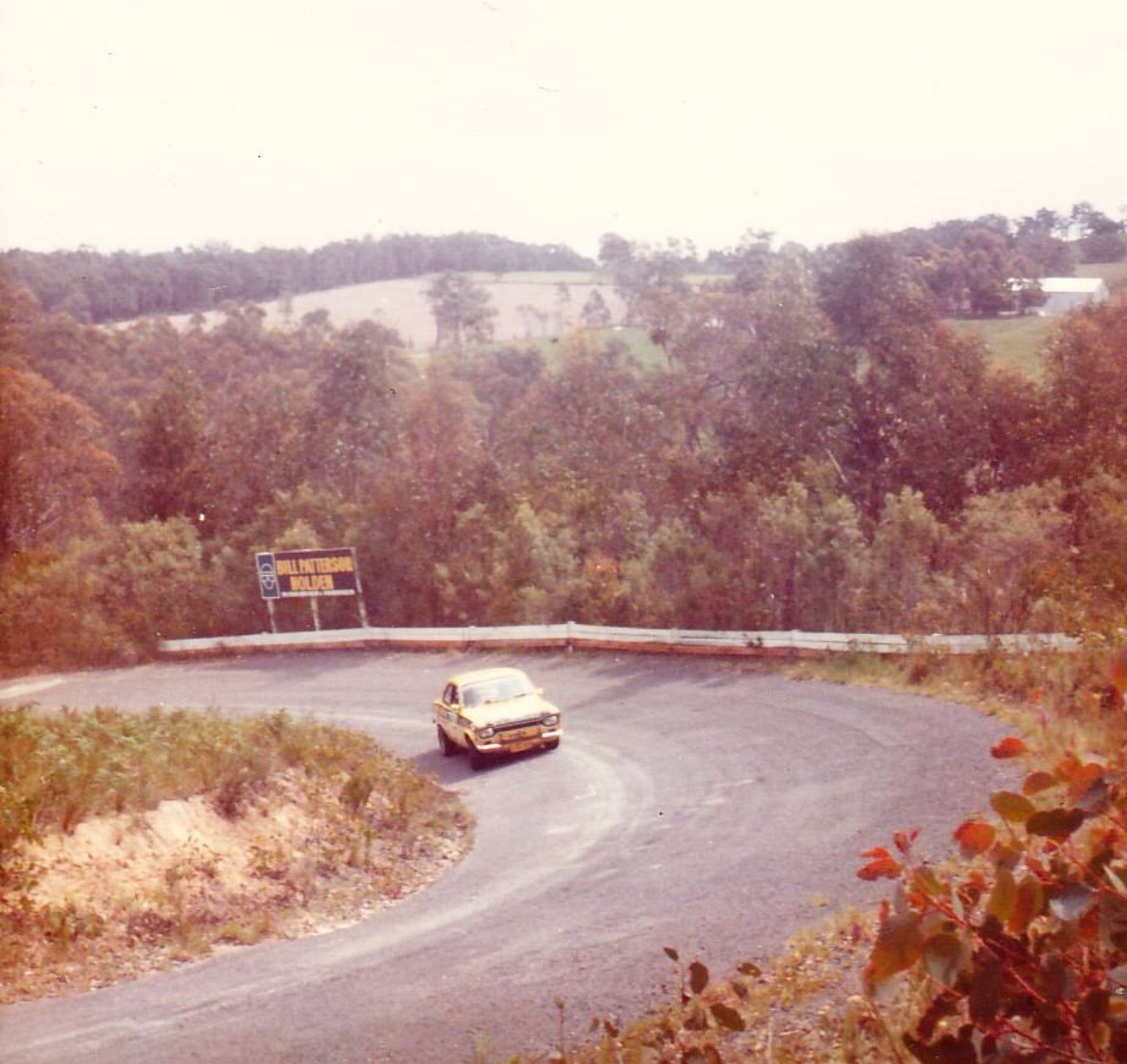
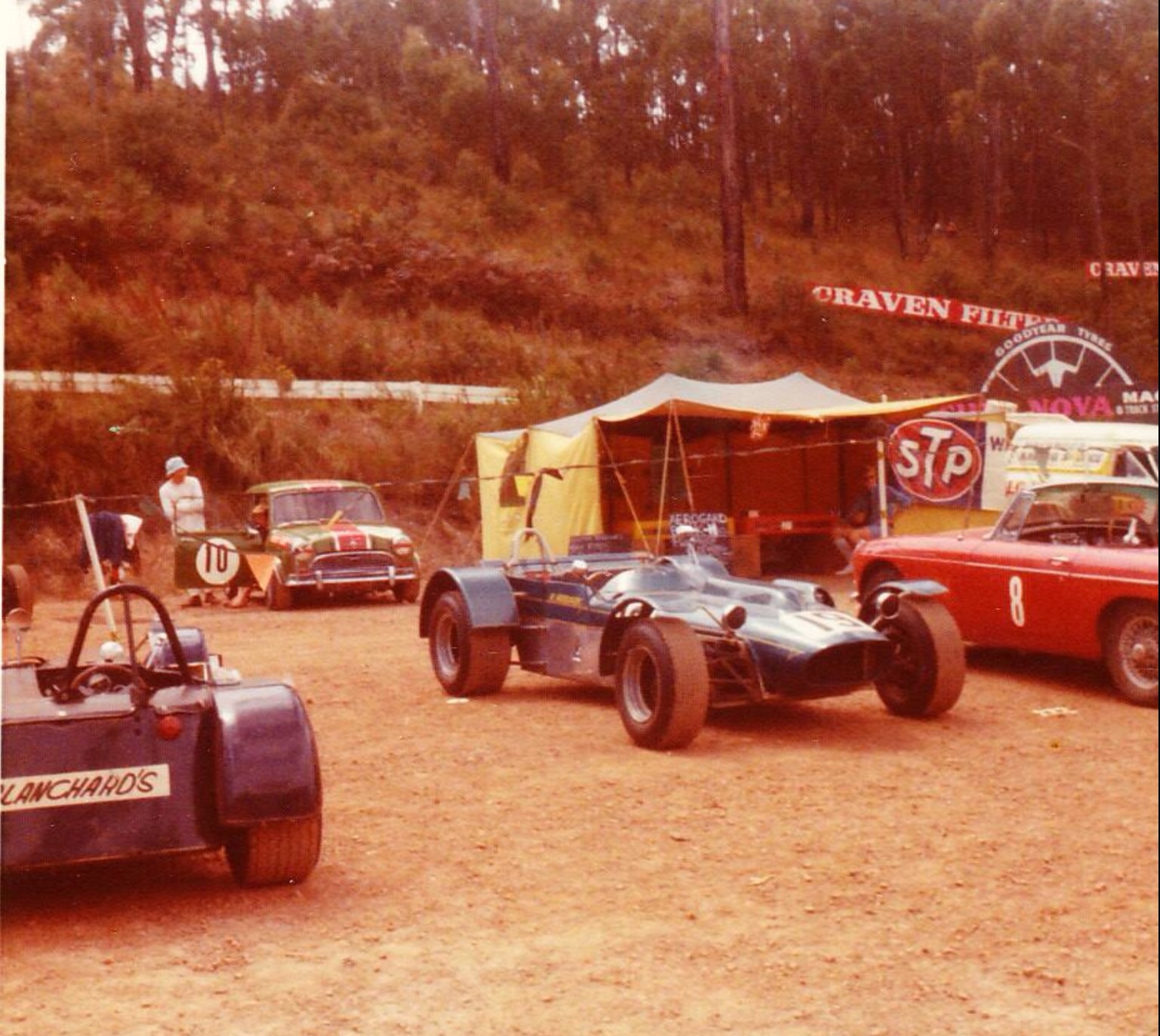
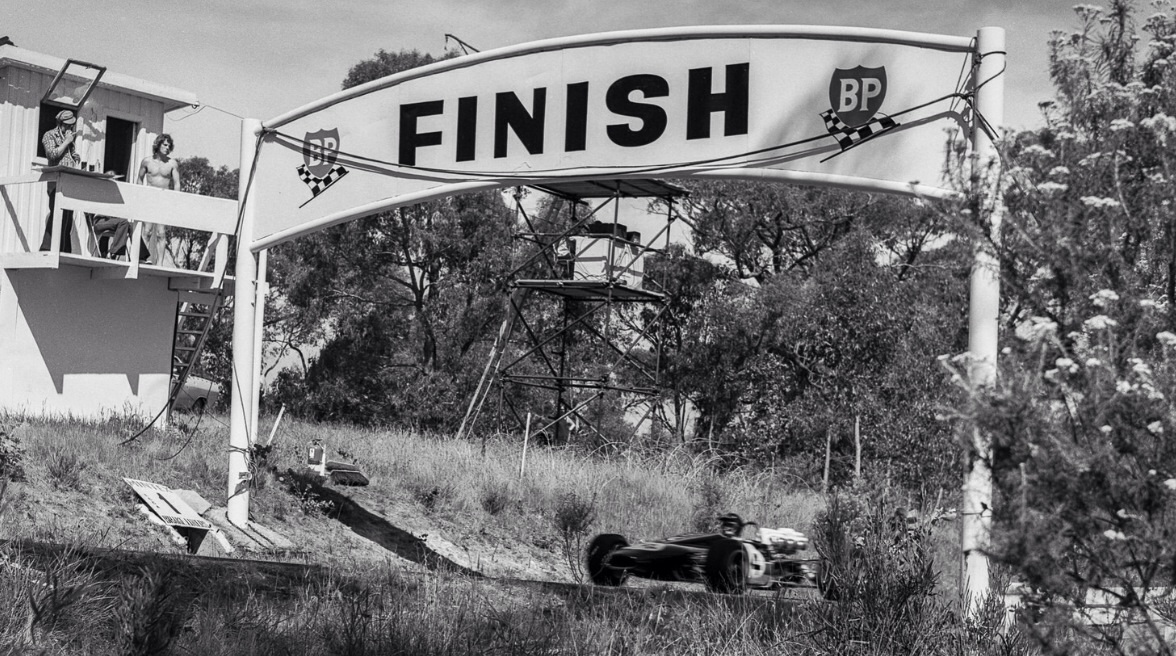
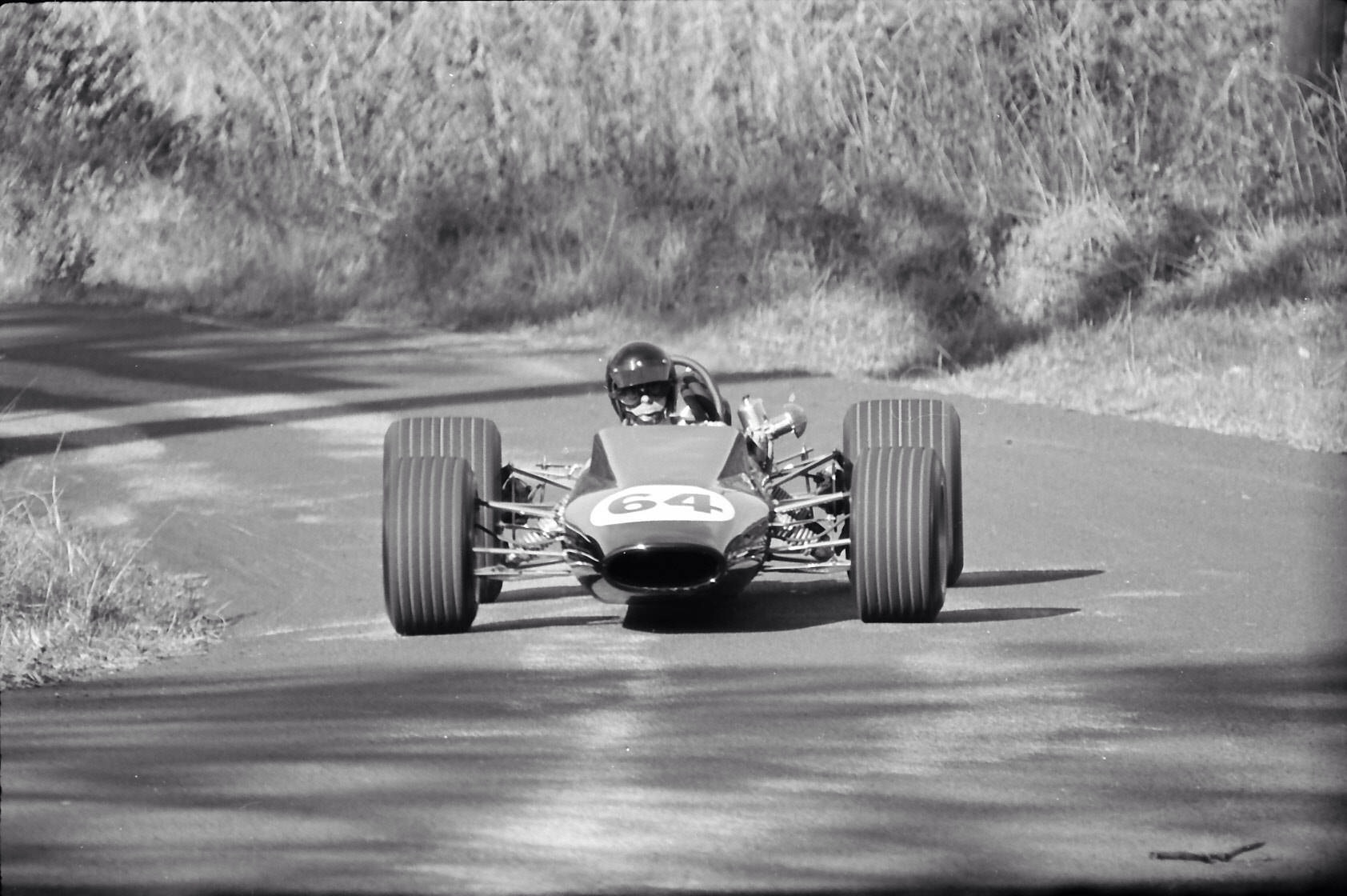
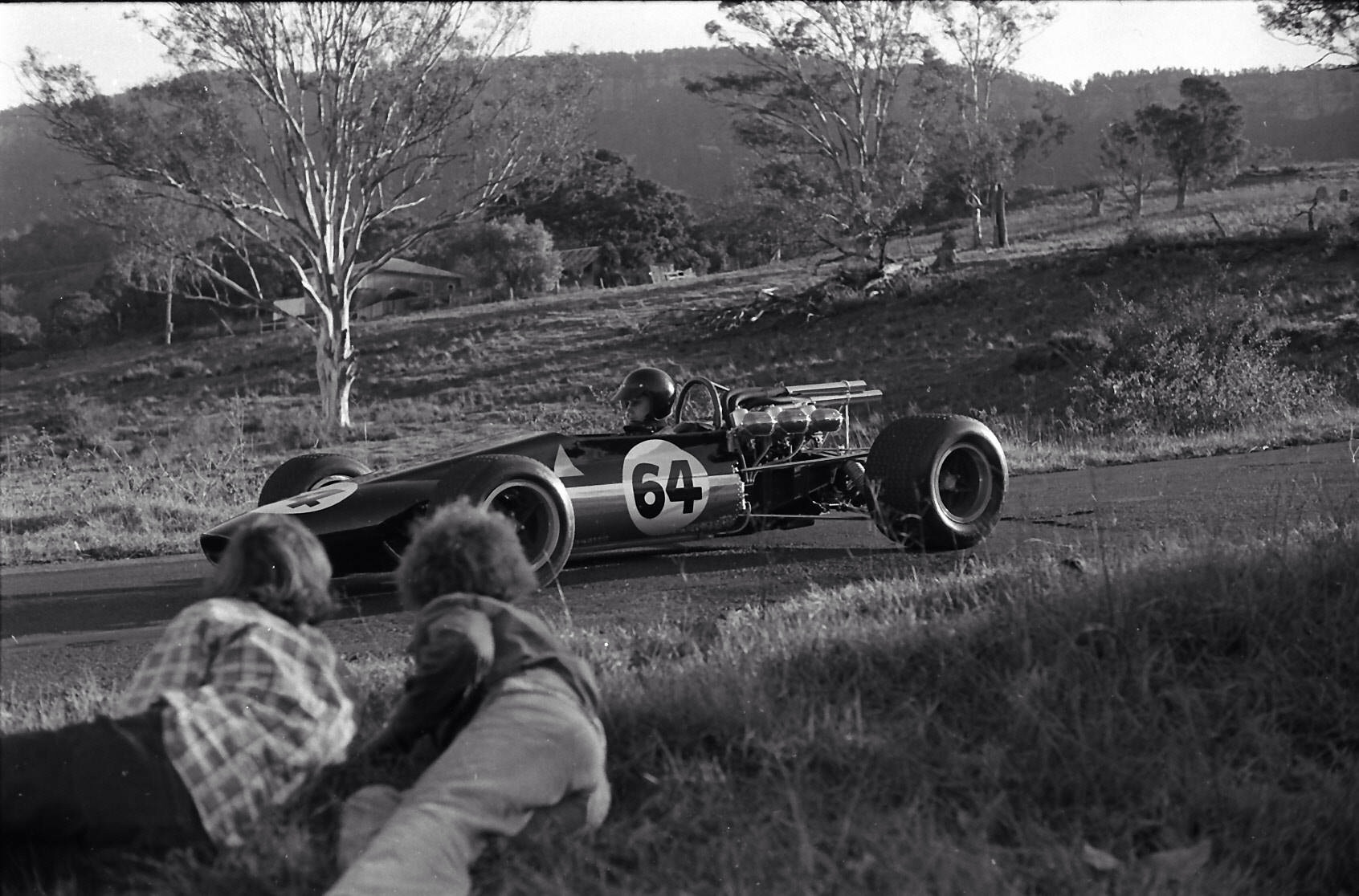
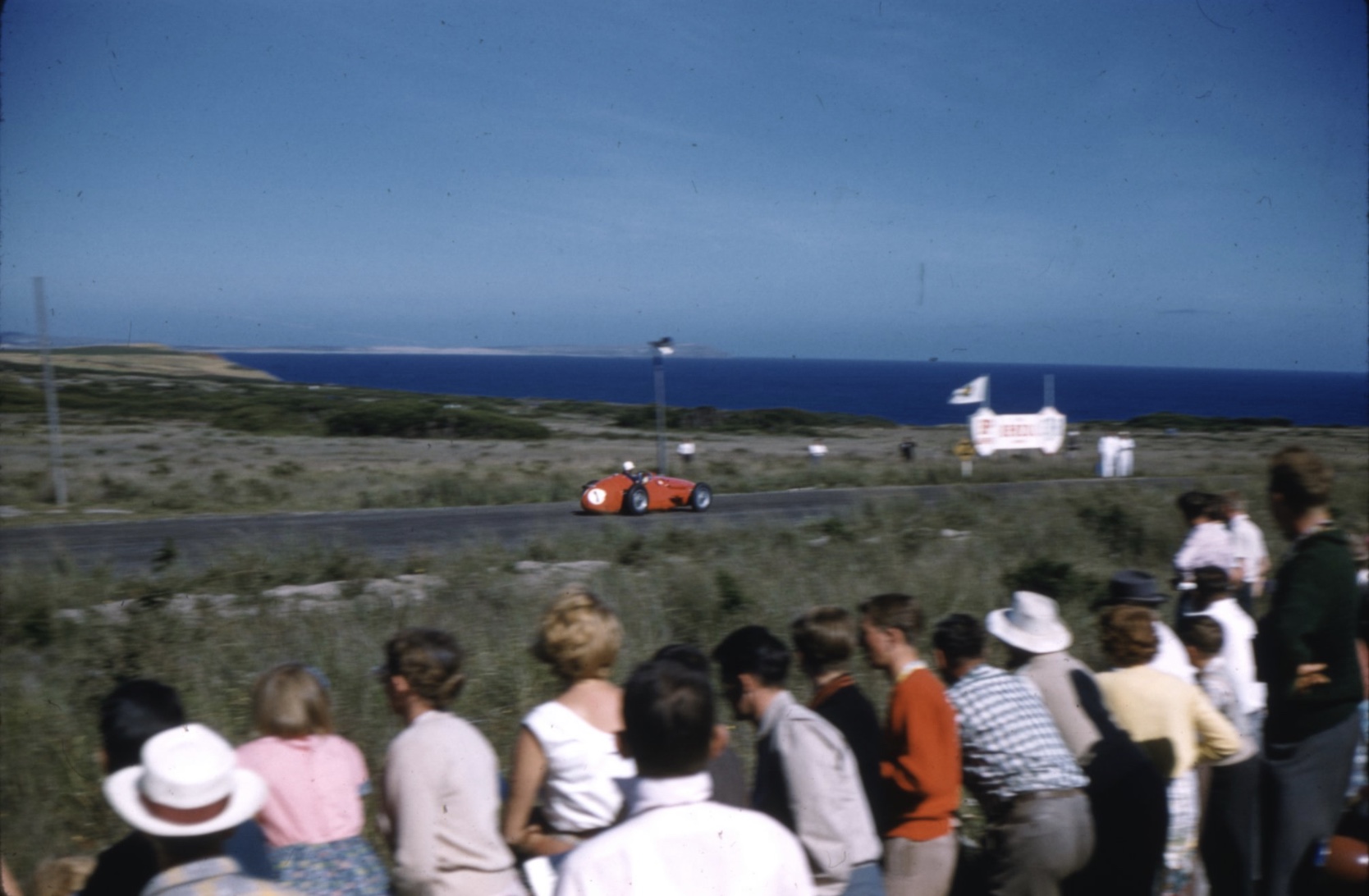
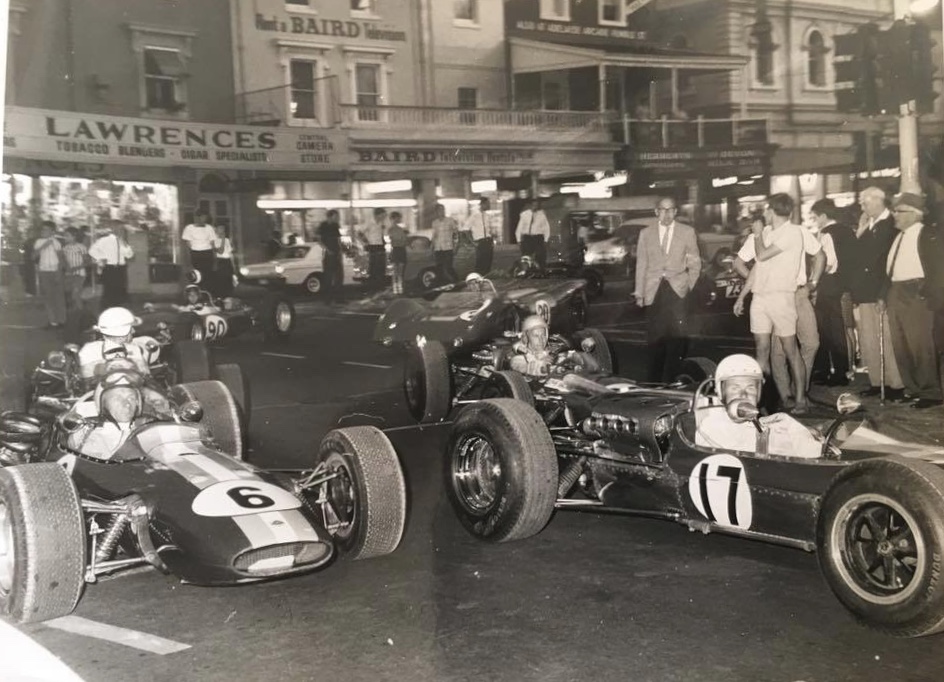


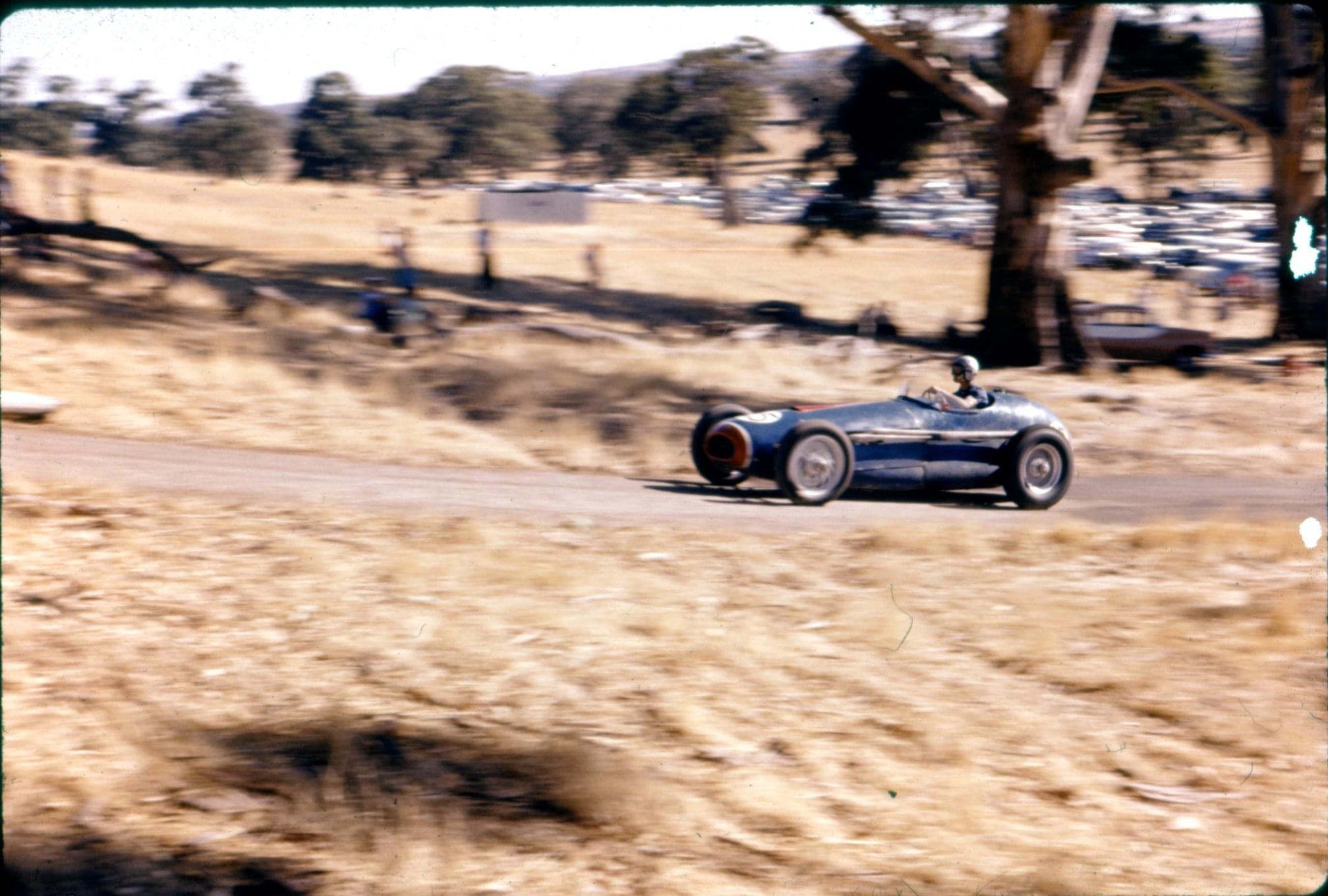

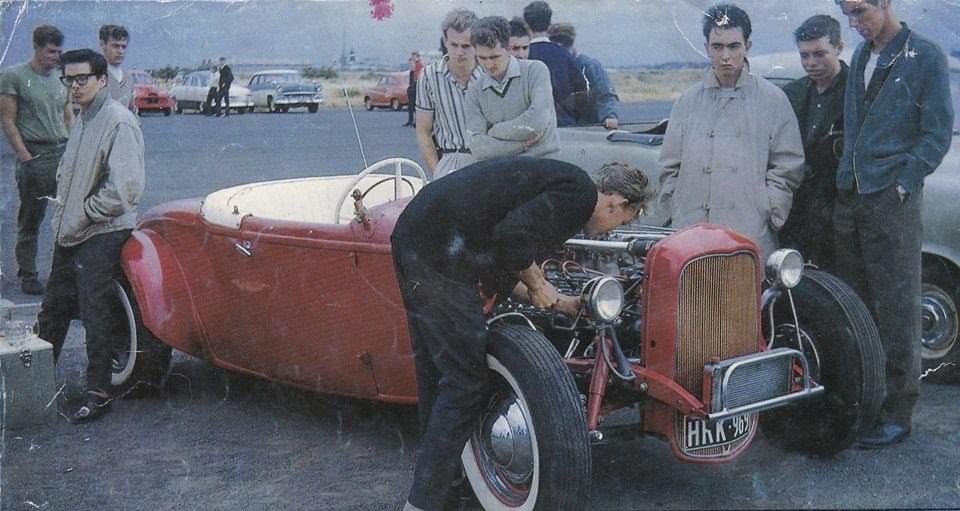


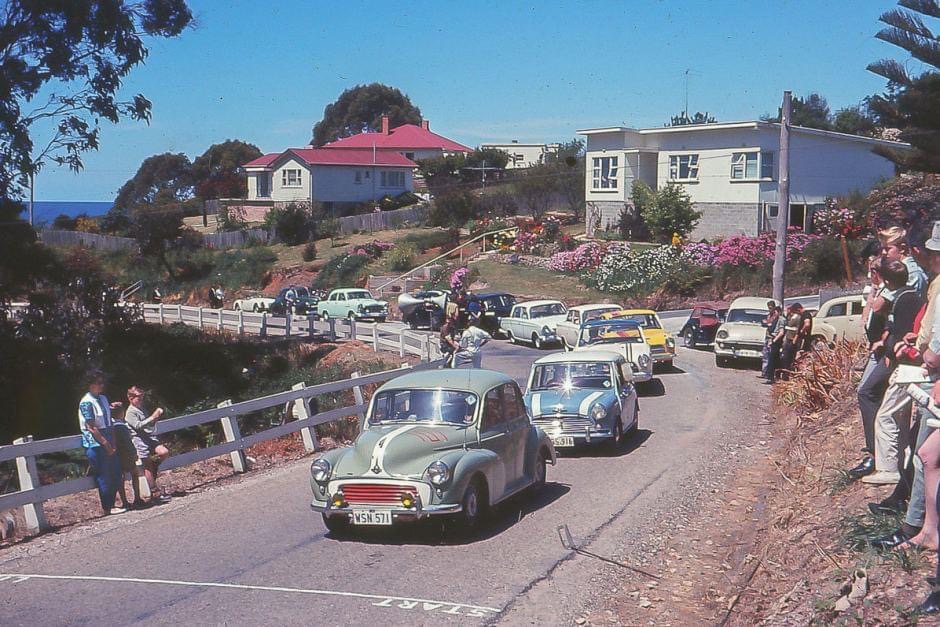
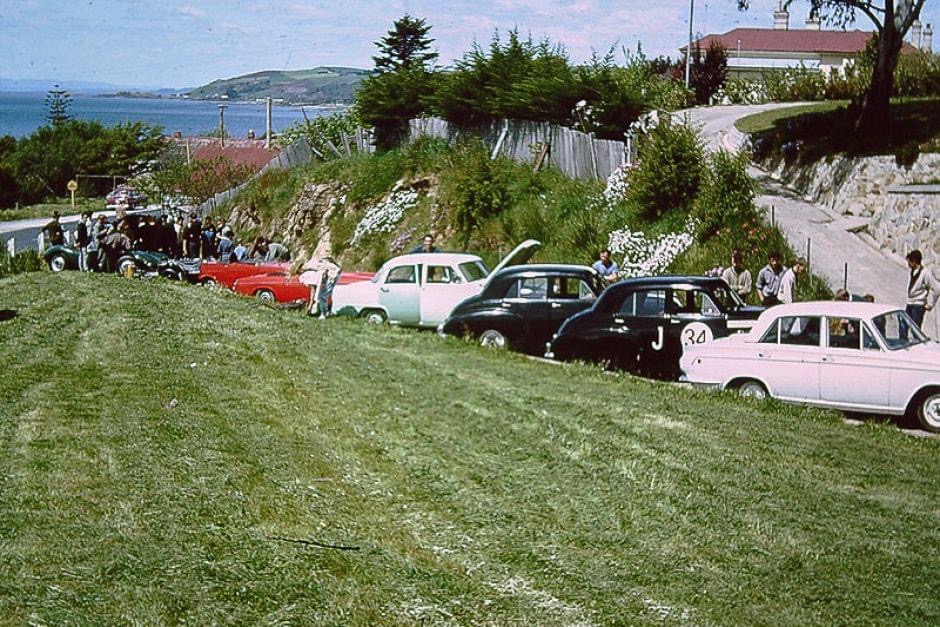


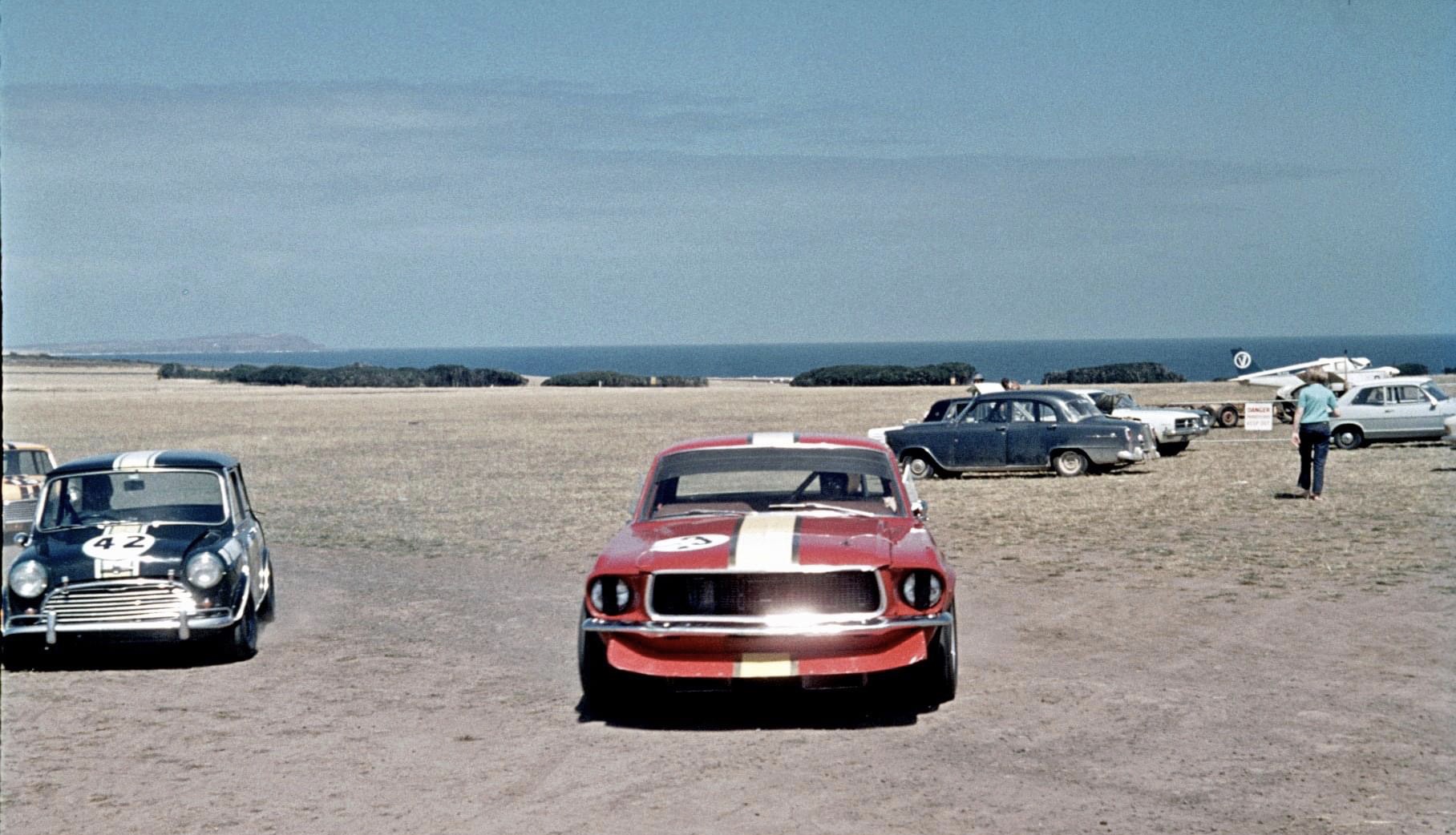
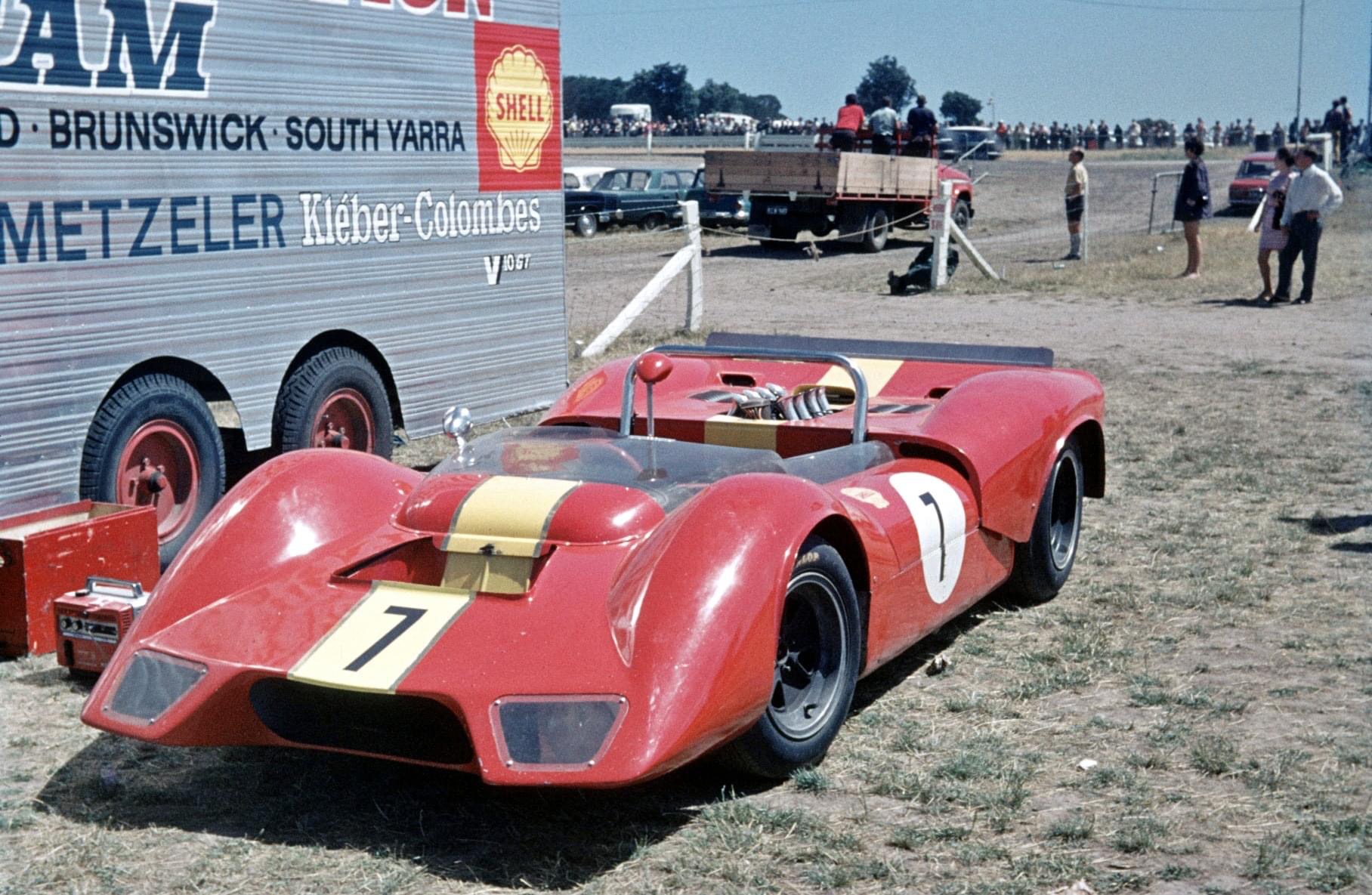

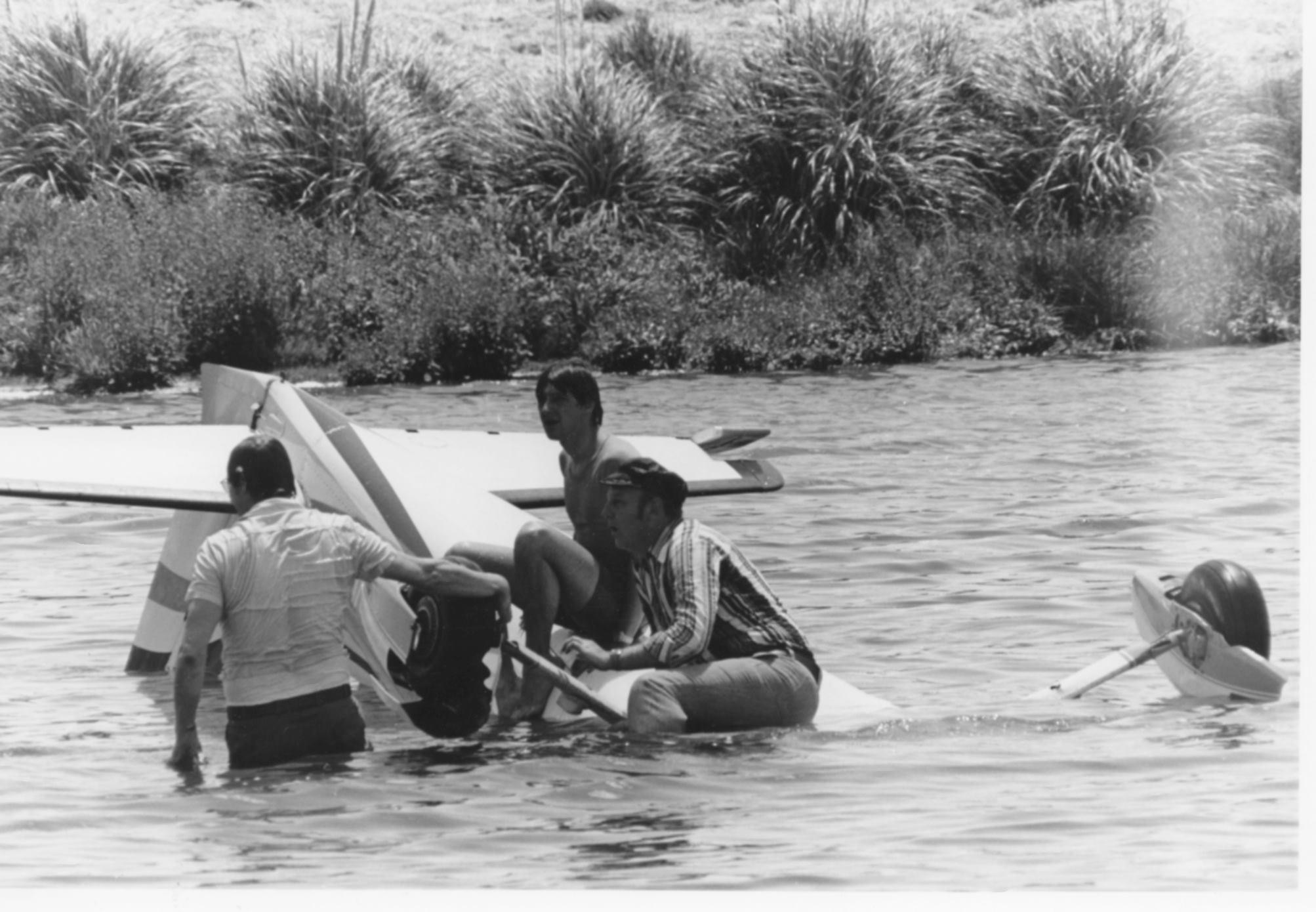

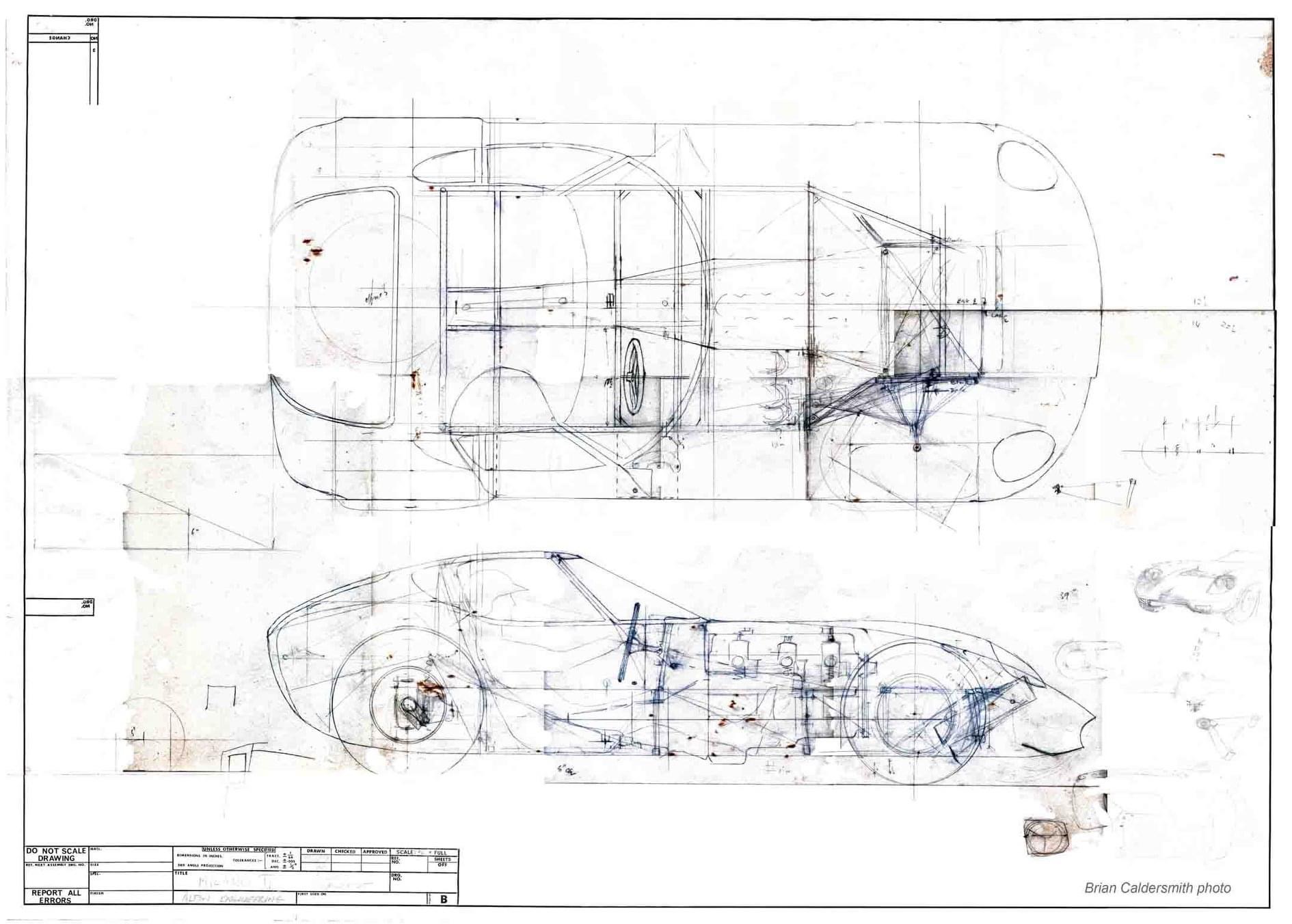
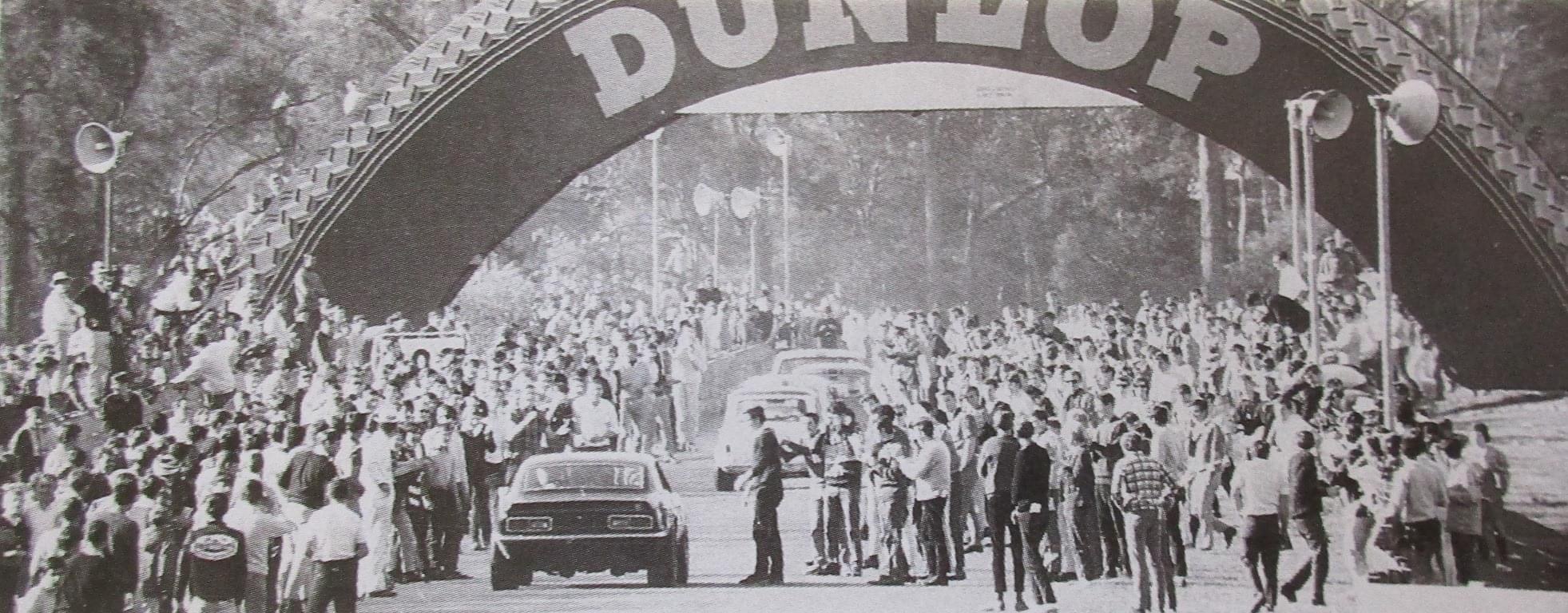
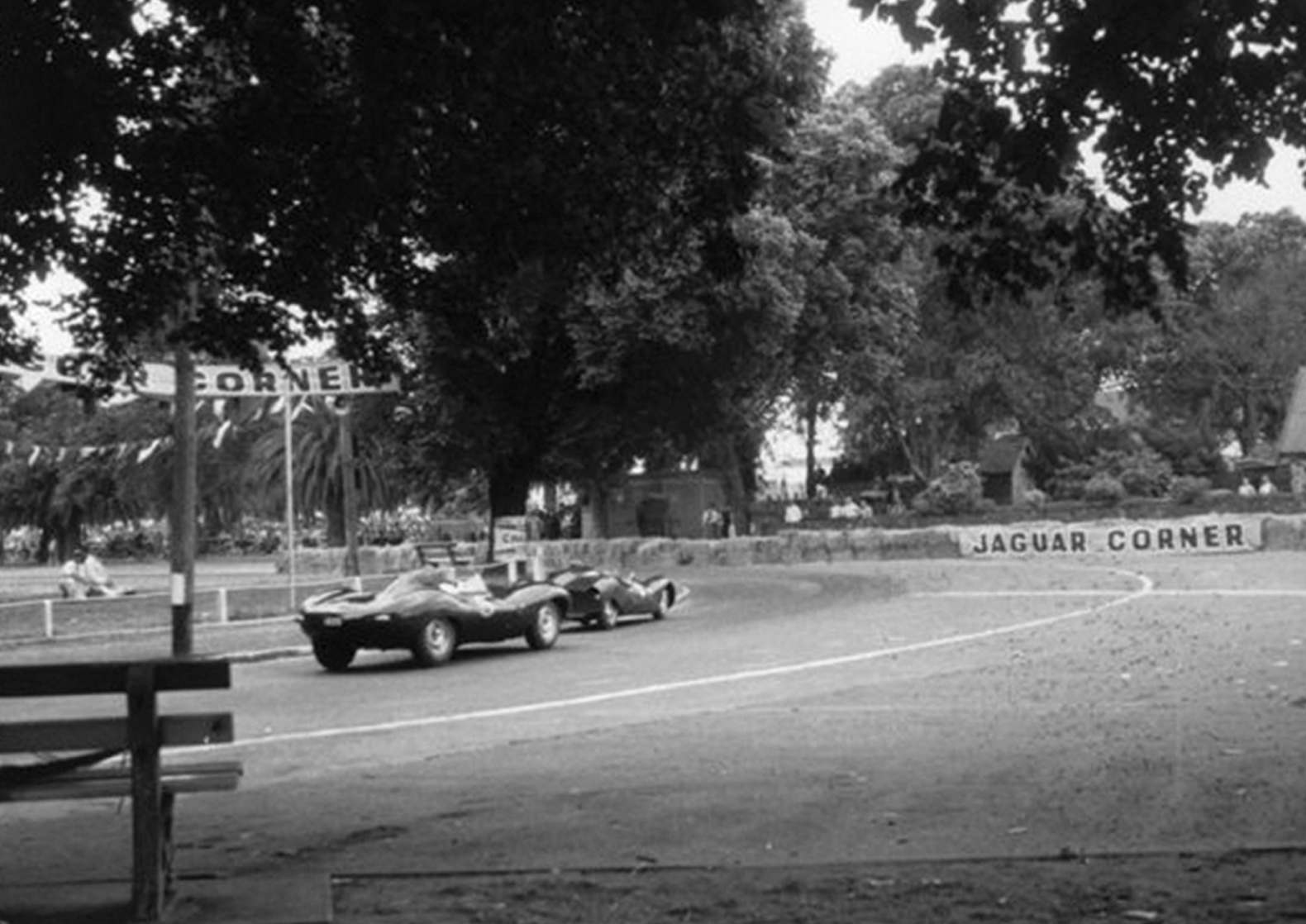


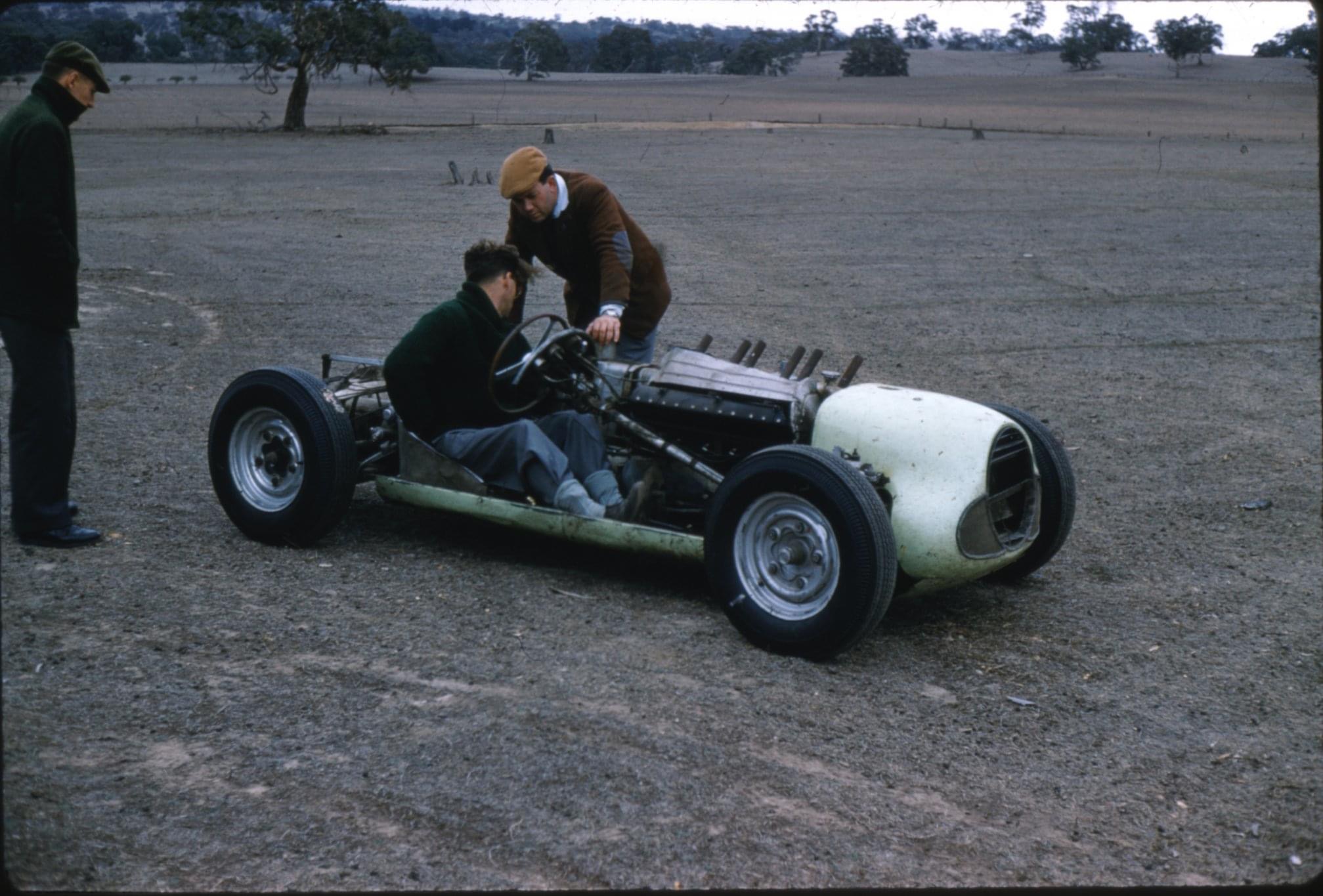
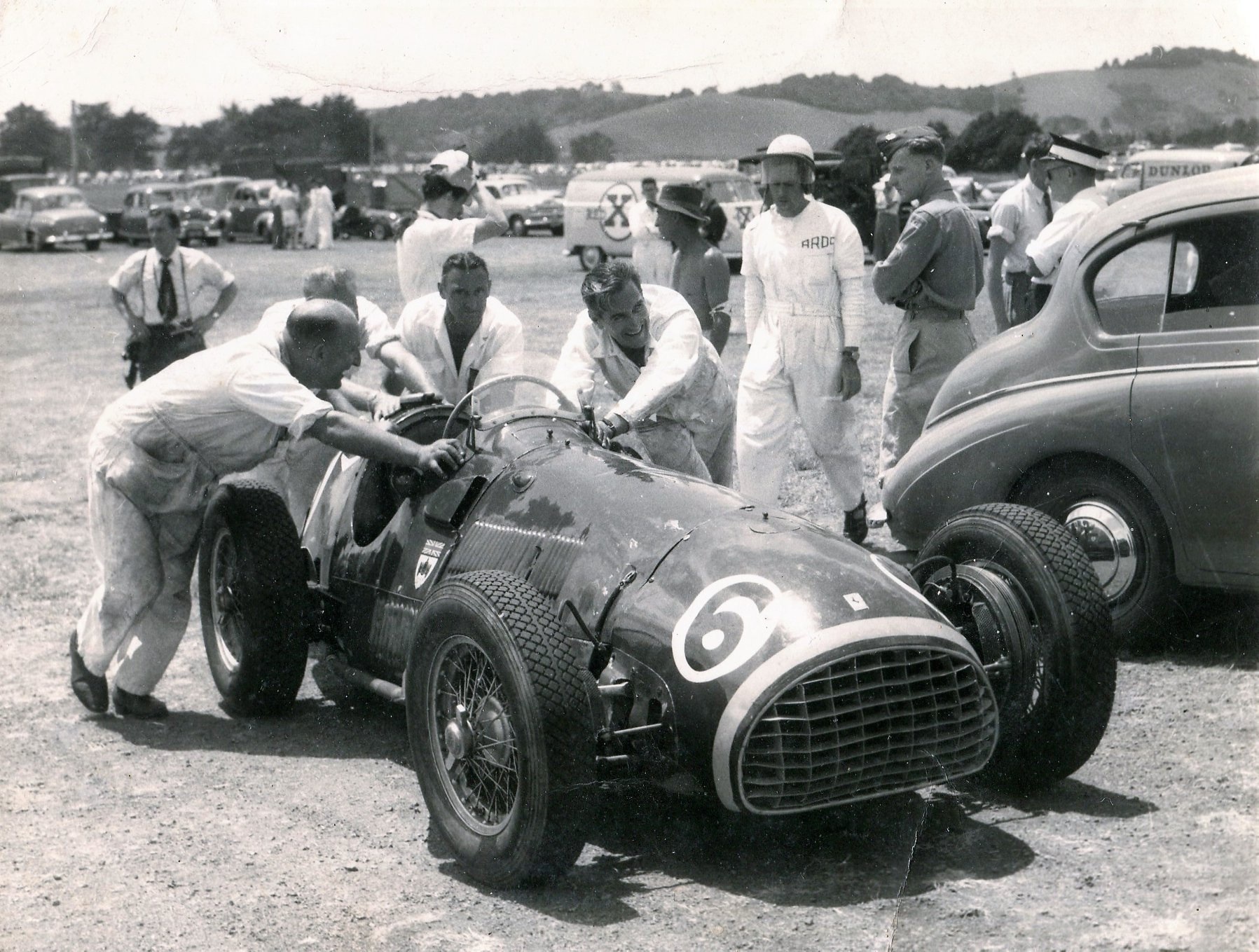
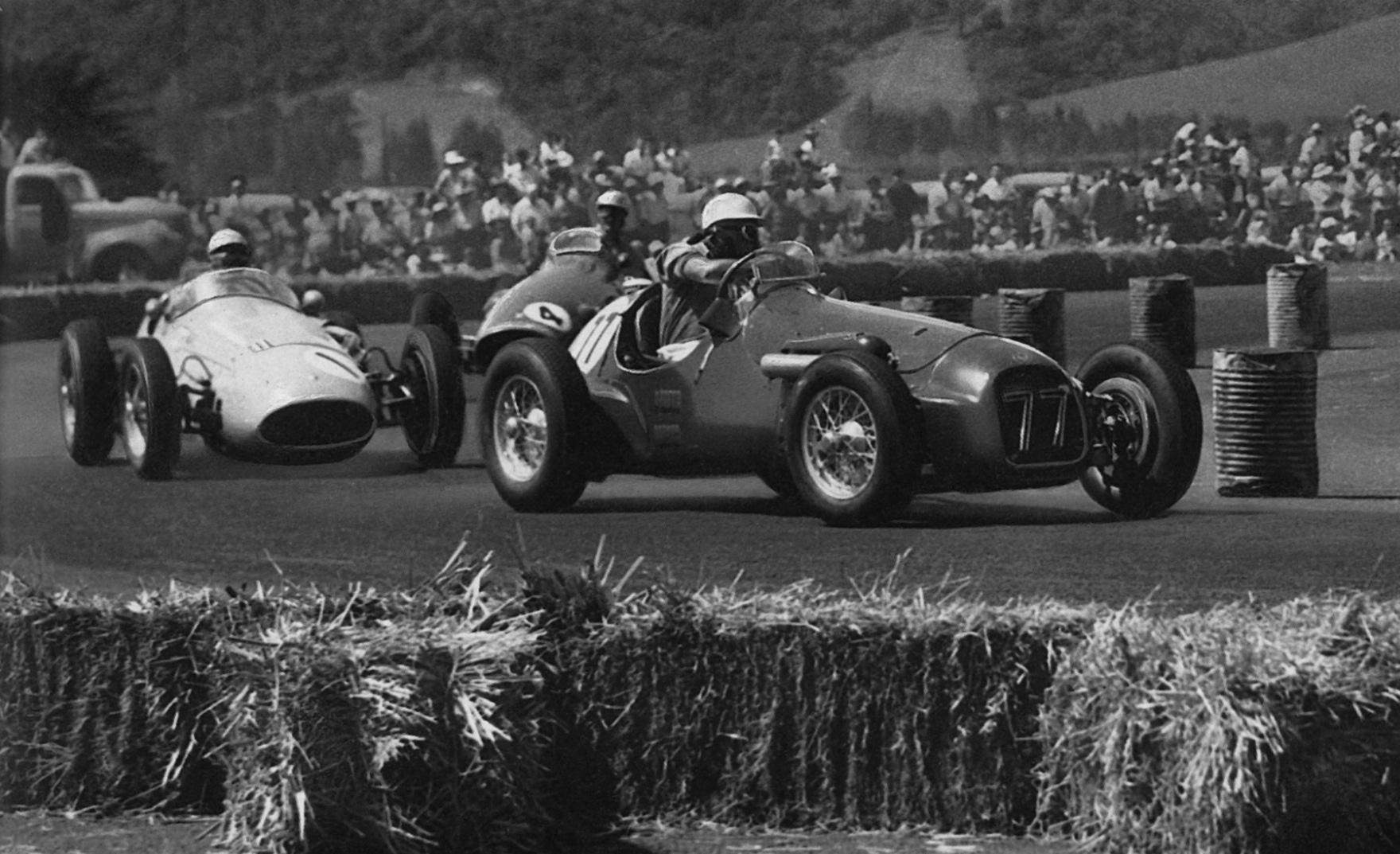

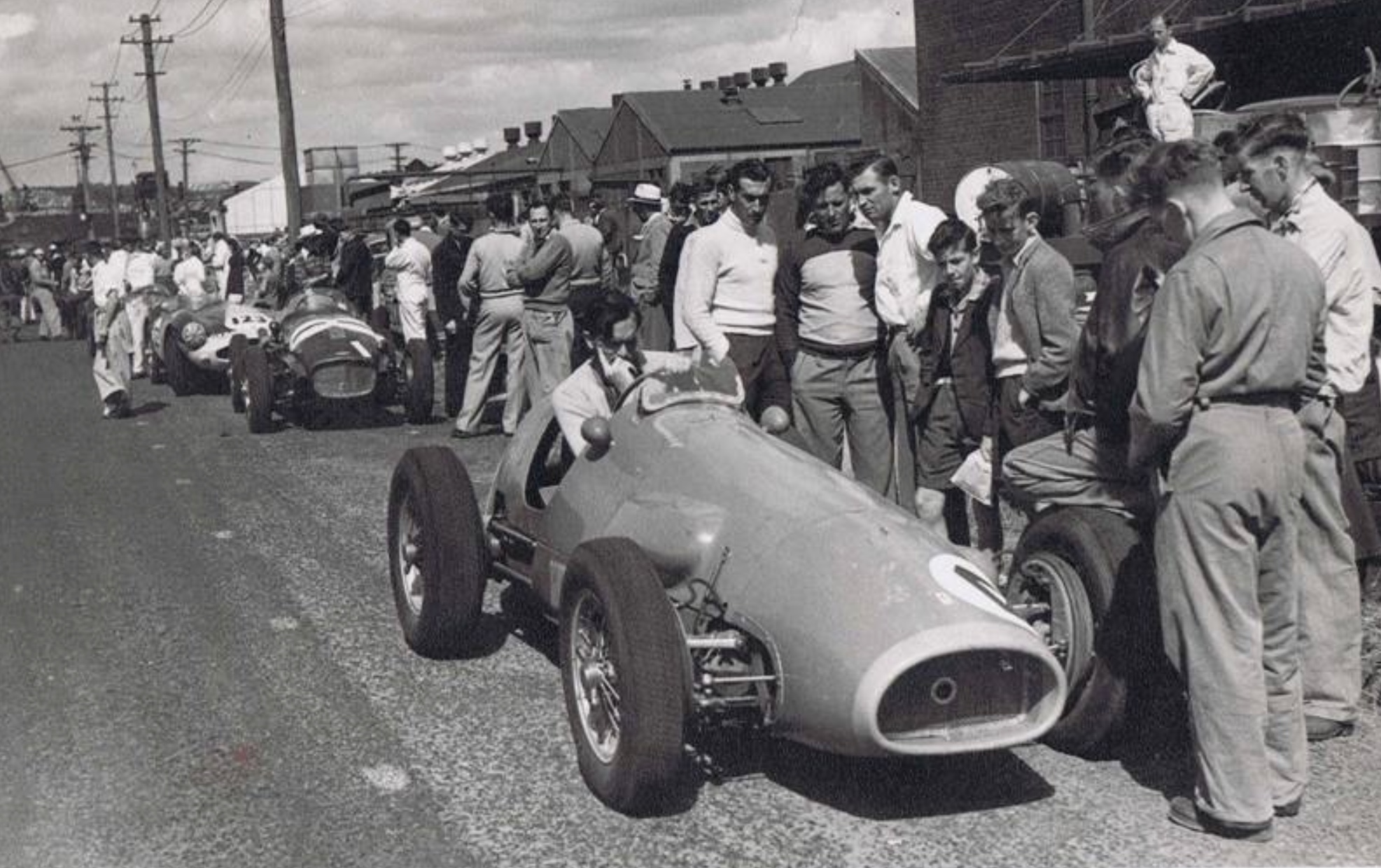
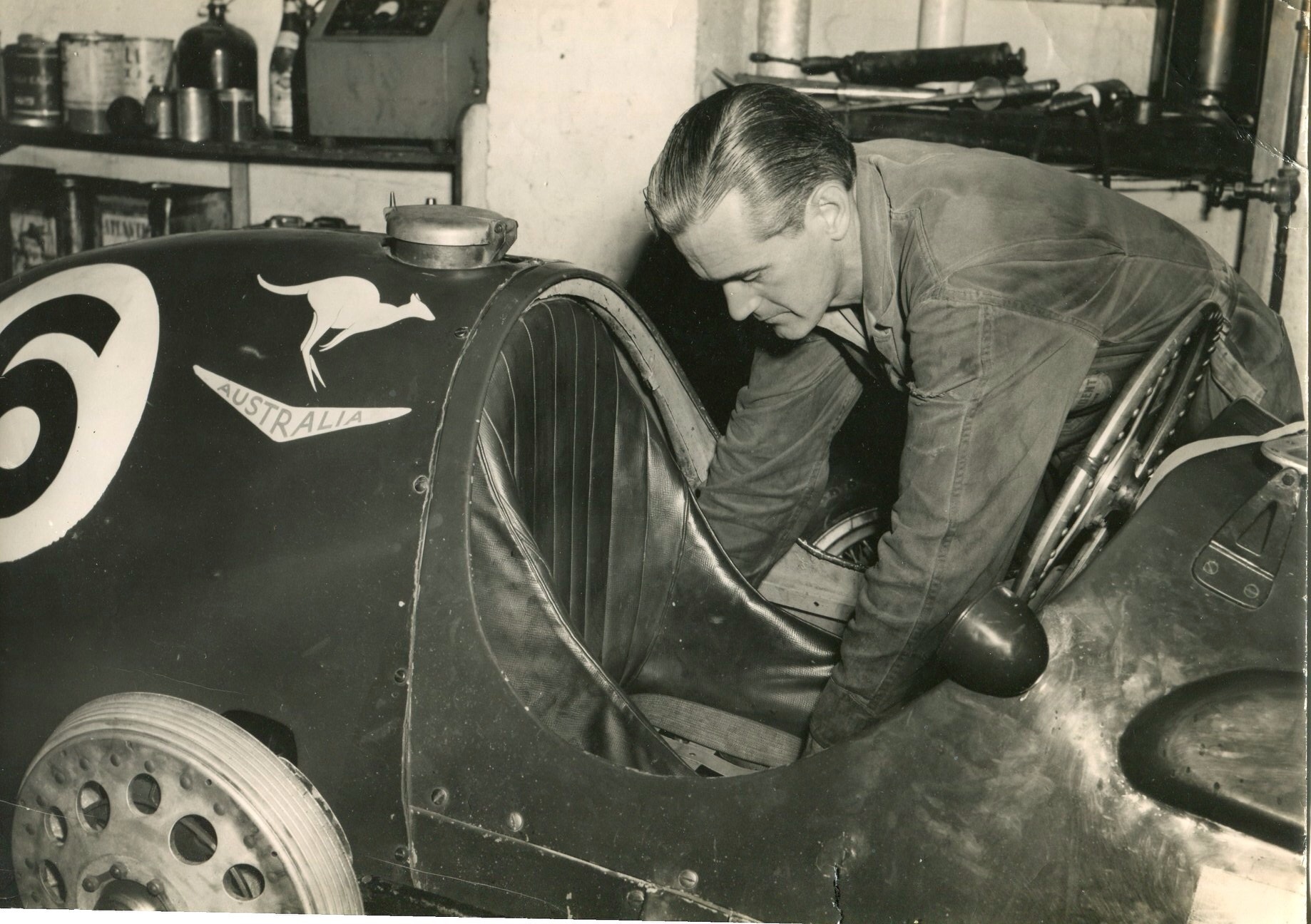
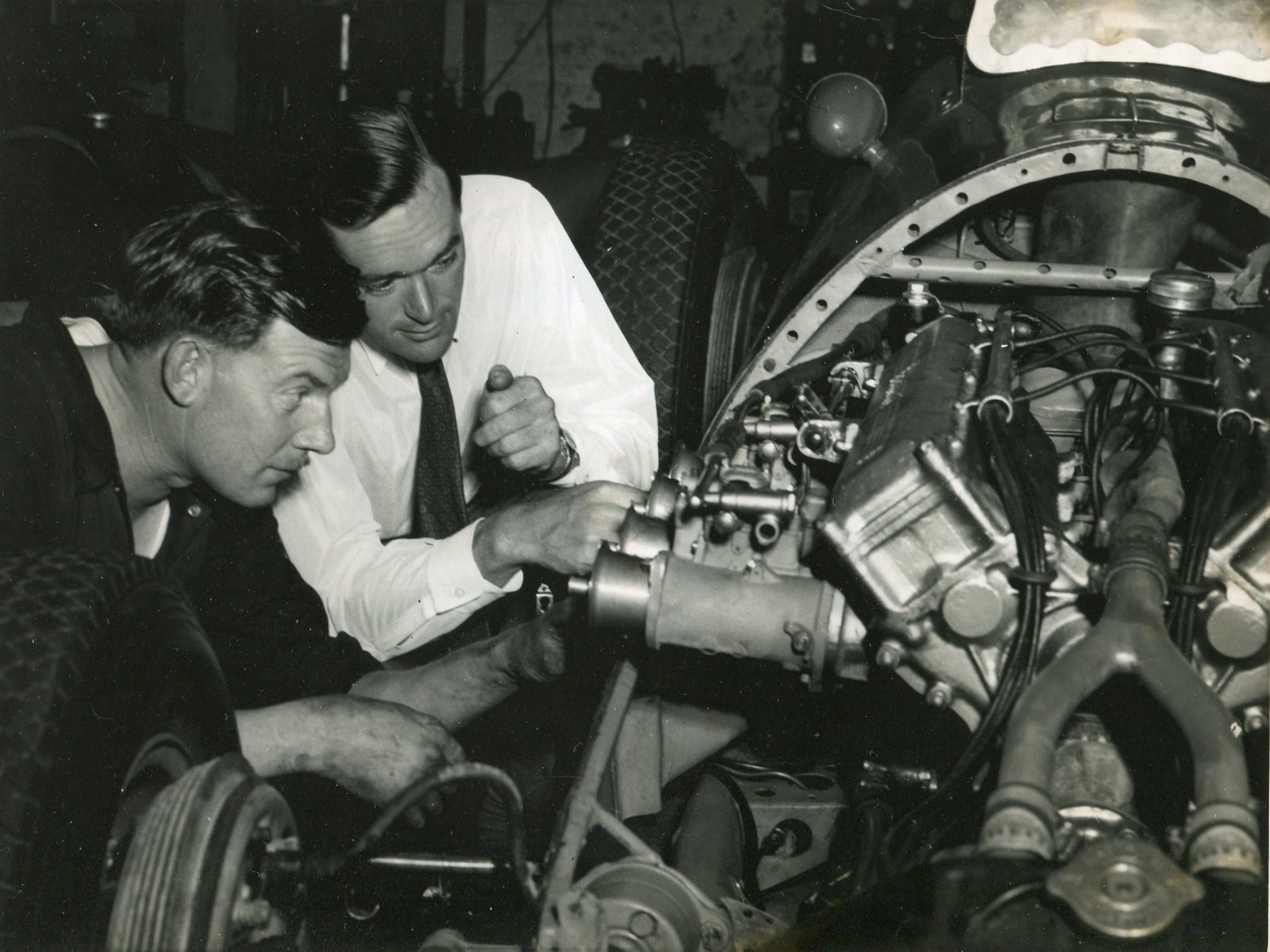

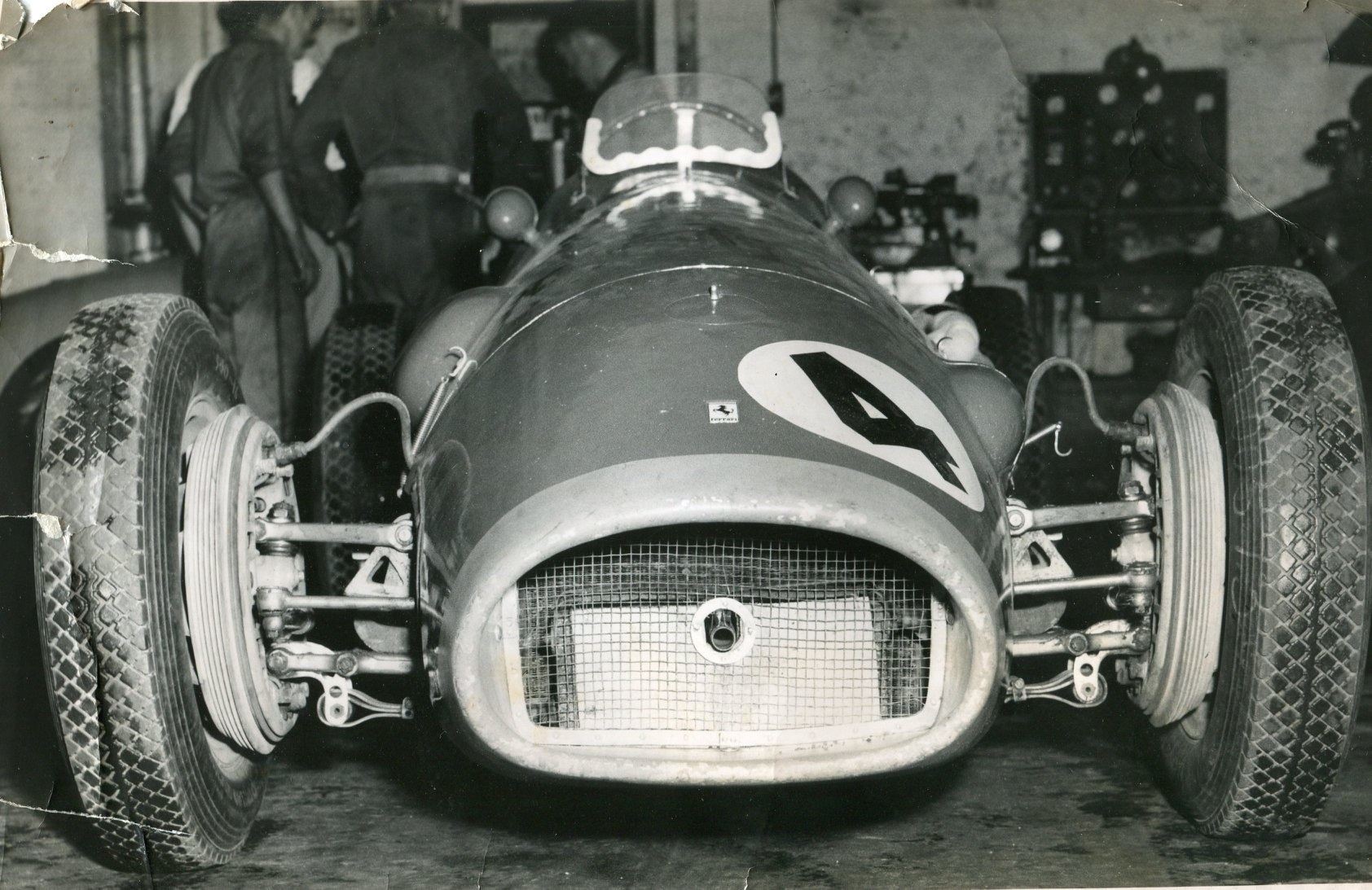
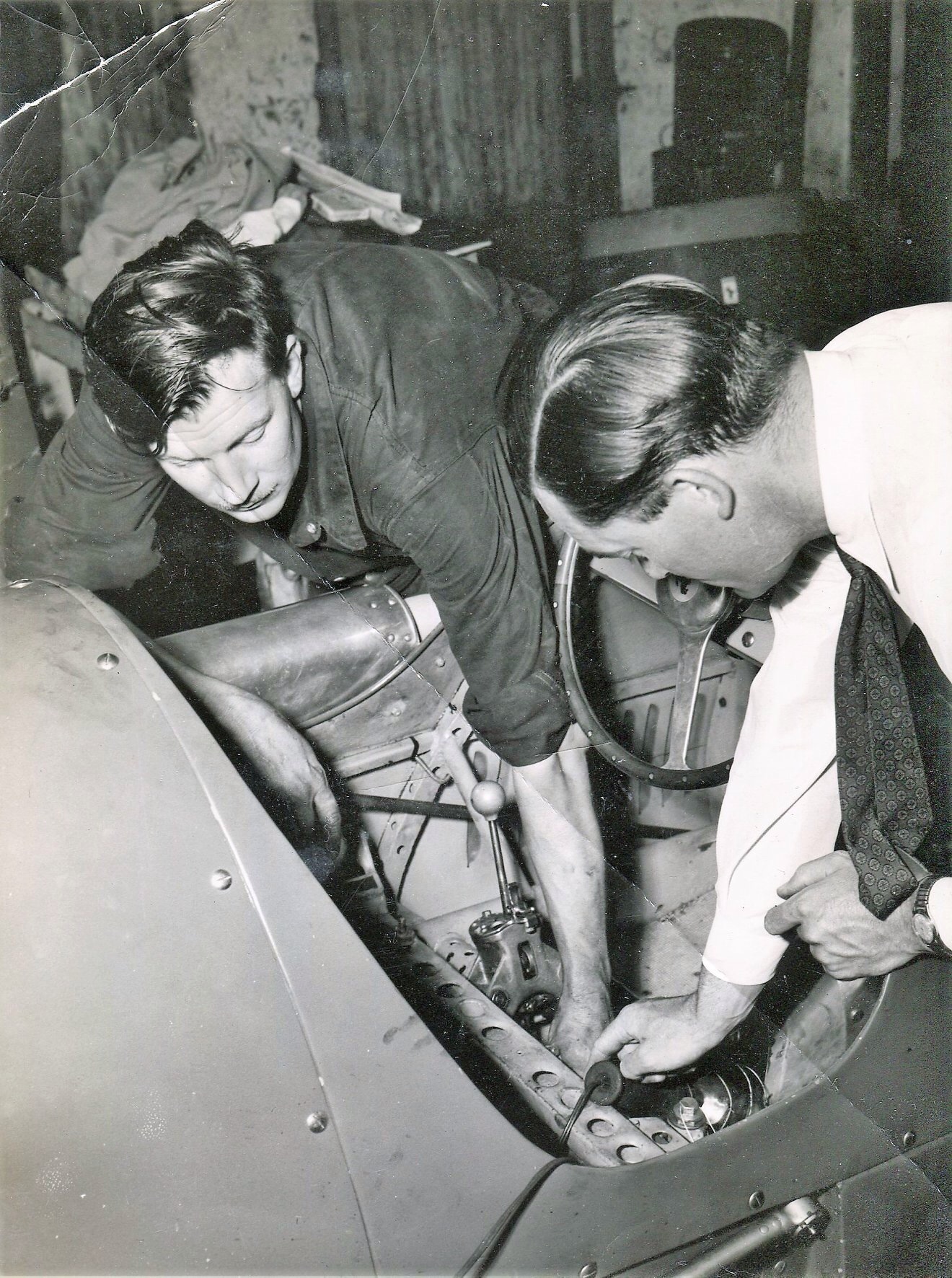
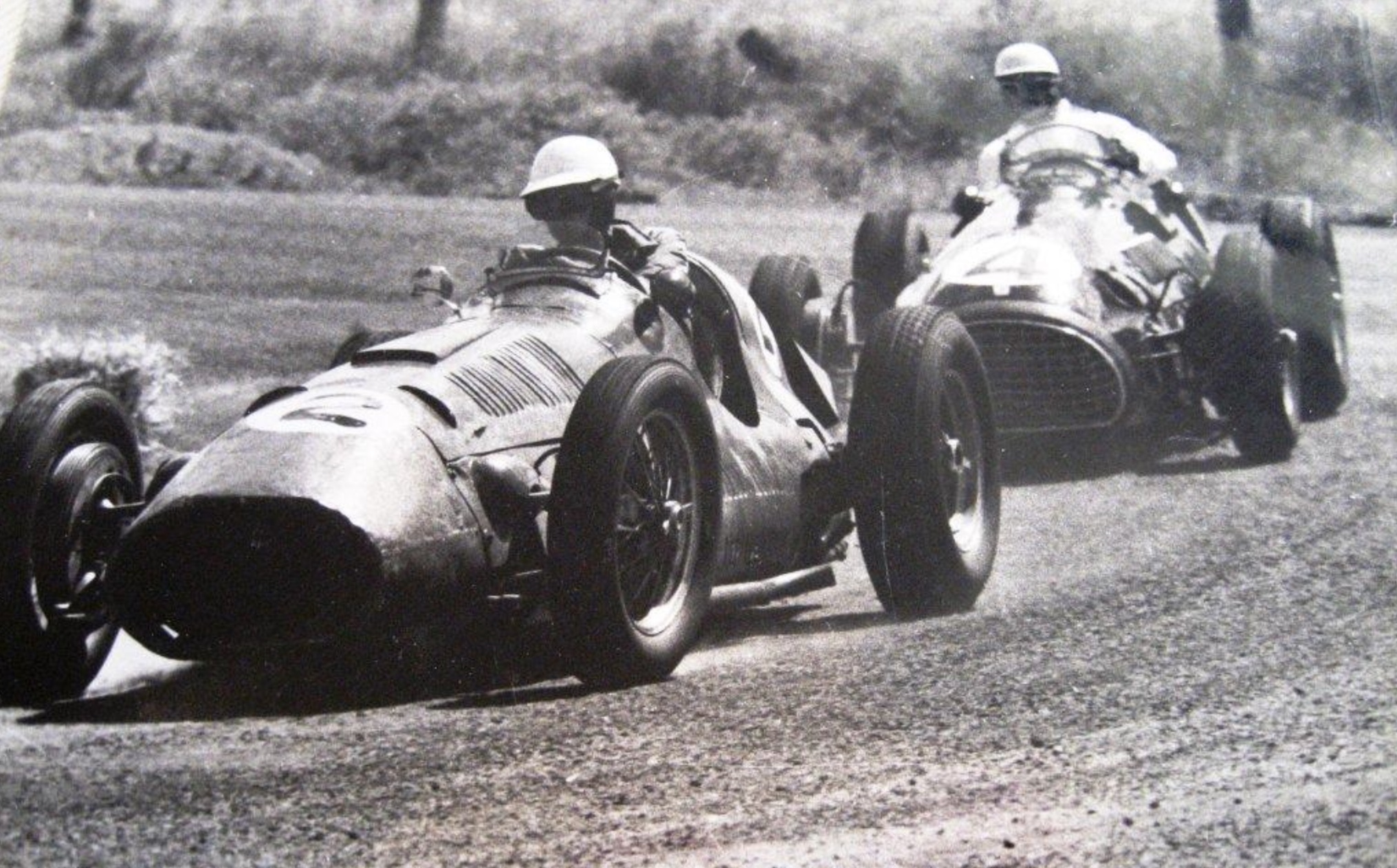
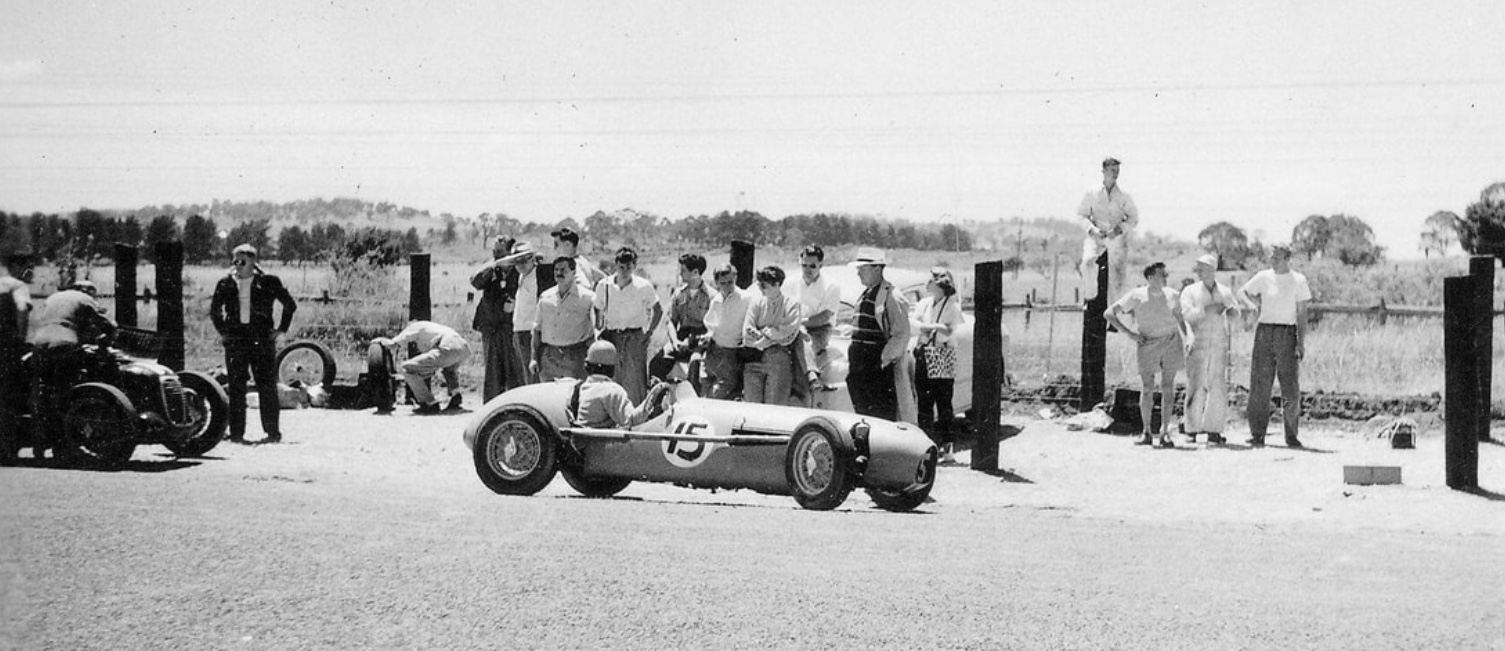

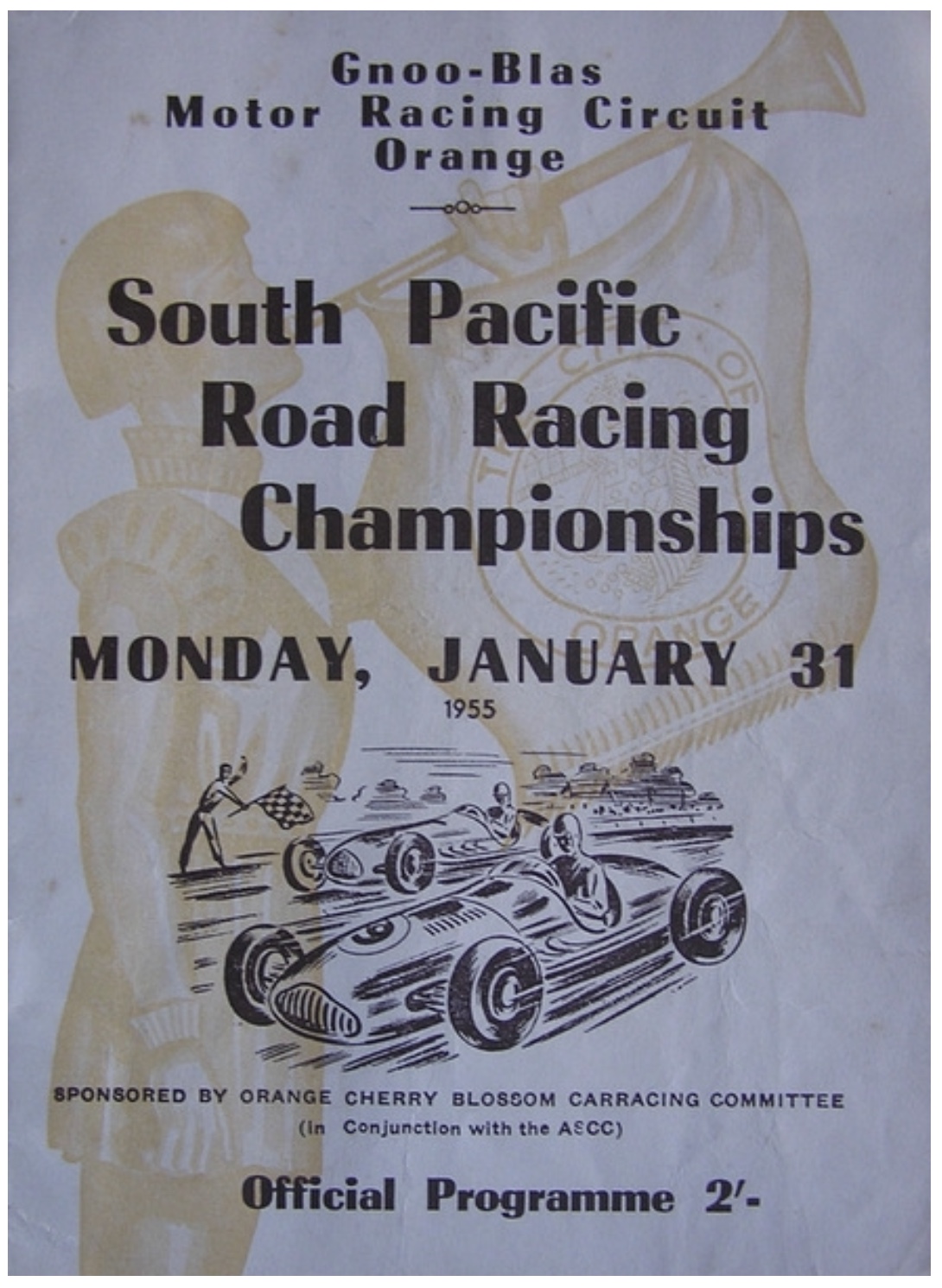


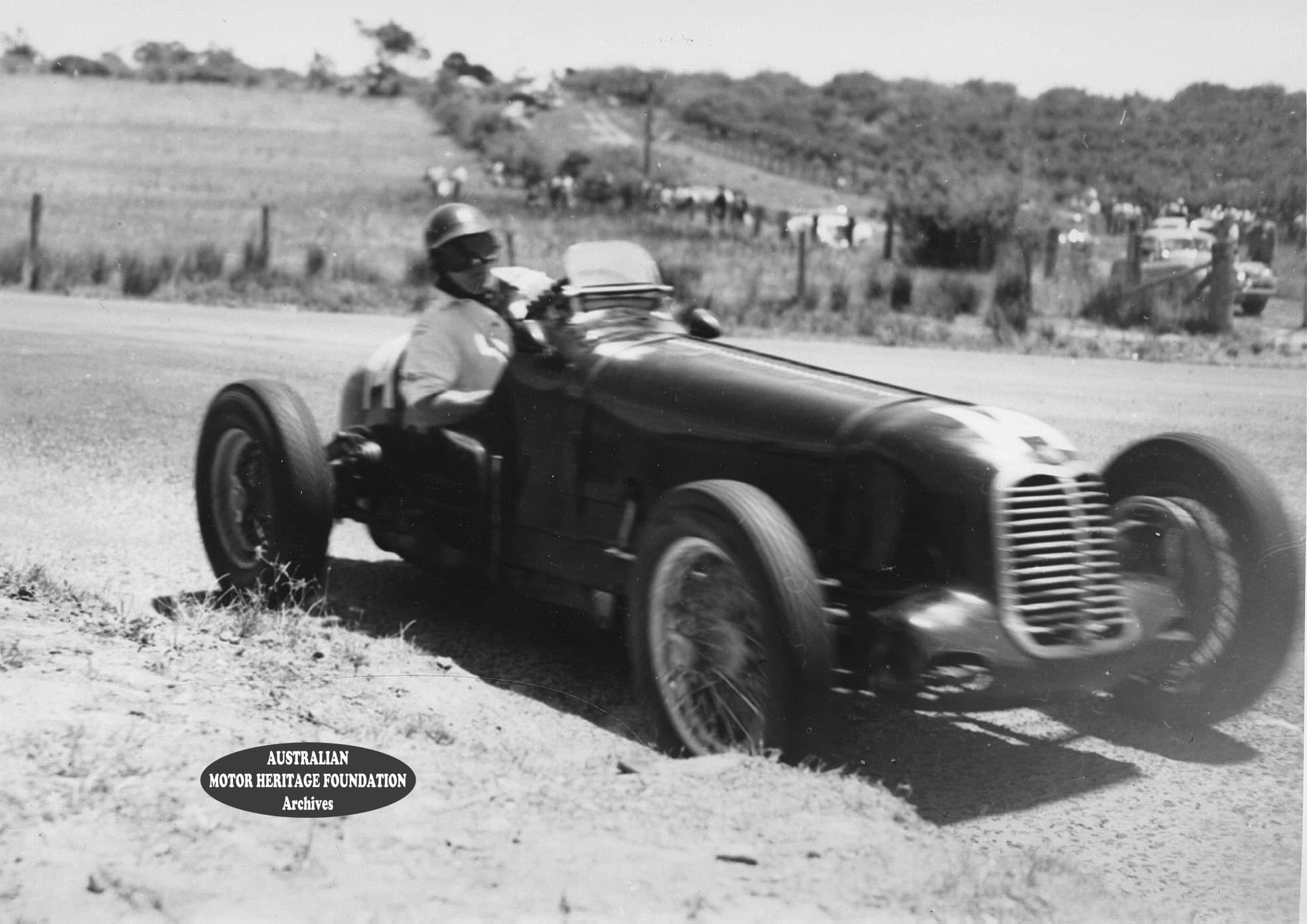


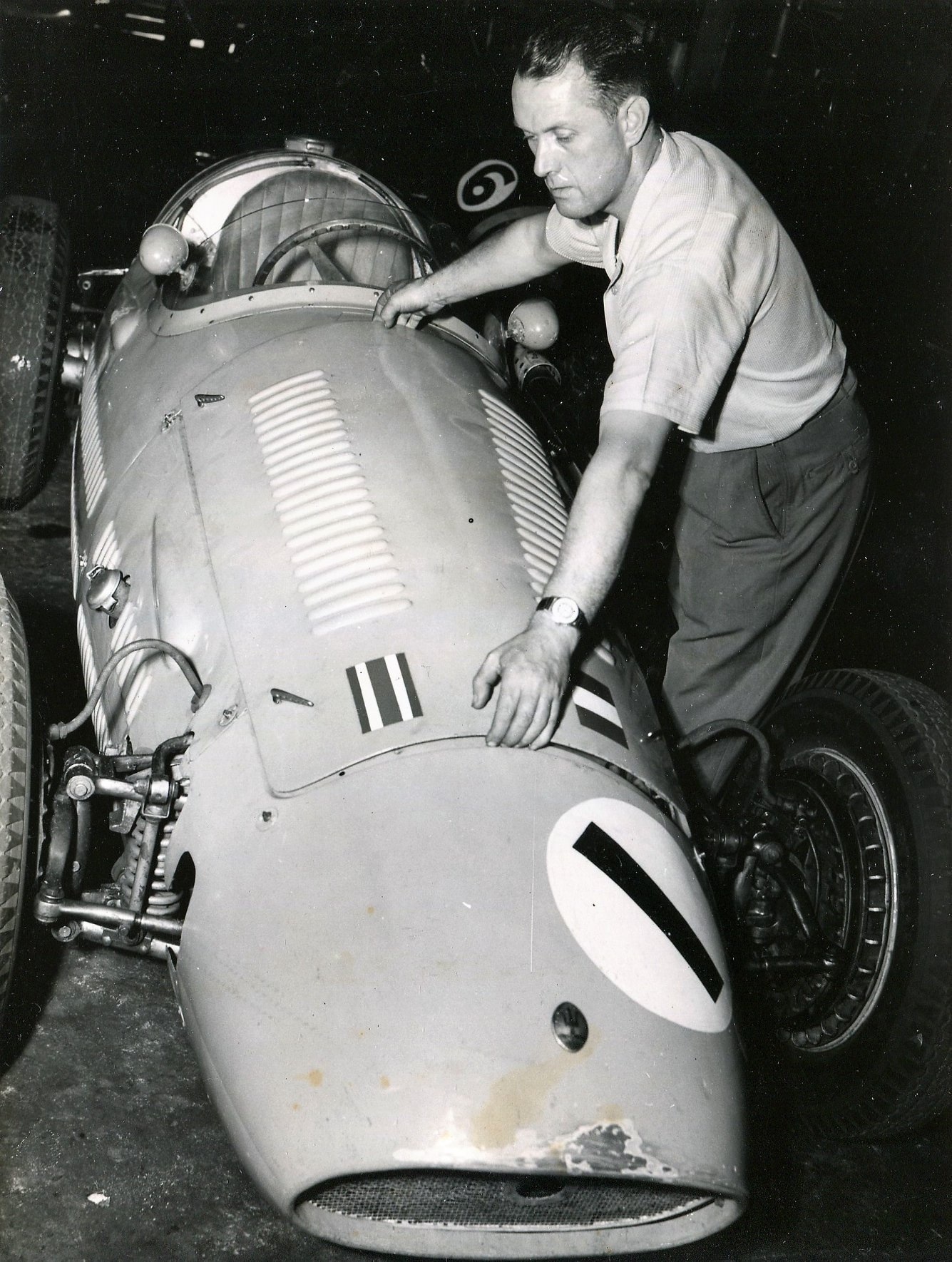

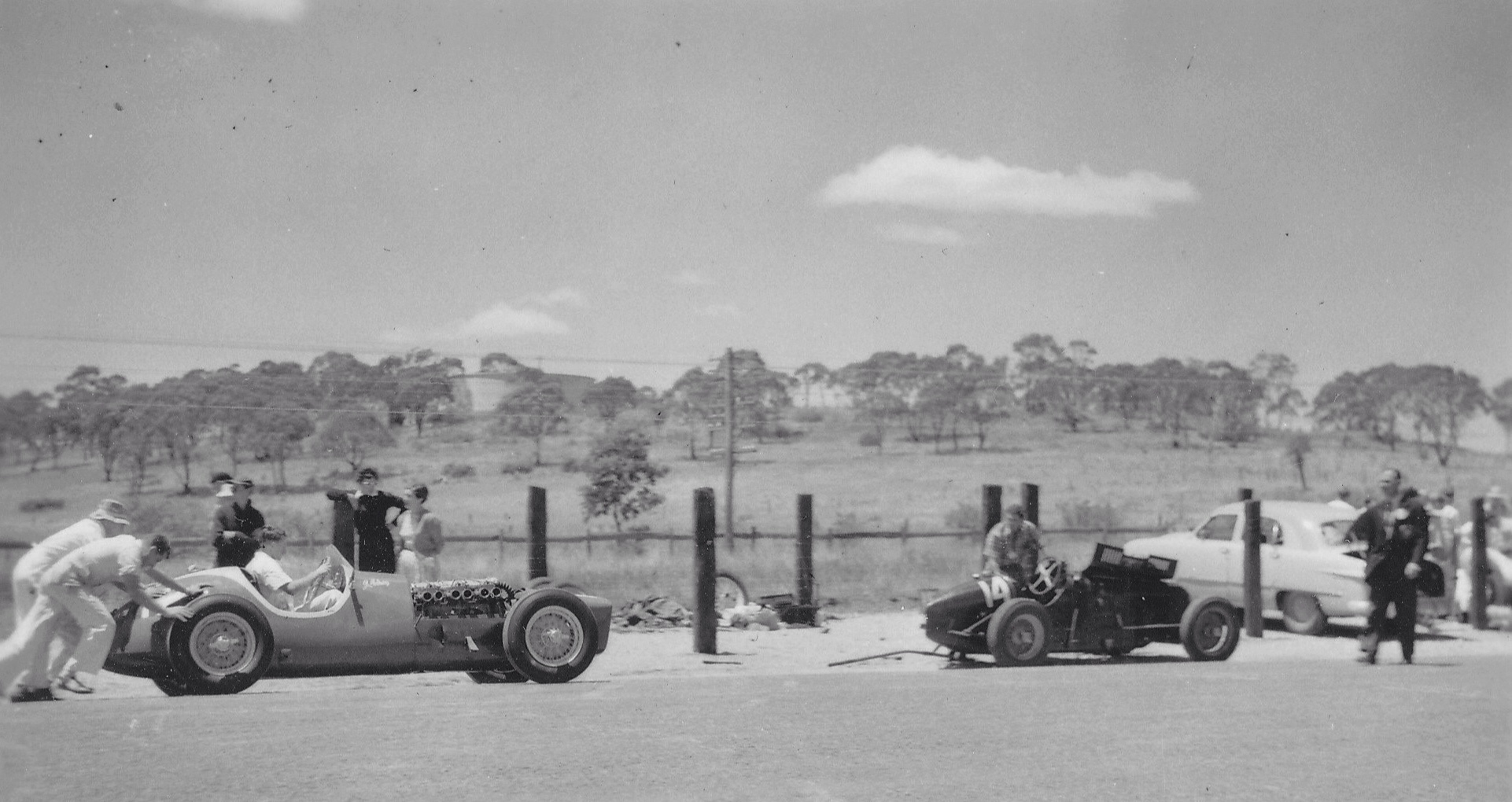
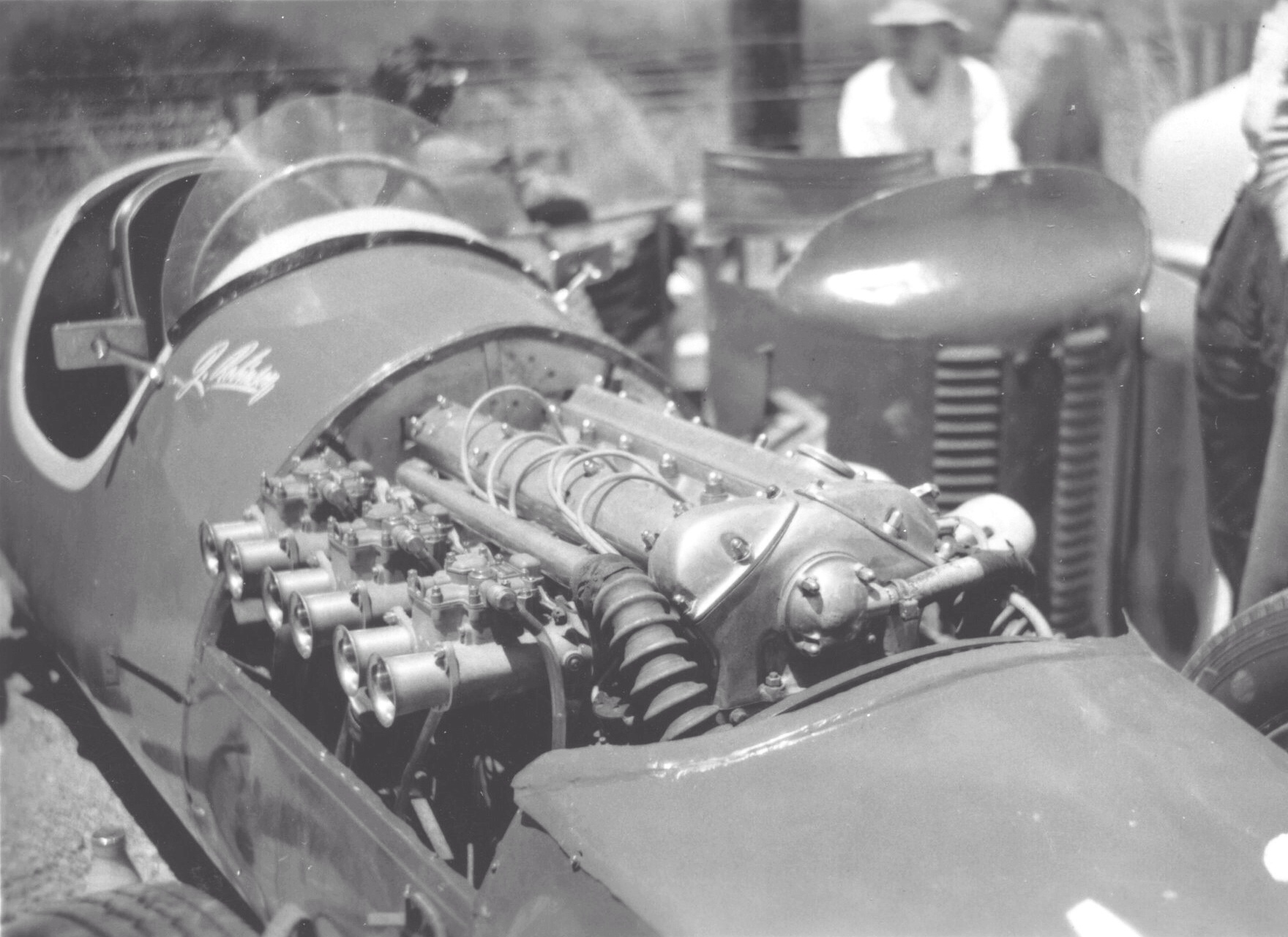
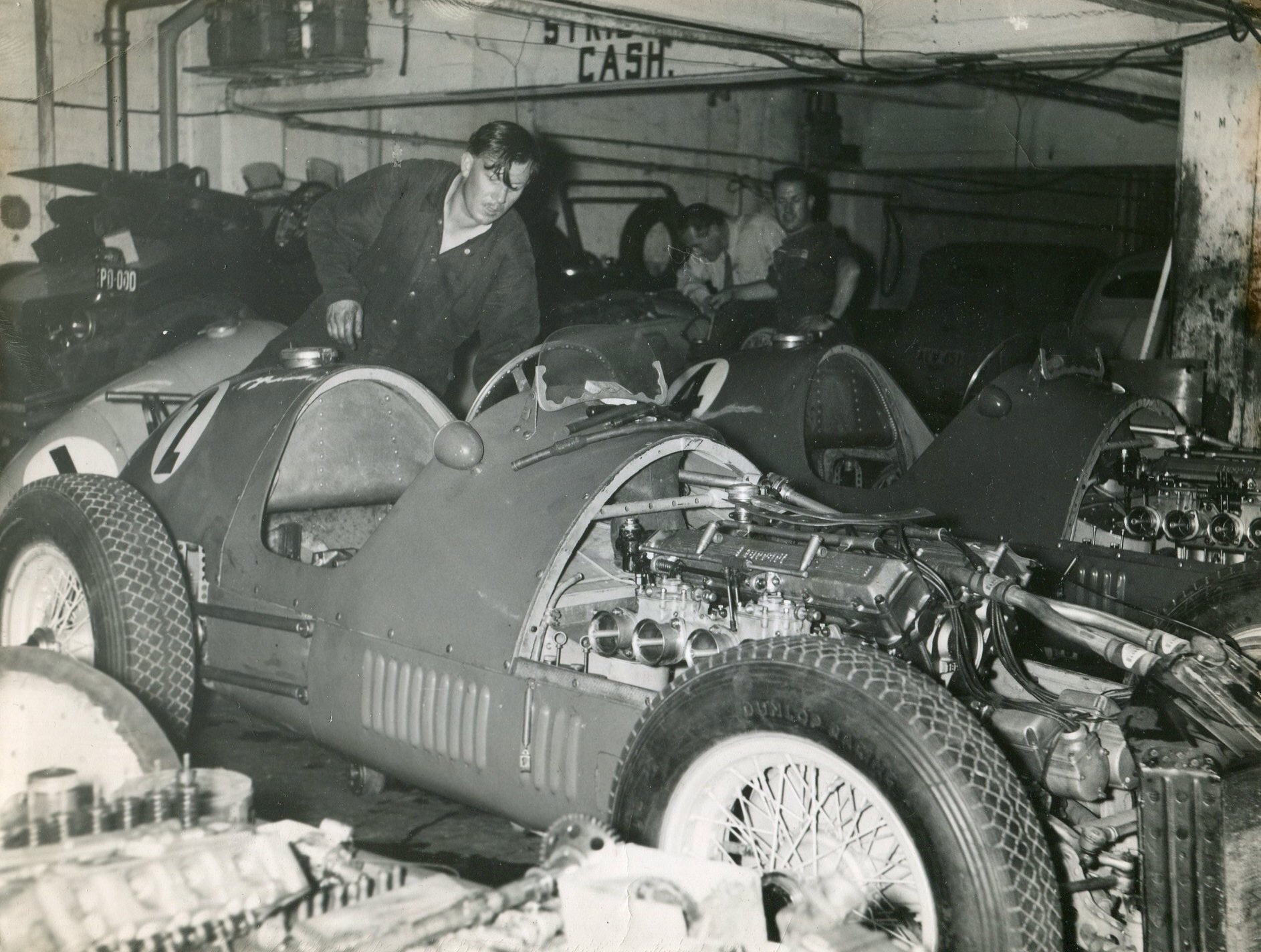
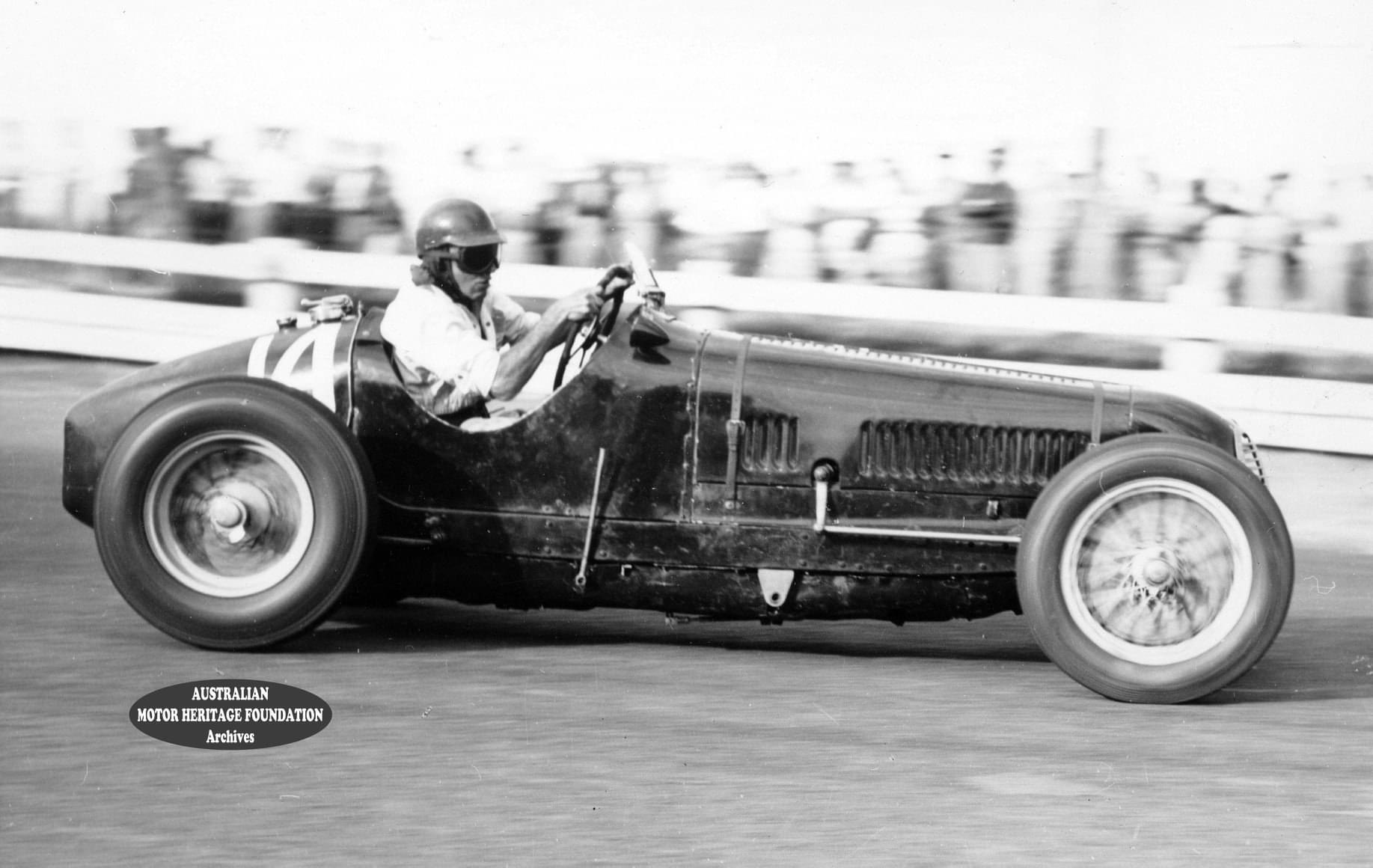
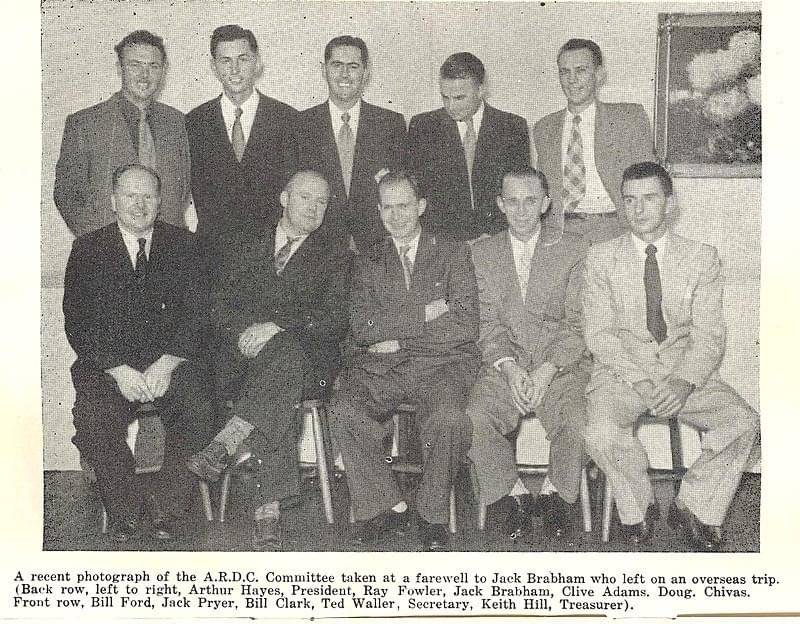

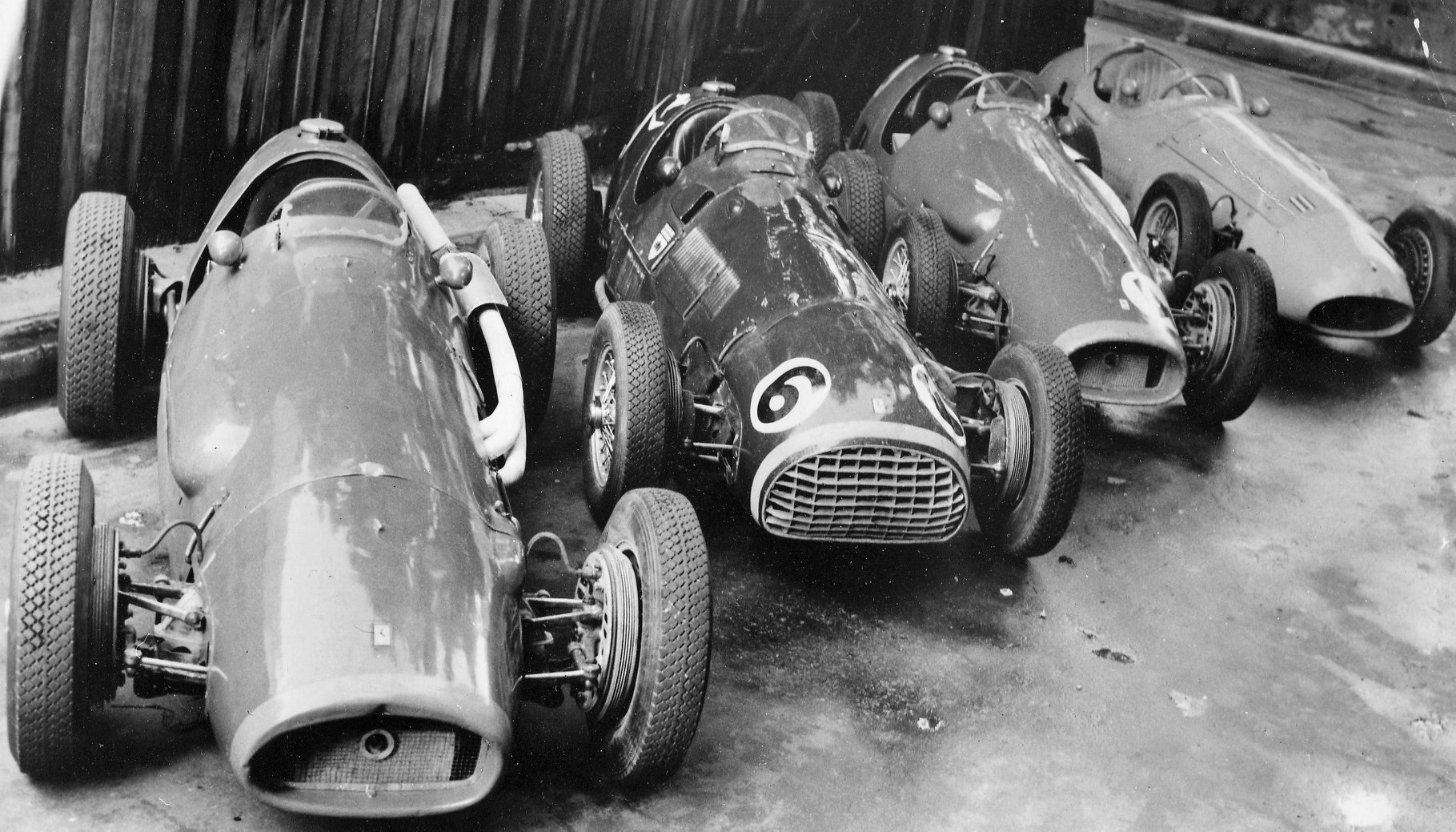
 primotipo...