Archive for the ‘F1’ Category

image

Great to see Innes Ireland maintain focus AND have the head space to follow Sirling Moss home in the  1960 US Grand Prix…

Bit of a tight fit in the cockpit of his 18, it would have been a bit more comfy in his 19 Sportscar, albeit not as much fun.

He  won the USGP in his Lotus 21 Climax the following year, the Scots only championship GP win. His talent deserved more but life was for living, he was a champion with joie de vivre!

Innes took Team Lotus first GP win in the process so ’twas a big weekend for Innes, Chapman and the Lotus 21.

The photo below is Ireland leading Dan Gurney’s Porsche 718 and Graham Hill’s BRM P48/57 Climax on his way to victory in 1961.

image

(unattributed)


Credit…

Dave Friedman, Getty Images

Tailpiece: Innes, Silverstone, circa 1961…

image

(Getty)


image

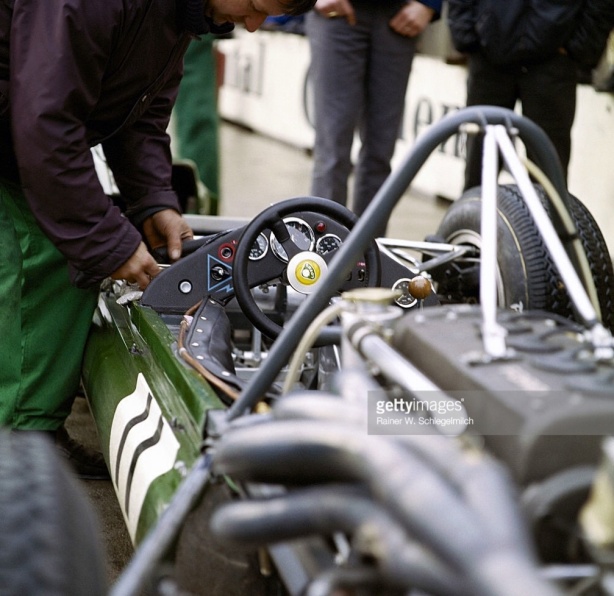
The spare Lotus 48 Ford FVA, chassis 48-2 during the Eifelrennen Euro F2 round in the Nurburgring pitlane on 24 April…

Oliver’s Lotus Components entered Lotus 41B was the most successful of the Lotus works entries, he finished 11th. The Team Lotus duo of Graham Hill were 15th with Clark retiring with fuel metering unit failure. The latter two drove Lotus 48 Ford FVA’s, Oliver’s car was an update of Lotus’ 1966 contender. Jochen Rindt won the race in a Brabham BT23 FVA.
image

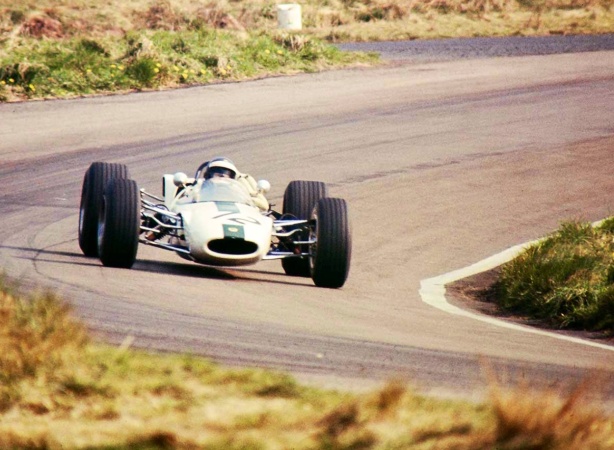
Oliver on his way to 4th place and first F2 home during the Oulton Park Spring Trophy. His Lotus 41B was behind the Brabham Repco’s of Jack and Denny Hulme, and the Honda RA273 of John Surtees. 15 April 1967 (Brian Watson)

Oliver raced for the Charles Lucas factory Lotus F3 team in the second half of 1966, driving a Brabham BT18 Ford and Lotus 41 Ford finishing third in the Les Leston British F3 Championship, Harry Stiller won it from Chris Lambert.

For 1967 Oliver contested the British F2 Championship, finishing 5th, as well as many Euro F2 rounds, for 1968 he was a member of the ‘works’ F2 team racing Lotus 48’s together with Jim Clark and Graham Hill.
image

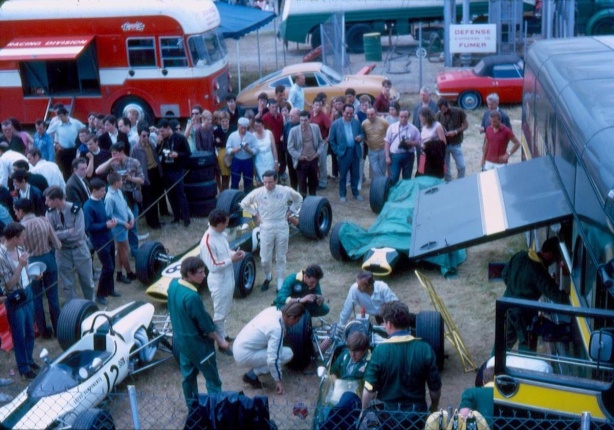
Lotus Team compound during the 25 June 1967 Reims GP weekend. The white car is Ollies Lotus 41B 7th. Jim Clark is talking to Jackie beside his car #8 Lotus 48 DNF, the car under the cover is the spare carrying #8. Hill is talking to the mechanics next to his chassis, 2nd. The race was won by ‘F2 King’, Rindt in a Brabham BT23 FVA (unattributed)

Then, in the worst of circumstances he ascended to the F1 team upon Jim Clark’s death at Hockenheim on 7 April during the second round of the 1968 Euro F2 Championship.

Oliver was 5th in the championship won that year by Henri Pescarolo’s Matra MS5 Ford, Rindt the dominant driver, as ever, in the category but ineligible for the title as a graded driver.

Olivers first Gold Leaf Team Lotus F1 race was the Monaco Grand Prix in which he qualified his Lotus 49B Ford 13th but was out on the first lap after colliding with Bruce McLaren.
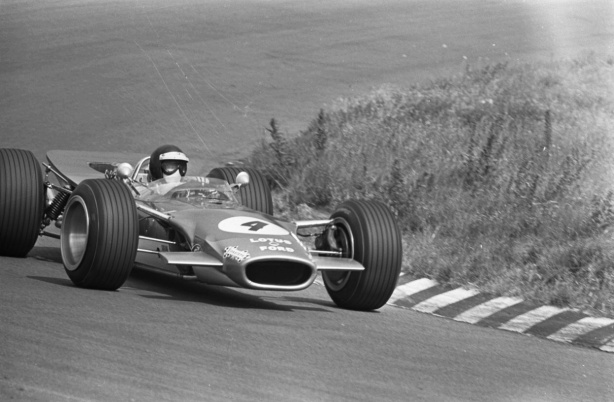
 

image

Oliver Q10 in the Dutch dunes where the Lotus 49B made its victorious debut in Clark’s hands the year before. He was non-classified having done insufficient laps. Jackie Stewart won in a Matra MS10 Ford (unattributed)


In a character building year, he had a monster accident at during French GP practice when the cars rear wing support failed-pinging the fence of a chateau on an amazing 125mph trip thru the Rouen countryside. He was able to walk away but the car was hors ‘d combat, so that was his meeting.


image

Oliver reflecting on life after a wild, wild, wingless ride thru rural France. Whilst his mechanic reflects on the long night ahead (sic) Jackie is sussing out his DG300 box and rear suspension which is 50 metres back up the road from whence he came (unattributed)
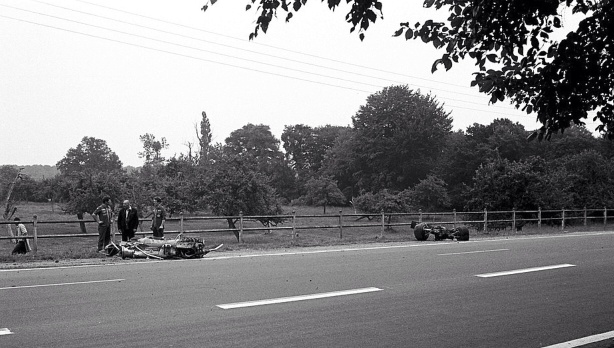
 

image

The chateau gates Oliver hit are to the right past the Lotus 49’s rear end (unattributed)
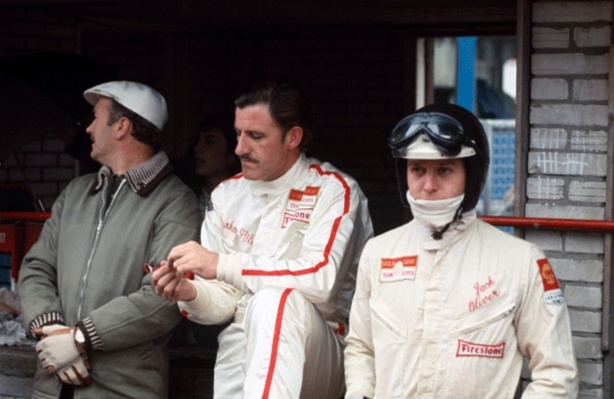
 

image

Chapman, Hill and Oliver during the tough 1968 season (unattributed)


His best result from a year in which Graham Hills tour de force of leadership gave him and the team world titles was Q2 in his home race at Brands Hatch, the race won by Jo Sifferts Rob Walker Lotus 49B, and 3rd in the season ending Mexican GP, Hill was the winner of that race.
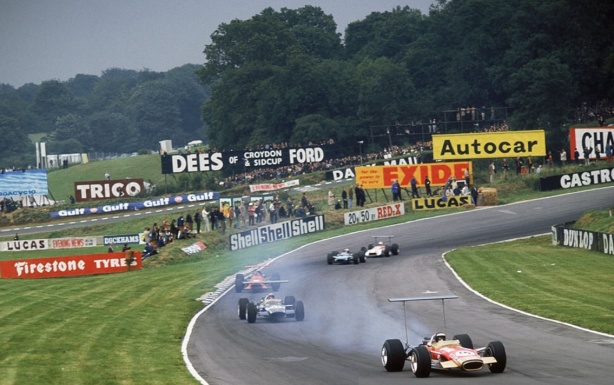
 

image

Oliver DNF gearbox after qualifying 2nd, ahead of Jo Siffert 1st both in Lotus 49B’s, Chris Amon 2nd, Ferrari 312, the last car in the group Surtees Honda RA301 5th (Getty)
 

image

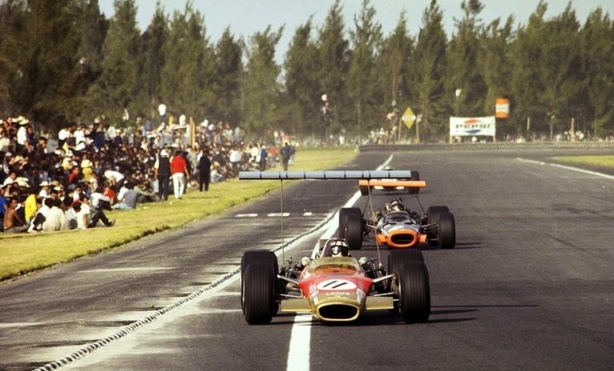
Oliver leads Pedro Rodriguez BRM P133, 3rd and 4th in the 1968 Mexican GP, 3 November. Hill won from Bruce McLaren (unattributed)


For 1969 Jackie was off to BRM, Jochen Rindt took his Lotus seat for 1969 in an ‘all star’ team with Hill. It was a tough year in  1969 as BRM had  ‘lost their way’ in a design sense, the P133/138/139 uncompetitive, better was to come  in 1970 with the Tony Southgate designed P153.
 

image

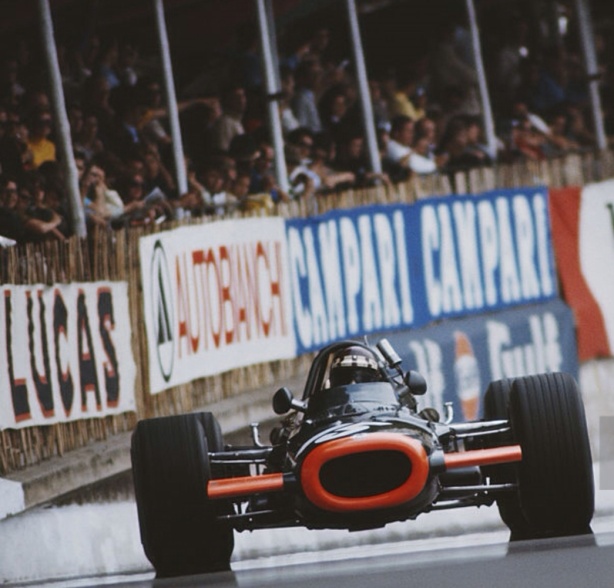
Oliver, BRM P133 Monaco GP 1969 , Q13 and DNF with an accident of lap 1. Hill won in a Lotus 49B Ford (Schlegelmilch)
 

image

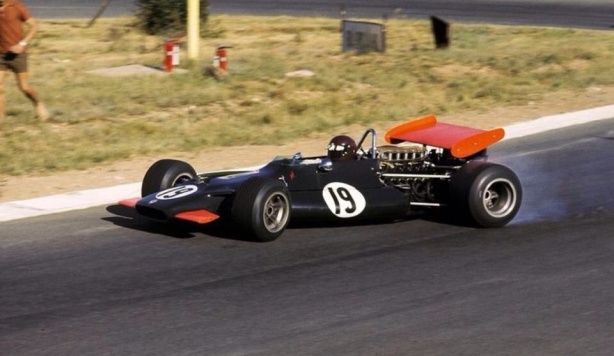
Jack Oliver giving his brand new BRM P153 V12 plenty during the season opening South African GP weeeknd at Kyalami in March 1970. Car looks gorgeous without its Yardley branding! Brabham won in a Brabham BT33 Ford, Oliver DNF with gearbox dramas (unattributed)


Chapman waxed and waned between monocoques and space frame chassis for his ‘small bore’, production single-seaters throughout the 1960’s…

Whilst the marketing advantage of a you-beaut monocoque ‘just like Jim Clark’s Lotus 25’ was clear, equally the relative cost of repair of a spaceframe, especially in the field, a long way from the Norfolk was something which wasn’t lost on a lot of customers. Local garagiste ‘Louis the Torch’ may have been able to fix bent RF corner tubes, but he was less likely to be able to assist with curved sheet metal/aluminium complexities…

Statistically the most successful FJ/F3/F2/FB cars of the 1960’s were Ron Tauranac’s spaceframe Brabhams which were built to a consistent design philosophy throughout.

The cars were simple, strong, fast and forgiving straight outta the box. The latter because Jacks ‘finely tuned arse’ in testing contributed the ex-factory suspension settings which could be relied upon as a competitive, starting position by customers. Plenty of championships were won by not straying too far from them.
 

image

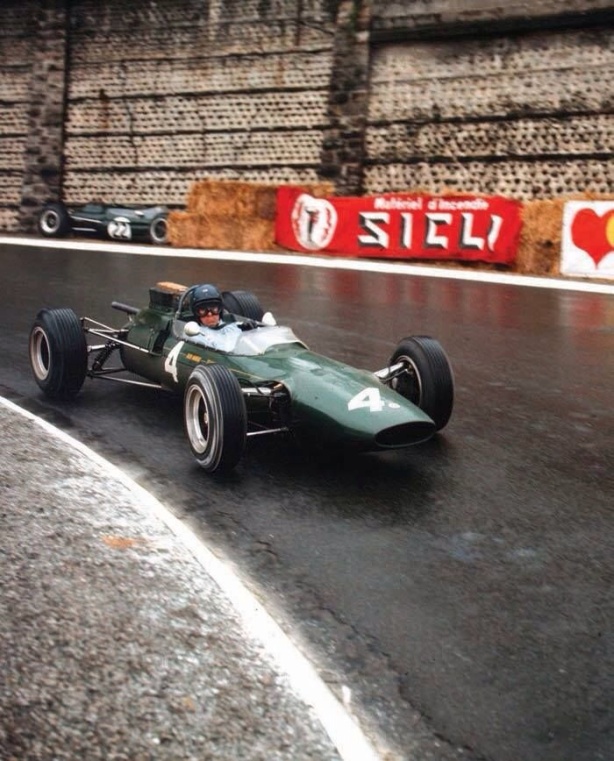
Jim Clark, Pau GP, 25 April 1965, victorious in his Lotus 35 Cosworth Ford SCA from Richard Attwood’s Lola T60 and Jochen Rindt’s Brabham BT16, both also SCA powered (unattributed)


Lotus Components 1965 F2/3 car was the monocoque 35, a modified version of the 1964 32, with Clark winning plenty of races in the car including the  Trophee de France, the Scot won 3 of the 4 rounds.

Aussie John Joyce (later the designer of magnificent Bowin racing cars when he returned to Australia) with assistance from Dave Baldwin were briefed to build a spaceframe F3/F2 frame for 1966 designated the 41. The Lotus brains trust were having second thoughts about monocoque chassis suitability in the junior classes. Issues were cost, weight and utility and expense of repair. The 41 was raced from 1966 to 1968 and whilst a good car didn’t have the factory support needed to further develop it, the exception the Lotus Components 41 raced by Oliver. The chassis was also raced in the US FB class.
 

image

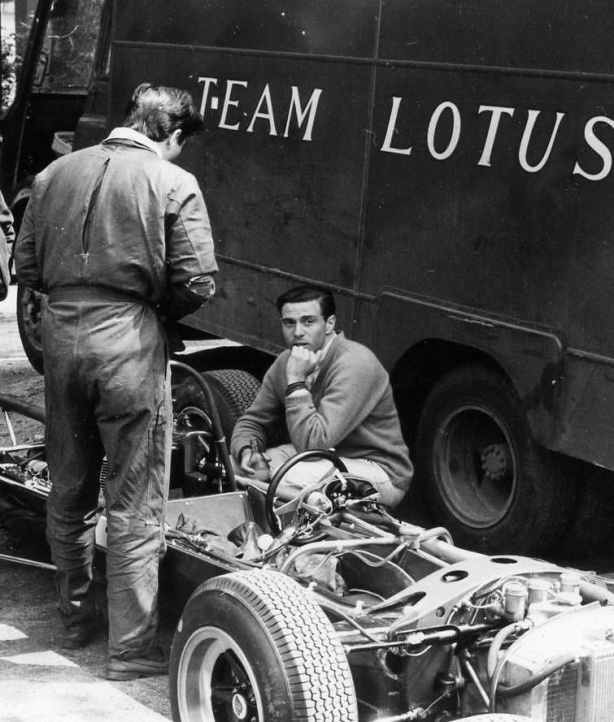
Pau GP, ’65 JC ponders setup changes on his monocoque Lotus 25 inspired 35 (unattributed)


The works Lotus F2 car for 1967, the first year of the 1.6 litre F2, the Lotus 48 was a monocoque, the car Oliver raced was the customer 41B, a spaceframe.

Both cars were comprehensively blown off by Tauranac’s Brabham BT23 which had some mighty fine pilots; aces like Rindt, but also coming drivers who extracted all the performance the car had to offer. The Matra F2’s, the MS5 and MS7 were also fairly tidy, fast (monocoque) devices…
 

image

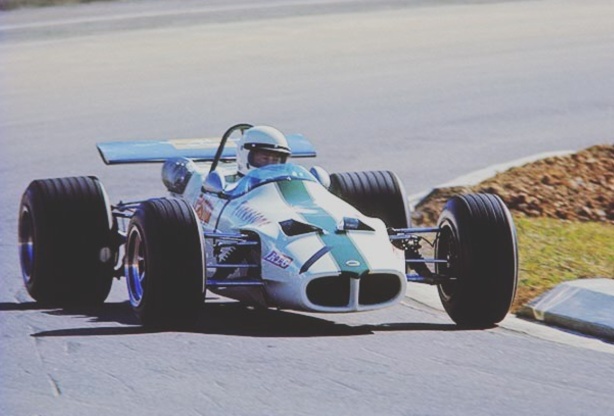
Leo Geoghegan, Australian Gold Star Champion in a Lotus 59 Waggott 2 litre in 1970. Here at Oran Park, Sydney that year (oldracephotos.com)


Chapman’s 1969 F3/F2 car, the Dave Baldwin designed 59 was a spaceframe. Its successor, the final Lotus production racing cars produced in volumes, the 1970 69 was a spaceframe for FF/F3 (spaceframe chassis are mandated in FF) and a monocoque for F2. Go figure!? Mind you, the 59 and 69 were very effective, successful tools whatever the variant.
 

image

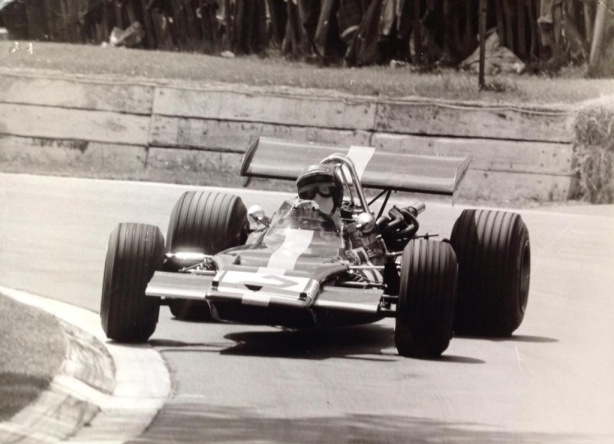
Jochen Rindt doing his thing in his Lotus 69 FVA during the Crystal Palace Euro F2 round, the ‘London Trophy’ on 25 May 1970. Jochen’s car DNF battery lead, Jackie Stewart’s John Coombs Brabham BT30 FVA won the race. The 69, a monocoque, was a mighty fine car in the hands of the works and customers, competitive into 1971 (unattributed)


These Lotus chassis changes are only of arcane interest over the decade I guess. Perhaps the reasons for the choices were simply the opinions and preferences of the individual designer who worked on each cars design or layout, not that I am suggesting Chapman ever lacked clarity about design direction or objectives!

In terms of the general specifications of F2 cars of the early 1.6 litre Formula, those and that of the engine de jour, the Ford Cosworth FVA 1.6 litre unit are well covered in my article on the Lotus 48, click here to read it, there is no point repeating it all;

https://primotipo.com/?s=lotus+48
 

ollie

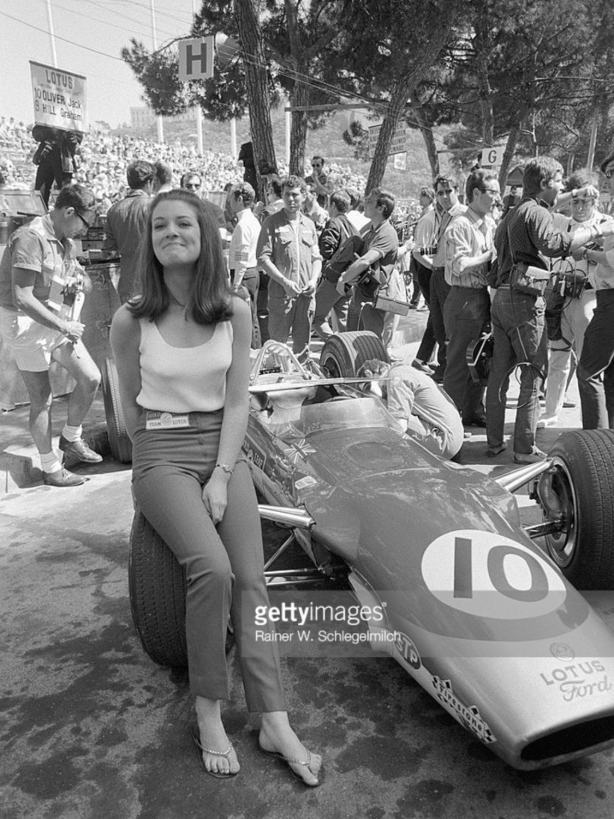
Lynn Oliver, Monaco 1968. Husband Jackie and Bruce McLaren collided on the first lap, both DNF. Car is Lotus 49B Ford, Graham Hill’s sister car won (Schlegelmilch)

Credits…

Rainer Schlegelmilch, Brian Watson, oldracephotos.com, Getty Images

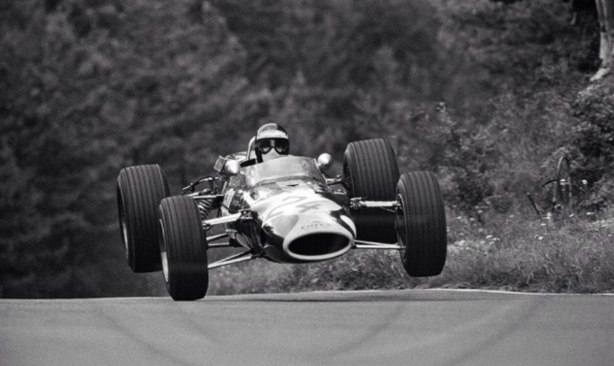
Tailpiece: Ollie’s Lotus 48 aerobatics at Klostertal during the ’67 German GP weekend, he was the F2 category winner…
image

(Schlegelmilch)

In a great performance Jackie was 5th in a Lotus 48, the race won by Denny Hulme’s Brabham BT24 Repco

Finito…


image

When I first saw this shot I had a chuckle at the Auto Union logo on the ‘brolly, merchandising and brand placement goes back so far, there is nothing new under the sun?!…

And then I wondered which car and where of course, and as is so often the case with the Getty Archive there are no useful details. It makes the detective work a challenge, there are obviously not a lot of hints in this shot!

image

But I think it may be Bernd Rosemeyer’s victorious 1936 ADAC Eifelrennen winning Type C, 3 litre V16 engined car. The number fits, the photo was taken by a German agency and the exhaust pattern, two into one ‘drainpipe’ seems to fit with the limited number of shots I can see of Bernd that day. But all correspondence will of course be entered into.

Rosemeyer won the 13 June event from teammate Hans Stuck, the two 6 litre V16’s ahead of Antonio Brivio’s Alfa Romeo 12C 4.1 litre V12. Checkout the Kolumbus.com website, my favourite for this period, and their detailed race report, just scroll down to the race;

http://www.kolumbus.fi/leif.snellman/gp363.htm

image

Rosemeyer, AU Type C, 1936 Eifelrennen (ullstein)

image

Credits…

Ullstein Bild

Tailpiece…

image


noige

(Automobile Year/DPPI)

Nigel Mansell blasts his Lotus 87 Ford through the North Sea sand dunes of the fabulous Dutch circuit on August 30 1981…

Mansell joined the team in 1980, contesting the Austrian, Imola and Canadan Grands Prix.

In Holland he qualified his Cosworth powered Lotus 87 17th in a field of 30, 5 cars were non-qualifiers. His race was a short one though, he retired with an electrical failure on the races first lap. Alain Prost took the Renault RE30 win from Nelson Piquet, Brabham BT49C Ford (Piquet won the drivers title that year and Williams the constructors) and Alan Jones’ Williams FW07C Ford.

Mansell finished his first full season with 8 points, 14th in the drivers championship and a best placing of 3rd at Zolder, Belgium.

noige 2

Mansell, Zandvoort 1981. (The Cahier Archive)

Photo Credit…DPPI, The Cahier Archive

image
(LAT)

Stirling Moss leads the 1956 Australian Grand Prix at Albert Park in his works Maser 250F…

The dark, gloomy, wet weather shot could be in Europe. Stirling won the 80 lap, 250 mile race held on 2 December 1956 by a lap from teammate Jean Behra, Peter Whitehead’s Ferrari 555 Super Squalo, Reg Hunt’s Maserati 250F and Stan Jones’ similar car.

The excitement of this post Melbourne Olympic Games race meeting run over two weekends I covered in an article about the Australian Tourist Trophy which Moss also won the week before, in another works Maser, this time a 300S, click here to read it;

image
Moss during the 1958 Melbourne Grand Prix metting in Rob Walker’s Cooper T45 Climax. He raced sans the rear engine cover in the final, such was the heat, so this is a practice shot or heat (Fairfax)

This short article is pictorial in nature, I rather like the justaposition between his win in the conventional, state of the art 250F in 1956 and victory two years later in the 1958 Melbourne Grand Prix. On that occasion Stirling was in a paradigm shifting, mid-engined Cooper, a T45 Climax. He took the first modern era, mid-engined GP win on January 19, 1958 in a Cooper T43 Climax at the Buenos Aires circuit in Argentina.

Moss chills in the Albert Park paddock before the off in 1956 (S Landrigan)

Stirling won that 32 lap, 100 mile Albert Park, Melbourne GP race run in super hot conditions on 30 November 1958…

Behind him was Jack Brabham’s similar Cooper T45 Climax 2.2 FPF- Doug Whiteford’s Maser 300S and Bib Stillwell’s Maser 250F were third and fourth.

The race was a Formula Libre event attended by over 70,000 spectators. Brabham led away at the start but Moss soon passed him and moved steadily away keeping a strong lead despite easing in the final laps given his cars water temperature, which was off the Smiths clock!

(R Jones)

Melbourne GP start, Jack gets the jump in the centre from Moss on the left, both in Cooper T45’s and Stan Jones Maserati 250F.

Stirling’s car was fitted with an Alf Francis built Coventry Climax FPF, 4 cylinder DOHC, two valve, Weber carbed engine of 2051cc, it was a ‘screamer’ with trick cams and crank. Jack’s T45 toted a 2.2 litre FPF, revised Ersa five-speed ‘box and double wishbone rear suspension.

Jack Brabham ahead of Dick Cobden, Ferrari 125 Chev
image

The two new-fangled Cooper T45’s were the class of the field, Moss and Jack took a heat apiece. The natural order of things in Australia changed very rapidly, just like everywhere else, albeit the last Australian Grand Prix won by a front-engine car was Stan Jones’ win at Longford several months after the Albert Park meeting, on 2 March 1959.

image
Jack’s Cooper being fettled in the Albert Park paddock in 1958, probably a practice day shot, T45 Climax (G Rhodes via KBY191)

Brabham was still on the rise as a driver, he raced in F2 in 1958 (and in the F2 class of some GP’s) but took fourth in the Monaco classic, sixth in the French, seventh in the Portuguese and eighth in the Dutch GP at Zandvoort-all in works F1 Cooper T45’s. His time was shortly to come of course, in 1959 and 1960.

image
Moss takes the chequered flag in his Cooper T45, Melbourne GP, November 1958 (LAT)

Sadly, the 30 November 1958 Albert Park race was the last race meeting until the modern Albert Park era

That commenced with the first of the F1 Grands Prix in 1996, or more precisely with some historic events in the years before which ‘softened up the public’ to the concept. The use of the park for motor racing became enmeshed in 1950s Victorian State politics, the net result was the end of racing for nearly forty years.

Barry Green observed in his book, ‘Glory Days’, ‘In many ways that final meeting represented a changing of the guard. The two nimble, little rear-engined cars had blitzed the field, underscoring the fact that the writing was on the wall for the big, front engined cars’.

‘So too, the days of the wealthy sporting amateur, of racing for a silver cup and the fun of it all. Professionalism had arrived- to see that, one had to look no further than the darkening sky over Albert Park; to a hovering helicopter, about to pluck Stirling Moss from the crowd and whisk him off to Essendon Airport and connections to the Bahamas for the Nassau Speed Week’.

Start of one of the heats won by Brabham’s Cooper T45 on this side. In the middle is Ted Gray’s big, booming Tornado Chev with Bill Patterson in the white Cooper T43 Climax (R Jones)
Same heat as above- Brabham, Cooper T45 Climax, Ted Gray, Tornado 2 Chev, Stan Jones, Maserati 250F, Tom Clark, Ferrari 555 Super Squalo, Derek Jolly, Lotus 15, Bill Patterson, Cooper T41 and the rest

Checkout this fantastic BP film, supporters of Moss’ attendance at the event, of the 1958 Melbourne GP meeting…

Etcetera: 1956 AGP/ATT weekends, November/December…

With Reg Hunt at left and Ken Wharton, right, before the start of the Australian Tourist Trophy- Moss’ winning Maserati 300S at right- and en-route to victory below.

Reg Hunt settles into his 250F before the off (JA Dennison)

Jean Behra grabs a quick drag whilst Moss deals with a fan.

And below corrects a delicate slide on the fast, demanding Albert Park road course- Maserati 250F.

A pity about that errant thumb- but still nice atmo and the Whitehead Talbot-Lago and it’s three big SU carbs (JA Dennison)
(J Russell)

Victory shot on soggy race day- wonderful, rare photograph.

Bibliography…

‘Glory Days-Albert Park 1953-8’ Barry Green

Credits…

stirlingmoss.com, LAT, Fairfax Media, Graham Rhodes, Simon Landrigan, Robert Jones, Australian Motor Heritage Foundation via Brian Caldersmith, Janet Russell Collection, JA Dennison

Tailpiece…

image
(unattributed)

And what a fine tail it is too. Moss, Maser 250F and mechanic in more recent times. “I won’t remember your number, text-me,” is the gist of the conversation.

Finito…

image

Roger Penske fits the mould of racer-billionaire rather nicely, as a model he doesn’t look quite so comfy…

I found these Zerex Special shots, as is so often the case lookin’ for something else. They are interesting in an historical context in the journey this chassis took. F1-16-61 was built as a Cooper T53 GP car then converted into an edgy central seat sportscar by Penske and his team. It then evolved into a two-seater and finally passed into Bruce McLaren’s hands as a foundation piece in his journey to ultimate Can-Am domination a few years later.

So, in the McLaren pantheon, its an important car. I wrote about it early in 2015, click here to read the article; https://primotipo.com/2015/03/19/roger-penske-zerex-special/

image

Cooper fans will easily pick the origins of the chassis. Both the photo date, September 1963, and the two equally sized seats reveal this as the third evolution of the car.

When the SCCA regulators, aided and abetted by some very cranky competitors and car owners cracked- the-shits with Roger’s innovative Rule Bender they re-wrote the regs to ensure sportscars were two seaters rather than Rogers seat-and-a-bit approach. This is the bendy-tube rebuild of the car at that time to meet the new rules…

Credit…

James Drake

Tailpiece…

image

Finito…

lotus boys

Nina Rindt keeping a close eye on Jochen, Jo Siffert and Graham Hill all doing their best to focus on their Loti and need for speed rather than the black booted babe…

A famous Rainer Schlegelmilch shot at Monza in 1969, i don’t think its ever been established exactly who ‘boots’ is? Quite a tidy unit.

Jackie Stewart took the race, the best placed Lotus 49 was Rindt in second. Siffert was classified eighth but withdrew with engine failure, Hill retired his 49 the lap before Jo with driveshaft failure and was classified ninth.

Photo…

Rainer Schlegelmilch

Finito…

monaco fan moss

(Maurice Jarnoux)

The Mercedes Benz 1955 1,2; Fangio and Moss in W196, 22 May 1955…

Mercedes had three 1/2 finishes for the year; at Spa and Zandvoort when Fangio led Moss and at Aintree where Moss led Fangio. At Monaco things were looking good for another but JM’s car broke a rear axle on lap 49 and Moss had an engine failure in the closing laps of the race (lap 80 of 100).

image

(Jarnoux)

Maurice Trintignant (above) took a somewhat lucky, but well deserved win in his Ferrari 625 from Eugenio Castellotti’s Lancia D50, the Italian putting in a charge in the final stages of the race trying to catch the Frenchman.

image

Ascari and Castelotti in D50’s ahead of Behra’s 250F, later in the race but before lap 80 when Alberto took his afternoon swim (Jarnoux)

image

Moss discussing the Mercedes teams prospects with its legendary engineer/test driver Rudy Uhlenhaut during Monaco practice. This car was comprehensively rooted later in the day when Hans Hermann had a bad accident, hurting himself as well as the W196. Andre Simon was brought into the team to race the spare (GP Library)

This was the famous race in which Alberto Ascari crashed his Lancia D50 into the harbour perhaps distracted by Moss’ engine problems in front of him late in the race. He popped to the surface unharmed but was killed several days later testing a Ferrari sportscar at Monza.

image

Ascari’s D50 cruises past Lance Macklin’s Maser 250F, DNQ. Ascari 2nd on the grid (unattributed)


It was a pivotal time in the history of GP racing; Ascari’s death robbed Lancia of the driver around which its GP campaign was built and Gianni Lancia’s lavish race program was quickly driving his company into insolvency.

The famous ‘handover’ of Lancia assets to Ferrari occurred later in the year, solving Enzo’s immediate need of competitive cars. The ‘sponsorship’ in the form of an annual contribution to the Scuderia’s budget from Fiat laid the foundations of a strategic partnership which, via ownership of the road-car division from 1969 and ultimate acquisition of the company upon Enzo Ferrari’s death continues today.

image

Louis Chiron 6th let’s teammate Gigi Villoresi 5th Lancia D50 past whilst Jean Behra’s equal 3rd placed (with Cesare Perdisa) Maser 250F threatens (GP Library)

image

Farina’s Ferrari 625 4th about to be swallowed by Ascari’s Lancia D50 (GP Library)

image

That! high speed Mercedes transporter, Monaco 1955 (GP Library)

Credits…

Maurice Jarnoux, GP Library

Tailpieces…

monaco moss

Moss heading up the hill from Ste Devote,  Monaco 1955, Mercedes W196 (unattributed)

image

The master in the lead; Fangio led from pole until transmission dramas intervened on lap 49, Benz W196, Monaco ’55 (unattributed)

image

Henri Pescarolo in BRM P160E-10 18th, ahead of Ian Scheckter Lotus 72E Ford, 13th during the 1974 South African GP, Kyalami (unattributed)

One of my favourite designers is Tony Southgate, ‘tops’ for me of his many great cars are the 1970 P153 and updated and evolved 1971-4 BRM P160 GP winning machines…

‘Every man and his dog’ drove these cars from champions to journeymen, the last of the 10 built, the ex-Lauda/Pescarolo ‘P160/10’ is now owned by Sydneysider John Gale who is writing a fascinating, detailed blog as he and his team of artisans restore the car, here ‘tis, have a look at it;

http://brmp160e10.blogspot.com.au/p/about.html

image

Niki’s ‘brand spankers’ BRM P160E-10 upon its race debut at Monza in 1973, DNF (unattributed)

I thought my series of articles on the reconstruction of Peter Brennan’s ex-Lombardi Lola T330 Chev ‘HU18’ were detailed but they were ‘high level summaries’ compared with this engaging blog!

I’ve a piece in process about the BRM CanAm car with P153/160 tangents I’ll upload in the next month or so but in the meantime lose yourselves in this wonderful site for an hour or three!…

Tailpiece: BRM team at Watkins Glen 1973, Lauda’s #21 new P160E-10, Beltoise #20 and Regazzoni’s similar cars…

image


image

Alberto Ascari takes a quick look over his shoulder during the 1951 Italian Grand Prix…

His car is a Ferrari 375, the photo taken between the two ‘Porfido’ corners, now the Parabolica, 16 September 1951. The car being passed is an Alfa 159, not sure which one though.

Alfa Romeo hit back with a win for Fangio in the non-championship GP event on the 3.45 mile road course at Bari on Italy’s southern Adriatic coast on 2 September. Ferrari had won the British Grand Prix at Silverstone, their breakthrough win at championship level taken by Froilan Gonzalez on 14 July and again at the Nurburgring on July 29th when Ascari was first home…

image

Ascari’s 375 ahead of Stirling Moss HWM Alta and Luigi Villoresi Ferrari 375, San Remo Grand Prix 25 April 1951. Ferrari 375 won a good many of the non-championship ’51 GP’s, mind you Alfa and Ferrari largely avoided each other at these events! (Hutton)

The Italians were out in force in their home race of course at Monza.

Fangio initially lead but soon yielded to Ascari’s normally aspirated 4.5 litre V12 Ferrari, Fangio regained the lead after fitting new tyres, the two-stage supercharged 1.5 litre straight-8 both powerful and its chassis far from as modern as the Ferrari’s. In concept they were of similar thinking mind you.

image

Ascari, Monza 1951, rare color shot of this combination, superb, butch lines of the Ferarri 375 shown to great effect (unattributed)

Gonzalez (Ferrari) was 2nd after Farina and de Graffenried (Alfa) were early retirements. Fangio ‘tigered’, his attempts to catch the Ferrari’s thwarted by a misfire. Then Farina in Bonetto’s Alfa took up the fight passing Villoresi for 3rd but his fuel tank was leaking forcing additional stops, the race won by Ascari from Gonzalez and Felice Bonetto; Ferrari 375 V12, Ferrari 375 V12 and Alfa 159 S-8 supercharged.

image

Farina’s 159 Alfa engine going ka-boomba early in the race (unattributed)

And so the ‘51 championship went down to the wire to the final round at Pedralbes, Barcelona on 28 October, that race and the title won by JM Fangio. For Alfa Romeo it was their last, to date, F1 championship race let alone title win. And perhaps more significantly it was the last forced induction GP championship series victory until Brabham’s 1.5 litre, turbo-charged, 4 cylinder BMW powered win in 1981…

image

Farina Alfa Romeo 159, Italian GP practice 1951 (unattributed)

Credits…

Klemantaski Collection, GP Photo, Hutton

Tailpiece: Ascari has a steer of Gonzalez’ 375 during Monza practice, a mighty fine racing car!…

image

(GP Photo)