Archive for the ‘Fotos’ Category

(W Byers)

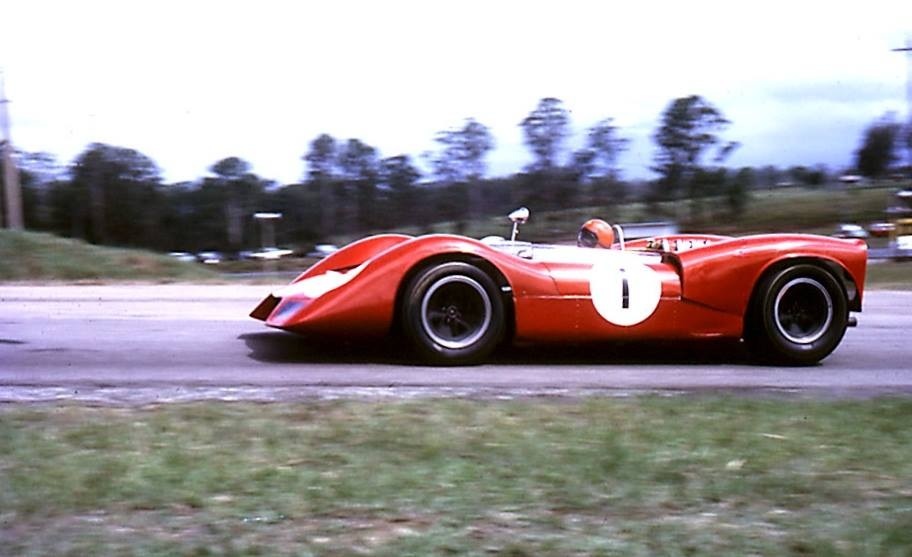
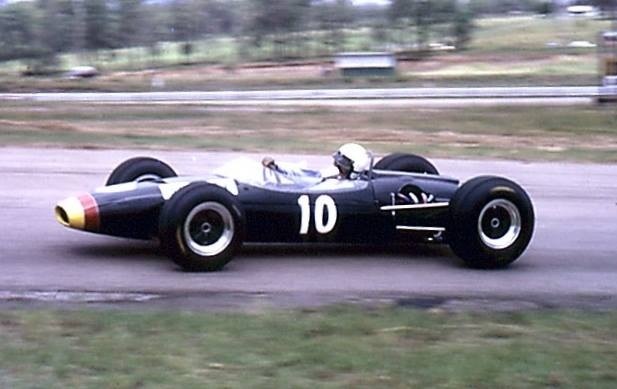
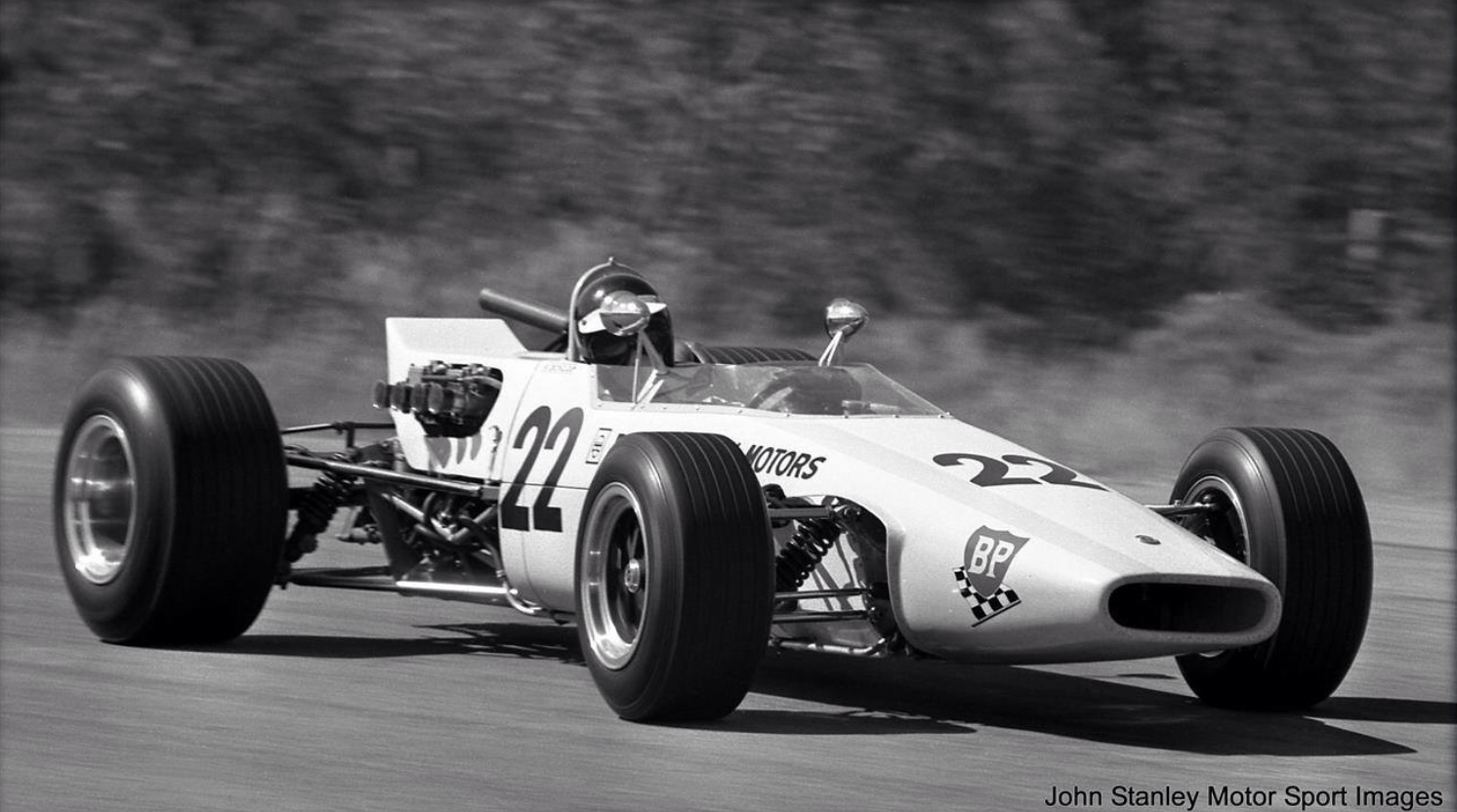
Bob Jane, Elfin 400 Repco ‘620’ 4.4 V8 entering KLG Corner, racer Ross Burbidge tells us, 12 February 1967…

It’s a very early race for Bob in his brand new Elfin, this car notable in several ways not least for the fact that it was the first to be fitted with a customer Repco Brabham engine V8- I’ve written a feature on it so let’s not repeat ourselves;

Belle of The Ball…

What struck me about William Byers’s photo and the unusual angle and locale in which it is taken is the degree of difficulty in sighting these big Group 7 sportscars through the corners. Admittedly Bob was a ‘short-arse’- mind you there was plenty of bounce in every ounce- but I bet the problem was the same for tall fellas like Dan Gurney.

Who won the sportscar races that day- had Matich debuted the SR3 at this point?, it certainly raced at the Farm and Sandown Tasman rounds that summer- Frank would certainly have given Bob a run for his money if present.

(W Byers)

The top-guns of the meeting were the Tasman 2.5’s of course.

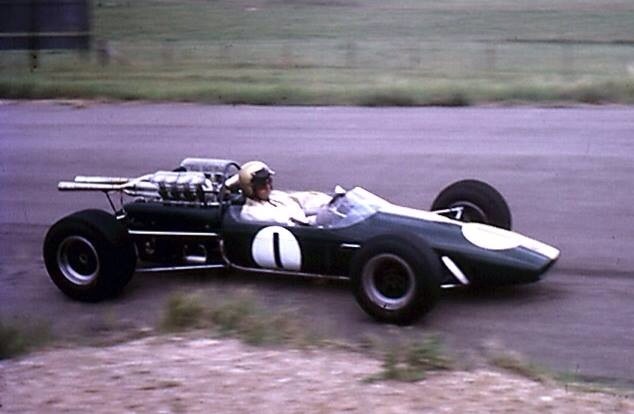
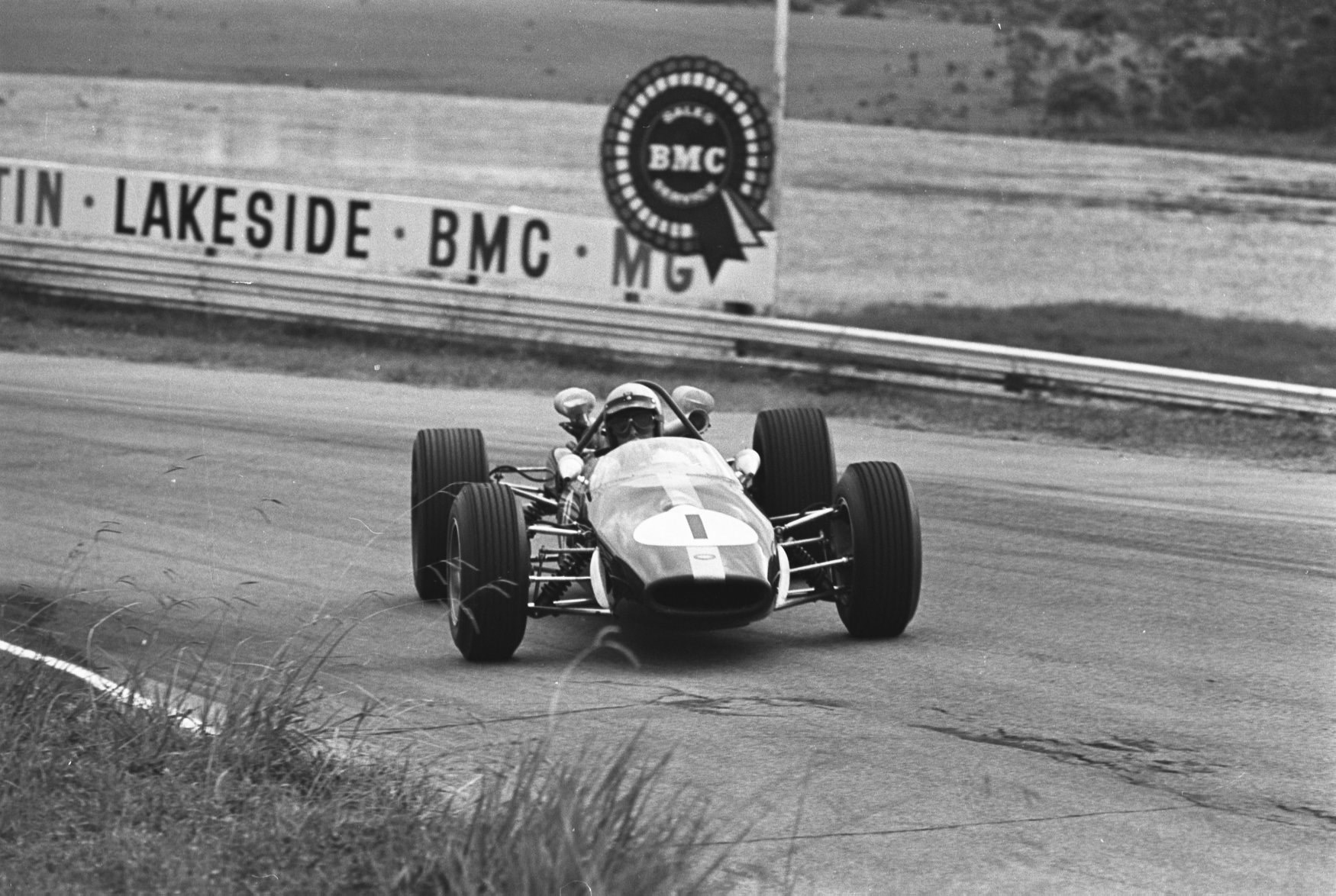
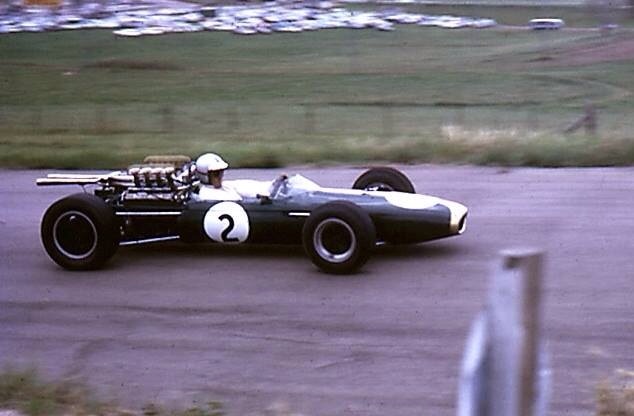
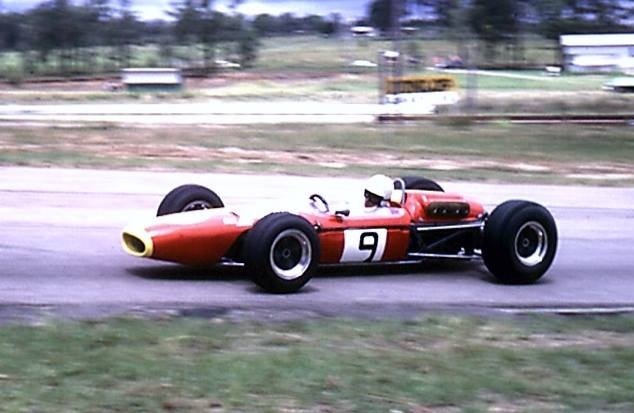
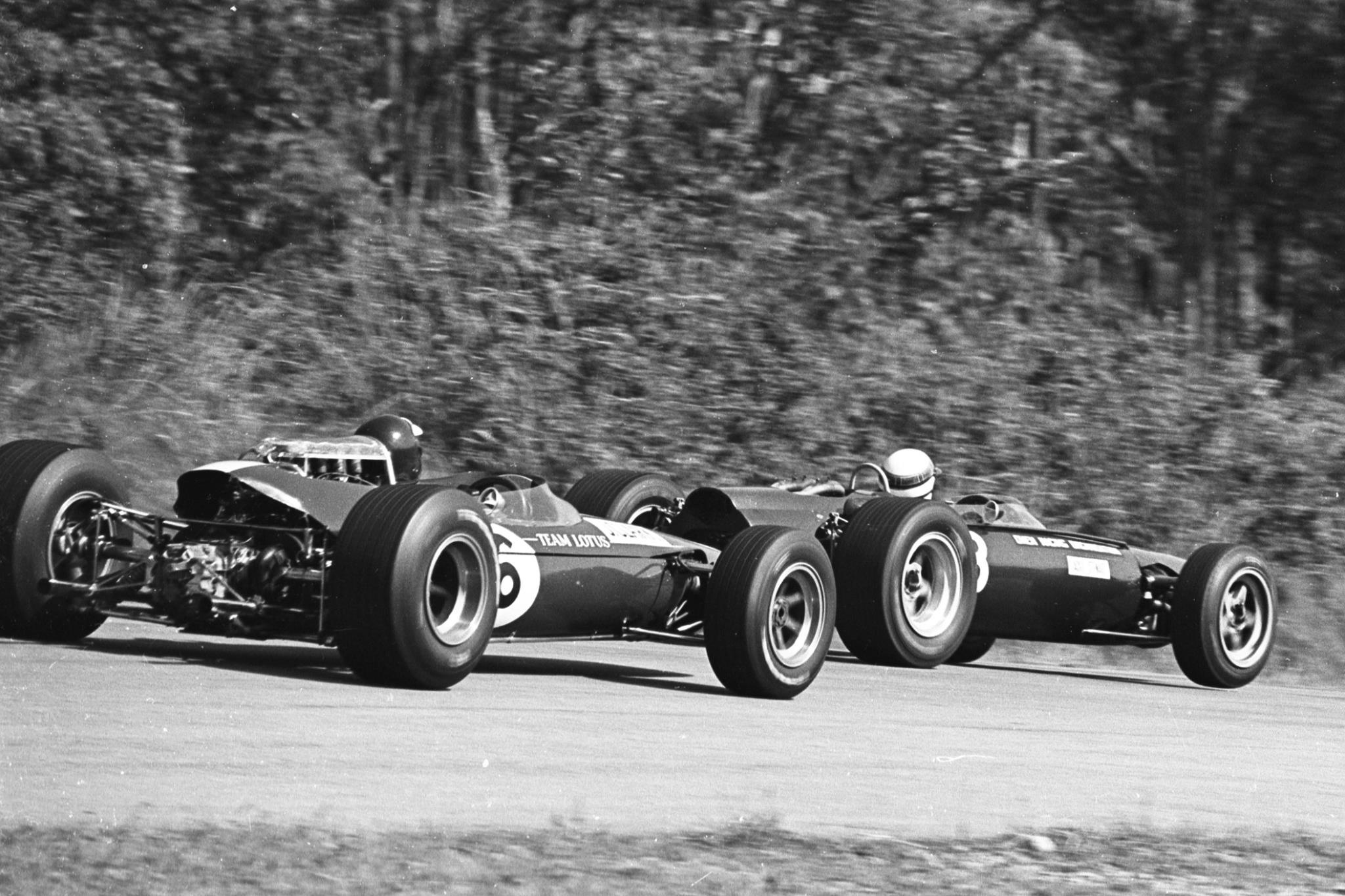
We have photos of second placed Jack Brabham, Brabham BT23A Repco ‘640’, (above and below) Denny Hulme’s similarly engined fourth placed Brabham BT22, sixth placed John Harvey in the 1.65 litre Ford twin-cam powered ex-Stillwell Brabham BT14, and Spencer Martin’s Bob Jane owned Brabham BT11A Climax but not Jim Clark’s victorious Lotus 33 Climax FWMV 2 litre V8- he won five of the eight Tasman rounds that year. A pity, but hey, let’s be thankful for some marvellous photos.

(W Byers)


(B Thomas)

1967 was the Tasman Series Repco had a red-hot go to win, two cars, one each for Denny and Jack with both drivers contesting all eight rounds- but the might of the F1 World Championship winning team did not triumph over Jim Clark and the very reliable, fast, special 2 litre FWMV Coventry Climax engined Lotus 33 of the Scottish ace.

In 1966, 1968 and 1969 Repco had limited Tasman campaigns, 1967 was the one they should have won, you might say, I’ve covered this series before, so no point repeating the many problems which cost the Maidstone outfit dearly.

Arguably the most important aspect of the Tasman for Repco was to blood their new for 1967 F1 engine- the 740 Series V8- in advance of the GP season, than win the series itself. In the event Repco’s Norm Wilson designed 700 Series block was not quite ready so Jack and Denny raced with ‘640 Series’ motors- the new 40 Series exhaust between the Vee two-valve heads and 600 Series (Oldsmobile F85 modified) blocks.

(W Byers)

Denny had a rather successful 1967 season didn’t he!, taking the F1 drivers title and finishing second to Bruce in the Can-Am Championship aboard one of McLaren’s M6A Chev papaya coloured machines.

The car above, a BT22, is essentially a BT11 frame fitted with BT19 suspension- Allen Brown writes that ‘F1-1-64’ was used by BRO until Denny’s F1 car for 1966 BT20 was ready. Fitted with a Repco-Brabham V8, it was raced by Denny in the Tasman and then sold to Rorstan Racing, who fitted a Coventry Climax FPF 2.5 and ran Aussie Paul Bolton in it, it’s present whereabouts is unknown.

Jack’s BT23A was built on the redoubtable BT23 F2 jig/frame.

BT23A has never left Australia thank goodness, and been very much in the news in the last twelve months with its acquisition by the National Motor Museum from Peter Simms who restored and then raced the car for decades.

It’s post Brabham race record was with Scuderia Veloce, the car driven by Greg Cusack and Phil West before being sold to Brian Page.

(W Byers)

John Harvey (above) drove the wheels off this ex-Bib Stillwell car, the first BT14 raced ‘FL-1-65’, then owned by Sydney car dealer Ron Phillips in 1966.

Prepared by Peter Molloy, the Brabham BT14’s Lotus-Ford twin-cam engine progressively got bigger and not too long after this shot the car was given ‘a birthday’, it was the recipient of a Repco-Brabham 640 Series 2.5 litre V8 fitted with the assistance of Rennmax’s Bob Britton, allowing Harves to run with the ‘big boys’.

In fact the combination is sorta related to Spencer Martin’s Brabham BT11A shown below.

(W Byers)

The very gifted Sydneysider won both the 1966 and 1967 Gold Stars aboard this Bob Jane owned Brabham BT11A ‘IC-4-64’ Coventry Climax FPF- his dices with the similarly mounted Kevin Bartlett in Alec Mildren’s car were highlights of racing for enthusiasts of the period.

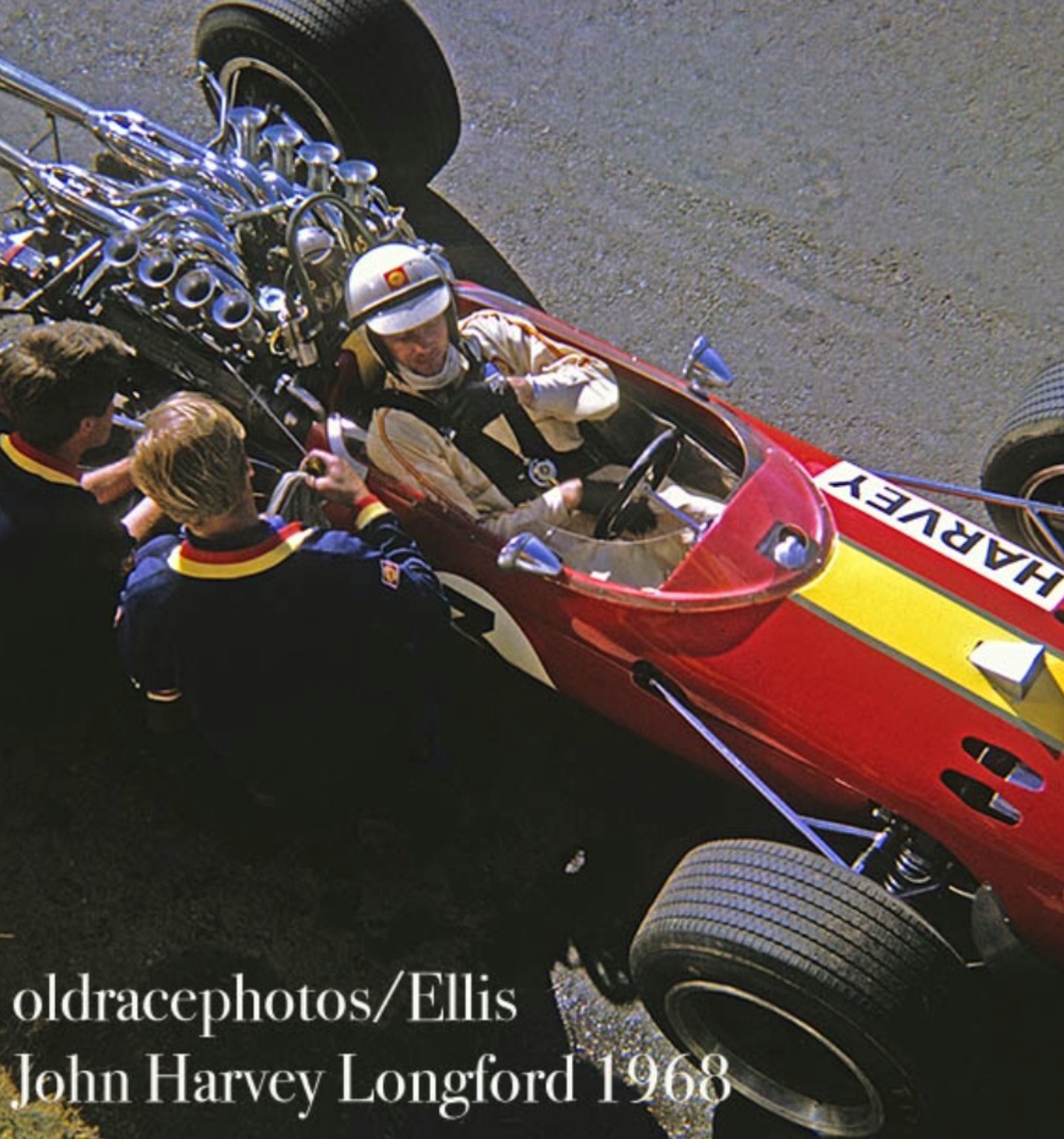
When Spencer decided to retire at the end of the 1967 Gold Star campaign Jane offered Harves the ride, and acquired the Brabham BT14 from Phillips. It’s 640 engine was fitted into the BT11A- like the BT14 it was not designed for a V8 motor, and raced by John in the 1968 Australian Tasman rounds.

Harvey in the Bob Jane Racing Brabham BT11A Repco during the 1968 Warwick Farm 100 Tasman round (unattributed)


Nice overhead shot from the Longford pits of the Repco 640 or 740 Series V8 installation in the BT11A

Jane then bought Jack’s 1968 Tasman mount, the BT23E at the series end for John to race in ’68 with Harvey very lucky to survive a huge shunt at Easter Bathurst in that car after a rear upright failure.

Harvey and Molloy had largely sorted the BT14 Repco by the end of the ’67 Gold Star, he had won a feature race in it at Oran Park. It does make you wonder why Bob didn’t race that car as it was rather than do the engine swap they did and develop the BT11A afresh- no doubt it all made sense at the time?!

The Jane Estate owns BT11A, the BT14, re-engined with a Ford/Lotus twin-cam is i think still in Peter Harburg’s hands in Australia.

William’s camera also captured some other interesting cars during that meeting.

(W Byers)

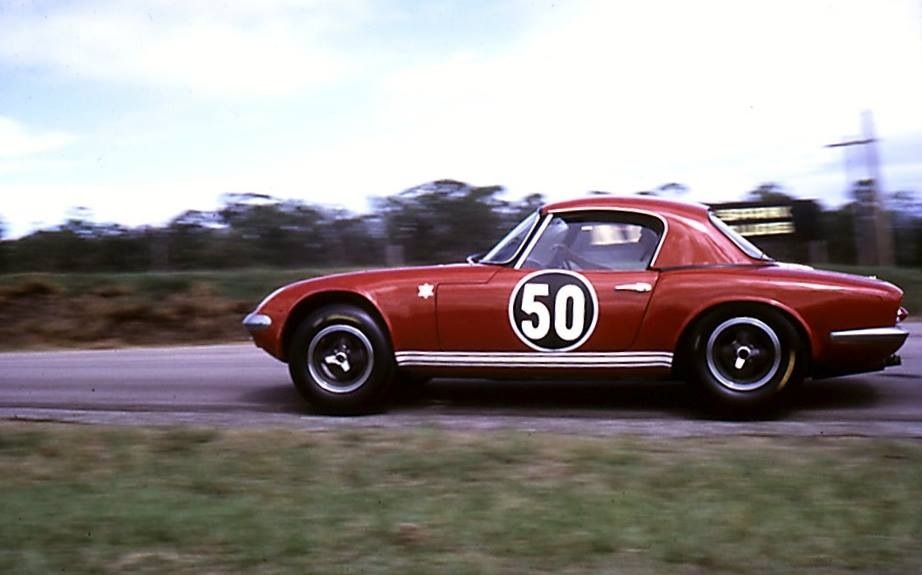
Bill Gates superb Lotus Elan 26R, Ross Burbidge tells us Gates raced both this car and an Elan Series 1, both of which are still alive and well in Australia. Ex-Geoghegan car originally?

Queenslanders will know the story better than I but its said that race promoter Bill Goode had the Bee Gees, the Gibbs brothers, performing between events at his Redcliffe Speedway and introduced them to Bill who promoted them on his radio show on 4BH Brisbane thereby assisting them in their climb to global success.

(W Byers)

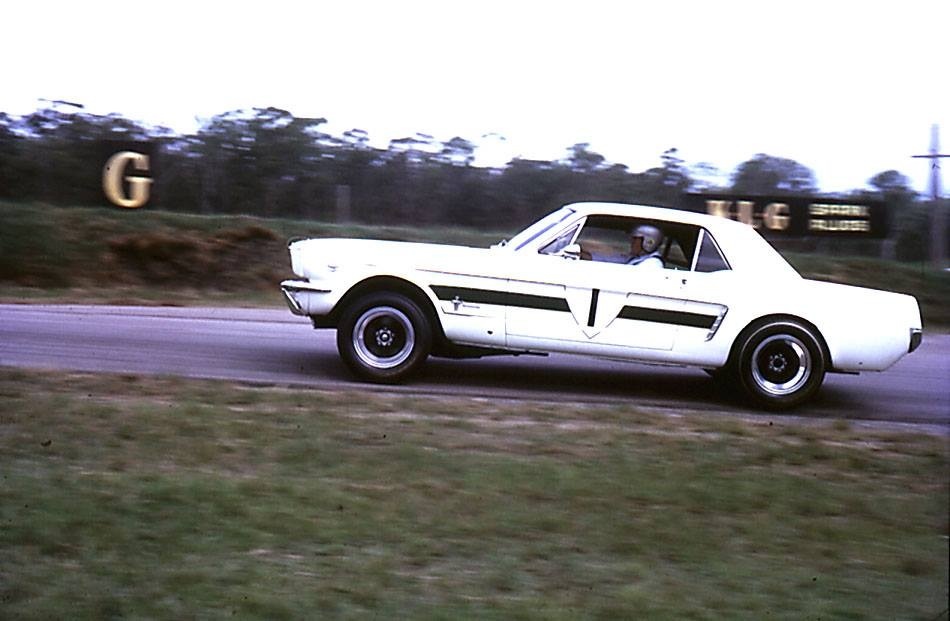
Ross Burbidge says this is the last time Pete Geoghegan ran his first Mustang at Lakeside.

He won the 1967 one-race Australian Touring Car Championship in the Australian, John Sheppard built, Mustang ‘GTA’ back at Lakeside on 30 July 1967 from the Brian Foley and Peter Manton Cooper S’s after various of the other V8’s fell by the wayside with mechanical dramas. The shot above is on the entry to ‘Hungry’ or then KLG corner.

Great Scots: Lakeside 1967, winner Clark Lotus 33 Climax chases Stewart BRM P261 (Tasman Book)

Hulme, Clark and Stewart, Tasman 1967…

1967: Hulme, Stewart and Clark: Levin, New Zealand Tasman and beyond…

Photo Credits…

William Byers, oldracephotos.com.au, ‘Tasman Cup’ Tony Loxley and Others, Brier Thomas

References…

Ross Burbidge, oldracingcars.com.au

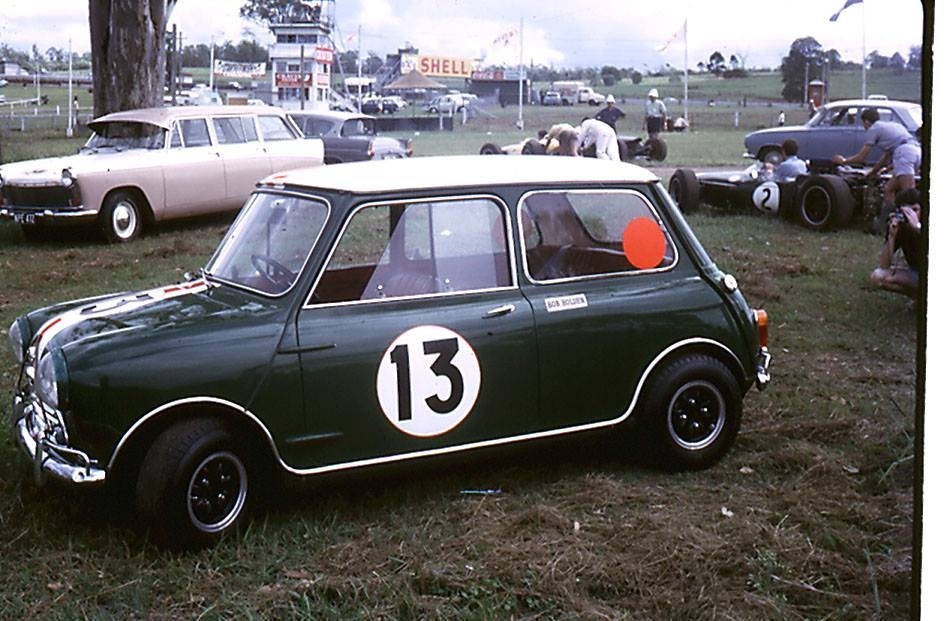
Tailpiece: Bob Holden, Improved Touring Morris Cooper S…

(W Byers)

Bob Holden won the 1966 Bathurst 500 in a Series Production Cooper S, co-driving the works BMC Australia car with rally-ace Rauno Aaltonen.

In a year of dominance the Cooper S took the first nine placings in the race! This car, not the same machine, is built to Improved Touring rules, the category to which the Australian Touring Car Championship was held at the time- mind you Bob didn’t return that July to contest the title race. He is still racing…

In the background Denny’s Brabham BT22 is being pushed past with perhaps the light coloured car Frank Gardner’s Mildren Racing Brabham BT16 Climax?

Finito…

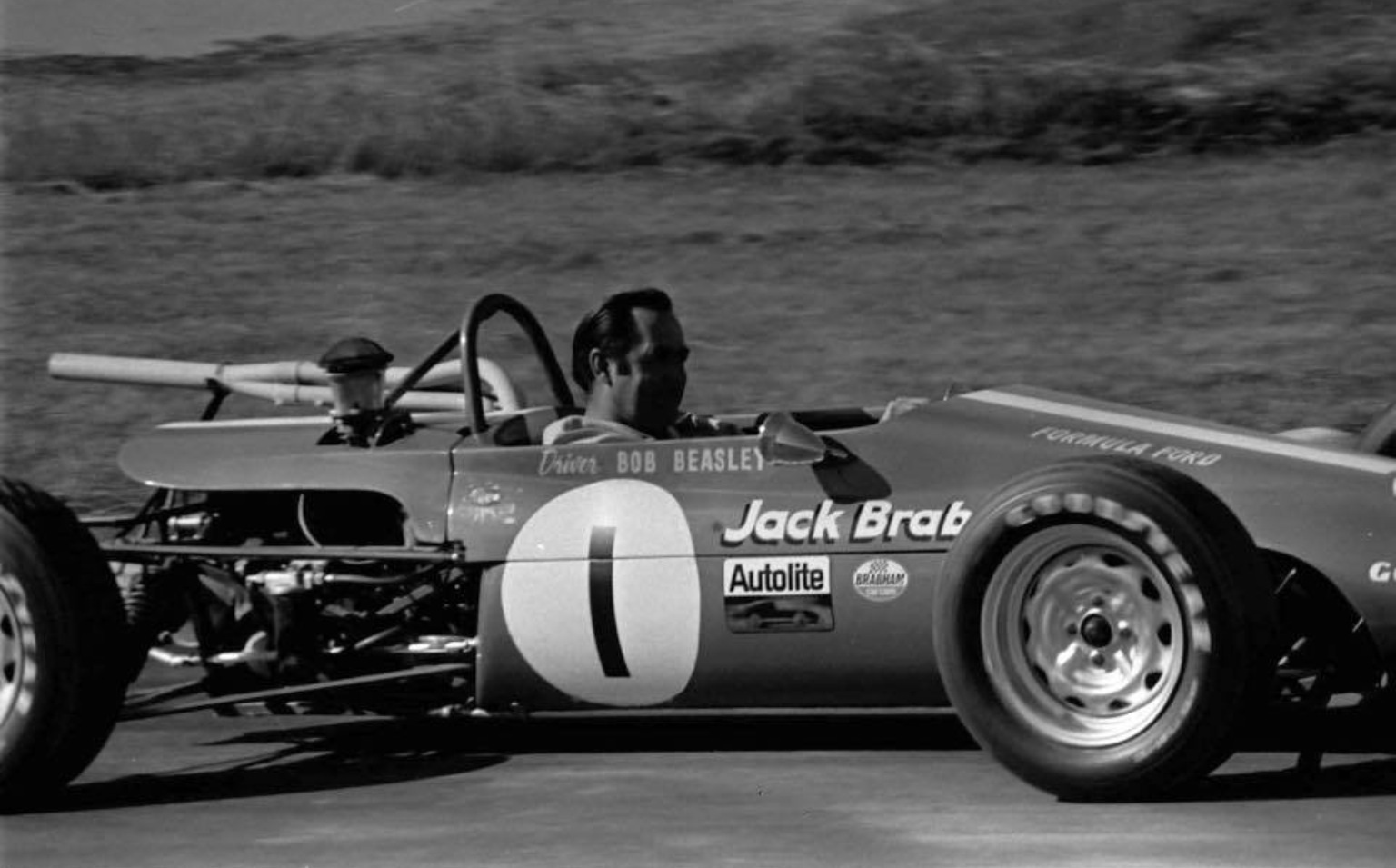
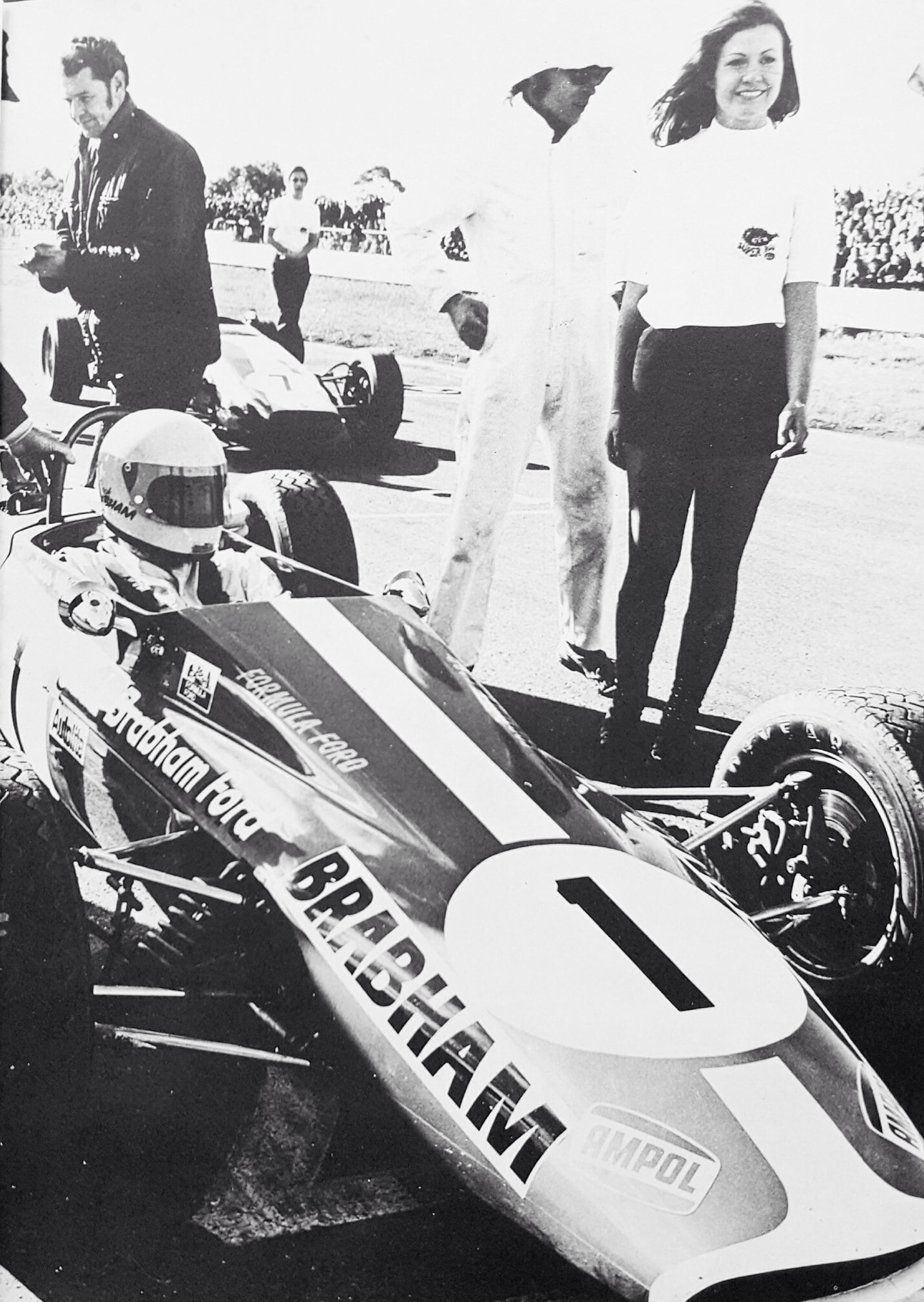
Jack Brabham, Bowin P4X Formula Ford, Calder August 1971…

Here is another Fairfax image of Jack after his victorious ‘Race Of Champions’ weekend. I wrote about this event a short while ago, and led the feature article with the final image below, this recent discovery is too good to ignore though- gotta put it up, there are no such things as too much Jack or too much Formula Ford, click here for the article; https://primotipo.com/2018/10/30/calder-formula-ford-race-of-champions-august-1971/

The Fairfax caption reads ‘Jack Brabham, Australian race car driver, 1971: Brabham in the cockpit of a 100 hp Formula Ford for a brief comeback at Calder- in the Calder Race of Champions. Driving a car built at his British racing car factory’. (actually a Bowin P4 built by John Joyce and his team at Bowin Designs in Brookvale, Sydney- owned by Jack Brabham Ford and raced by Bob Beasley in the ‘Driver to Europe’ Oz FF Championship).

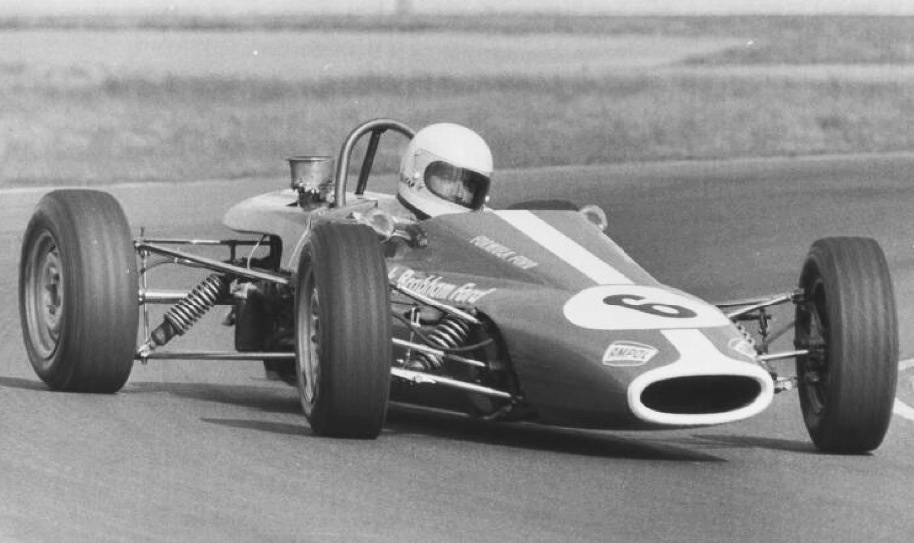
JB, Bowin P4X, Oran Park parade lap 1972 (L Hemer)

Its an irrelevant tangent really but Motor Racing Developments (Brabham) never built a Formula Ford, Ron and Jack kept away from the rough and tumble of that market- mind you there were a few converted Brabham F3 cars which went well in the early years of the class in the UK.

‘Brabham raced home a clear winner after taking the lead in the third lap of the 10 lap event’.

Its a big year for Formula Fordsters in Australia- 50 years of FF in Australia is being celebrated during 2019.

Credits…

Alan Lambert- Fairfax Publications, Lynton Hemer, National Archives of Australia

Tailpiece…

(NAA)

Finito…

massa

(Sutton)

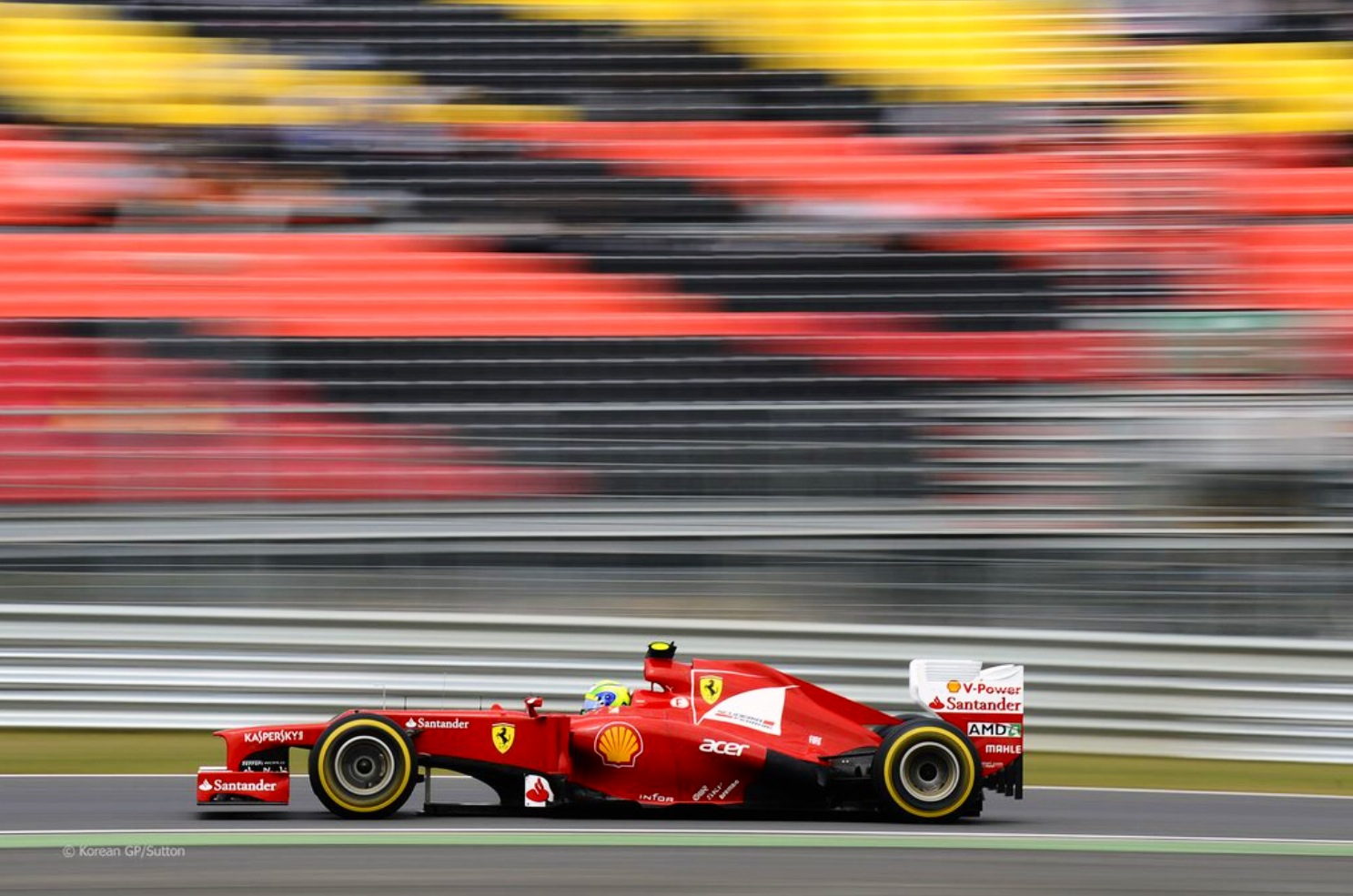
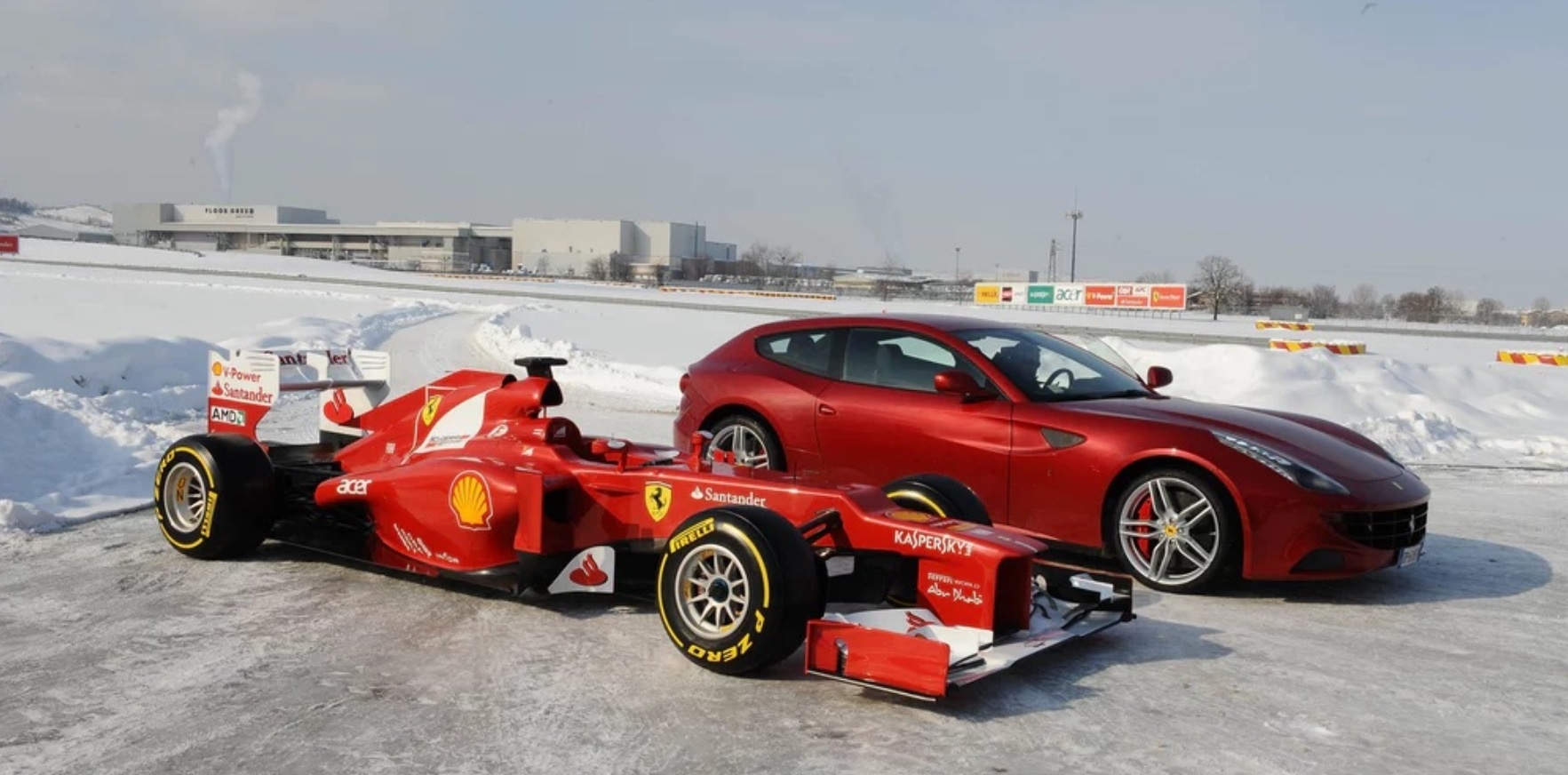
Felipe Massa on the way to fourth place in his Ferrari F2012. Yeongam, Korean GP, 14 October 2012…

It’s a relatively simple panned-shot made striking by its composition in terms of background. The lines of the car are shown to rather good effect.

The class of the 2012 grid was the Red Bull RB8 Renault which took five wins in World Champ Sebastian Vettel’s hands, and two in Mark Webber’s. Vettel and Red Bull won the drivers and manufacturers titles respectively.

The F2012 was a competitive tool though. Fernando Alonso won in Sepang, Valencia and Hockenheim. It was powered by the mandated 2.4-litre V8 which developed about 750bhp at the mandated rev limit of 18,000rpm.

Lotsa mandateds in F1 these days.

Too many.

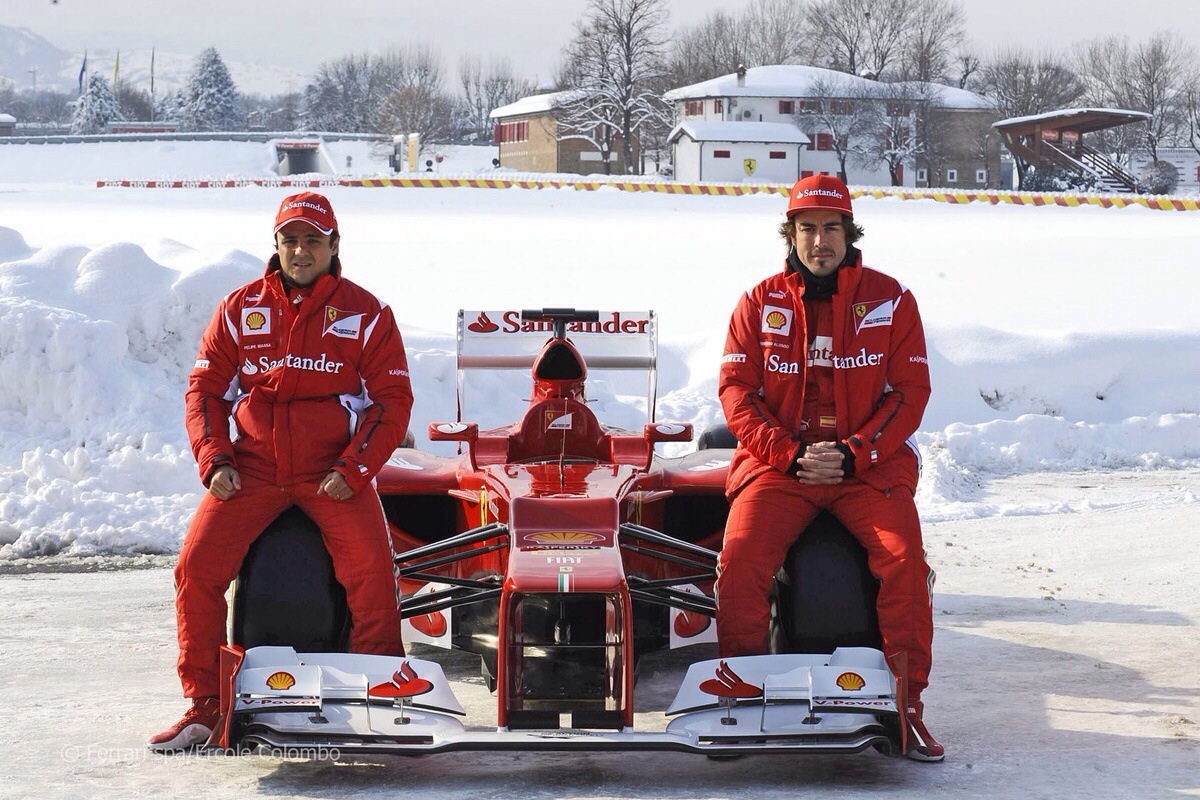
Ugly as a hatful. The F2012, not Massa and Alonso- Fiorano launch (Ferrari)

Credit…

Sutton Photographics, Ferrari

Tailpiece…

(Ferrari)

Finito…

Beach Baby…

Posted: January 9, 2019 in Fotos, Sports Racers

(oldracephotos/DSimpson)

Or Beach Buggy, more specifically?…

The CMS VW buggy of George Geshopoulis in this group of four cars has been rounded up by one of the fastest cars in Australia at the time, Bob Jane’s 4.4 litre Repco-Brabham V8 engined Elfin 400, a racer I wrote about a while back;

Belle of The Ball…

Its a typically varied country race meeting grid of the day, 1968, on this occasion at Hume Weir close to the Victorian/New South Wales border towns of Wodonga and Albury. Here is the Hume Weir story;

Hume Weir…

The other cars shown are the Warwick De Rose Lotus 11, having difficulties with one of his doors, and the John Sheehan Geneer Outlaw VW at the rear of the group.

Australian Formula Vee enthusiasts will recognise CMS and Geneer as Melbourne constructors of Vees. I was aware of the Outlaw sporties, attractive little cars, but not that CMS made beach-buggies- which were big at the time constructed on shortened VW chassis’.

Maybe Janey, with a short set of ratios in his Hewland DG300 would have seen 130 mph at the Weir but no way the CMS would do 80, so the closing speeds and differential of pace are not to be sneezed at.

In any event, it’s a cracker of an amusing shot of a time and place long ago.

Credits…

Dick Simpson/oldracephotos.com.au – Lindsay Ross, Duane De Gruchy

Tailpiece: Geneer Outlaw…

The Geneer’s were built by Barry Coutts in East Burwood, not too far from where I used to live, about 15km to Melbourne’s east. About 30 are thought to have been constructed between 1960 and 1967 with a range of VW, and the occasional Porsche engine inserted in the rear of the multi-tubular spaceframe chassis. Very interested to hear from an owner.

Finito…

(G Ruckert)

‘Brian Foley in the Alfa Romeo GTAm nicely on line as he exits The Karrussell, Lakeside 18 April 1971’ wrote photographer Graham Ruckert…

This is about as natural a setting, devoid of signage and the visual clutter typical of racetracks by the early seventies you could hope for to capture surely one of the most beautifully proportioned and delicately toned Touring Car racers ever?

Foley’s ex-works car in its various incarnations is very well known to Oz enthusiasts, I’ll get around to writing about it again one day- I first did so in an Alfa Romeo Owners Club of Australia magazine circa 1978! About time to do so again, thankfully the car is still in Australia, in Melbourne’s east and in the very best of Alfista hands too.

Photo Credit…

Graham Ruckert

Tim Schenken, Merlyn Mk11 Formula Ford and his rivals at Brands Hatch, 20 September 1968…

Chris Steele, Tim’s tuner/entrant dispenses advice to the Formula Ford ‘flock’ comprising Ray Allen, Brian Smith, Dave Morgan and Tony Trimmer. No doubt it’s a press shot to promote an upcoming race meeting; two of these fellows made it through to Formula 1- Schenken and Trimmer, the well of talent in Formula Ford has been deep in every season including its first couple.

Schenken cut his racing teeth in Australia, initially with an Austin A30 and later a Lotus 18 Ford FJ. By the time he contested some F3 races in an old Lotus in the UK in 1967 he had plenty of experience- the step ‘back’ into the new Formula Ford class paid off in spades with wins in both the 1968 British Formula Ford and Lombank F3 Championship- as a consequence he carried away the main 1968 Grovewood Award.

Tetsu Ikuzawa Brabham BT21B from Tim Schenken Chevron B9 Ford, Martini International Meeting Silverstone 1968 (M Hayward)

In 1970 he broke into Grand Prix Racing with Frank William’s De Tomaso 505 Ford, that ride arose as a result of Piers Courage’ death during the 1970 Dutch Grand Prix.

His promise was confirmed with drives in the year old Brabham BT33 Ford for Ron Tauranac in 1971, his first career mistake was jumping out of Brabham as BC Ecclestone acquired it at the end of ’71. Surtees was far from the worst place to be at the time but staying put would have been better.

Tim was as quick as Mike Hailwood at Surtees but the slip down the F1 totem pole was quick once he left and the climb back up is even harder.

I don’t think we ever saw his best in Grand Prix racing but point scoring races and an F1 podium, not to forget his F2, European GT Championship  and works Ferrari 312PB sportscar wins form part of a CV any of us would be rather happy to have.

Schenken, Brabham BT33 Ford, Canadian GP 1971 DNF (unattributed)

Tim’s best results in F1 were sixth and third placings for Brabham in 1971 at Hockenheim and the Osterreichring and fifth, seventh and eighth for Surtees in 1972 at Argentina, Mosport and Spain. In non-championship F1 he was third in the BRDC International Trophy at Silverstone and third in the 1972 International Gold Cup at Oulton Park.

Schenken aboard his Merlyn Mk11 FF in 1968

Credits…

Getty Images, Mike Hayward Collection, Victor Blackman, LAT Images

Other Tim Schenken Article…

Frank Williams and Tim Schenken, Austrian Grand Prix 1970…

Schenken testing the Merlyn at Brands during 1968 (LAT)

Tailpiece: Ron Tauranac, Tim and Hill G with Hill’s Brabham BT34 Ford, Silverstone, British GP weekend July 1971- note the rig to attach a camera, the GoPro is still a while away…

Finito…


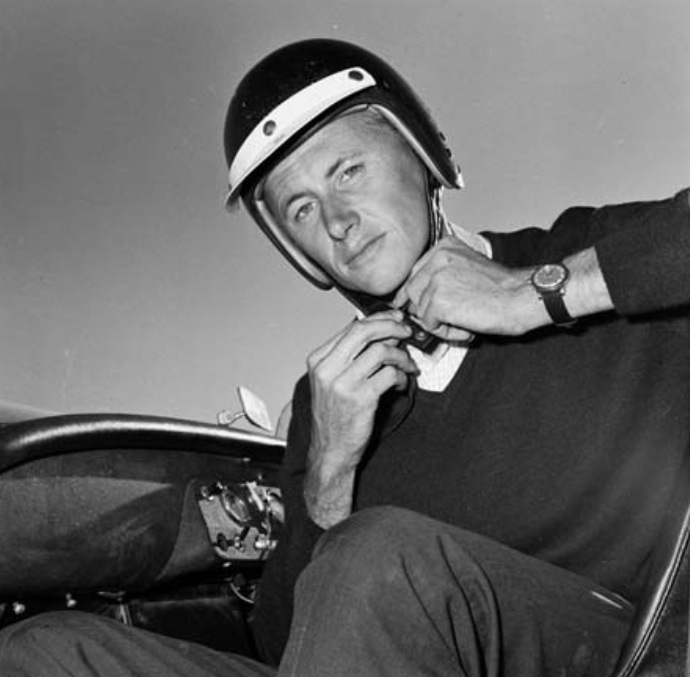
(DIMIA)

Queensland single-seater pilot Henk Woelders adjusts his helmet, probably Lakeside, 1967…

I was musing online with some ‘Nostalgia Forum’ buddies the other day about the effectiveness of the Castrol liveried brothers Geoghegan racers of the late sixties and early seventies. The commercial message was delivered well because of the elegant simplicity involved.

Woelders, Elfin 600E Ford Waggott, Calder 1971. Engine is a Merv Waggott prepped Lotus-Ford twin-cam (J Lemm)

Henk Woelders’ Elfin 600 liveries are other fine examples of ‘getting it right’.

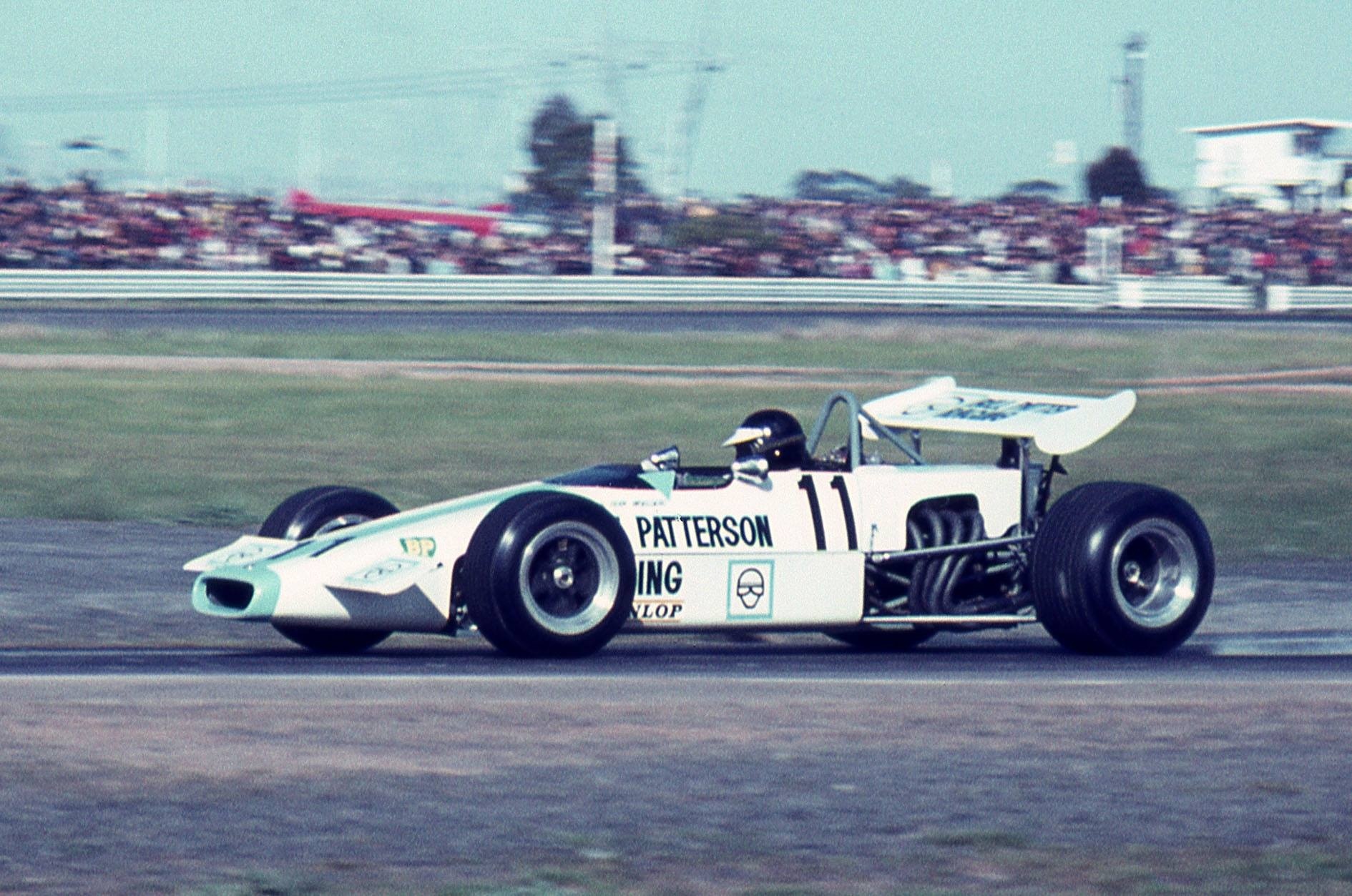
He raced two of the spaceframe cars, both ANF2 machines, the second to the 1971 Australian Formula 2 Championship, taking four of the six rounds in his Bill Patterson Motors sponsored car. This chassis was a 600E, Garrie’s you beaut late F2 machine which had magnesium front uprights and revised suspension geometry front and rear.

Henk’s cars had Patto’s simple light blue stripe on a white background, Patterson’s own racing colours from his Cooper Gold Star winning days a decade before.

(DIMIA)


Sometimes photographs appear from the most unlikely of places, the inspiration for this article was two shots taken by the Australian ‘Department of Immigration, Multicultural and Indigenous Affairs’- catchy innit?

It seems the DIMIA were running some articles at the time about migrant success stories in Australia, as you may have gathered from the Woelders name he hails from the Netherlands- one of millions who came to The Great Brown Land post-war in a ‘populate or perish’ policy by our national governments. It would be intriguing to know where these photos were first published.

The shots are dated 1967 and refer to Henk with his Lotus Super Seven- which the first opening photo may be but the second most certainly is not. Lotus 20 FJ maybe?- did they have rear drum brakes?, intrigued to know what the car is if one of know what he was racing at the time.

Woelders in his first 600, a 600B chassis ‘6806’ at Calder before the hi-wing ban imposed over the ’69 May Monaco GP weekend. A moveable aerodynamic device too- clever setup has the wing feathered on the straights as here- with incidence created when required- interested to know who engineered this clever setup (B Mills)

What limited information I have indicates Henk was employed by Patterson during the Elfin 600 period, so at some point he moved from Queensland to Melbourne, presumably working at Patterson’s Holden empire based in Ringwood, an outer-eastern Melbourne suburb.

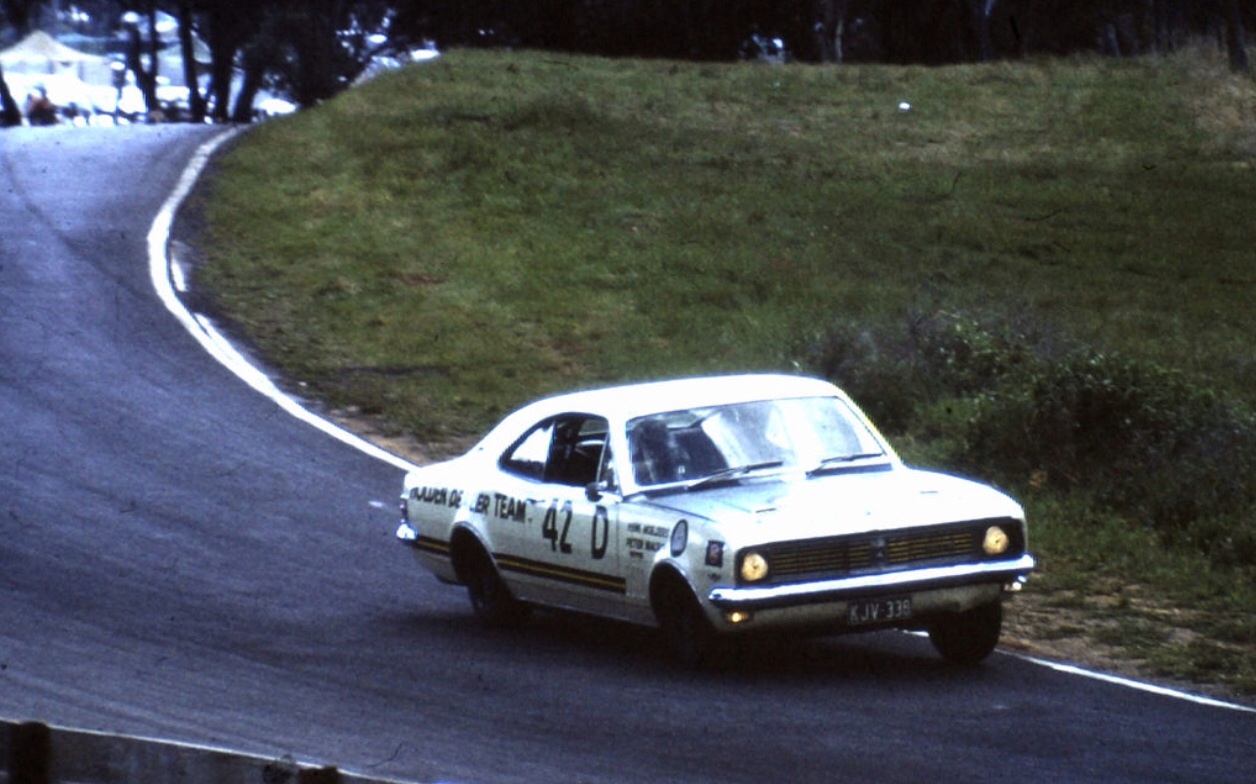
Harry Firth rated him as a driver, Henk and Peter Macrow were the ‘open-wheeler’ duo in the Holden Dealer Team’s first successful, three car 1969 Bathurst 500 assault- Colin Bond and Tony Roberts won, Des West and Peter Brock were with Woelders/Macrow sixth.

Woelders/Macrow HDT Holden HT Monaro GTS350 (R Davies)

Henk’s career seems to have ended after his F2 win but he was reunited with his championship winning 600E ‘7024’ many years later and still retains it, and a very nice car it is too.

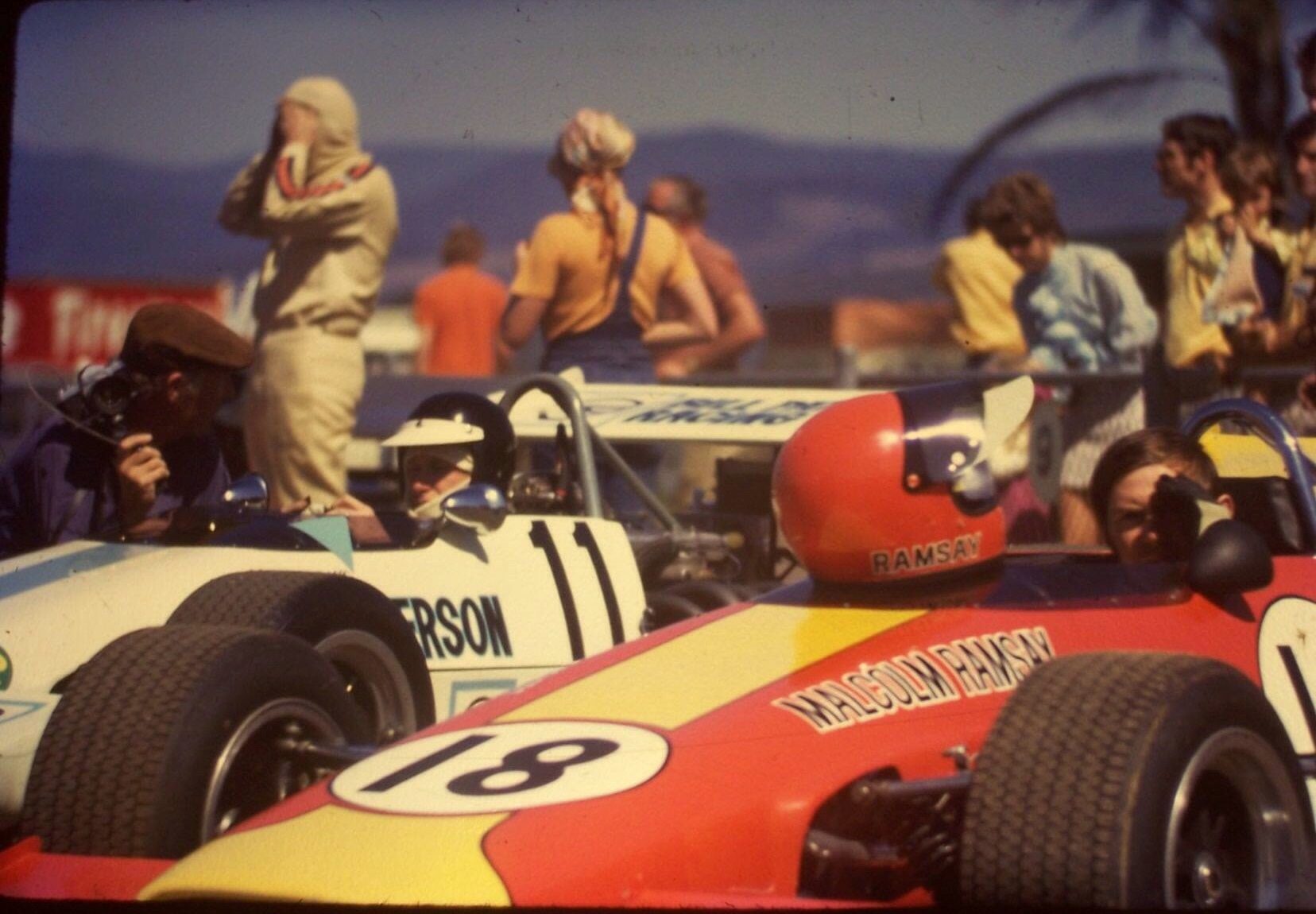
Henk and Malcolm Ramsay- in 600E and 600C ‘6908’ get set for the August 1971 Glynn Scott Memorial Trophy Gold Star round at Surfers Paradise. The F2 Championship race was run concurrently with the F5000 cars- Henk won the F2 section finishing 6th and Frank Matich was first outright in his McLaren M10C Repco. Ramsay DNF with a broken throttle cable- both these cars were powered by Merv Waggott built Lotus-Ford twin-cams (S Johnson)

Credits…

Department of Immigration Multicultural and Indigenous Affairs, John Lemm, Bruce Mills, Robert Davies, John Stanley, Stewart Johnson

Tailpiece: Woelders, Elfin 600B, Lakeside 1968…

John Stanley’s photo above is of Henk’s first 600 coming out of Lakeside’s Eastern Loop in 1968, he raced this car from 1968 to 1970 before replacing it with the later model.

Elfin 600’s won goodness knows how many F2 races in the hands of drivers like Garrie Cooper, John Walker, Tony Stewart, Ivan Tighe, Maurie Quincey and Australian Championships for Cooper, Woelders and Larry Perkins in Gary Campbell’s 600B/E in 1968 (ANF 1.5 C’ship shared with Max Stewart) 1971 and 1972 respectively.

Elfin’s Australian F2 dominance is amply demonstrated by the 1971 championship table- the first eleven placegetters raced Elfins- Woelders, Tony Stewart, Jack Bono, John Walker, Ivan Tighe, Garrie Cooper, Vern Hamilton, John Ampt, Ken Hastings, Ross Ambrose, Clive Millis and Don Uebergang!

Of those, all raced 600’s with the exception of Ampt who was aboard a Mono- the monocoque Birranas finally rained on the Elfin F2 parade from 1973…

Finito…

Frank Matich in his new Elfin 400 Olds nee ‘Traco Olds’ at Warwick Farm during the 1966 Tasman Meeting (Russell Thorncraft)

The very best of the seasons greetings to you all, wherever you may be. May all of us get the luck we deserve in addition to a healthy, wealthy, wise and generous 2019…

It was May 2014 when I first started fiddling around with what has become somewhat of an obsession, I have promised myself I will re-commence racing my Van Diemen RF86 Formula Ford in 2019- ‘doing it’ rather than just writing about it!

I have no strategy with primotipo other than writing about what interests me, the article ideas are generated by a photograph and it is in that context that the direction of the thing has shifted much more to an Australian bias this past year.

DIY Davo: Jon Davison looking after a wheel or pressures in the Oran Park pitlane prior to the 1977 AGP. Car is his ex-Walker Matich A50 Repco. Davo become a mighty fine F5000 driver with the purchase of an ex-Teddy Yip/Alan Jones Lola T332 Chev 12 months hence. Behind Jon are the Team VDS entries of race winner, Warwick Brown, Lola T430 Chev and Peter Gethin Chevron B37 Chev (Adam Thurgar)

A limiting factor until recently has been access to lots of interesting Australian photographs. This has changed in that Bob Williamson’s ‘Old Motor Racing Photographs-Australia’ and the ‘Historic Racing Car Club of Tasmania’s’ Facebook pages and meeting Bob King and Ken Devine in recent times has allowed me to explore topics I never would have contemplated without the visual stimulation of ideas provided by their archive/collections.

So special thanks to those organisations/fellows in addition to the photographers who have been very supportive right from the get-go. John Ellacott, Rod MacKenzie, Lindsay Ross, Dick Simpson, Lynton Hemer, Kevin Drage and Dale Harvey. Terry Marshall’s New Zealand work gets a regular run too.

Len Lukey’s Lukey Bristol chases Bib Stillwell, Maserati 250F, Melbourne Grand Prix, Albert Park 1958. Stirling Moss won in a Cooper T45 Climax- Len was 5th and Bib 4th (Simon Wills via Bob King Collection)

Bob King’s ‘Words from Werrangourt’ articles have been very popular, Rod MacKenzie’s and Bruce Polain’s pieces were beauties, and I have unpublished manuscripts from Peter Finlay and Ray Bell to pop up in the coming months- thanks to you all.

Ray, Stephen Dalton and Rob Bartholomaeus have been great ‘sub-editors’ in advising errors post-upload of articles which has helped the accuracy of primotipo big-time. Stephen and Rob have also provided research material which has given me ‘reach’ beyond my own collection. The collective global wisdom of The Nostalgia Forum is also an ongoing source of nuanced information which goes way beyond the books we all have.

Stan Jones and Cooper T51 Climax at Caversham, West Australia in October 1959. WA Road Racing Championships Gold Star round. Len Lukey won the race in the green Cooper T45 alongside, Stan was 2nd. He won the AGP at Longford in March aboard his Maserati 250F (Ken Devine)

The readership has increased nicely again by over 30% with the Australian readership now 30% of the total compared with 17-20% of the last two years. So, it seems you International folks aren’t turned off by the greater Australian content. The top ten countries in terms of readership in order are Australia, US, UK, France, Italy, Germany, Spain, Japan, the Netherlands and Brazil. Exactly the same as last year actually, albeit the order was a smidge different.

Last, but far from least, thanks for reading it!

The balance of this piece are some randomly chosen photographs from the sources above I’ve not published before…

(Chris Robinson)

Bob Skelton contesting the Symmons Plains round of the Australian Formula 2 Championship in September 1973.

He was second to Leo Geoghegan’s works Birrana 273 Ford Hart that weekend and was third in the seven round series behind Geoghegan and Enno Buesselmann in another 273.

Skello first raced this chassis- the very first Bowin P6 built, in the 1972 Formula Ford Festival at Snetterton in the UK before returning home and ditching the Ford 711M Kent motor and Hewland Mk9 gearbox in favour of a Brian Hart built 1.6 litre Lotus-Ford, Lucas ‘416B’ injected engine and five-speed Hewland FT200 ‘box as well as wings and slicks etc.

He did well in 1973, it was a shame he did not race on in the Finnie Ford supported car- without doubt the 1972 FF Driver to Europe Winner (Bowin P4A) had talent aplenty.

Ex-Lotus engineer, Bowin Designs John Joyce’s spaceframe P6 and monocoque P8 designs bristled with innovation having the Lotus 56/72 wedge shape and hip-mounted radiators and JJ’s own very clever variable or rising rate suspension front and rear. Whilst the P6F won an FF title in John Leffler’s hands in 1973, F2 and F5000 Championship success eluded these wonderful cars.


(Matt Liersch)

Stirling Moss and minder wander down the new Sandown pitlane with ‘Peters Corner’, the left-hander onto the Back Straight behind them. Notice the kerb, trees and lack of Armco on the outside of Pit Straight and between the circuit and pitlane.

The March 1962 ‘Sandown Park International’ was the track’s first meeting with Moss fifth his Rob Walker Lotus 21. Jack Brabham won from John Surtees and Bruce McLaren- in Coopers T55, T53, and T53- all powered by Coventry Climax 2.7 litre ‘Indy’ FPFs.

(Matt Liersch)

Jack Brabham either pulling into or out of pitlane in the Cooper T55 Climax which was then acquired by John Youl and raced by he and engineer Geoff Smedley with great success over the next couple of years.

(Matt Liersch)

Melburnian’s of a certain age will remember Channel 9 sports broadcaster Tony Charlton here getting the story from Moss and Brabham. He was more a cricket and footy kinda-guy but did a workmanlike job whatever the sport.

‘ole 935…


(Brian Caldersmith)

Maybach 3 was Charlie Dean’s Repco Research built cars definitive specification in six-cylinder Maybach engine form- Maybach 4 was this chassis modified by Ern Seeliger in various ways inclusive of fitment of a Chev 283 cid small-block V8.

Here the car is showing off its Phil Irving developed fuel injection at Gnoo Blas, Orange during the January 1956 South Pacific Championship weekend.

(Brian Caldersmith)


(Brian Caldersmith)

Stan Jones was running well in second position behind Reg Hunt’s new Maserati 250F, and ahead of Brabham’s Cooper T40 Bristol in third when the Maybach motor let go in the biggest possible way on lap 23, an errant rod broke causing the car to spin down the road.

With little in the way of spares now remaining- and the speed of Hunt’s Maseratis (A6GCM and 250F) apparent Jones ordered a 250F and Maybach 3 was put to one side until Seeliger’s mechanical magic was worked upon it.

Stan Jones: Australian and New Zealand Grand Prix and Gold Star Winner…

(Chris O’Connor)

Cheetah as a marque all too often slips under the radar, a bit like the car’s designer, builder and driver Brian Shead- he won the 1979 Australian F2 Championship in a Cheetah Mk6 Toyota.

Shead built ANF3 and 2 cars, two Clubmans and a Formula Holden, well over forty cars in all in his small Mordialloc, outer Melbourne bayside workshop. ‘The Two Brians’ Shead and Sampson (above) dominated ANF3 in the mid-seventies, the 1975 Bathurst 1000 winner (together with Peter Brock in a Holden Torana L34) is on the downhill plunge into Dandenong Road corner at Sandown in 1973 or 1974.

The car is a Cheetah Mk4- a spaceframe chassis powered by a pushrod, OHV, ‘Motor Improvements’ modded Toyota Corolla 1.3 litre, twin-42 DCOE carbed 135 bhp engine. Motor Improvements was Sambo’s business in the Nepean Higway St Kilda, at the time ANF3 was a 1300cc OHV/SOHC category.

ANF3…

(Dennis Cooper)

Clark, Amon, Hill: Lotus 49 Ford DFW by two and a lone Ferrari Dino 246T, Longford 1968.

Not the South Pacific Championship Tasman race mind you- that was held in the pissin’ rain and won by Piers Courage’ McLaren M4A Ford FVA. This is the dry Saturday preliminary which was won by Clark.

Longford Tasman: ‘South Pacific Trophy’ 4 March 1968 and Piers Courage…

Credits…

Russell Thorncraft, Quentin Miles, Adam Thurgar, Simon Wills- Bob King Collection, Brian Caldersmith, Matt Liersch, Chris Robinson, Ken Devine Collection, Dennis Cooper, Chris O’Connor

oldracingcars.com

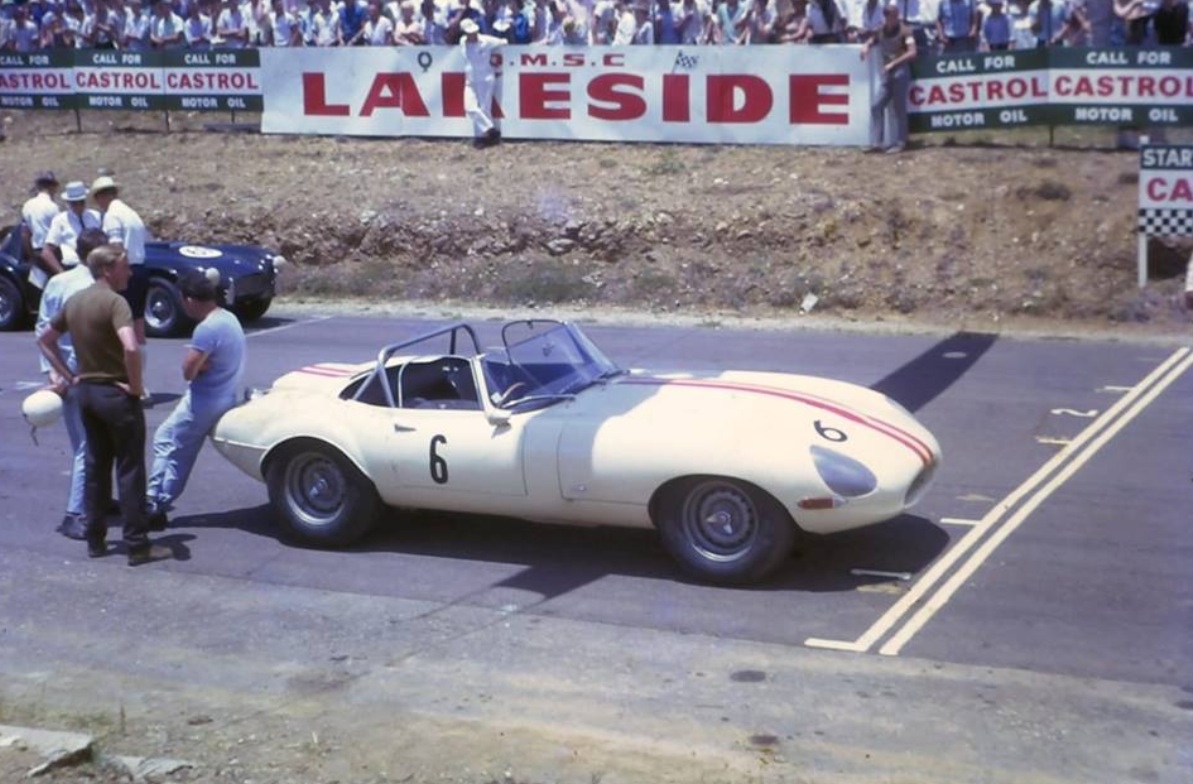
Tailpiece: Bob Janes and Jaguar E Type Lightweight, Lakeside circa 1965…

(Quentin Miles)

Ron Thorp’s AC Cobra is on the second row, it looks hot so perhaps its the summer Tasman meeting.

The Jag was an interesting choice, it was never going to be an outright machine in the sportscar sprint events which predominated in Australia at the time. The Bib Stillwell Cooper Monaco, Frank Gardner/Ralph Sach/Kevin Bartlett Mildren Maserati, Lotus 23’s and increasingly V8 mid-engined cars ruled the roost.

Nonetheless the E was a welcome addition to the local scene and a car Bob retained in his collection for decades- it shared garage space with a Maserati 300S, Jag D Type, Brabham BT11A Climax, McLaren M6B Repco, Ralt RT4 Ford, Chev Camaro ZL1 and various other bits of mouth-watering kit.

Finito…

‘Wow!’…
Posted: December 16, 2018 in Fotos
Tags: , ,

wow

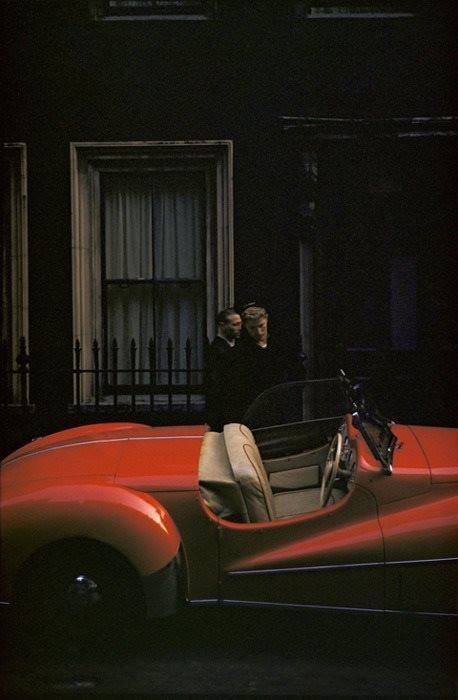
The car is a heavy 1950 Alvis TB 14 drophead cruiser…

It’s based on TA14 sedan underpinnings, fitted with an 1892cc four cylinder engine fitted with twin-SU’s- about 68bhp and good for 80mph.

Its not of any interest to you racing lot, but I like the 1953 shot by Inge Morath, a noted photographer of the time. Click here for her interesting obituary;

http://www.nytimes.com/2002/01/31/arts/inge-morath-photographer-with-a-poetic-touch-dies-at-78.html

Credit…

Inge Morath

(F Pearse)

The Jack Saywell Alfa Romeo Tipo B/P3 and John Snow Delahaye 135CS and friends at The Coorong, South Australia on January 5 and 6 1939…

The two intrepid Sydney racers contested the 1939 Australian Grand Prix at Lobethal on 2 January, the handicap race famously won by Allan Tomlinson in his MG TA Spl s/c. Saywell aboard ‘the fastest car in Australia’ was off scratch and finished sixth, slowed by tyre problems on the scorching hot South Australian summer day. Snow was off 4 minutes 15 seconds in the French sportscar and was fourth. Everybody that day was outfoxed, out-prepared and outraced by the three youngsters from Perth- Tomlinson and two fellow racer/fettlers Clem Dwyer and Bill Smallwood.

Whilst in South Australia they decided to attack some Australian speed records on the pipe-clay surface of The Coorong, at a little spot near Salt Creek, 210 km from Adelaide.

Huge amounts of preparation went into the attempts with the Sporting Car Club of South Australia playing an organisational role and in ensuring compliance with international rules.

Not the Coorong but the Lobethal paddock earlier in the week- John Snow’s gorgeous Delahaye 135CS- he used the Hudson behind in the Australian Stock Car Championship that weekend too (N Howard)

Whilst attempts were being made by Snow and Victorian racer Lyster Jackson over longer distances/times, both Snow and Saywell also wanted a crack at The Flying Mile (Class C for Snow and Outright for Saywell) which had to be timed to the nearest hundredth of a second rather than a tenth of a second- the best which could be achieved with a chronometer. The Adelaide University Physics Department were involved in creating some automatic photo-electric timing equipment which met the accuracy requirements of the international regulations.

Two existing speed records had been set in South Australia during February 1935 at Sellicks Beach by John H Dutton (Class C 92 mph Flying Mile) and CW Bonython MG (Class A 76.09 mph) but the Fleurieu Peninsula beach would not suffice in length for this endeavour which sought records between an hour and twenty-four hours.

A huge open area was needed with space for long, high speed corners to keep average speeds up. Whilst the opening photo may be at the Coorong, it could be at Sellicks- perhaps its a promotional shot taken prior to the record attempts or maybe a test run. Let me know if you have certainty about the locale.

Weather delayed the attempts by a few days but the SCCSA officials were out and about at 5 am on the morning of Thursday 5 January 1939 and prepared a surface as ‘smooth as glass’- the wind was up on the day and was said to be anything up to a 40 mph headwind.

The temperature was 96 degrees Fahrenheit, by the end of the week the temperature in Adelaide was 117 degrees! ‘Despite that a crowd of over 200 people ventured out into that desolate landscape and into those incredible temperatures, setting up a tent city’ wrote John Medley.

The chosen course had been professionally surveyed by an SCCSA club-member and measured 10 miles 318 yards- it was a huge oval comprising two straights of 5 miles and ‘wide circles at either end for turning’.

John Snow started the blue Delahaye 135CS at noon and was soon lapping consistently, the intent being to stick to a plan to coax the car through 24 hours- it wasn’t a sprint after all.

John covered the first 185 miles in just over two hours averaging 92 mph. The car was then refuelled in 4 minutes and Lyster Jackson jumped aboard- he maintained the average of 92 mph in his 10 lap stint and then made another refuelling stop and some ‘engine adjustments’ were made. The first tyre stop, which took 49 seconds, was made a little later and then Jackson was relieved by Snow after the speedy machine had completed 35 laps, or about 366 miles.

Snow had been going again for less than 3 miles when valve trouble ended further motoring at about 6.30 pm.

A perfect world would have been popping a spare engine into the car between the 150 mile Grand Prix and the record attempt but Snow didn’t have a spare despite his wealth. The car ‘was overhauled by the Englishman brought to Australia specially to prepare the car’- lets come back to that point.

The distance travelled in the first hour was 92 miles, for three hours about 275 miles. Jackson did the quickest lap at 6:26 with Snow’s 6:32. ‘No attempt was made to push the car’ but a mean speed of 130 mph was reached on the long straights.

The team claimed records to the Australian Automobile Association for 50, 100 and 200 miles- 50, 100, 200 and 500 kilometres- and 1 and 3 hours. Those recognised in the Australian record books are;

Standing 100 km 40 mins 45.5- 91.47 mph, Standing 200 km 1 hour 21.29.0- 91.51 mph, Standing 50 Miles 32.55.4- 91 mph, Standing 100 Miles 6:5.33.0- 91.51 mph.

Obviously the Delahaye was in no fit state to attack the Flying Mile, whilst one newspaper report has it that Saywell’s Vittorio Jano designed masterpiece did 132 mph for the Flying Mile and 88 mph for the Standing Mile.

‘On the following day , it was Jack Saywell’s turn…the task was perhaps simpler, the red car attacking only two records, the standing start and flying start mile- but the blistering temperature, sandy surface and blustery 45 mph sidewind across his path were going to be a hindrance…in accordance with AAA rules, a run in each direction was required, and the Alfa used its Lobethal rear axle ratio, the second highest of four available’ John Medley wrote.

‘Using a four mile run in against the breeze, Saywell averaged 128 mph for the first officially timed run. In the opposite direction he used a shorter run in and averaged 140 mph for the flying mile. The average of the two runs was 134.7 mph, the fastest officially recorded speed in Australian history breaking the previous record by over 35 mph’.

‘The Alfa was then prepared for its attempt on the standing start one mile record. Spewing dirt off its spinning back wheels for the first 400 yards, the booming Alfa then got into its stride and crossed the line at 142 mph, wind assisted. Into the wind Saywell crossed the finishing line at 125 mph. When the times were totalled and the speed averaged, the mean speed was 89.2 mph, another new Australian record’ John Medley wrote.

Some Australian enthusiasts will be aware that John Snow, scion of the wealthy Sydney ‘Snows Department Stores’ family made annual trips to the UK both to purchase merchandise for the family business and to race and purchase some top-end cars either to order or for re-sale back in Oz.

The 1939 AGP grid, for example, comprised at least four cars (John Crouch Alfa 8C2300 Le Mans, Colin Dunne MG K3 Magnette, Saywell’s Tipo B and Snows Delahaye 135CS) imported to Australia by the front-rank Sydney racer.

John Snow during the 1939 AGP weekend at Lobethal, Delahaye 135CS (N Howard)

The Delahaye was a remarkably astute purchase by Snow for Australian handicap racing- it was not an outright winner other than on the ‘right day’ but with enough speed and reliability built into it by virtue of its sports-racer intent would always be ‘thereabouts’ in the handicaps which predominated in Australia. And so it was, mainly. The car probably coulda-shoulda won several AGP’s, but in the end it only took the one, in John Crouch’s hands at Leyburn, Queensland in 1949.

The 6 cylinder, 3557cc, OHV 160 bhp car, chassis ‘47190’ was turned into a ‘corn-chip’ as a consequence of a disastrous trailer fire due to an errant cigarette butt flicked out of the car window upon the trip back to Sydney after the 1951 AGP at Narrogin, Western Australia. Enough of the car existed to reconstruct in the seventies/eighties.

The English mechanic referred to earlier was ‘Jock’ Finlayson, he was brought to Australia by Snow and Saywell who by that time were operating ‘Monza Service’, at 217 Bourke Street, East Sydney looking after various racing and top-end road cars.

The very well credentialled (ex-Bentley, Birkin, Straight, Seaman) poor chap totally stuffed up the timing of Saywell’s 2.9 litre, DOHC, supercharged Tipo B engine when he rebuilt it and rooted the engine as a consequence.

With no confidence in anyone else locally to address the engine and having plenty of moolah Jack popped the engine onto a boat back to Milan, but the ship is thought to have been sunk in the immediate months of the War- Saywell never saw that engine again!

Chassis ‘5002’ was not reunited with a motor of kosher original specification until it was restored in Australia in the early sixties. It had an active, long, eventful racing career mind you, albeit fitted with GMC and Alvis motors…

Credits…

Fred Pearse Collection, ‘John Snow: Classic Motor Racer’ John Medley, Norman Howard from the Bob King Collection

Tailpiece: Jack Saywell, Alfa Romeo Tipo B, AGP Lobethal 1939…

(N Howard)

Finito…