Jackie Stewart passes the burning molten alloy remains of Jackie Oliver’s BRM P153 and Jacky Ickx’ Ferrari 312B, fortunately both drivers escaped with only minor injuries, burns in Ickx’ case, lucky, it could have been much worse…
On the first of the 90 lap 19 April 1970 event Oliver had a suspension failure at the Ciudalcampo, Jarama, Madrid circuit, ploughing into Ickx and puncturing his fuel tank. The other P153 BRM of Pedro Rodriguez was withdrawn as a precautionary measure, Ollie reported stub axle failure as the accident’s cause.
#2 Ickx Ferrari 312B and Oliver’s white BRM P153, inside an inferno. ‘Bag type’ safety bladder fuel tanks mandated from the start of the 1970 season. The FIA at this time, pretty much year by year changed the regulations to improve safety around fuel tanks; safety foam around tanks in ’72, crushable structures around tanks in ’73, self-seal breakaway tank/hose coupling in ’74. (unattributed)
The full horror of the situation confronting the two drivers; Oliver has punched the release on his Willans 6 point harness and is jumping out of the BRM, Ickx is in the process of popping his Britax Ferrari belts. Johnny Servoz-Gavin’s Tyrrell March 701 Ford 5th passes. (unattributed)
Ickx disoriented and on fire in search of a marshall (Automobile Year 18)
A soldier beckons in Jacky’s direction. (Automobile Year 18)
The soldier, not a marshall puts Ickx’ overalls fire out. At this stage foam is being sprayed on the car fire but the foam extinguishers were soon emptied leaving water only, the impact on the molten magnesium componentry was to make the fire worse. (Automobile Year 18)
Jack Brabham’s Brabham BT33 Ford was on pole, reinforcing the speed of Ron Tauranac’s first monocoque GP contender, but Jackie Stewart won the race in one of his least favourite cars, the March 701 Ford.
The accident happened at the ‘Esses Bugatti’, a stub axle failed and Oliver’s BRM rammed Ickx’ Ferrari puncturing its fuel tanks and releasing 45 gallons of avgas, a similar amount aboard the BRM. Oliver got out quickly, Ickx finally emerged with his overalls on fire, the flames were put out by a soldier. Ickx suffered as a result of keeping his fuel soaked overalls on.
‘The accident created race havoc, not only the visibility being dangerously reduced for drivers…but the flaming petrol constituted another hazard. The fire-fighting was abysmal, vast quantities of water being hosed on the flames for a long time-a procedure which caused the magnesium elements to ‘gas’ and flare up time and time again. The BRM was still burning at the end of the race, but miraculously no-one was hurt’ the Automobile Year race report said.
Stewart didn’t have the race to himself; he initially pulled away from Brabham and Hulme, electronic dramas causing the Kiwi’s demise. Despite spinning twice Jack chased Stewart and Pescarolo, taking second when the Frenchman’s Matra V12 seized, he was five seconds behind JYS. Only a few metres separated them when Brabham’s Ford Cosworth failed, allowing Jackie to ease off to take victory.
Bruce McLaren was second, McLaren M14A and Mario Andretti in another privately entered March 701, third.
The 1970 speed of BT33 was reinforced by Jack’s pole. He won the season opening South African GP. Here spinning on the ‘extinguisher foam rink’. He spun twice but despite that was right on Stewart’s tail when his engine blew. Jarama 1970. (unattributed)
Jarama 1970 was also notable for the race debut of Chapman’s latest design the Lotus 72.
Jochen Rindt qualified his 8th, John Miles in the sister car did not make the cut. Rindt was out of the race on lap 8 with ignition failure.
It would take intensive development by Colin Chapman and his team to make the car competitive, the cars monocoques had to be ‘unpicked’ to make the suspension changes to eliminate a lot of the anti-dive/squat geometry and many other modifications but by June they had a winning car; victorious for Rindt in the sad Dutch Grand Prix, unfortunately the fire on that day had far more serious, fatal consequences for Piers Courage and his De Tomaso 505 Ford.
The sad reality of days like Jarama and Zandvoort in 1970, look how ill equipped in terms of fire protective clothing the marshalls are in the photos above, was the acceptance that safety standards in every respect; circuits, car construction and race support services had to improve to societal levels of acceptability. Thankfully we are on a different level in every respect today…
Rindt, Lotus 72 Ford, Jarama 1970. Look at the suspension travel on that early 72! (unattributed)
Jochen and Colin making a long joblist during Spanish GP practice. The car which won at the Dutch GP in June was a 72C which shows how much change there was in 2 short months. ‘Sol’ pitboard is Alex Soler-Roig who failed to qualify a Lotus 49C. (unattributed)
John Surtees ran as high as 3rd in his ex-works McLaren M7C Ford but faded and then retired with gearbox problems. Back at base his team were building John’s first F1 car the ‘TS7’ which made its debut at the British GP in July. (The Cahier Archive)
Piers Courage during Jarama practice 1970. His Frank Williams De Tomaso 505 Ford non-started after a practice accident. (The Cahier Archive)
Tailpiece: Stewart’s winning March 701 passes the conflagration…
Jack Brabham starts the plunge from the Casino Square to Mirabeau in his factory Lotus 25 Climax ‘R3’ during the 1963 Monaco Grand Prix…
Brabham was joined at ‘Brabham Racing Organisation’ by Dan Gurney in 1963, the lanky Californian left Porsche at the end of their F1 program. In 1962 BRO ran a car for Jack only in the teams first F1 season.
For 1963 both were driving the latest Brabham BT7’s powered by short stroke, fuel injected Coventry Climax V8’s. In first Monaco practice Jack’s Climax munched a valve, Jack flew the engine back to the UK in his Cessna to have it rebuilt it in time for Sundays race. The F1 racer of 1963 was a DIY kinda guy, if his name was Brabham anyway!
Dan Gurney’s brand new Brabham BT7 Climax, Monaco 1963, he was mighty fast if lacking in reliability and luck in that car that year! Famously the driver Clark came to respect the most. (unattributed)
In final practice Gurney lost the head off a valve, as had Trintignants Lotus 24, Roy Billington gave Jack the sad news when The Guvnor returned with his rebuilt FWMV from Coventry.
Brabham decided to start Gurney and withdraw from the race. The following morning having heard of Jack’s predicament Colin Chapman sportingly offered Jack a drive in the Team Lotus spare, ‘R3’ fitted with last years Weber carb Coventry Climax V8. Clark did a 1:35:2 in this car ‘just for fun’ only 9/10 of a second slower than his pole time in his race chassis towards the end of qualifying.
Chapman knew Jack was well familiar with the handling characteristics of the car as Jack acquired a Lotus 24 in early 1962, the spaceframe variant of the epochal, monocoque 25 whilst Ron Tauranac completed the build of Jacks 1962 and first GP contender, the Brabham BT3.
And so it was that Jack had the opportunity to drive a car he had wondered a lot about since driving his own Lotus 24 Climax for much of 1962. ‘That was a great gesture by Colin and i was delighted not to miss the race, but i can’t say i liked his car. If i thought my tube chassis Lotus 24 had been cramped, this Lotus 25 redefined the term. Its German ZF gearbox had a weird ‘upside down’ change pattern, and whilst i thought Dans feet were big, Jimmy’s must have been microscopic! The 25 seemed to have terrific traction and cornered well, but the gearbox got stuck in 5th twice and i had to stop to have it fixed and finished way back’ said Jack in Doug Nye’s biography of him. Click here for an article on this race and the Lotus 25;
’63 Monaco GP lap 1, the field led by Hill’s BRM P57 1st and Clark’s Lotus 25 cl 8th exiting the Station Hairpin. Next is Ginthers BRM P57 2nd, Surtees’ Ferrari T56 4th, #7 is a flash of McLaren’s Cooper T66 Climax 3rd, #4 Gurney’s Brabham BT7 Climax DNF ‘box and the rest. (unattributed)
MRD, BRO and the 1962 Season…
Jack Brabham and Ron Tauranac formed ‘MRD’ Motor Racing Developments Ltd to build racing cars in 1961, their first car, the FJ MRD was raced by Aussie Gavin Youl that year.
The main games were both production racing cars and F1, ‘Motor Racing Developments’ jointly owned by Brabham and Tauranac built the cars and ‘Brabham Racing Organisation’ owned by Jack (at that stage) ran the F1 program; prepared and entered the cars and contracted commercial agreements to fund the program.
Brabham being pushed to the Sandown grid, March 1962. Brabham sold this Cooper T55 to John Youl who raced it very successfully over the next couple of years the car continually developed by engineer Geoff Smedley including fitment of a twin-plug 2.5 FPF built by Smedley, an interesting story in itself. (autopics.com.au)
Jack raced in the International Series of races in the Australasian summer in early 1962 in a Cooper T55 under his own ‘Ecurie Vitesse’ banner.
The car was his factory Cooper 1961 F1 chassis ‘F1-10-61’ the little 1.5 litre FPF used in GP events replaced by its big FPF brother, an ‘Indy’ 2.7 for the Antipodean F Libre races. He won at Levin in NZ and Lakeside Queensland, i reckon his last Cooper win was his victory in the ‘Sandown Park International’ on 12 March 1962 from Surtees and McLaren both Cooper T53 mounted.
Jack Brabham in his F1 BT3 derived BT4 ‘Intercontinental’ Formula Brabham powered by a Coventry Climax 2.7 litre FPF ‘Indy’ engine. BT4 used smaller tanks than BT3 and 15 inch wheels all round. Australian national F1 was F Libre at this time. AGP, Caversham, WA, November 1962. Bruce Mclaren won the race in a Cooper T62 Climax, Jack collided with another competitor. (Milton McCutcheon)
By the end of the year he was racing his own BT4, 2.7 FPF powered in the Australian Grand Prix at Caversham WA in November.
But first there was a season of Grand Prix racing to contest, BT3 wouldn’t be ready until mid year as the customer FJ program had priority; MRD built 11 BT2 FJ’s, BT3 and 3 BT4’s in 1962, not bad for a new concern!
‘Brabham Racing Organisation’ needed a car for Jack to race in both championship and non championship 1962 events in the interim.
Colin Chapman was more than happy to oblige, selling Jack Lotus 21 chassis ‘936’ and 24 ‘947’ to enable the Aussie to chase the prizemoney and championship points on offer.
The 21 was the factory 1961 F1 design, a beautiful chassis only let down by the lack of a suitable, modern engine, the old 1.5 litre Coventry Climax FPF even in updated Mk2 form was too long in the tooth to keep up with the Ferrari Dino V6’s in 1961. Mind you, the brilliance of Moss in Rob Walker’s Lotus 18 took two wins at Monaco and the Nurburgring and Innes Ireland one in his factory 21 at the season ending Watkins Glen round.
Chapman updated the Lotus 21 design into the 24 for 1962, adapting the chassis to take the new 1.5 litre V8 Coventry Climax FWMV engine and the suspension of his ‘experimental’ masterstroke, the Lotus 25, the first modern, monocoque single seater from which all such racing cars right through to the present owe their parental lineage.
Lotus 24 cutaway drawing. Multi-tubular spaceframe chassis, front suspension by top rocker and lower wishbones and coil spring/damper units. Rear suspension by reversed lower wishbone, single top link and 2 radius rods for lateral location, coil spring/damper units. Girling disc brakes. Wheelbase 91 inches, front track 51 1/2 and rear 51 3/4 inches. Weight 1036 lb dry. Fuel tank capacity 27 gallons. Engines Coventry Climax V8 or BRM V8, gear boxes 5 speed ZF or 5/6 speed Colotti Francis. A good Coventry Climax FWMV V8 developed around 181bhp@8200rpm in 1962. (unattributed)
Mind you, the customers of the 24 thought they were buying Cols latest design…
As is well known, the conceptual inspiration for the Lotus 25 was Chapman’s Elan road car and it’s backbone chassis; why not widen the ‘backbone’ to accommodate the driver, pop the fuel into the structure so created either side of him and get enhanced torsional rigidity for less weight, the primary objectives of the exercise?
Chapman sketched his ideas, the 25 was drawn by draftsman Alan Styman, the prototype ‘R1’ put together in the early months of 1962 in a partitioned part of Team Lotus workshop at Cheshunt by mechanics Dick Scammell and Ted Woodley working with Mike Costin, Lotus Engineering Director (and shortly the ‘Cos’ of Cosworth) and Chapman himself . Doug Nye; ‘Chapman suspected the concept might not work out, but would in fact revolutionise racing car design’
The 1961 Lotus 21 chassis frames torsional stiffness was only 700lb/ft per degree of deflection, the 24 frame was 10 pounds lighter bare weight (before brackets and aluminium fuel tanks) and had similar rigidity to the 21. The 25 weighed in at 65 pounds bare, ‘yet offered 1000 lb/ft per degree rigidity rising to what was at that time a staggering 2400 lb/ft per degree when the new Coventry Climax V8 was installed in its rear bay’ said Nye.
Clark all snuggled into his brand new Lotus 25 ‘R1’, Belgian GP 1962. Monocoque structure by rivetted D Shaped light alloy longerons with fabricated steel bulkheads to support suspension, steering and engine. Suspension, wheelbase and track as per Lotus 24. Engine Coventry Climax FWMV V8 and ZF 5 speed ‘box. Fuel capacity 32 gallons. Weight 990lb dry. (Yves Debraine)
Chapman justified the new type 24 customer design as against offering them the 25 saying ‘just in case the monocoque idea didn’t work out’. Many customers had ordered 24’s unsuspecting the works was going to be running something quite different and superior. From Chapman’s perspective it was simple; he could build and sell plenty of 24’s then, off the back of the speed of the 21 in 1961, the 25 was unproven and it would take months to fulfil the orders even if he could talk his customers into embracing what was a new concept. Better to ‘take the bird in hand’, Lotus Components could build the 24’s quickly allowing Chapman to focus on the new 25 and deal with the flack later!
Lotus 24 customers in 1962 included UDT Laystall 4 chassis, Rob Walker 2 chassis, Wolfgang Seidel, Team Lotus themselves and Brabham.
Maurice Trintignant in one of Rob Walkers Lotus 24 during the 1962 French GP. He was 7th and highest placed Lotus in the race won by Dan Gurney’s Porsche 804. (unattributed)
It’s interesting to reflect on Jack’s thoughts when the 25 was announced but he probably had more than a sneaking admiration for Chapmans ‘guile’, Jack and Chapman both ‘wheeler-dealers’ par excellence, one needed to get up pretty early in the day to get the better of them; if anyone ever did!
In any event, Jack was a racer, he needed to work with what he had knowing the BT3 was coming along later in the season and in any event the 25 might not work.
Jack’s 21 ‘936’ was first tested at Goodwood ‘I found one needed a shoehorn to fit into it-Colin Chapman seemed to build cars for midgets. But its ride was softer than any Cooper, its steering lighter and its handling good’ said Jack.
Only a few days later the car was destroyed in a workshop fire at the Repco facility in Surbiton where Tim Wall was preparing the car. Whilst fitting the battery a spanner shorted against one of the fuel tanks, making a small hole which then gushed burning fuel! Brabham and Wall ran out of fire extinguishers trying to control the fire and the fire brigade were unable to save the uninsured 21.
Chapman lent Jack the parts to build up another car which was ‘flung together’ in time for the Pau GP on 23 April. Jack qualified well in 4th but the car ran its bearings on lap 4.
The team rushed to make the ‘Aintree 200’, the following weekend but they missed practice, the car stripped its gears in the race which was won by Clark’s Lotus 24. Chapman and Clark let Jack drive the 24 for the first time in practice ‘Again i found it as tight as a sardine can’ quipped Brabham. Tight but fast!
By early May Jack’s 24 was ready, Roy Billington and Jacks team worked feverishly on the car to finish it at Lotus in Cheshunt in time for the ‘BRDC International Trophy’ at Silverstone on May 12. He was 13th on the grid and finished 6th, the race won by Hill’s BRM P578. It was a good result, final chassis set-up was done by guesswork/the eye and the tacho drive failed.
Brabham raced his Lotus 24 competitively in Holland before running into the spinning Rodriguez Ferrari 156. Q4, DNF on lap 4 upon Clark’s debut of the Lotus 25. (unattributed)
On 20 May the Lotus 25 made its race debut in Jim Clark’s hands at Zandvoort, Holland. The racing world drooled over ‘R1’ which Clark qualified 2nd and lead the race until clutch problems intervened.
Jim Clark debuts one of the most influential GP cars of all time; Lotus 25 Climax chassis ‘R1’ Zandvoort 1962. (unattributed)
24’s were entered for Trevor Taylor, Innes Ireland and Jack, the competitiveness of the chassis shown by Taylor’s 2nd place, Jack qualified very well 4th, but was punted out of the race by Ricardo Rodriguez’ Ferrari 156. The Mexican spun across his path as Jack lined him up for a fast downhill pass. The race was won by Hills BRM P57.
Jack blasts up Beau Rivage, Ste Devote in the background, Monaco 1962. Behind his Lotus 24 is Clark’s Lotus 25. Jim Q1 DNF with clutch dramas, Jack classified 8th. In the distance is one of the Ferrari 156’s. (Sutton Images)
At Monte Carlo Jack had ‘947’ flying,he qualified 6th and raced in 3rd until until a prang forced his withdrawal. He was classified 8th and quipped ‘I had a wishbone break-after i hit the barricade’ avoiding Phil Hill’s spun Ferrari 156 in Casino Square. Bruce McLaren won in a Cooper T60 Climax.
Back in the UK a week later for the ‘International 200 Guineas’ at Mallory Park on June 11he finished 2nd from 3rd on the grid and continued to get good experience of the new Climax V8 in the 24. Surtees was victorious in his Lola Mk4 Climax.
Brabham, Lotus 24, ‘2000 Guineas’ Mallory Park. June 1962. (unattributed)
A week later at Spa on 17 June he qualified 15th having arrived late and had little practice but raced well finishing 6th. Clark took his and the 25’s first championship win.
There the handling of the Lotus ‘was simply evil-demanding the full road width at 150mph…the boys straightened out the bent chassis (damaged in the Monaco prang) in time for Reims’.
Innes Ireland’s BRP/UDT Laystall Lotus 24 Climax being loaded at the 1962 French GP at Rouen. Innes Q8 DNF puncture on lap 1. Fine carefully faired rump on display, as is the rear suspension, typical layout of the day described in the text earlier. (unattributed)
At Reims for the non-championship GP he was 4th from grid 5 on 1 July, McLaren again winning in a T60 Cooper. Jack enjoyed a long high speed slip-streaming dice with Bruce and Graham Hill’s BRM and in the process forgot to switch to the reserve fuel tank late in the race.
Then a week later Jack contested the French Grand Prix at Rouen-Les Essarts qualifying 4th but failed to finish with a suspension breakage, a rear shocker mount had broken. Dan Gurney took a popular win in the Porsche 804 from Tony Maggs Cooper T60, a wonderful result for the young South African. Hill and Clark both had troubles.
Brabham firing up the Coventry Climax FMWV 1.5 litre V8 engine of his Brabham Racing Organisation Lotus 24 under the watchful eye of chief mechanic Roy Billington, Aintree, British GP paddock 1962. This shot shows the svelte lines of the car to good effect. (unattributed)
Back home for the British GP, that year held at Liverpool’s Aintree on 21 July he qualified 9th and raced to 5th. The new BT3 was nearly completed only difficulties finishing the complex ‘crossover’ exhaust system required by the early series Climax engines prevented its debut.
Brabham, Aintree British GP 1962. Lotus 24 Climax. (unattributed)
The BT3 ‘F1-1-62’ was completed the week after Aintree and run briefly at Goodwood before Coventry Climax dramas intervened…
The engine out of the 24 was slotted in and then tested at Brands ‘here at last was a modern F1 car into which i actually fitted. Its cockpit wasn’t too hot and most critically it handled beautifully. Ron really knew his stuff’ said Jack.
Brands BT3 test in late July at Brands Hatch. Tauranac at left, Harry Speirs of Climax fettling the engine and Jack. (Jack Brabham Story)
The BT3 was taken straight to the Nurburgring for its GP debut.
Brabham awaits the start of the very sodden German GP, the Nurburgring awash. He looks calm but it had been a fraught practice with the new car, the Climax V8 ran a bearing. (unattributed)
On the 5th of August BT3 finally made its GP debut at the Nurburgring,Jack was taking the new car gently but it still ran the bearings in his Climax engine.
The team built an engine from the bottom end of a Team Lotus unit and top end of the one in BT3, which was rough but allowed him to qualify. Jack’s spare was flown in that night to Cologne and fitted in the morning.
He qualified 24th but failed to finish with a throttle linkage which had been lashed up with extra springs to ensure it would close safely, throttle balance in the corners a real challenge, so he retired. This thrilling race in awful wet conditions, watched by over 350000 fans was won by Graham Hill, a supreme drive in his BRM P57 by 2.5 seconds from Surtees’ Lola Mk4 Climax and Gurney’s Porsche 804.
Brabham BT3 cutaway. Muti-tubular spaceframe chassis. Front suspension by unequal length upper and lower wishbones with coil spring/Armstrong damper units. Rear by reversed top wishbones, wide based lower wishbones coil spring/Armstrong damper units. Girling disc brakes. Fuel capacity 26 gallons. Wheelbase, as for the Lotus 24 and 25 was 91 inches. Front track 52 and rear track 50 1/2 inches. Weight 1045 lb dry. Engine Coventry Climax FWMV V8 circa 180bhp@8600rpm, 6 speed Colotti-Francis gearbox. (unattributed)
Brabham’s first GP car, the BT3 Climax makes its debut at the Nurburgring 1963. (unattributed)
Whilst testing of BT3 continued Jack raced the Lotus 24 ‘947’ one last time in the 3rd Danish GP at Roskildering on 25 August winning all 3 heats in a real carve-up with Masten Gregory in a similar Lotus 24, and the event as a consequence.
Nice portrait of Brabham in his Lotus 24 Climax in the Aintree paddock 1962. Cars behind are the Lola Mk4 Climaxes of John Surtees and Roy Salvadori. (unattributed)
Back in the UK Jack contested the ‘9th Gold Cup’ at Oulton Park on 1 September,Clark won the race in his Lotus 25, he seemed to have more luck in the non-championship than title rounds in 1962, Jack was 3rd in BT3 having qualified 5th. The race was held over a full GP distance so provided valuable mileage for the new car.
A critical learning was that the brake pads had worn after only 40 laps of a total of 73, the discs were increased in size from 9 to 10.5 inches and spring rates stiffened, the body was also ‘tidied up’ post Oulton.
Brabhams BT3, Oulton Park ‘Gold Cup’ September 1962. (unattributed)
Jack elected to miss the Italian Grand Prix on September 16 in order to better prepare for the ‘away races’ at the end of the season; the non-championship Mexican GP and final championship rounds at Watkins Glen and Kyalami. Graham Hill won at Monza from teammate Richie Ginthers BRM P57, Clark started from pole but this time gearbox dramas caused a lap 12 DNF.
Brabham BT3, US GP. (George Phillips)
The US Grand Prix was held at Watkins Glen on October 7, Clark won the race from Hill and in so doing kept his championship hopes alive, the title was decided in the final round in South Africa.
Jack had a competitive run finishing 4th, having a big dice with Gurney and McLaren, despite his Colotti box jumping out of gear and qualifying 5th, the ‘Automobile Year’ report stating Jack ‘created a sensation in qualifying’ with what was still a new car.
The non-championship Mexican Grand Prix was contested by many of the GP teams on 4 November as it was close to the US Grand Prix in both time and proximity. The event was a tragic one; Ferrari had not entered but local star Ricardo Rodriguez, a Ferrari driver that year was keen to strut his stuff in front of his home crowd at the Magdalena Mixhuca circuit at Mexico City.
He approached Rob Walker who entered the 20 year old in his Lotus 24 Climax.
Jack’s Lotus 24 ‘947’ was lent to John Surtees for this race and was a ‘bit player’ in the sequence of events which lead to Ricardos death.
Rodriguez had fastest time, which Surtees then pipped in ‘947’. Rodriguez kissed his father on the hand from the cockpit of the Lotus and went out to attempt to retake pole to keep the faith with the thousands of his countrymen who had turned up to see him.
Poignant and sad shot. Ricardo Rodriguez kisses his fathers hand, youngest brother Alejandro looks on and drives the Rob Walker owned Lotus 24 Climax to his death. Mexico 1962. (unattributed)
The poor driver had a massive, fatal accident on the dauntingly fast Peraltada corner.
Some reports say their was a right rear suspension failure on the Lotus, others that he was simply going too fast in a car he wasn’t familiar with. Innes Ireland’s account in his autobiography of the differences in handling of the Lotus 24 and Ferrari 156, he raced both in 1962, is that they were considerably different. Its possible given his limited time in the Lotus that Rodriguez made an error as a result of the differences in handling characteristics of the different chassis’. Whatever the case the young driver was dead.
Clark and Trevor Taylor shared the winning Lotus 25 from Jack’s BT3 and Ireland’s Lotus 24.
Jacks BT3 2nd leads good mate Bruce McLaren’s Cooper T60 Climax DNF engine in the 1962 Mexican GP. 4 November. (Dave Friedman Collection)
John Surtees, in Jack’s Lotus 24 qualified 4th in front of Jack in 7th but had ignition failure in the race and failed to complete a lap. ‘947 was then sold to Syd van der Vyver in South Africa. It was subsequently destroyed in a workshop fire there, it and Jack’s Lotus 21 ‘936’ have been ‘reconstructed/rebuilt/rebirthed’ and run in Historic Events to this day.
At Kyalami on December 29 Jack had another competitive points winning run again finishing 4th, despite a gearbox jumping out of 3rd and 4th gears. Jack experimented with the first Hewland gearbox in BT7 in 1963 and in so doing ended the gearbox unreliability for the non-BRM British teams of the era, Mike Hewland’s transmissions amazingly robust.
All of the South African GP drama was centred on the battle for the championship between rivals and friends, Clark and Hill.
Clark led from pole and had the race ‘in the bag’ but as was so often the case in 1962, whilst the Lotus 25 was easily the fastest car it was not the most reliable. Races were lost due to engine, gearbox, clutch and other component failures, and so it was that Jim retired on lap 61 of the 82 lap event with an engine losing oil, a liquid which cannot be replenished during a race.
Hill took a popular race and drivers championship win, and BRM’s only one as a manufacturer.
Brabham races to victory in BT3, the first GP win for Brabham as a marque, at Solitude, Stuttgart 28 July 1963. (unattributed)
BT3 raced on into 1963 and GP Success…
Ron Tauranac developed a new car for 1963, the BT7 which was a lighter and cleaned-up BT3, Gurneys car 2 inches longer in the wheelbase than Jack’s in an effort to keep the lanky Californian comfier than Jack had been in Chapman’s Lotus 24!
Jacks BT7 was not ready until later in the season, he ran BT3 at Monaco before the Climax engine failure, racing the Team Lotus 25 and at Spa before using BT7 in the championship events from the Dutch GP in June.
Fittingly BT3 won Brabham’s first GP as a manufacturer when Jack won the Solitude GP, near Stuttgart, Germany on 28 July 1963 from Peter Arundell’s works Lotus 25 and Innes Ireland’s BRP BRM. The circuit was majestic, 7.1 miles long with many fast corners through pine forests with average speeds of over 105 mph, it was a fitting place to take such a win.
Solitude GP 1963. Brabham’s #1 BT3 1st from #30 Jo Bonnier’s Cooper T60 Climax 9th, #16 Trevor Taylor’s Lotus 25 Climax ‘R3’ DNF, the car Jack drove at Monaco that May, the red nosed Lola T4A Climax of Chris Amon DNF #2 Innes Ireland BRP BRM 3rd, #17 Peter Arundell’s Lotus 25 Climax and the red Lotus 24 BRM of Jo Siffert DNF. (Michael Turner)
‘Autosport’ 1963 Solitude GP report
Solitude was truly an amazing feat for a newish marque. Jack famously became the first man to win a championship GP in a car of his own name and manufacture at the French GP in 1966, when BT19 Repco took the chequered flag.
BT3 was also used by Jack to win the Austrian GP at Zeltweg on 1 September from Tony Settember’s Scirocco BRM and Carel de Beaufort’s Porsche. Raced by Denny Hulme to 3rd in the Kanonloppet at Karlskoga, Sweden behind Clark and Taylor’s Lotus 25’s on 1 August, BT3 was retained as BRO spare car for the balance of 1963.
Sold to Ian Raby for the 1964 season and a life in British Hillclimbing after that before being restored by Tom Wheatcroft in 1971 and an exhibit of his fantastic Donington Museum. In more recent times BT3 has been sold and is ‘historic raced’ which seems fitting for a car so significant in laying the foundations of success for Tauranac and Brabham all those years ago…
BT3 at the Goodwood Festival of Speed in 2012. (oldracingcars.com)
Team Lotus sorted the 25 over the ’62/3 winter into a more consistent, reliable package,Doug Nye credits Len Terry for his role in finessing and fettling the car and Coventry Climax also developed the engines further.
Not only was the Lotus 25 and its successor 33 the best package of the 1.5 Litre F1 but one of the ten most important GP designs ever…no doubt Ron Tauranac had a good, long, hard look at Jacks sister Lotus 24 as he finalised the design elements of BT3 in the early months of ’62.
Victorious spaceframe amongst the monocoques; #6 Jacky Ickx in his winning Brabham BT26A Ford, #7 Stewart Matra MS80 2nd, Rindt Lotus 49B DNF and Hulme McLaren M7C DNF, all Ford powered. German GP 1969. Tauranac evolved his Repco powered 1968 BT26 into the Cosworth powered BT26A for ’69, Ickx also won at Mosport, Canada. Ron was using aluminium to provide some additional structural stiffness to his multi-tubulat masterpieces by then. (unattributed)
One of the bits of history which amuses me, small things amuse small minds, granted! is that despite the undoubted technical advantages of a monocoque chassis over a good-ole spaceframe, Tauranac’s Brabhams won GP’s with spaceframes right to the end of the sixties; his 1968 design BT26, won 2 Grands Prix for Jacky Ickx in 1969, let alone the titles Ron and Jack took in ’66 and ’67! So theory and practice sometimes diverge.
Tauranac’s first monocoque GP Brabham, the 1970 BT33, a change forced by regulations demanding ‘bag’ fuel tanks (his 1968 BT25 Indycar was his first monocoque) was a ripper car, one of the seasons best, it should have won at least 3 GP’s (South Africa, Monaco and British) instead of the one it did and Jack with luck, could have taken a title in his final, 1970 F1 year.
Brabhams BT33 3rd ahead of Hulme’s McLaren M14D 4th and Peterson’s March 701DNF a Ferrari 312B in the distance. Rindt’s Lotus 72 Ford won. French GP, Clermont Ferrand 1970. BT33 took a win for Jack in South Africa in 1970, Tauranac’s first GP monocoque. (unattributed)
Back to the period at hand; 1962’s BT3 evolved into 1963’s BT7, a very competitive package in the hands of both Jack and particularly Dan Gurney who became the driver the era’s undoubted star, Jim Clark feared the most.
There would be Brabham wins in the 1963-65 period but not as many as there should have been with a series of problems/preparation errors and bad luck of the type Team Lotus experienced in 1962, a story for another time…
Etectera…
Lotus 24.
Lotus 24 outline. (unattributed)
Brabham, Lotus 24 Climax, Dutch GP 1962. (Getty Images)
Jack Brabham Lotus 24 Climax Monaco 1962 (John Hendy)
Brabham BT3.
Brabham BT3 outline. (unattributed)
The photos below by George Phillips were taken of BT3 on 29 July 1962 at MRD’s New Haw Lock factory beside the River Wey navigation canal adjacent to the old Brooklands circuit.
Profile of BT3 (George Phillips)
Cockpit shot of BT3 also shows the spaceframe chassis and unusual front suspension, beefy upper wishbone and single lower link (George Phillips)
BT3 front detail. Spaceframe of 18 guage steel construction, Smiths instruments, LH change for Colotti ‘box, front suspension detail including odd top wishbone. (George Phillips)
BT7 1963 Future.
Brabham’s own spaceframe 1963 vintage. Jack in the Nurburgring paddock in a BT7 Climax, an evolution of BT3, 1963. (unattributed)
Bibliography…
Doug Nye ‘History of The GP Car 1965-85’, ‘Automobile Year’ # 10 and 11, Doug Nye ‘The Jack Brabham Story’, silhouet.com, oldracingcars.com
Photo Credits…
The Cahier Archive, Dave Friedman Collection, Milton McCutcheon, Yves Debraine, John Hendy, George Phillips, autopics.com.au, Getty Images, Sutton Images
Tailpiece: Brabham debuts BT3 Nurburgring 1962…
What a sense of achievement and anticipation Brabham must have felt as he set off on his first laps of The ‘Ring in BT3, in his wildest dreams i doubt he would have imagined the success of the following years?!
This 1967 Life magazine was staring at me, waiting for me to pick it up in my favourite bric-a-brac store in Chapel Street, Windsor. I was more than happy to give it a good home. It celebrates the Brabham F1 team achievements in 1967…
Articles on motor racing have never been mainstream in such global publications, of course the article has a lot of general rather than specific enthusiast interest stuff. But I thought the photos worth posting and a little of the contents.
Jack Brabham pondering setup changes. US GP 1967 (Life)
All of these photos were taken during the US Grand Prix weekend, held on 1 October at Watkins Glen.
By that stage of the season the new Lotus 49s had the consistency as well as the speed they demonstrated from debut at Zandvoort in May. Clark and Hill finished 1-2 at the Glen in the Ford Cosworth DFV engined cars.
Denny Hulme was fourth and Jack fifth. Denny won the 1967 Drivers title and Brabham the Constructors, for the second year on the trot.
Those spaceframe BT24s powered by 3-litre Repco ‘740 Series’ SOHC, between the Vee exhaust V8s were chuckable, fast, successful cars. They were still quick in Jochen Rindt’s hands early in 1968 against even more formidable opposition, despite having only 320bhp or so.
Denny Hulme, Watkins Glen 1967 (Life)Betty Brabham and Jack. Car is BT24 Repco. Watkins Glen, US GP 1967 (Life)
‘Life’ credit ‘The pre-eminence of Australia and New Zealand in automobile racing to Brabham…
He is responsible not only for the Brabham Racing Organisation (the F1 team), but also for Motor Racing Developments Ltd, which constructs the Brabham designed cars (Ron Tauranac may have a view on that!): Jack Brabham conversions Ltd which produces go-faster kits and treatments; and Jack Brabham Motors Ltd, a garage and car dealership’.
Jack was a busy boy indeed! I think at that stage he was still ‘ghosting’ a magazine column or two as well in addition to managing the relationship with engine partner Repco.
Bruce McLaren in his McLaren M5A BRM, US GP 1967. DNF with water hose failure. With Cosworth power from 1968 his GP cars found success (Life)
‘It isn’t only Jack Brabham and Denis Hulme who bring glory to their part of the world…
Contributing to the lustre are Bruce McLaren, 30, as well known as a manufacturer of racing cars as a driver, and Chris Amon, 25, who was in fourth place in the World Championship standings going into the final race (the Mexican GP)…McLaren has won three GP’s during his career. Amon…still seeks his first victory which could come at any time’.
Chris Amon, Ferrari 312. Watkins Glen 1967. DNF in the race with engine failure (Life)Jack Brabham; post race, happy mode in the Brabham pit. Looks like an apple in hand! Watkins Glen 1967 (Life)
Start of the race won by Jack Brabham’s dominant Brabham BT18 Honda, the little 1 litre car was the winner of the F2 Championship that year…
Jack won the title, ‘Trophee de France’ 1966, awarded for results in six championship rounds, from teammate Denny Hulme, similarly mounted with Alan Rees third in another BT18 powered by the Ford Cosworth SCA engine.
Brabham won the 3 July, 307 km ‘XXXII Grand Prix de Reims’ F2 in a little over an hour and a half from Alan Rees BT18 and Jean-Pierre Beltoise’ works Matra MS5 Cosworth SCA.
In a pretty good weekend for Jack, he also won the 400 km French Grand Prix on the same day in BT19 Repco, and of course in so doing became the first man to win a GP in a car with his own name and manufacture- together, Brabham and Ron Tauranac were partners in Motor Racing Developments, the manufacturers of Brabham cars.
Brabham’s BT18 Honda takes the Reims chequered flag from Toto Roche (unattributed)
Jack’s business acumen is demonstrated by his ability to form engine partnerships with Honda in F2 and Repco for his F1 and Tasman engines simultaneously, victorious in both F2 and Grands Prix racing in 1966…
Brabham and Ron Tauranac collaborated very successfully with the Japanese engineers, Honda learning much about engine installation and the need for torque as well as top end power during the first season of the partnership in 1965.
The little ‘S800’ 4 cylinder, fuel injected 1 litre engine developed around 150bhp @ 10000 rpm at the time the Ford block Cosworth SCA developed circa 138bhp and comprehensively blew off the opposition that year. 150bhp per litre for a normally aspirated engine was about as good as it got at the time, apart from Honda’s motor cycle engines anyway!
Honda acquired a Brabham F2 chassis in 1964, so Jack was well aware of Honda’s F2 plans, he first tested the car at Honda’s request late in 1964 at Suzuka and again in January 1965 at the conclusion of the Tasman Series.
He reported his impressions of the car in his ‘Motor Racing’ magazine column.
‘The Honda F2 is an all-alloy 4 cylinder DOHC, 4 valve engine with fuel injection…alongside an F2 Cosworth SCA , it is quite a big looking unit and there are some difficulties getting it into the frame…Since then modifications have been made to the unit so it can be mated to a Hewland 6 speed gearbox and sit in its proper position in the chassis’.
Honda 1 litre DOHC, 4 valve fuel injected 150bhp ‘S800’ engine. Jack’s Brabham BT16, Pau GP 1965, DNF in the race won by Clark’s Lotus 35 Cosworth SCA. Electronic ignition take off of exhaust camshaft clear, large size of engine, neat installation and Goodyear tyres suggests 1966. Hewland ratio change in progress, lots of this with the peaky little engine! (Ian Gordon)
‘It runs smoothly and sounds very impressive, makes twice as much noise as the average F2 engine..there is useful power from 6000-9500 rpm, which is a nice wide band and makes the car comparatively easy to drive…Honda agreed to send two of their mechanics to be responsible for maintaining the engines during the coming season’. (1965)
In fact 1965 was a learning year for the new partners with Jack impressing upon the Japanese engineers the need for a wider band of power and torque, gearing of the car in 1965 was particularly critical.
Jack stepped out of the Honda powered chassis in June, forsaking it for Cosworth SCA power as the engine was developed. He returned to it at Albi in September- Jack took pole, set the fastest lap and finished second to Jim Clark’s Lotus 35 Cosworth SCA by less than a second after 85 laps…the lessons were well learned by Honda for success, make that domination in 1966.
Ron Tauranac and Jack Brabham discussing setup changes to Jacks BT21 Honda, #2 Hulme’s sister car, Monthlery 9 September 1966 (Popperfoto)
Jack Brabham with the victors garland, Monthlery 1966. Brabham BT21 Honda. Thats Clark’s 2nd place #3 Lotus 44 Cosworth SCA behind, Denny Hulme was third in the other Honda engined Brabham BT18. Note the Honda badge on the nose of Jack’s car. (unattributed)
The FIA introduced a new 1.6 Litre F2 class for 1967…
Honda were focussed on F1 in 1967 and 1968 before their withdrawal from top level single seater racing, they did not build an engine for the new European F2 Championship, but returned with Ralt to 2 litre F2 in 1980- the partnership of Honda and their old friend and collaborator Ron Tauranac was rekindled after all those years.
They were successful again too, winning the European F2 Championship in 1981/3/4, the Ralt Honda’s driven by Geoff Lees, Jonathon Palmer and Mike Thackwell to the title respectively before they returned to F1 with Spirit in 1983. That formative partnership was replaced with a longer term commitment to Williams in 1984 and the rest as they say is history.
(unattributed)
Modern Ron Tauranac/ Honda Partnership…
The successful Ralt Honda Team in 1981. They were victorious with the Ralt RH6 in the Euro F2 Championship, Geoff Lees won the title, he is to the right of teammate- the black-clad Mike Thackwell is on crutches thanks to a big testing accident before the 20 April Thruxton Euro F2 round, showing true grit he returned to the fray at Mugello on May 24.
Lees won the title with three wins, Thackwell took one, the season opener at Silverstone.
Ralt RH6/81- the aluminium monocoque ground effect car of the period used the Honda RA261E, 2 litre (1996cc) DOHC, 4 valve , fuel injected normally aspirated V6 engine as a stressed member, which developed circa 310bhp @ 10500rpm.
Ron Tauranc leaning on the wing of a Ralt at Silverstone during the obviously hot! British Grand Prix on 18 July 1981.
There was no F2 duties that weekend but rather an important F3 race to attend to- customer Ralt RT3 Toyota’s filled the first four slots in the race- Thierry Tassin won from Raul Boesel and Jonathon Palmer, the latter graduated to the works Ralt-Honda F2 squad. To underline the dominance of the RT3’s, they filled thirteen of the top fifteen places.
Ralt RH6 Honda (T Jufuku)
Etcetera…
Jack not looking quite so happy with the car in its formative 1965 year with the new Honda engine. Here at Oulton Park for the F2 ‘Gold Cup’ in September. He qualified his BT16 with the peaky unit well, 6th, but clutch trouble meant a DNS in the race won by John Surtees Lola T60 Cosworth SCA. (Eddie Whitham)
Another Oulton shot, Geoff Brabham in the green jacket far left looking on, Ron Tauranac, Jack and the small team of Honda mechanics. (Eddie Whitham)
In the early stages much experimentation took place to get the power/torque mix right including exhaust lengths… 1965, paddock place and date unknown. (unattributed)
Jack preparing for the off in the Oulton paddock, 1965 Gold Cup. (Eddie Whitham)
Another unattributed paddock shot of the Brabham Honda. Roy Billington down the back. Conventional rear suspension and Hewland ‘box. Single top link, inverted lower wishbone, coil spring/damper unit, adjustable roll bar and rubber donut all in shot. (unattributed)
Denny ahead of Jack at the Pau GP on April 17 1966. The tables were turned at the events conclusion, Jack and Denny in Brabham BT 18 Honda’s, Graham Hill 3rd in another Brabham, a BT16 BRM. The Brabham Honda 1/2 was achieved at Goodwood, Pau, Zolder, Crystal Palace, Karlskoga and Keimola, Finland that year. (unattributed)
Brabham victorious in the car at Pau with Graham Hill and Denny Hulme joining in the fun (INA)
Tailpiece…
‘Where’d they go?!’ Tailenders on the Reims ’66 F2 grid. (unattributed)
Credits…
Eddie Whitham, Popperfoto , Stephen Dalton and Leigh McMullen for research assistance, ‘Motor Racing’ magazine May/June 1965, Ian Gordon, Takashi Jufuku
Baptism at Aintree – Karl Kling’s Mercedes W196 & Roberto Mieres’ Maserati 250F push Jack at his 1st World Championship F1 event. Cooper T40 Bristol. 1955 British GP. (Jack Brabham Story)
Sixty years ago today, Jack Brabham made his Formula 1 GP debut at Aintree, but first he had to build the car…
The first half of 1955 was full of many goings on for Jack Brabham. With encouragement from the UK RAC motor sporting administrator, Dean Delamont, Jack was convinced to head over to the UK for some motor racing. Little did anyone know the success this would bring – although it was hardly immediate.
It the pages of the February 1955 ‘Australian Motor Sports’ there’s a brief piece on Jack and his trip to the Continent and it rumours that he had ordered a Cooper-Altaand might have a trial drive with Mercedes Benz. To finance such a trip he had to sell his highly developed & successful ‘RedeX Special’ – aka Cooper-Bristol. Stan Jones, having wrecked his Maybach II at the 1954 Australian GP purchased it. Just prior to selling though, Jack had his last race in the ‘RedeX’ at the January 31, 1955 Gnoo Blas meeting. This was a big meeting for the country NSW circuit with international drivers’ Peter Whitehead and Prince Bira running Ferrari & Maserati respectively. For Jack another part of financing the UK journey also meant selling his lathe and some other equipment – all to his later lament.
The unloved ex-Whitehead Cooper-Alta at Ibsley. (Jack Brabham Story)
Flying to the UK, meant initially leaving his wife, Betty and young son, Geoffrey in Australia. Soon after arriving Jack took delivery of the ex Peter Whitehead Cooper-Alta. In fact he originally set up camp at Whitehead’s Chalfont St Peter’s race garage before a slightly later move to Bob Chase’s RJC Motors operation at Saltdean. His racing activities in the UK, began with the Cooper-Alta at the April 11, 1955 Goodwood Easter Monday meeting. The same meeting Cooper Cars debuted their petite 1100cc Coventry-Climax T39 ‘bobtail’ sports car. Their first foray into what would become a successful ‘Climax’ engine relationship.
Brabham’s brand new, self built Cooper T40 Bristol, Aintree, British GP 1955. Car and driver victorious in the 1955 Australian GP, Port Wakefield later in the year. (unattributed)
History tells us that Jack Brabham never said much, he let his ability do the talking, whether by his driving or engineering skills. But he knew how to get what he wanted.Neither Charles, nor John Cooper ever officially interviewed Jack for a job at Cooper’s Surbiton works. He just hung around often enough until he was one of them.
Despite its Cooper heritage, Jack’s lack of enthusiasm remained for the Cooper-Alta. Even after an engine blow-up at the April 30 Ibsley meeting on the old RAF base, saw him convert it to Bristol power. Meaning he was never going to be satisfied continuing to race that car.
So having gained his new friendship with the likeable John Cooper, Jack was allowed use of Cooper’s Surbiton facilities to knock together what would be his own interpretation of Cooper’s new T39 ‘bobtail’ – shoehorning a big engine into a small sports car. One could even say this was an early incarnation of what would evolve into the Can Am style cars of the mid 60s and onwards.
The bare bones of the Cooper T40 Bristol under construction. Tubular ‘curvy in the usual Cooper way’ chassis frame. Front and rear suspension upper transverse leaf spring and lower wishbones with Arnstrong shocks, drum brakes, 2 litre Bristol 6 cylinder engine.(Jack Brabham Story)
Part of Jack building his ‘streamliner’ F1 car, involved adding 50mm to the chassis’ wheelbase to accommodate the familiar to him, 2 litre Bristol 6 cylinder lump – in place of the 1100 Climax 4. Both built with the engine behind the driver. Worth noting is that in some official entry lists the car is claimed to have a 2.2 litre Bristol. Apparently that was the intent, but not reality. It was also built devoid of lights and anything that would add unwarranted weight.
The Bristol 2 litre 6 cylinder in the rear of the T40. (Jack Brabham Story)
This project later tagged as T40 in the Cooper genealogy stakes – with 2 constructed. One Jack would use himself, this car was allocated chassis number CB/1/55 and another that Bob Chase’s RJC Motors would briefly run for Mike Keen. I say briefly, because unfortunately a crash at the August 20, 1955 Goodwood 9 hour took Mike’s life and the ever present problem of fire destroyed the car.
Jack Brabham’s UK presence hadn’t gone unnoticed by the UK specialist motoring press, gaining a few comments in race reports. Autosport magazine even showed off the incomplete T40 in their pages the day before its first race. Admittedly the photo would have been taken sometime before that, but it was a brand new car when it hit the circuit – with no test time.
Autosport 15 July 1955 Cooper/Brabham announcement.
Liverpool’s Aintree circuit was the venue for the running of the July 16, 1955 British GP meeting. This meeting became Jack’s F1 debut race. The programme even mentions ‘The Cooper Grand Prix entry is a prototype of a full team to be built to race in 1956.’ A slightly premature comment as it turned out and the only F1 Grand Prix the T40 would take part. The car’s haste to complete meant new car sorting was lacking and a rear of grid start. Having liberated the Harley Davidson clutch setup from his Australian ‘RedeX’ C-B before sale, with some irony it was this part that let Jack down at Aintree making for an early retirement at 30 of the intended 90 laps the outcome. The dominant Mercedes Benz W196 team that included Juan Manuel Fangio, Karl Kling and Stirling Moss, saw Stirling taking race honours.
Jack Brabham’s Cooper T40 Bristol from Ken Wharton Vanwall VW55 equal 9th, with victor Stirling Moss about to round them up in his Mercedes W196. (Bill Henderson)
Despite the niggling start Jack had more faith in the T40 than the Cooper-Alta. What followed over the ensuing month were national events at July 30 Crystal Palace & August 1 Brands Hatch with further retirements at both. Then crossing over the Scottish border his luck with the T40 began to change at the August 6 Charterhall meeting. Finally two 4th placed finishes in his Heat and Final. Continuing into the following week’s damp August 13 Snetterton. At that meeting Jack was able to mix it amongst some of the motor racing luminaries. Such as Harry Schell & Ken Wharton in Vanwall’s, Stirling Moss in his privately entered Maserati 250F and Roy Salvadori 250F. That being the finishing order for Snetterton’s RedeX Trophy race with Jack slotting in between Stirling and Roy for another 4th place. Had he not spun during his tussle with Moss it may well have been a 3rd place greeting him. This race alone was enough to convince Jack he would return to the UK in 1956 as he was about to send the Cooper T40 home to Australia. Jack and Betty then set to return to Sydney in late September to catch up with their son and more motor racing.
Jacks thoroughly modern mid engined, ‘central seat sports derived F1 car’ ahead of the over the hill Ferrari 625 of Mike Hawthorn, monstering the little Cooper. MH finished equal 6th in the race with Fazz teammate Eugenio Castellotti. Things got better for Ferrari, the Lancia D50 ‘gifts’ were not too far away! (unattributed)
The year of 1955 was also a period whereby other Aussies had made the trip to England for a racing holiday. Orders had been placed with Aston Martin for 3 of their DB3S racing sports cars. The ‘Kangaroo Stable’ as it was so named with members being Tony Gaze, David McKay, Les Cosh, Dick Cobden, Tom Sulman & Jack Brabham. Circumstances played against them though. Late delivery of the cars didn’t help, but it was the June 11-12, 1955 running of Le Mans that put the skids on racing soon afterwards with a number of events cancelled as a result to the Pierre Levegh Mercedes going into the crowd at Le Mans.
‘Kangaroo Stable’ Aston Martin DB3S at the Hyeres 12 Hour, France 29 May 1955. L>R Gaze, McKay, Brabham, Cosh and Cobden standing near the post. Only Tom Sulman is missing from the shot. Race won by Canonica/Munaron Ferrari 750 Monza, then came the Kangaroo Stable trio; Gaze/McKay 2nd, Cosh/Cobden 3rd and Sulman/Brabham 4th. (David McKay ‘Behind The Wheel’)
Jack Brabham was present at the famous French road course that year, but as a reserve driver for the Bristol team. He got to qualify, but never received the call up to put his helmet on for the race. That may well have been one of several omens Jack was granted in 1955 and over his outstanding career.
Cooper Cars Ltd also had a presence at Le Mans with the John Brown/Edgar Wadsworth Cooper T39 1100 and the Whitehead Brothers Cooper-Jaguar that year, but it was the infancy of Jack and John’s friendship, hence no involvement with the Surbiton marque’s effort
Another instance of Brabham luck was just before he headed for home. September 17 was the Dundrod RAC Tourist Trophy meeting in Ireland, with Jack there to share the Michael O’Shea owned Cooper T39 with London driver, Jim Mayers. An inexperienced French driver, Vicomte Henri de Barry created annoyance for several drivers as he baulked their progress, with those drivers’ having to take risks to get past to further their race on the testing Irish road course. Unfortunately the situation ended as badly as it could with a fiery crash at Deer’s Leap involving several cars. Jim was one of 2 drivers to die at that crash scene – the Cooper scattered to oblivion. This event would also claim another driver, elsewhere around the course. Although not knowing otherwise, Dean Delamont had sought out Betty Brabham, thinking it was Jack involved in the main crash – only to find him in the pit. Jim and Jack had flipped a coin to decide who did the first stint. We know who won…
Together in the UK, Betty Brabham followed Jack mid-year. While their son, Geoffrey stayed with his grandparents in Sydney. Cooper T40 Bristol. (Jack Brabham Story)
So as can be seen there were a few familiar names that helped establish Jack Brabham in those early days in the UK – Whitehead, Chase, Cooper & Delamont.The Bristol marque also played its part with their engine and the Le Mans reserve driver gig. Through them, Jack Brabham, Jim Mayers & Mike Keen are also entwined with their 1955 Le Mans Bristol team involvement. Taking out 7th (Mayers), 8th (Keen) & 9th places behind Jaguar’s Mike Hawthorn, Ivor Bueb winning entry. It was all a taste of the next 15 years Jack would encounter in the highest levels of motor racing, including building more racing cars.
Etcetera…
Jack shipped the Cooper Bristol home to Australia at the end of 1955, and in the saltbush country of the new Port Wakefield circuit, 100Km from Adelaide, won the 1955 Australian Grand Prix on 10 October. A lucky win from Reg Hunt’s ailing Maserati A6GCM and Doug Whiteford’s Talbot-Lago T26C. The first mid-engined AGP win. (unattributed)
Bibliography and Photo Credits…
‘The Jack Brabham Story’ Jack Brabham and Doug Nye, ‘Behind The Wheel’ David McKay, Bill Henderson
The little Alfa Duetto’s DOHC 1570cc would have struggled ferrying this lot, even for a lap…
It’s the victory parade after the 1968 ‘Warwick Farm 100′ won by Jim Clarks’ Lotus 49 Ford DFW from teammate G Hill, with Piers Courage third in his little McLaren M4A Ford FVA.
What driving talent aplenty in this car!
Driving the car is 1960 Australian Gold Star Champion Alec Mildren, Mildren also an Alfa Dealer and incredibly successful and generous race team owner of the 1960-1970 period, the Dutto immaculate in white and wearing a set of ex-GTA wheels, I wonder who owns it now?
Behind Alec is a youthful Alfredo Costanzo, first local home in an Elfin Mono Ford 1.5 and later to be very successful in Australia’s latter F5000 days and the Formula Pacific era in cars owned by Porsche Cars Australia’s Alan Hamilton, another very generous benefactor of the sport.
Brabham, Moss and Clark needing no introduction…
Clark won the race, the Lotus 49 was the F1 standard from its 1967 Dutch GP launch, reliability cost Lotus the titles that year- the light, nimble beautiful handling Brabham BT24’s did the trick, Denny Hulme pipping Jack for the Drivers Championship and Brabham Repco winning the Constructors laurels.
In 2.5 litre ‘DFW’ spec the Ford Cosworth powered cars were formidable Tasman weapons, Clark won the 1968 title and Jochen Rindt was the fastest man of the series in 1969, if not the most reliable.
Jim Clark, Lotus 49 DFW, WF 1968. (Peter Windsor)
The Tasman Cup entries in 1968 were as interesting and diverse as ever
Moreso than previous years in fact- the interesting shot below was taken as the cars lined up for practice in Warwick Farm’s pit lane and shows the business end of the new Len Terry designed 2.5 litre V12 BRM P126. Its Hewland DG300 gearbox is just visible behind the Lucas fuel pump mounted to the rear of the ‘box, the Shell ‘el cheapo’ oil catch tank is a nice ‘in the field’ touch! Richard Attwood in the hotseat retired from the race with gearbox dramas.
Two of the P126’s were entered in the Tasman, Bruce McLaren raced a car in the New Zealand rounds and took a win at Teretonga, the cars were in the Southern Hemisphere to be race proven, after the abortive H16 program, before the European F1 season but there was always a scramble to drive the old, light, nimble and reliable 2.1 litre V8 P261.Pedro Rodriguez raced it at WF finishing sixth in a car which had so much Tasman success, Jackie Stewart took the title in a P261 in 1966.
In front of the BRM is Frank Gardner’s Alec Mildren Racing, one off, Brabham BT23D Alfa. This magic little car was powered by a 2.5 litre V8 developed via Alfas’ endurance racing Tipo 33 program. Its twin vertically mounted distributors fired two plugs per cylinder- a distinctive visual element of the little DOHC, two valve, injected engine. Later in 1968 the car won the Australian Drivers Championship in Kevin Bartlett’s capable, quick hands.
Forward of Frank is Piers Courage’ McLaren M4A Ford FVA- he came to Australasia with this car and two engines and did incredibly well, perhaps its not unfair to say he re-launched his career with this self funded Tasman effort. Numerous podium placings were surpassed by an heroic win in hopelessly wet conditions on one of the ‘biggest balls’ circuits of the world, Longford a fortnight after his strong third at WF ahead of many more powerful and equally nimble cars as his little F2 McLaren.
This McLaren stayed in Australia after the Tasman being bought by Niel Allen, and was also raced successfully by Warwick Brown in the formative stages of his career.
WF pitlane Tasman Series 1968. (Brian McInerney)
Graham Hill and friends, Warwick Farm paddock 1968. (Brian McInerney)
Graham Hill was perhaps not as focussed on a win as teammate Clark…get your hands off that young woman you bounder!
Was there ever a bloke from ‘central casting’ who looked more like a dashing, debonair driver than G Hill? He did not have the absolute pace of teammates Clark, Stewart or Rindt but was a driver of incredible ability, the only winner of motor racings World F1 Title/LeMans/Indy ‘Triple Crown’ of course.
His greatest moments were to come in 1968 when he picked Team Lotus up by the scruff of the neck, despite the loss of his good friend Jim Clark, providing the leadership the team needed whilst Colin Chapman recovered from his own grief at losing his driver, friend and colloborator in April, only months after this race meeting.
Lotus’ wins in the Drivers and Constructors Titles in 1968 owe a lot to Hill’s character as well as his determination and speed.
Hill from Amon and Courage. Lotus 49 DFW, Ferrari Dino 246T, and McLaren M4A FVA. 2nd, 4th and 3rd respectively. WF 1968, the majesty of the place clear in this shot. (Unattributed)
Jack Brabham had a short 1968 Tasman.
His Brabham BT23E was powered by Repco’s latest 740 Series SOHC V8 and competed in only the Warwick Farm and Sandown rounds.
In fact Repco, for all their F1 success didn’t ever have much Tasman glory in their own backyeard…to be fair the primary reponsibility of the Repco Tasman program each year was to sort out the engines for the coming Grand Prix season, but all the same, a few local wins should have been achieved given the resources deployed?
This fabulous car stayed in Australia, acquired by Bob Jane at the Tasmans’ duration, it was raced for him by John Harvey who was always fast in it, but also unlucky, surviving a high speed accident at Bathurst after a component failure, the low point for the team.
Brabhams BT23E Repco all ready to qualify with a fresh set of Goodyears. Car in front is the BRM P261 V8 of Rodriguez, Courages’ McLaren body on the deck behind Jack. WF pitlane 1968. (Brian McInerney)
Stirling Moss tells Clark about the fast way around ‘The Farm, both drivers loved the place and won there. ‘Lucas Opus’ spark-box prominent between the Vee of the Cossie DFW. Ford DFV famous as a load bearing member of the car, this shot showing the suspension componentry and its attachment to the engine and ZF ‘box. Suspension itself conventional for the day; inverted lower wishbone, single top link, twin radius rods and coil spring/damper, adjustable roll bar. Front suspension inboard; top rocker visible. Nice. WF Tasman 1968. (Brian McInerney)
The Eyes Have It.
Chris Amon (below) absolutely focussed on the task at hand. He came back with another two Dinos he ran with the assistance of David McKay’s Scuderia Veloce in 1969, lifting the title in a tremendous and very popular fashion.
In 1968 he was very competitive, winning the first two Kiwi rounds at Pukekohe and Levin but did not ultimately have the speed of the Lotuses of Clark and Hill. The car was a Ferrari 166 F2 (1.6 litre formula at the time) to which was fitted the 2.4 litre DOHC, two valve, injected V6 engine from the cars used at the start of the 3 litre Formula 1 in early 1966.
In the 1968 Australian Tasman Rounds Amon mixed the racing of the Dino single seater with McKay’s P4/CanAm 350 Ferrari i wrote about a week or so back.
Chris Amon, Ferrari Dino 246T, WF, Tasman Series 1968. (Brian McInerney)
This shot captures the atmosphere of the Tasman Series generally and Warwick Farm specifically…
There is no hassle of the drivers by the appreciative crowd and vice-versa, there would be uproar these days of course.
Piers Courage is looking relaxed and happy about his third behind the Lotuses of Clark and Hill, and Amon fourth, is still figuring he could take the title with two rounds remaining at Melbourne’s Sandown and Tasmania’s Longford- ultimately he fell short of Clark by 8 points, Amon taking two wins to Clark’s four.
Piers Courage and Chris Amon on the WF warmdown lap. McLaren M4A FVA and Ferrari Dino 246T. Australian summer male ‘fashion’ of the day on full display. (Bruce Thomas)
Jim Clark savouring the plaudits of the crowd and one of his last wins, Lotus 49 Ford DFW, 18 February 1968…
Jim Clark, Lotus 49 WF 1968. (wirra)
Grid and Results…
Etcetera…
(B Jackson)
Get a move on chaps…
And things go better with Coke it seems- brake bleed in process. Note the solid front rotor on Graham’s Lotus 49 rather than the vented ones first used in 1967. Nice shot of the front bulkhead and inboard front suspension mounting treatment.
(Peter Windsor)
Chris Amon in the Warwick Farm pitlane, Ferrari Dino 246T, 1968 was a useful exploratory season for the successful two car assault in 1969.
(Brian Jackson)
Piers Courage alights his McLaren M4A Ford FVA as Ray Parsons, in ‘Australian summer mechanic’s clobber’ awaits instructions for the next round of tweaks before the next session, one of which is to increase the size of the nose mounted duct to get a bit more cool air into the cockpit.
(John Ellacott)
Superb John Ellacott shot of Frank Gardner in the one-off Alec Mildren Racing Brabham BT23D Alfa Romeo Tipo 33 2.5 V8- she is puffing a bit of blue smoke in best Alfa tradition!
(Brian McInerney)
‘See you after the race then?’ Hill G dealing with another admirer of the feminine type.
(Brian Jackson)
First local driver home was Alfie Constanzo in his Elfin Mono Mk2B Ford twin-cam in eighth place, here shielding his eyes from the late afternoon sun- that’s Ian Fergusson in a Lotus 27 Ford twin-cam behind Alf, both of these cars are ANF 1.5s.
Photo and Other Credits…
Bruce Thomas, Peter Windsor, Brian McInerney, Wirra, John Ellacott, Brian Jackson
Stephen Dalton for the race program and ‘Racing Car News’ material
‘Cmon Dad £1 a week isn’t much…you know i’m saving for a racing car!? Let’s cut a deal and then you can go back to qualifying ok?…’
I doubt he did the deal, Jack was a notoriously tough negotiator and parsimonious, but Geoff did get his first racer, a Bowin P6F Formula Ford in 1974 and did rather well from there, Jack doing his bit along the way!
Geoff’s first racing car drive? Jack clicking the watches at Oran Park, Sydney 16 August 1972. Car is the Jack Brabham Ford owned Bowin P4X normally raced by Bob Beasley, and in a bit of trivia, the car in which Jack won his last single-seater race at Calder in 1971 in the ‘Race of Champions’ which pitted current and past stars against each other in FF’s (Getty Images)Geoff Brabham in his Bowin P6F FF during his 1974 national campaign, F1 driver, Larry’s brother, Terry Perkins won that year in an Elfin 620 (Bob Jane Heritage)
Brabham had done a few races in 1973 in an Elfin 620 FF but mounted a serious camapign for the Australian National Formula Ford title in 1974…
He raced John Leffler’s championship winning car from 1973. These Bowins were very advanced for their day having a wedge shape, hip radiators and rising rate suspension front and rear, this in a car first built in 1972- so advanced were the cars that later Reynard designer, Malcolm Oastler was still winning in a P6F in 1983: http://www.bowincars.org/mediawiki-1.6.12/index.php?title=Bowin_P6
Geoff progressed to Australian F2 in 1975 winning the title in a Birrana 274 Ford, ANF2 then was a 1.6 litre, DOHC two-valve formula, effectively mandating the Lotus Ford twin cam engine, the ‘ducks guts’ variant, the Hart 416B produced circa 205bhp.
This wings and slicks experience was important for Brabham in his UK F3 and US Super Vee racing in various Ralt RT1s over the next three years.
Brabham, Birrana 274 leads the F2 field at Amaroo Park, Sydney in 1975. He won the title. Ray Winter Mildren ‘Yellow Submarine’ in second and Andrew Miedecke Rennmax BN7 third, all Hart Ford powered. Birranas were jewels of cars built by Malcolm Ramsay and Tony Alcock in Adelaide between 1971 and 1974, around 21 were built: FF,F3,F2. Unable to make a $ in Oz they ceased construction, Alcock moved back to the UK joining Graham Hill and was on That Fateful Flight… (Unattributed)GB BP British F3 Championship 1977. Brands Hatch 11 September. Ralt RT1 Toyota DNF in a race won by Derek Daly’s Chevron B38 Toyota. (David Lawson)
Brabham contested the British F3 Championships in 1976 and 1977 racing a Ralt RT1 Toyota, products of father Jack’s former business partner, Ron Tauranac of course.
He then moved to the United States in late 1978 and won the US Super Vee Championship aboard a Ralt RT1 in 1979. Critically, he broke into ‘big cars’ late that year with a single seat Can-Am 5-litre Hogan HR001 Chev.
Who said spaceframes were a thing of the past in the elite categories by 1979? GB in his Hogan HR001 Chev, Riverside GP, fourth. Jacky Ickx heading out to practice behind in his Lola T333CS Chev, Jacky won the CanAm title that year. Al Holbert raced the Hogan for most of the year, but it wasn’t quick or reliable, GB drove it in the last two rounds. (Chris Nally)VDS001 Chev, GB won the Can-Am in this car in 1981. VDS raced the Lola T530 in the previous two years, this Trevor Harris designed car used the centre of a Lola T530 monocoque; the fuel cell, roll bar and engine mountings. Front suspension was T530 derived but the rest of the car, inclusive of Tony Cicale designed body, was built at VDS California workshop. (Unattributed)
Over the following years he mixed Indycars and Can-Am machines…
He won the 1981 Can-Am Championship in Count Rudy Van der Straaten’s VDS Teams self built car, VDS001 having been quicker than teammate and 1980 Champion Patrick Tambay in identical Lola T530 Chevs in the second half of the season.
He raced Indycars from 1981 to 1987, and then periodically in the early 90s, in the last four years just competing at Indianapolis, his best Indy finish was fourth in a VDS entered Penske PC10 Ford in 1983.
VDS Racing Penske PC10 Ford, Q 26th finished fourth at Indy in 1983, his best result. (Unattributed)
In sports cars he was an ace…
Brabham won four IMSA GT Championships with various of Nissans sports cars run by Kas Kastner in the US.
He competed at Le Mans with Nissan in 1989 and 1990 and was a logical choice for Renault as a safe, experienced, fast driver as part of the 1993 Peugeot Team to repeat the success of the year before, the 3.5-litre V10 905 Evo 1 a very quick car, in essence a two seat GP car. He won the race partnered by Eric Helary and Christophe Bouchot, taking a race win that Jack didn’t, JB wasn’t a LeMans regular but did compete with Matra in 1970, his final season in Europe. https://primotipo.com/2014/09/01/easter-bathurst-1969-jack-brabham-1970-et-al/
Jack settled the family in rural Wagga Wagga in New South Wales in 1971, well away from motor racing but it was not long before the pleasures of bucolic life, whatever they may be, were overwhelmed by the Brabham boys ‘need for speed’, all graduating from Australian Formula Ford to F3 in the UK in turn!
Peugeot 905 Evo 1 Le Mans 1993. GB won the race partnered by Eric Helary and Christophe Bouchot. Jean Todt popped him into the car for the final stint. (Unattributed)Mid 90’s in Australia in one of his BMW 2 litre ‘Super Tourers’. (Unattributed)
Geoff Brabham returned to Australia in the early 1990’s racing both 2-litre Super Tourers and V8 Supercars. He was runner up in both the 1995 and 1997 Super Touring Championship and won the 1997 Bathurst 1000 Super Touring race partnered by his brother David.
GB had a remarkably diverse career, as versatile in his time as Jack was in his, and a career of achievement especially if comparisons with his father, such a difficult act to follow, are put to one side!
The Brabham Racing Dynasty continues with Geoff’s son Matthew finishing fourth in the 2014 Indy Lights Championship driving a Dallara Nissan for Andretti Motorsport. http://matthewbrabham.com/ David Brabhams’ son Sam is also competing and hoping to make the Le Mans grid this year…
Etcetera…
GB and supporters with his Ralt RT1 Super Vee at Pocono in 1979, the year he won the US FSV championship (Matt Brabham)Another angle of the wild VDS001 Chev in 1981. GB Used both this car and Lola T530 Chev to win the Can-Am title that year, circuit unknown. (D Hodgdon)GB contested a few of our Formula Pacific Australian Grands Prix at Calder. Here Ralt RT4 mounted in 1983, he finished fourth in the race won by Roberto Moreno, also, inevitably in a Ralt! Alan Jones, Jacques Laffitte also contested the race. (John Brewer Collection)GB at Road America IMSa 1992. Nissan NP91C third behind two Eagle Mk3 Toyotas. (Mark Windecker)1992/3 Peugeot 905 Evo 1. Carbon fibre chassis weighing 750Kg. ‘SA35’ 80 degree 3499cc DOHC four- valve fuel injected V10. 670bhp@12500rpm. 6 speed ‘box.
Tailpiece…
Photo Credits…
Bernard Cahier, Chris Nally, Mark Windecker, RIAM Photo Archive, John Brewer Collection, David Lawson, Bob Jane Collection, Getty Images, Don Hodgdon
Jack Brabham winning the 1969 Australian Gold Star Series event at Easter Bathurst in his Brabham BT31 Repco…he is heading across Mount Panorama between ‘Skyline’ and ‘The Dipper’…
Introduction…
Those who have read the first three Repco articles may recall that we have been chronologically going through the history of Repco’s F1 and Race Engine program of the mid 60’s partially through the eyes of Rodway Wolfe who worked for the company as both technician and storeman during the glory years from 1966.
This article is out of sequence, its’ about Jacks’ 1969 Tasman mount, the Brabham BT31 powered by the Repco ‘830 Series’ 2.5 litre V8, logically the 1967 and 1968 F1/Tasman/Sportscar engines and race records come first. Rodways’ manuscript is running ahead of my own research so we will run with this article now, one he is intensely passionate about for reasons which become obvious, i will re-number once we have covered 1967 and 1968 down the track.
‘In the historic vehicle world there are some fascinating stories of various cars and some seem to just keep accumulating historic events and happenings throughout their existence. The BT31 Repco Brabham is one such car. The following story is mine, I was lucky enough to purchase the BT31 early in its history making saga…
Brabham, BT31, Bathurst Easter 1969. It is such a shame the car did not arrive early enough to compete in the 1969 Tasman and/or the 1970 Tasman, it was potentially a winning car in 1970. ’70 Tasman won by Graeme Lawrences’ ’68 updated Ferrari Dino 246T despite F5000 cars also being eligible that year…(Unattributed)
BT31/1 was constructed by Brabham Cars for Brabham Racing Organisation…(Sir Jack Brabhams works racing team, a separate entity from Jack and Ron Tauranacs’ race car production entity) It was built especially for the 1969 Tasman series, not just a modified Formula 3 car as some have suggested. It was bright red, unique itself as the FI BRO cars were all green and gold.
The engine was a ‘Tasman’ 2.5 litre ‘830 Series’ the car fitted with low profile wheels and tyres and various other features. It was consigned by sea freight to Australia, there seemed to be ample time for its arrival for the start of the Tasman series of races in New Zealand in January 1969.
I managed Repco Brabham Engine Company’s spare parts operation, we awaited the cars arrival with great anticipation. By a twist of fate the Melbourne ‘wharfies’ went on strike due to some industrial problem. They were cooperative and sympathetic to us and offered to unload the car if possible. A search revealed the car crate to be under many hundreds of tons of freight so it was not to be.
Eventually the strike ended and the crate arrived at RB on the Wednesday prior to the last race of the ’69 Tasman Series at Sandown Park, Melbourne. It was very disappointing but Jack being Jack he still wanted to be on the Sandown grid, Repcos’ home town race.
If anyone has been lucky enough to purchase a new Brabham they will know what I am talking about. The cars arrive in a very long crate just wide enough for the chassis and suspension, tanks and body parts are packed along the crate in front of the chassis. In this case a tubular space frame.
As despatch and receiving was part of my job I had the great pleasure of assisting Jack to unpack the car. I have been lucky in my life to have many days I enjoyed to the fullest but that Wednesday with Sir Jack has to rank as the best. I spent the day helping the World Champion assemble his car, imagine a star of today doing that!
Every part went together like a dream, Jack sat in the cockpit while we fitted instruments, adjusted pedals, steering wheel reach etc. We discussed many subjects including his flying in Europe. He asked if I had seen any ‘Brabham Holden Toranas’ in my travels. At the time he had done a deal with General Motors Holden, it was possible to buy a Torana with Brabham badges and gear knob, steering wheel. It was truly a memorable day for a boy from the bush!
Meanwhile my RB colleagues were power testing the ‘830 engine’. It was one of the best and most reliable of our engines. Finally it was fitted and the car was ready for testing mid Friday afternoon prior to the Sandown meeting on Saturday/Sunday.
We loaded the car on an old open trailer of Jacks and set out for Calder Raceway, near Keilor, an hour from Melbourne. Kevin Davies went in his car, I went in mine and I think Michael Gasking took his too. (1959 Australian Gold Star Champion) Len Lukey and his wife took Jack and Betty Brabham and one of the toddler Brabham boys.
Brabham testing at Calder the day before Sandown and the day the cars assembly was completed by Brabham and Wolfe…the DIY World Champion! Brabham is belted in but driving in a ‘parka’, no racesuit.(Rodway Wolfe)
Len Lukey towed the trailer. We stopped at Keilor and Jack disappeared into a house for a few minutes. He borrowed the key to the circuit from Calder owner, Jean Pascoe. We proceeded to the circuit, unloaded the car and with just a handful of us there Jack started testing.
The fuel cam was causing a hesitation coming out of corners but Michael Gasking had a selection of test cams and soon had the fuel mix OK.
Len Lukey parked his car on the infield and they all stayed in the car watching. At one stage Jack walked over and carried his small son to BT31 and took him for a few laps as he sat on Jacks lap, no wonder all those boys raced! Another memorable moment for me. It was such a lovely casual setting with Jack just wearing his Parka jacket, no fireproofs.
We had been there about an 1.5 hours, Jack seemed happy with everything and suddenly into the gate roared a car which skidded to a stop and out jumped a very irate man. He started shouting at us all, especially Jack who was still sitting in the cockpit. He yelled something about no engines were to be started at the circuit after 6pm at night and it was a council by-law etc. He would report us etc. When he finally managed to get a word in Jack calmly said ‘we will pack up now fellas’ the irate man left as fast as he had arrived.
I have often wondered how funny it was that he never knew he was abusing our World Champ!’
Needless to say the car was at Sandown next day for practice…
Jack Brabham, Brabham BT31 Repco, Sandown Tasman 1969, ‘Dandy Road’ corner. Winged in the race, he tested also sans wing. Note the ‘old style’ Buco helmet…Jack was wearing Bell Magnums in Europe, i suspect this is an old helmet left in Oz, ditto the goggles! (Rod MacKenzie)
sergent.com reported the race as follows…
‘It was a battle for pole again between Amon and Rindt, although the dark horse of the meeting was Jack Brabham hurriedly arranging a marriage between a Brabham BT31B F3 chassis and the 2.5 twin-cam Repco V8 engine. It was certainly the smallest and lightest of the V8 powered cars at the meeting, and although he fitted a wing to the rear, Brabham was down on horsepower compared to the other Internationals.
John Harvey was having his first competitive drive in the Bob Jane Repco Brabham BT23 Repco V8 since his Easter accident at Bathurst in 1968, and was using the outing as an extended test session for the coming Gold Star rather than trying to drive a hard race first time out. This was born out by Harvey’s practice time which put him 14th on the grid among the 1.6 F2 cars.
Brabham BT31 #9 beside Derek Bells’ Ferrari Dino 246T, Sandown Tasman grid 1969. Grey haired gent just in shot is Scuderia Veloces’ supremo, David McKay who entered the successful Amon/Bell Ferraris’ in both 1968 and 1969 Tasman. (Mildren Films)
Rindt (Lotus 49 DFW) got the start and lead the field through Shell Corner and held it through the very slow Peter’s Corner, but Amon (Ferrari Dino 246T) used his better gearing for the straight and took the Austrian as they headed over the hill and down toward the Esses. Hill (Lotus 49 DFW) had started in third position but dropped back sharply on the first lap when his throttle linkage came adrift and Courage (Brabham BT24 DFW) broke a previously twisted half shaft down the back of the circuit.
Amon and Rindt started to open a gap to Brabham, who was holding off Bell for third place. Kevin Bartlett (Brabham BT23D Alfa) pulled sharply into the pits on lap 5 with a broken exhaust which threatened to set fire to exposed oil and fuel lines while Hill re-joined the race and set about climbing back through the field. John Harvey spun when his Repco engine overheated and poured out scalding water at Dandenong Corner and he retired with a very sore neck from the results.
Meanwhile Hill was forcing his way back up and he took Levis on lap 33 for sixth place but couldn’t get any higher after his four lap deficit after the start. Garrie Cooper drove steadily throughout the race to finish eighth and first resident Australian home in his own Elfin 600B. Leo Geoghegan hadn’t started as mechanics found a leaking fuel cell in the Lotus 39 Repco V8 and they couldn’t repair it in time.’
Amon won the race and the Tasman Series that year from Rindt and Courage. Rindt and Brabham were second and third in the race.
Check out this fabulous film made by Alec Mildren Racing of the Australian Leg of the 1969 Tasman Series…
After that Sandown event, Jack returned to Europe to commence his F1 campaign for the year. Brabham’s BT26’s fitted with the Ford Cosworth DFV V8 for 1969 rather than the RB 860 Series 3 litre V8’s which had been so unreliable for he and Jochen Rindt in 1968, and caused his decision to bring the F1 partnership with Repco to an end.
The BT31 returned to the Maidstone factory, the engine was removed and the car stored for a while. We had two 830 2.5 litre engines for the car, one of course the spare.
Brabham, Bathurst Easter 1969. (Dale Harvey)
In April 1969 the car was brought out of mothballs and taken to Bathurst for the Easter ‘Bathurst 100’ race…
‘This race has also been widely reported over the years needless to say the BT31 started from the rear of the grid and hosed off all the Australian cars and set a new lap record for open-wheel cars of 2 min 13.2 seconds.’
‘Of course that was the old track layout with the full Conrod Straight and notorious hump. Typical of Jacks foxiness, he fitted both front and rear high wings for Saturday practice which resulted in some teams working frantically all night to install front wings as well to their cars. Of course Jack rolled out the BT31 on race morning minus the high front wing’.
Bi-winged during Easter Bathurst practice. One-off car based on BT28 F3 chassis. Multi-tubular space frame, front suspension by upper and lower wishbones and coil spring/damper units. Rear suspendsion by single top link, inverted lower wishbone, twin radius rods, adjustable sway bars front and rear. Cast magnesium front and rear uprights. Repco ‘830 Series’ 2.5 litre SOHC 295bhp V8, Hewland FT200 5 speed box. (Rodway Wolfe)
The car was suffering some fuel starvation problems in practice. Very hastily the electric fuel pump was borrowed from Charlie Deans’ Lancia road car, some of you may remember Deans contribution to Australian motor racing in the Stan Jones article published a while back;
It assisted fuel flow into a reserve pot arrangement in the fuel system and a switch fitted to the instrument panel. Jack turned the pump on each lap for either the climb up the mountain or the run down Conrod I cannot recall which.
I do remember how great the car sounded down Conrod. It was the days of the apple orchards at Bathurst and BT31 looked magical going down through the apple orchards. When I purchased the car later it retained the Bathurst gearing, Peter Holinger and i calculated 5th gear at 186 mph at 9500 rpm so it was flying!
After the Bathurst meeting the car went to Sydney for display at Jack Brabham Fords’ Bankstown showroom.’
Brabham during Bathurst practice pondering fuel starvation problems…(Rodway Wolfe)
‘Finally the BT31 was returned to our Repco factory at Maidstone…Jack Brabham had since returned to the UK, the cars engine was removed and it sat in a corner gathering dust.
Meanwhile Repco had been negotiating with Jack to purchase the car for the Repco Export Company to place on display in Japan at the upcoming ‘Expo 70’. Repco exported engine components around the world, most people would not know that Rolls Royce in the UK were supplied with Repco piston rings. So the display in Japan was a crucial part of the company’s export drive.
We will never know the details of Repco’s purchase of BT31, all I know it was involved with import duty with the amount paid dependent on the car being used as a race car or for advertising purposes.In other words, if the car was raced a higher level of duty applied than if the car was not.
One morning the works superintendant, Kevin Davies came out of his office and went down to John Brookfield in the welding shop, (John was our magic welder of all things aluminium) and was an excellent engineer. We all heard a bit of a discussion and Kevin disappeared back into his office. John was a big guy, his nickname, ‘Lurch’. We all knew something was wrong as Lurch came out of his welding bay with a red face, set to explode.’
‘Chop up BT31…
He told us with an incredible look on his face; ‘Kevin came and asked me to cut the BT31 chassis in half!!!??? I told him to F….k off and if he wanted it cut in two pieces he would have to find someone else to f…….g cut it for him…’
‘We all rebelled, the entire factory agreed on no destruction of BT31. It was something to do with Repco buying the car from Jack for advertising only, a space frame cut in half of course destroys the car and prevents it being raced. Anyway it was all to do with the usage of the car and the marketing idea at ‘Expo 70′ in Japan was to setup a display using a tunnel with the rear of the car disappearing in one end and the nose coming out of the other.
After a lot of discussion and refusal to damage the car the nose was removed and the bracket holding the radiator cut off the front. I didn’t visit Expo 70 but I understand the display did feature the car entering a tunnel. The car’s front high wing, the nose cone and the front wheels were in my care in our RB store until the car was returned in 1971’.
Editors Note: Without being an expert on Australian race car import laws of the past, the legislators allowed racing cars to be imported free of duty into Australia on the basis that the car left the country annually…perfect for Tasman series competitors as the cars left Oz for NZ to compete each year before returning. Eventually, when the car stays in Oz, duty is payable, therein commenced, often, a lot of ‘jiggery-pokery’ with chassis numbers as impecunious racers, seeking to avoid the taxmans net, applied very old chassis numbers to very new cars! Repco, as an audited public company could not afford to play ‘ducks and drakes’ in this manner. I suspect the scenario Rodway outlines is around the points outlined here. That is, how to minimise the punitive duties whilst remaining ‘kosher’ in the process as large public company.Mark.
BT31/1 cockpit shot taken in 1983 at Sandown. Quintessential 60’s English racing car cockpit; Smiths chronometric tach, oil/water temps/oil pressure, leather bound Mota-Lita wheel and right hand change for the 5 speed Hewland FT200 gearbox. Chassis tubes clear as is aluminium fuel tank to left and right. (Mark Bisset)
‘When the car was returned by sea freight from Japan Repco had undergone huge changes in their motor racing policy…
The whole Repco Brabham project had been dismantled and the factory in Maidstone was being converted to a new company, Repco Dynamics, which was to construct a new concept in automotive wheel balancers. Most of the RB employees, about 70 at the time, were given their marching orders but a few were selected for the new entity or other Repco companies.’
In essence what occurred was the commercial flow on of Jack Brabhams decision to change from Repco to Ford Cosworth power in F1 with effect the 1969 F1 season.
RB Engines raison d’etre was the supply of engines to Brabham; Brabham received race winning engines and Repco reaped the advertising and promotional spinoffs.
The sale of Tasman 2.5 and 4.4/5 litre sports car and other engines in Australia and elsewhere did not generate a commercial return, the parent companies subsidy to keep its RB Engines subsidiary afloat was increasing each year. The PR rub off ended when Jack turned to Cosworth and had lost its gloss in ’68 due to the engines unreliability in F1. Whilst the 2.5 Repcos’ won Gold Star races they never won a Tasman or Gold Star series. Frank Matich’s 1969 Australian Sports Car Championship Matich SR4 Repco win was laudable but again did not, in Repco’s view, justify the significant investment made.
Repco therefore ‘flipped’ the stock of unsold engines and other assets of RB Engines into Redco, a new company, which it continued to support. The deal was probably done that way to maximise the tax effectiveness of the transaction, with Redco then looking after the needs of RB Engine customers needing spares etc, and taking on development of the new Holden ‘308 V8’ as a race F5000 engine, CAMS having finally made the vexed decison of the new ANF1 category between 2 litre race engine and 5 litre F5000 stock block alternatives.
These are topics we will explore in later articles, in essence this is a summary of the circumstances around the issues Rodway addresses above.
Bi-winged BT31 during Bathurst practice. At ‘The Dipper’. (Unattributed)
‘In a corner of the RBE factory a wall was constructed with big doors and ‘No Entry’ signs, the new domain of ‘Repco Engine Development Company’ (REDCO) was set up with Mal Preston as Chief…
The former General Manager of Repco Brabham Engine Co, Frank Hallam was transferred to Repco Research at Dandenong. Don Halpin, John McVeigh, John Mepstead and Brian Heard were placed in the new company with Malcolm Preston.
Being the spoilt brat from the bush, i refused to accept the closing of Repco Brabham which was my life really. I wrote a nice letter to the board and thanked them for employing me through the RB project and told them I was returning to Gippsland. I asked them to re-employ me when they started building F1 engines again. I had been offered a job as Service Manager assistant to Michael Gasking who was the new Chief Engineer of Repco Dynamics.
It did have a huge future and I could not have found a better guy to work with than Michael Gasking but I was young and stubborn.
One day Charlie Dean arrived and said ‘What’s all this about you going home to the farm Rod’ I explained to him how I was not keen on the heavy cast iron 308 Holden engine. I had loved and appreciated my time on the Repco Brabham Engines. Anyway he said ‘right, I want you to work with Malcolm, he will need you to keep up the RB spares around the world as we have to maintain supply’.
‘The Repco Brabham engine spares represented $340,000 in value at that time!, were retained by REDCO, to sell the parts to RB engine owners. I ended up behind the wall with Don Halpin and the other boys. Looking back it was great to have Charlie Dean tell me I couldn’t leave! The time I spent at REDCO with Malcolm is another story altogether.’
Bi-winged BT31 during Easter Bathurst practice, car won sans front wing…and high wings shortly to be banned globally by the FIA during the 1969 Monaco GP weekend. (Dale Harvey)
Buying the Brabham BT31…
‘BT31 arrived back from ‘Expo 70’ in its crate and no one cared. Repco Brabham Engine Co did not exist, all the staff had gone. Mal Preston had not seen the car and was not interested as Charlie was continually on his back about Holden F5000 developments.
I did not envy Mal in those early months of the F5000 project he was under lots of pressure. Charlie Dean was like a small tornado wherever he went.
One day Mal asked me to unpack the BT31 as it was needed for a car show in Mornington. I spent a couple of days reassembling it around a mock ‘830 2.5’. It was rare for us to display a going engine. I recall once doing so with our one magnesium 3 litre, (which disappeared off the planet anyway) so at all times we used mock ups. They were mostly complete but had no internals.
There was no interest in the car, so i decided to write to the Repco Board asking to acquire it. I was a lot younger then but I did have some nous. I decided not to discuss it with anybody as I knew I was a ‘very small gear in a massive gearbox’. I pulled out a figure I would pay and got secretary Coral Allen to type the letter for me but I left a gap where the price offered was to be added later by me! Coral typed it and I duly posted it to the Repco Board. I trusted Coral completely but not all the bosses she typed for!
I really didn’t think I had any chance and I had not even given a thought to how i would pay for it. Malcolm asked if I would take the car to Mornington for a car show that Jim and Bill Leech had a lot to do with. I loaded the car on Jacks old farm trailer and took the car to the show, kept it polished and handed out Repco brochures and answered questions.
It was about mid afternoon when up bowled ‘Tornado’ Charlie Dean. Charlie told me he had read my letter and asked why I wanted to buy the car. I very politely (in Repco you rarely got to speak to a director anyway) told him I loved the cars history and it was important to both Repco’s and Australia’s history. He quickly replied yes we will discuss the matter next week.
He then commented on how good it looked and went to leave but just at that moment up walked one of the Leech brothers, these guys owned some serious cars including a Maserati 300S and Bugatti T37A, Jim was enquiring about the value of BT31, the conversation fortunately stopped when the entourage of Lancias’ arrived which Dean and the Leech boys joined…a close call!
A couple of weeks later I was cleaning the car. All of a sudden the double doors flew open with a crash and out came Mal Preston in ‘full flight’ RODWAY he shouted, ‘Did you write to the Repco Board offering to buy this car without even consulting me? I am your boss and the least you could do is tell me’ He was furious. He asked ‘Why didn’t you consult me first’. I replied in a rather shocked state, because you possibly would have talked me out of it Mal. He shouted at me for a minute then disappeared back to his office again. I was very low. I realised I had done my dash and might not even have a job!
A few minutes later Mal appeared very quiet and subdued. ‘I am very sorry for that outburst Rodway, I have thought about your reply and you are probably right, I would have bloody well talked you out of it’. It is of great credit to Malcolm that he was that sort of boss. He treated us all as equals and he got the most out of his employees that way. As he went to depart I called to him. Are you with me or against me Mal, he turned and said I will help you all I can. The matter was never discussed between us again.
During the following weeks I heard all kinds of stories about BT31. Several people wanted to buy it internally. BT31 was built in 1968, by then it was 1971, it had only raced twice by Sir Jack himself and was still setup as he raced it including all decals, accessories, gear ratios etc. It certainly was not an old car as some have suggested. There must have been many discussions and arguments about what was going to happen to the car within Repco until one night about 6 pm I was consigning some parcels, when Mal Preston came storming out of his office over to my desk.
RODWAY he shouted again, ‘I want you to get that F…..g car out of this f…..g workshop tonight, load it on a f……g trailer and I never ever want to see the f…….g car again ! As he stormed back to his office I called what about the money, as I had to get it. He shouted out he didn’t care at all about that just get it out of here now’.’
‘And so, BT31/1 was Mine…
BT31 spent the night on Jack Brabham’s old trailer in suburban Burke Road, Kew where I was living at the time with not much car parking. Anyway it was still there next morning! I rang up my good friend Peter Holinger who was now, after the Repco Brabham closure working in his own workshop in Warrandyte. He was happy to store the car in return for making a duplicate chassis for himself. He had decided to build another hillclimb car to replace the Vincent powered one that had brought him so much success.
Now that I had it I had to pay for it!, fortunately a wealthy uncle, who had a large, successful bakery business came to the party. It took a while for Repco to process my cheque, i firmly believe had i not paid for the car no-one would have asked for the money.
I left the car in Holingers’ care, it was in the safest of hands. He photographed the suspension and measured all the lengths of the components and duplicated the space frame so well that years later at Morwell Hillclimb he borrowed the shock absorbers and a few bits from BT31 and won the event with some of my suspension parts. He even used the fibreglass seat insert to make a pattern for another one.’
‘830 Series Engines, Paperwork and BT31’s Rarity…
Repco ‘830 Series’ 2.5 litre ‘Tasman’ V8. SOHC gear driven per bank, Lucas fuel injection, 295bhp @ 9000rpm. Note the heavily ribbed block, and below the ribbing socket head cap screws to ‘cross bolt’ the main bearing caps. This engine is ex Garrie Cooper Elfin 600D and has the later ‘Indy’ sump assy and combined oil pressure/scavenge pump. (TNF)
BT31 was fitted with Repcos’ latest ‘830 Series’ Tasman V8. The engine was first used by Brabham in his BT23E in practice for the 1968 Sandown Tasman round, he raced with an ‘840 Series’, which failed, Jim Clark winning the race in his Lotus 49DFW.
The ‘830’ incorporated the shorter, more rigid ‘800 Series’ block developed for the 1968 F1 engines by Norm Wilson with the ’30 Series’ cross-flow SOHC heads. With a bore and stroke of 3.34X2.16 inches, the engine developed 295bhp @ 9000rpm and weighed 150Kg.
‘The 830 was such a good reliable engine Jack stated that had Repco developed a 3 litre version (despite what people may tell you, we never EVER built a 3 litre 830 but I think Don Halpin has since) we would have quite possibly have retained the World Champioship in 1968.
Jack said that the 830 was such a great engine in 2.5 form and was so much lighter than the oposition despite being down on horsepower by comparison. I remember Jack saying to us fellows in the engine assy area one day. ‘If Ferrari had the horsepower they claim to have they would be leaving me behind by a much bigger margin than they are leaving me behind’ !!! We will never know what the 830 would have produced at 3 litres capacity?’
At the time, two 2.5 Litre 830’s were built for the car. Other 830’s were subsequently built for other Tasman competitors.
‘Now as our commercial manager Bob Sippo had been moved on to the Repco Replex Company we had no-one really able to make any commercial decisions. One night the Bob Jane Racing fellas turned up and I was informed that we were lending them one of the 2.5 litre 830 engines. (for the Bob Britton built ‘Jane Repco’, a car constructed on Brittons BT23 Brabham jig at his Sydney, Rennmax facility)
What the various companies and individual teams were charged was up to the manager and the accountants, this applied to all customers including Jack Brabham, he was of course sponsored by Repco.
So I did as I was told. Later the Bob Jane Racing boys arrived again, their car was going to Tasmania for the next meeting and they needed a spare! Well that of course meant the spare BT31 engine went too. Now as this was while the car was in Japan on display with a mock up engine and I never of course dreamed of ever owning the car I just did as instructed. The person instructing me never really had the authority to lend either engine but the factory was in disarray and the Jane organisation had been great ambassadors of our engines, the decision made sense at the time.
Neither engine ever came back of course as many others did not either. I knew about stock control and the hazards of stuff being squirreled away, the amount of stock of RB parts and even engines that were removed from my store illegally is staggering. No names, no packdrill!
I was not the least concerned about obtaining an engine, i had a good mock-up engine anyway and their were still enough bits around to build an engine.
I was not ambitious enough to buy the car to drive it as at the time I believed it was ultra valuable as an historic car, totally original as described above.
To me it is as collectible as BT19, Jacks 1966 World Championship car now in the Victorian Historic Racing Register, Melbourne, museum in Box Hill. One of the BT31 engines lay under a work bench at Bob Jane Racing for quite a time so was available to any collector.
In contrast I went to Sydney and called at Jack Brabham Ford to see BT19 when it arrived from the UK. A salesman showed me what was left of an F1 car. There was not too much of the car there, no engine and lots of parts missing. I am not sure if the wheels were there. Later BT19 was totally restored by Jim Shepherd to as new condition, Don Halpin built an original ‘620 Series’ Oldsmobile engine for it.
What I am saying is that BT 19 did not have an original engine or body and was mostly built up to original, BT31 in contrast even had the Bathurst tyres still on it and was totally original with an original engine available.’
Rod Wolfe, Brabham BT31/1 and faithful Leyland P76 towcar, mid ’80’s Sandown. Car fitted with mock-up ‘740 Series’ exhaust between the Vee, V8 in this shot. (Rodway Wolfe)
‘Working on the Repco F5000 Engine and home to Gippsland…
With the BT31 safely stored with Peter Holinger I continued at REDCO assisting with the new Repco Holden F5000 engine. We were all busy with only 5 of us to do everything, Mal Preston had a big job to do. Don Halpin was in charge of the workshop, he was exactly the right choice to work with Malcolm. Malcolm was always thinking, I mean always! so he would expect problems before they had a chance to happen in an uncanny sort of way and Don was seemingly unruffled at any problem so the combination worked very well with some very amusing conversations between them at times.
I had a variety of duties as I did stuff including porting cylinder heads and all the consignment of RBE parts and acquisition of F5000 bits. I enjoyed working with all my mates from the RB project and despite our regular ‘innings’ on various subjects I admired Mal Preston very much and learnt a lot from his rather unusual management style. He did tell me once after one of our sparring matches that out of all the boys I was the one most likely to end up working for myself eventually! I never worked out if it was a compliment or not.
Mal Preston was the right man for that F5000 project, his passing recently was very sad.
As I was not that happy with the situation, it was not a personal reason but a Repco political situation, eventually I resigned to go home to Gippsland. I ended up at Peter Holinger’s working with Pete and his wife Bev, after a period with them I departed Melbourne and towed BT31 behind to Gippsland. The car was a bit out of place on a farm in the country and various articles were appearing in motor magazines about it.
In my spare time I used to fully dismantle it and got to know every nut and bolt. My small son was toddler size and I used to make up a bed for him in the cockpit where he slept until the early hours of the morning and loved it. I am sorry to inform subsequent owners that my son holds the record for most hours in the cockpit!
I had the chassis gently sand cleaned and repainted by a good friend. You have to be very gentle with a space frame as you can upset the tension of the various tubes if it is sandblasted too severely. It was a satisfying pastime getting to know exactly what went into a Repco Brabham design.
I was a Kawasaki motorcycle dealer for a time and used BT31 as a display feature in the country showroom, it enabled me to meet lots of interesting people.
I would have loved to convert the BT31 to a hill climb car for myself as I had hill climbed a Cooper Mini and usually won my class at Morwell Hill Climb and loved it but I really believed to break that magic of Jack Brabham being the only driver and all original condition I would be a fool. One of my aims was to get recognition of Repco Brabham in Australia, even Phil Irving told me how Repco had totally missed the boat when it came to claiming the fame that they should have been recognised for.
I wrote to Ampol (Australian oil company) first giving them all the details and informing them of their association with the car. The car still had the Ampol decals on the nose cone too. A little secret here, we never did use Ampol oil, it was Shell ‘Super M’ in Ampol drums but that’s normal in advertising, only because Ampol did not make a racing oil. But even at director level they were not really interested. I have a file of old letters from various Australian Companies and museums. There was just no real interest.
I eventually moved to Metung on the Gippsland Lakes in the late ’70s and began a new sort of engineering with boats and became a Volvo Penta service agent.
BT31 gave me a huge insight into motor racing and motor sport generally. Many people were attracted to the car and i got to know them as a consequence. The legendary race car engineer John Sheppard spent holidays at Metung, we had many hours talking about his times including managing the Holden Dealer Team after Harry Firth.
The great Peter Brock and his engineer at the time, Bruce Nowacki spent hours leaning on the cars rear wing, Pete was a fantastic source of driving and handling technique so I was in another world. He and Bev even came and stayed at our holiday accommodation in Metung.
One day a guy showed up wanting to see BT31. He introduced himself as Austin Miller, or Aussie Miller. He was a fantastic character, he owned a crop dusting and spraying company in Northern Victoria. On looking up his past I realised just who he was. The fastest man on wheels in Australia prior to the Bluebird of Donald Campbell. A legend of Australia’s Motor Sports’ past and in the Guinness Book of Records.
I also featured the car on display at various race meetings. One Sandown meeting was very special. I met and talked for an hour or more with the great John Surtees. He was so down to earth and discussed the Italian Grand Prix between he and Jack Brabham at Monza in 1967. I also met and talked to Tom Wheatcroft, he told me all about Donington Park, his race circuit in the UK.
All these people could see my dedication to the Repco Brabham engines and they responded by letting go on their own particular Motor Sport interests.’
BT31/1 and ‘Penthouse Pet of The Year’ Tracey Wallace..shot of poor resolution sadly. AGP Calder auction 1980. (Rodway Wolfe)
‘Time To Sell…
Finally as the salt air beside the lake at Metung was getting to the car, I was disappointed with the lack of interest in preservation of BT31.
So I sent the car to auction prior to the 1980 Grand Prix at Calder. I set a reserve price, there was lots of hype and Alan Jones and Tracy Wallace (Miss Penthouse of the year) and other Australian motoring greats.I passed it in after a very good bid but slightly under my reserve. So I returned to Metung and kept the car for another term.
One day I received an offer from a museum owner who wanted the car for his collection. At last I thought I was on to something to keep me happy with the RB history. I believed this guy had the resources to purchase a going engine from Bob Jane. The guy purchased the car and forwarded a deposit and made several payments but never the full amount so the sale fell through.
I decided if Australia didn’t want the car I would advertise it in ‘Road and Track’. There were problems in placing the ad as they decided the car was a replica and didn’t want to run the advertisement! In the meantime a guy showed up in a Rolls Royce asking about it. He was a Sydney specialist Doctor. He specialised in repairing people after bombs had exploded, especially facial damage. He made up new jawbones from other body parts etc. It was a gruesome job, he had worked for many years in Ireland for experience. He never smiled and actually reminded me a bit of the film star Jack Palance. The Rolls Royce was filthy, covered in mud and he explained it had been in a motorkhana the weekend before!
He wanted BT31 and as I was browned off generally as all my attempts to preserve it for Australia had flown out the window. I had the advantage of already obtaining most of the required funds due to the museums closure and failure of the previous sale. So I agreed to sell the car, it was 1984. We did a deal and Don Halpin arranged to construct an engine for him.
Finally the ‘R&T’ ad bore fruit as Bib Stillwell contacted me. He was President of the LearJet Corporation in America at the time and wanted to buy BT31. Of course being a mate of Jack Brabham’s he knew all about the car. I explained that I had received a deposit and had sold it to the Sydney doctor subject to his final cheque arriving. Much to Bibs’ frustration, he tried hard to convince me to sell the car to him but i had committed to Dr William Marshall. Bib got his wish and did buy the car later, he won a lot of races ‘in period’ with Brabhams and was keen to own it.
Marshall put a team together and did race the car for a time and had a fairly serious crash during his term of ownership.’
Dr William Marshall in the cockpit, older gent former RBE Commercial Manager Bob Sippo and a mechanic, Sandown, not long after the cars ‘re-debut’. (Rodway Wolfe)
‘Bib Stillwell and BT31…
Some time later I was invited to an historic Sandown meeting and sure enough there was Bib Stillwell with BT31 looking great in the Stillwell green colours, he bought the car from Marshall in 1987. I was looking at the car in the pits and had not made myself known and said in my typical fashion. ‘Hey what’s with this green’ a big guy stood up and said and why shouldn’t it be green. I piped up that it was built red, raced red and Bib hearing all this came over and said hello.
We ended up very good friends. At one stage he said ‘You should have sold it to me first Roddy’. I was impressed with his driving that day. He really put in. I also suspect a little extra effort because I was there in his pit, when he came back he was covered in perspiration and all red in the face. He walked over and put his arm around my shoulder and said ‘How was that Roddy did I do a good enough job?’. I was pleased that he cared what that I had kept the car in original shape for so long. He was a born racer as Bob Jane was as well. They were not just collectors they were users and drivers.
We Repco boys were invited to Geelong on Melbourne’s Port Phillip Bay for a special sprint meeting on the waterfront. The Geelong sprints are a wonderful spectacle on a good day. During the afternoon Don Halpin came in to the RB tent and said to me ‘Bibs gone in’ of course meaning an accident. We did not all rush down there of course and later I became aware that somehow it had been a very bad accident and Bib had multiple fractures of his legs. He had an extensive stay in Geelong hospital and sadly I think that he never recovered fully from that accident.
It was a long and tough call on Bib and he was no spring chicken. He also had lots of problems as the bottom had dropped out of new car sales in Australia. Sometime later he tragically collapsed and died of a heart attack in his Kew showroom. I don’t think that the BT31 had added much to his fine racing career.
The car was rebuilt and sold overseas and has since changed hands numerous times, but is back in Australia.
Nowadays I have the great pleasure of occasionally seeing BT31 in flight under various owners and I was impressed to see the car looking so good at Phillip Island in 2014. It gives me a lot of satisfaction in my older age and the reception I get from the younger owners is pleasing to say the least.
Long live BT31, the only one built and built specially as a works car for Sir Jack Brabham to race in Australia. You cannot get a car much more historic than that’.’
BT31 Phil Irving and Bib Stillwell, Sandown, late 1990’s. Stillwell won 3 of his 4 1960’s Australian Gold Star Championships in Brabhams, a World Class steerer in his day. (Rodway Wolfe)
Kevin Bartlett track testing BT31, whilst owned by William Marshall in 1987 at Oran Park, Sydney for ‘Wheels’ magazine. Bartlett typically sideways! (Wheels)
Etcetera…Track Test of BT31/1 by Kevin Bartlett in 1987…
Australian Gold Star Champion in 1968 and 1969, Bathurst Winner and ex-Brabham racer Kevin Bartlett track tested the car for ‘Wheels’ magazine, the article written by Graham Howard was published in August 1987. These are excerpts from that article;
‘…The car fires up and Bartlett hops right into it, giving it three hard bootfuls of throttle on the way to the first corner. Just so the car knows whos’ boss right? To the onlookers there is no doubt. All the gearchanges go in, the throttle work is smooth and confident. Progressively he is getting faster everywhere, braking later-tho still a bit early, it seeems, and now after a few laps starting to find the outside of the kerbs on the way out of corners’. Then he comes in.
KB, ‘It doesn’t like getting its power to the ground, does it. And the brakes are a worry. The front to rear balance is not right. The throttle needs heavier return springs’. He removes the seat and goes again. ‘Its a good torquey little engine from 3100-3200’. He suggests shock and tyre pressure changes. Present day Australian Historic Regs don’t allow a wing which Bartlett concludes it needs.
‘You can see the understeer into the corner but his exits are clean, decisive much steadier as he steers the car with its own noise, vanishing away with successive upward shrieks of acceeleration, gearchange, more acceleration. He is fast and accurate and the impressive thing is how, with a very peaky engine and a car with a willingness to break into wheelspin, Bartlett is stringing together lap after lap without a slip. No extravagant wheelspin, no attitude on the car, this mate, this is car control.’
Says KB, ‘Its understeering, just, which is the way they used to be. A bit, thats all on turn in, but you fix that with the throttle. It is better with the lower tyre pressures and stiffer rear shocks, not perfect but better. The engine starts to work at 5000 and at 6000 the cams come in, so you’ve got to drive it between 6000-7500. Any engine like this you have to work it right thru its range. No point having your gears too close. Its a good engine though, a good car.’
Graham Howard asked KB how his 1968 Gold Star winning Brabham BT23D Alfa (2.5 litre T33 V8 engine) would go up against BT31…’It would be very even, it would depend on the driver. I feel the chassis we had, with the Alfa V8, might have got the power to the ground better. But with the right tyres and a wing this car could be fantastic. The actual driving position is full of memories. I did my championship years in cars like this. It feels like home again.’
Bartlett BT31 in profile, Oran Park 1987. KB raced Brabhams BT2 Ford, BT11A Climax, BT23D Alfa, BT43 Chev and others in his successful single-seater years…(Wheels)
PhotoCredits…
Rodway Wolfe, Dale Harvey, Rod MacKenzie, Dick Simpson, Mildren Films,The Nostalgia Forum, Bob Frankel
Bibliography…
sergent.com, ‘Maybach to Holden’ Malcolm Preston, ‘Historic RacingCars in Australia’ John Blanden, Wheels magazine, Rodway Wolfe Collection, Racing Car News
Jack Brabham dipping under brakes as he approaches ‘Pub Corner’ in his Cooper T51 Climax on the first lap of the ‘Longford Trophy’ in March 1960, wonderful Ellis French shot…
Jack retuned to our Australian summer as the reigning World Champion, he didn’t disappoint the Tasmanian crowd winning the race from the similar MkIV T51s of Alec Mildren and Bib Stillwell.
In those pre-Tasman 2.5 formula days Australian National Formula 1 was run to Formula Libre rules, but 1960 Coopers of various models and capacities were the dominant marque. There were still sportscars amongst the single-seaters including Doug Whitford’s ex-works Maserati 300S, sold to Doug after the 1956 Australian Grand Prix at Albert Park when Officine Maserati brought five Maseratis to Melbourne- thee F1 250F’s and two 300S.
The ‘Australian Motor Sports Annual Review 1960/61’ has a report of the 1960 Longford Trophy and notes with superb understatement that ‘Possibly no circuit in Australia offers so many scenic attractions and quite so large a variety of racing hazards as that at Longford in Northern Tasmania.’
The article continues ‘Although racing has been carried out at Longford for several years, it was only after the selection of the circuit for a Gold Star race in 1958 that Longford became known to Australians outside Tasmania…One of the advantages Longford holds over any other mainland circuit is full government and community support. Unlike other states where motor racing is viewed with concern for safety or as a noise disturbing nuisance and a Sabbath breaker, Tasmania views motor racing as a vital tourist attraction and as such, gives it the fullest support’.
Improvements to the track since the 1959 meeting resulted in a faster, more even surface with a softened approach to the railway crossing in Longford township.
John Ellacott shot of the front 2 rows gridded up: Brabham #4, Stillwell #6, Miller in yellow, all Cooper T51 Climaxes and Arnold Glass in the Maserati 250F, evocative!
Australian Tourist Trophy contenders with the J Wright Aston Martin DB3S and Doug Whiteford’s Maserati 300S up front with Harry Cape’s MGA Coupe and the #18 Gorringe/Watt MG Holden on grid 2 (J Barnes)
The 1960 meeting was a double-header with both the Formula Libre Longford Trophy and Australian Tourist Trophy for sportscars, won by Derek Jolly’s ex-works Lotus 15 Climax FPF 2 litre, the ATT was a great race with a big field, check out this photo heavy feature; https://primotipo.com/2018/05/17/1960-australian-tourist-trophy/
Jack Brabham’s Cooper T51 Climax FPF 2.5 had been secured by the promoters and was the same chassis with which he had won the NZ GP at Ardmore in January from Bruce McLaren’s Cooper T45 and Stillwell’s T51- click here for that NZ7 GP; https://primotipo.com/2019/09/16/chief-mechanic/
Brabham had a good summer also winning The Lady Wigram Trophy, Light Car Club of Tasmania Trophy at Longford, the Repco Trophy at Phillip Island in mid-March before heading back to Europe.
Jack’s practice time of 2:38 was a second clear of Bib’s 2.2 litre T5, a welcome addition to the grid was Alec Mildren’s new Cooper T51 Maserati, the frame of the car was adapted by Mildren and mechanic Glenn Abbey to fit a four cylinder, DOHC Maser 250S sportscar engine running on methanol- the soon to be 1960 Australian Gold Star champion did 2:46. An article about this car is here; https://primotipo.com/2018/06/08/mildrens-unfair-advantage/
Stillwell gets the jump off the line, Glass at rear, Brabham on this side (John Ellacott)
Stillwell got the jump from the start and led for the first three-quarters of a lap before Brabham passed him in his more powerful Cooper. On lap 3 Jack did a 2:34, an average of 105.19 mph and on the following tour recorded a top speed on the Flying Eighth of 157.9 mph. Brabham reduced his pace and led comfortably from Stillwell, Mildren and Arnold Glass’s ex-Hunt/Stillwell Maserati 250F.
The punch of Mildren’s Maserati engine was demonstrated when he sailed past Stillwell’s Coventry Climax engined T51 on the Flying Mile, at about the same time Bill Patterson’s 2 litre T51 passed Glass with Jon Leighton’s Cooper T45 Climax being challenged by Glynn Scott’s similar ex-Mildren machine- both of these cars were powered by 2 litre Climaxes. Towards the end of the 17 lap 45 minute 40 second race Brabham allowed Mildren to close up to within 100 yards of his car, magneto failure spoiling Patterson’s good run.
Brabham won from Mildren, Stillwell, Glass, Leighton and Scott, the Glass Maserati was the only front-engined interloper amongst the dominant mid-engined Coopers.
Glynn Scott, Cooper T43 Climax 1.7 with Jon Leighton’s Cooper T45 2 litre behind him- the red car is Ern Tadgell’s Lotus 12 Climax aka Sabakat (J Barnes)
Allen Brown’s wonderful archive ‘oldracigcars.com’ states that the car Jack drove at Longford was probably the first of two cars he used during his successful 1959 F1 season, chassis ‘F2-4-59′- he drove it in the early part of the year, it then became a spare when ’27-59’ appeared at Zandvoort.
When Jack’s Australian season ended the car was sold to Bib Stillwell who then had two Cooper T51’s to choose from, his Gold Star campaigns had started to become more serious and ultimately were very successful from 1962 to 1965- four titles on the trot in Cooper and Brabham chassis.
Brabham returned to Europe to successfully defend his world title whilst the Gold Star championship was won by Alec Mildren’s Maserati engined T51.
Brabham in his Cooper T51 Climax at Longford in 1960. I think the gent in braces at the rear is Jacks’ father, this chassis 1 of 2 he used in his successful 1959 GP season (oldracephotos)
Allen Brown’s wonderful archive ‘oldracingcars.com’ states that the car Jack drove at Longford was probably the first of two cars he used during his successful 1959 F1 season, chassis ‘F2-4-59′- he drove it in the early part of the year, it then became a spare when ’27-59’ appeared at Zandvoort.
When Jack’s Australian season ended the car was sold to Bib Stillwell who then had two Cooper T51’s to choose from, his Gold Star campaigns had started to become more serious and ultimately were very successful from 1962 to 1965- four titles on the trot in Cooper and Brabham chassis.
Brabham returned to Europe to successfully defend his world title whilst the Gold Star championship was won by Alec Mildren’s Maserati engined T51.
Kevin Drages’ panoramic view of part of the Longford paddock in March 1960, looking across to Mountford corner with the Pit Straight on the right. Cars are green Derek Jollys’ Lotus XV Climax and the ‘Kenley Vincent Spl’.
Etcetera…
(Kevin Drage)
‘Modern media scrum’, Jack tells the press how it was post race.
JB’s British Racing Drivers Club badge proudly worn on his overalls, the car is a Humber ‘Super Snipe’, in those days British prestige cars were very popular in Australia, the Germans steadily whittled them back by the early seventies.
(Ellis French)
Bill Patterson’s Coopers T51 by two.
Patterson went on to win the Gold Star in 1961 and soon after retired from driving but supported others for decades via his Ringwood, Melbourne, Holden dealership, click here for a feature on Patto and his many Coopers; https://primotipo.com/2017/02/02/patto-and-his-coopers/
(Kevin Drage)
Jack Brabham and Bib Stillwell swapping Cooper set-up notes…or Bib is buying Jacks car!?
Bib Stillwell’s Climax engine being fettled in the Longford paddock.
(J Barnes)
Tornado 2 Chev won the 1958 Gold Star round at Longford with Ted Gray at the wheel, but by 1960 the marvellous 283 cid Chev engined beastie was an also-ran amongst the hordes of Coopers typified by Stillwell’s T51 at right- Ted didn’t start in the Longford Trophy feature and was unclassified in the LCCT Trophy a couple of days later. The D Type Jaguar without a rear wheel is David Finch’s car- note to the left Doug Whiteford’s Maser 300S ‘Rice’ trailer.
(J Barnes)
All the fun of the fair- who can help with the bike/rider identifications?
(J Barnes)
Ron Hodgson and David McKay in their Jaguars before the touring car race- who won this encounter?
(J Barnes)
Alan Jack cruises through the Longford paddock in his ex-Patterson Cooper T39 Climax whilst in the distance you can see Doug Whiteford’s Maserati 300S and trailer and further still Arnold Glass’ 250F.
Sticking with the T39 theme, the Jack and Lynn Archer cars sandwich Ron Phillips’ ex-Whitehead/Jones Cooper T38 Jaguar which raced so well in the Australian Tourist Trophy.
(J Ellacott)
(J Barnes)
Its a pity John Barnes got the shakes because this Light Car Club of Tasmania Trophy start shot really would have been a cracker but I still like it for its atmospherics.
Red #13 is Ern Tadgell’s Sabakat or more correctly Lotus 12 Climax ‘351’ about which I have written a lot. #9 and #20 are the Patterson and Scott Coopers Types 51 and 43- the Cooper in front of Scott’s is Mildren’s Maserati engined machine. The front engined car at left is the Glass Maser 250F and yellow machine to its right is Austin Miller’s distinctive Cooper T51.
Meanwhile in the simply superb panorama below we can take in the starters stand and beach umbrella, anxious mechanics, the old tram which served as race HQ, the flags and wonderful casual, bucolic air of this wonderful part of the world.
The cars- Sabakat at left, then Gray’s Tornado and one of the Coopers at right.
(J Barnes)
(J Barnes)
What a great shot, probably the grid of one of the Tasmanians only events perhaps, Ellis French identifies the cars as the #12 Gerald Tattersall, Buchanan, #14 R Ward, MGA Twin-Cam and #30 on row 2 the Mel McEwin in the Melmac Healey Spl, green car alongside the Hines #11 MG Special, red #18 is Mick Watt MG Holden Spl and #101 a Triumph TR not listed in the program.
(J Barnes)
She looks unbelievable!
I wonder what, or who it is which has captured the attention of Brabham’s crew. Who are they BTW?
Brabham Senior- Tom, and Esso’s Reg Thompson watch proceedings from the far left- look at those monster 58 DCO Webers, circa 235bhp from a 2.5 FPF tops at the time.
(J Barnes)
Photo and Reference Credits…
Ellis French, John Ellacott, oldracephotos.com, Kevin Drage, ‘Australian Motor Sports Annual 1960/61’, John Barnes
oldracingcars.com
Tailpiece…
Lets finish on the same note as we started, an Ellis French shot of Brabham, this time ‘panned’ into the braking area on the entry to ‘Pub Corner’, Longford 1960…
For international readers Tasmania is a wonderful place to visit.
The scenery is stunning on all of its coasts, the mountains in the middle worth climbing, the ‘Overland Trail’ in the Cradle Mountain- Lake St Clair National Park worth walking. Hobart, a centre of culture and ‘Foodie Stuff’ is worth a stop for ‘Mona’ alone, a gallery of contemporary art and you can still see a lot of the Longford circuit, not far from Launceston, including the ‘Country Club Hotel’ with heaps of racing memorabilia.
Wonderful shot of Stan Jones winning the 1959 Australian Grand Prix. Tannery Corner, Longford, Tasmania. Maserati 250F (B Dunstan via Ellis French)
The Ascaris, Jones, Hills and Villeneuves…
When Alan Jones won the 1980 Australian Grand Prix at Calder, he and his father Stan joined the Ascaris as the only father/son combination to win their home Grands’ Prix.
Antonio Ascari won the 1924 Italian Grand Prix in an Alfa and his son Alberto won it in 1949, 1951 and 1952 for Ferrari.
Stan won the 1959 AGP at Longford in his Maserati 250F, the last AGP won by a front engined car.
Graham and Damon Hill both contested the British Grand Prix, Damon winning in 1994 aboard a Williams Renault, whilst Graham came close he never had a hometown win. His luck in the UK was as bad as it was good in Monaco where he won five times!
Similarly, Gilles and Jacques Villeneuve both contested the Canadian Grand Prix but only Gilles took a win, for Ferrari in 1978.
Sadly, all four fathers had one thing in common, they all died before their sons achieved Grand Prix success. Alberto and Gilles in testing/race accidents, Graham in the light aircraft he was piloting, together with his team, and Stan of natural causes at the very young age of 49.
Foreword…
Like so many of my articles, this one on Stan started with a photograph, the one above at Longford. I figured the article would be short but the more I dug, and there is not a lot of information available on Jones, the more interested I became in him and the series of Maybach cars which were such an important part of his career.
So, it’s ended up rather long but I hope of interest.
I leaned heavily for information on the Maybach phase on Malcolm Preston’s great book ‘From Maybach to Holden’, sadly, Malcolm died a month or so ago. He was very kind and helpful to me with the article on the John McCormack McLaren M23, that article in many ways was the inspiration for starting this blog, so I dedicate this article to him. RIP Malcolm Preston.
Famous shot of Stan Jones shaking hands with Otto Stone, his engineer after the 1959 Longford AGP victory in his Maserati 250F. Alan is 12, John Sawyer, the other technician wears the flat cap…Stan a justifiably happy-chappy after so many years trying to win this event! (unattributed)
Stan Jones…
Much has been written about Alan of course, but not so much about Stan, one of the great drivers and characters of Australian motor racing in the immediate post war years until the dawn of the 1960s.
He was raised in Warrandyte, then a rural hamlet 24km north-east of Melbourne and still semi-rural now, by his mother and grandfather. He served in the Australian Armed Forces based in Darwin during World War 2. He married Alma O’Brien circa 1940, Alan was born on November 2 1946.
Stan commenced motorsport after being encouraged by Otto Stone, a racer and engineer who would later make a great contribution to his success as an elite driver. He competed in his MGTC at Rob Roy Hillclimb, at Christmas Hills, not far from where he grew up in 1948.
Stan was soon a keen competitor in all forms of the sport including trials, twice winning the Cohen Trophy awarded to the best trials driver of the year by the Light Car Club of Australia.
His MGTC was supercharged, as so many of them were, his first circuit meeting was at Fishermans Bend, Melbourne in late 1949. He did well, finishing seventh against more experienced opposition.
In need for more speed, he bought an HRG chassis to which a local monoposto body was fitted, achieving success with the car in 1949 and 1950. His first road racing event was at Woodside, in the Adelaide Hills, he finished second in the Onkaparinga Class handicap in November 1949. Australian Motor Sports reported that it was the first appearance of one of the new production monoposto racing HRG 1500’s.’ In 1951 he also bought an Allard J2.
These faster cars were funded by Superior Cars, a dealership he opened in Richmond: yards in Coburg and South Yarra followed, northern and inner eastern Melbourne suburbs respectively.
Jones Allard J2 in the Bathurst paddock, 1951. (Ray Eldershaw Collection)Charlie testing Maybach circa 1950 on the road, in the grounds of ‘Willsmere’ the hospital for mental illnesses in Kew not far from Charlie’s home. His other testing venue was Princes Park Drive behind the Melbourne General Cemetery in North Carlton. This ‘track’ was conveniently close to Repco Research in Sydney Road, Brunswick. What a super car it was/is! (Dacre Stubbs Collection)
Charlie Dean, Repco and Maybach…
The turning point in Stan’s career was the association with Charlie Dean, the ‘Maybach’ racers which Dean built and the ‘Skunkworks’ at Repco Research, which continued to develop the car and its successors after Jones acquired it/them.
Charlie’s business, named ‘Replex’, manufactured large industrial transformers. He became involved in the Australian Motorsports Club and using his wartime knowledge of sophisticated German engines, sought a suitable motor to form the basis of a special.
A friend who operated a war surplus wrecking yard was briefed and Charlie was soon the owner of a ‘Demag’ half-track armoured personnel carrier. Critically, it was powered by a Maybach six cylinder 3.8 litre SOHC, crossflow engine. The block was cast-iron, the head aluminium, the crank ran on eight main bearings. In standard form the engine produced 100bhp at 2800rpm, but the engine’s performance potential was clear to Dean.
Initial modifications involved fitment of twin Amal carbs to a fabricated manifold, increasing the compression ratio to 8:1 by planing the head, fitment of a Vertex Magneto and a re-ground cam to increase valve lift and duration.
At about the time Dean started to build Maybach 1, he sold his business to Repco, being retained to run it, this gave him both time for his hobby and access to Repco resources.
The engine was fitted into a tubular chassis, the basis of which was two 4 inch diameter 10 guage mild steel tubes to the front of which was mounted suspension mounting framework. Front suspension comprised a transverse leaf spring with suspension arms and stub axles from a 1937 Studebaker Commander. Rear suspension was of conventional semi-elliptic leaf springs, Luvax lever-arm shocks were used. A Fiat 525 gearbox drove an open prop-shaft to a Lancia Lambda seventh series rear axle. A Jeep steering box was used. Standard Studebaker brakes and wheels were deployed at the front and Lancia brakes, hubs and wheels at the rear.
It was a quick sports car and was soon developed further for competition use, Charlie debuting it at Rob Roy Hillclimb in 1947.
The car was clothed in a metal body built by fellow Repco Engineer Frank Hallam. It was made from surplus metal Kittyhawk aircraft fuel belly-tanks. (made by Ford)
Charlie raced the car in the 1948 AGP at Point Cook, an ex-RAAF base in Melbourne’s inner West. He retired on lap 12 from magneto failure in a race of attrition in searing heat, victory going to Frank Pratt’s BMW 328. In those days the AGP was Formule Libre and handicaps were applied.
Charlie Dean with Jack Joyce as ballast competing at Rob Roy Hillclimb, Christmas Hills, outer Melbourne in March 1949. Maybach 1 Evolution B in the car’s never ending developmental cycle (Dacre Stubbs Collection)
The development of Maybach was constant and ongoing, the ‘program’ having strong Repco support due to its promotional value and the development of its engineers. In 1950 Dean was appointed to head up a Research centre for the Repco Group, located at the ex-Replex premises at 50 Sydney Road, Brunswick…from acorns do great oaks grow.
In June 1951 Jones, looking for an outright class winning car, bought the car for a nominal sum. Repco involvement continued with the car’s preparation, development and use by Repco for product development and testing. The car was engineered at Repco Research.
Dean’s business and family commitments had made ongoing motor sport participation difficult. Jones lived in the Melbourne eastern suburb of Balwyn, in Yongala Road, not far from Dean’s home in Kew so communication was easy despite the lack of email and iPhones.
By the time Stan bought ‘Maybach 1 Series 3’ the body was still a two-seater. Three feet of rear chassis rails had been removed from the original, it had rear axle mounted trailing quarter elliptics with radius rods.
The engine was 4.2 litres and used three 2 3/16 inch SU carbs, had a compression ratio of 9:1 and a reliable (sic) Lucas magneto. After the SUs were fitted the engine developed 200bhp @ 5000rpm. Tyres were 16×6.50 touring type.
A 1922 American truck Power Lock ‘slippery diff was adapted in the Lancia housing which was modified to suit. The brakes had also been changed substantially using 16 inch/ 14 inch drums front/rear.
Doug Whiteford, Lago Talbot leads Jones in Maybach 1 onto the main straight at Woodside in October 1951, Whiteford won the race, Stan second. Just look at the nature of this road circuit: telephone poles, fence posts, railway crossing etc. A tragic accident in a motor-cycle handicap race where an early starter completed his first lap before the scratchmen had gotten away, killing two people in the starting area caused a ban on racing on public roads in South Australia (Clem Smith via Ray Bell)
Racing Maybach…
Stan’s first race in the car was at Gawler, South Australia, the main scratch race setting the pattern for the season with Jones and Doug Whiteford in the Lago Talbot fierce rivals, the two cars passing and repassing before Whiteford won the event.
Jones then raced the car at Bathurst in October 1951, winning a 3 lap scratch race but finishing second to Whiteford’s Talbot-Lago in the 50 lap handicap. The following week Jones again finished second to Whiteford at Woodside, a road circuit in the Onkaparinga Valley of the Adelaide Hills.
Stan’s Maybach chasing Ron Tauranac’s Ralt Jap through Parramatta Park, Sydney on 28 January 1952. You can see the energy being expended by the drivers in getting everything from the two, dissimilar cars (unattributed)
He adapted to the car quickly, and well, having progressed from a low powered road going TC to one of the fastest cars in the country in less than three years, his money allowed it but he still had to extract all the car had to offer, which he did from the start.
He next raced the car at the Ballarat Airstrip in rural Victoria, winning both the Victorian and Ballarat Trophies from Lex Davison’s aristocratic pre-war Grand Prix Alfa Romeo P3.
Maybach 1 at rest. Rob Roy Hillclimb early 1950s (unattributed)
As Stan became used to the car he became quicker and quicker, it was a considerable step up for him in terms of the performance of his preceding cars. He was the favourite to win the AGP at Bathurst in 1952 but excessive tyre wear resulted in a victory for Whitefords’ Lago.
Stan finished second having stopped six times to replace rear tyres, the six-ply touring tyres used on the 16 inch wheels, running hotter than four-ply racing tyres. The racing Pirellis on order had failed to arrive on time, it’s interesting to reflect on supply-lines in those far off days between Australia and Europe.
Maybach at Bathurst, October 1951, exiting Hell Corner and heading up Mountain Straight (Malcolm Preston)
The car won three Victorian Trophies – the big race on the Victorian calendar – two at Fishermans Bend, another airfield circuit in Melbourne’s inner West, the first was in 1952 at Ballarat Airfield, the car beating Whiteford with specially made four-ply tyres for Maybach.
In 1952 Stan also raced a newly acquired Cooper Mk 4 Jap 1100, successfully on both the circuits and the hills.
On New Years weekend 1953 the new Port Wakefield circuit opened with Jones taking another win. He had been unbeaten in all but a couple of minor handicap races since the 1952 AGP, the sensation of the weekend was the blowout of a tyre on Davison’s Alfa and the multiple rollover which followed.
Lex was a lucky boy as only days later Davo, Jones and Tony Gaze set off to Europe to compete in the 1953 Monte Carlo Rally. The racers were competitive, finishing sixty-fourth, at one stage having been in the top ten amongst much faster cars in a field of 440 far more experienced teams in a Repco prepared Holden 48-215.
Graham Howard describes this as ‘one of the great feats of Australian motoring, this trio clean-sheeted from Glasgow to Monaco and then finished 64th after minimal reconnaissance, in the final elimination, with Jones working stopwatches while sitting sideways across the front bench seat so he could use his feet to brace Davison behind the wheel’.
Jones/Davison/Gaze Holden FX,somewhere in Europe…Monte Carlo Rally 1953 (unattributed)
Stan led the 1953 AGP at Albert Park…
Its inaugural meeting, by lap ten he was ahead of Whiteford by thirty seconds, by lap fourteen he and Whiteford had lapped the field, which was indicative of both their pace and dearth of outright contenders in Australian racing at the time.
The Maybach needed fuel and a replacement water pump drive belt. Jones then had to vacate the cockpit when he was splashed by methanol, sluiced with water he rejoined the race only for clutch failure to end a brave run, Doug Whiteford won in his Lago Talbot.
Some compensation for Jones was fastest lap at 2 mins 03 seconds, an average of 91.46mph. Imagine that Victorians who can remember the ‘circuit’ in its pre-modern era format.
L>R front row: Davison HWM Jag, Jones Maybach, Whiteford Lago Talbot, start of the 1953 AGP at Albert Park, its first meeting. Cec Warren #6 Maser 4CLT, Frank Kleinig #7 Kleinig Hudson, W Hayes #10 Ford V8 Spl and a smoking Ted Gray #11 Alta Ford V8 (Peter D’Abbs)Profile of Maybach 2 during the ’53 race (unattributed)The tension on the faces of his team is palpable as Jones fires up the engine after the monumental job in rebuilding it onernight. 10.30AM Sunday January 9 1954, Shorter Bros workshop in Auckland. Team is Don Busche, Dean in tie!, Bib Stillwell and Jack Joyce (Malcolm Preston)
New Zealand Grand Prix victory 1954…
Stan was said to be hard on his cars, but he also had poor luck. Everything finally came together for Jones and Maybach with a win in the first NZGP at Ardmore in 1954.
He beat a class field which included Ken Wharton in the BRM P15 V16, Peter Whitehead’s Ferrari 125, Horace Gould and Jack Brabham in Cooper Bristols and Lex Davison and Tony Gaze, both driving HWMs.
It was a triumph over adversity as the car threw a rod in practice, punching a sizeable hole in the crankcase and damaging a cylinder bore. Dean ‘phoned Australia for spares which could not be delivered in time. Undeterred, the team comprising Dean, Otto Stone, Jack Joyce, Bib Stillwell and Don Busch scoured town, patched the crankcase and machined both a GMC rod whose weight was carefully matched to the original, and a new cylinder liner.
The engine was running by 10.30AM on Sunday morning, with Stan catching some beauty sleep to be race-ready. The event’s duration was 2 hours and 45 minutes, the patched Maybach and Jones doing justice to the ingenuity and resilience of their small team.
The spoils of victory for Jones, winner of the 1954 NZGP. Close up shot showing the quality of fabrication and build of the car. Maybach 1 in its ultimate form (KE Niven & Co)Stan, Maybach 2 and Charlie Dean, venue unrecorded, but early 1954. Big drums were by Patons Brakes, a Repco Subsidiary, big ‘Lago’ SU’s, exhaust not fitted in this shot (Unattributed)
Maybach 2…
When they returned from NZ the team began work on a new monoposto.
The chassis was similar in layout to Maybach 1 but adapted for the narrower and lower body. The rear axle was of ‘speedway type’ which allowed a lower propshaft and the easier changing of gear ratios. Front suspension used Chev upper control arms. The new rear axle was attached to quarter elliptic springs but with revised control arms, a Panhard rod with Monroe Wylie tubular shocks used. Les Tepper built the chassis, Brian Burnett and Bob Baker the body. Great attention was paid to reducing weight, aluminium was used for the body, as a consequence the cars’ weight was reduced from 19.5 to 16cwt.
The engine was rebuilt with a capacity increase to 4250cc by increasing the bore to 91mm. Power was 257bhp @ 5200rpm and torque 288lb ft @ 3000rpm. The compression ratio was 11:1 and the 110 octane fuel was an intoxicating brew of 60% methanol, 20% benzol and 20% av-gas. The fuel tank fabricated by Burnett held 25 gallons.
The same brakes were used with the addition of air scoops to the front backing plates and a dual master cylinder supplied by Repco subsidiary, Patons Brakes. Peugeot rack and pinion steering replaced the earlier Jeep cam and roller setup.
The first race for Maybach 2 was the Victorian Trophy at Fishermans Bend in March 1954 which Jones duly won, lapping the entire field with Brabham’s Cooper T23 Bristol three miles behind!
Jones victorious Maybach 2 in the Victorian Trophy at Fishermans Bend, an airfield circuit in Melbourne’s inner industrial west. March 1954 (VHRR Archive)
Further preparation for the AGP was the Bathurst 100 at Easter.
18,000 spectators attended the event, one of the ‘most successful meetings ever stage at the circuit’ according to The Sydney Morning Herald. Jones won a preliminary race on the Saturday but broke the gearbox in a handicap event late in the day. W Clark’s HRG won the handicap ‘100’ from Brabham’s Cooper Bristol and Stan. Jones won a 3 lap scratch race in the morning during which Maybach was timed at 132.6 mph over the flying quarter-mile. Not a bad reward for the mechanic who drove back to Melbourne overnight to collect a spare ‘box!
Maybach 2 was also raced at Altona twice, and again at Fishermans Bend in October in the lead up to the AGP, achieving success in the first of the two Altona meetings in May. He lost to Brabham’s Cooper T23 Bristol in the handicap at Altona in June and had gearbox failure at Fishermans Bend in October.
Demonstrating his versatility as a driver, Stan competed in the 1954 Redex Round Australia Trial in the Repco ‘prepped Holden FJ navigated by CAMS co-founder, Don Thomson, finishing equal fifth.
He also continued to compete in the Cooper with at least three wins on the circuits and again success in the hills, including lowering the Rob Roy record which had stood for three years.
Stan Jones drives Maybach 2 onto the main straight at Southport 1954 AGP, early in the race. A road course and a very rough one at that. These are now well paved roads can still be driven (Malcolm Preston)
1954 AGP…
The 1954 AGP was held on public roads at Southport on the Gold Coast not far from Surfers Paradise.
The roads were bumpy, were recently sealed, having loose gravel shoulders, some humps and two defined ‘no-passing’! sections. The crcuit was 5.7 miles long with a race distance of 155 miles or 27 laps. It promised to be a tough event.
Jones lead from the start, initially from Davison’s HWM Jag and Brabham’s Cooper. Malcolm Preston in his fantastic book ‘From Maybach to Holden’ records ‘…Jones was reportedly maintaining a furious pace and consistently lifting all four wheels off the ground over one of the humps…On lap 14, whilst negotiating the S bends the Maybach ran onto the gravel. As Jones endeavoured to steer the car back onto the road it spun and careered backwards into the roadside trees at an estimated 100mph…passing between two large trees, one tree caught the side of the engine, ripping the carburettors and front suspension from the car, whilst the body containing Jones continued a little further on its side. Jones emerged uninjured from the wreckage apart from a small cut on his lip’.
Their are mixed accounts as to the cause of the accident, those sympathetic to Repco suggest that failure of a front suspension frame weld did not occur and that Stan made a driving error. Graham Howard in his book, ‘The History of The Australian Grand Prix’ concludes, drawing on contemporary sources, that a weld failure caused the accident.
Brian Burnett who built the chassis at Repco ‘explained that the two main chassis rails, of 4 inch 16g chrome molybdenum alloy steel, passed through holes in the diaphragm-type front crossmember and were completely electrically welded into position. These welds crystallised and cracked, and in the course of the Grand Prix one chassis tube eventually broke away and touched the ground. It was a problem as simple, as enormous, as unfamiliarity with new materials and techniques,’ Howards book says.
Jones was tight lipped at the time, and it was a gentler age when journalism did not go hard at a large corporate such as Repco. From Stan’s perspective it made no sense to bite the hand which fed him and be forthcoming in a manner damaging to Repco.
The race continued and was won by Davison’s HWM, the first of his four AGP wins, from Curly Brydon and Ken Richardson in MG Spl and Ford V8 Spl respectively.
Brian Burnett, Maybach’s body builder, Preston records, told Jones at the team debrief at the Chevron Hotel that ‘he had driven too fast and recklessly’, Jones responded by flooring him with one punch! Out of character for a bloke who was generally the life of the party and a favourite with the ‘babes’, but perhaps reflecting Jones’ view that the destroyed car was not his fault.
Jones was awarded the ‘Australian Driver of The Year’ in 1954 for his NZGP, Victorian Trophy, Bathurst 100 and Victorian Hillclimb Championship wins.
Maybach 2 on the trailer for the trip back to Melbourne. The car was destroyed by the voyage backwards through the Southport trees at high speed Main frame members clear, front suspension torn from the car. Mechanical failure or driver error? (‘History of The AGP’ G Howard)
Maybach 3…
Shortly after returning from Southport, Charlie Dean hired Phil Irving, already a famous engineer for his work on Vincent motorcycles, and later the designer of the Repco Brabham RB620 Series V8 which won Jack Brabham’s 1966 World Drivers/Manufacturers Championships.
Whilst Maybach 3 was being built, Stan bought Jack Brabham’s ‘Redex Special’ Cooper T23 Bristol when Jack left for the UK, his businesses continuing to prosper and funding some wonderful cars.
At Fishermans Bend in February he qualified the Cooper on pole but finished third behind Davison’s HWM and Hunt’s Maserati. He ran the car again in the Argus Trophy at Albert Park in March finishing second to the Hunt’s Maser and the Whiteford Lago.
He also raced the Cooper 1100 and a Cooper T38 Jaguar in sports car events, winning in the latter at Fishermans Bend in February and also racing it on the hills.
Jones added a Cooper T38 Jag to his stable winning in it on both the circuits and in hillclimbs (motorsportarchive.com)
Early in 1955 construction of the new Maybach commenced.
To lower the bodywork the engine was canted at 60-degrees, offsetting the engine and driveshaft to the right allowing a driving position left of centre. New rear axle housings and steel gearbox housings were built to Irving’s design.
The remaining stock of 110mm stroke cranks were cracked, so a 100mm one was used. With a 90mm bore the engine capacity was 3800cc. The special SU carbs could not be readily replaced so six Stromberg side-draft carbs were used, the engine developing 240bhp @ 5000rpm.
A similar suspension layout to Maybach 2 was used. Brakes were made from flat plate steel rolled into circles and then welded at the ends, the drums were machined internally and externally for attachment to the hubs. Brian Burnett again built the body which was inspired by the contemporary Mercedes Benz W196 GP car.
The car was finished in April 1955 and entered for the Bathurst 100 at Easter.
It was timed at 145mph but had severe handling problems causing a spectacular spin and finishing second to Hunt’s Maserati A6GCM. The car also had a severe flat spot so was not run in the ‘100’, Stan winning the Group B Scratch race in his Cooper 1100.
It was found that the front cross member was flexing under braking, affecting the steering. Irving rectified the flatspot by devising a fuel injection system using the Stromberg throttle bodies, part throttle flow was regulated by a Lucas ignition distributor, with fuel delivered by an aircraft fuel pump; when dynoed the engine produced 250bhp.
Dean tested the car at Templestowe Hillclimb and Jones won the A.M.R.C Trophy at Altona, Melbourne in May from Ern Seeliger’s Cooper Bristol.
Jones raced the Cooper Bristol at Mount Druitt, western Sydney in August, losing a wheel in practice but winning the preliminary race only to have the car’s chassis snap in the 50 mile main race, fortunately bringing it to a halt without hurting himself.
Start of the race with Hunt’s Maser A6GCM and Stan in Maybach 3 alongside, front row. Jack Brabham and Doug Whiteford are on the second row in Cooper T40 Bristol ‘Bobtail’ and Lago-Talbot (Malcolm Preston)
1955 Australian Grand Prix, Port Wakefield, South Australia…
The car was fully rebuilt prior to the October 10 race and run in a preliminary event at Fishermans Bend the week before, Jones, whilst second to Hunt was happy with the car’s performance.
Jack Brabham was racing a Cooper Bristol T40 he built himself (to race in the 1955 British GP) and although hitherto fairly unreliable, he won the race from Hunt, who had led in his Maser A6GCM before breaking a rocker, and Jones whose clutch failed. Doug Whiteford was third in his Lago.
Stan competing at Gnoo Blas, Orange in the South Pacific Championship. Maybach DNF with a broken conrod in the race won by Hunt’s Maser 250F from the Brabham and Neal Cooper Bristols (Gnoo Blas Classic Car Club)
Maybach was next raced at Gnoo Blas, Orange, in January 1956 in the South Pacific Road Racing Championship meeting. Hunt took the lead by a small margin, Jones was second having lapped the field, then Brabham a distant third. On lap 23 the Maybach broke a conrod, locking the wheels and sending the car spinning down the road, Hunt won from Brabham.
Upon examination, the block and crank were badly damaged, there was little of Dean’s original cache of spares left and in any event the more modern cars from Europe, readily available at a price, meant it was increasingly difficult to develop the Maybach to the required levels of competitiveness.
After all those years Dean and Stan decided the cars elite racing days were over.
Stan Jones applying some gentle correction to his Maserati 250F #2520, AGP Caversham, WA 1957 (David Van Dal)
Maserati 250F…
Maybach 3 was never really competitive and Reg Hunt upped-the-local-ante when he imported an ex-works Maserati A6GCM in late 1954. Lex Davison followed suit with his ex-Ascari/Gaze Ferrari Tipo 500/625 3-litre. Stan, having the resources, invested £10,000 to acquire a Maserati 250F, chassis #2520 and a spare 3-litre 300S engine.
Stan despatched Charlie to Modena to do the deal. 2520 was built in late 1955 to 1956 spec and used by Frolian Gonzalez and Pablo Gulle in the 1956 Argentinian and Buenos Aires GPs respectively, (DNF and eighth) before being shipped to Melbourne, arriving on the SS Neptunia on April 22 1956.
In a 1981 issue of MotorSport Alan Jones describes his joy in ‘unwrapping the car’ at Port Melbourne but also his disappointment as a 9-year old that the car was a Maserati, real Italian racing cars being Ferraris…
In any event, Stan had the ‘ducks guts’, the most competitive customer Grand Prix car of the period, a tool with which he would demonstrate his mastery over the following three years.
Jones raced the car for the first time at Port Wakefield, coming second in the wet to Stillwell’s D-Type in the SA Trophy. He raced the car again in September at Bathurst winning both the three lap curtain raiser and NSW Road Racing Championship later in the day, setting a lap record in the process.
Jones’ 250F in the foreground and Owen Bailey’s ex-Whiteford/Chiron six-plug Lago-Talbot @ rear of the Albert Park Paddock, AGP 1956. The uoung mechanic in the brown overalls is noted Australian engineer/fettler Ian Tate (Rob Bailey Collection)
Australian Grand Prix, Albert Park 1956…
Melbourne hosted the Olympic Games in 1956. The AGP at Albert Park that November is still regarded as one of the greatest ever, certainly the best to that point in the race’s long history. It is the event which changed the face of motorsport in Australia, such was the calibre and competitiveness of the entry and scale of the event.
The meeting was a double-header featuring the Australian Tourist Trophy for sportscars on the first weekend and the AGP the following one, with support races of course, the AGP is still famous for those!
The overseas entry was headed by the factory Maserati team which brought five cars, three 250Fs and two 300S sports cars for Stirling Moss and Jean Behra. They based themselves at the Esplanade Hotel nearby in St Kilda, (still there, the ‘Espy is a great pub and band venue) the cars themselves were housed in Maserati driver and local Holden dealer Reg Hunt’s premises on the Nepean Highway in Elsternwick, close to the circuit.
Moss heads out to practice the spare 250F…three chassis came to Oz, two of the latest spec cars with offset driveline, lower seating position and revised bodywork, and this earlier car. Hunt tested it in practice and Brabham was entered to race it but ran his Cooper T39 Climax instead (unattributed)
So close that the 300S were driven to and from the track, adding to the cosmopolitan atmosphere. The large local Italian community, many of whom migrated post-war turned out in force to support the big red cars.
Other Maserati 250Fs were entered by Ken Wharton, Stan and Reg Hunt with Kevin Neal in Hunt’s old A6GCM. Ferraris were entered for Peter Whitehead and Reg Parnell: 555 Super Squalos’ with 860 Monza 3.5-litre four cylinder engines.
The strong field would test the local talent who were in cars of more or less equal performance to the vistors: Jones and Hunt in their 250Fs, Davison in his venerable 3-litre Ferrari Tipo 500, Whiteford’s Lago was long in the tooth but he ran his 12-plug T26C as did Owen Bailey in Doug’s old, successful car.
Jean Behra, Stirling Moss and cuppa tea! Albert Park pits AGP 1956 (unattributed)
Moss disappeared into the distance from Behra with local interest centred on the battle of the Melbourne drivers: Jones, Hunt and Davison. Moss initially led Behra, Whitehead, Parnell, Davison, Hunt, Neal and Jones. Bailey’s half shaft failed on the line. Jones was fast early, passing Hunt, with Wharton, Parnell and Davison dropping back.
Rain started to fall with the Jones/ Hunt dice continuing until Jones eased with smoke coming from under the Maser’s long bonnet. Post-race this was found to be a broken crankcase breather pipe leaking onto the exhaust. Rain started to fall heavily with 10 laps to go, Neal crashing the A6GCM into a tree and breaking both of his legs and those of the official he collected in the process. Moss won by nearly a lap from Behra, Whitehead, Hunt, Jones, Parnell and Davison.
The duel between Hunt and Jones was the first and last in similar cars, Hunt shortly thereafter retired from racing, neither Stillwell nor Glass were as competitive in the car subsequently.
Jones continued to also compete in rallies finishing second in the Experts Trial and getting hopelessly bogged in the wastes of North Queensland in the Mobilgas Trial co-driven by Lou Molina, legendary Melbourne racer, restauranteur and raconteur.
Jones and Hunt during their spirited early AGP race 250F dice. Such a shame Hunt retired shortly thereafter, the battles between Jones, Hunt, Davison and Ted Gray in the Tornado Chev would have been mega. The other ‘maybe’ would have been Doug Whiteford in an ex-factory 250F rather than the ex-factory 300S he bought from the Maserati team immediately after the meeting…Bob Jane bought the other 300S and sadly all three 250F’s left the country (unattributed)
1957 Australian Gold Star Series…
Stan shipped the Maserati to NZ for the Grand Prix at Ardmore in January hoping to repeat his earlier success, the race included internationals Reg Parnell, Peter Whitehead and Jack Brabham. Stan qualified well and in a tough 240 mile race of 3 hours 7 minutes, finished third in a typically gritty drive from Parnell and Whitehead in Ferrari Super Squalo 555s.
The Maserati also gave Stan a lot of unreliability grief, his fortunes in it changed when Otto Stone took over its preparation after the 1957 AGP held in searing 104 degree heat at Caversham in WA.
Jones was initially awarded victory after a stunning drive, but on a lap count back two days later, Davison got the win albeit with Bill Patterson as his co-driver. Tough-nut Stan drove the distance on his own. Alec Mildren also thought he (Mildren) had won the race.
Stan Jones in practice, AGP Caversham WA 1957. Superb David Van Dal shot makes the car look very long and low – Maserati 250F. Davison’s year 1957, winning the AGP, Gold Star and Victorian Trophy in his Ferrari Tipo 500 (David Van Dal)
Lex Davison won five rounds of the championship that year winning the Gold Star from Tom Hawkes’ Cooper T23 Holden and Stan. Jones only Gold Star win for the year was in Queensland, winning the Lowood Trophy in August. At Bathurst a UJ broke, at Lowood a spur gear, and back at Bathurst the clutch failed.
Stan entered the Maser in the Victorian Trophy meetings, over two consecutive weekends at Albert Park in March, winning a preliminary event from the Davison Ferrari 500/625 and Brabham’s F2 Cooper T41 Climax, but his engine let go in a big way in the 100 mile Trophy race whilst chasing and catching Davison in the lead. A conrod broke, carving the block in half after setting fastest race lap on this big-balls circuit. Davison won from Brabham and Hawkes.
Stan’s businesses continued to expand, he was awarded a Holden franchise, Stan Jones Motors was located at 408 Victoria Street, Richmond/Abbotsford. Many of his fellow ‘elite racers’ were also motor-traders including Bib Stillwell, Lex Davison, Bill Patterson, Alec Mildren, Arnold Glass, Stan Coffey and Reg Hunt.
Wet practice session for the Maser, Victorian Trophy at Albert Park in March 1957 (Rodway Wolfe Collection)
Australian Gold Star Champion 1958…
Stan won at the Victorian Tourist Trophy meeting at Fishermans Bend in February 1958 from Arnold Glass in a Ferrari Super Squalo and Doug Whiteford in an ex-works Maserati 300S sports car acquired from the Maserati team after the 1956 AGP.
In a consistent year with the now well prepared and reliable Maserati, Stan also won the final round of the championship, the Phillip Island Trophy race and scored second places at Gnoo-Blas, (Orange NSW), Longford and Lowood, Queensland. He won the title from Alec Mildren and Len Lukey in Coopers T43 Climax and T23 Bristol respectively.
Jones leads Ted Gray across the top of Mount Panorama, AGP 1958. Maser 250F from Tornado Chev (Alan Stewart Collection)
Davo took the AGP at Bathurst in October 1958 in a thriller of a race, Jones led for the first 17 laps with Davo in close company until the 250F clutch failed, and several laps later the engine. Ern Seeliger finished second in Maybach 4 (see below for specifications) with Tom Hawkes third in his Cooper T23 Bristol.
Start of the 1958 GP’s preliminary race: Ted Gray’s Tornado from Davison # 12 Ferrari Tipo 500/625 and Stan (Bernie Rubens)
In a year of relative consistency Stan amassed enough points to win the CAMS coveted Gold Star for Australian Champion driver of the year.
It was a fitting reward for one who had contributed so much to the sport and been a drawcard from the moment he first stepped into Maybach 1.
Grid of the 1958 AGP Mount Panorama, Bathurst. Front row L>R Davison #12 Ferrari Tipo 500/625, Tom Clark Ferrari 555 Super Squalo, Ted Gray blue Tornado, row 2 L>R, Alec Mildren Cooper T43 Climax, Merv Neil Cooper T45 Climax and Curley Brydon Ferrari Chev, Tornado red clad crew well to the fore. (David Van Dal)Jones, Hell Corner, Bathurst AGP 1958, this shot taken from the inside of the corner, the following one from the outside. These shots show the truly challenging nature of the place in the 1950s in 250bhp plus GP cars (Ed Holly Collection)Jones wheels his 250F into Hell Corner Bathurst 1958 AGP (Bernie Rubens)
The Australian Grand Prix win he had strived for for so long was finally his with a victory on the power circuit of Longford in Tasmania 1959.
Stan’s 250F was at its peak, lovingly and skilfully prepared by Otto Stone, Stan beat Len Lukey’s Cooper T43 Climax at just the right moment. The day of the front engined GP car was over in Australia, a bit later than in Europe.
Stan was fortunate that there were no 2.5-litre Coventry Climax engined Coopers in Australia at that stage. Lukey’s little 2-litre did not quite have the ‘mumbo’ to do the job on Longford’s long straights, but if anyone deserved some luck Stan certainly did!
Stan being pushed to the start in front of Arnold Glass in the ex-Hunt/Stillwell 250F. Otto Stone beside Stan, fair haired Sawyer pushing Maser’s pert rear…(Walkem Family/Ellis French)
Jones led from the start followed by Lukey and Whiteford, Whiteford’s Maser 300S did not survive the landing off the railway line spraying copious amounts of oil over Lukey.
Ellis French shot as the flag has dropped catches all the ‘fun of the fair’ of country Tasmania in much simpler times…Jones from Lukey, Glass and Whiteford in the 300S. Blue coloured sports car at rear is Ron Phillips’ Cooper T38 Jag. Formula Libre event (Ellis French)
The lap record was taken by Jones, Lukey and Glass. Lukey lead for six laps, Jones regained the lead, tapping Lukey’s Cooper up the chuff whilst going past the Prince of Wales Hotel. Glass made a bid for the lead, getting right up to Jones, but had to use the escape road at Mountford Corner, his brakes locking. He recovered, joining the circuit still in third in front of Mildren’s Cooper.
Jones worked his away back to the front again, and built a small lead over Lukey, winning by 2.2 seconds from Lukey, with Glass 2.5 minutes behind them and Mildren 39 seconds behind Glass. Ted Gray’s Tornado, the other outright contender had troubles in the qualifying heats, he ran a bearing in the fabulous Lou Abrahams built Chev V8 engined Australian special on lap 4.
Amazing shot of Jones and Lukey ‘yumping’ their cars over the railway line towards Tannery Corner on the outskirts of Longford township (Charles Rice)Stan Jones and Len Lukey in their epic 1959 AGP Longford dice, the cars touched here on lap 9 (oldracephotos-ed steet)
Stan contested the Gold Star Series again in 1959, winning at Port Wakefield in Maybach 4. The car, still owned by Jones, was modified by Stan’s friend Ern Seeliger by fitment of a Chev Corvette 283cid V8, de Dion rear suspension, a 30 gallon fuel tank and less weight. The dry-sumped Chev was fitted with 2 four barrel Carter carbs and developed 274bhp at 6000rpm and 300ft.lbs of torque. The last victory for the car was that race at Port Wakefield, in March, in back to back wins with his AGP triumph.
Stan in Maybach 4 Chev alongside Alec Mildren’s Cooper T43 Climax. Stan won the Gold Star round at Port Wakefield in March 1959, mixing drives in the Maser and Maybach that year. Relative size of the ‘old and new’ apparent, Mildren’s Cooper is tiny in comparison! (Kaydee)
The 1959 Gold Star Series was very long at twelve rounds, Len Lukey winning it in Coopers T23 and T43 Climax from Alec Mildren in Coopers T43 and T45 Climax, and Stan.
Alan and Stan Jones, Phillip Island circa 1959. Car is Maybach 4 Chev, still owned by Stan but modified by fitment of the Corvette V8, fettled and mainly raced by Jones’ mate Ern Seeliger. PI track surface not quite what it is today…(Fan.one)
Coopers…
The Maserati 250F was advertised for sale at £4500 (selling some years later for circa £2000), Maybach 4 was pressed into service at the AGP held in 1960 at Lowood, Queensland in June. The Chev engine failed after four laps, Alec Mildren took a fantastic win by less than a second after a race long dice with Lex Davison’s Aston DBR4/300.
Mildren’s car was a clever combination of Cooper T51 chassis and Maserati 250S engine taken out to 2.9 litres, deservedly, he finally won the Gold Star that year and then retired, forming a race team and over the following decade putting far more back into the sport than he ever took from it.
The mid-engined way forward was clear. Stan’s new Cooper T51 2.2 Climax arrived in time for the NZ Grand Prix at Ardmore in early January 1960. Stan’s practice times were fifth quickest of a grid which included Stirling Moss, David Piper, Denny Hulme and Len Lukey, all driving Coopers.
Jones finished fourth behind Brabham and McLaren in works Cooper T51 and T45 Climax 2.5s, and Stillwell, like Stan in a new Cooper T51 but 2.2 Climax engined.
Stan contested the Craven A International at Bathurst in October 1960. He retired the car in a lap one accident, the race was won by Jack Brabham’s T51.
Merv Bunyan photo50,000 people turned up to see Jack Brabham win the Craven A International at Bathurst in 1960. Front row L>R Jones, Mildren, Brabham. The red car on row two is Stillwell, the yellow behind is Austin Miller, the white one behind him Patterson..all in Cooper T51 Climax. The Glass 250F is clear, third row outside (Australian Motor Racing Museum)
Grand Prix Racing changed from a 2.5 to 1.5 litre Formula in 1961 but many internationals contested our summer races…bringing 2.5-litre ex-GP cars, the ‘Tasman Series’ was still three years away. Stirling Moss, Innes Ireland, Dan Gurney, Graham Hill, Ron Flockhart as well as our Jack raced in Australia that summer.
Stan missed the opening Gold Star round at Warwick Farm but was the fastest of the locals, making a particularly big impact on Dan Gurney at the Victorian Trophy meeting held at Ballarat Airfield in mid February. He was fourth, bested only by Gurney and Hill in their BRM P48s and Ron Flockhart’s Cooper T51 Climax 2.5. Jones led home the locals Stillwell, Mildren, Glass and Miller all in Cooper T51’s.
The oldracingcars.com commentary of the 1961 season asserts that Jones was the quickest of the Australians at the start of ’61 but only won later in the year at Lakeside in July.
At the Longford Trophy in March he had a DNF on lap four, the race won by Roy Salvadori’s Cooper T51 Climax. At the Queensland Centenary Road Racing Championships at Lowood in June he finished third behind Bill Patterson and Mildren, both Cooper T51 mounted.
In April he contested the Craven-A Gold Star event at Bathurst finishing second to Patterson’s winning Cooper T51. Pattos’ Cooper and the four cars behind Jones 2.3 Climax, all 2.5-litres in capacity or bigger.
Stan in his Cooper T51 Climax alongside Bib Stillwell in Aston DBR4/300. Stans’ BRDC badge proudly displayed on the Coopers side. Longford practice, March 1961 (Ron Lambert Collection)
But for Stan difficult times had begun…
In 1961 there was a credit squeeze in Australia as the Menzies Government tightened monetary policy to control inflation with the usual brutally fast consequences of an instant drop in consumer demand, cars included.
Sales on Jones’ multiple sites dropped and continued to decrease as consumers kept their wallets in their pockets or could not obtain consumer credit, which was nowhere near as sophisticated or as common as it is today. Superior Motors was sold in 1960. If you were highly geared, as Stan’s businesses were, you were in trouble, his assets were progressively sold as his cashflow could not keep up with creditors demands.
Jones initially raced on and won the Lakeside Libre Race in the Cooper in July, ahead of Arnold Glass’ Cooper T51 Maser and the Lotus 18 Ford FJ of Bruce Coventry.
He didn’t start the 1961 AGP at Mallala, South Australia, the race was won by Lex Davison in a Cooper T51 borrowed from Bib Stillwell. David Mckay was penalised for a jumped start and lost a race many believe he should have won, Davos’ AGP luck was legendary!
The Gold Star was won by Patterson from Davison, with Jones equal third with Bib Stillwell despite not competing at most rounds and having his mind on much bigger issues, his financial survival.
That unfortunately was the end of Jones’ racing career, he simply no longer had the financial means to compete, the fastest Australian at the start of 1961 was effectively retired twelve months later.
Stan Jones, John Sawyer and Otto Stone with the Cooper, Calder 1962. A drive of the car at this stage was no doubt some relief from the financial issues Jones was dealing with (autopics)
Jones retained the Cooper, racing it at local Calder, Victoria, events several times into 1962. Whilst for sale, the 250F had not sold, Stan ran the car in an historic demonstration event at Sandown in November 1963, which seems to have been his last competition outing. By 1965 the car was sold and running in historic events in the UK.
Stan was ‘a player’, his marriage to Alma ended in divorce. Stan gained custody of Alan and moved to The Boulevard in Ivanhoe, a more salubrious address than Yongala Street, Balwyn. By the mid-1960s all of Stan’s businesses had been sold and he was struggling to find an income; all of this tumultuous for Alan, by then in his late teens.
Stan and Jack McDonald in Maybach 1, mid 1960s in the Calder or Sandown paddocks. Fit and well at this point pre-strokes (Graham Thompson Collection)
Jones suffered two debilitating strokes in the mid-1960s. Alan, after an initial trip in 1967, moved to the UK to pursue a racing career in 1969, Stan moved there to live with Alan and Beverley, AJ’s first wife.
He died in a London hospital in March 1973 just short of his fiftieth birthday. He was a shadow of his former self but a family friend who visited the Jones family in London spoke on the ‘blogosphere’ of Stan using two walking sticks but still looking dapper and smart.
Sad as this was, he would have been proud of Alan as 1973 was his breakthrough year in the UK. He had been competing in F3 for several years, winning a lot of races in a GRD 373 in 1973 and finally broke free of F3, getting his first F1 drive in the Harry Stiller owned Hesketh in 1975.
Champion Racers both, Stan and Alan…and in elite company with Antonio and Alberto Ascari.
Stan Jones Cooper T51 Climax Bathurst Gold Star, March 1961 (John Ellacott)
Where Does Stan Jones rate in the pantheon of local Australian drivers of the period?…
It’s much harder to rate the drivers of the period as they raced mainly cars of different performance. It isn’t like today when drivers come through controlled junior formulae and into controlled senior formulae including F1! telemetry and the like making the job of picking who is fastest easier.
The competitor set includes Doug Whiteford, Lex Davison, Jack Brabham, (whom I have excluded from this analysis given he went overseas) Reg Hunt, Ted Gray, Alec Mildren and Len Lukey. Guys like Bib Stillwell peaked later and David McKay wasn’t in single seaters until the very end of Stan’s career so lets say that is the ‘elite group’, based either on results or speed – Ted Gray an example of the latter.
Whilst their is some chatter about the merits of Jones on the blogosphere, of more relevance are contemporary reports of those there in the day, assessing the drivers of the day in the context of the day.
Australian Motorsport Yearbook 1958/9 refers to Jones ‘two most important overseas appearances have done more to put Australia on the map than many other drivers’. His ‘finest achievement must still be driving an Australian Special against International drivers in works cars in the first NZ International GP.’ ‘On the results of these experiences (the other being the Monte Carlo Rally) Jones should then have spent one season overseas; his potential as a racing driver, was superior, at the time to Jack Brabham’.
This did not happen primarily due to his family and business commitments so ‘..it is therefore not surprising that when he has recently driven against overseas drivers, he has been unable to match their skill…’
‘It has been suggested Stan is a car killer. This is not true. Jones is the first to admit that when he began motor racing he had little knowledge of what went on under the bonnet, but on the credit side he has the ability to give the mechanics details of incorrect symptoms…’
‘It must be admitted Jones is a hard driver…This determination to win has been one of the most important factors contributing to Jones’ success…his record shows he has rarely been unplaced when completing a race.’
‘Jones has been a complete all rounder…He is not temperamental and like many similar drivers his easy friendliness off the track is only matched by his determination once a race has started.’
Stans adaptability is mentioned above, that was not unique at the time as circuit events were not as common as now so drivers with the means had to be prepared to travel interstate and to do trials, rallies and hillclimbs to get their ‘racing fix’.
Jones had the financial means to race, but so too did the competitor set above, who were all sucessful businessmen/racers with the wherewithal to match their skill.
As the oldracingcars.com analysis earlier states, Stan was the quickest local driver in 1961…Dan Gurney stating after racing against him at Ballarat Airfield, ‘wow he is some driver that Stan Jones’. He successfully made the change from front to mid-engined cars, he was as adept in his Cooper Climax as Maybach 4, both entirely different beasts raced successfully in the same year.
Ray Bell, noted Australian motor racing journalist and Racing Car News contributor talks about Jones on ‘The Nostalgia Forum’ as ‘..the dominant figure of his day. He probably won the 1957 AGP at Caversham denied by poor lap-charting by the organisers. He stood out amongst drivers of the fifties, Brabham shot off to the UK to really make an impact’. ‘At Albert Park in 1956 only two drivers took Golf Links Bend flat, Moss and Jones’
Was he our fastest of the period? Probably.
It’s a pity Whiteford bought a 300S rather than a 250F from the visiting Maserati factory team after the 1956 Albert Park GP, equally it’s a shame Hunt retired, those battles would have been interesting and perhaps conclusive.
Was he the best in the period? Possibly.
Perhaps mechanical sympathy, important at the time was a slight negative.
Lex Davison is the other ‘best’ contender and an honorable mention should be made of Hunt who really wasn’t around long enough in outright cars to call it, he definitely had a car advantage when the A6GCM arrived, raising the bar and forcing others to buy Red Cars.
The final word goes to John Medley, another racer/enthusiast/historian of the period also writing on ‘TNForum’. He said of Stan, ‘He was an impressive operator, a determined and at times exuberant driver and usually with good equipment. Alan Jones was not the only goer in the Jones family. Stan was a serious goer full of fire and brimstone.’
Jones returns to the pits, final victory in Maybach 4 Chev, Port Wakefield, SA Gold Star round March 1959 (Kevin Drage)
Etcetera…
Charlie Dean…
Repco PR shot of Charlie Dean circa 1972 (Malcolm Preston)
The importance of the Research & Development ‘Skunkworks’ Dean created at Repco post-war is important to recognise.
Its existence and focus on development by racing attracted an incredible number of talented engineers who graduated from the ‘Repco University’ and achieved much within Repco, or more often outside it.
Repco engineering alumnus include Ivan Tighe, Paul England, Peter Holinger, Nigel Tait, Michael Gasking, George Wade, Don Halpin, Frank Duggan, John Brookfield, John Judd, John Mepstead, David Nash, Ian Stockings, Ken Syme, Brian and Norm Wilson and many others. Phil Irving is not on this list as he was already of world renown when he joined Repco.
This unit within the company led to the Coventry Climax FPF maintenance program in the early 1960s, this and the capabilities of the engineers made possible taking on the Jack Brabham request to design and build the 1966-67 World Championship winning RB620 and 740 Series of engines, a program supported and sponsored by Dean, by that time a Repco Board member.
Board membership was a considerable achievement in Dean’s career as Repco were for many years an Australian Stock Exchange Top 200 company. Even though by then he wore a suit, by thought, word and deed he was a racer to his core and a fine engineer to boot.
As a Repco Director he retired compulsorily at 60 in 1973, then doing a variety of engineering projects, and some property refurbishment work. He died suddenly in 1984 after suffering a fatal blood clot following surgery after a fall moving a concrete slab at his home.
To my knowledge his story has not been fully told but it is well covered in Malcolm Preston’s great book referred to in the bibliography.
Charlie Dean, Maybach 1, Rob Roy 1948 (George Thomas)
Etcetera…
Tony Gaze, Lex Davison and Stan Jones with their Holden, Monaco quayside, Monte Carlo Rally 1953 (unattributed)1958 AGP, Mount Panorama, Bathurst…Stan in his 250F from Ted Gray’s Tornado Chev and Davison in the Ferrari 500/625, first lap. Hell Corner from the inside, beginning the run up the mountain…(Peter Wherrett Collection)Jones and 250F at Phillip Island circa 1959 (Peter D’Abbs)Ern Seeliger and Stan after the latter won the 1953 Victorian Trophy at Fishermans Band in Maybach 1 prepared by Ernie (The Age)
Bibliography…
Barry Green ‘Glory Days’, Malcolm Preston ‘Maybach to Holden’, Graham Howard ‘History of The Australian Grand Prix’, ‘Australian Motorsport Yearbook 1958/9’, ‘The Nostalgia Forum’
Photo Credits…
David Van Dal, John Ellacott, Ron Lambert, oldracephotos.com, Rodway Wolfe Collection, Merv Bunyan Collection, Bernie Rubens, John Ellacott, Charles Rice, Ellis French, B Dunstan, Ed Steet, Walkem Family, KE Niven & Co, Peter Wherrett Collection, Australian Motor Racing Museum, Rob Bailey Collection, Kevin Drage, Dacre Stubbs Collection, motorsportarchive.com, Graham Thompson Collection, Ray Eldershaw Collection, Alan Stewart Collection, Ed Holly Collection, fan.one, George Thomas, VHRR Archive, Pter D’Abbs, Historic Racing Car Club of Tasmania, The Age
Tailpiece…
(HRCCTas)
Happy Stan, no doubt a relieved Stan, in the Longford paddock post 1959 AGP win, Maserati 250F…


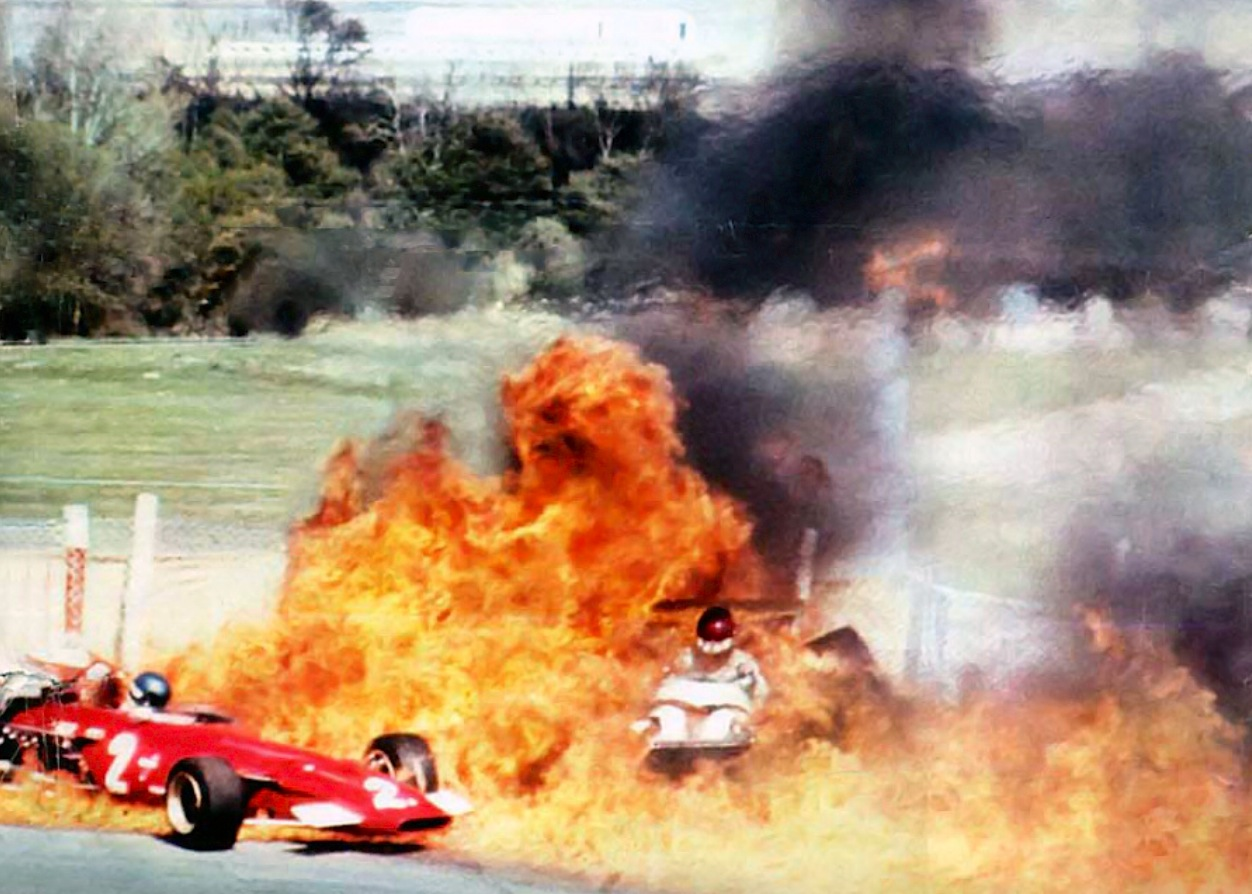


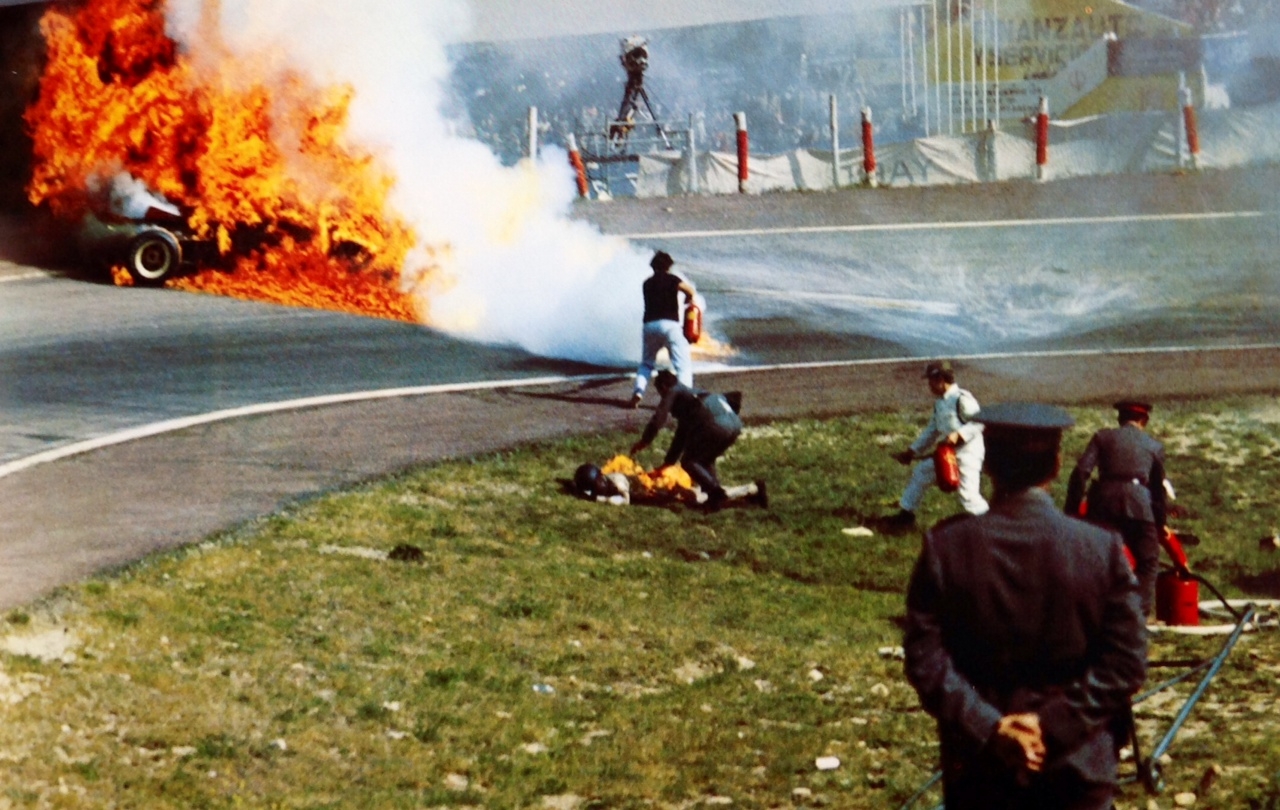


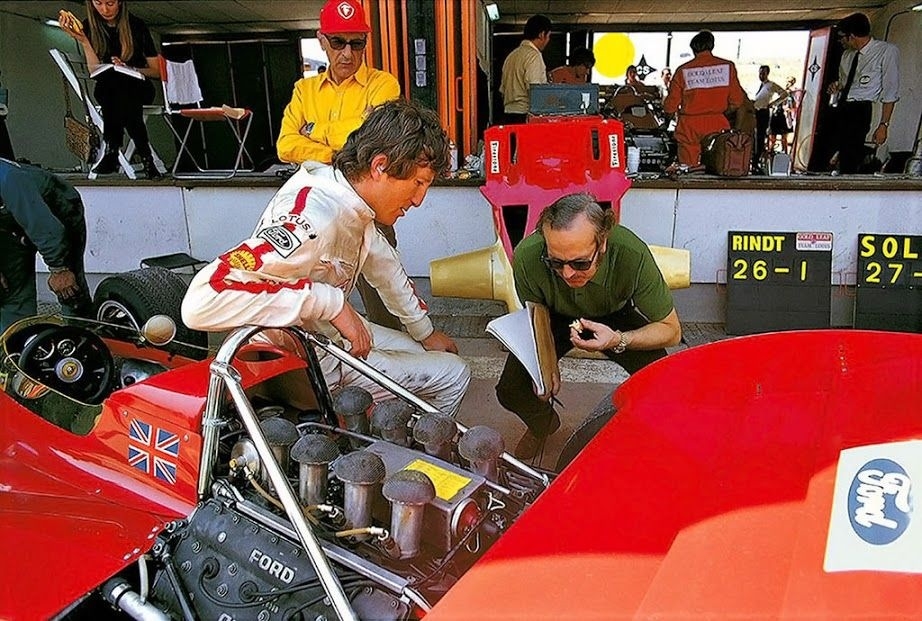
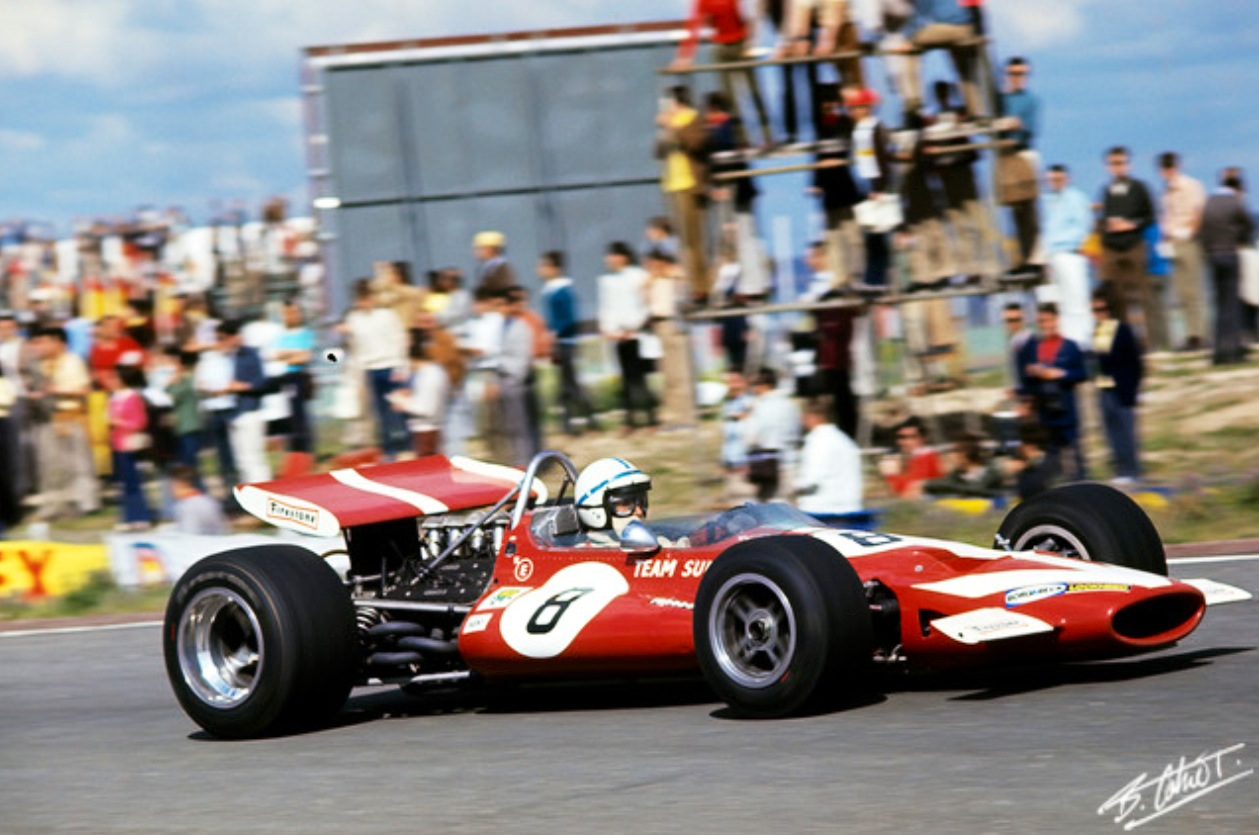


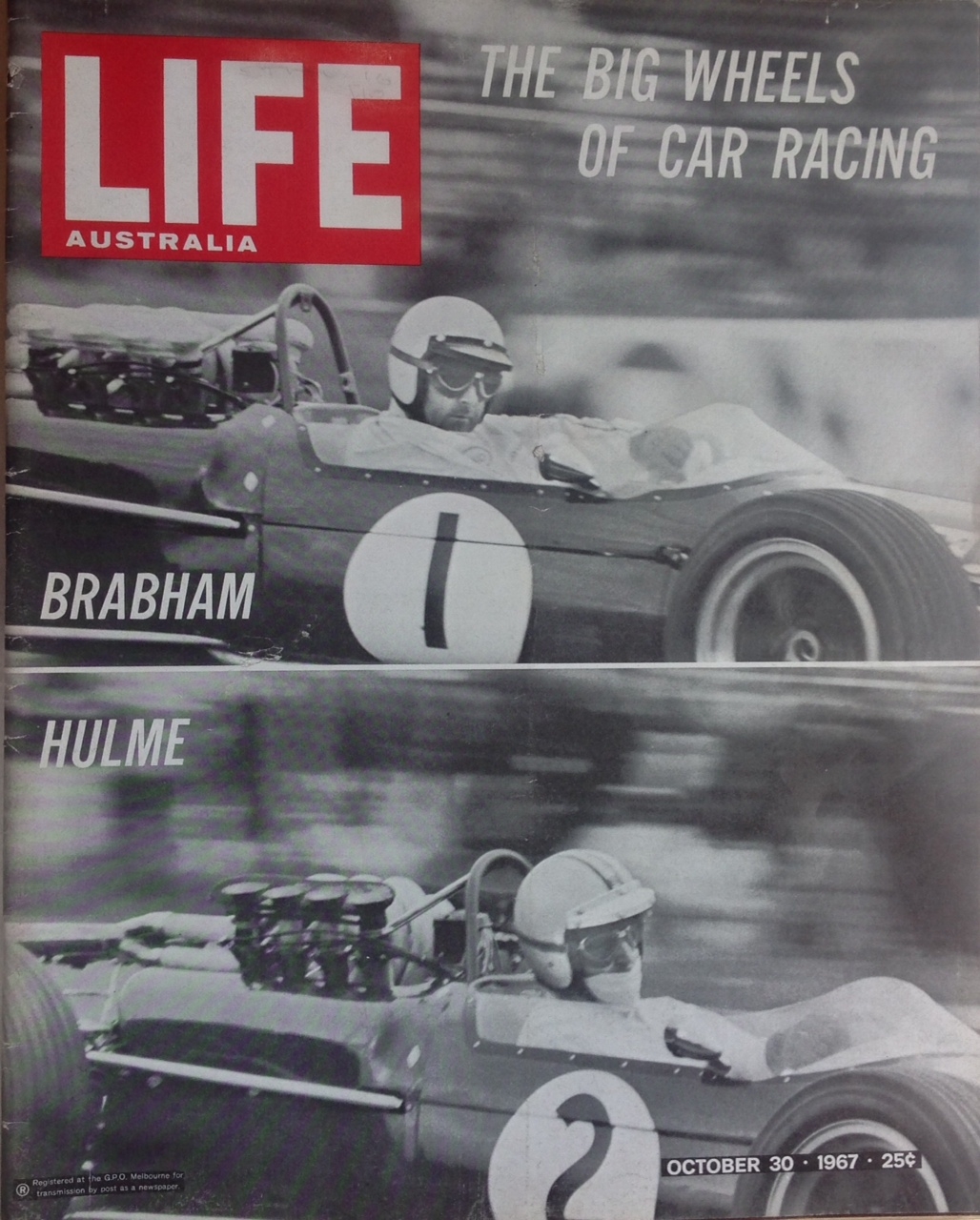
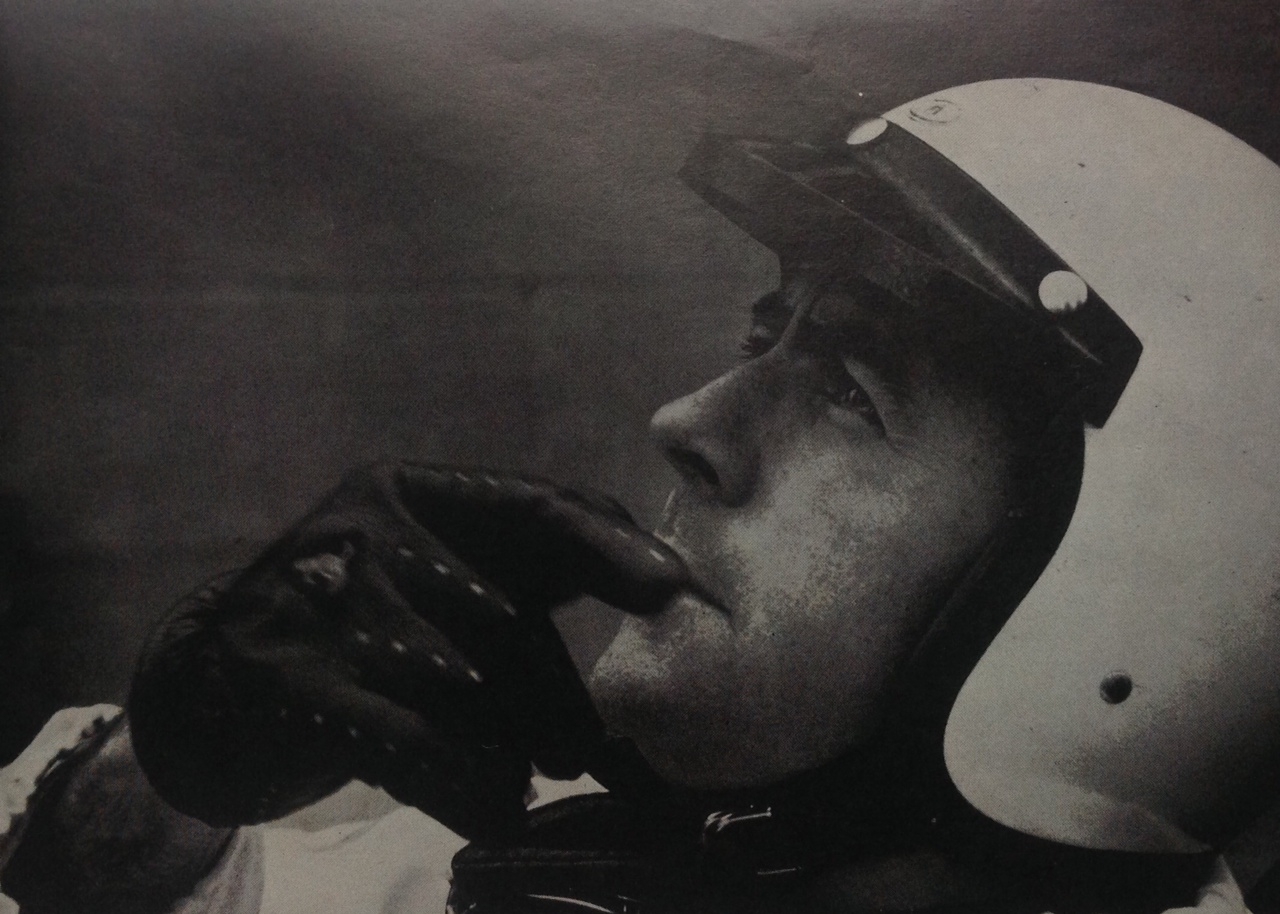
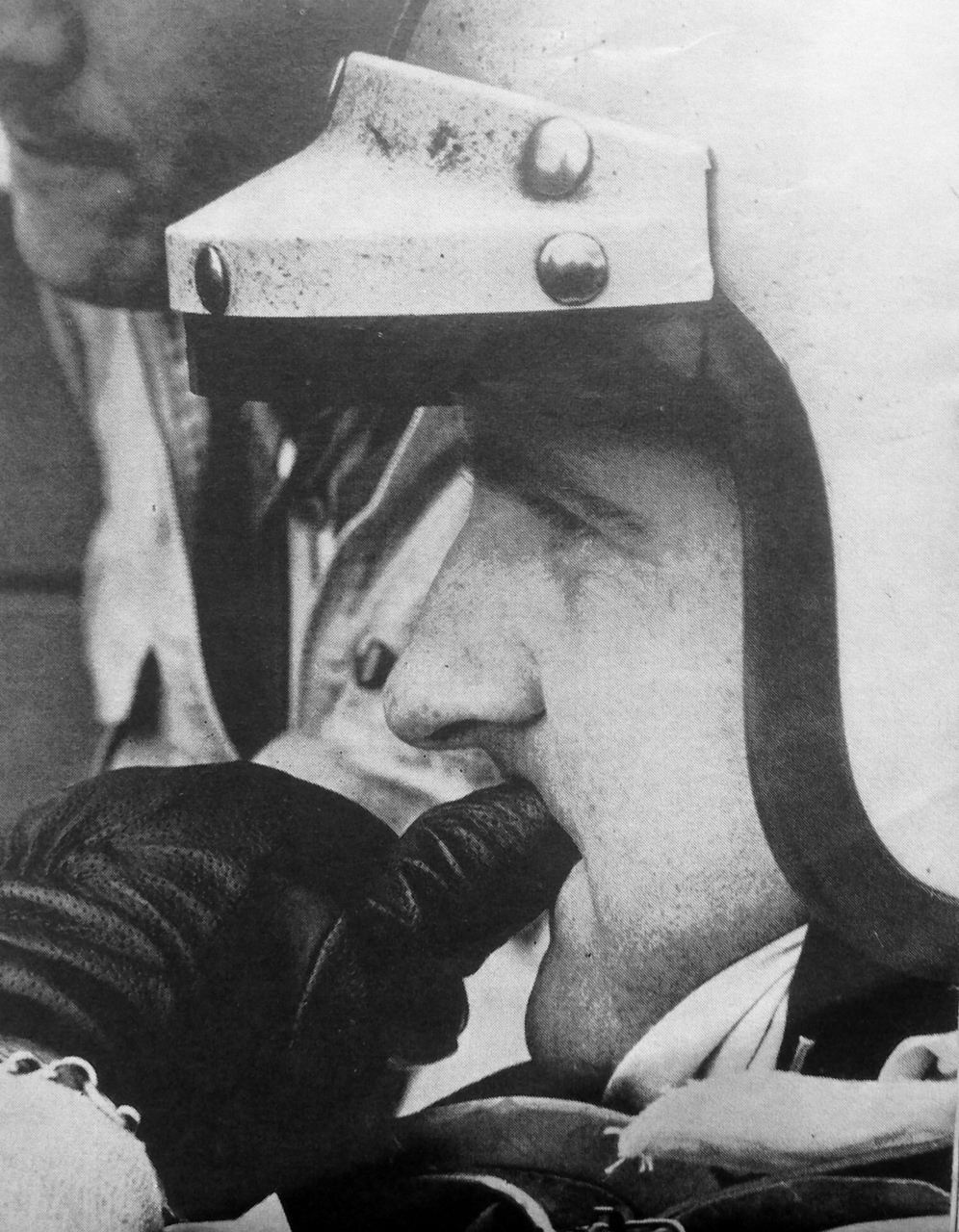
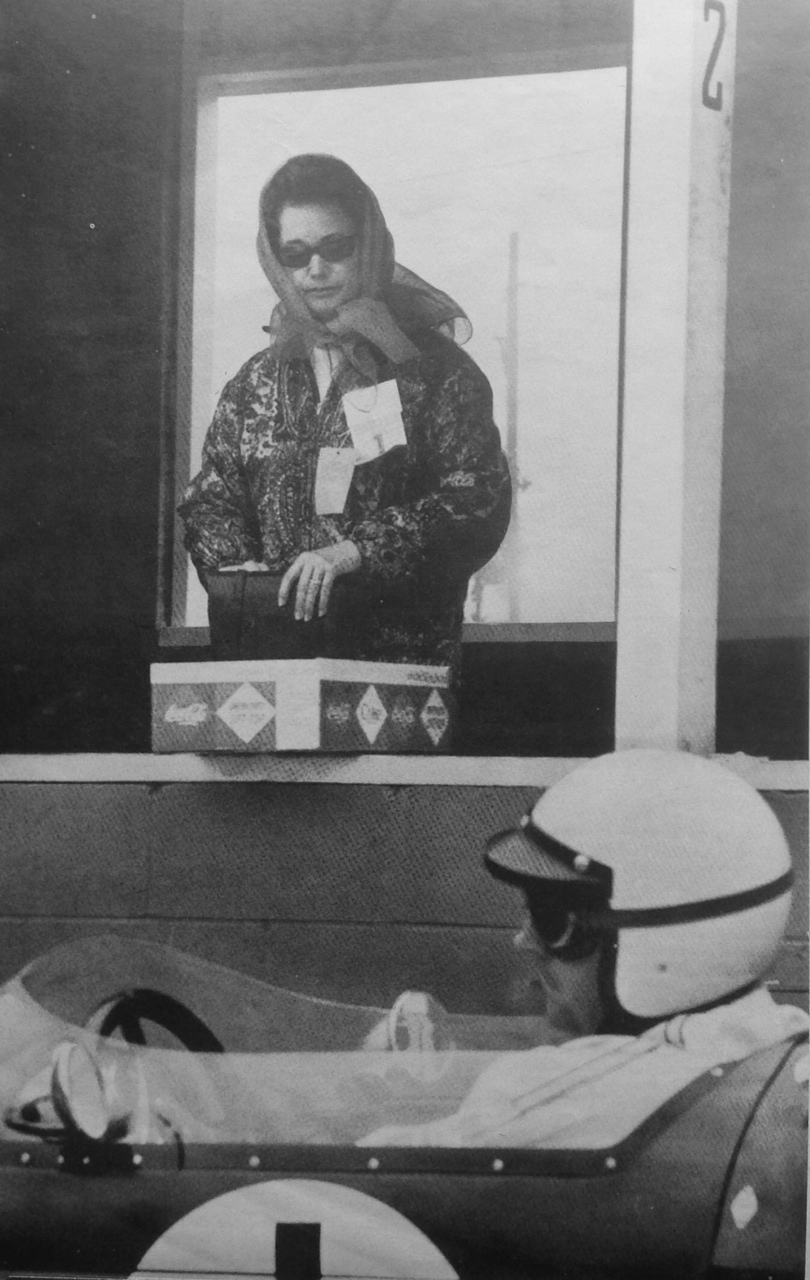
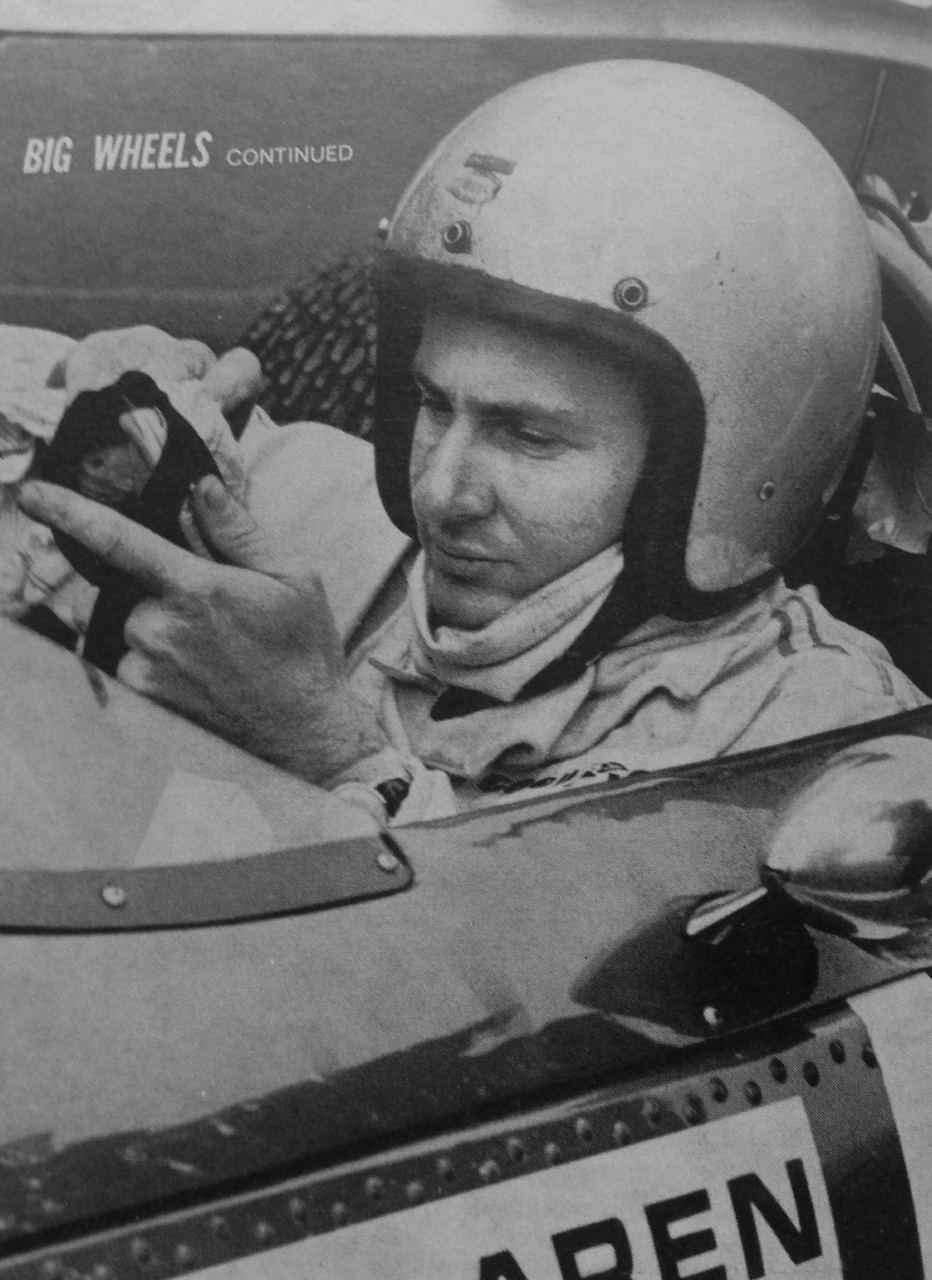
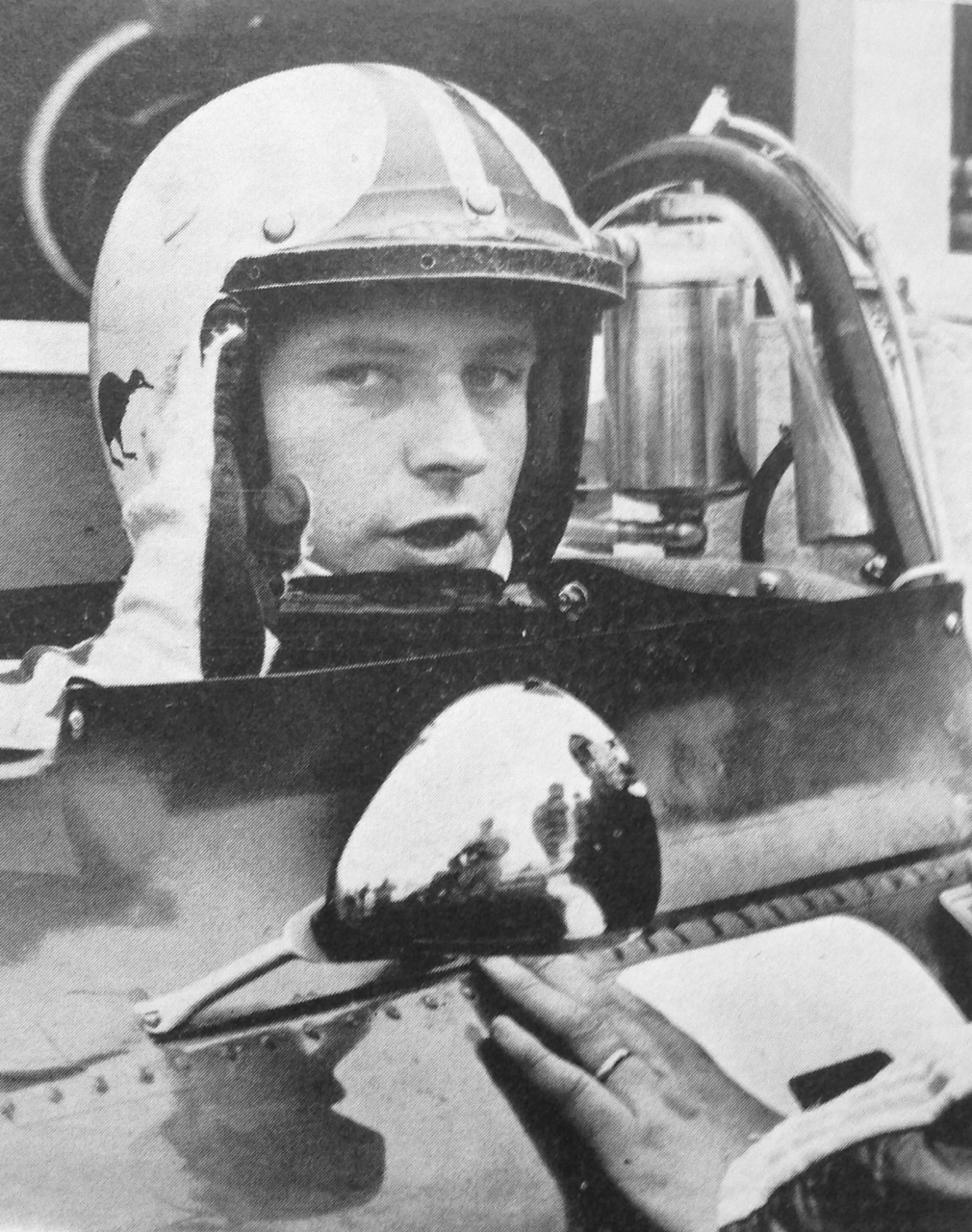
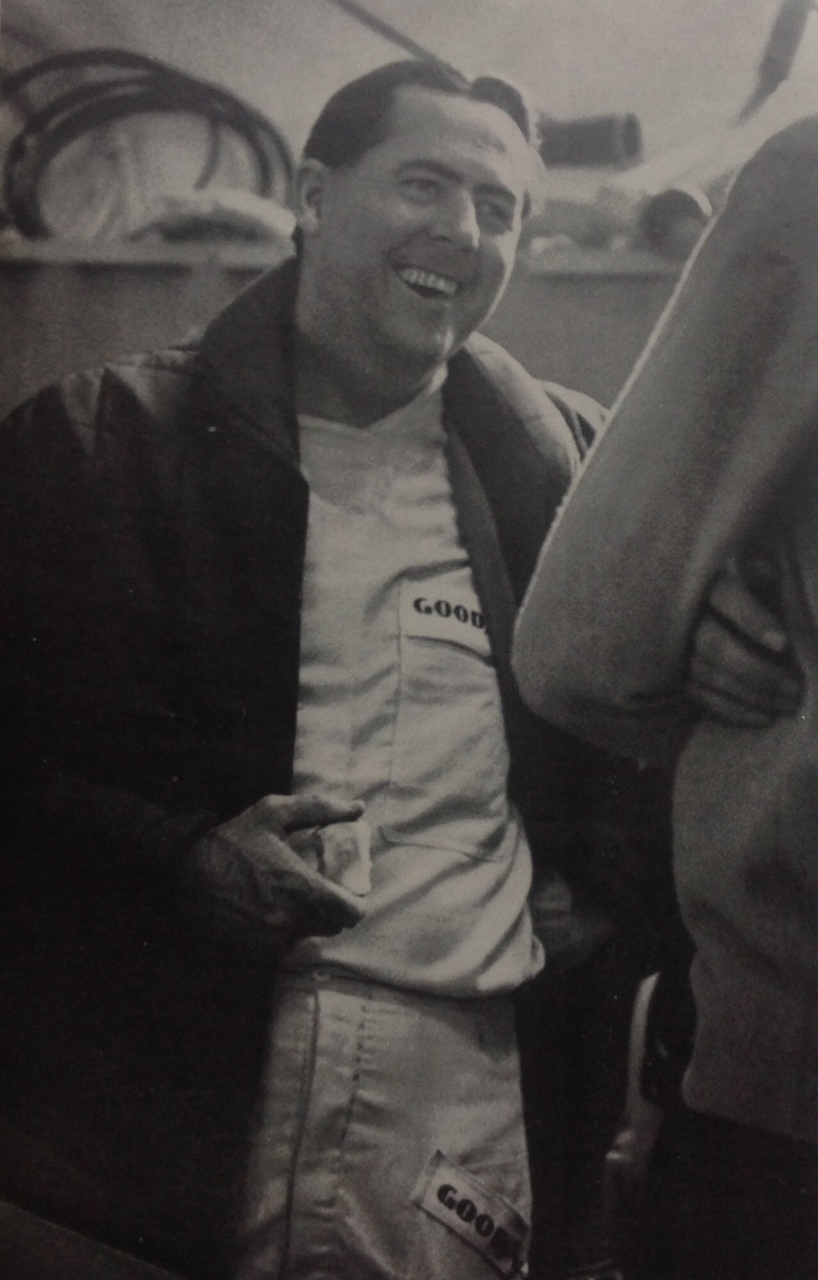
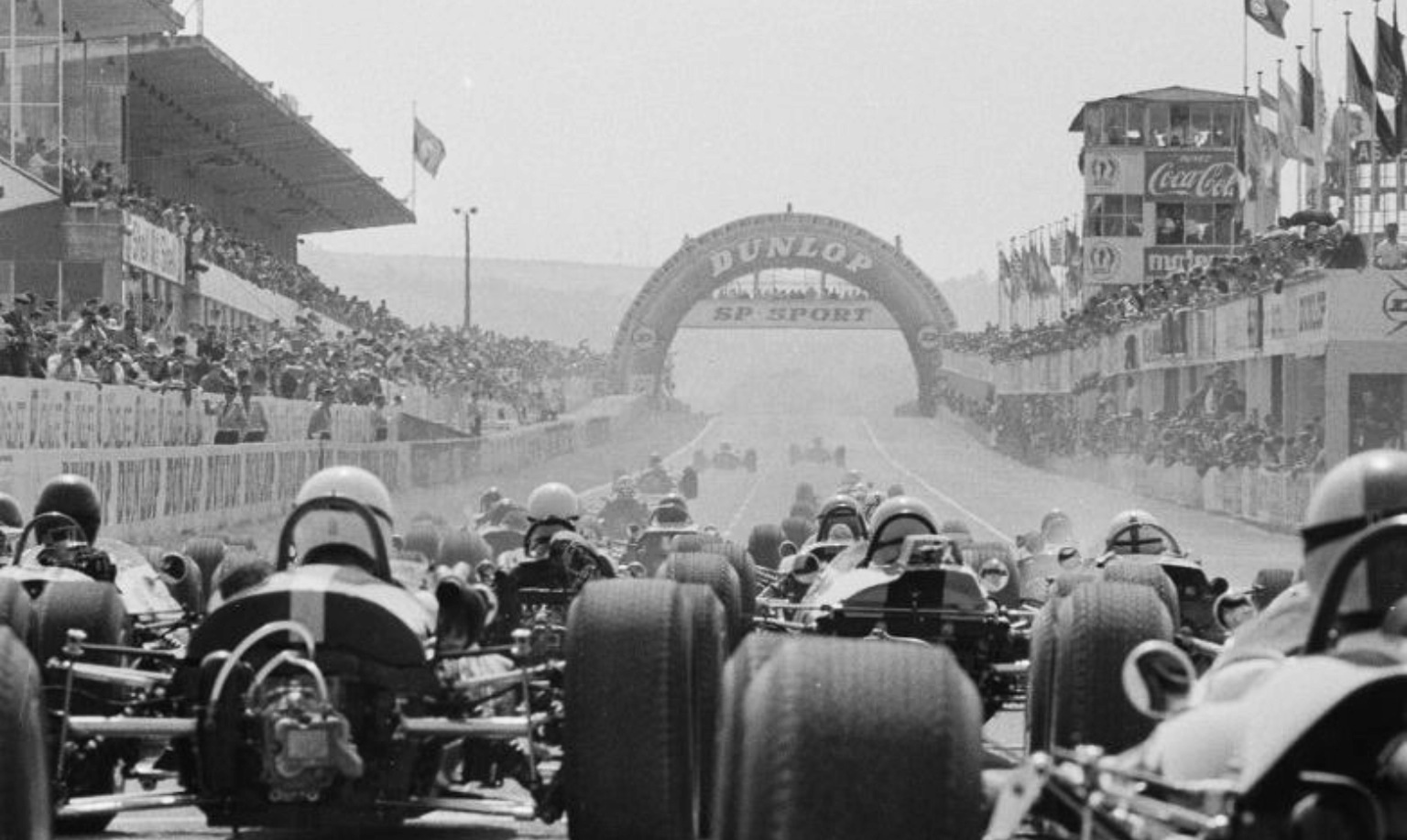
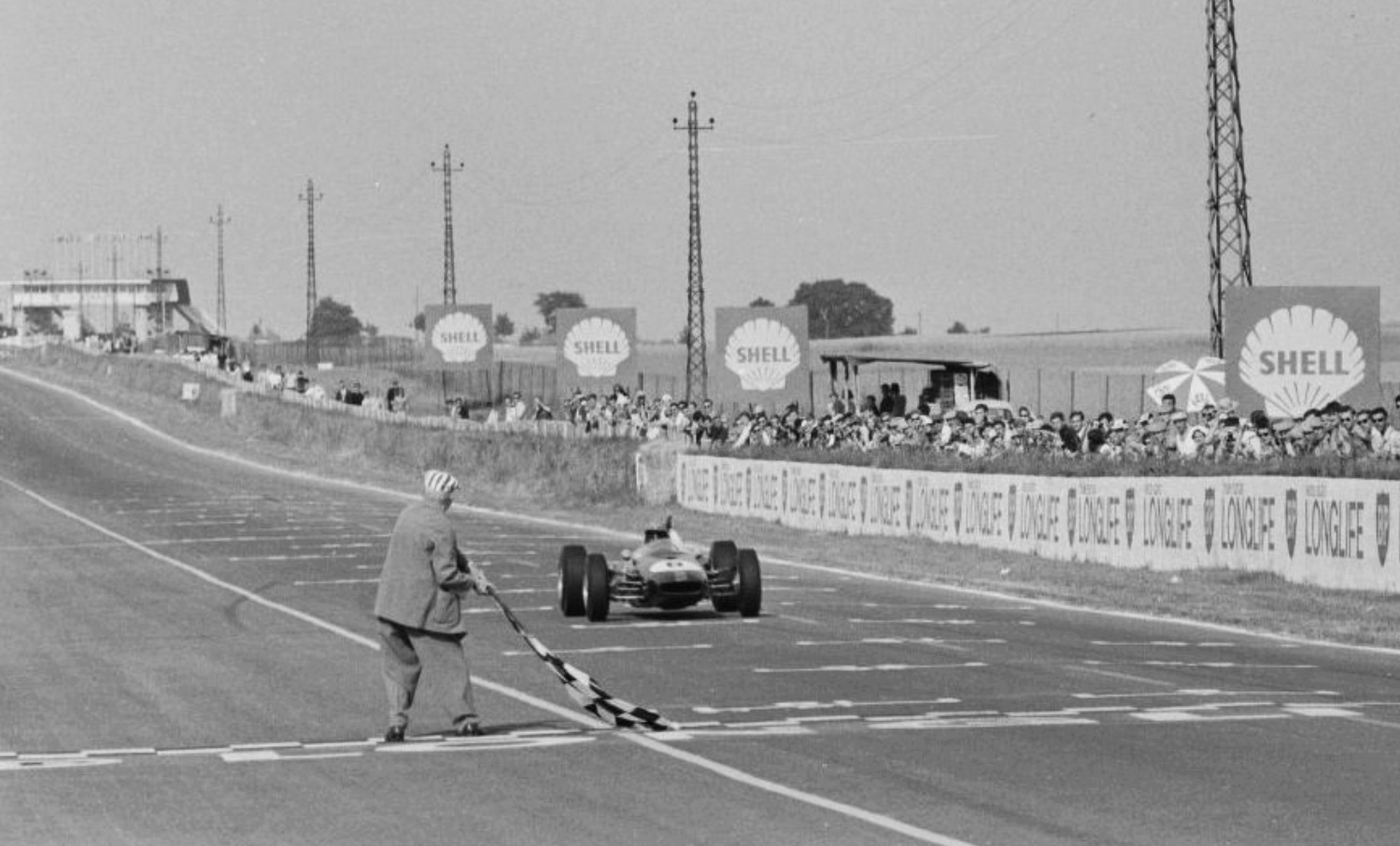
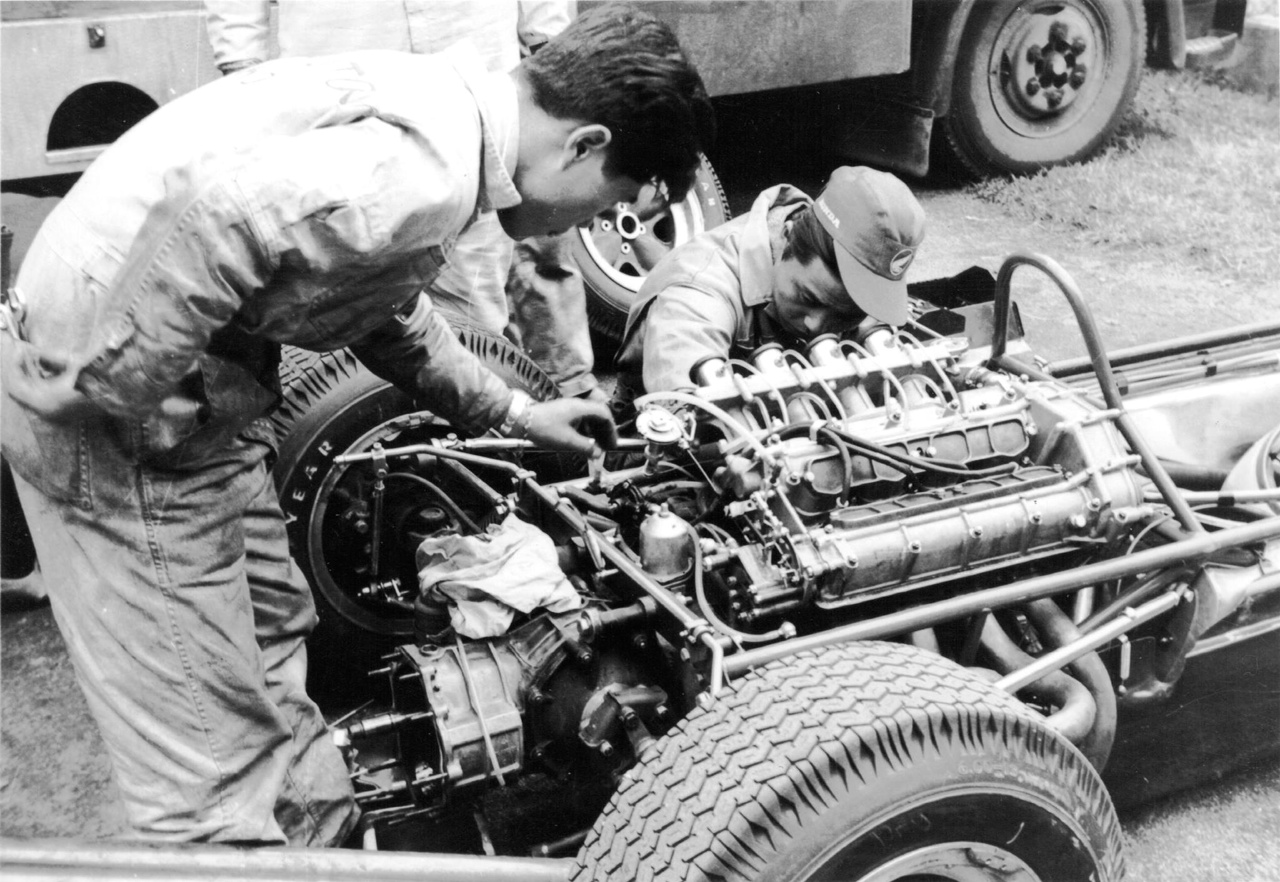
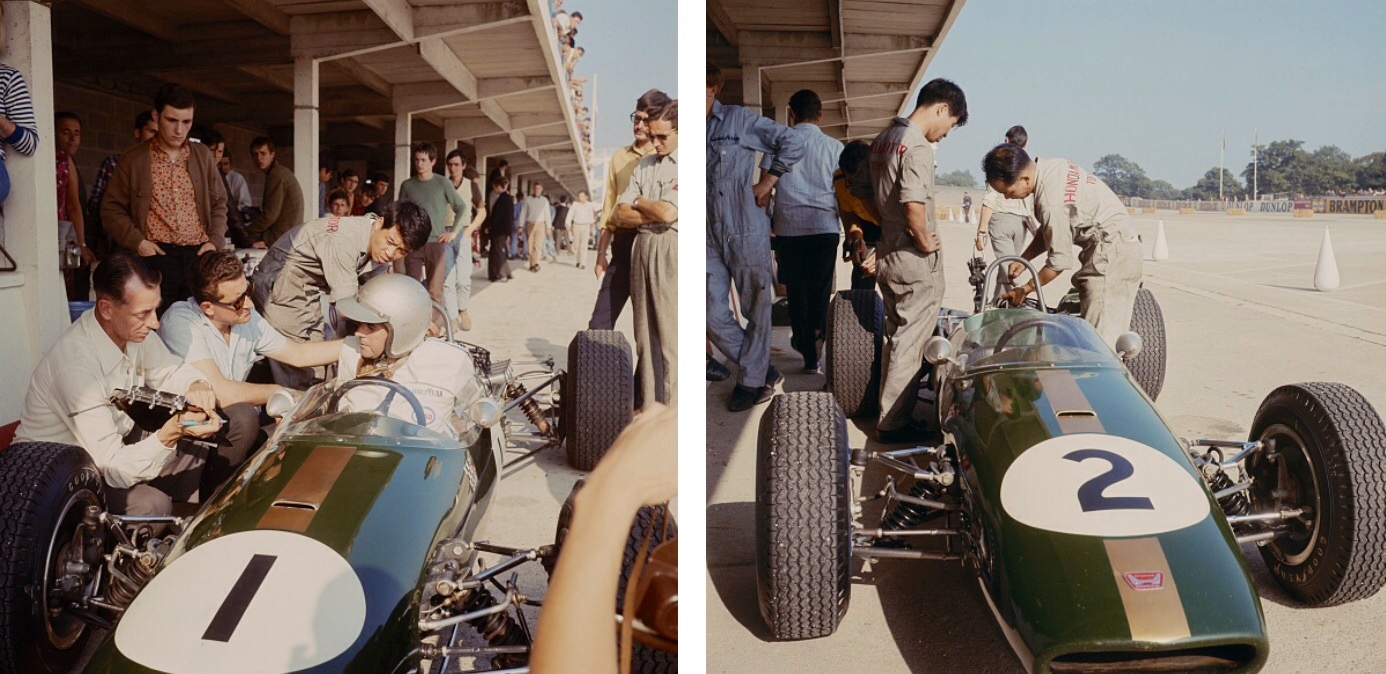
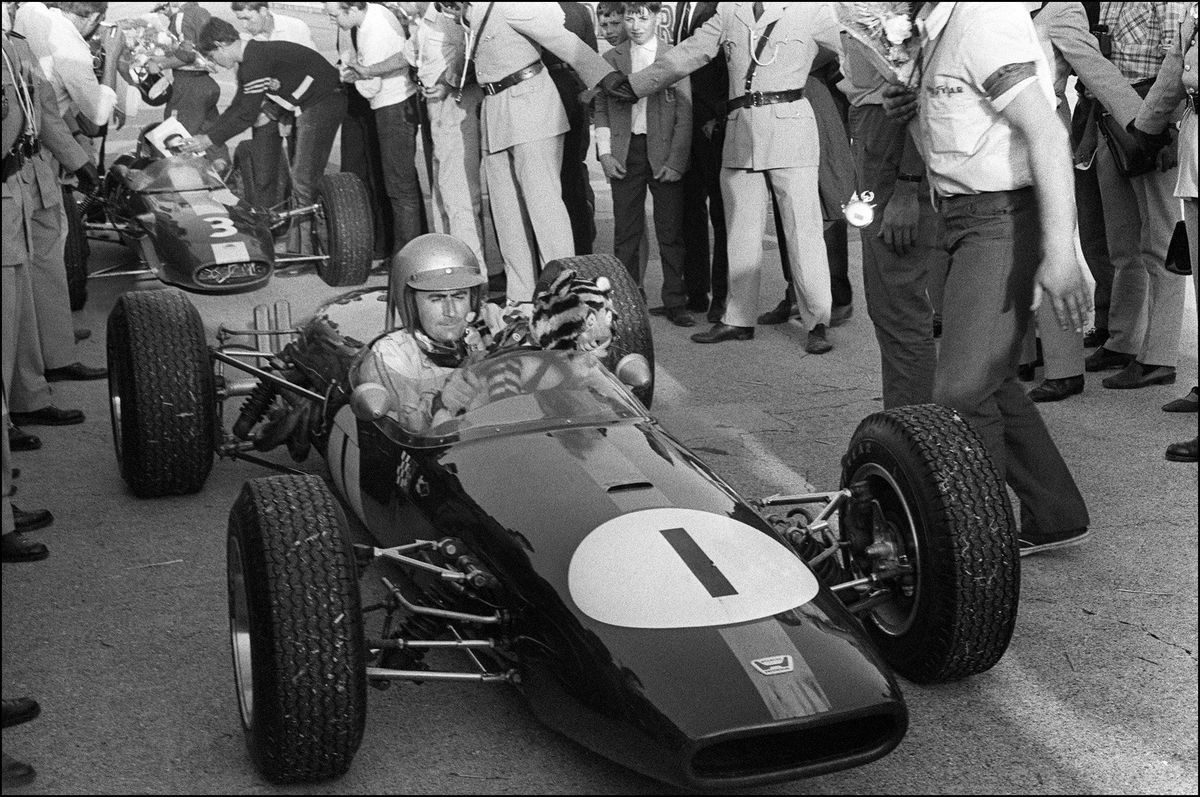


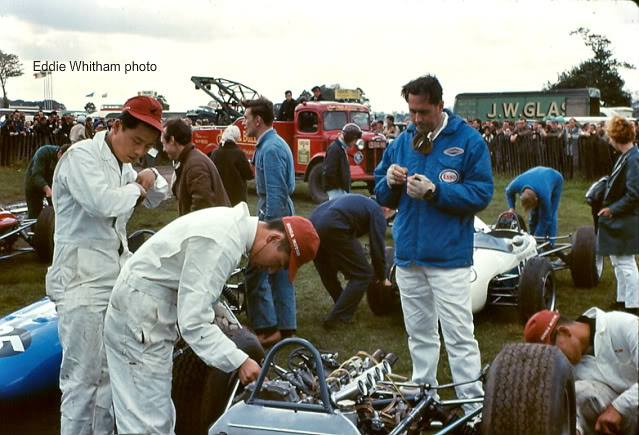

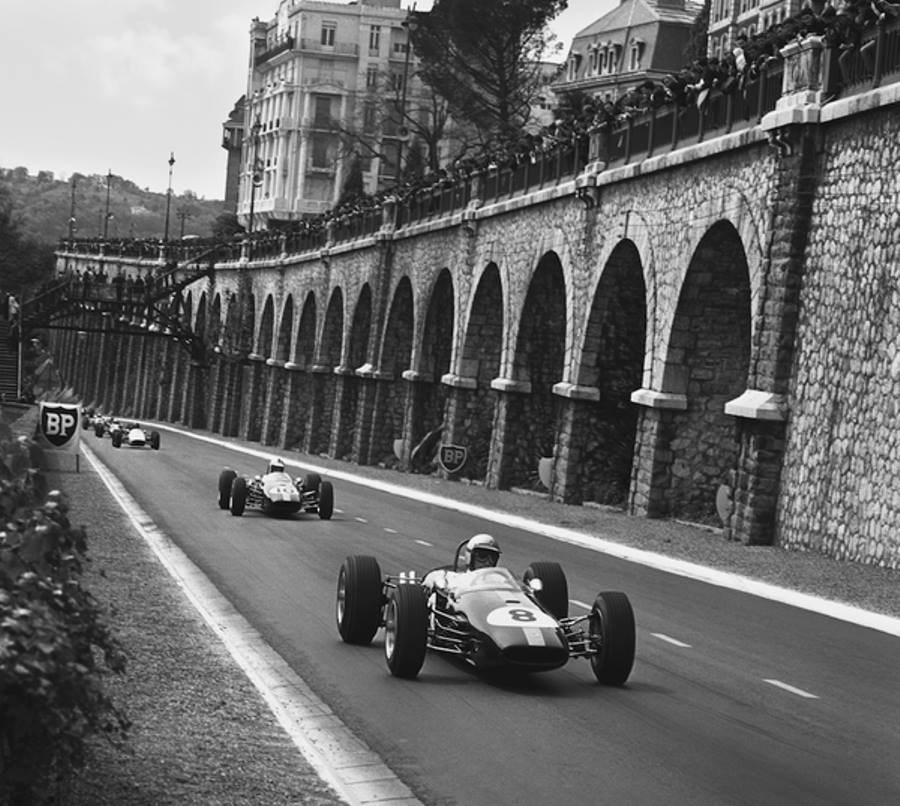

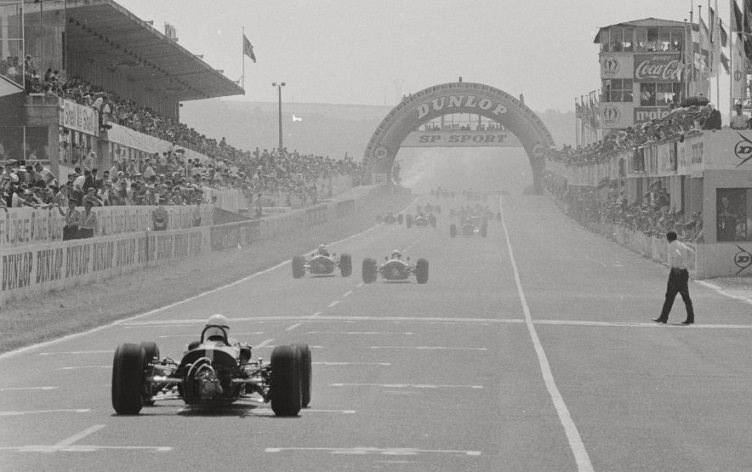
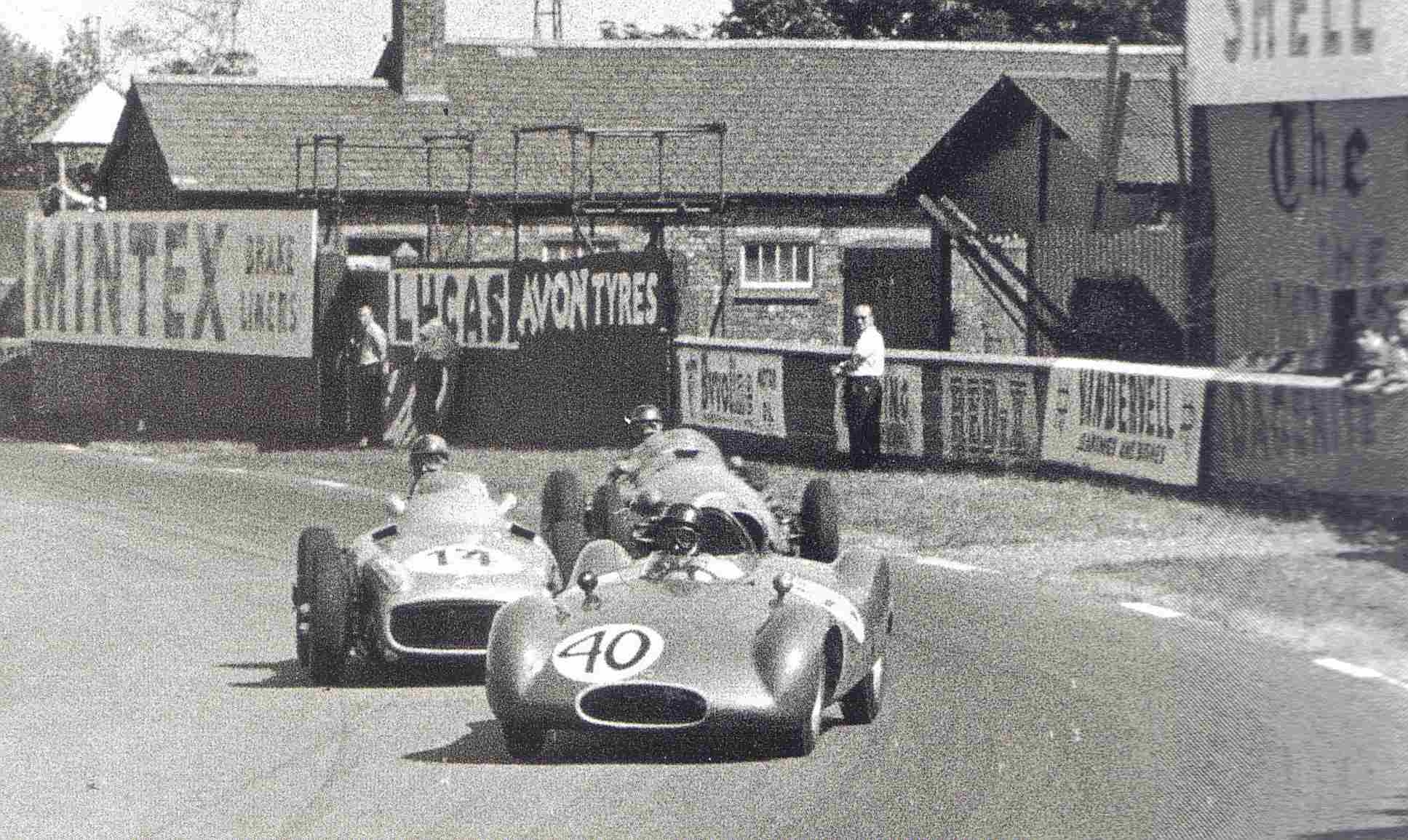


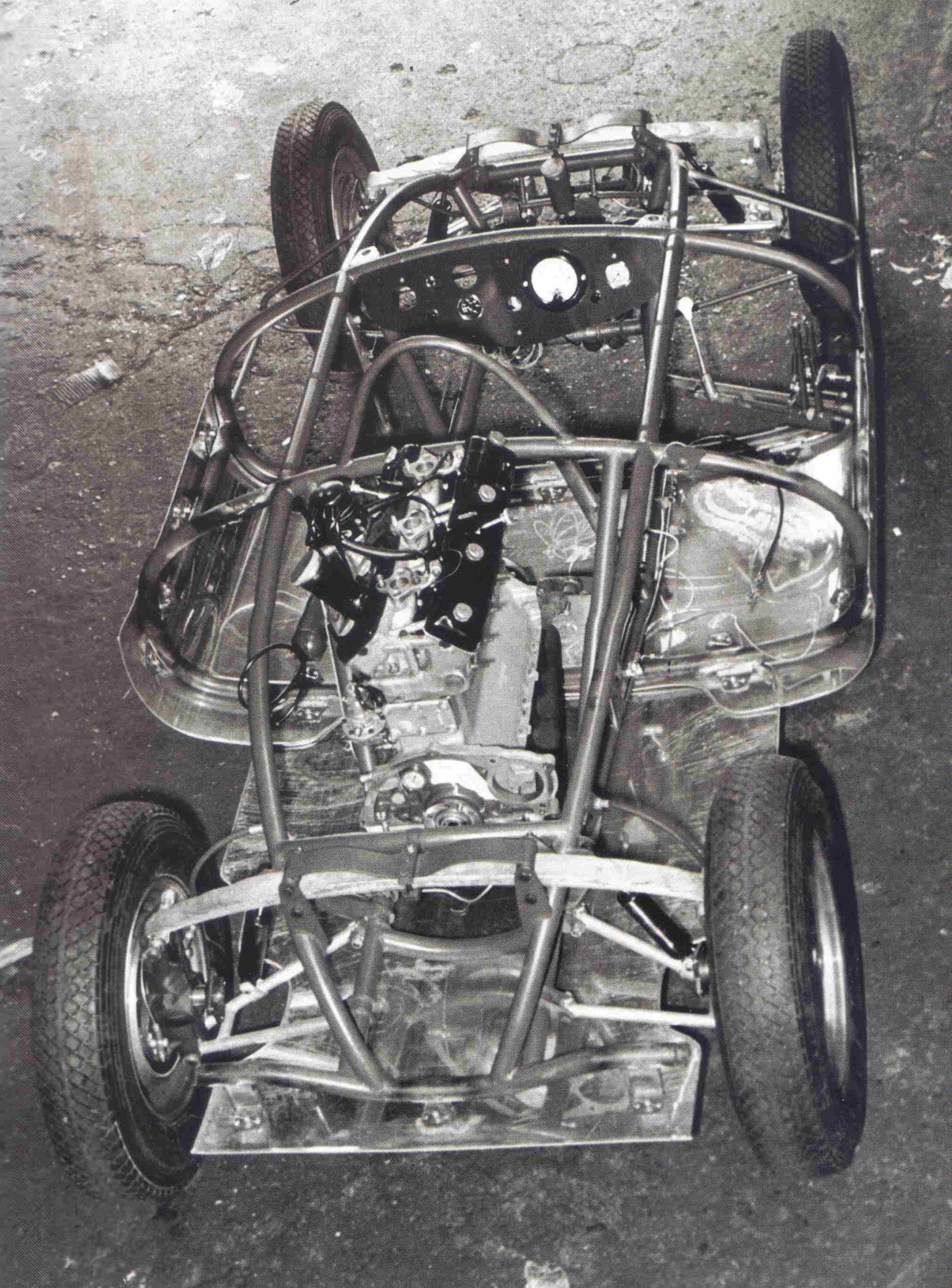
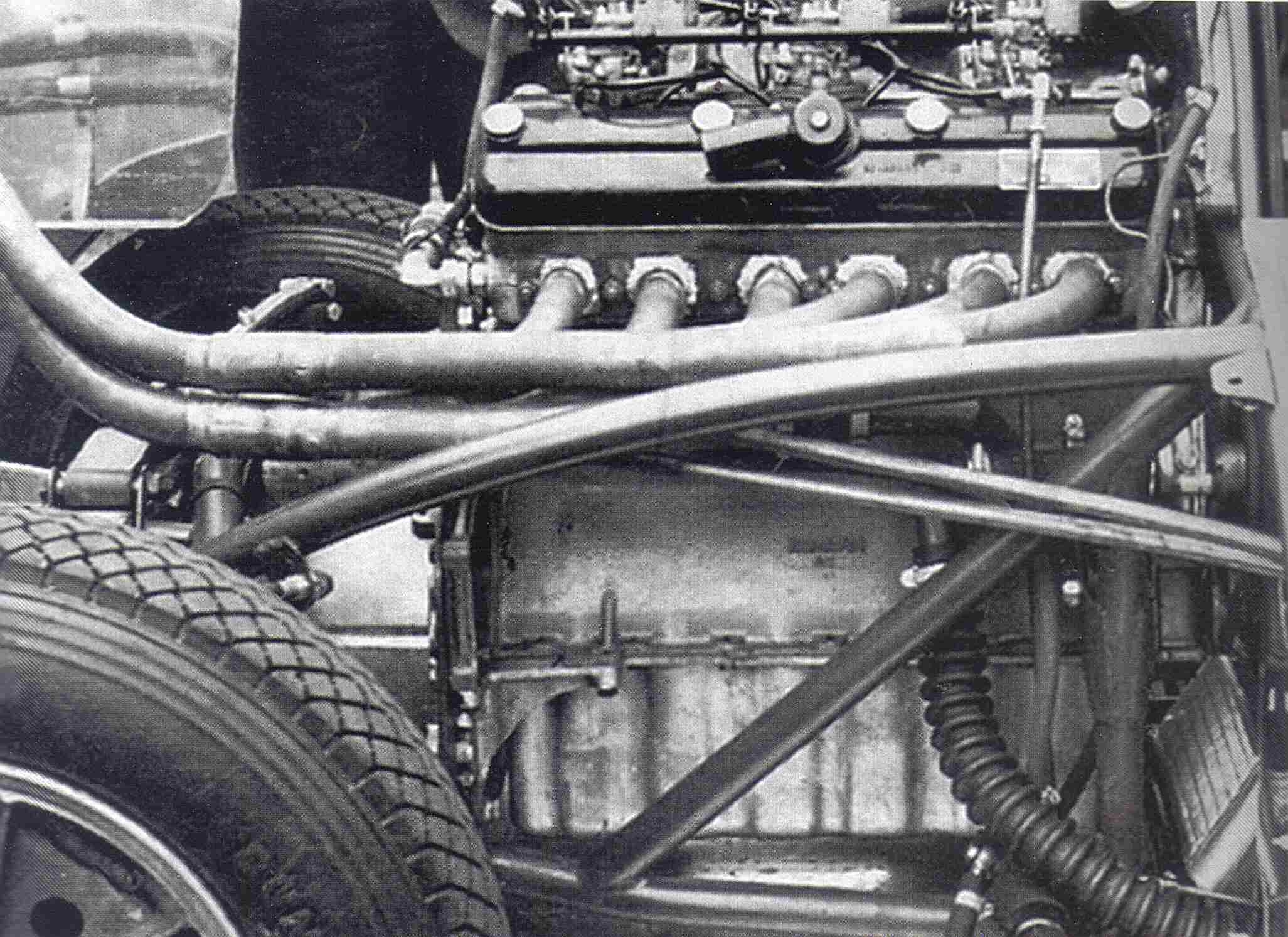


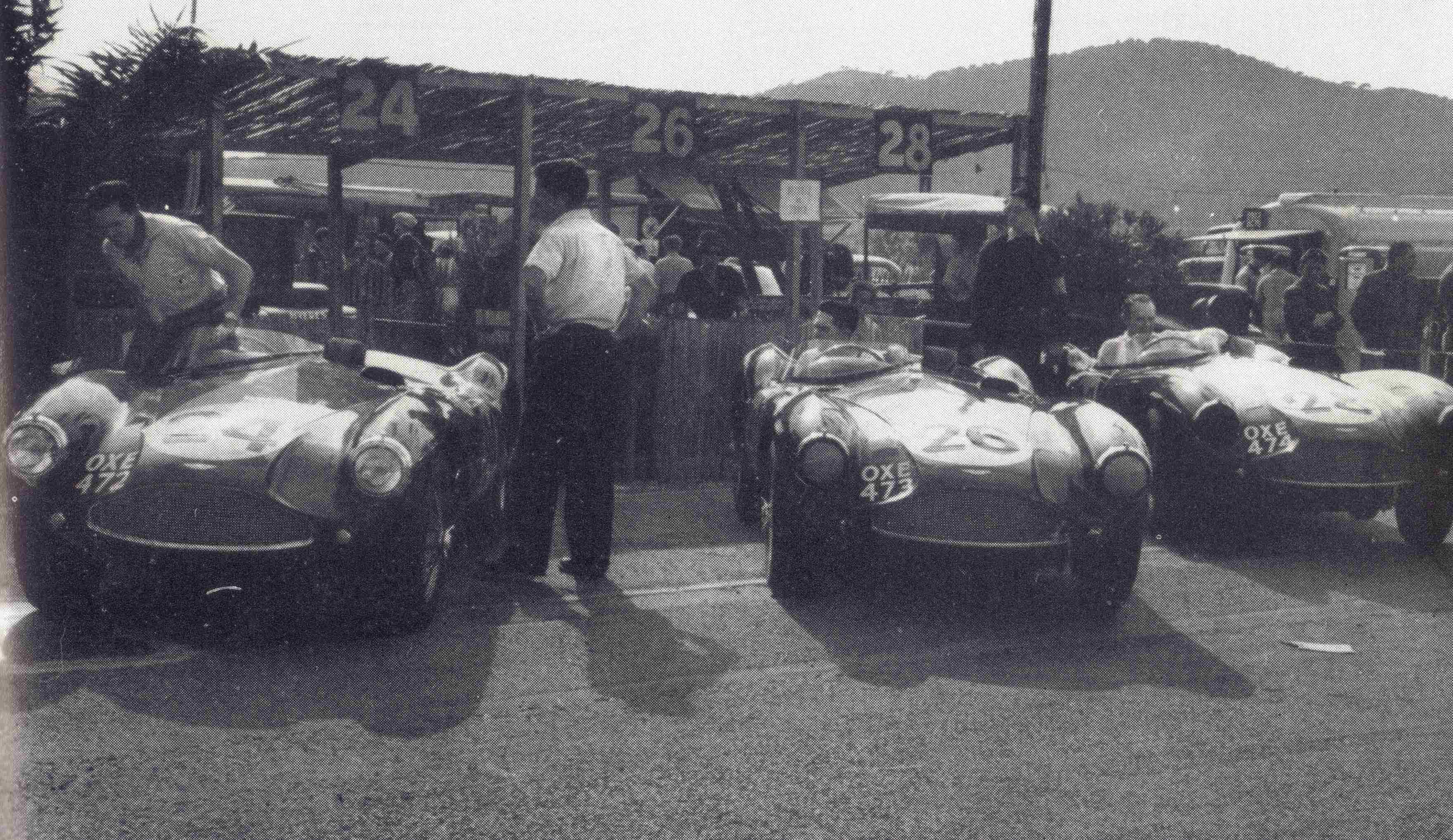


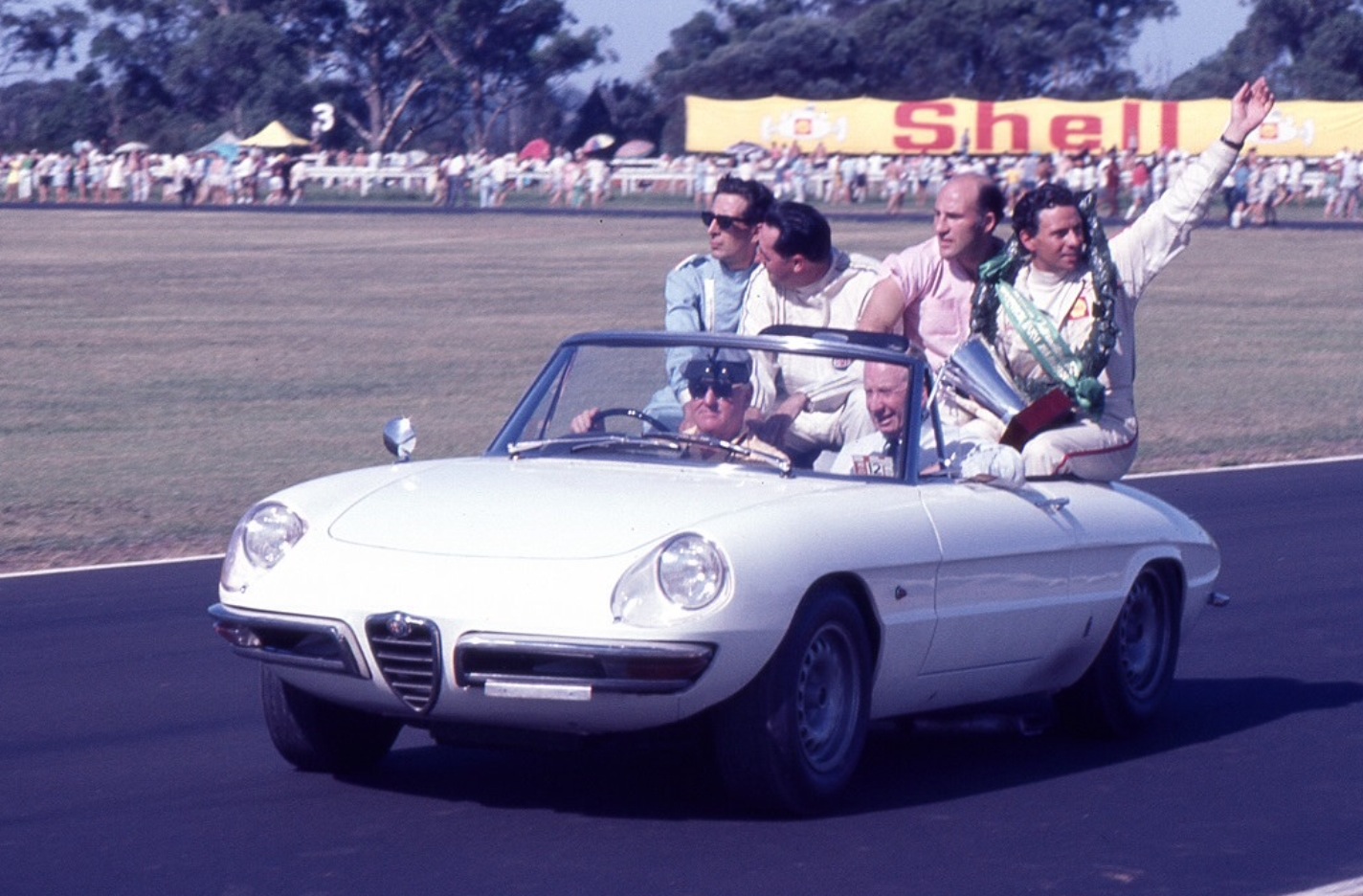


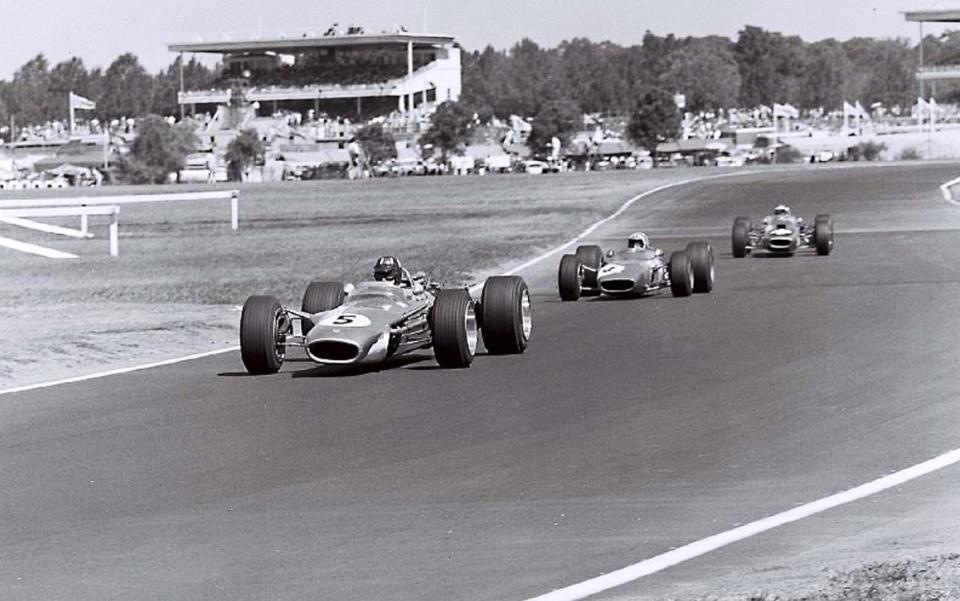
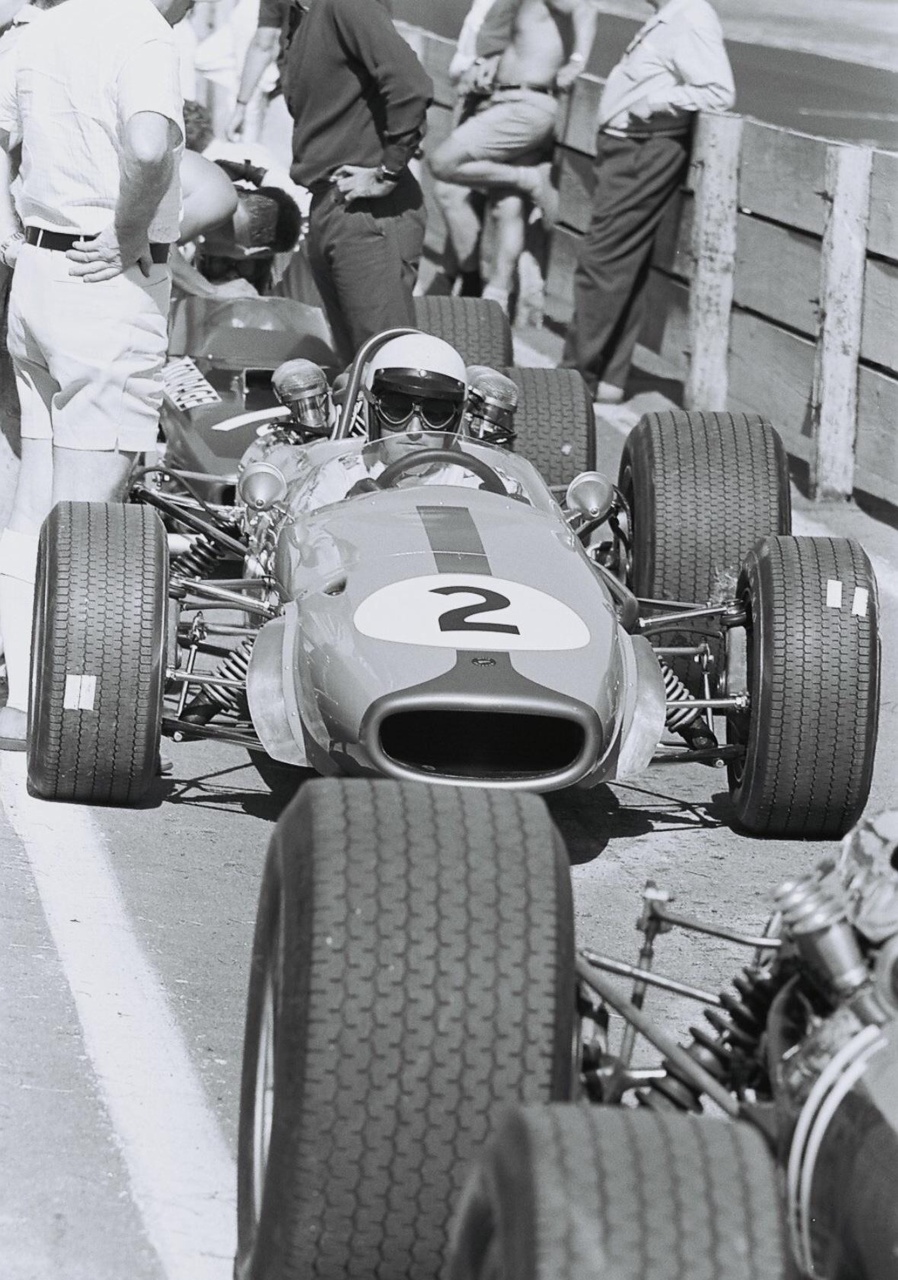
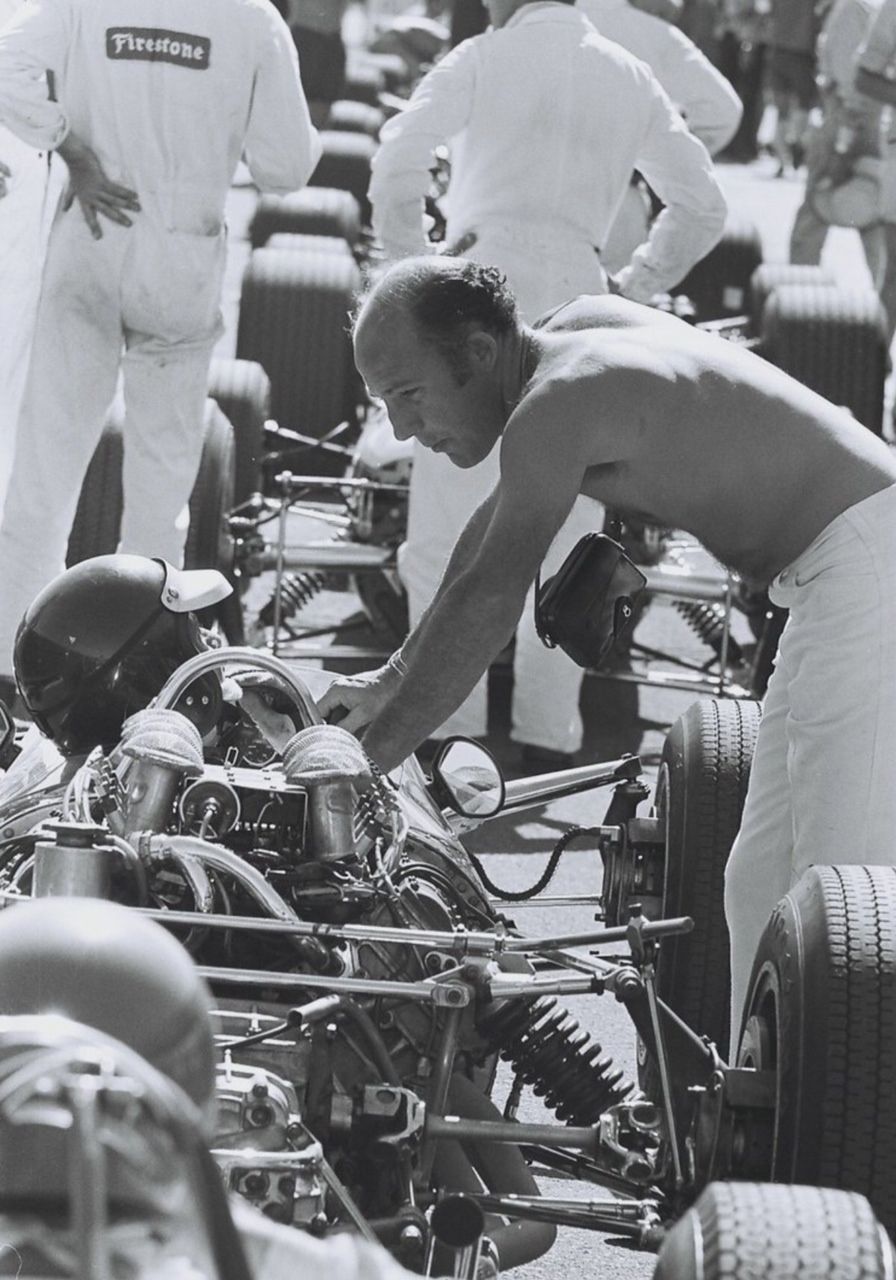

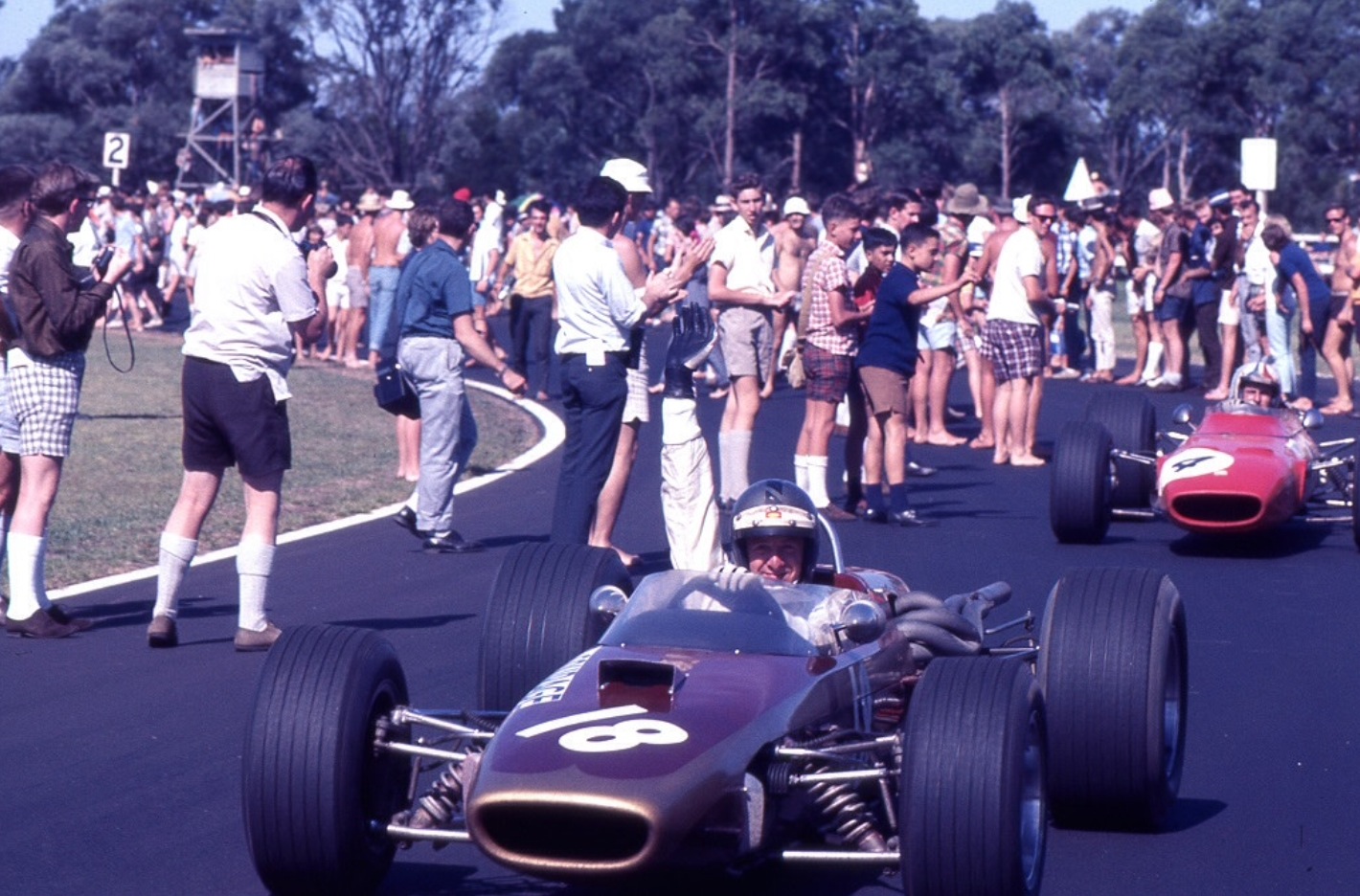


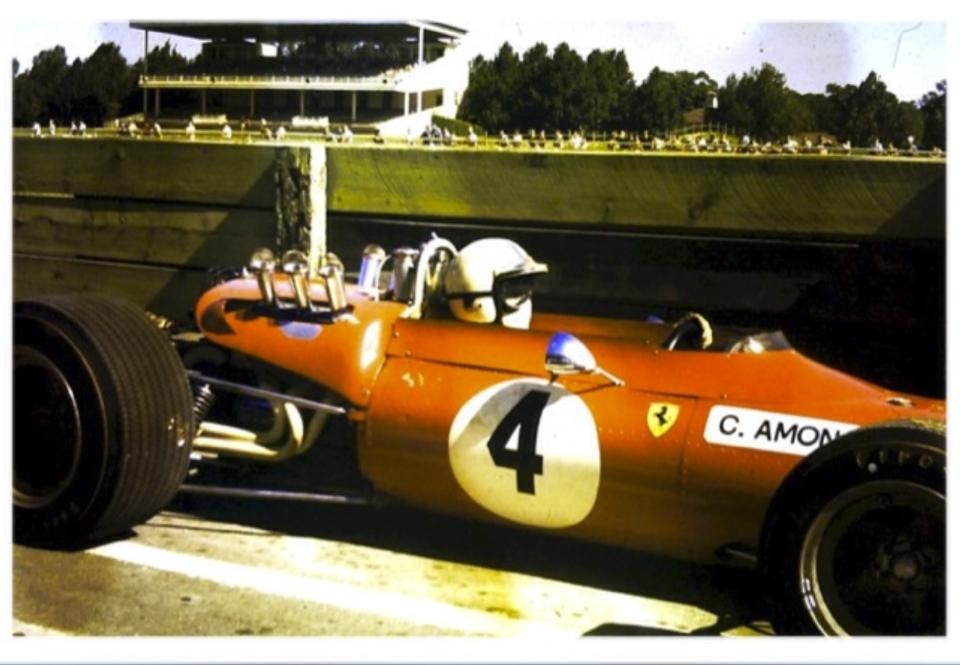


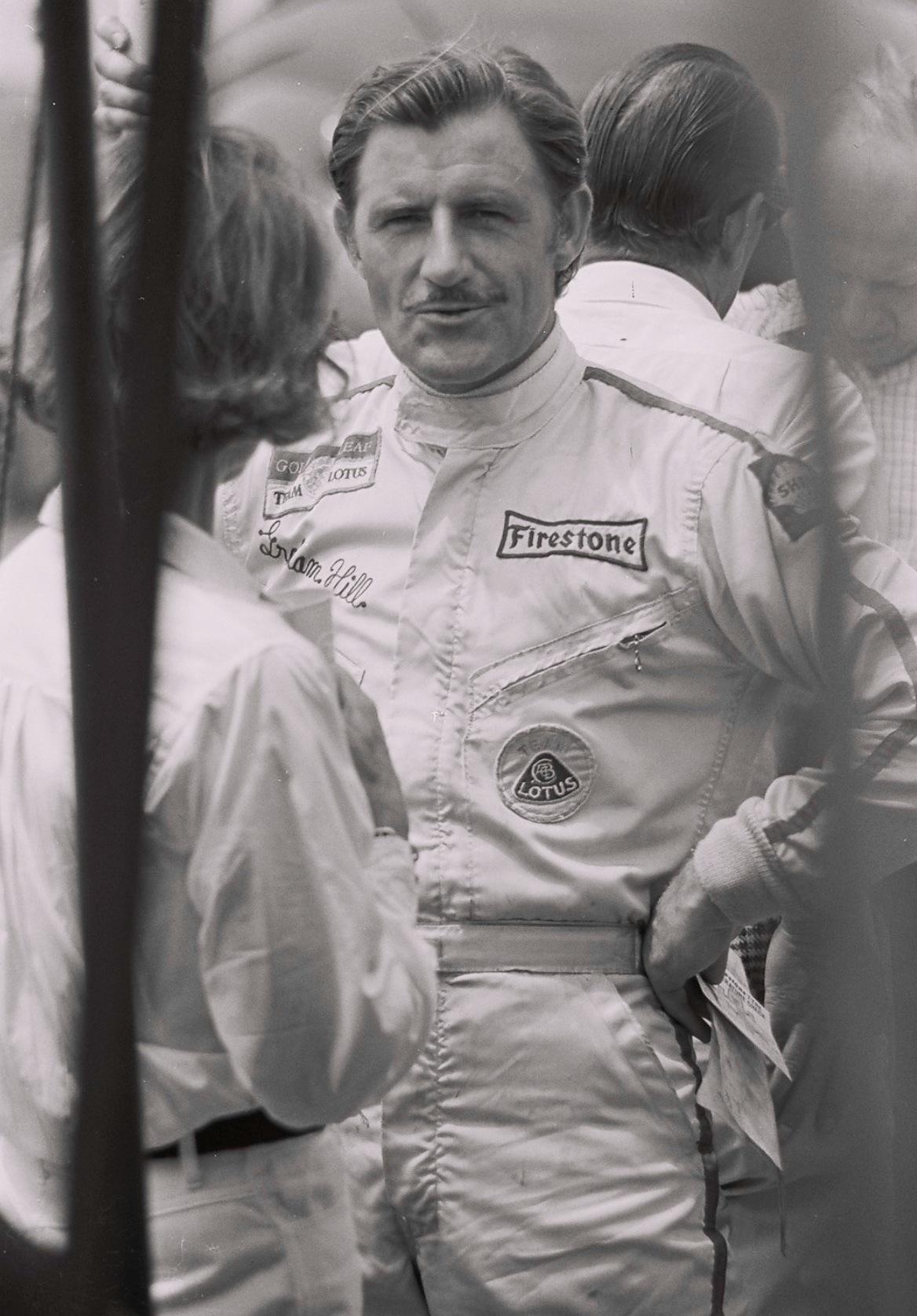

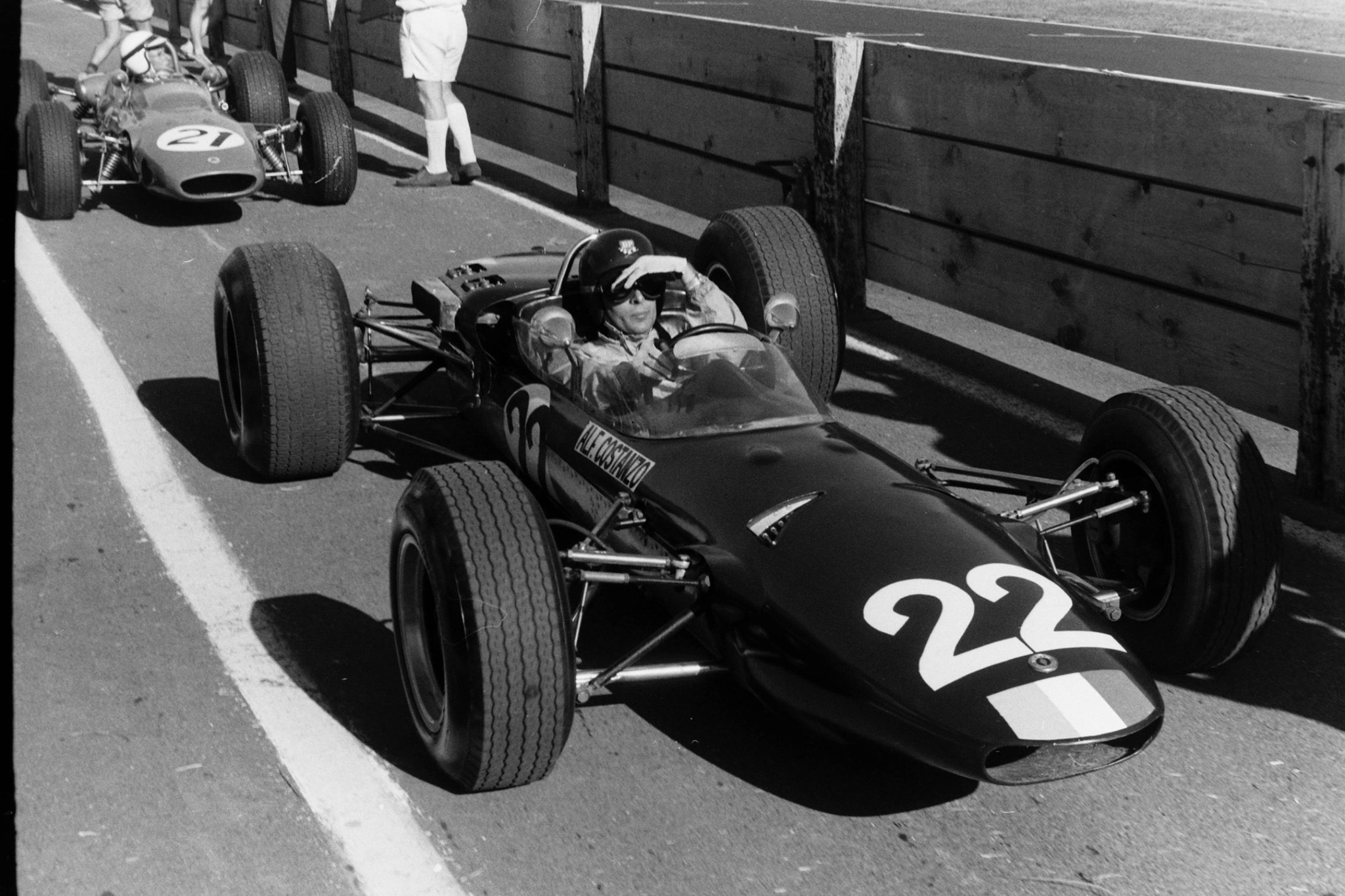
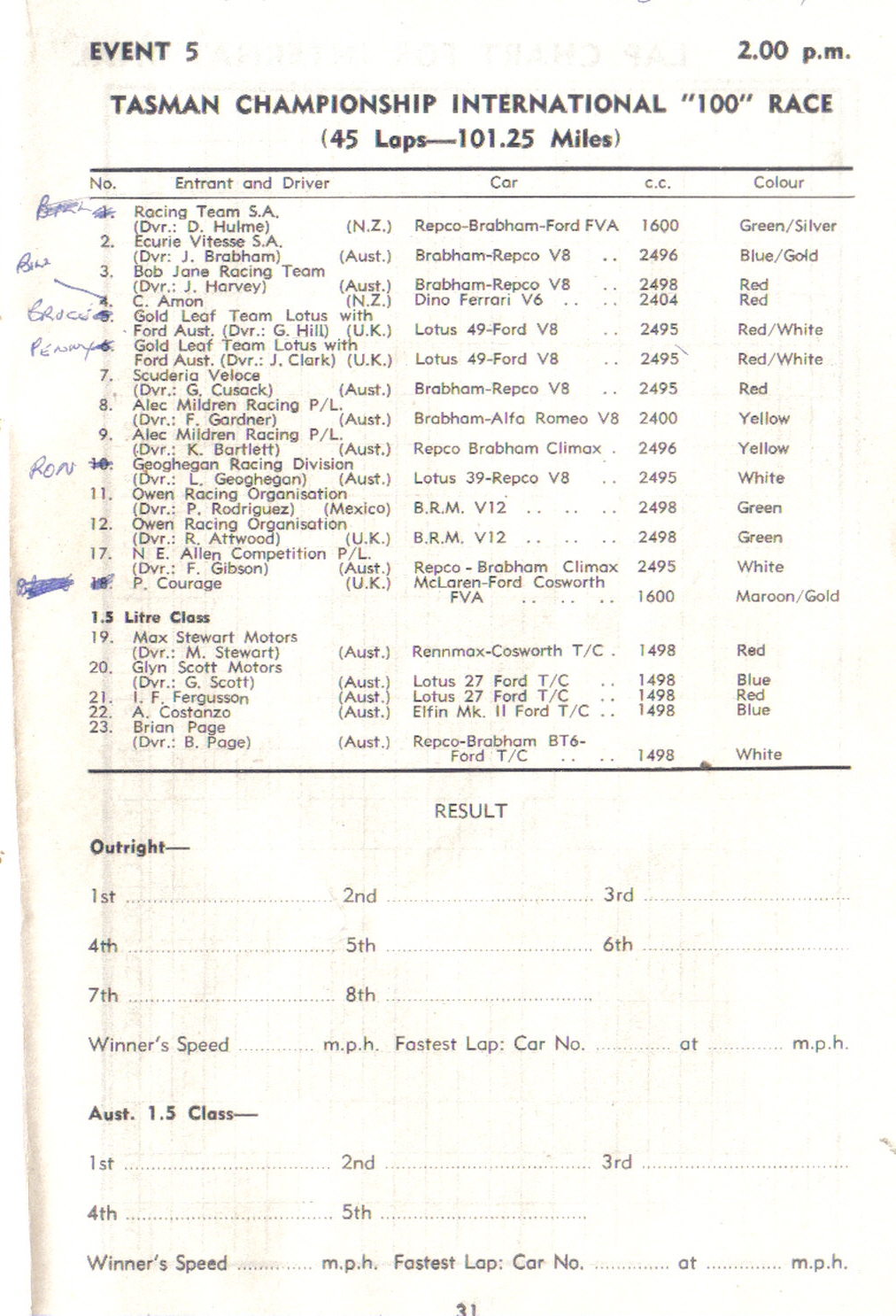

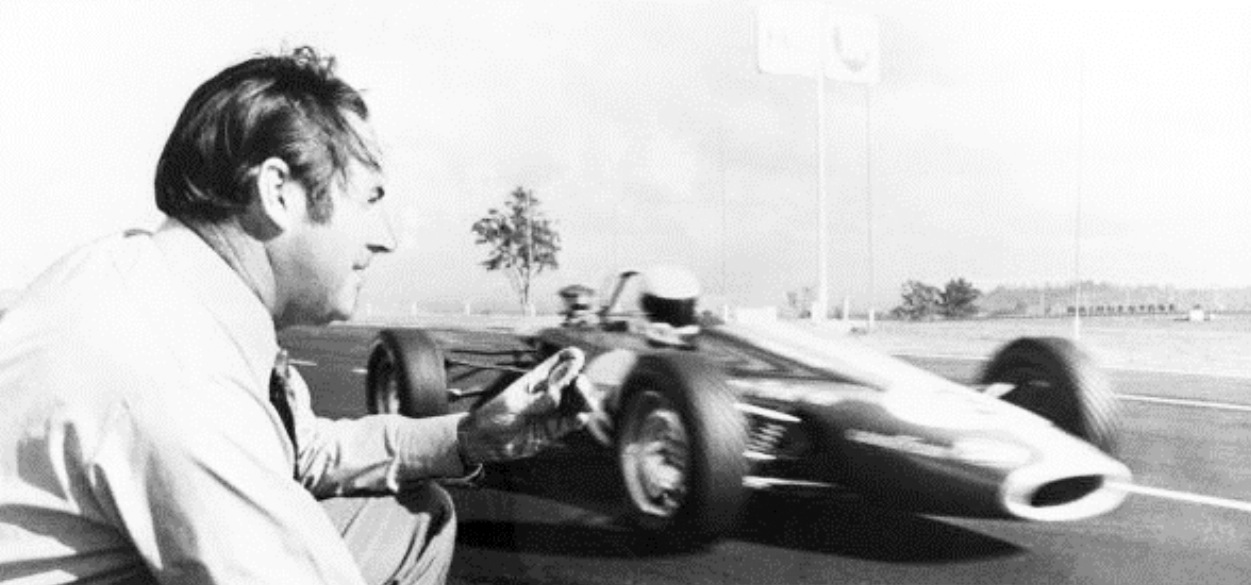


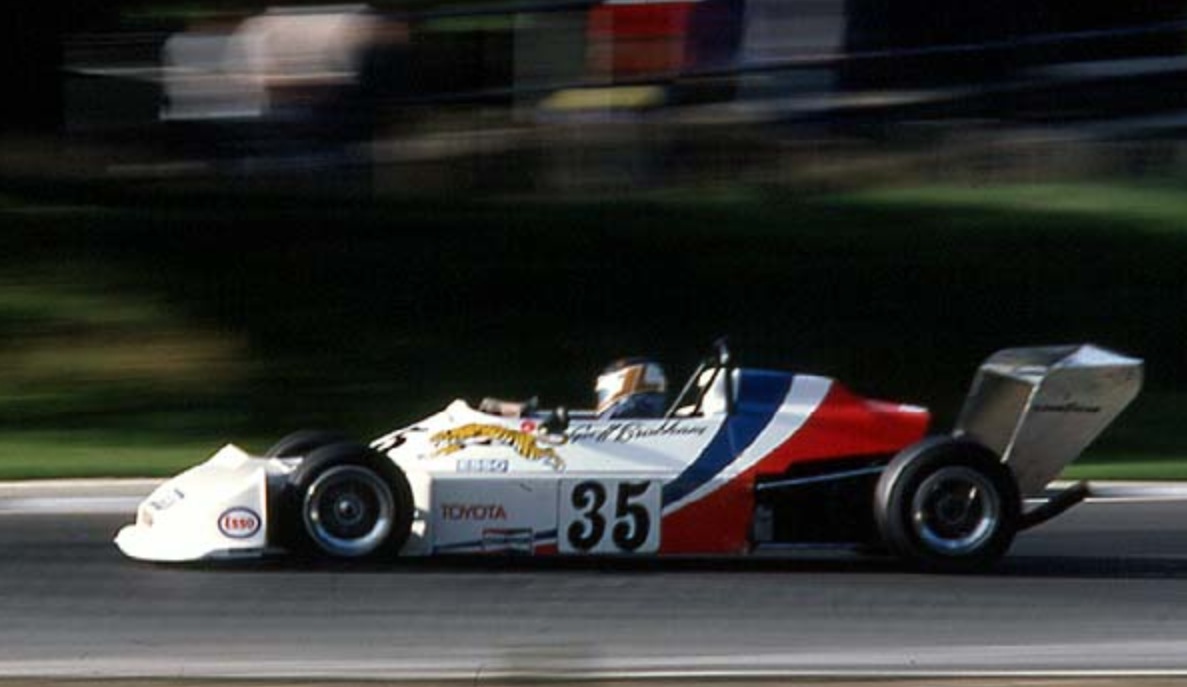
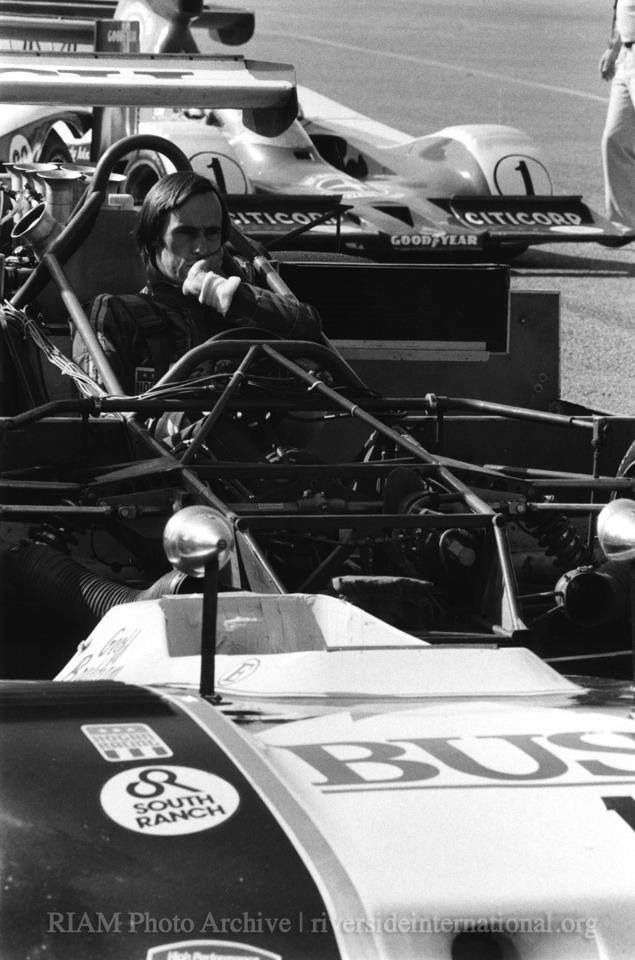
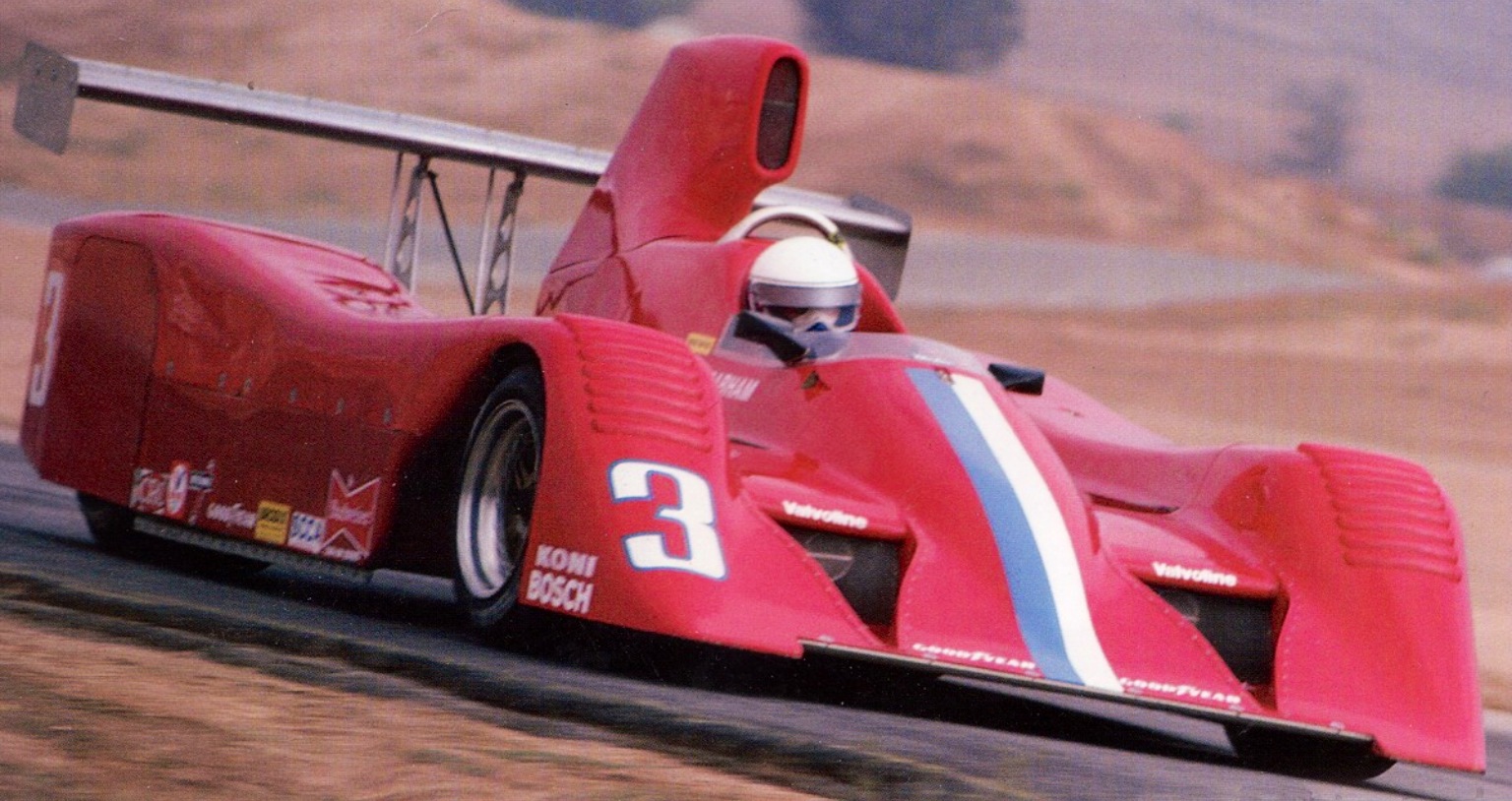
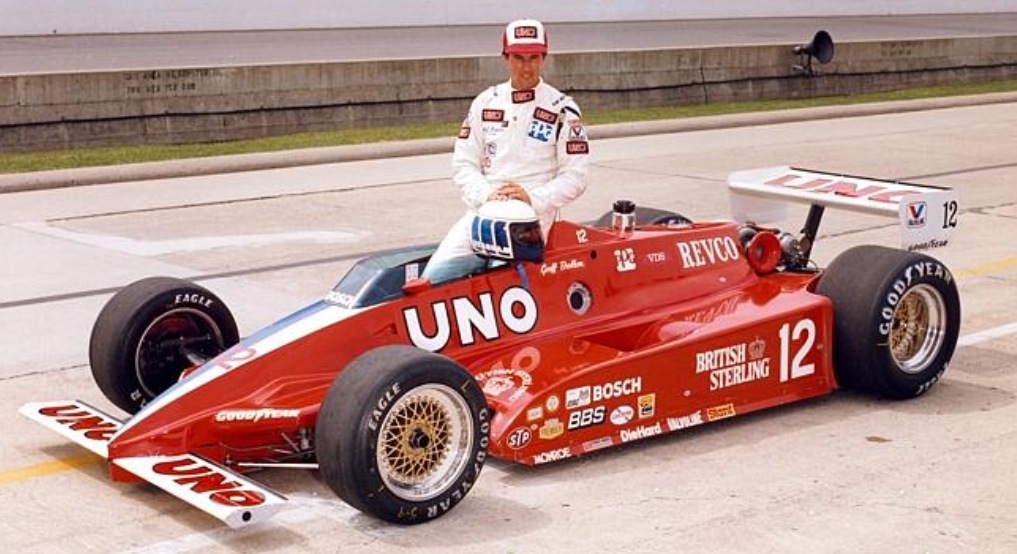

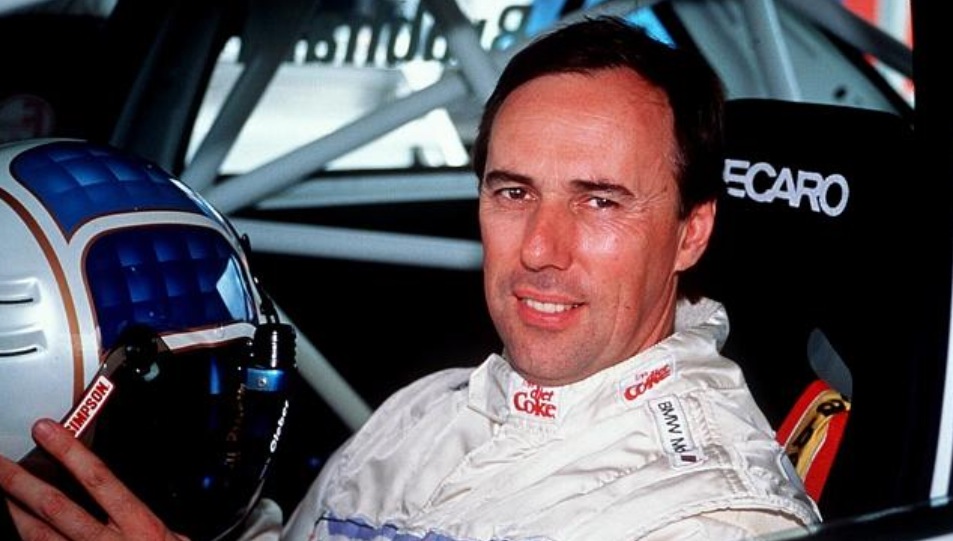


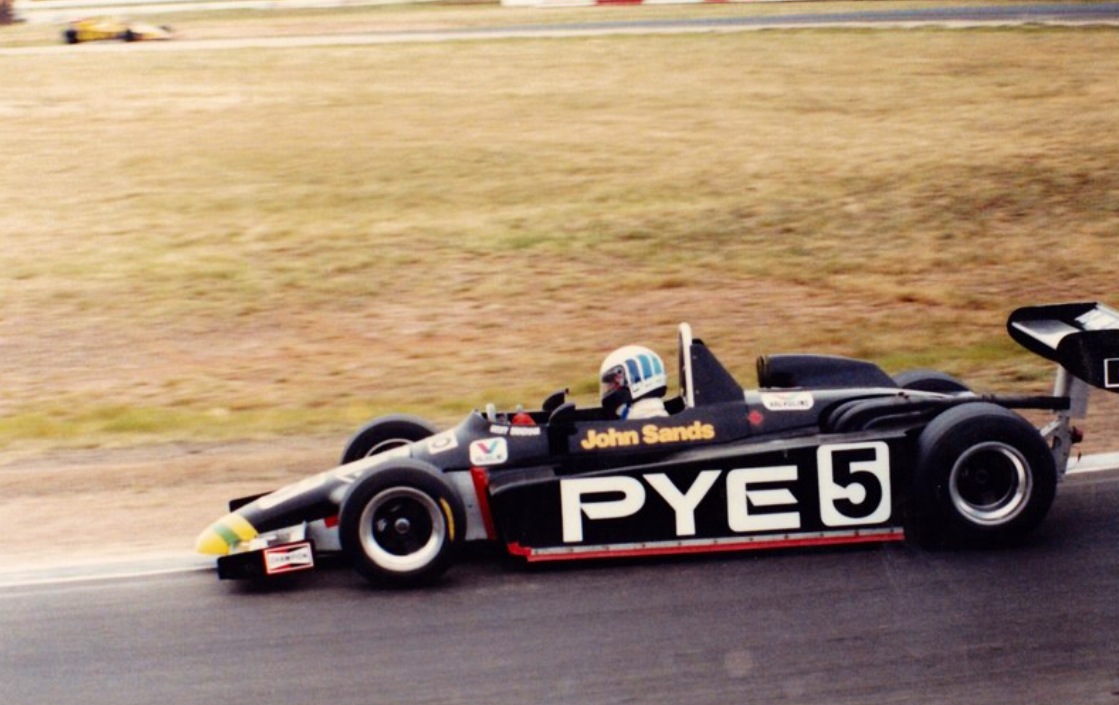


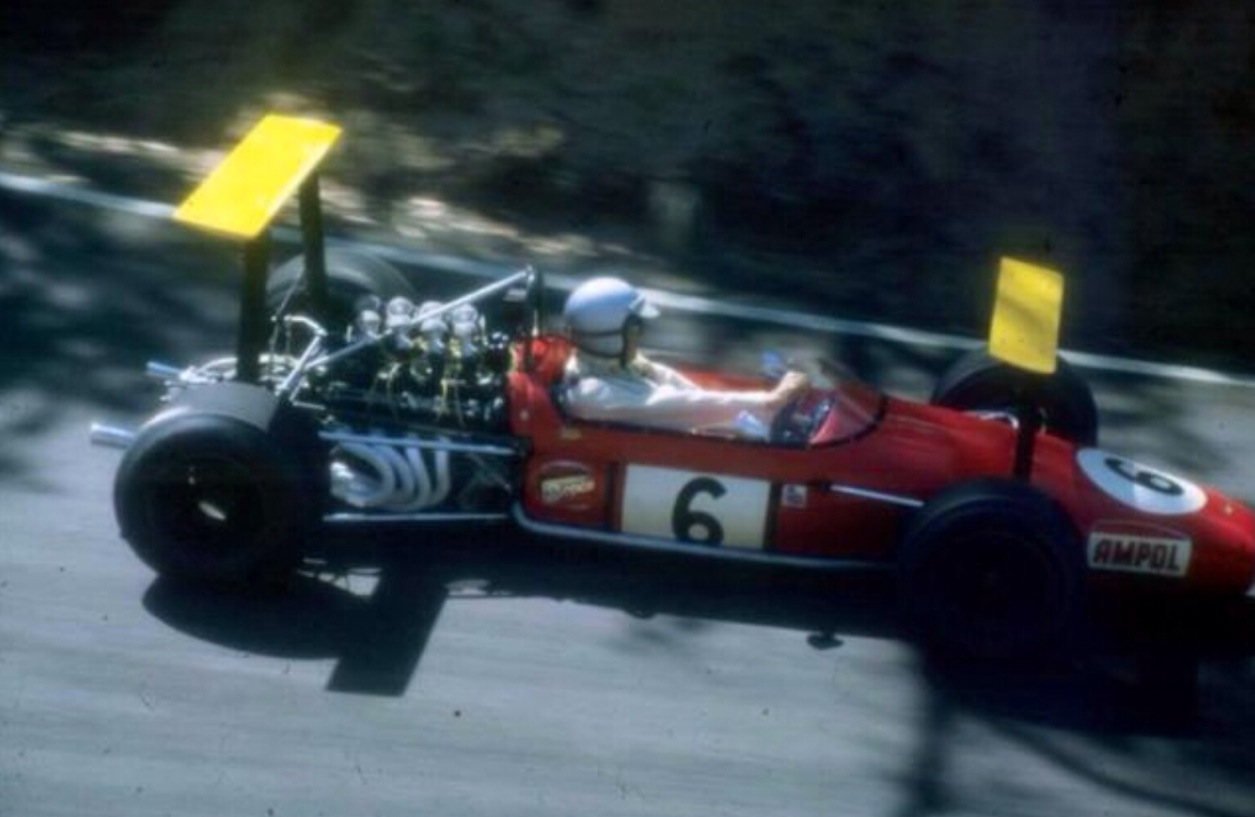

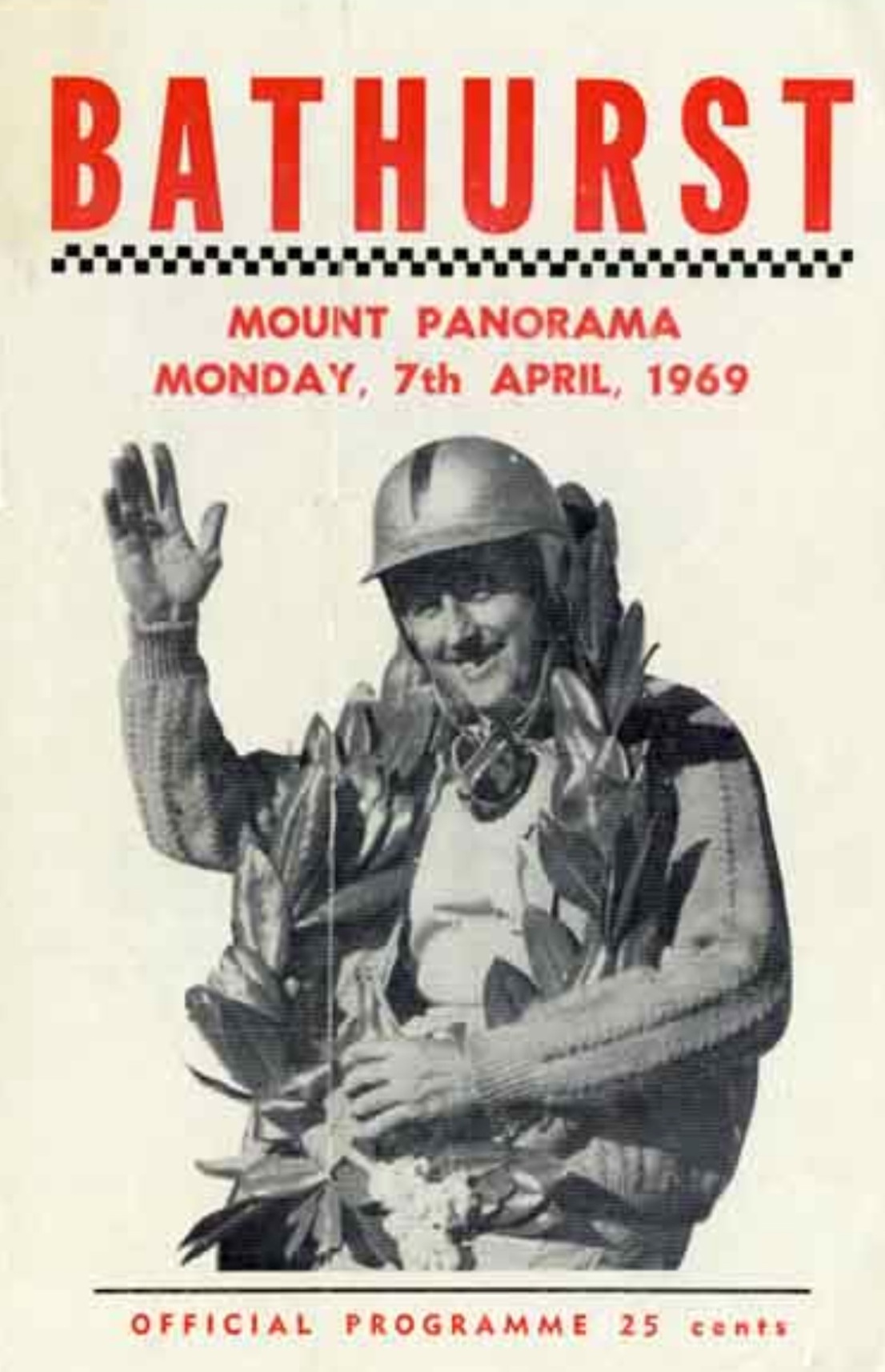
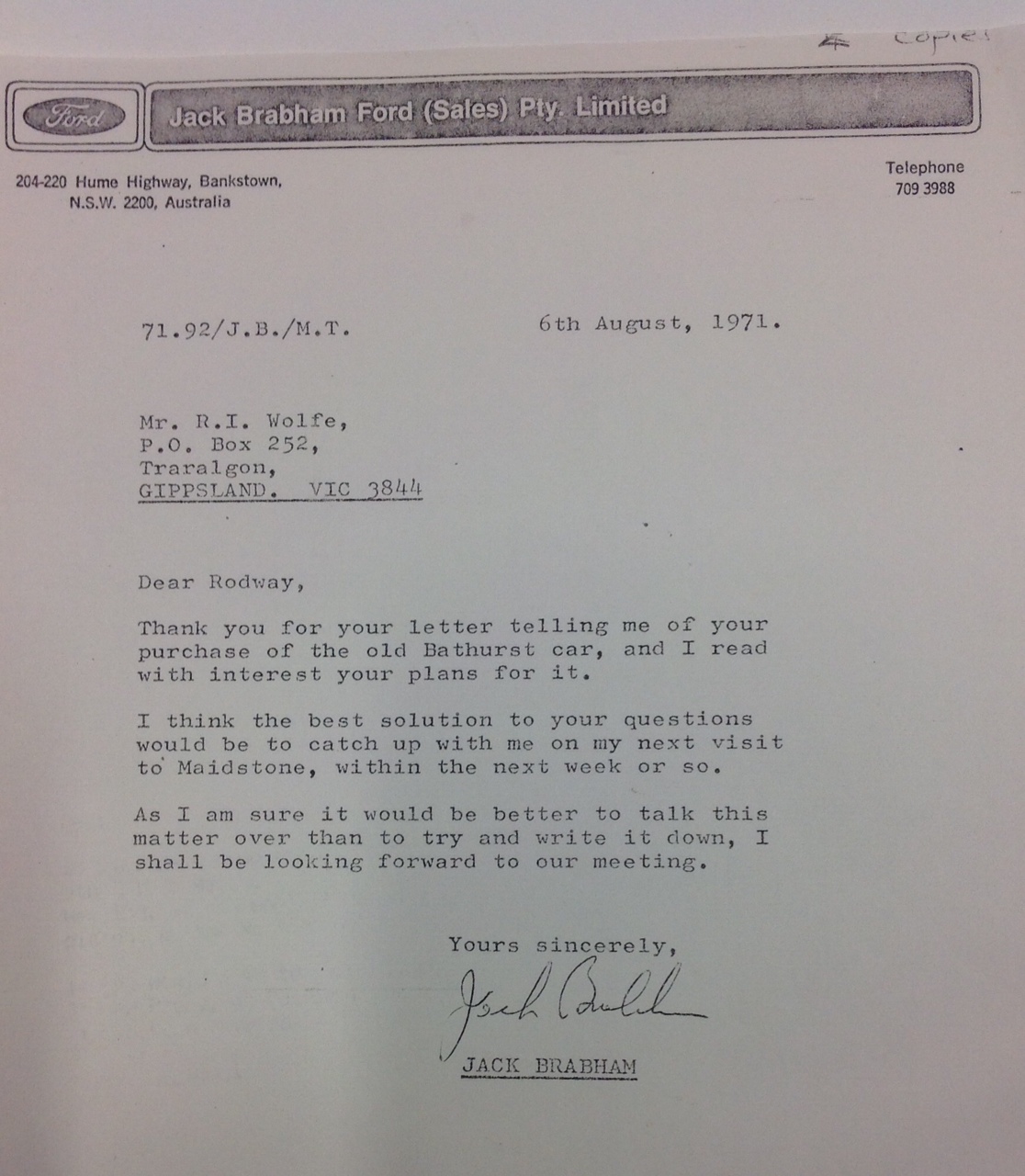


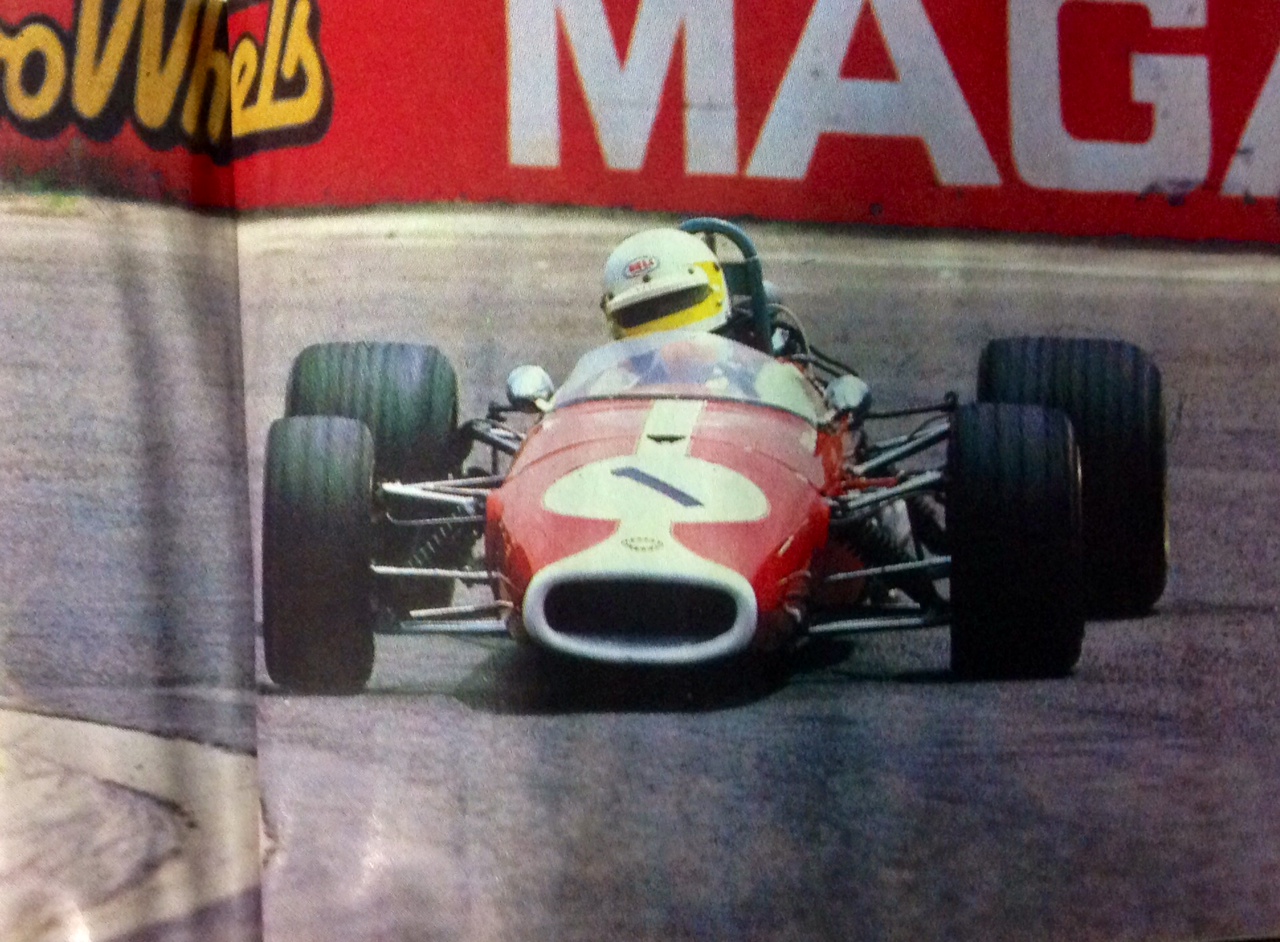
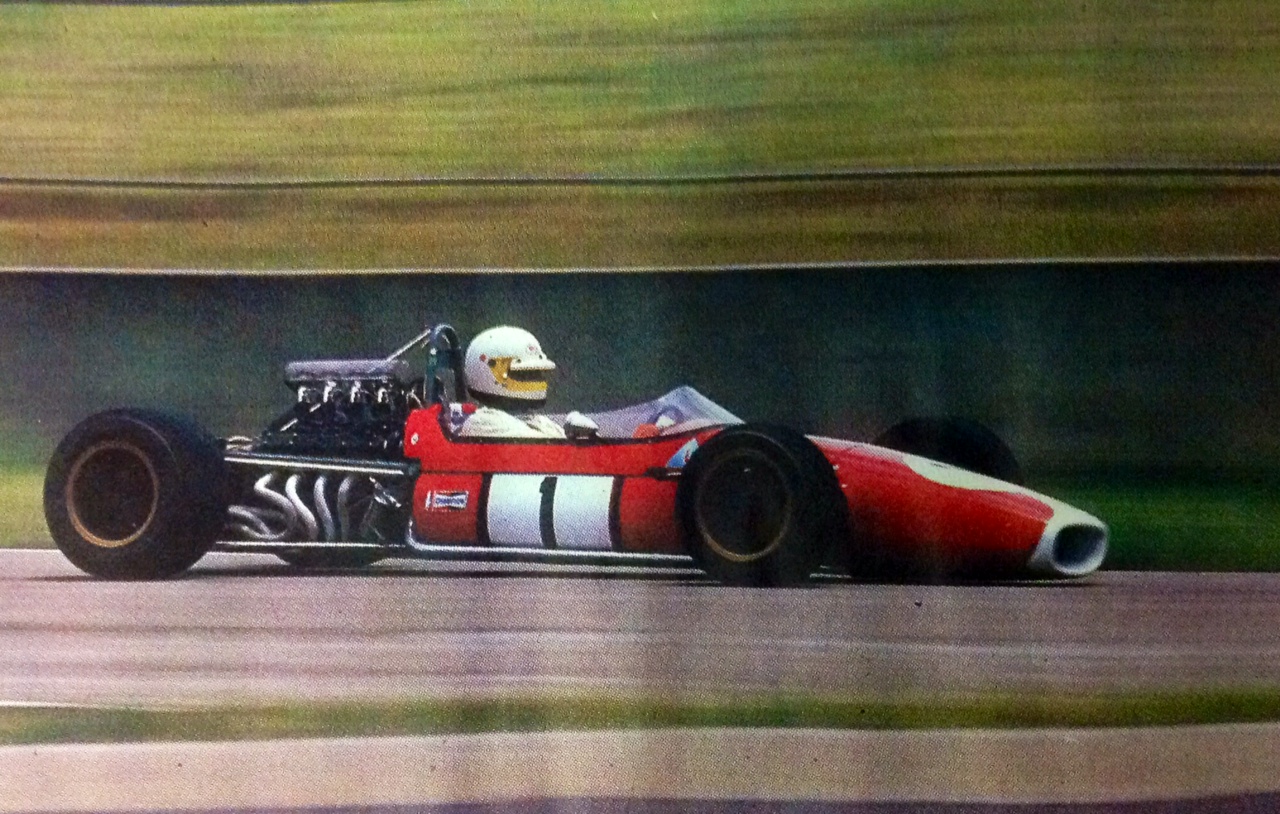


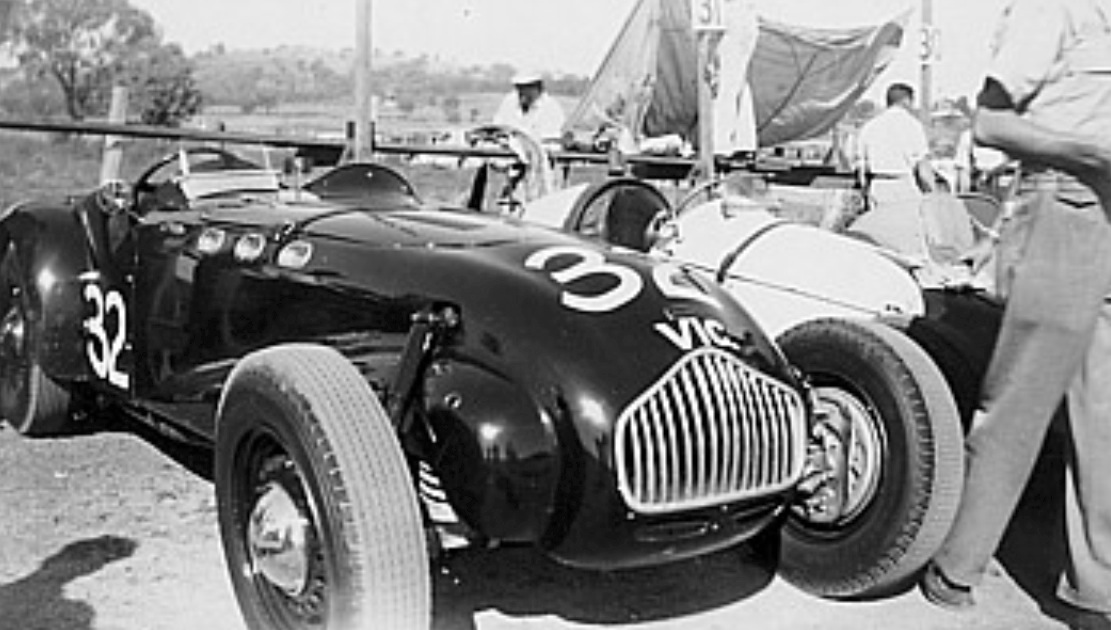

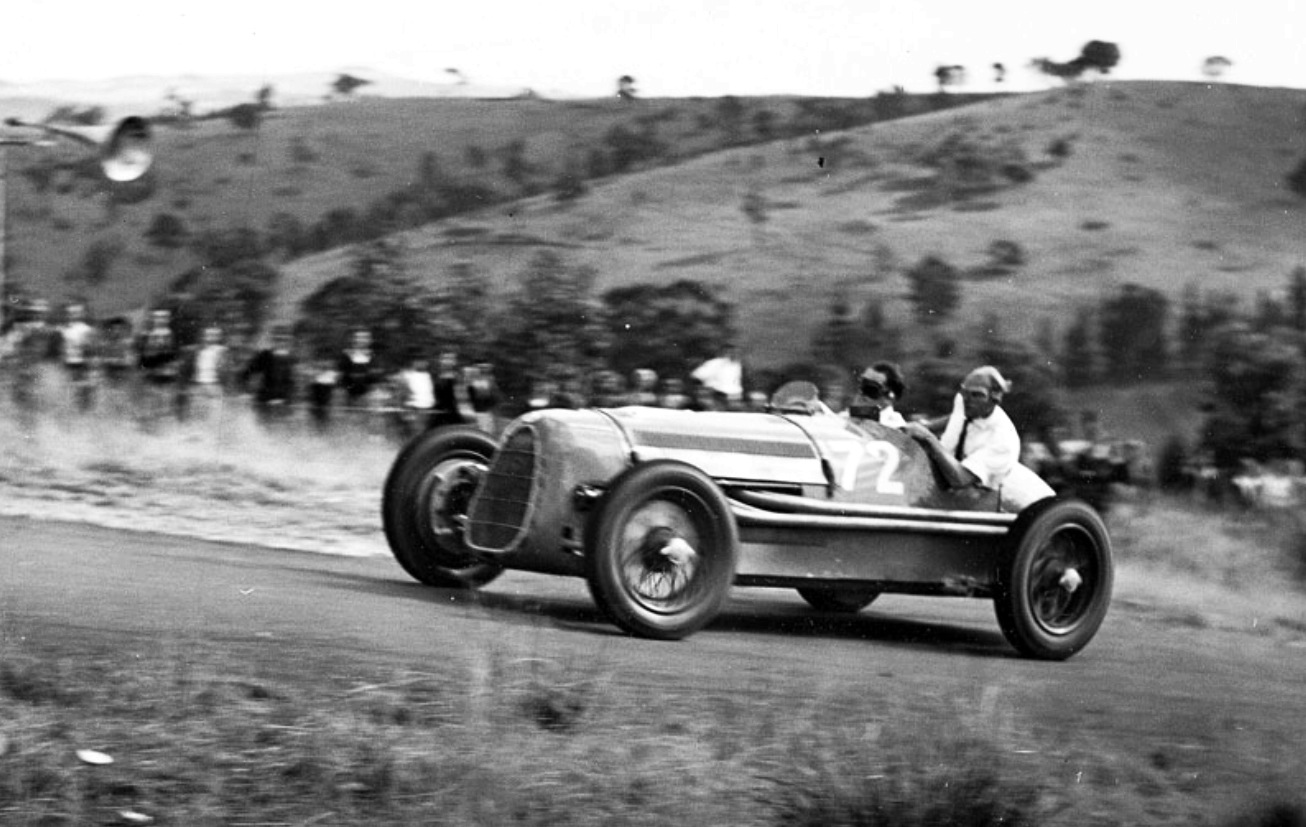
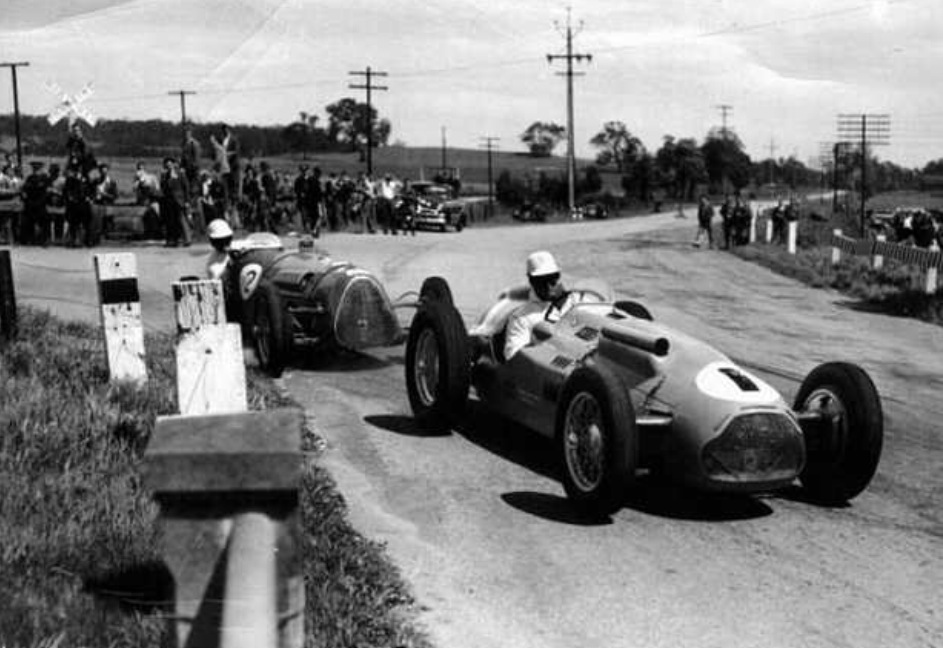


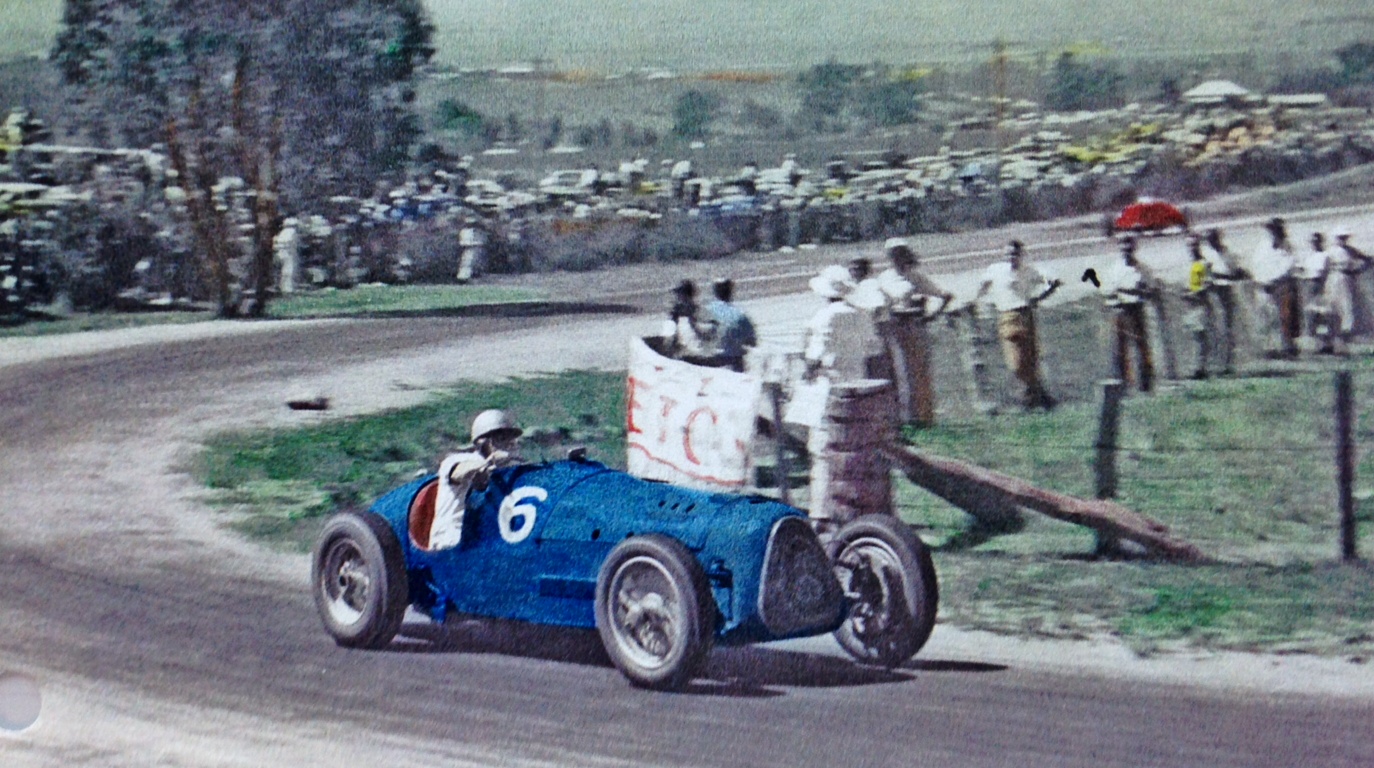


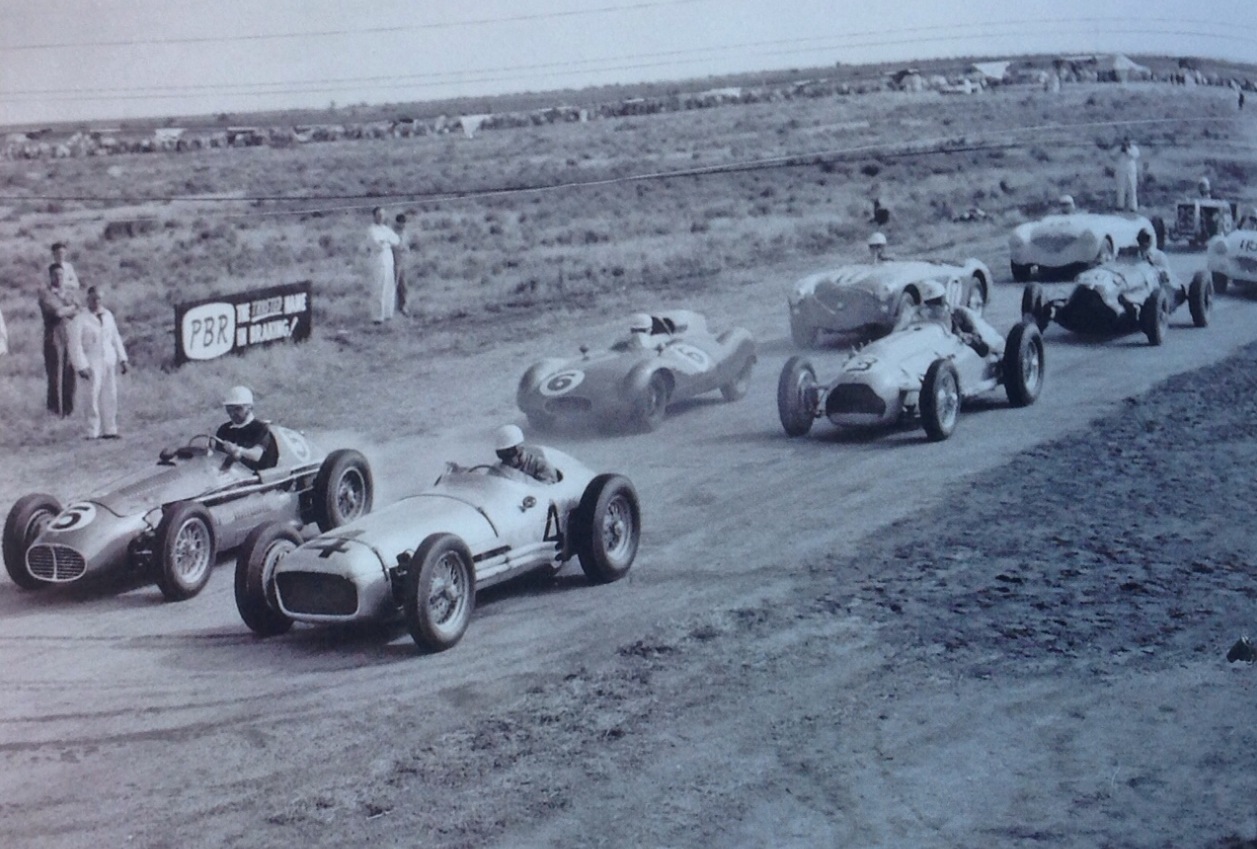


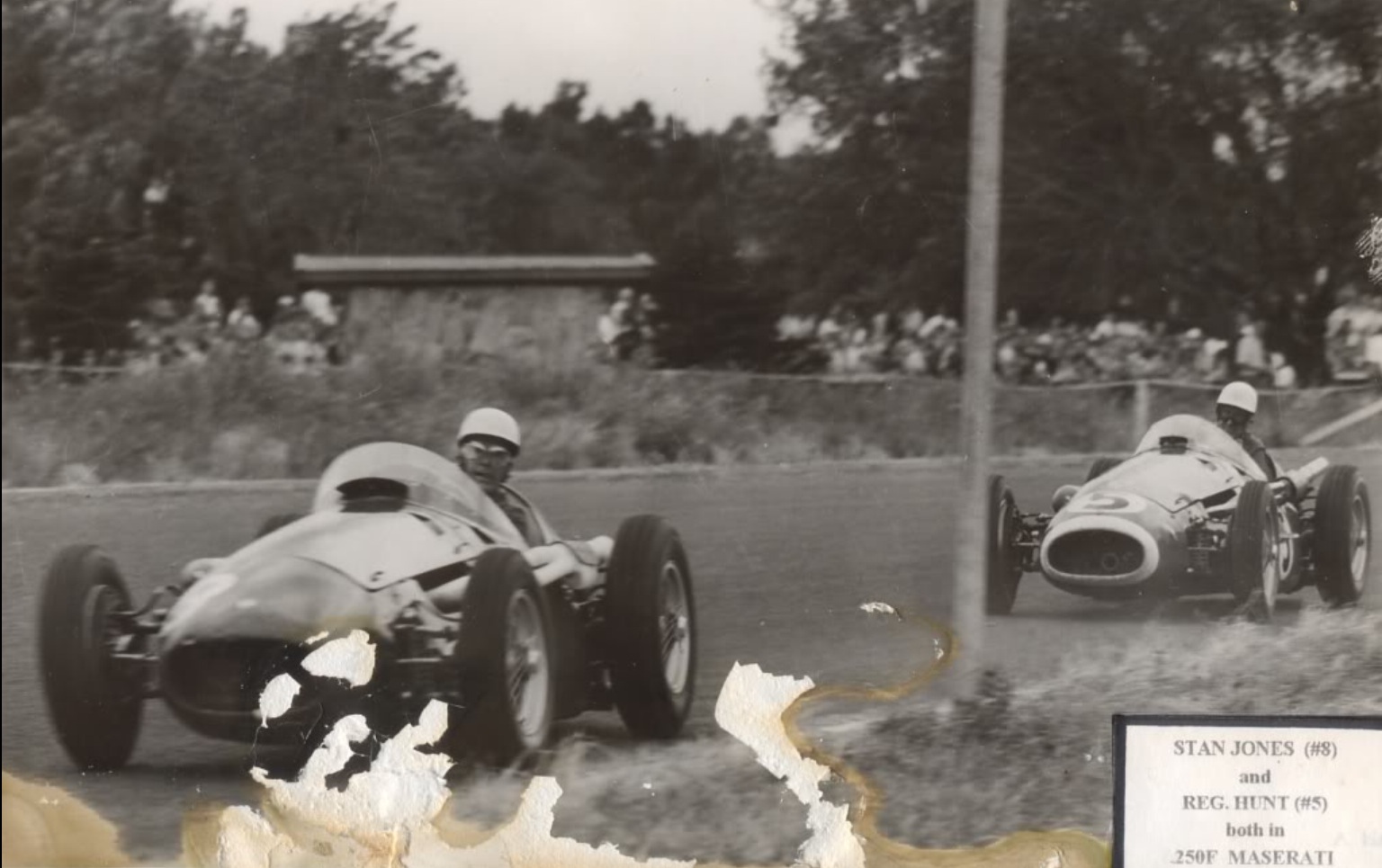



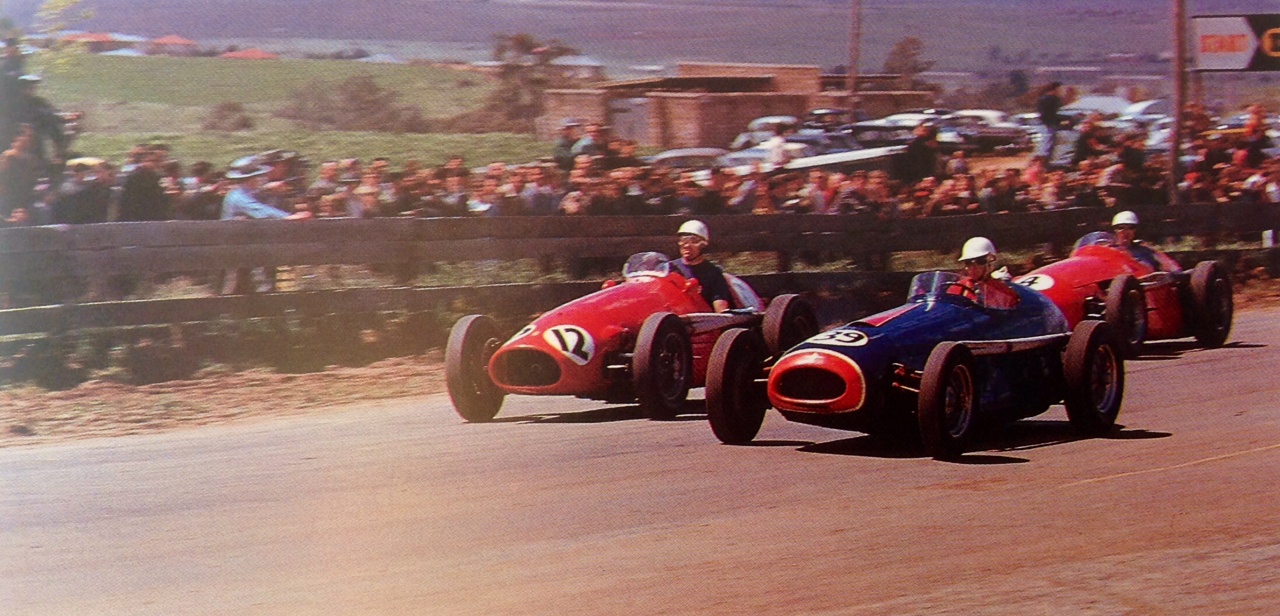

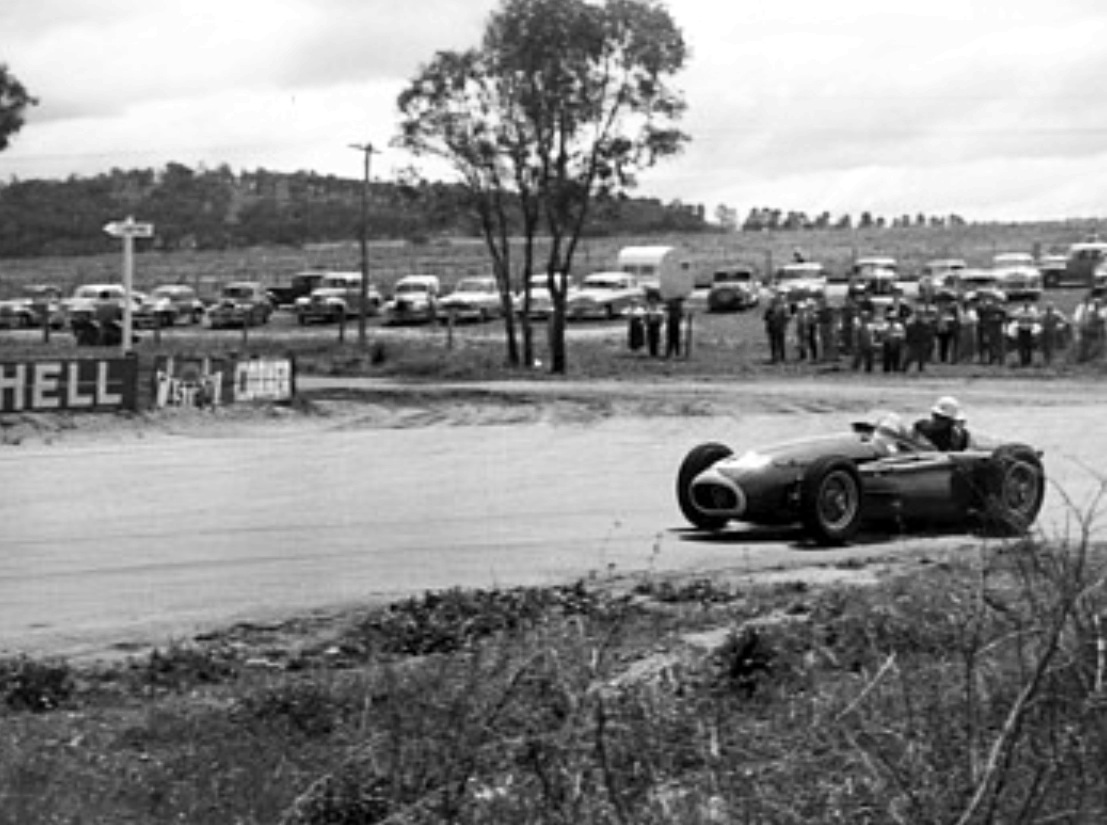
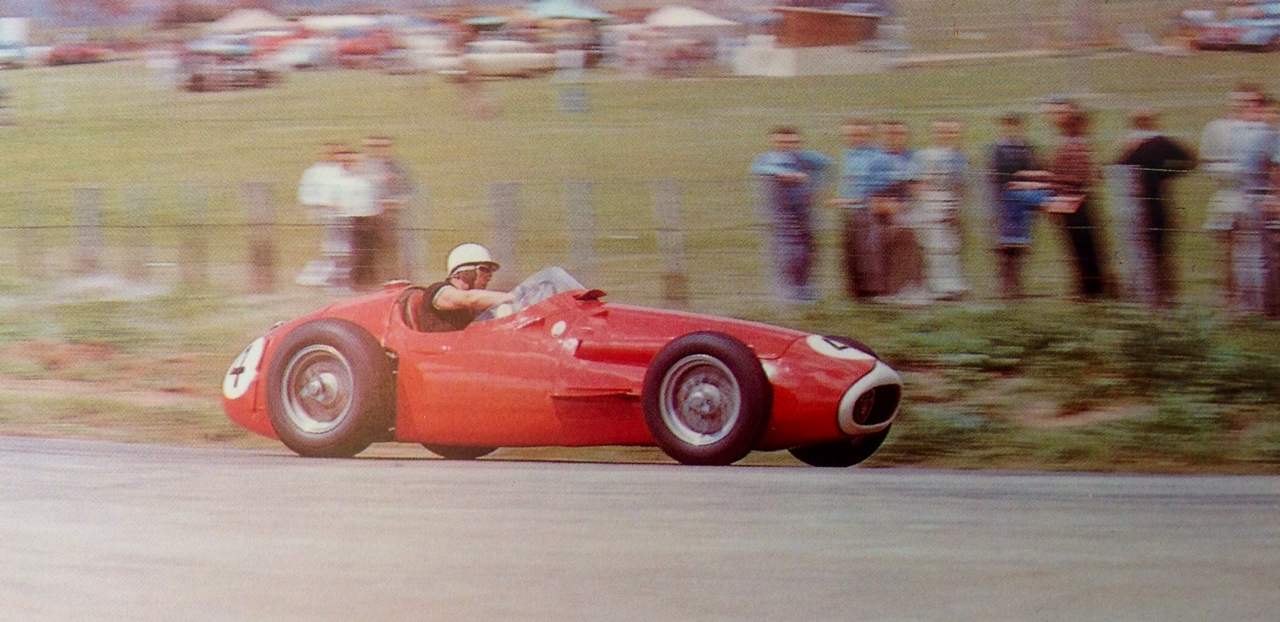


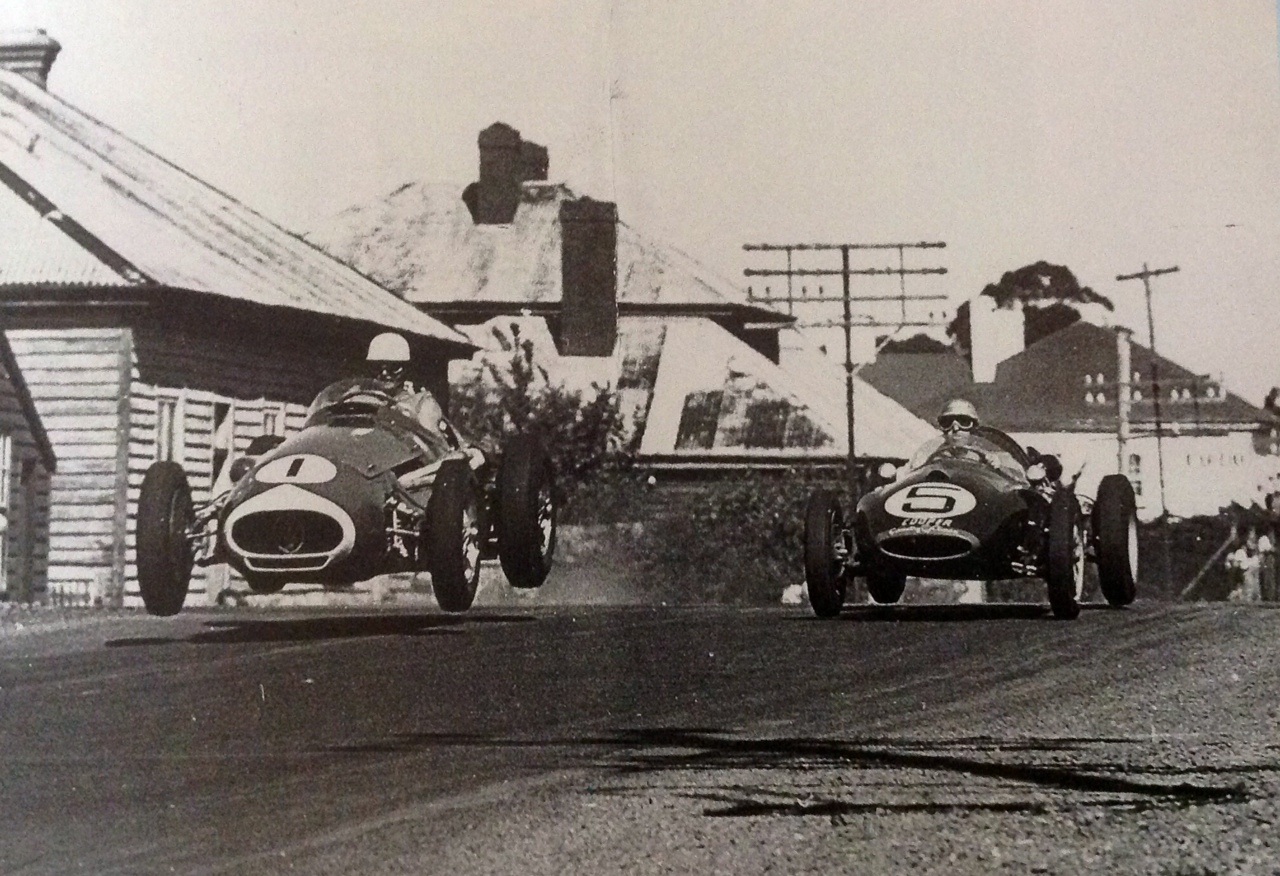


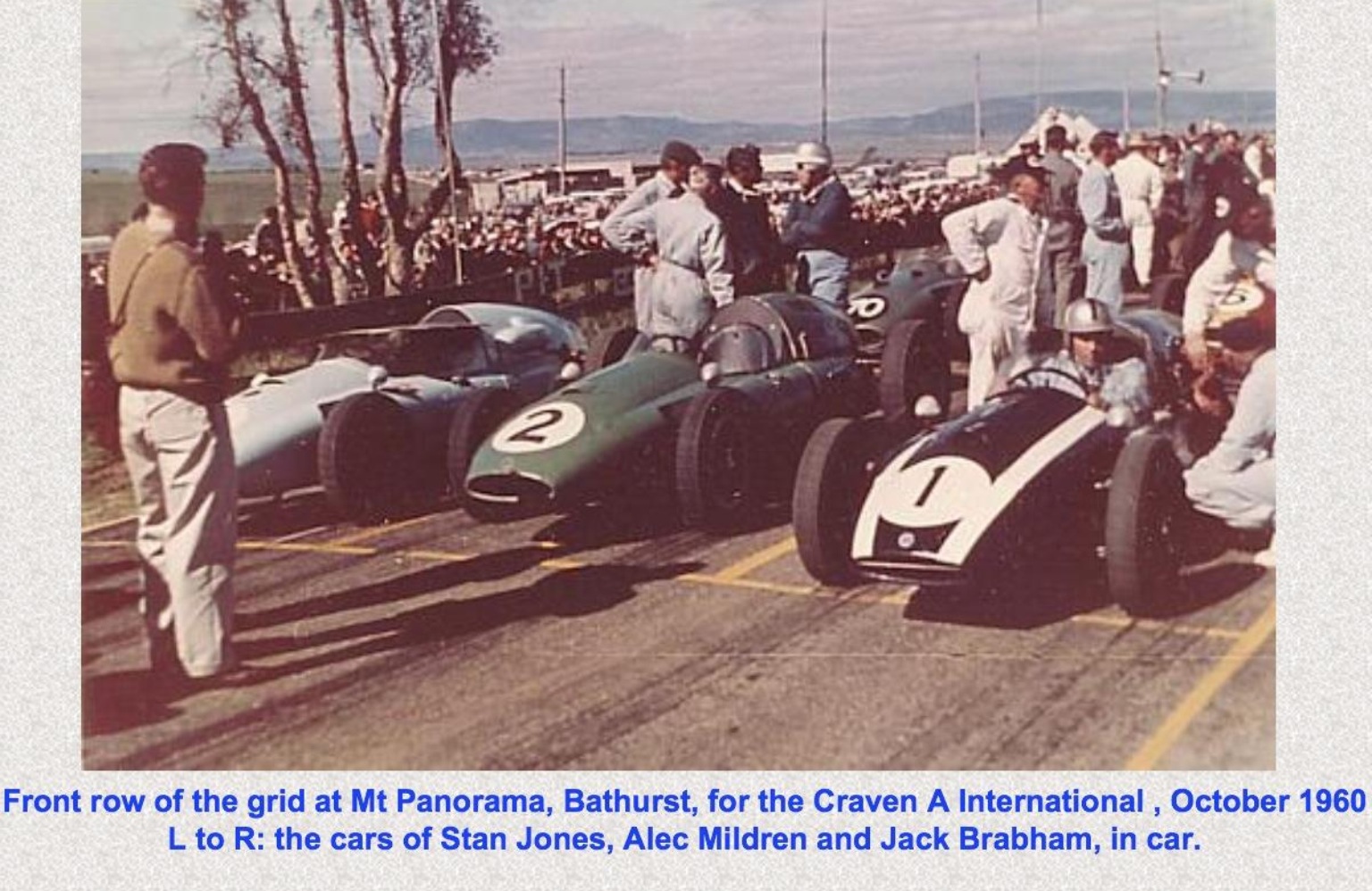
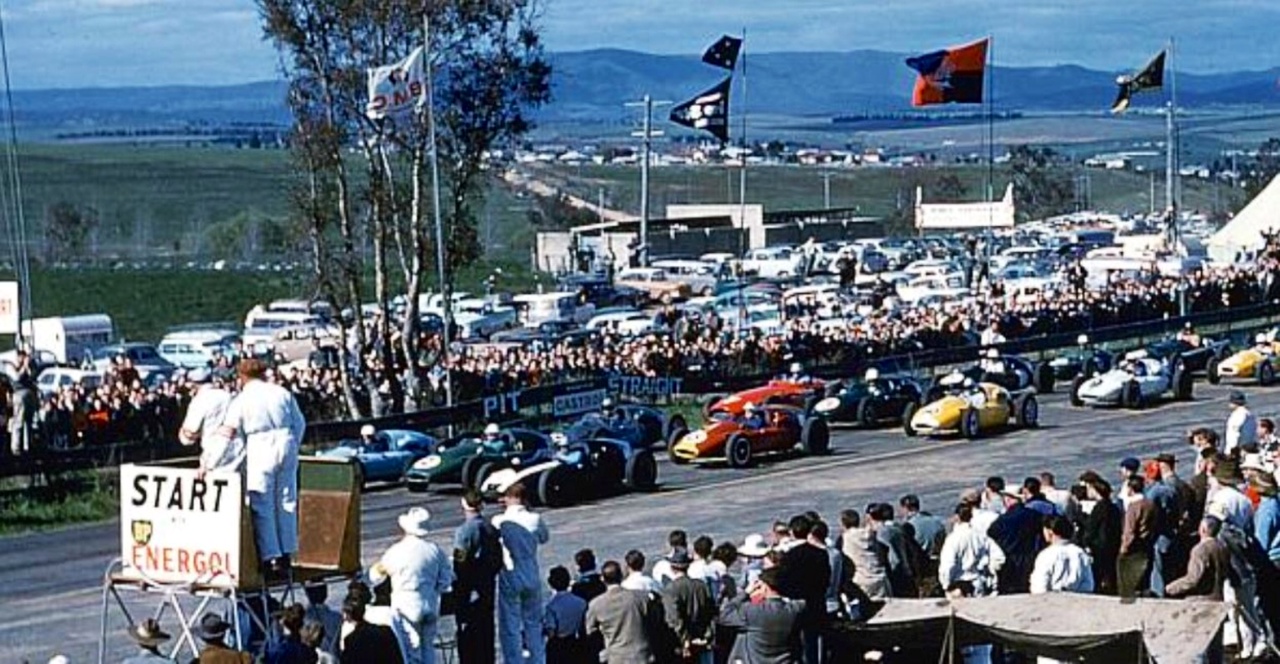

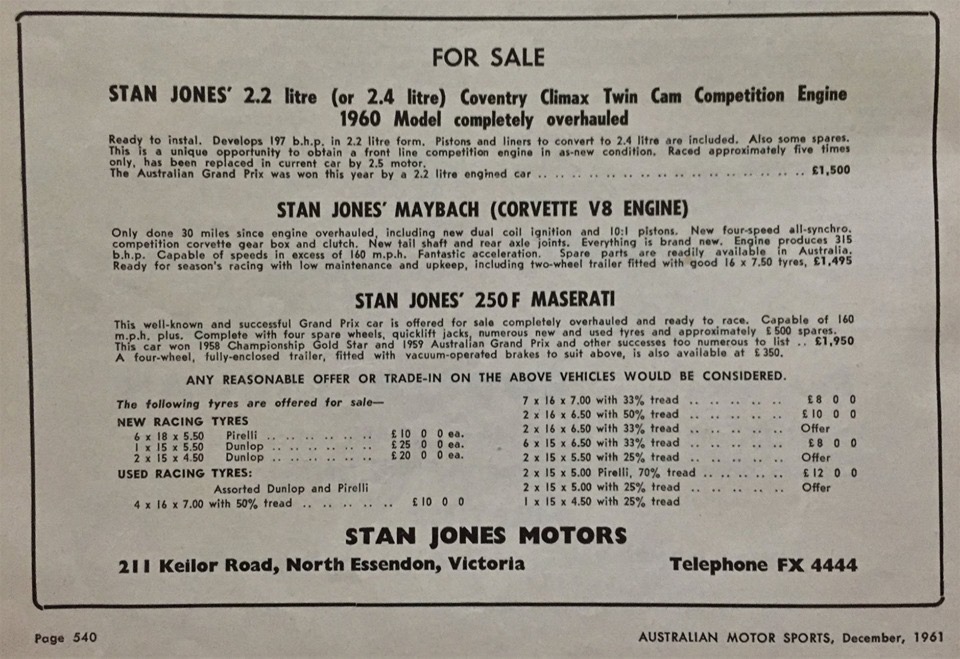
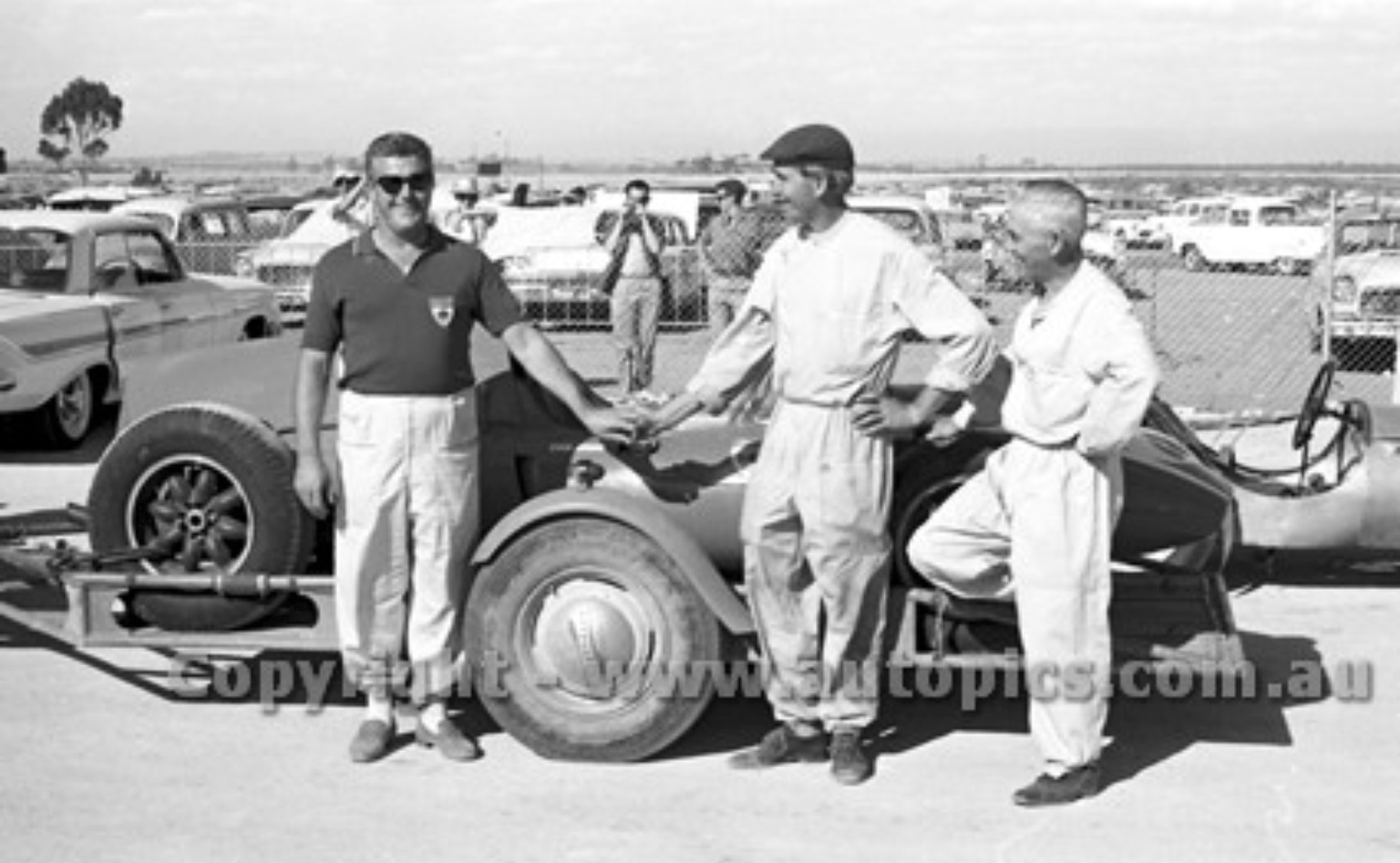
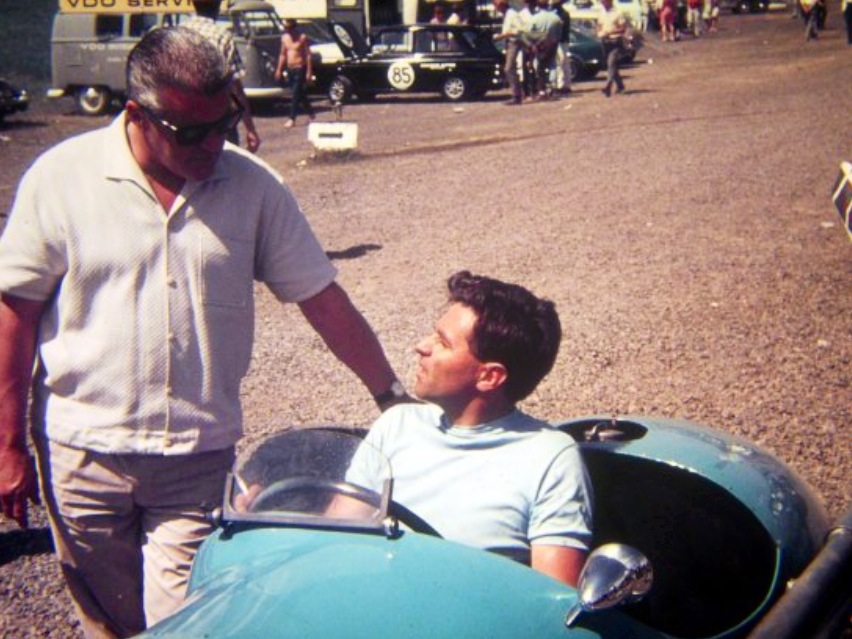

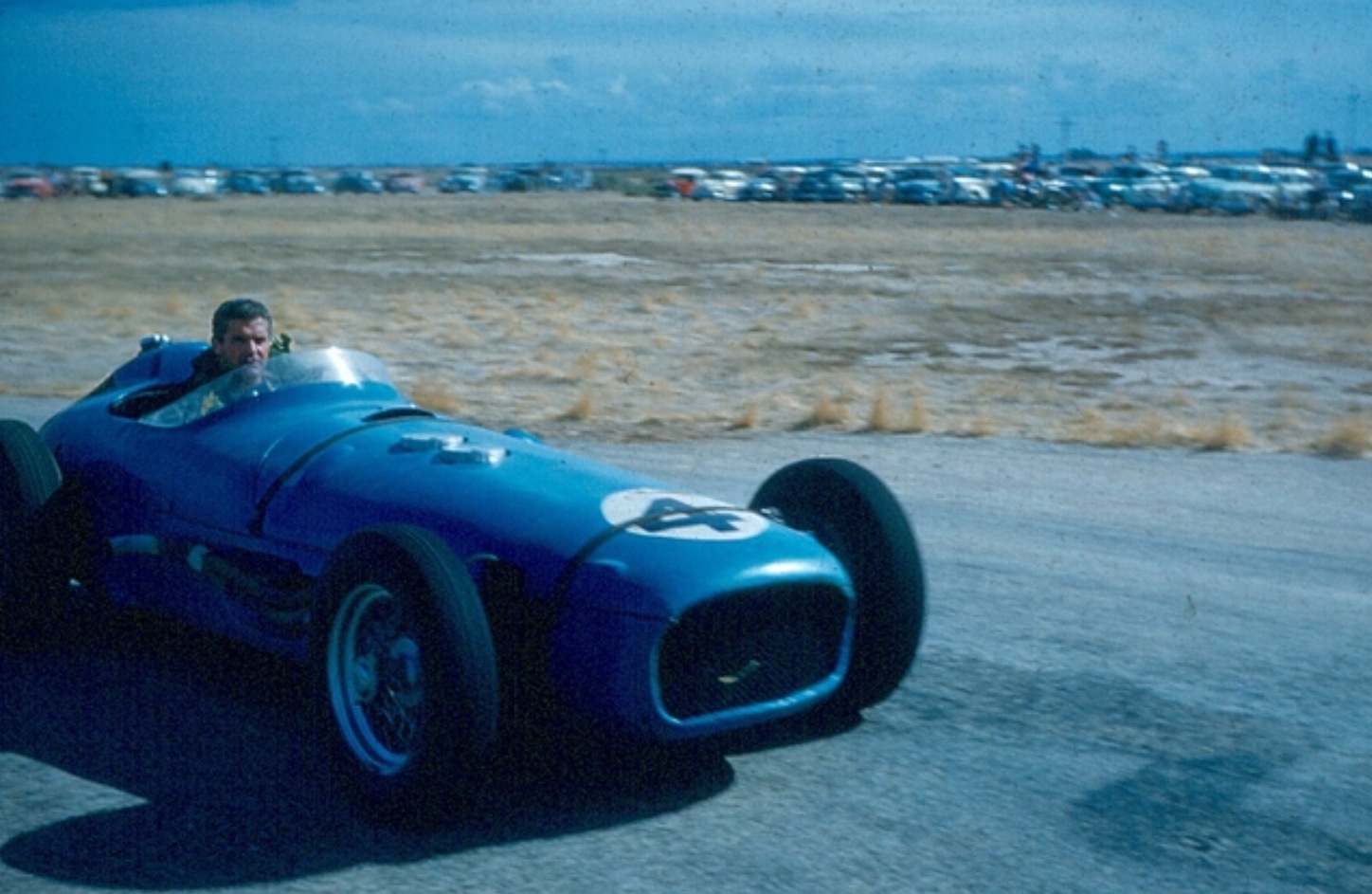


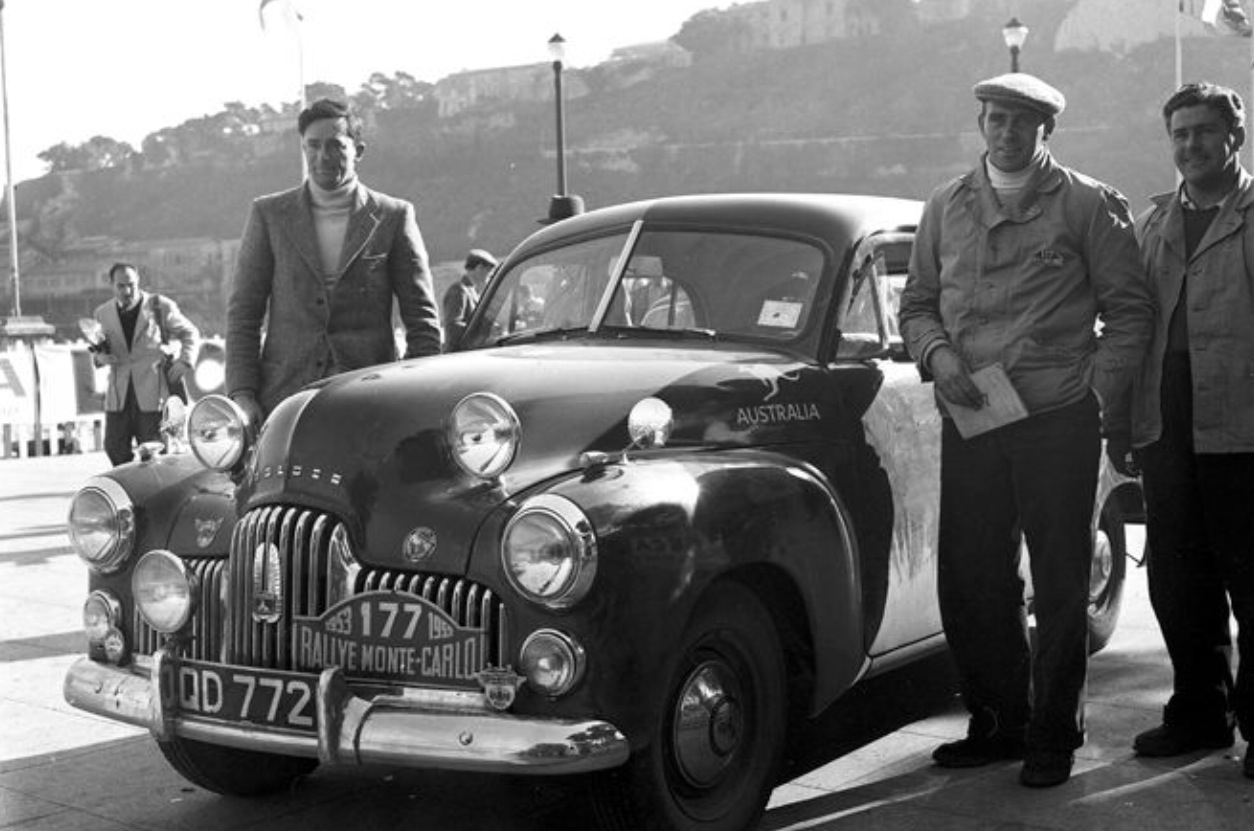
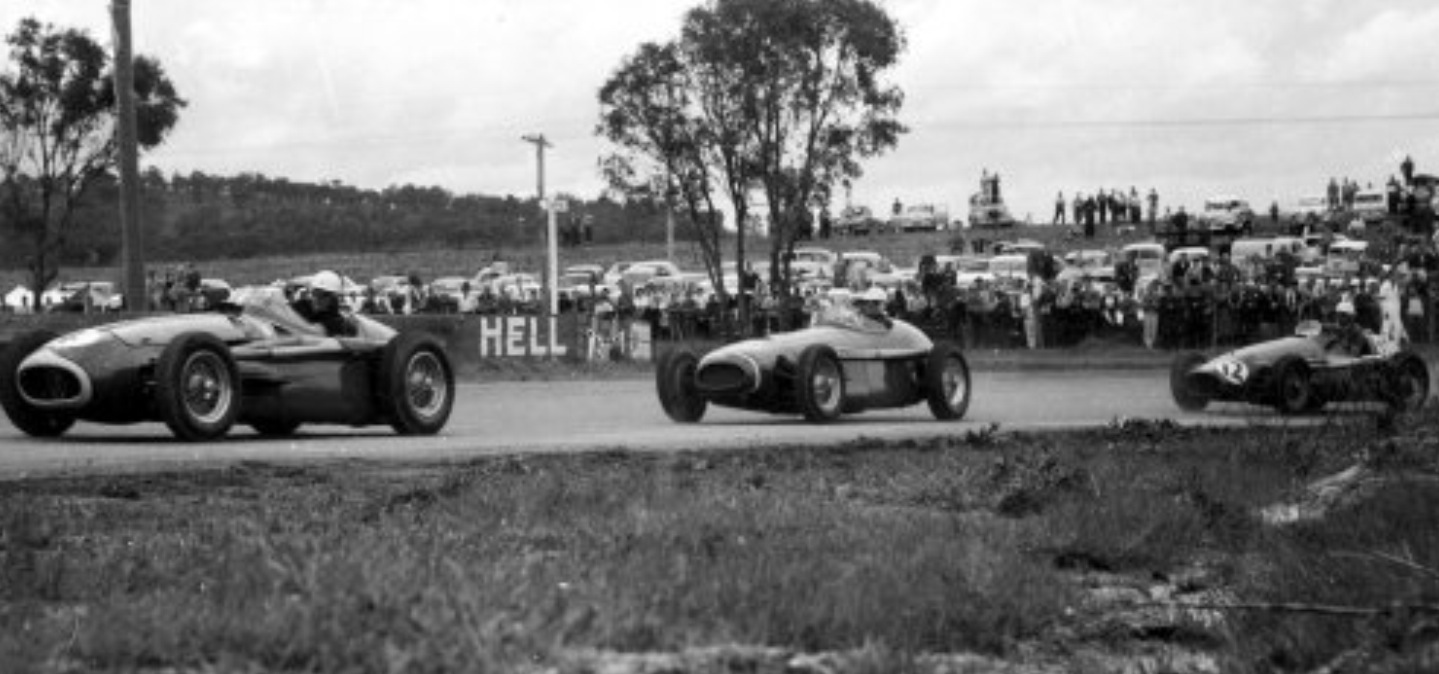


 primotipo...